
SOFIA, Bulgaria (AP) — Bulgarian voters will head to the polls Sunday in another snap election that could elevate a leftist former president to power, coming just days after Hungarian citizens turned away from Viktor Orbán’s authoritarian agenda and the global far-right movement.
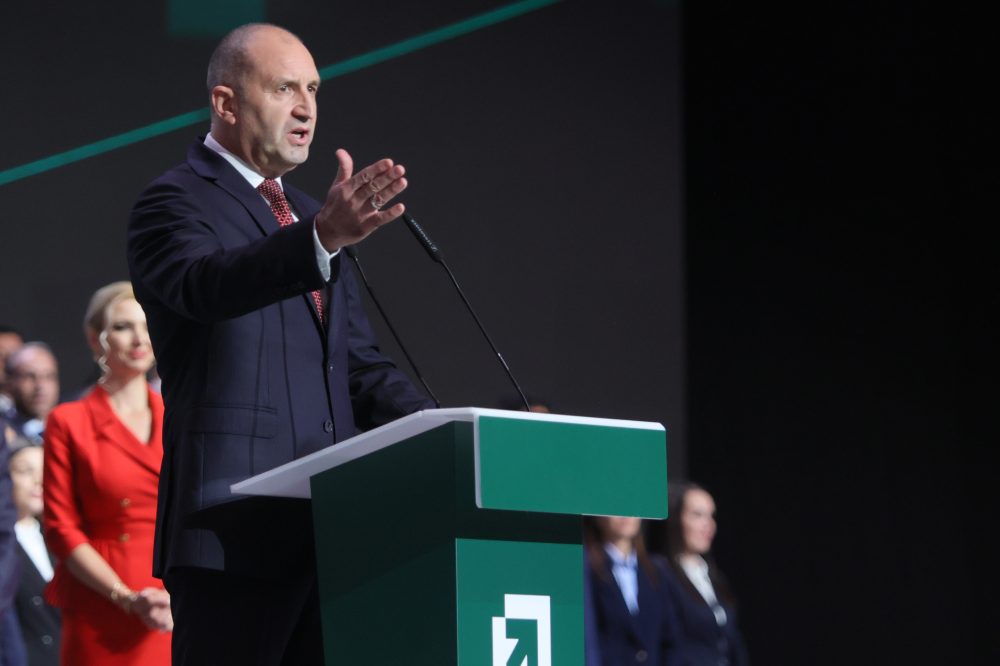
Former President Rumen Radev’s newly formed coalition appears positioned to capture the most votes in the April 19 election, drawing support from citizens who believe he can eliminate entrenched oligarchy and corruption, while others rally behind his European Union-skeptical and Russia-friendly positions.
In January, the 62-year-old stepped down from his largely symbolic presidential role several months ahead of his second term’s completion to pursue the prime minister position and lead the government directly.
The ex-fighter pilot and former air force commander enjoys the highest popularity ratings among Bulgarian politicians and has pledged to provide the nation with a new beginning should his center-left Progressive Bulgaria coalition prevail in the upcoming vote.
This weekend’s emergency election stems from the collapse of a conservative government following massive anti-corruption demonstrations in December 2025 that brought hundreds of thousands of predominantly young protesters into the streets nationwide.
The Balkan nation of 6.5 million people holds membership in both the European Union and NATO, recently adopted the euro currency on January 1, and gained entry to the Schengen border-free zone. However, political chaos has gripped the country since 2021, when longtime conservative leader Boyko Borissov stepped down as prime minister for the third time amid widespread demonstrations against systemic corruption and inequality.
No administration has lasted longer than 12 months since then, with each falling to either mass street demonstrations or parliamentary maneuvering, creating seven failed early elections across five years. This pattern has fostered deep institutional distrust, voter disengagement, and declining election participation.
Bulgarian officials recently sought help from EU diplomatic services to combat Russian interference operations targeting public opinion through social media platforms and propaganda websites. This request followed expert assessments identifying active Russian influence networks designed to create social divisions.
Polling data suggests Sunday’s voter turnout could rise from the recent average of 35% to more than 50%, driven partly by a fresh political contender entering the competition and the interim government’s efforts to restore electoral confidence through nationwide police operations, arrests, and legal proceedings targeting vote purchasing.
Survey results indicate Radev’s coalition may secure over 30% of votes, establishing a nearly 10-point advantage over his primary challenger — Borissov, the experienced GERB party leader whose latest prime ministerial tenure ended with the December 2025 protests. Polling margins of error range from 3 to 3.5%.
Radev has positioned himself as an adversary of the nation’s embedded criminal networks and their connections to senior political figures. During his final campaign event Wednesday, he promised to “remove the corrupt, oligarchic model of governance from political power.”
While surveys suggest Radev will likely finish first, he will require coalition partners to establish stable governance. He has rejected potential alliances with Borissov’s GERB party and the Movement for Rights and Freedoms, whose leader Delyan Peevski faces corruption sanctions from both the United States and Britain.
The pro-Western “We Continue the Change” bloc could serve as a domestic reform partner, with predictions placing them third at 12%-14% of votes.
Nevertheless, substantial foreign policy disagreements may hinder such cooperation, particularly regarding Russia’s invasion of Ukraine. Although Radev officially condemns Moscow’s aggression, he has consistently opposed military assistance to Kyiv and supports renewed negotiations with Russia to resolve the conflict.
Research center Trend analyst Evelina Slavkova believes Radev is unlikely to pursue a serious reorientation of Bulgaria toward Russia.
“Our country has succeeded, despite all the obstacles, despite disagreements among some politicians, in building a very important set of tools that keeps Bulgaria on the right track,” she told the Associated Press.
Slavkova emphasized that Bulgaria’s NATO and EU memberships, along with eurozone and Schengen participation, serve as “tools that allow us to be much more at ease.”
She observed that Radev avoided providing definitive positions during campaigning, attempting to balance competing viewpoints.
“This might be acceptable during a campaign, but when you’re running the country, you’ll certainly have to provide clear, definitive answers,” Slavkova explained.