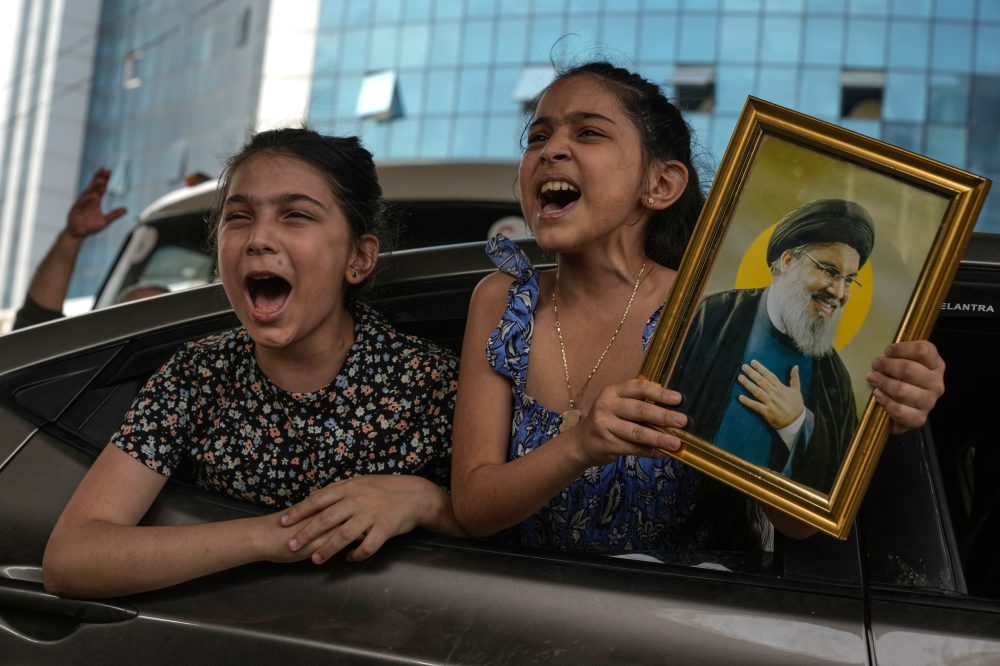

BEIRUT (AP) — An uneasy peace descended across Lebanon Friday as a 10-day ceasefire negotiated by the United States went into effect between Israel and Hezbollah, leading thousands of displaced residents to start returning home despite ongoing uncertainty, widespread devastation, and Israeli advisories warning against traveling to certain areas of southern Lebanon.
Early Friday morning, traffic stretched for miles along the southern route toward the damaged Qasmiyeh bridge spanning the Litani River, an important crossing that connects the southern coastal city of Tyre with northern regions. Cars loaded with mattresses, luggage, and rescued possessions moved slowly through a single reopened lane that had been quickly fixed following an Israeli airstrike just one day before.
The recent conflict between Israel and Hezbollah forced over one million people from their homes. Although Lebanese authorities advised against immediate returns, many residents began traveling toward southern Lebanon within hours of the ceasefire announcement. The truce seemed to hold steady through the night.
In southern communities such as Jibsheet, small numbers of residents came back to destroyed apartment buildings and roads covered with concrete debris, bent aluminum window coverings, and hanging power lines.
“I feel free being back,” said Zainab Fahas, 23. “But look they destroyed everything — the square, the houses, the shops, everything.”
Many residents remained skeptical that their suffering had truly ended.
“Israel doesn’t want peace,” said Ali Wahdan, 27, a medic walking on crutches over the rubble of the emergency services’ headquarters in Jibsheet. He was badly wounded in an Israeli airstrike that hit the building without warning during the first week of the war.
“I wish it were different,” he said. “But this war will continue.”
In Beirut’s southern suburb neighborhood of Haret Hreik, complete buildings had been turned to debris following weeks of heavy Israeli bombardment. Ahmad Lahham, 48, held up the yellow Hezbollah flag while standing on a pile of wreckage that had once been his apartment building, which also contained a branch of Hezbollah’s financial division, Al-Qard Al-Hassan.
“We are at the service of the fighters,” said Lahham, expressing his dedication to the organization.
He credited Iran and claimed its influence in discussions with the U.S. brought about the ceasefire, while criticizing Lebanon’s direct negotiations with Israel.
“Only the Iranians stood with us, no one else,” he said, referring to Lebanon’s leaders as “the leadership of shame.”
A municipal official in Haret Hreik reported that Israel attacked the area 62 times during the past six weeks.
“We’ve been able to clear up the rubble of the partially damaged buildings, but for those destroyed, we will need special equipment,” Sadek Slim, the neighborhood’s deputy mayor, told a press briefing.
The district was jammed with vehicles as people returned to inspect their properties and Hezbollah supporters rode through on motorcycles, displaying the group’s banner.