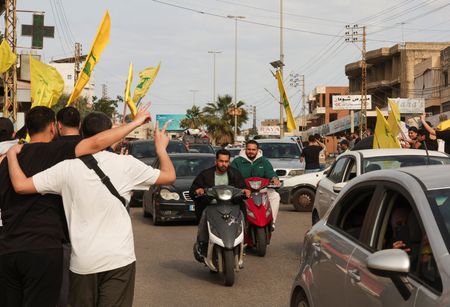

Displaced residents of Lebanon started making their way back to their communities Friday, surveying the damage to see if their homes survived the conflict, although many hesitated to stay permanently due to concerns the newly established 10-day truce between Hezbollah and Israel might not endure.
Massive piles of debris now occupy spaces where apartment buildings previously existed in Beirut’s southern districts under Hezbollah control, areas that suffered intense Israeli bombardment during more than six weeks of fighting that emerged from the broader conflict between the United States and Iran.
In the southern Lebanese town of Qasmiyeh, vehicles navigated a temporary bridge spanning the Litani River, quickly constructed after the truce took effect at midnight local time (2100 GMT). Israeli forces had demolished all river crossings during the hostilities, destroying the Qasmiyeh bridge just one day earlier.
“I inspected my home and praise God the building is still standing,” said Ali Hamza, who had just visited his house in the southern suburbs known as Dahiyeh.
However, he explained that “people are scared to come and live, and it is impossible to live in these circumstances, and with these smells. A full return is difficult now, despite the hardship of displacement.”
President Donald Trump revealed the ceasefire agreement between Lebanon and Israel’s governments on Thursday. Lebanon’s leadership has maintained strong disagreements with Hezbollah regarding its war participation and has pursued the group’s peaceful disarmament for the past year.
Lebanon’s military documented ceasefire breaches by Israeli forces, including sporadic bombardment of multiple southern Lebanese communities, and urged civilians to delay returning to southern areas.
Israeli military officials did not provide immediate response to the allegations.
In Nabatieh, a heavily damaged southern city, some returning inhabitants declared their intention to remain permanently. Others concluded there was nothing left worth returning to.
“There’s destruction and it’s unliveable. Unliveable. We’re taking our things and leaving again,” said Fadel Badreddine, who arrived with his wife and young son. “May God grant us relief and end this whole thing permanently – not temporarily – so we can return to our homes and lands.”
The Iranian-backed Shiite organization Hezbollah, established by Iran’s Revolutionary Guards in 1982, began attacking in support of Tehran on March 2.
Lebanese officials report the conflict claimed over 2,100 lives in Lebanon and displaced approximately 1.2 million people, with most evacuees belonging to the Shiite community that also suffered heavily during a 2024 war.
Israeli authorities state that Hezbollah attacks resulted in two civilian deaths, while 13 Israeli soldiers died in Lebanon since March 2. The militant group launched hundreds of rockets and drones toward Israel throughout the conflict.
Israel’s military operations in Lebanon had become a significant barrier to achieving the peace agreement Trump sought to conclude the war with Iran.
Following the ceasefire announcement, Trump informed reporters that Lebanon and Israel would pursue a more permanent agreement, noting Lebanon had committed to “take care of Hezbollah.”
Israeli Prime Minister Benjamin Netanyahu stated he had rejected Hezbollah’s requirement to remove forces that entered southern Lebanon, and would continue maintaining a comprehensive “security zone” extending to Syria’s border.
Netanyahu emphasized that Israel’s primary objective remained Hezbollah’s complete dismantlement.
Hezbollah declared that any ceasefire must prevent Israeli forces from operating freely within Lebanese territory. The organization issued a statement asserting that Israeli military presence on Lebanese soil provided Lebanon and its citizens the “right to resist.”
Israeli military units have occupied portions of southern Lebanon and had pledged to retain control over territory reaching the Litani River, which flows into the Mediterranean approximately 30 kilometers (20 miles) north of Israel’s border. During the war, Israel commanded residents to evacuate the area south of the Litani.
Israeli forces demolished Lebanese communities in the region, stating their objective was establishing a “buffer zone” to shield northern Israeli towns from Hezbollah assaults.
Trump announced plans to invite Netanyahu and Lebanese President Joseph Aoun to the White House for “meaningful talks” between the two nations, which have technically remained at war since Israel’s establishment in 1948.