MURFREESBORO, Tenn. – The University of Delaware women’s tennis team delivered a remarkable upset victory on Friday, defeating the top-seeded and nationally-ranked 73rd LA Tech Bulldogs by a score of 4-2 in the Conference USA semifinals.
The fourth-seeded Fightin’ Blue Hens earned their place in Saturday morning’s championship final with the impressive win in Murfreesboro, Tennessee. The title match is scheduled to begin at 11 a.m. Eastern Time.
Delaware’s season record improved to 21-4 with the victory, while Louisiana Tech saw their campaign record fall to 17-4 following the surprising defeat.
The Blue Hens will now compete for the Conference USA championship title after overcoming the tournament’s highest seed and a team ranked among the top 75 programs nationally.
The company behind Facebook and Instagram has set May 20 as the date for its first major round of workforce reductions this year, according to three sources with knowledge of the plans.
Meta will eliminate roughly 8,000 positions worldwide during this initial phase, representing about 10% of its total workforce, one source revealed.
Company leadership is also preparing for additional workforce reductions during the latter half of the year, though the exact timing and scale of those cuts remain undetermined. Executives may modify their strategy based on developments in artificial intelligence technology, the sources indicated.
Meta representatives declined to provide details regarding the schedule or extent of the planned workforce reductions.
CEO Mark Zuckerberg is investing massive amounts of capital into AI technology as he works to fundamentally transform how his company operates, mirroring a trend seen across major U.S. corporations this year, especially within the technology industry.
Amazon has similarly reduced its corporate staff by 30,000 workers in recent months, cutting nearly 10% of its office-based employees, while financial technology firm Block eliminated almost half its workforce in February.
Leadership at both companies connected these workforce reductions to improved efficiency through artificial intelligence implementation.
According to Layoffs.fyi, which monitors technology sector job eliminations globally, 73,212 workers have been laid off this year so far. The total for 2024 reached 153,000.
These upcoming workforce reductions will mark Meta’s largest since its restructuring efforts in late 2022 and early 2023, which the company called its “year of efficiency,” when approximately 21,000 positions were eliminated. During that period, Meta’s stock price was declining sharply and the company was working to address unsustainable growth projections made during the COVID pandemic.
While the company enjoys stronger financial stability currently, leadership envisions a future with reduced management hierarchy and improved efficiency through AI-enhanced productivity.
Meta’s stock has increased 3.68% year-to-date, though it remains below the peak levels reached last summer. The company generated over $200 billion in revenue last year and achieved $60 billion in profit despite substantial AI investments.
The Menlo Park, California-based company had nearly 79,000 employees as of December 31, based on its most recent regulatory filing.
Recently, Meta has restructured teams within its Reality Labs division and moved engineers from various departments into a newly formed “Applied AI” organization focused on developing autonomous AI agents capable of coding and handling complex tasks independently.
According to one source, some employees will also transfer to Meta Small Business, a division established last month, as part of the organizational changes.
The University of Delaware men’s tennis team secured a major tournament victory Friday afternoon in Murfreesboro, Tennessee, knocking out higher-seeded Kennesaw State by a score of 4-2 in Conference USA quarterfinal action.
The Fightin’ Blue Hens entered the match as the fifth seed but managed to overcome the fourth-seeded Owls to earn their spot in Saturday’s semifinal round. Delaware’s season record improved to 14-9 with the victory, while Kennesaw State saw their campaign end at 15-7 despite holding a national ranking for much of the season.
The Blue Hens will now prepare for their toughest challenge yet, facing the tournament’s top seed Middle Tennessee, which holds the 48th national ranking. That semifinal matchup is scheduled for Saturday afternoon at 2 p.m. Eastern Time, with Delaware looking to continue their impressive postseason run in the Conference USA championships.
Ukrainian President Volodymyr Zelenskyy addressed representatives from 50 nations on Friday, advocating for collaborative action to establish an effective security operation in the Strait of Hormuz, while suggesting that Ukraine’s Black Sea wartime expertise could prove valuable.
Speaking during a video conference led by France and Britain, Zelenskyy warned that “Decisions made regarding Hormuz now will determine how other aggressive actors perceive the possibility of creating problems in other straits and on other fronts.”
The Ukrainian leader stressed the importance of taking decisive action, stating: “We need to be as specific and clear as possible so that in six months we don’t find ourselves in the same situation as in Gaza, where much still needs to be done.”
Zelenskyy noted that maritime security challenges in the Hormuz region require more than diplomatic solutions, explaining that “In Hormuz, there are security challenges that cannot be addressed by political decisions alone,” though he did not provide additional details.
Drawing on Ukraine’s ongoing conflict with Russia, Zelenskyy highlighted his country’s relevant experience, noting that over four years of warfare, Ukraine had “already carried out a very similar mission in the Black Sea.”
He explained Ukraine’s maritime defense capabilities, saying: “Russia also attempted to blockade our sea and we have experience in escorting merchant vessels, demining, defending against air attacks and the overall coordination of such operations.”
The president revealed that Ukraine has deployed military experts across Middle Eastern countries to share knowledge about countering Russian-made drones, many of which originated from Iranian designs.
“We can also contribute to maritime security,” Zelenskyy declared during his remarks, which were published on the Telegram messaging platform.
Ukraine has already established defense cooperation partnerships with Saudi Arabia, Qatar and the United Arab Emirates, while currently negotiating similar agreements with Oman, Kuwait and Bahrain.
Arizona Cardinals signal-caller Jacoby Brissett is pursuing a new deal that would compensate him at starting quarterback levels.
According to NFL Network’s Friday report, Brissett has chosen to skip the team’s voluntary offseason training sessions while he works to resolve his contract situation.
The 33-year-old quarterback currently has just $1.5 million in guaranteed money remaining on his one-year deal and appears set to take over as the Cardinals’ primary starter following the team’s decision to part ways with Kyler Murray on March 3. Murray, who was previously selected first overall in the draft, inked a one-year agreement with the Minnesota Vikings on March 12.
Beyond Brissett, Arizona’s quarterback depth chart includes Gardner Minshew II and Kedon Slovis. The organization is anticipated to select another quarterback in the upcoming NFL draft.
During the previous campaign, the veteran quarterback filled in admirably for Murray, completing passes for 3,366 yards while recording 23 touchdown throws against eight interceptions across 14 appearances, including 12 as a starter.
Despite Brissett’s solid performance, the Cardinals struggled to a 3-14 record in the competitive NFC West during 2025 and dismissed head coach Jonathan Gannon on January 5 following his three-year tenure.
The former Super Bowl winner with New England has accumulated 14,766 passing yards throughout his career, along with 76 touchdown passes and 32 interceptions while playing for the Patriots, Indianapolis Colts, Miami Dolphins, Cleveland Browns, Washington Commanders and Cardinals.
NEW YORK — A potential work stoppage that could have disrupted services for approximately 1.5 million New York City residents has been avoided after union representatives and property owners reached a preliminary contract agreement on Friday.
The agreement prevents nearly 34,000 building service employees — including doormen, building superintendents, and maintenance staff — from walking off the job when their current contract expires Monday at midnight.
Local 32BJ SEIU, the union representing these workers, has not staged a work stoppage in three and a half decades. City residents living in apartments, condominiums, and co-ops had been preparing for potential disruptions, including taking out their own garbage, handling package deliveries, and managing building security themselves.
Details of the preliminary agreement have not been disclosed yet. Union leadership and representatives from the Realty Advisory Board on Labor Relations, which speaks for building owners, scheduled a Friday afternoon press conference to discuss the deal.
Union members will need to vote on whether to approve the preliminary contract.
Contract talks had become increasingly contentious in recent weeks. Union officials objected strongly to management proposals requiring workers to contribute to health insurance costs and establishing a lower-wage tier for newly hired employees.
Building service workers pushed for increased salaries and retirement benefits, arguing that their current average annual pay of approximately $62,000 for doormen — with different averages for other positions — makes it difficult to afford living expenses in the New York metropolitan area. Union members pointed out that property owners have been collecting significantly higher rental income in recent years, particularly for market-rate units in Manhattan and Brooklyn.
The building owners’ association countered that union demands were excessive given rising operational expenses and the possibility of a rent freeze on one million rent-regulated apartments. This rent freeze proposal has received support from newly elected Mayor Zohran Mamdani, a Democrat who appeared alongside workers at a large Wednesday demonstration where they voted to authorize strike action.
The union’s most recent work stoppage occurred in 1991 and continued for 12 days.
A court decision in Arizona’s largest county has shifted more election oversight power to the county recorder following a legal battle with local supervisors who previously shared election responsibilities.
The ruling may significantly affect election procedures in Arizona, a crucial swing state preparing for several competitive races this fall. Maricopa County, home to Phoenix, has faced ongoing scrutiny from election conspiracy advocates since former President Donald Trump’s 2020 defeat to Democrat Joe Biden in the state.
Republican County Recorder Justin Heap initiated legal action against the mostly Republican board of supervisors last summer, arguing they had unlawfully assumed control over various election duties. Heap contended that the board had moved funding, information technology personnel, and essential responsibilities — including drop box oversight and early voting location setup — away from his department through a deal made with his predecessor, whom he had defeated in the Republican primary.
Maricopa County Superior Court Judge Scott Blaney largely supported Heap’s position in Thursday’s ruling, which became publicly available Friday. The supervisors “acted unlawfully and exceeded its statutory authority by seizing the Recorder’s personnel, systems and equipment and refusing to return them” to the recorder’s office, Blaney determined.
The judge also clarified that the recorder’s department must handle in-person early voting oversight along with other responsibilities, while the board maintains duties such as choosing Election Day polling sites, providing polling location supplies, and recruiting poll workers.
“The Board’s assertion of plenary authority over election administration through its general supervisory powers is inconsistent with Arizona law,” Blaney stated in his decision.
Board Chairwoman Kate Brophy McGee indicated the board may challenge the ruling.
“I disagree with other portions of the ruling, and I will explore all options with the Board of Supervisors, including an expeditious appeal,” McGee, a Republican, stated. “From day one, the Board of Supervisors has provided Recorder Heap the resources and staffing needed to fulfill his statutory duties. We will continue to do so because voters always come first.”
Heap, a former Republican state representative, won election in 2024 after defeating incumbent Stephen Richer in the GOP primary and a Democratic opponent in the general election. While Heap has avoided directly endorsing false assertions about stolen 2020 and 2022 elections, he has expressed concerns about voter confidence and management issues within the state’s electoral system.
Unfounded fraud allegations following the 2020 presidential race resulted in violent threats against Richer and other Maricopa County election personnel. Richer has accused Heap of fostering an environment of suspicion and hostility toward the election office.
“He catered to the really ugly stuff that the people in that office had to live through,” Richer commented about Heap in a recent interview. “And he allied with people who were very much in the eye of the storm in terms of creating it.”
After assuming office, Heap ended the previous arrangement between Richer and the board that had redistributed election responsibilities between the two offices. Heap pursued his lawsuit with support from America First Legal, a conservative advocacy organization established by Stephen Miller, currently serving as deputy chief of staff in the White House.
Residents in New Castle County, Delaware should prepare for minor coastal flooding Saturday night into early Sunday morning. The National Weather Service has issued a Coastal Flood Advisory effective from 11 PM Saturday until 3 AM Sunday.
Up to one foot of water above ground level is expected in low-lying areas near shorelines and tidal waterways. The flooding will primarily impact the most vulnerable roads along tidal areas, with some partial or full road closures possible.
“Minor tidal flooding often results in some road closures, usually affecting the most vulnerable roadways,” according to the National Weather Service alert issued Thursday afternoon.
Officials are urging drivers to avoid parking vehicles in flood-prone locations and never attempt to drive through flood waters. “The water may be deeper than you think it is,” the advisory warns, noting that drivers risk personal danger and costly vehicle damage.
The advisory also affects Salem County in New Jersey. Residents can monitor local water levels and flood impacts by visiting the National Water Prediction Service website.
The Coastal Flood Advisory expires at 3 AM Sunday. TV Delmarva will continue monitoring conditions and provide updates as needed throughout the weekend.
WASHINGTON — White House chief of staff Susie Wiles is scheduled to discuss Anthropic’s cutting-edge artificial intelligence technology with the company’s CEO Dario Amodei, as the federal government examines how the new Mythos model could impact national security and economic interests.
An unnamed White House official confirmed the Friday meeting, explaining that the administration is actively consulting with leading AI companies about their technological developments and software security measures. The official emphasized that any new technology being considered for government use would undergo thorough technical review.
This scheduled discussion occurs amid ongoing friction between the Trump administration and Anthropic, a company known for its cautious approach to AI development and efforts to establish protective measures that reduce potential dangers while enhancing economic and security advantages for the United States.
President Trump previously attempted to ban all federal agencies from utilizing Anthropic’s Claude chatbot following a contract disagreement with the Pentagon. In a February social media statement, Trump declared the administration “will not do business with them again!”
Defense Secretary Pete Hegseth additionally moved to classify Anthropic as a supply chain threat, marking an unusual action against an American company that Anthropic is now contesting in two federal courts. The company requested guarantees that the Pentagon wouldn’t employ its technology for completely autonomous weapons or domestic surveillance of Americans. Hegseth maintained that the company should permit any Pentagon uses considered legal.
U.S. District Judge Rita Lin issued a March decision that prevented enforcement of Trump’s social media order directing federal agencies to cease using Anthropic’s products.
Anthropic chose not to comment on the upcoming meeting.
The San Francisco-headquartered company announced its new Mythos model on April 7, describing it as remarkably advanced and restricting access to selected customers due to its ability to exceed human cybersecurity professionals in identifying and exploiting computer system weaknesses.
While some industry observers have questioned whether Anthropic’s assertions about overly powerful AI represent a marketing strategy, even company critics acknowledge that Mythos may signal significant AI progress.
David Sacks, a prominent Anthropic critic and former White House AI and crypto czar, urged taking the development seriously.
“Anytime Anthropic is scaring people, you have to ask, ‘Is this a tactic? Is this part of their Chicken Little routine? Or is it real?’” Sacks commented on the “All-In” podcast he co-hosts with fellow tech investors. “With cyber, I actually would give them credit in this case and say this is more on the real side.”
Sacks explained, “It just makes sense that as the coding models become more and more capable, they are more capable at finding bugs. That means they’re more capable at finding vulnerabilities. That means they’re more capable at stringing together multiple vulnerabilities and creating an exploit.”
The technology’s potential advantages and dangers have drawn international attention as well.
The United Kingdom’s AI Security Institute evaluated the new system and determined it represents a significant improvement over earlier models, which were already advancing quickly.
“Mythos Preview can exploit systems with weak security posture, and it is likely that more models with these capabilities will be developed,” the institute stated in its assessment.
Anthropic has engaged in discussions with the European Union regarding its AI systems, including advanced versions not yet available in Europe, according to European Commission spokesman Thomas Regnier on Friday.
Axios initially reported the planned meeting between Wiles and Amodei.
Alongside the Mythos announcement, Anthropic launched Project Glasswing, an initiative uniting technology leaders including Amazon, Apple, Google and Microsoft, plus companies like JPMorgan Chase, to protect global critical software from potential serious consequences the new model could create for public safety, national security and economic stability.
“We’re releasing it to a subset of some of the world’s most important companies and organizations so they can use this to find vulnerabilities,” explained Anthropic co-founder and policy chief Jack Clark during this week’s Semafor World Economy conference.
Clark noted that while Mythos leads current technology, it isn’t a unique development.
“There will be other systems just like this in a few months from other companies, and in a year to a year-and-a-half later, there will be open-weight models from China that have these capabilities,” he stated. “So the world is going to have to get ready for more powerful systems that are going to exist within it.”
PROVIDENCE, R.I. — A federal court has thrown out a Justice Department lawsuit that demanded comprehensive voter information from Rhode Island, marking another victory for states resisting federal data collection efforts.
U.S. District Court Judge Mary McElroy ruled in favor of Rhode Island’s election officials and civil rights groups on Friday, determining that federal law does not authorize the U.S. Department of Justice “to conduct the kind of fishing expedition it seeks here.”
The Justice Department declined to provide a statement about the ruling, citing ongoing legal proceedings in an email response.
McElroy’s ruling mirrors rejections issued by federal courts nationwide since the Justice Department launched efforts to collect comprehensive voter information from states. The requested data encompasses birth dates, home addresses, driver’s license numbers, and portions of Social Security numbers.
Federal authorities claim the voter information is necessary for maintaining election security, while Democratic and some Republican state leaders have pushed back against these demands, arguing they breach state and federal privacy protections.
“The executive branch seems to have no problem taking actions that are clear Constitutional overreaches, regularly meddling in responsibilities that are the rights of the states,” Rhode Island Secretary of State Gregg M. Amore said in a statement. “But the power of our democratic republic, built on three, coequal branches of government, is clearer than ever before.”
Election administrators have expressed worry that federal agencies might use the confidential information for additional purposes, including investigations into potential non-citizens. These fears intensified when DOJ lawyers revealed in the Rhode Island proceedings that the department wanted complete voter registration data to share with the Department of Homeland Security for citizenship verification purposes.
According to the Brennan Center, no fewer than 12 states have either delivered or agreed to deliver their comprehensive voter registration databases to the department: Alaska, Arkansas, Indiana, Louisiana, Mississippi, Nebraska, Ohio, Oklahoma, South Dakota, Tennessee, Texas and Wyoming.
The DOJ has initiated legal action against at least 30 states plus the District of Columbia in attempts to compel the release of this information. Beyond Rhode Island, federal judges have denied these efforts in California, Massachusetts, Michigan and Oregon. In Georgia, a judge threw out a DOJ case due to improper venue, leading the government to refile in a different jurisdiction.
In her Rhode Island decision, McElroy aligned with the federal judge’s ruling in Oregon. That decision determined the federal government lacked entitlement to complete voter registration databases containing private information and concluded the Justice Department had not established a legitimate basis or objective for requesting the voter files.
“Absent from the demand are any factual allegations suggesting that Rhode Island may be violating the list maintenance requirements,” McElroy wrote.
WASHINGTON — President Donald Trump’s legal representatives have requested a federal judge grant a 90-day suspension of his $10 billion legal action against the Internal Revenue Service while both parties attempt to negotiate a settlement.
The lawsuit centers on allegations that the IRS improperly disclosed the president’s confidential tax information to media organizations during a two-year period from 2018 to 2020.
According to court documents submitted Friday, Trump’s attorneys are seeking the temporary halt to facilitate productive discussions between the parties.
“This limited pause will neither prejudice the parties nor delay ultimate resolution,” the court filing states. “Rather, the extension will promote judicial economy and allow the Parties to explore avenues that could narrow or resolve the issues efficiently.”
Legal and ethics specialists have raised numerous concerns about the case, questioning whether it’s appropriate for the head of the executive branch to pursue aggressive litigation against a federal agency under his administration’s control.
The president initiated the legal action in a Florida federal courthouse earlier this year, claiming the unauthorized disclosure of his personal and Trump Organization tax documents resulted in “reputational and financial harm, public embarrassment, unfairly tarnished their business reputations, portrayed them in a false light, and negatively affected President Trump, and the other Plaintiffs’ public standing.”
Donald Trump Jr. and Eric Trump, the president’s sons, are also named as plaintiffs in the litigation.
The case traces back to Charles Edward Littlejohn, a former IRS contractor from Washington, D.C., who received a five-year prison sentence in 2024 after admitting guilt for disclosing tax information about Trump and other individuals to two media outlets.
While the news organizations weren’t identified in criminal charging documents, the timeline and details correspond with New York Times coverage of Trump’s tax returns and ProPublica’s reporting on wealthy Americans’ tax obligations. The Times investigation revealed Trump paid just $750 in federal income taxes during his first year as president and paid no income taxes in certain years due to massive reported losses.
When questioned in February about his plans for any potential monetary awards from the lawsuit, Trump indicated charitable intentions.
“I think what we’ll do is do something for charity,” he stated.
“We could make it a substantial amount,” he said at the time. “Nobody would care because it’s going to go to numerous very good charities.”
Multiple ethics oversight organizations have submitted friend-of-the-court briefs opposing the president’s legal action.
Democracy Forward, a watchdog organization, argued in their February submission that the situation is “extraordinary because the President controls both sides of the litigation, which raises the prospect of collusive litigation tactics,” and “the conflicts of interest make it uncertain whether the Department of Justice will zealously defend the public fisc in the same way that it has against other plaintiffs claiming damages for related events.”
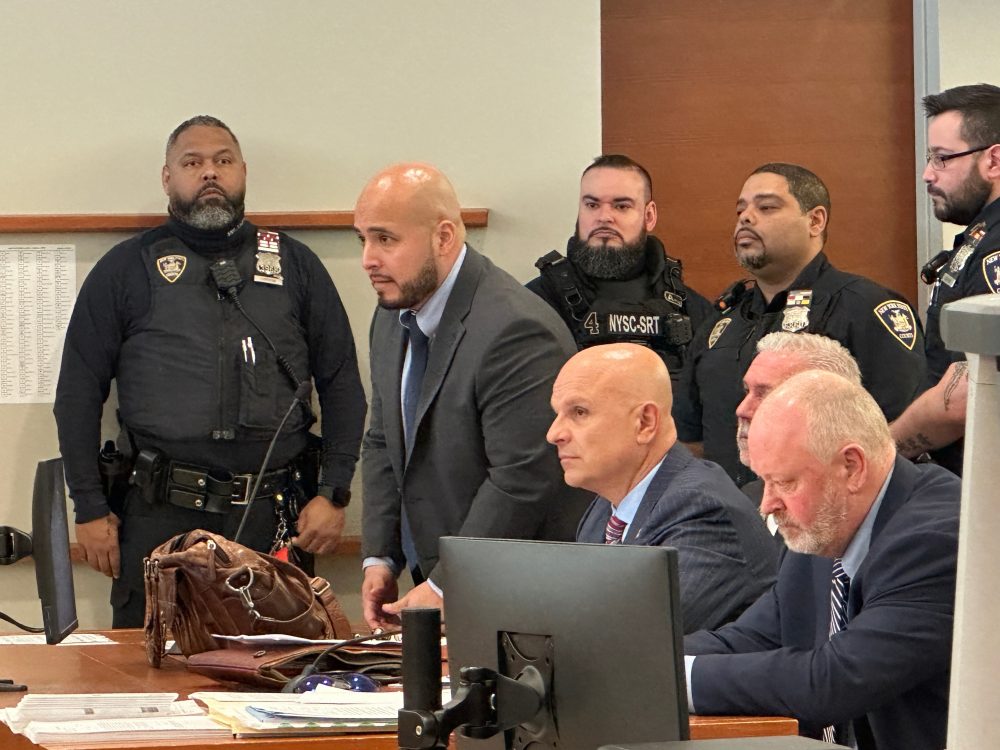
A former New York City police sergeant convicted of manslaughter will remain free while challenging his conviction in the death of a man who crashed his scooter after being struck by a thrown picnic cooler, an appeals court judge decided Friday.
Judge Saliann Scarpulla of the state’s Appellate Division granted the release of Erik Duran one week after he received a sentence of three to nine years behind bars for the 2023 death of 30-year-old Eric Duprey. The lower court had immediately jailed Duran following his sentencing.
Scarpulla set Duran’s release conditions at $300,000 in cash or bond and required him to give up his passport to his attorneys, who must hold it throughout the appeals process.
Vincent Vallelong, president of the Sergeants Benevolent Association representing Duran, called the decision “This is a major win for Erik and his family and for law enforcement officers around the country.”
However, Jon Roberts, representing Duprey’s family, expressed disappointment with the ruling, stating they were “deeply disappointed” by Scarpulla’s decision.
“While we respect the appellate process, this outcome reopens painful wounds for a family that has already endured an immense loss,” Roberts said. “Our focus remains on seeking accountability and ensuring that the seriousness of what occurred is never diminished.”
The 38-year-old Duran, who is married with three children, became the first former NYPD officer in at least twenty years to receive a prison sentence for a death that occurred while on duty. During sentencing proceedings, defense attorney Andrew Quinn noted that Duran will forever be remembered as “the cooler cop.”
Defense lawyer Arthur Aidala petitioned the Appellate Division after Judge Guy Mitchell denied bail following sentencing. Duran had been held at New York City’s Rikers Island jail complex for the past week.
According to Aidala, the appellate court’s decision to free Duran indicates the panel recognizes “legitimate appellate issues in Sgt Duran’s case” and confirms “he is not a flight risk nor a danger to the community.”
The incident occurred during a drug enforcement operation on August 23, 2023, when Duran was working with a narcotics unit conducting a “buy-and-bust” operation in the Bronx. According to police reports, Duprey had sold drugs to an undercover officer before attempting to escape on his scooter.
During his February trial testimony, Duran claimed he threw the ice-filled cooler at Duprey to protect fellow officers from harm.
The cooler hit Duprey, causing him to lose control of his scooter and collide with a tree before hitting the ground. Without wearing protective headgear, Duprey suffered fatal head trauma and died almost immediately, prosecutors stated.
The case has sparked intense debate between police reform advocates, who have dubbed Duran the “cooler killer,” and law enforcement supporters who argue that imprisoning him discourages officers from making necessary quick decisions in dangerous situations.
This week, the New York Islanders hockey team displayed a message on their arena’s video board encouraging fans to contribute to Duran’s legal defense fund. The display featured a QR code and messaging from the Sergeants Benevolent Association asking supporters to join “the fight for justice.”
Vallelong explained that the fundraising effort developed after a New York Post contact informed him the Islanders “wanted to do something” for Duran. The team also committed to donating 25% of their 50/50 raffle earnings to support Duran, the union reported.
Roberts criticized the Islanders’ involvement, saying the family was “deeply troubled” by the team’s decision to “align themselves, even symbolically, with efforts that appear to support Sgt. Duran’s legal defense.”
“This was not a neutral act,” Roberts said. “It sends a message — intended or not — that risks undermining public confidence in a fair legal process and deepens the pain of a family still grieving.”
A Massachusetts court has temporarily prevented a turbine company from abandoning a major offshore wind energy project, with the judge stating it would be unrealistic to expect another contractor to complete the complex work.
The legal battle began when GE Renewables announced it was ending its contracts for turbine services and maintenance at the Vineyard Wind project, prompting the wind farm developers to seek court intervention. The dispute centers around financial claims from both sides: GE Vernova, the parent company, claims Vineyard Wind owes $300 million for completed work, while the wind farm operators argue GE should pay approximately $545 million to cover damages from a major turbine blade failure in July 2024 that delayed the project by two years.
Suffolk County Superior Court Judge Peter Krupp sided with Vineyard Wind’s request to block the contract termination on Friday. The judge determined that GE owes significantly more money than what the developers have withheld to cover costs from the blade incident, which caused fiberglass debris to wash up on Nantucket beaches during peak tourist season.
“The project is at a critical phase and the loss of (Vineyard Wind)’s principal contractor would set the project back immeasurably,” Judge Krupp stated in his ruling. “To pretend that (Vineyard Wind) could go out and hire one or more contractors to finish the installation and troubleshoot and modify (GE Renewables’) proprietary design without (GE Renewables’) specialized knowledge is fanciful.”
Vineyard Wind spokesperson Craig Gilvarg expressed satisfaction with the outcome, saying “We are pleased with the decision, which ensures Vineyard Wind can continue delivering much needed energy to Massachusetts customers and the New England grid.”
GE Renewables defended its position in court documents, claiming it had the right to end the contracts and that its services were no longer needed. The company also argued that any damages experienced by Vineyard Wind were caused by the wind farm operators themselves.
“We stand by our compliance with contractual obligations and our performance, including recently completing installation of all 62 wind turbines at the Vineyard Wind Farm,” GE said in a Friday statement. “We remain engaged in supporting the safe operation of the project while we evaluate next steps.”
The wind farm is a partnership between Avangrid and Copenhagen Infrastructure Partners, positioned 15 miles south of Martha’s Vineyard and Nantucket in Massachusetts waters. Its 62 turbines are designed to produce 800 megawatts of electricity, sufficient to supply power to approximately 400,000 households.
The project reached completion in March, becoming the first offshore wind farm to finish construction during President Trump’s current term. The facility had been supplying electricity to the regional power grid for more than a year as individual turbines came online, and full operational capacity is anticipated within the next few months.
The Trump administration has criticized the project due to the blade malfunction, which GE Vernova attributed to inadequate bonding processes at one of its Canadian manufacturing facilities rather than a fundamental design problem.
This wind farm was among five major East Coast offshore wind developments that the Trump administration suspended just before Christmas, citing national security issues. Project developers and state governments filed lawsuits challenging the halt, and federal courts permitted all five projects to resume construction after determining the government failed to demonstrate an immediate national security threat requiring work stoppage.
Chicago Cubs pitcher Cade Horton underwent Tommy John surgery Thursday and faces an extended rehabilitation period of 15 to 16 months, according to the team’s Friday announcement.
The 24-year-old right-hander won’t be expected back on the mound until July or August 2027, a lengthier recovery period than typical because this marks his second elbow ligament reconstruction surgery. Horton previously had the same UCL repair procedure performed during his college career in 2021.
The Cubs placed Horton on the 15-day injured list April 5, just two days following his abbreviated appearance against Cleveland. He departed that road game after throwing only 17 pitches across one-plus innings.
Through his two starts this season, Horton posted a 1-0 record with a 2.45 earned run average.
Chicago selected Horton as their first-round draft choice in 2022, taking him seventh overall. Last season, he compiled an 11-4 record with a 2.67 ERA across 23 appearances, including 22 starts, and earned runner-up honors in National League Rookie of the Year balloting.
Two student-athletes from the University of Delaware women’s golf program have been honored with spots on Conference USA’s 2025-26 Women’s Golf All-Academic Teams, according to an announcement from the conference headquarters in Dallas.
Sophomore Kate Roberts secured a position on the first team, while junior Mary Grace Dunigan was named to the second team for the academic recognition program.
The Conference USA All-Academic Teams celebrate student-athletes who demonstrate excellence both in competition and in the classroom, highlighting their ability to balance the demands of collegiate athletics with academic achievement.
The latest federal agricultural report reveals that the number of cattle currently in feedlots across the United States has decreased by one percent compared to previous periods.
According to data released by the National Agricultural Statistics Service, the modest decline reflects ongoing trends within America’s cattle feeding operations.
The statistics provide insight into the current state of the nation’s livestock industry and feeding patterns at commercial operations nationwide.
America’s potato inventory has experienced a slight decline, dropping 1 percent from levels recorded on April 1, 2025, according to the latest report from the United States Department of Agriculture.
The federal agency’s National Agricultural Statistics Service released the updated figures, which track stored potato supplies across the country. The modest reduction reflects current market conditions and seasonal patterns in potato storage and distribution.
These inventory numbers are closely monitored by agricultural economists, food processors, and industry analysts as they provide insight into supply chain trends and potential pricing impacts for consumers.
Agricultural producers nationwide experienced a decline in peanut compensation during the week concluding April 11, according to federal agriculture data.
Growers received an average of 20.3 cents per pound for their farmer stock peanuts, marking a drop of 4.8 cents from the previous reporting period.
The pricing information reflects what farmers earned for their raw peanut crops before processing and distribution to retailers and manufacturers.
The National Weather Service office in Mount Holly, New Jersey has issued a coastal flooding alert that will remain active from Wednesday afternoon through the early morning hours of Friday.
The advisory went into effect at 3:00 PM on April 17th and is scheduled to continue until 2:00 AM on April 19th.
Residents in coastal communities should be prepared for potential flooding conditions during this timeframe and take appropriate precautions.
Motorists traveling on Route 1 should expect delays today as construction crews have shut down left lanes in both directions along a stretch of the Coastal Highway.
The Delaware Department of Transportation reports that left lane closures are currently in effect on both northbound and southbound Route 1 between Willow Creek Road and Best Lane.
According to DelDOT’s traffic incident reporting system, the lane restrictions are related to ongoing construction work in the area and are expected to remain in place until 3:00 PM this afternoon.
Drivers are advised to allow extra travel time and exercise caution when passing through the construction zone.
The National Weather Service office in Mount Holly, New Jersey has issued a coastal flood advisory that went into effect Wednesday afternoon at 3:00 PM and will remain active until 3:00 AM on Friday morning.
The advisory warns residents and visitors in coastal areas to prepare for potential flooding conditions during high tide cycles over the next day and a half.
Coastal flood advisories are typically issued when minor to moderate flooding is expected in low-lying areas near the shore, including roads, parking lots, and properties close to the waterline.
Residents in affected areas should avoid driving through flooded roadways and take necessary precautions to protect property that may be vulnerable to rising water levels.
Residents in New Castle County, Delaware and Salem County, New Jersey should prepare for minor coastal flooding late Saturday night into early Sunday morning. The National Weather Service has issued a Coastal Flood Advisory effective from 11 PM Saturday until 3 AM Sunday, warning of up to one foot of water inundation in low-lying areas near shorelines and tidal waterways.
The flooding is expected to impact the most vulnerable roads along tidal areas, with some partial or full road closures possible. Drivers should avoid parking vehicles in flood-prone locations and never attempt to drive through standing water, as it may be deeper than it appears.
“Minor tidal flooding often results in road closures, particularly on the most vulnerable roadways,” according to the weather service advisory. Officials warn that driving through flood waters puts both people and vehicles at risk of costly damage.
The advisory will remain in effect until 3 AM EDT Sunday morning. Residents can monitor current water levels and flood impact information at the National Water Prediction Service website. This is a developing weather situation, and TV Delmarva will continue monitoring conditions throughout the weekend.
Residents across the Delmarva Peninsula should prepare for minor coastal flooding this weekend as a Coastal Flood Advisory remains in effect from 8 PM Saturday through 2 AM Sunday.
The National Weather Service warns that up to one foot of water could inundate low-lying areas near shorelines and tidal waterways throughout southern Delaware, including Kent County, inland Sussex County, and Delaware’s beaches. Parts of southern New Jersey are also under the advisory.
The flooding will primarily impact the most vulnerable coastal and bayside roads, with some partial or full road closures expected. Inland tidal waterways may also experience flooding during this period.
Officials strongly urge drivers to avoid parking vehicles in flood-prone areas and never attempt to drive through standing water. “The water may be deeper than you think,” warns the Weather Service, noting that flood waters can cause dangerous conditions and costly vehicle damage.
This minor tidal flooding event is considered routine for coastal areas, but residents should remain cautious and avoid unnecessary travel through low-lying coastal roads during high tide periods.
The advisory expires at 2 AM Sunday morning. For the latest water level information, residents can visit the National Water Prediction Service website.
A traffic accident has resulted in the closure of the left southbound lane on DuPont Boulevard (Route 113) at Earth Chi Lane, according to Delaware Department of Transportation officials.
The crash is causing traffic delays for drivers traveling south on the major roadway. DelDOT crews are working to clear the scene and restore normal traffic flow.
Motorists are advised to use caution when traveling through the area and consider using alternate routes to avoid potential backups. The duration of the lane closure has not been specified.
This is a developing situation and updates will be provided as more information becomes available from transportation officials.
Las Vegas Raiders quarterback Fernando Mendoza appears destined to hear his name called first when the NFL Draft begins next Thursday, giving him the opportunity to develop under veteran Kirk Cousins before taking over as the franchise signal-caller.
The Heisman Trophy recipient, who guided Indiana to its inaugural national title, stands as the clear consensus choice for the opening selection. Rather than attending the draft ceremony in Pittsburgh, Mendoza has opted to mark the milestone moment surrounded by loved ones in Miami.
While the top selection seems settled, genuine uncertainty begins with the second overall choice. The New York Jets were widely anticipated to select Ohio State pass rusher Arvell Reese, but Texas Tech defensive end David Bailey has generated significant buzz in recent weeks.
The Associated Press has released its third mock draft projection ahead of Thursday’s selections:
Mendoza brings exceptional accuracy as a pocket quarterback, combining ideal physical dimensions with composure and leadership qualities. Las Vegas has assembled offensive weapons including Brock Bowers and Ashton Jeanty while investing over $250 million in free agency additions. Cousins provides veteran guidance in the quarterback room, while part-owner Tom Brady offers championship expertise. The Raiders haven’t captured a playoff victory since their Super Bowl appearance following the 2002 campaign and have qualified for postseason play just twice since then. Mendoza represents their hope for a cornerstone quarterback.
The projection maintains Reese as the Jets’ selection. His exceptional athleticism was showcased by a 4.47-second 40-yard dash time, and his versatility playing both linebacker and edge positions demonstrates his rare talent. Reese possesses the ability to become an elite pass rusher with immediate impact potential for New York.
Bailey represents another supremely athletic edge defender with tremendous upside potential. Arizona could explore trading down to accumulate additional draft capital or focus on offensive line improvements. Bailey would pair with Josh Sweat to create a formidable pass-rushing tandem.
Tennessee has been active in free agency, overhauling their secondary and adding defensive depth while bringing in wide receiver Wan’Dale Robinson as another target for Cam Ward. They face a difficult decision between Love and providing new head coach Robert Saleh with a defensive star like edge rusher Rueben Bain Jr. or linebacker Sonny Styles. If general manager Mike Borgonzi follows best available talent, Love emerges as the choice.
Styles’ outstanding combine showing has elevated him into numerous top-five projections. While protecting Jaxson Dart remains a priority for New York, making them candidates for the draft’s premier offensive lineman, Styles represents an exceptionally talented defensive prospect.
Tate excels as a reliable route runner with sure hands and sufficient speed to become a premier playmaker. Cleveland added three veteran offensive linemen but could still target tackle help. Tate provides them with a number one receiver option that’s difficult to overlook.
Delane stands as the draft’s top coverage cornerback. His addition would significantly strengthen a defense lacking depth in the secondary.
Bain offers versatility as a pass rusher capable of lining up outside or inside against guards, creating favorable matchups. He would become a valuable asset for New Orleans.
Mauigoa brings three years of starting experience at right tackle and would replace Jawaan Taylor while enhancing Patrick Mahomes’ protection. Adding a playmaking receiver or edge rusher also remains possible, but Mauigoa represents strong value at this position.
Downs is an elite, multi-faceted playmaker who would bolster a struggling defense that has limited Cincinnati in recent seasons. Downs possesses top-five talent but slides due to positional value considerations.
Following trades involving Jaylen Waddle and the release of Tyreek Hill, Miami must provide Malik Willis with a top receiving target. Lemon is an elite playmaker who creates difficult matchup problems for defenses from the slot position.
Mesidor is an older prospect at 25 but demonstrates clear talent on film. He generates outside pressure while remaining solid against the run, addressing priorities Jerry Jones emphasized after trading Micah Parsons.
An outstanding route runner with speed who makes catches in traffic. Los Angeles showed interest in high-profile receivers, so selecting Tyson would upgrade a dynamic group featuring All-Pro Puka Nacua and Davante Adams.
Ioane addresses a significant need for Baltimore along their interior offensive line while fitting their run-blocking system perfectly.
Scouts praise Faulk’s leadership qualities alongside his obvious talent. Tampa Bay needs an impact pass rusher, and Faulk fits general manager Jason Licht’s character standards. Trading down for additional selections also remains possible.
Boston combines strength, speed, and elite ball skills. His frame at 6-foot-4, 212 pounds matches receivers that new offensive coordinator Frank Reich has utilized in his system. The Jets could trade down while still landing Boston or Omar Cooper Jr. and accumulating more picks.
Proctor began starting at left tackle as a freshman and surrendered only two sacks across three seasons. His impressive size at 6-foot-7, 352 pounds comes with considerable athleticism. Proctor even contributed five rushing attempts for 16 yards.
Thieneman impressed at the combine with a 4.36-second 40-yard dash that exceeded some of the NFL’s top receivers. As a three-year starter, he would immediately contribute to Brian Flores’ defense.
Carolina improved their defense through free agency by acquiring edge rusher Jaelan Phillips and linebacker Devin Lloyd. If Sadiq remains available, they would land the draft’s best tight end, providing Bryce Young with a potential primary target.
McCoy is a reliable cornerback with exceptional ball skills frequently projected to Dallas at the 12th selection. The Cowboys would acquire a defensive back capable of anchoring their secondary.
Freeling possesses elite athleticism and is considered a potential top-10 selection. He requires additional experience after starting just one season on the right side. Freeling has the athletic ability to adjust to a new position.
Woods is a powerful, versatile defensive lineman who embodies the type of player coach Jim Harbaugh wants on defense.
Miller started 54 collegiate games and can contribute immediately if Philadelphia needs him. He provides an eventual replacement for right tackle Lane Johnson.
Parker’s production declined after strong 2024 numbers, but he’s a strong, powerful edge defender with flourishing potential. His selection would make three consecutive Clemson players in this projection.
Chicago lost several secondary starters, making a defensive back addition possible, but a strong pass rusher also provides significant help. Young is a disruptive force who brings energy and leadership.
Despite acquiring D.J. Moore, another playmaking receiver remains an option. Edge rusher also ranks as a priority, and Howell has demonstrated his ability to reach quarterbacks and finish plays.
Concepcion is a speedy, elusive receiver who would give Brock Purdy and San Francisco another top target and offensive playmaker. Despite signing Mike Evans in free agency, the 49ers cannot pass up a confident player who has already declared himself the draft’s best receiver.
McDonald represents another Buckeyes player entering the first round. He’s a natural run defender who will occupy the middle of the defensive line.
After providing Mahomes with a blocker at the ninth pick, Kansas City adds a potential top target late in the round. Cooper is a versatile playmaker known for generating yards after catches.
Terrell is an athletic cornerback projected higher in the draft. Alabama quarterback Ty Simpson is possible if still available, but Miami signed Malik Willis.
Iheanachor is an athletic former basketball player with ideal size who needs development time but projects as a potential immediate starter.
Price replaces the departed Super Bowl MVP and provides Seattle with a natural runner in the backfield. With Kenneth Walker III gone and Zach Charbonnet recovering from knee injury, Price fills a need. Seattle could trade out of the first round, add more picks, and potentially acquire Price early in the second round.
BEIRUT (AP) — A temporary ceasefire between Israel and Lebanon’s Hezbollah militant group began Friday, bringing much-needed calm to both nations and potentially creating an opportunity for Iran and the United States to negotiate an end to the broader regional conflict.
The cessation of hostilities appears to have prompted Iran to reopen the Strait of Hormuz, helping to alleviate the worldwide energy crisis. However, significant hurdles persist, as Hezbollah has not officially endorsed the ceasefire and is demanding Israeli withdrawal. Meanwhile, Israel maintains it has not completed its mission to dismantle the Iranian-supported militant organization and has declared intentions to control portions of southern Lebanon.
The temporary 10-day halt in fighting seemed largely stable during its initial day, with thousands of Lebanese citizens returning to their southern homes. Hezbollah had fired rockets at Israel in early March, just two days following the commencement of the U.S.-Israeli military campaign against Iran. Israel responded with intensive bombing campaigns and ground forces.
Here’s an examination of the ceasefire agreement.
President Donald Trump revealed the ceasefire Thursday, characterizing it as an arrangement between Israel and Lebanon, whose government had been mostly excluded from the conflict. Israel has consistently criticized Lebanon for not disarming Hezbollah according to prior agreements and the government’s own strategy.
The State Department released the agreement’s text and called it an Israeli gesture “to enable good-faith negotiations” toward lasting peace with Lebanon. Officials said the 10-day pause could be extended through mutual consent if discussions advance and “Lebanon effectively demonstrates its ability to assert its sovereignty.”
The deal requires the Lebanese government to stop Hezbollah and other armed factions from launching attacks on Israel, similar to the ceasefire that ended the previous Israel-Hezbollah conflict in November 2024.
The 2024 deal specified that both nations would retain “self defense” rights, without providing details. Israel continued frequent strikes against what it claimed were militant positions, often resulting in civilian casualties, while Hezbollah refrained from retaliation until last month.
According to U.S. officials, the current agreement grants Israel the “right to take all necessary measures in self-defense, at any time, against planned, imminent, or ongoing attacks.” No comparable rights are specified for Lebanon or Hezbollah.
Prime Minister Benjamin Netanyahu stated Israel accepted the ceasefire following Trump’s request but emphasized being “not finished yet” with Hezbollah. Israeli officials announced plans to control a 10-kilometer (6-mile) buffer zone in southern Lebanon and prevent civilian returns until eliminating all threats.
Facing elections this year, Netanyahu confronts increasing pressure to demonstrate victory over Israel’s adversaries in conflicts triggered by Hamas’ October 7, 2023, Gaza attack — which occurred during his leadership.
Israel and the United States seek Lebanese authorities to disarm Hezbollah, using force if required. While Beirut had made substantial progress asserting control over southern Lebanon before the war, officials remain reluctant to risk civil war by fully confronting the heavily armed group.
Lebanese President Joseph Aoun stated his goal is to “secure the withdrawal of Israeli forces from the occupied southern territories” and establish Lebanese army control over border regions.
Hezbollah announced it would respect the ceasefire provided it remains “comprehensive across all Lebanese territories, including border areas, and includes a full halt to hostilities and restrictions on the enemy’s freedom of movement, serving as a prelude to Israeli withdrawal.”
The statement suggested Hezbollah might resume rocket attacks if Israel continues targeting it and maintains presence in southern Lebanon.
On Truth Social, Trump declared Israel is now “PROHIBITED” by the U.S. from bombing Lebanon, representing an unusually direct assertion of American authority over an ally. The U.S. has described the truce as resulting from direct Israeli-Lebanese negotiations in Washington — the first such talks in decades.
Iran and Hezbollah claim the agreement actually stems from broader Tehran-Washington negotiations and resulted from Iranian pressure.
Mohsen Rezaei, a military adviser to Iran’s supreme leader, posted on X that “while the Lebanese government and Trump are attempting to claim this ceasefire as their own initiative,” it was “the resistance of Hezbollah’s fighters and Iran’s multifaceted pressures” that created the truce.
Hassan Fadlallah, a Hezbollah parliamentary bloc member, told reporters Friday that Iran had notified Hezbollah leadership about the ceasefire agreement early Thursday, well before Trump’s announcement.
Iran and mediator Pakistan had claimed Lebanon was included in broader ceasefire negotiations with the U.S. earlier this month. Both the U.S. and Israel denied this, with Israel launching massive Beirut bombardments after those talks concluded.
Two Pakistani officials confirmed to The Associated Press Friday that Pakistan helped secure the Lebanese ceasefire. They requested anonymity to discuss private negotiations.
Lebanon’s government opposed the war from its start and sought to end it but lacked influence over Hezbollah. Instead, Iran took the lead, which many Lebanese view as another violation of their sovereignty.
During Friday remarks, Aoun thanked the U.S. and Arab nations, including Saudi Arabia, for ceasefire efforts. He did not acknowledge Iran.
Tehran apparently leveraged its Strait of Hormuz control and Trump’s desire to end an increasingly unpopular and economically damaging war to stop Israel’s campaign against its proxy.
As the Lebanese ceasefire began, both Trump and Iranian Foreign Minister Abbas Araghchi announced the strait’s reopening, something the U.S. couldn’t achieve through weeks of intensive bombing and destroying much of Iran’s naval fleet.
Araghchi explicitly connected the development to the Lebanese ceasefire.
A source familiar with ongoing discussions confirmed to The Associated Press that the family of deceased San Diego Padres owner Peter Seidler is approaching completion of the team’s sale.
The individual requested anonymity due to the organization’s decision not to publicly discuss the transaction process.
According to initial reporting by The Wall Street Journal, the pending agreement involves private equity magnate Jose E. Feliciano and his spouse, Kwanza Jones. The franchise is anticipated to fetch $3.9 billion, establishing a new benchmark for Major League Baseball team valuations and significantly exceeding the roughly $2.4 billion Steven Cohen spent acquiring the New York Mets in 2020.
Feliciano, age 53, serves as co-founder and managing partner of Santa Monica, California-based Clearlake Capital, a private equity company. His firm participated in the investment consortium that acquired Premier League soccer club Chelsea in 2022, with Los Angeles Dodgers minority stakeholder Todd Boehly assuming the role of Blues chairman.
The Seidler family initiated discussions about divesting the Padres this past November, marking two years since beloved owner Peter Seidler’s passing. His sibling, John Seidler, has occupied the chairman position during the interim period.
Peter Seidler joined an ownership group that acquired the Padres in 2012, eventually becoming the franchise’s controlling owner in 2020. He captivated San Diego baseball enthusiasts through his willingness to invest heavily in pursuit of the organization’s inaugural World Series championship, while general manager A.J. Preller assembled competitive rosters that secured playoff berths in four of the previous six campaigns — an unprecedented achievement in franchise history.
The substantial asking price for the Padres stems from their status as San Diego’s sole representative among North America’s four premier professional sports leagues, cultivating devoted supporters who pack the scenic downtown Petco Park facility. The organization has established new attendance benchmarks during each of the last three seasons, culminating in last year’s remarkable total of 3,437,201 spectators — ranking second nationally behind only the Dodgers, who benefit from their considerably larger venue in Chavez Ravine.
Born and raised in Puerto Rico, Feliciano pursued his education at Princeton and Stanford universities before establishing Clearlake Capital two decades ago.
Federal authorities say a former University of Alabama football player orchestrated an elaborate disguise scheme to steal the identities of NFL athletes and secure millions in fraudulent loans.
According to a criminal complaint filed by Atlanta federal prosecutors, Luther Davis donned wigs and makeup to pose as professional football players during video conference calls with lenders. In one instance during early 2024, Davis allegedly used cosmetics and a hairpiece while calling from an upscale Atlanta-area hotel to secure a $4 million loan.
The charging documents reveal Davis successfully deceived investors into believing they were lending money to legitimate NFL players. Federal officials say Davis continued the deception through March and July, using different disguises including wigs and a do-rag-style head covering to impersonate two additional professional athletes during separate video calls.
Prosecutors have not disclosed exactly how the disguises enabled Davis to convincingly portray the three different players, and the complaint identifies the NFL athletes only by their initials.
Both Davis and alleged co-conspirator CJ Evins face charges of conspiracy to commit wire fraud and aggravated identity theft. While both entered not guilty pleas in March, court documents show they are scheduled to change their pleas to guilty during an April 27 hearing.
Attempts to reach Davis’s lawyer Gabe Banks and Evins’s attorney Benjamin Alper for comment were unsuccessful.
The charging documents state that none of the impersonated NFL players had given Davis and Evins permission to obtain loans in their names. Beyond the video call disguises, prosecutors allege Davis created counterfeit driver’s licenses using photographs of the players found on the internet.
The fraudulent operation netted approximately $20 million through at least 13 bogus loans, which the defendants allegedly spent on real estate purchases, jewelry, and vehicles, according to federal authorities.
Davis was part of Alabama’s 2010 national championship team during his time with the Crimson Tide.
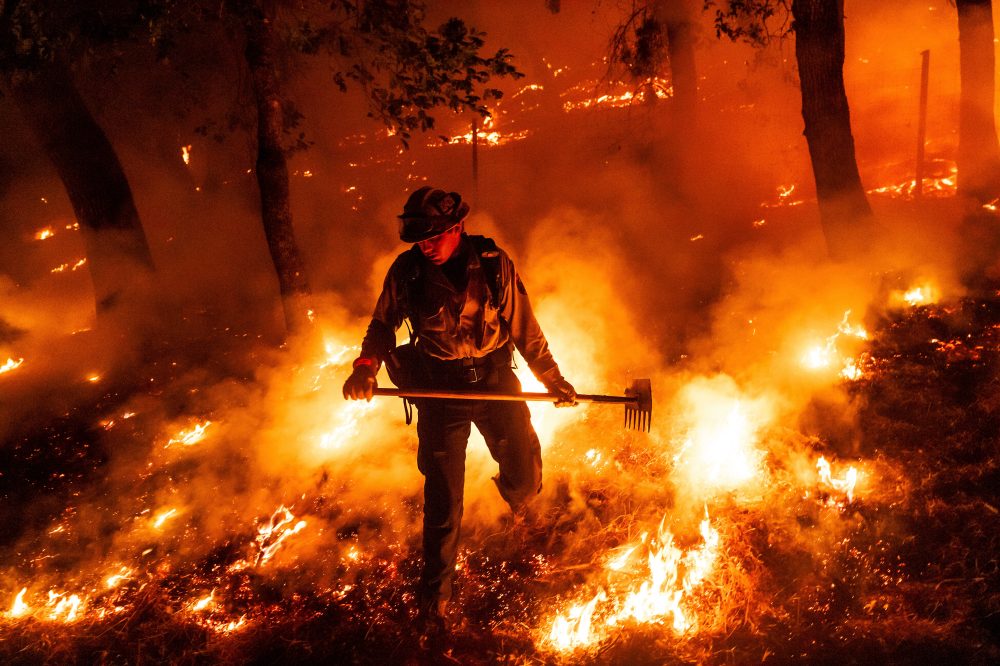
A groundbreaking study shows that wildfires across North America are now burning far longer each day than they did decades ago, with flames staying active through nighttime hours when they previously would have subsided.
Research published Friday in Science Advances reveals that weather conditions favorable to wildfire activity now last 36% longer than they did five decades ago. This dramatic change means fires that once naturally slowed or stopped during cooler evening hours are now burning continuously.
California experiences approximately 550 additional hours of fire-prone weather annually compared to the mid-1970s. The most dramatic increases occur in southwestern New Mexico and central Arizona, where conditions suitable for wildfire activity have expanded by up to 2,000 hours per year.
Recent devastating blazes that burned aggressively during nighttime hours include the 2023 Lahaina fire in Hawaii, which started at 12:22 a.m., the 2024 Jasper fire in Alberta, and the current Los Angeles fires, according to researchers.
The extended burning window affects more than just daily hours. Fire-prone weather days have increased by 44%, effectively adding 26 additional high-risk days each year over the past half-century.
“Fires normally slow down during the night, or they just stop,” explained study co-author Xianli Wang from the Canadian Forest Service. “But under extreme fire hazard conditions, fire actually burns through the night or later into the night.”
Wang warned that Earth’s warming climate will likely worsen these conditions in the future.
University of California Merced fire scientist John Abatzoglou, who did not participate in the research, noted that fires maintaining their intensity overnight gain momentum for the following day, making suppression efforts significantly more challenging.
“Nights aren’t what they used to be — that is, more reliable breaks for wildfire,” Abatzoglou stated. “Widespread warming and lack of humidity is keeping fires up at night.”
Fighting fires during darkness presents unique dangers, according to wildland firefighter Nicholai Allen, who also operates a company producing home fire prevention equipment.
“You have to understand that you have snakes and bears and mountain lions and all the stuff you have in daytime,” Allen explained, mentioning that a colleague was attacked by a bear. “But at night, they’re really scared and they’re running away from the fire.”
Canadian researchers examined nearly 9,000 major fires between 2017 and 2023, using weather satellites and additional instruments to track hourly atmospheric data including humidity, temperature, wind patterns, precipitation, and fuel moisture content. They developed a computer model linking weather patterns to fire behavior and applied it to historical information from Canada and the United States spanning 1975 to 2106.
Climate scientists have long understood that heat-trapping emissions from burning fossil fuels cause nighttime temperatures to rise more rapidly than daytime temperatures due to increased cloud cover that traps and redirects heat back to Earth’s surface. Since 1975, summer nighttime minimum temperatures in the continental United States have risen 2.6 degrees Fahrenheit, while daytime maximums have increased 2.2 degrees, according to the National Oceanic and Atmospheric Administration.
Nighttime humidity levels no longer recover from daytime dryness as they historically did, said lead researcher Kaiwei Luo from the University of Alberta.
Wildfires frequently occur alongside drought conditions, particularly severe droughts, creating not only drier air but hotter, drier air that extracts additional moisture from soil and vegetation, making fire fuel more combustible, Wang noted. During drought periods, a destructive cycle develops where increasingly dry conditions allow the warmer atmosphere to draw even more moisture from potential fuel sources.
Similar to how warmer nights during heat waves prevent human bodies from recovering, these elevated nighttime temperatures prevent forests from recuperating, Wang observed. Dead vegetation can require weeks to regain lost moisture and become less fire-prone.
“It’s just a stress to the plants,” Wang said. “That also increases fuel load and make fire-burning more easily.”
Between 2016 and 2025, American wildfires burned an average area equivalent to Massachusetts annually, covering slightly more than 11,000 square miles. This represents 2.6 times the average burned area during the 1980s, based on National Interagency Fire Center data. Canada’s average burned acreage over the past decade is 2.8 times greater than during the 1980s, according to the Canadian Interagency Forest Fire Centre.
Syracuse University fire scientist Jacob Bendix, who was not involved in the study, described the research as a stark warning about climate change’s impact in driving “increased fire potential across almost all of the fire-prone environments of North America.”
BRIDGEPORT, W.Va. — As evening approaches, Bridgeport High School sophomore Becky Pepper-Jackson steps into the throwing circle, blocks out surrounding noise, and launches her discus into the fading daylight.
Her approach remains straightforward. Whether she’s working to surpass her third-place showing from West Virginia’s state track championship last year or dismissing critics who oppose transgender girls participating in female athletics, the student-athlete simply wants to spend time with her teammates.
She pushes aside everything else that could distract her. Right now, that includes avoiding thoughts about the upcoming U.S. Supreme Court decision expected this summer in a landmark case where she plays a central role regarding transgender girls’ participation in sports.
“I’m not here to get an advantage,” Pepper-Jackson said. “I’ve been like pushed down and have people that just look at me nasty my whole life. And I’ve learned that that’s just something I’m going to have to deal with.”
Pepper-Jackson made headlines in 2021 when she legally contested West Virginia’s recently enacted legislation prohibiting transgender students from participating in female athletics across middle schools, high schools, and universities. The nation’s highest court permitted her continued participation in middle school competition in 2023 as legal proceedings moved forward.
She has since advanced to high school, and her case approaches its conclusion. During January proceedings, the Supreme Court’s conservative members, who have consistently decided against transgender rights in recent rulings, indicated they would likely determine that state prohibitions don’t breach constitutional protections or Title IX, the federal statute preventing sex-based educational discrimination.
The court also considered arguments in a related Idaho case, where Lindsay Hecox challenged her state’s pioneering ban while seeking opportunities to try out for Boise State University’s women’s track and cross-country programs. She ultimately didn’t qualify for either team.
Throughout West Virginia, Pepper-Jackson remains the sole transgender individual who has requested to participate in girls’ athletics. Should the court validate state prohibitions, her ongoing track season would mark her final competition. She avoids dwelling on this possibility.
“I can’t make their decisions for them, so I just have to wait and see what they’ll say,” she said. “I try not to look at it if this could be my last season.”
West Virginia Attorney General JB McCuskey expressed confidence in his state’s position.
“West Virginia’s law does not exclude anyone; it simply says biological boys will compete against boys, and biological girls will compete against girls,” McCuskey said in a statement. “On the athletic field, biological sex matters — gender identity does not.”
Pepper-Jackson began living openly as a girl at age 8, though she expressed this identity much earlier within her family.
Her mother, Heather Jackson, recognized that Becky differed from her two older brothers.
“I noticed immediately that Becky was different,” Jackson said. “When she was old enough to say what she wanted, toys or clothing or anything, she was very profound in her opinion.”
Early signs included requesting and receiving a makeup set for Christmas at age 3. She also began using her mother’s shirts as makeshift dresses.
“She would be very opinionated on what she wanted to wear,” Jackson said. “I just followed her lead from the very beginning.”
When puberty began, Pepper-Jackson began taking hormone-blocking treatments.
“Becky did not undergo male puberty,” said Aubrey Sparks, legal director for the American Civil Liberties Union’s West Virginia chapter. “And so when you hear, ‘Well, this is unfair. Trans kids have an advantage.’ That’s just not the case here.”
During sixth grade, Pepper-Jackson followed her girls’ track coach’s recommendation to transition from competitive distance events to field competitions. Last year as a freshman, she earned third place in discus and eighth in shot put at the state championship.
Opposition has consistently shadowed her career, including from Republican Governor Patrick Morrisey.
During 2024, five competitors from an opposing school declined to participate against Pepper-Jackson. These athletes later received enthusiastic applause at a Charleston press conference, where Morrisey, serving as attorney general at the time, declared the state’s intention to contest a federal appeals court decision supporting Pepper-Jackson.
At the 2025 state championship, a female sprinter celebrated her victory on the podium while wearing a shirt declaring, “Men don’t belong in women’s sports.”
This season has proceeded more peacefully. Pepper-Jackson has claimed first place in both discus and shot put during her initial two competitions and has supported teammates in their various events.
“There’s a lot of core lessons you learn from being in sports that you don’t get anywhere else, like teamwork, sportsmanship,” she said.
Beyond athletics, she intends to study music in college and eventually become a band director.
Pepper-Jackson has followed the achievements of other transgender girls who have succeeded in high school track nationwide.
AB Hernandez captured gold medals in girls’ high jump and triple jump at California’s state high school championship last year. Hernandez currently attends Jurupa Valley High School as a senior. Verónica Garcia claimed consecutive 400-meter championships in Washington state during 2024 and 2025, while Ada Gallagher won the 200-meter race at Oregon’s state meet in 2024.
“I think it’s very inspiring,” Pepper-Jackson said.
Hernandez’s achievements reignited demands from certain parent organizations and conservatives, including President Donald Trump, for California to prohibit transgender girls from competing against other female athletes. California maintains legislation allowing students to join sports teams matching their gender identity, regardless of birth-assigned sex.
When Hernandez earned qualification in three events last year, the resulting controversy prompted the meet’s organizing body to permit an additional girl to compete and earn medals in Hernandez’s events. This accommodation may represent the nation’s first such rule modification.
Pepper-Jackson’s strongest advocate remains her mother. Following a recent practice session, the two danced together, and Heather Jackson moved across the field to collect discuses after her daughter’s throws.
Jackson praised how her daughter has managed the attention and examination surrounding her case “with astounding grace and intelligence and education, which is more than I would have been able to do at that age.”
Pepper-Jackson mentioned that others have expressed admiration for her, though she struggles to understand why because “I don’t see the gravity of this court case. I think it’s just common knowledge: Transgender girls should be able to be on the girls’ sports team. I think that’s simple.”
SIOUX CITY, Iowa — Boxing legend George Foreman has been laid to rest in an Iowa cemetery, far from his Texas roots, after a single visit to the area nearly four decades ago left a lasting impression on the champion.
The former heavyweight titleholder passed away on March 21, 2025, at 76 years old in Houston. A month following his death, he was interred at Logan Park Cemetery in Sioux City, Iowa, according to city representatives. On Thursday, Foreman’s relatives gathered at the gravesite alongside Sioux City Mayor Bob Scott for a press conference, unveiling the burial location marked by an impressive monument featuring his image as a young Olympic gold medalist.
According to a statement from city officials, Foreman’s family shared that he had traveled to the Iowa community in 1988 and frequently remembered the tranquility he felt during that stay.
When the family arrived on April 17 of last year to inter Foreman, they said they quickly grasped why the area had such an impact on him.
“Our father lived a life of purpose, faith and gratitude,” the family said in a statement released by Sioux City officials. “To see him laid to rest in a place that brought him peace means everything to us.”
Scott stood with family members beside Foreman’s memorial, located several miles north of the Missouri River in the upper Midwest community of approximately 87,000 residents. The burial ground provides views of the striking Loess Hills, formed by wind-carried sediment deposits rising as high as 200 feet and extending along the Iowa riverfront for 200 miles.
“Their story is a reminder of how one place can stay with someone for a lifetime,” Scott said.
Born in Texas, Foreman gained national attention after earning a spot on the 1968 U.S. Olympic boxing squad and capturing gold in Mexico City. He claimed the world heavyweight title in 1973 by beating Joe Frazier, but lost the belt the following year to Muhammad Ali in the legendary “Rumble in the Jungle.”
Two decades later in 1994, Foreman made history by becoming the oldest heavyweight champion at age 45, stunning Michael Moorer in a remarkable comeback victory.
Foreman hung up his gloves in 1997 with a professional record of 76 wins and 5 losses.
Following his boxing career, he transitioned into business ventures, endorsements and occasional acting roles, gaining recognition among younger audiences through the George Foreman Grill. The compact cooking device generated sales exceeding 100 million units and earned him greater financial success than his fighting career.
A film chronicling Foreman’s life story premiered in 2023.
The Ocean City Maryland Hospitality Association announced that the popular annual Restaurant Week celebration will take place from April 26 through May 9, offering food enthusiasts a chance to explore the coastal city’s varied dining landscape.
This year’s two-week culinary showcase will feature participating eateries presenting specially crafted fixed-price menus designed to highlight the creativity and value found throughout Ocean City’s restaurant community.
The extended promotion provides both residents and tourists an opportunity to sample diverse cuisines while taking advantage of exclusive dining deals across the resort destination.
A recent article from the United Soybean Board discussing soybean planting information was unable to be retrieved due to technical difficulties with the source website.
The piece, originally titled ‘Beyond the Bean – Planting Edition,’ was published on the United Soybean Board’s website but only shows loading elements and attribution links rather than the full article content.
The United Soybean Board typically provides educational content and resources for farmers and industry professionals regarding soybean cultivation, market information, and agricultural best practices.
After sitting out last year’s playoffs due to injury, NBA veteran Kevin Durant is making his postseason comeback with the Houston Rockets as they prepare to take on the Los Angeles Lakers in their opening playoff series Saturday evening.
“I’m grateful to be here healthy with a team that’s looking forward to trying to do some big things,” Durant expressed. “(What) a difference a year can make and I’m just grateful to be back in this position. I don’t want to take any moment for granted.”
Following a major summer trade that brought him from Phoenix to Houston, the seasoned forward is guiding a youthful Rockets squad into playoff territory for their initial matchup against Los Angeles.
Last season proved challenging for the 37-year-old athlete, who sat out the final seven regular season contests due to an ankle problem while Phoenix struggled to a 1-6 record, ultimately missing playoff qualification.
This year tells a different story, as Durant ranked second league-wide in playing time with 2,840 minutes despite entering his 19th NBA campaign.
His enthusiasm for extended postseason play remains evident.
“When you get on the court and you get a chance to be healthy you want go out there and take advantage of that opportunity,” Durant explained. “So, I’m looking forward to it.”
Durant paced Houston’s scoring this season with a 26-point average, establishing himself as the NBA’s oldest player ever to reach the 2,000-point milestone in a single season.
Head coach Ime Udoka praised Durant’s contributions since joining the team, emphasizing his consistent presence on the court.
“Just the availability on a night-to-night basis,” Udoka noted. “Being able to play this many games at this stage in his career and the efficiency that he does it with … just the fact that he’s durable and available with the injuries in his past, is very impressive.”
Houston seeks its first championship since capturing consecutive titles in 1994 and 1995. The franchise returns to playoff action for the second consecutive year after Golden State eliminated them in round one last season, marking their first postseason since 2020.
Durant brings an impressive resume as the league’s fifth all-time leading scorer, two-time champion, 16-time All-Star, and four-time Olympic gold winner. His championship experience provides valuable leadership for a starting unit where his four teammates have combined for just one previous playoff appearance each.
When asked about his motivation for pursuing another championship, Durant emphasized daily focus.
“Winning every day is the most important thing,” he stated. “Obviously the main objective is to win a title, but you can’t do that unless you take care of each day first.”
Young teammates have embraced Durant’s guidance throughout the season. Twenty-three-year-old Amen Thompson described modeling his approach after the veteran’s work ethic and physical preparation.
“He’s great and I want to be great,” Thompson shared. “We’ve got a lot of young guys that want to be great, so just having that as something to look at every day and just being teammates with him is good.”
Durant’s positive influence extends beyond physical preparation. Fellow 23-year-old Alperen Sengun credited the veteran with improving his mental approach to offensive struggles.
“I used to care a lot when I used to miss shots,” Sengun revealed. “But when I miss shots now, he’s already screaming in my ear: ‘It’s gonna come.’ So, he’s helped with a lot of things, but the big thing is confidence, especially confidence.”
Despite his mentoring role throughout the regular season, Durant plans to let experience be the teacher as playoffs begin.
“Nope,” he responded when asked about sharing playoff wisdom. “Just jump in the fire and let’s see what happens, man. We can all get advice and words of encouragement from everybody in our lives and it’s not going to be like actually being in that action.”
Durant expresses confidence in Houston’s readiness after finishing the regular season with nine victories in their final ten contests.
“It’s the biggest stage of basketball and there’s a lot that comes around the game, but at the end of the day, when that ball’s tipped up, it’s just basketball,” he concluded. “So, we all know how to play at this level, and we all know what it takes to win basketball games. We’ve just got to do that consistently.”
The Los Angeles Angels organization is grieving the loss of former outfielder Garret Anderson, who passed away at the age of 53, the team announced Friday morning. No details regarding the cause or location of his death were immediately released.
Anderson made his major league debut with the California Angels in 1994 and remained with the organization through 2008, spending most of his career patrolling left field. During his 15-year tenure with the franchise, he established himself as the team’s all-time leader in multiple offensive categories, including hits (2,368), games played (2,013), RBIs (1,292), total bases (3,743), extra-base hits (796), doubles (489), and grand slams (8).
Team owner Arte Moreno released a statement honoring the fallen star: “The Angels organization is mourning the loss of one of our franchise’s most beloved icons, Garret Anderson. Garret was a cornerstone of our organization throughout his 15 seasons, and his stoic presence in the outfield and our clubhouse elevated the Angels into an era of continued success, highlighted by the 2002 World Series championship. Garret will forever hold a special place in the hearts of Angels fans for his professionalism, class and loyalty throughout his career and beyond. His admiration and respect for the game was immeasurable.”
The team plans to honor Anderson’s memory throughout the upcoming season by wearing commemorative patches featuring his initials. A moment of silence will be observed Friday evening when the Angels face the San Diego Padres at home.
Throughout his career, Anderson earned three American League All-Star selections and received two Silver Slugger awards. His best MVP finish came when he placed fourth in AL voting. In 2003, he captured both the Home Run Derby title and All-Star Game MVP honors during the midsummer classic in Chicago.
Anderson’s 272 career home runs rank third in franchise history, trailing only current star Mike Trout and former slugger Tim Salmon. In runs scored, only Trout has surpassed Anderson’s total in team history.
The 2002 season marked Anderson’s finest campaign and the franchise’s greatest achievement. He posted a .306 batting average while leading the team with 123 RBIs as the Anaheim Angels captured 99 victories and secured a wild-card playoff spot. The club then embarked on a memorable postseason run, culminating in their lone World Series title after overcoming a 3-2 series deficit against Barry Bonds and the San Francisco Giants.
Anderson played a crucial role in that Fall Classic triumph, collecting nine hits in 32 at-bats while driving in six runs. His most memorable moment came in the decisive Game 7, when he delivered a three-run double in the third inning that broke a tie and helped secure the Angels’ 4-1 victory and championship.
Following his Angels career, Anderson spent his final seasons with the Atlanta Braves and Los Angeles Dodgers before retiring in 2011. The Angels inducted him into their Hall of Fame in 2016, and he continued his association with the organization as a television broadcaster for pregame and postgame programming over the past decade.
A Los Angeles native born on June 30, 1972, Anderson attended Granada Hills High School in the San Fernando Valley before the Angels selected him in the fourth round of the 1990 draft.
Anderson leaves behind his wife Teresa, daughters Brianne and Bailey, and son Garret “Trey” Anderson III.
Delaware transportation officials are warning drivers about major construction activities set to begin this weekend on northbound Interstate 95 in New Castle County.
DelDOT has scheduled a significant phase of roadwork to take place from Saturday evening, April 25th, continuing through Sunday, April 26th. The construction will create multiple traffic disruptions for motorists traveling north on the interstate.
The work timeline includes several key changes throughout the weekend. Starting at 6:00 PM on Saturday, crews will shut down Exit 5A, which provides access from northbound I-95 to Airport Road. Drivers needing to reach that destination will need to use Exit 5B as an alternate route.
Also beginning at 6:00 PM, construction workers will close the rightmost lane of northbound I-95 near Route 1. Two hours later, at 8:00 PM, the highway will be reduced to just three through lanes for northbound traffic.
The most significant impact will occur at 11:00 PM Saturday, when the stretch of northbound I-95 from Route 1 to the Airport Road exit will be narrowed to only one through lane.
Normal traffic conditions are expected to resume by 10:00 AM on Sunday, when all lanes and exit ramps will reopen to vehicles.
Transportation officials note that once the work is complete, drivers will notice a permanent change to the roadway configuration. The two leftmost lanes of northbound I-95 will remain separated from the three right lanes by a concrete barrier. Road markings will clearly indicate which routes drivers should take before reaching decision points.
Delaware Department of Transportation officials have temporarily shut down the right shoulder of northbound US Route 301 near Bunker Hill Road due to an ongoing controlled burn operation.
The shoulder closure affects traffic in that section of the highway and is scheduled to remain in effect until 4 PM today, according to DelDOT’s traffic incident reporting system.
Drivers traveling through the area should expect potential delays and use caution while the controlled burn activities continue. Motorists are advised to stay alert for emergency vehicles and work crews in the vicinity.
The New York Liberty have locked up their championship trio for the future, announcing Friday that Breanna Stewart, Sabrina Ionescu, and Jonquel Jones have all inked deals to remain with the franchise through the 2026 season.
The organization did not reveal the financial details of the contract extensions.
“This is an incredibly historic moment for the New York Liberty franchise,” Liberty general manager Jonathan Kolb said. “Re-signing Breanna, Jonquel and Sabrina reflects the trust, sacrifice and shared purpose that define what it means to represent the Liberty, this city and our fanbase. The three cornerstone players chose to invest in each other and the long-term legacy of this organization, a rare commitment that has the chance to redefine that standard of excellence across basketball.”
Both Stewart and Ionescu had previously indicated this month their intentions to return to New York, removing uncertainty about their status as free agents.
The 31-year-old Stewart, a forward, is preparing for her fourth campaign with the Liberty and her tenth year in the WNBA overall. She has claimed MVP honors twice – first with the Seattle Storm in 2018 and again with New York in 2023.
During the previous season, Stewart posted averages of 18.3 points, 6.5 rebounds and 3.5 assists across 31 contests while earning her seventh All-Star selection.
The veteran has captured three WNBA championships — two with Seattle in 2018 and 2020, plus last year’s title with New York — and holds career numbers of 20.5 points, 8.5 rebounds and 3.2 assists over 292 games, all as a starter.
Ionescu, 28, is set to begin her seventh professional season after spending her entire WNBA career in New York. Selected first overall in the 2020 draft, she has earned four All-Star nods.
The former Oregon standout contributed 18.2 points, 5.7 assists and 4.9 rebounds per game over 38 appearances last season.
Throughout her professional career, Ionescu has compiled averages of 16.7 points, 5.9 assists and 5.5 rebounds in 181 contests (177 as a starter) and captured one WNBA championship in 2024.
Jones, 32, contributed 13.6 points and 8.1 rebounds per contest across 31 starts last season. The 2021 WNBA MVP has career averages of 13.4 points and 8.4 rebounds over 306 games (259 starts) split between the Connecticut Sun and Liberty.
Canada’s flagship airline announced Friday it will halt flights to John F. Kennedy International Airport for almost five months this summer due to skyrocketing jet fuel expenses caused by the ongoing Iranian conflict.
The Montreal-headquartered carrier revealed that routes connecting Toronto and Montreal to JFK will be discontinued starting June 1, with service not resuming until October 25. However, flights to the New York area’s other major airports, LaGuardia and Newark, will remain operational.
The airline stated it plans to contact affected passengers to provide alternative travel arrangements.
“As jet fuel prices have doubled since the start of the Iran conflict and some lower profitability routes and flights are no longer economic, and we are making schedule adjustments accordingly,” a company representative explained Friday.
Industry data from Argus Media shows jet fuel prices hit $4.32 per gallon Thursday, a dramatic increase from $2.50 per gallon recorded the day before Iranian hostilities began.
Oil markets saw significant relief Friday, dropping over 10% after Iran announced the reopening of the Strait of Hormuz to commercial oil tankers transporting petroleum from the Persian Gulf to global markets.
Aviation fuel and workforce expenses represent airlines’ biggest annual operating costs. Delta Air Lines reported earlier this month that elevated fuel prices will increase their second-quarter expenses by $2 billion. Multiple carriers including JetBlue and United Airlines have implemented higher baggage fees to combat rising fuel expenses, while others are reducing flight schedules.
During an exclusive interview with the Associated Press Thursday, International Energy Agency Director Fatih Birol warned that Europe has “maybe six weeks” of jet fuel reserves remaining and characterized the situation as the world’s “largest energy crisis.”
The company that operates television shopping channels QVC and HSN has declared Chapter 11 bankruptcy protection as traditional home shopping networks face mounting challenges from modern digital competitors.
QVC Group submitted its bankruptcy petition to the U.S. Bankruptcy Court for the Southern District of Texas as these established TV retail giants find themselves losing customers to social media shopping on platforms like TikTok and online retailers such as Shein.
The bankruptcy filing excludes the company’s overseas operations, and executives emphasized they maintain more than $1 billion in available cash with sufficient resources to fulfill all business commitments.
According to QVC Group, all brand operations continue without interruption, including customer services in the United Kingdom, Germany, Japan, and Italy. The company pledged uninterrupted service to customers through all QVC, HSN, and Cornerstone Brands channels and platforms.
“Bankruptcy may allow the necessary restructuring to give QVC the room to operate with better financials. However, it does not solve the need to reinvent and become relevant,” said Neil Saunders, managing director of GlobalData, in a statement.
The company has been working to reverse declining revenues for several years, with 2024 sales dropping nearly 30% from their 2020 high of over $14 billion. Stock prices tell a similar story of decline, falling from more than $900 per share ten years ago to under $3 this week.
Company officials expect to complete the bankruptcy restructuring process within approximately 90 days.
Delaware’s soybean farmers stand to benefit from a major federal investment announced today, as three national soybean organizations received $14 million in new funding to expand global markets for American-grown soybeans.
The U.S. Department of Agriculture’s Foreign Agricultural Service awarded the funding through its newly created America First Trade Promotion Program to the American Soybean Association, U.S. Soybean Export Council, and World Initiative for Soy in Human Health.
These organizations plan to use the federal dollars to provide international buyers with technical assistance, market data, and other resources designed to increase their preference for American soybeans over competitors from other countries.
“This AFTPP funding is a welcome and especially timely opportunity coming just as new trade agreements are opening doors, and diversifying demand for U.S. Soy in international markets,” said Mike McCranie, who chairs the U.S. Soybean Export Council board and farms in South Dakota. “USSEC is eager to turn that momentum and this new investment into export sales and measurable returns for U.S. soybean farmers.”
Ohio farmer Scott Metzger, who leads the American Soybean Association, emphasized the importance of maintaining market share abroad. “For soybean farmers, demand is everything,” Metzger said. “This funding helps strengthen long-term market access and ensures U.S. Soy remains competitive in a global marketplace, keeping American farmers at the forefront of growing global demand.”
The funding will also support efforts in developing nations where protein sources remain limited, according to Morey Hill, an Iowa farmer who chairs the World Initiative for Soy in Human Health. “The AFTPP funding supports WISHH and U.S. Soy to capitalize on years of market development efforts in developing and emerging markets,” Hill said. “This funding will allow WISHH to launch new and innovative programs with partners who are eager to try U.S. Soy.”
The organizations outlined several key initiatives for the funding, including training programs for overseas food processors and feed manufacturers, support for local food processing businesses in protein-deficient regions, promotion of soy-based food products, and sustainability programs highlighting the environmental benefits of American soybean farming practices.
The America First Trade Promotion Program launched in 2025 as a tool to help American agriculture take advantage of new international market opportunities while maintaining existing trade relationships and expanding into new export destinations. The program works alongside other USDA export promotion efforts including the Market Access Program and Foreign Market Development program.
Motorists traveling on southbound Interstate 95 should expect significant delays after a traffic incident closed two right lanes just beyond the Delaware Route 141 exit.
According to the Delaware Department of Transportation, the crash has blocked the two rightmost lanes of traffic on I-95 South. DelDOT officials are monitoring the situation and working to clear the roadway.
Drivers are advised to use caution when approaching the area and consider alternate routes if possible. The incident is causing backups during what is typically a busy travel corridor through northern Delaware.
DelDOT has not yet provided an estimated time for when the lanes will reopen to traffic.
Revival Animal Health, based in Orange City, Iowa, has issued a voluntary recall of two puppy milk replacement products after discovering inconsistent vitamin D concentrations in their formulations.
The company is pulling Breeder’s Edge Foster Care Canine milk replacer and Shelter’s Choice Canine milk replacer from store shelves due to unpredictable vitamin D levels that range from dangerously high to inadequately low amounts.
The recall affects puppy milk substitute products that are typically used to feed orphaned or rejected newborn dogs when mother’s milk is unavailable.
Pet owners who have purchased these products are advised to discontinue use immediately and consult with their veterinarian if their puppies have consumed the recalled milk replacers.
JOHANNESBURG — The son of Zimbabwe’s former President Robert Mugabe successfully negotiated a plea agreement Friday that allowed him to dodge attempted murder charges in connection with a shooting incident in South Africa.
Bellarmine Chatunga Mugabe and co-defendant Tobias Mugabe Matonhodze have remained in custody since mid-February after being charged with attempted murder in the shooting of Sipho Mahlangu, identified by authorities as a household employee. Mahlangu required hospital treatment for his wounds.
The 28-year-old Mugabe, youngest child of the deceased Zimbabwean leader and his second spouse Grace Mugabe, entered guilty pleas to charges of brandishing what appeared to be a weapon in an unrelated matter and violating South African immigration statutes. Robert Mugabe passed away in 2019.
Matonhodze admitted guilt to five separate charges, including attempted murder, illegal firearm and ammunition possession, obstructing justice, and immigration violations.
Attorney Sinenhlanhla Mnguni, representing both defendants, explained to media gathered outside the courthouse that prosecutors and defense teams had reached a Section 112 plea agreement following the breakdown of earlier negotiations. This type of arrangement under South African criminal law eliminates the need for a complete trial.
Defense counsel Advocate Laurence Hodes requested leniency during sentencing, emphasizing that both cousins had clean criminal records, provided financial compensation to their victim, and possessed the means to pay court-imposed penalties.
A police investigator testifying as a witness revealed that law enforcement continues searching for the weapon used in the shooting and that the defendants, who “were there at that time when the firearm was fired and injured the victim,” have refused to cooperate with the investigation.
“The accused shows no remorse in assisting the police in any way to point out the firearm. They know where the firearm is,” Lt. Col. Raj Ramchunder testified before the court.
The judge accepted both guilty pleas and scheduled sentencing for April 24.
This case recalls a 2017 incident involving Grace Mugabe, who allegedly assaulted model Gabriella Engels with an extension cord at a Johannesburg hotel, causing a forehead laceration. The South African government granted her diplomatic immunity, sparking fierce criticism from opposition politicians and human rights advocates, enabling her departure despite prosecution demands.
NEWARK, N.J. — Soccer enthusiasts planning to attend World Cup matches this spring will face sticker shock beyond just ticket prices when traveling to certain U.S. venues.
Transportation authorities announced Friday that soccer fans traveling from New York City to MetLife Stadium will pay $150 for round-trip train service during each match.
The steep price represents nearly a twelve-fold increase from the standard $12.90 cost for the approximately 15-minute journey covering 9 miles from Penn Station in Manhattan to the East Rutherford, New Jersey venue. With stadium parking unavailable to most attendees, New Jersey authorities project roughly 40,000 spectators will rely on public transportation for each game.
MetLife Stadium, which serves as home field for both the New York Giants and New York Jets, will welcome eight World Cup contests, culminating with the championship match on July 19. Tournament group play featuring soccer giants Brazil, France, Germany and England, plus additional countries, kicks off June 13.
New Jersey Governor Mikie Sherrill defended the price hike as essential to prevent state commuters from being saddled with a “tab for years to come” as the World Cup returns to American soil for the first time since 1994.
NJ Transit leadership revealed that fan transportation throughout the tournament will require $62 million, with external funding covering just $14 million of projected costs.
“This isn’t price gouging,” declared NJ Transit President and CEO Kris Kolluri during Friday’s press briefing. “We’re literally trying to recoup our costs.”
Boston-area World Cup attendees will also encounter elevated transportation expenses.
Express bus service from multiple pickup points to Gillette Stadium, home to the New England Patriots, will run $95, authorities revealed this week.
Additionally, thousands of supporters have already purchased $80 round-trip rail passes from Boston to the commuter station serving the stadium. This rate quadruples the typical $20 charge for round-trip service during game days and special occasions. Unlike MetLife’s proximity to downtown, Gillette sits in Foxborough, roughly 30 miles south of Boston.
Several other World Cup host locations, including Los Angeles and Philadelphia, have committed to maintaining standard transit pricing, highlighting that federal authorities allocated approximately $100 million in transportation grants to host communities for enhanced bus and rail operations.
Kansas City operates shuttle service from various city locations to Arrowhead Stadium for just $15 round-trip, plus complimentary airport-to-downtown bus service. Houston, hosting seven World Cup matches, expanded its bus and rail capacity for fans while maintaining existing rates: $1.25 for buses and light rail, with park-and-ride options between $2 and $4.50.
However, New Jersey’s governor, a Democrat who assumed office in January, stated her administration inherited arrangements where FIFA, soccer’s international governing organization, provided “$0 for transportation” while leaving the state’s financially struggling transit system “stuck with a $48 million bill.”
“FIFA should pay for the rides. But if they don’t — I’m not going to let New Jersey get taken for one,” Sherrill wrote in a Wednesday social media message.
FIFA rejected these claims, emphasizing that 2018 agreements with World Cup host cities required complimentary fan transportation to all matches. The organization also noted that previous major events at MetLife weren’t required to fund fan transit.
“We are quite surprised by the NJ Governor’s approach today on fan transportation,” FIFA stated Thursday as news of the fare increase spread. “FIFA worked for years with host cities on transportation and mobility plans, including advocating for millions of dollars in federal funding to support host cities for transportation.”
The dramatic MetLife fare increase also prompted criticism from New York Governor Kathy Hochul.
“Charging over $100 for a short train ride sounds awfully high to me,” the Democrat wrote on X earlier this week.
Sports publication The Athletic initially reported the surge pricing.
Alternative transportation to MetLife Stadium games carries similarly steep costs. Limited parking spaces at the adjacent American Dream Mall are being pre-sold for $225.
A UPS freight aircraft was forced to execute an emergency maneuver at Louisville’s Muhammad Ali International Airport early Tuesday morning when a smaller aircraft unexpectedly entered the runway during its landing approach.
Air traffic control urgently shouted “Skylab 25, stop!” to the smaller aircraft before immediately directing the UPS jet to execute a go-around procedure, preventing what could have been a catastrophic collision at the major shipping hub. Audio recordings of the incident were made available through LiveATC.net.
The near-miss occurred at approximately 12:10 a.m. on Tuesday, with no injuries reported from either aircraft.
Following the cargo jet’s successful evasive action, the controller questioned “Skylab 25, what are you doing?”
The pilot of the small plane replied “Skylab 25, yeah, sorry about that.”
Federal Aviation Administration officials have launched an investigation into the incident.
This close call adds to a concerning pattern of similar aviation incidents occurring nationwide. Just days earlier, a Frontier Airlines aircraft nearly struck two ground vehicles that crossed its path while taxiing at Los Angeles International Airport. Another incident this week in Charlotte, North Carolina involved an American Airlines pilot who had to apply emergency brakes when a truck crossed a taxiway.
The Louisville airport was also the site of a tragic UPS crash last November, when a cargo plane went down after an engine separated during takeoff, resulting in 14 fatalities. The National Transportation Safety Board announced Thursday it will conduct investigative hearings beginning May 19 to examine the causes of that deadly accident.
Last month at New York’s LaGuardia Airport, an Air Canada aircraft collided with a fire truck that had received clearance to cross the runway just seconds before the plane’s landing, killing both pilots and injuring dozens of passengers.
The dental community and patients are honoring the memory of Dr. Cerina Fairfax, a dedicated mother and compassionate dentist who authorities say was fatally shot by her estranged husband, former Virginia Lieutenant Governor Justin Fairfax.
Authorities discovered both bodies in their Annandale, Virginia home early Thursday morning in what police believe was a murder-suicide. Investigators say Justin Fairfax shot his wife before turning the gun on himself. The couple was in the midst of divorce proceedings, and a judge had ordered Justin Fairfax to vacate the residence by month’s end.
Dr. Cerina Fairfax, age 49, operated a successful family dental practice in Fairfax, Virginia. Her professional profile described her as someone who enjoyed reading, traveling, yoga, trail running with her Vizsla dogs, and “spend time with her wonderful family.”
Virginia Representative Jennifer McClellan, who became acquainted with Fairfax during her husband’s political career, said the couple’s two teenage children were “the people she cherished most.”
“Cerina Fairfax was a loving and dedicated mother and the rock at the center of her large family,” McClellan stated.
Patient and friend Terron Sims II described her as a gentle and compassionate person whose dental work went beyond mere profession.
“It was an expression of love and compassion,” Sims told WUSA-TV. “It was her way of service to others.”
In 2015, the Virginia Commonwealth School of Dentistry honored Dr. Fairfax as the Outstanding Graduate of the Last Decade. Interim Dean Dr. Jeffrey Johnson expressed how deeply her death has affected those who knew her.
“As a clinician and alumna, Dr. Fairfax embodied the ideals of our profession — dedication to her patients, commitment to growth, and a deep sense of purpose in her work each day,” Johnson stated. “I know she was a mentor, role model, and friend to many in our school.”
State dental community leaders also commended her achievements and patient care.
“In addition to being a beloved practitioner in her community, Dr. Fairfax loved giving back through volunteer work and contributions to local charities focused on helping those in need,” stated Ryan Dunn, CEO of the Virginia Dental Association. “As we remember Dr. Fairfax, we honor the impact she made and the connections she helped build within the VDA and her community.”
The couple first met as Duke University students and wed in 2006.
Justin Fairfax lost his bid for the Democratic attorney general nomination in 2013 but secured the lieutenant governor position in 2017. His political career derailed when two women publicly accused him of sexual assault from years before his marriage to Cerina. He completed his term in 2022 after an unsuccessful gubernatorial campaign.
Court documents show Cerina Fairfax filed that they had been separated for almost two years. However, they continued sharing the family home with their children, who police confirmed were present during the incident.
The divorce judge had mandated that Justin Fairfax relocate by April’s end, noting “it is clear tensions in the Fairfax home have been extremely high for an extended period of time.”
If you or someone you know needs help, the national suicide and crisis lifeline is available by calling or texting 988. Online chat is also available at 988lifeline.org.
MEDIA, Pa. — While Judy Prichard McCleary holds faith that her family members’ spirits have moved on to heaven, she can’t shake the distress of learning that their final resting place was violated by a grave robber who targeted their family mausoleum.
McCleary discovered that five out of nine burial chambers in her family’s crypt were broken into, with the body of her great-great-great aunt among the stolen remains in a shocking crime spree that involved more than 100 bodies taken from Pennsylvania burial grounds.
“I believe their souls are in heaven. I still think it’s disruptive,” McCleary stated following Friday’s court proceeding where 34-year-old Jonathan Gerlach chose not to contest an evidentiary hearing. Gerlach faces approximately two dozen burglary charges plus numerous additional counts after investigators say he removed human remains from burial sites across multiple counties.
The disturbing case has drawn widespread media attention due to its shocking nature. While McCleary understands law enforcement has pressing matters involving the living, she and family members present at Friday’s hearing emphasized that crimes against the deceased still cause real harm to survivors. She’s pushing for legislative action to prevent online sales of human body parts, which authorities believe may have motivated these crimes.
“To be able to sell body parts on the internet, just appalls me. I think it should be stopped,” she stated.
Law enforcement took Gerlach into custody in January close to Mount Moriah Cemetery on Philadelphia’s outskirts. Officers reported seeing skeletal remains and skulls visible in his vehicle’s rear seat, which led to searches of his residence and a storage facility in Ephrata. Investigators discovered over 100 human skulls, preserved hands and feet, and other human remains.
Authorities also found personal items they believe came from the graves, including jewelry and a medical pacemaker that remained connected to human remains. Gerlach’s formal arraignment is scheduled for June 3, though his attorney declined comment and indicated his client likely won’t attend.
During Friday’s hearing, Gerlach remained jailed and appeared wearing glasses with his hair in a tight bun and a large neck tattoo, responding courteously to standard judicial questions.
Police arrested him in January as he returned to his vehicle from Mount Moriah Cemetery carrying a crowbar. Investigators found preserved remains of two young children, three skulls, and additional bones inside a burlap sack. Gerlach admitted to taking approximately 30 sets of human remains and guided investigators to the burial sites he had targeted, according to authorities.
Mount Moriah Cemetery, established in 1855, spans 160 acres along the Philadelphia-Yeadon border and contains roughly 150,000 burial sites.
The Prichard family built their mausoleum in the early 1900s under the direction of McCleary’s great-great-grandfather, Jonathan Prichard, an Irish immigrant who established a grocery business. Family stories claim he created the first paper bag, though no official patent exists to verify this family legend.
Before his own death, Prichard relocated the remains of two children who had died previously into the mausoleum, where he and other family members would eventually be laid to rest.
“It just made me sick to my stomach that anybody would want to do that,” McCleary said regarding the crimes. “I think the man needs help.”
Baseball lost one of its most respected players Thursday when Garret Anderson, the Los Angeles Angels’ all-time hits leader and World Series champion, passed away at his Newport Beach, California home. He was 53 years old.
The Angels organization announced Anderson’s death Friday but did not reveal the cause. TMZ reported that the former outfielder suffered a medical emergency at his residence.
“The Angels Organization is mourning the loss of one of our franchise’s most beloved icons, Garret Anderson,” team owner Arte Moreno stated. “Garret was a cornerstone of our organization throughout his 15 seasons and his stoic presence in the outfield and our clubhouse elevated the Angels into an era of continued success, highlighted by the 2002 World Series championship.”
Anderson delivered the most memorable hit in franchise history during Game 7 of the 2002 World Series against the San Francisco Giants. His three-run double in the third inning became the game-winning blow in the then-Anaheim Angels’ 4-1 victory, securing the organization’s only World Series title to date.
“Garret will forever hold a special place in the hearts of Angels fans for his professionalism, class, and loyalty throughout his career and beyond,” Moreno continued. “His admiration and respect for the game was immeasurable.”
Throughout his Angels career, Anderson established himself as the franchise’s offensive leader across multiple categories. He holds team records for hits (2,368), total bases (3,743), extra-base hits (796), doubles (489), RBIs (1,292) and games played (2,013). The outfielder compiled a .296 batting average with 272 home runs after the Angels selected him in the fourth round of the 1990 MLB Draft from John F. Kennedy High School in Granada Hills, California.
The Angels inducted Anderson into their Hall of Fame on August 20, 2016. The team announced players will wear memorial patches on their uniforms for the rest of the season to honor his memory.
“We extend our deepest condolences to Garret’s wife Teresa, daughters Brianne and Bailey, son Garret ‘Trey’ Anderson III, and his entire family,” Moreno said.
Anderson earned recognition as a two-time Silver Slugger Award winner and three-time All-Star during his career. He became a regular starter in Anaheim in 1995 and remained with the team for 14 seasons. His major league career concluded with single seasons playing for the Atlanta Braves in 2009 and the Los Angeles Dodgers in 2010.
Among Angels players, only current star Mike Trout, who joined the franchise in 2011, has spent more time wearing the team’s uniform than Anderson did during his tenure.
Investment firms made a massive $760 million wager against oil prices just 20 minutes before Iran’s foreign minister declared the Strait of Hormuz open to commercial vessels on Friday, marking another instance of suspiciously timed commodity trades during Middle East tensions.
The enormous bet has sparked fresh concerns among U.S. lawmakers and legal analysts that some traders may be gaining unfair advantages in volatile derivatives markets through advance knowledge of diplomatic and military decisions.
Market data from LSEG shows that between 12:24 and 12:25 GMT, investors dumped a combined 7,990 lots of Brent crude futures contracts. At prevailing prices, these transactions totaled approximately $760 million in value.
Twenty minutes later at 12:45 GMT, Iran’s foreign minister posted on social media platform X that commercial ship passage through the Strait of Hormuz would remain completely open during the ceasefire period, consistent with the Lebanon ceasefire agreement.
Oil prices plummeted as much as 11% within minutes of the announcement, generating substantial profits for those who had sold futures contracts shortly before.
This incident follows a pattern of well-timed oil trades preceding major Middle East developments. Reuters previously reported that approximately $950 million in bets occurred just hours before the U.S. and Iran announced a two-week ceasefire on April 7. Similarly, on March 23, investors sold $500 million worth of oil futures merely 15 minutes before President Donald Trump announced he would postpone attacks on Iran’s energy facilities, causing crude prices to drop 15%.
A source familiar with the matter revealed Wednesday that the U.S. Commodity Futures Trading Commission is actively investigating multiple oil futures transactions, including the March 23 and April 7 trades, that occurred shortly before Trump administration policy announcements regarding the Iran conflict.
The recurring pattern of large-scale oil trades immediately preceding major geopolitical announcements has heightened scrutiny of potential insider trading in commodity markets during times of international crisis.
A conflict involving Iran that has stretched nearly seven weeks has eliminated more than $50 billion worth of crude oil from global markets, creating what analysts describe as the largest energy supply disruption in modern times.
Since the crisis erupted in late February, approximately 500 million barrels of crude oil and condensate have been removed from worldwide production, according to data from Kpler. The economic impact of this massive supply shortage is expected to continue affecting global markets for months and potentially years ahead.
Iranian Foreign Minister Abbas Araqchi announced Friday that the Strait of Hormuz remained operational following a ceasefire agreement reached in Lebanon. Meanwhile, U.S. President Donald Trump expressed optimism that a resolution to end the Iran conflict would arrive “soon,” though he provided no specific timeline.
To put the scale of this oil shortage into perspective, the 500 million missing barrels would be equivalent to several dramatic scenarios. According to Iain Mowat, a principal analyst at Wood Mackenzie, this amount could power global aviation for 10 weeks, fuel all road vehicles worldwide for 11 days, or supply the entire global economy for five full days.
The shortage also represents nearly one month of total oil consumption in the United States, or more than a month’s worth of fuel for all of Europe combined. It equals approximately six years of fuel usage by the U.S. military, based on their annual consumption of roughly 80 million barrels. The missing oil could also power the world’s entire international shipping fleet for about four months.
Gulf Arab nations experienced devastating production losses during March, with crude output dropping by approximately 8 million barrels daily. This decline nearly matches the combined production capacity of energy giants Exxon Mobil and Chevron.
Aviation fuel exports from major Middle Eastern producers including Saudi Arabia, Qatar, the United Arab Emirates, Kuwait, Bahrain and Oman plummeted dramatically. These countries exported about 19.6 million barrels of jet fuel in February, but that number collapsed to just 4.1 million barrels for March and April combined. The lost jet fuel would have been sufficient for approximately 20,000 round-trip flights between New York’s JFK airport and London Heathrow.
With crude oil prices averaging around $100 per barrel since the conflict began, the missing production represents roughly $50 billion in lost revenue, according to Johannes Rauball, a senior crude analyst at Kpler. This financial loss equals about 1% of Germany’s entire annual economic output, or roughly matches the complete gross domestic product of smaller nations like Latvia or Estonia.
Despite Araqchi’s statement that the Strait of Hormuz remains open, experts predict that restoring full production and supply flows will be a lengthy process. Global onshore crude oil stockpiles have already declined by approximately 45 million barrels during April alone. Since late March, production outages have reached roughly 12 million barrels per day.
Recovery timelines vary significantly depending on the type of oil infrastructure affected. Heavier crude fields in Kuwait and Iraq may require four to five months to return to normal production levels, which would extend inventory shortages throughout the summer months. More concerning for long-term recovery, damage to refining facilities and Qatar’s Ras Laffan LNG complex means complete restoration of the region’s energy infrastructure could take several years to accomplish.
Iran’s foreign minister announced that the Strait of Hormuz, a vital passage for global oil and gas shipments, is now accessible to all commercial traffic after a ceasefire agreement was reached in Lebanon.
The declaration has prompted responses from major shipping companies and international leaders worldwide.
SHIPPING COMPANY RESPONSES:
HAPAG-LLOYD
The German shipping giant stated: “If all open issues are cleared (i.e. insurance coverage, clear orders of Iranian government/military about the exact sea corridor to be used and the sequence of ships leaving) we would prefer to pass the strait as soon as possible.”
Company officials added: “Our crisis committee is in session and will try to resolve all open items with the relevant parties within the next 24-36 hours.”
MAERSK
The Danish shipping leader noted: “We have noted the announcement. The safety of our crew, vessels and customers’ cargo remains our priority. Since the outbreak of the conflict, we have followed the guidance of our security partners in the region, and the recommendation so far has been to avoid transiting the Strait of Hormuz.”
Maersk continued: “Any decision to transit the strait will be based on risk assessments and close monitoring of the security situation, with the latest developments also included in the ongoing assessments.”
KNUT ARILD HAREIDE, CEO OF THE NORWEGIAN SHIPOWNERS’ ASSOCIATION
Hareide commented: “If this represents a step towards an opening, it is a welcome development. However, the situation remains unresolved, with a number of outstanding uncertainties, including questions related to the presence of sea mines, applicable Iranian conditions, and practical implementation. These aspects will need to be clarified before any transit can be assessed.”
ARSENIO DOMINGUEZ, SECRETARY-GENERAL OF INTERNATIONAL MARITIME ORGANIZATION
Dominguez stated: “We are currently verifying the recent announcement related to the reopening of the Strait of Hormuz, in terms of its compliance with freedom of navigation for all merchant vessels and secure passage.”
INTERNATIONAL LEADERS’ STATEMENTS:
ANTONIO GUTERRES, UNITED NATIONS SECRETARY-GENERAL
Guterres expressed support, saying: “I welcome Iran’s announcements that the Strait of Hormuz is completely open for all commercial vessels for the remainder of the ceasefire. This a step in the right direction.”
He emphasized: “The UN position remains clear: we need the full restoration of international navigational rights and freedoms in the Strait of Hormuz, respected by everyone.”
U.S. PRESIDENT DONALD TRUMP
Trump posted on Truth Social: “The Strait of Hormuz is completely open and ready for business and full passage, but the naval blockade will remain in full force and effect as it pertains to Iran, only, until such time as our transaction with Iran is 100% complete.”
FRENCH PRESIDENT EMMANUEL MACRON
Macron described the development as moving “in the right direction.”
He added: “We all oppose any restrictions or system of agreements that would, in effect, amount to an attempt to privatize the strait—and, of course, any toll system.”
CEVDET YILMAZ, TURKISH VICE PRESIDENT
Yilmaz welcomed the news, stating: “We welcome Iran’s announcement that the Strait of Hormuz has been reopened to all ships until the end of the ceasefire period, viewing it as an important step towards deescalation of tension.”
He noted: “Preventing similar crises, conflicts, and developments that disrupt maritime transport in our region is only possible through dialogue, restraint, and strengthening multilateral cooperation.”
FINNISH PRESIDENT ALEXANDER STUBB
Stubb declared: “Finland stands ready to work on a solution that brings stability to the region and respects international law.”
A California biotechnology company experienced a strong first day on Wall Street Friday, with its stock price climbing 33% during its initial public offering on the Nasdaq exchange, bringing the company’s market value to $1.53 billion.
Alamar Biosciences, headquartered in Fremont, California, saw its shares begin trading at $22.60 each, well above the initial offering price of $17 per share.
The biotech firm completed an expanded public offering, selling approximately 11.3 million shares at the highest end of its projected price range between $15 and $17 per share, generating $191.3 million in proceeds.
Established in 2018, the company specializes in creating technology that can identify minute levels of protein biomarkers present in blood samples, which supports medical research and diagnostic applications for various diseases.
Contact: Dover Police Department Public Information Officer Lieutenant Mark Hoffman Email: [email protected]
Dover Police detectives are looking into a shooting incident that struck an occupied residence in the 100 block of Willis Road. Law enforcement officers were dispatched to the location following reports of gunfire at around 12:34 a.m. on Friday, April 17th. Initially, no visible damage was found and area residents provided no information to authorities.
Hours later at approximately 9:06 a.m., police received another call from a tenant who discovered damage to their home. Investigators found that a bullet had pierced through a window and continued into a kitchen wall inside the apartment. While the residence was occupied by one individual at the time of the shooting, no one was hurt in the incident.
The investigation remains active. Police are asking anyone with information to contact the Dover Police Department at (302) 736-7145. Anonymous tips are accepted, and information can also be provided through Delaware Crime Stoppers at 800-TIP-3333 or online at www.delaware.crimestoppersweb.com. Financial rewards may be offered for tips that lead to an arrest.
WASHINGTON, D.C. — The National Chicken Council has officially filed comments with the U.S. Department of Agriculture’s Agricultural Marketing Service endorsing the agency’s proposed 18-month postponement of new poultry grower payment regulations.
The industry group submitted formal documentation backing the delay of the Poultry Grower Payment Systems and Capital Improvement Systems rule, originally scheduled to become effective July 1, 2026.
Federal agriculture officials first suggested the delay back in March following an assessment of the regulation’s potential financial impact on poultry operations nationwide.
Beyond supporting the postponement, the National Chicken Council is advocating for complete elimination of the rule altogether.
Three individuals are facing charges after New Castle County police investigated an attempted robbery where shots were fired in a local townhouse community.
Law enforcement officers were dispatched to the first block of Blairville Road in the Blairville Court Townhouse neighborhood around 12:07 a.m. on Friday, March 20, 2026, following reports of a robbery attempt that had just taken place.
When police arrived at the scene, they discovered several shell casings scattered in the area, indicating that firearms had been discharged during the incident.
The New Castle County Division of Police has not yet released additional details about the circumstances surrounding the attempted robbery or the identities of the three suspects who have been taken into custody.
The investigation into this incident remains ongoing as authorities work to piece together the events that led to the gunfire in the residential community.
Dover Police Department has issued updated registry notifications for sex offenders residing within the city as part of their regular Megan’s Law compliance procedures.
The department released a series of notification documents containing current information about registered offenders in the Dover area. These updates are part of ongoing efforts to keep community members informed about the presence of sex offenders in their neighborhoods.
Residents who have questions or concerns about the information contained in these notifications are encouraged to reach out to the Dover Police Sex Offender Enforcement Unit directly.
The notifications include photographs and details about individuals required to register under Delaware’s sex offender laws, which mandate that certain convicted offenders maintain current registration information with local law enforcement.
Dover Police Department has activated a Gold Alert as they search for a 27-year-old man who disappeared from a local hospital Friday morning.
Ryan Renda of Dover left Bayhealth Kent Campus at approximately 8:38 a.m. on Friday, April 17th, 2026, where he had been receiving medical treatment. According to authorities, Renda departed from the facility located at 640 S. State Street in Dover.
Police describe Renda as a white male standing 6 feet 1 inch tall and weighing approximately 175 pounds. When last observed, he was dressed in brown shorts and yellow socks.
The Dover Police Department reports that no photograph of Renda was available when the alert was issued.
Anyone with information regarding Renda’s location is urged to contact the Dover Police Department at 302-736-7111.
The case has been assigned complaint number 50-26-12573. Lieutenant Mark Hoffman serves as the Public Information Officer for this investigation and can be reached at [email protected].
QASMIYEH, Lebanon – Children waved victory signs from car windows Friday as families traveled across a hastily-built temporary crossing over the Litani River, returning home after a ceasefire agreement with Israel brought an end to six weeks of intense conflict.
The journey home revealed the devastating toll of war, with approximately 25% of Lebanon’s population having been displaced from southern regions and other areas with large Shiite Muslim communities. Israeli forces had ordered evacuations while conducting military operations that destroyed entire neighborhoods and villages.
Israeli officials maintain their military actions targeted only combatants in what they called essential operations to defend Israeli citizens from attacks by Hezbollah, the Iran-supported Shiite organization based in Lebanon.
Thursday’s announcement of a 10-day pause in hostilities has provided hope for families eager to assess damage to their properties, though many are praying the temporary truce will become permanent.
However, thousands of residents face the reality that they cannot return home – either because their houses no longer exist or because Israeli forces continue to occupy their areas.
Among the returning families, the Halabis navigated crowded coastal highways to cross the Litani River, where Israeli forces had destroyed the final bridge connecting southern Lebanon to the rest of the country just one day earlier.
Construction crews worked throughout the night using heavy machinery and floodlights to create an earthen crossing where the destroyed bridge once stood, its mangled steel remains visible nearby.
What normally would have been a one-hour drive stretched to 10 hours as the family made their way through massive debris piles into Tyre, an ancient Lebanese coastal city, seeking to reunite with relatives.
‘These are the first two children to arrive – my son’s children,’ said Sobhi Halabi, 80, embracing his grandchildren as they entered his apartment, which displayed family photos alongside images of Hezbollah leadership.
Many returning residents encountered heartbreaking scenes of destruction. Collapsed buildings left streets unrecognizable, while memorial posters honoring local fighters killed in combat with Israeli forces covered remaining walls.
The most shocking evidence of warfare appeared early in many families’ journeys as they passed through Beirut’s southern districts.
Destroyed and burned vehicles filled roadways alongside wreckage from targeted structures. Some buildings had their facades completely blown away by airstrikes, exposing interior rooms like oversized dollhouses.
In Nabatieh, among Lebanon’s most severely damaged towns, resident Fadel Badreddine struggled to comprehend the extensive destruction surrounding him. While other families drove past carrying mattresses and personal belongings, he concluded that he, his wife, and young child could not remain.
‘We’re gathering our belongings and departing once more,’ he explained. ‘May God provide us comfort and bring this situation to a complete conclusion – not just temporarily – so we can truly come home.’
Lebanese officials report that more than 7,000 residential units in Nabatieh alone have suffered destruction or significant damage.
Some displaced families have chosen not to attempt returning home yet. Kodor Mouzannar, 62, originally from the southern village of Souaneh, has spent the conflict living in a blue tarp shelter at Beirut’s Camille Chamoun Stadium.
‘The village represents my home, where I was born, and holds tremendous meaning for me. It contains my childhood, my existence, my grandparents, my family, and my community. I long for all of them. We share deep bonds,’ he shared.
Despite his desire to return, Mouzannar doubts Israel will honor the ceasefire agreement and cease bombing operations. Following a previous truce in 2024, Israeli air attacks resumed in southern areas as both sides accused the other of violating the agreement.
He also recalls the challenges his family faced finding accommodation in Beirut when the conflict began. They spent two nights sleeping in their vehicle while waiting for shelter space and worry about experiencing similar hardships if they return home to find it destroyed and must flee again.
‘I wish for the ceasefire to hold and for conditions to stabilize so people can return to their homes. But only under the condition that they can actually live in their homes – without facing the daily risk of someone going to work and being killed,’ he stated.
NEW YORK — A woman accused of stealing a purse found herself in an unusual pursuit Wednesday morning when a mounted police officer and his horse tracked her down through Manhattan’s busy streets.
The chase started after a victim contacted police to report the theft late Wednesday morning. An unnamed officer on horseback immediately began pursuing the suspect in a dramatic scene recorded by both the officer’s body camera and a television news team that was coincidentally filming nearby for another assignment.
During the pursuit, the mounted officer shouted commands for the suspect to halt, but she continued fleeing while claiming she hadn’t stolen any purse. The unusual chase wound through sidewalks, underneath construction scaffolding, around parked vehicles, and across city streets until a bystander helped stop the woman, allowing the officer to make the arrest.
Police charged the woman with larceny and giving false information to authorities. Records show she previously served prison time for a murder conviction stemming from the fatal shooting of a taxi driver in April 2000, and she remains under lifetime parole supervision.
Officials reported no one sustained injuries during the incident.
The head of pharmaceutical company Eli Lilly believes that popular weight-loss medications will eventually serve only around half of Americans who could benefit from them, citing healthcare system barriers and financial obstacles.
David Ricks, CEO of Eli Lilly, shared this projection during a Washington conference on Friday, noting that currently just one in ten overweight or obese individuals are using GLP-1 medications.
“It’s never going to be a hundred,” Ricks explained. “For institutional reasons in healthcare and some other complexities in managing health, it’s never going to be that high.”
The executive drew comparisons to cholesterol-lowering statins, which despite being affordable and widely available, are used by only 40-50% of patients who would benefit from them. “Between 40 and 50% of people who should be on them, are on them. I think of that as maybe a ceiling,” he said.
Eli Lilly and competitor Novo Nordisk are battling for dominance in the rapidly expanding GLP-1 market, which industry experts predict could exceed $100 billion annually within the next ten years.
Lilly’s newest oral weight-loss medication, Foundayo, generated 1,390 prescriptions during its debut week in the United States, according to industry data from IQVIA. This compares to Novo’s competing oral medication Wegovy, which recorded 3,071 prescriptions in its first four days after launching in January.
Manufacturing capacity presents another significant challenge, according to Ricks. He estimates that serving 50% of potential candidates worldwide would mean treating approximately 500 million people.
“Today we’re treating 21 or 22 million,” the CEO said. “So, can we basically 20-fold that production? Not anytime soon.”
“It will take a long time to do that. There is no real efficiency gain left, we’ve just got to put in more units of capacity. And we will do that, but that capex rollout is expensive and slow,” he said.
Cost remains a major barrier for many patients interested in these treatments. Monthly expenses for GLP-1 medications range from $149 to $349 for those paying out of pocket, making them unaffordable for many Americans.
Obesity medicine doctors told reporters that patients are particularly interested in pill forms as more affordable, injection-free alternatives to medications like Lilly’s Zepbound.
Ricks acknowledged the affordability crisis, stating that access has historically been limited to those with financial means. “The history has been, it’s really been for people with means and not for people without means,” Ricks acknowledged, “and I think we need to change that.”
“I think it’s a moral imperative, but also it’s a cost imperative. Obesity flows with poverty,” Ricks said.
President Donald Trump continues to assert that maritime drug smuggling into the United States has been virtually eliminated during his time in office.
In a recent Truth Social message, Trump declared that drug trafficking via ocean routes has declined by 98.2%, claiming these shipments have been “stopped.”
When the White House was asked to provide evidence for Trump’s figure, officials pointed The Associated Press toward Customs and Border Protection seizure statistics.
However, drug policy specialists argue that Trump is incorrectly interpreting the CBP information, noting that the actual scope of drug trafficking cannot be measured since authorities have no way to track narcotics that evade detection.
Let’s examine what the data actually reveals.
TRUMP’S CLAIM: “98.2% of Drugs coming into the U.S. by Ocean or Sea have STOPPED!”
THE REALITY: This statement distorts official government information. According to CBP records, drug confiscations in coastal and interior waters dropped 98.2% between July 2025 and November 2025. But this figure doesn’t represent total drug trafficking activity and only compares two individual months rather than showing a broader pattern. The amount of narcotics entering the country without being caught remains unknown.
“Drug seizure data measure interdiction activity, not actual trafficking volume,” explained Dessa Bergen-Cico, a Syracuse University public health professor who researches drug trafficking. “As drug policy researchers have noted, no one knows how much goes uncaught, and changes in seizure data are insufficient to make definitive claims about policy outcomes.”
Interdiction activity means stopping illegal drugs before they reach their intended destination.
During July 2025, CBP confiscated 223,923 pounds of cocaine, fentanyl, heroin, marijuana and methamphetamines from open waters and coastal areas. By November 2025, that figure dropped to 4,463 pounds, creating the 98.2% difference.
According to Bergen-Cico, variations in drug seizure amounts can indicate changes in smuggling pathways, law enforcement tactics, agency responsibilities, drug availability and market demand, or combinations of these elements.
Maritime drug seizures kept declining through December 2025, when authorities intercepted 2,268 pounds. The numbers started climbing again in early 2026. March data, the most recent available, shows 28,500 pounds were seized that month.
Yet none of these figures represent the complete picture of drug trafficking — only what gets confiscated. What remains unclear is what percentage of drugs are actually intercepted versus how many slip through undetected.
Jonathan Caulkins, who teaches operations research and public policy at Carnegie Mellon University and studies drug policy, said the “ignorance of what are the correct figures for either of these important concepts” leads to confusion and wrong conclusions.
Trump’s Monday Truth Social message also threatened to target Iran’s “fast attack ships” if they approached vessels enforcing a blockade of Iranian shipping near the Strait of Hormuz. Both Trump and Iranian Foreign Minister Abbas Araghchi announced Friday that the strait has reopened completely, though Trump stated the blockade would persist until Iran negotiates with the U.S. to end the conflict. Abbas indicated the strait would stay open during the remaining days of a 10-day ceasefire between Israel and Iran-supported Hezbollah forces.
Beginning in September, the Trump administration has launched a series of attacks on ships allegedly involved in drug smuggling throughout Latin American waters. At least 51 vessels have been targeted and 178 individuals have died, with the most recent reported attack occurring Wednesday in the eastern Pacific. More strikes took place Saturday, Monday and Tuesday.
Bergen-Cico noted that cocaine represents the most frequently seized substance in coastal and interior regions, pointing out minimal differences between quantities intercepted during the Biden and Trump presidencies. Cocaine seizures fell 79% from August 2025 to January 2026, a decrease she attributed “driven primarily” to the Trump administration’s naval strikes.
However, this still only measures enforcement activity rather than total trafficking amounts. Additionally, it reflects just one agency’s operations — CBP.
The reduction in coastal and interior drug seizures between fiscal years 2025 and 2026 “do not straightforwardly indicate reduced drug flow,” Bergen-Cico stated. “Rather, they reflect a jurisdictional and operational transition in which traditional CBP maritime interdiction has been partially displaced by U.S. military and Coast Guard operations.”
WASHINGTON — Energy companies scored a major legal victory Friday when the nation’s highest court unanimously decided their environmental damage cases should be heard in federal rather than state courts in Louisiana.
The procedural ruling allows oil and gas corporations to restart their legal battles in federal court after a Louisiana jury previously ordered Chevron to pay more than $740 million for coastal cleanup efforts. This represents just one of several similar legal challenges facing the industry.
The energy companies, supported by the previous Trump administration, contended these cases belonged in federal jurisdiction because their operations helped rapidly boost aviation fuel production for the U.S. military during World War II.
The Supreme Court accepted this argument. In an 8-0 decision authored by Justice Clarence Thomas, the court emphasized that Congress has historically permitted federal courts to handle lawsuits involving government contractors. Thomas explained that this particular case involves Chevron’s wartime contributions to increasing aviation fuel supplies.
According to U.S. Geological Survey data, Louisiana’s coastal regions have suffered the loss of over 2,000 square miles of land during the past 100 years, with oil and gas operations identified as a major contributing factor. State coastal protection officials project an additional 3,000 square miles could disappear in upcoming decades.
Interestingly, Republican Governor Jeff Landry supported these environmental lawsuits during his tenure as attorney general, despite his historical backing of the oil and gas sector. Legal representatives for Louisiana local officials claim the companies’ Supreme Court challenge was simply a delay strategy.
The corporations brought their appeal after Plaquemines Parish jurors determined that Texaco, which Chevron purchased in 2001, had spent decades breaking Louisiana’s coastal protection rules. The jury found the company failed to restore wetlands damaged by canal dredging, well drilling, and the disposal of billions of gallons of contaminated water into marshlands.
Friday’s Supreme Court decision reverses a 2024 ruling from the Fifth Circuit Court of Appeals that had kept the case in Louisiana state court.
Chevron praised the high court’s ruling, stating the allegations relate to work performed under federal oversight. “Chevron looks forward to litigating these cases in federal court, where they belong,” the company said in a statement.
The corporation disputes any responsibility for Louisiana’s land loss and maintains that legal action is inappropriate for activities that occurred before environmental regulations existed.
This case represents one among dozens of lawsuits filed in 2013 accusing major oil companies including Chevron and Exxon of violating state environmental laws for many years.
Justice Samuel Alito did not participate in the decision due to financial connections with ConocoPhillips. He has previously stepped aside from other cases because of his stock investments.
The lengthy and disputed effort to find a new owner for the San Diego Padres appears headed toward completion, with Chelsea FC owner Jose E. Feliciano emerging as the winning bidder with an unprecedented $3.9 billion offer.
Multiple sources indicate the basic terms have been settled, leaving only the requirement for three-quarters of Major League Baseball owners to give their approval before the transaction becomes official.
Should the deal receive the green light, it would obliterate the existing MLB franchise sale record set when Steve Cohen acquired the New York Mets for $2.42 billion in 2020.
Feliciano, who established Clearlake Capital and holds partial ownership of Chelsea FC, joined the bidding process alongside his spouse Kwanza Jones when the Seidler Family put the team up for sale.
The franchise’s longtime owner Peter Seidler passed away in 2023, leaving family members divided over who should control the organization. Current Padres chairman John Seidler announced in November that the team would be sold. Forbes had valued the Padres at $3.1 billion heading into the 2026 season.
Through Clearlake Capital, Feliciano controls more than 60 percent of Chelsea, with the ownership group including Mark Walter, Todd Boehly and Hansjorg Wyss as partners.
Other prominent figures who pursued the MLB franchise included Joe Lacob, who owns the NBA’s Golden State Warriors, the WNBA’s Valkyries and San Francisco’s Chase Center; Dan Friedkin, who serves as principal owner of three European soccer teams; and Tom Gores, owner of both Platinum Equities and the NBA’s Detroit Pistons.
The Wall Street Journal cited sources familiar with the agreement who indicated the Padres hope to complete the entire sale process by June.
Maritime companies worldwide are expressing cautious optimism about Iran’s declaration that the Strait of Hormuz has reopened, but industry leaders say they need additional details before resuming vessel traffic through the vital Gulf entrance.
Iran’s Foreign Minister Abbas Araqchi announced Friday that commercial ships can navigate the strait during a 10-day ceasefire agreement with Lebanon. The announcement triggered declining oil and commodity prices while boosting stock market performance.
Arsenio Dominguez, who leads the International Maritime Organization under the United Nations, addressed the development with measured words. “We are currently verifying the recent announcement related to the reopening of the Strait of Hormuz, in terms of its compliance with freedom of navigation for all merchant vessels and secure passage,” Dominguez stated.
Norway’s shipowner trade group outlined multiple concerns requiring resolution before vessels can safely transit the waterway. The organization cited questions about explosive mines, Iranian requirements, and operational procedures that need clarification.
“If this represents a step towards an opening, it is a welcome development,” commented Knut Arild Hareide, who heads the Norwegian Shipowners’ Association representing 130 firms operating approximately 1,500 ships.
German maritime corporation Hapag-Lloyd indicated they are assessing conditions and “probably we will pass soon,” according to a company representative.
Major shipping companies Maersk from Denmark and France’s CMA CGM could not be reached for immediate response. Norwegian petroleum tanker operator Frontline chose not to provide commentary.
According to a high-ranking Iranian source speaking with Reuters, all merchant vessels including American ships may traverse the strait, though coordination with Iran’s Islamic Revolutionary Guard Corps remains mandatory.
The Iranian official explained that passage would be limited to routes Iran considers secure, while military ships remain banned from the area.
President Donald Trump stated Friday that Iran committed to keeping the strait permanently open and is removing underwater explosives from the waterway.
However, a U.S. Navy bulletin obtained by Reuters warned Friday that mine dangers in certain strait areas remain unclear, suggesting ships should consider avoiding those zones.
The strait represents one of the planet’s most crucial maritime passages, and its disruption has forced shipping corporations to halt voyages, redirect cargo routes, and implement expensive alternative methods to maintain Gulf trade flows.
WASHINGTON – Former President Donald Trump announced Friday that America plans to collaborate with Iran in retrieving enriched uranium and transporting it to U.S. soil.
During a telephone conversation with Reuters, Trump outlined his vision for the recovery operation. “We’re going to get it together. We’re going to go in with Iran, at a nice leisurely pace, and go down and start excavating with big machinery… We’ll bring it back to the United States,” Trump explained.
The former president described the material as “nuclear dust” and indicated the retrieval would happen “very soon.”
Trump’s reference to “nuclear dust” appears to describe what he believes is left behind following bombing strikes on Iran’s nuclear facilities by American and Israeli forces in June of last year.
British Prime Minister Keir Starmer announced Friday that more than a dozen nations have volunteered military resources for a defensive operation designed to restore safe passage through the Strait of Hormuz.
The announcement came during a Paris gathering where France and Britain hosted representatives from 49 countries to plan a potential multinational effort to safeguard commercial vessels navigating the critical waterway.
“We will take this forward with a military plan conference in London next week where we will announce more detail on the composition of the mission, and over a dozen countries have already offered to contribute assets,” Starmer told the media while standing with leaders from France, Germany and Italy.
The British leader emphasized the global importance of the shipping corridor, stating: “Reopening the strait is a global necessity and a global responsibility.”
Baltimore Ravens wide receiver Zay Flowers has pointed to former head coach John Harbaugh’s intense training methods as a contributing factor to the team’s injury struggles.
Speaking on the “4th and South” podcast, Flowers described how the Ravens constantly practiced in complete protective gear without providing sufficient time for players to recover and address injuries. Harbaugh was dismissed following the 2025 regular season after nearly two decades with Baltimore and subsequently joined the New York Giants.
“However many practices in pads you can get, every single one. We’re doing one-on-ones in Week 17,” Flowers explained. “Week 17, we’re doing one-on-ones, everybody out there, we’re tired, we’re still going.”
The NFL’s collective bargaining agreement does allow padded practices but with specific limitations. Teams may conduct a maximum of 14 padded sessions during the regular season, with no more than one per week permitted. Additionally, 11 of these padded practices must occur within the first 11 weeks of the season.
Star quarterback Lamar Jackson frequently sat out practice sessions last year. When questioned about how players coped with Harbaugh’s training approach, Flowers responded bluntly: “We don’t. That’s why we had a lot of injuries, because of how we practiced, how we went. The load was heavy.”
New head coach Jesse Minter, a former Ravens assistant who replaced Harbaugh, is implementing modifications based on player feedback, according to Flowers.
“He knows how we worked with Harbaugh,” Flowers noted. “So, he’s like, ‘You’re going to get your work, but it’s going to be a little easier on your body. You’re going to be fresher for the game.’”
Minter previously served under Harbaugh with the Ravens from 2017-20 before joining Jim Harbaugh at Michigan as defensive coordinator in 2022 and 2023. After Jim Harbaugh captured a national championship with the Wolverines and returned to the NFL with the Chargers, he brought Minter along as his defensive coordinator for the 2024-25 seasons.
During his tenure, John Harbaugh guided the Ravens to six AFC North division championships and a Super Bowl victory following the 2012 season, finishing with a 193-124 overall record.
The United States Department of Agriculture has officially declared nine Maryland counties as primary natural disaster areas on April 17, 2026, following prolonged drought conditions that have severely impacted agricultural operations during the current growing season.
Agricultural producers in the counties of Allegany, Carroll, and Charles are among those receiving the federal disaster designation, which will unlock emergency assistance programs for farmers dealing with crop losses and livestock challenges caused by the extended period of insufficient rainfall.
The drought disaster declaration comes as farmers across the affected regions continue to struggle with water shortages that have hampered planting schedules and threatened crop yields during critical growing months.
This federal designation will allow eligible farmers and ranchers access to low-interest emergency loans and other disaster relief programs administered through the USDA’s Farm Service Agency to help recover from drought-related agricultural losses.
The NHL playoffs were expected to feature recent top draft selections Matthew Schaefer and Macklin Celebrini, both teenagers, but their teams – the New York Islanders and San Jose Sharks – failed to qualify for postseason play.
Despite their absence, this year’s Stanley Cup playoffs still showcase an impressive collection of emerging talent, with numerous rookies and players under 22 experiencing their inaugural playoff runs in hockey’s premier league.
Among the notable young performers are Montreal’s Ivan Demidov, Pittsburgh’s Ben Kindel, Boston’s Fraser Minten, Philadelphia’s Porter Martone and Matvei Michkov, plus Anaheim’s Bennett Sennecke and Leo Carlsson – all positioned as key contributors in their teams’ championship pursuits.
“(This will be about) showcasing some of these young players that are on the rise that maybe haven’t had that experience,” retired Hall of Fame defenseman Chris Pronger said. “Now they get a chance to kind of understand what it’s all about and what it means to play in the playoffs.”
While Demidov’s upcoming series opener versus Tampa Bay won’t mark his playoff debut – he appeared in last year’s opening round against Washington – the dynamic winger has significantly developed his game. His impressive 19 goals and 43 assists this season have helped establish Montreal as a serious championship threat.
“He’s just gotten better over the season at understanding the NHL game and understanding our systems and where he can be effective,” captain Nick Suzuki said. “He’s still a young kid in the league, and he’s going to keep getting better.”
Despite being just 20 years old and selected fifth in the 2024 draft (after Celebrini went first overall), Demidov has earned the trust of Hall of Fame coach Martin St. Louis, who has placed him in a crucial top-six forward position.
“He’s really using his speed, using his skills and he creates a lot on the ice,” linemate Alex Newhook said. “Fun to play with. We play a fast game, and I think it suits his style a lot. He sees the ice really well. He plays fast himself. Sure, he can slow it down, but he fits that style and he’s built for what we’ve got going here.”
While Schaefer’s immediate NHL transition was anticipated, Kindel’s rapid ascension was more surprising. Pittsburgh selected him 12th overall in the draft, and his exceptional training camp performance left team management with little option but to retain him on the roster.
“For him it was just continuing to check boxes,” first-year coach Dan Muse said. “For a younger player, it’s just continuing to work with him and continuing to help his game evolve at the things that do go well and then over the course of the season, this is a game of mistakes. It’s also seeing how you adjust and how you adapt when maybe things don’t go as perfect.”
Kindel recorded 35 points across 77 games this season. Saturday’s series opener against Philadelphia occurs just two days prior to his 19th birthday.
“It’s been a lot of fun,” Kindel said. “It’s been a whirlwind, but I love going out there and competing.”
Minten represents Boston’s primary asset from last year’s trade deadline deal that sent Brandon Carlo to Toronto. The 21-year-old, 6-foot-2 center wasn’t initially projected to make the roster immediately, but his performance compelled the coaching staff to reconsider.
“It was more up to him, so I give him a lot of credit,” coach Marco Sturm said, adding that he has seen Minten’s confidence grow in his rookie season. “When you have that, I think it automatically gives you more boost. It could be his skating. It could be his just calmness on the ice, playing a two-way game. He’s still growing. He’s still becoming a man and he’s just taking really good strides right now.”
Minten has demonstrated versatility throughout Boston’s lineup, proving capable of handling various roles and responsibilities.
“What impressed me is his ability to play in all three zones,” teammate Casey Mittelstadt said. “As a young guy, I had my troubles with that, so to see him do it is very impressive.”
Michkov enters his sophomore campaign after Philadelphia successfully negotiated his release from a KHL contract one year following his seventh overall selection in the 2023 draft. While his point production declined slightly, the 21-year-old has evolved into a more complete player.
“He’s really taken the information and applied it,” coach Rick Tocchet said. “He’s always been a team guy, but it’s just about the team. And then whatever we can do to help him, we’ll help him.”
Martone, 19, joined Philadelphia in March following the conclusion of his collegiate season at Michigan State. He provides the Flyers with a physical, power-forward presence that complements Michkov’s offensive creativity.
“They’re just a little bit different,” Tocchet said. “It’s good to have different flavors in your lineup.”
Anaheim’s front office, led by General Manager Pat Verbeek, faced criticism for selecting Carlsson second overall in 2023 ahead of Adam Fantilli and for choosing Sennecke third in 2024, well above most projections. Both decisions have vindicated the organization’s scouting evaluation.
Sennecke has emerged as a potential Calder Trophy candidate for rookie of the year honors, while Carlsson has become Anaheim’s most crucial player as they’ve secured a playoff berth under coach Joel Quenneville’s guidance.
Carlsson maintained nearly a point-per-game pace with 67 points in 70 contests despite missing time due to an injury that occurred before the Olympics. Sennecke’s 60 points finished just two behind Demidov for the rookie scoring lead.
NEW DELHI (AP) — India’s lower house of Parliament rejected legislation Friday that would have set aside one-third of legislative seats for women, alongside a connected proposal to restructure the nation’s electoral districts and expand the size of the legislature.
The proposed changes represented what many considered the most sweeping transformation of India’s political framework since gaining independence from Britain in 1947. After two days of parliamentary discussion involving both ruling party and opposition members, the measure failed to secure enough votes. The legislation aimed to guarantee 33% female representation in both national Parliament and state assemblies, addressing long-standing gender imbalances in Indian politics.
The women’s representation measure became controversial because it was connected to plans for electoral redistricting throughout India, which emerged as the primary obstacle to passage. Although lawmakers from multiple parties expressed support for boosting women’s political participation, opposition members raised alarms that restructuring electoral boundaries and enlarging Parliament might give Prime Minister Narendra Modi’s Bharatiya Janata Party an unfair advantage.
Modi’s administration presented both pieces of legislation during a special three-day parliamentary session that started Thursday, with passage requiring support from two-thirds of legislators. When the women’s quota bill failed to reach that benchmark, officials pulled the redistricting measure from consideration.
Had the redistricting plan succeeded, it would have grown the lower house from its current 543 members to approximately 850 by the 2029 parliamentary elections.
Leading opposition factions fought against the proposal, expressing concern that using 2011 census figures to determine new districts would transfer political influence to rapidly expanding northern states while diminishing the voice of southern areas. They contended these modifications would particularly help Modi’s party, which maintains strong backing in northern India.
Government officials dismissed these objections, stating their plan included uniform 50% seat increases across all states to maintain balanced representation nationally. Opposition critics pointed out, however, that the proposed legislation lacked explicit guarantees for this approach.
Shortly before the scheduled vote, Modi posted on X that his government had responded to all worries and “misconceptions surrounding the legislation with facts and logic.”
Opposition leadership remained skeptical. Congress party member Rahul Gandhi characterized the initiative as “an attempt to change the electoral map of India.”
JACKSON, Miss. — Business owner Brandi Carter depends on reliable wine shipments for her livelihood.
Carter operates Levure Bottle Shop in Jackson, Mississippi, where she specializes in selling natural wines distributed through the state’s alcohol control system to retail stores, restaurants and bars. However, warehouse complications have created significant shipping delays, forcing Carter and numerous other business owners to watch their stock levels drop while sales decline as they await new deliveries.
The business owner, who also manages beverage operations for a Jackson restaurant, reports experiencing these setbacks since February and feels powerless as customer traffic decreases.
“I’ve just reached acceptance that this is our new normal, and it’s awful,” Carter said Wednesday.
Mississippi operates under a unique system where the state’s Alcoholic Beverage Control department — part of the Mississippi Department of Revenue — handles wine and liquor distribution to retail businesses. This differs from most other states where private companies manage alcohol distribution, Carter explained.
Statistics from the Mississippi Department of Revenue show that during the week of April 12, more than 172,000 cases awaited delivery, with businesses experiencing an average 17-day wait for their orders.
These figures represent an improvement from the week of March 1, when the bottleneck reached its worst point this year. At that time, over 220,000 cases were pending delivery with an average completion time of 25 days.
By comparison, the week of January 11 saw just over 51,000 cases pending with only a three-day wait period, according to department records.
Carter reports the current backlog has created wait times of four to five weeks, compared to the previous timeframe of several days to two weeks before problems began.
The distribution problems originated in January when the state’s four-decade-old warehouse transitioned from an outdated conveyor belt system to a pallet-based operation, according to Mississippi Department of Revenue officials. Technical difficulties with the new warehouse management system caused the delays, the department stated.
“The computer program that they implemented for the warehouse wasn’t working effectively with the ordering side,” Carter said. “So the first big chunk was the biggest problem, because things were being marked as shipped, but they weren’t shipped.”
Department officials say the technical problems have been fixed and the warehouse is now running at maximum capacity, with backlogged orders being processed as retail demand increases.
“While capacity at the existing facility has been a challenge for well over five years, there is not an alcohol shortage,” the department said. “As retail ordering stabilizes, we anticipate shipments returning to normal volume within the coming weeks.”
State lawmakers considered legislation that would have temporarily permitted out-of-state distributors to sell and deliver alcohol directly to retailers. The proposed law included a two-year sunset clause, but failed to gain approval before the legislative session concluded.
A replacement warehouse scheduled for completion by year’s end will have the capacity to store and distribute more than double the current facility’s volume, revenue department officials announced.
Josh Sorrell, who owns Spillway Wine and Spirits in Brandon, says his daily orders have been reduced from 600 cases to just 100 cases. He estimates that 30% to 40% of his regular daily orders remain unavailable.
Sorrell thinks reinstalling the conveyor belt system would solve the issue and has requested that Mississippi Gov. Tate Reeves declare a state of emergency.
Should the delays persist, Sorrell worries his business will struggle during the busy end-of-year period when he generates much of his annual revenue.
“As it gets busier, we’re gonna crumble,” he said. “I mean, it’s going to be really hard at 100 cases a day to stock up for a full October, November, December.”
Customers are now visiting multiple stores searching for specific products and often leave empty-handed, Sorrell noted.
“It’s frustrating to lose people at the door who are looking for a specific product that I can’t even get from the state,” he said.
Customer Lauren Roberts experienced this firsthand Thursday when she visited Sorrell’s store seeking Soda Jerk’s orange cream shots, but found them sold out, just like at her usual supermarket. She settled for a different beverage for an upcoming family gathering.
“We’re having a little get-together this weekend because it’s my daughter’s prom and her boyfriend’s family’s coming,” Roberts said. “So everybody has their drink of choice, but me.”
A webpage on the official Rehoboth Beach city government website appears to be experiencing technical difficulties, displaying only basic website code instead of the intended article content.
The page, dated April 17, 2026, and titled “Lines in the Sand,” shows only HTML formatting elements and a link back to the main city website rather than any substantive information or news content.
City officials have not yet responded regarding the apparent website malfunction or what information was supposed to be contained in the missing article.
Vancouver Canucks management terminated general manager Patrik Allvin on Friday following the team’s basement finish in the Western Conference standings.
Allvin began his tenure with the organization on January 26, 2022. During his time at the helm, Vancouver reached the playoffs only once. The team captured the Pacific Division title during the 2023-24 campaign with a 50-23-9 record and 109 points, but Edmonton eliminated them in a seven-game second-round series.
This past season saw Vancouver struggle mightily, posting a 25-49-8 record for just 58 points.
Hockey operations president Jim Rutherford addressed the dismissal in an official statement. “I would like to thank Patrik for all his hard work over the past four seasons,” Rutherford said in a news release. “Under his guidance we have accumulated a lot of good young talent, and he has helped us lay the foundation of our rebuild. This season was disappointing for everyone in the organization, and we understand how frustrating it was for those who care about the team. Moving forward our goal will be to continue to bring in younger players who can grow together with our current group and form our next competitive core.”
The 51-year-old Allvin previously spent 16 seasons with the Pittsburgh Penguins organization in various capacities, eventually advancing to assistant general manager. During his Pittsburgh tenure, the franchise captured three Stanley Cup championships.
Allvin transitioned into front office work in 2002, joining Montreal as a European scout following his retirement as a player, primarily competing in his homeland of Sweden.
Australian golf sensation Minjee Lee, currently ranked sixth in the world, has pulled out of the LA Championship before Friday’s second round began. The LPGA Tour has not disclosed any explanation for her departure.
The 29-year-old golfer from Australia was positioned in a tie for 40th place following her opening round performance of 69, which was three strokes under par at El Caballero Country Club in Tarzana, California.
Throughout her professional career, Lee has captured victory in 11 LPGA Tour events, with three of those being major championships. She claimed her latest major championship at the Women’s PGA Championship held in Frisco, Texas last year.
This season, Lee started strong with top-five performances at both the HSBC Women’s World Championship and the Founders Cup. However, she failed to advance past the cut at the Aramco Championship earlier this month.
Alshon Jeffery, the former Philadelphia Eagles wide receiver who helped bring home the franchise’s first Super Bowl title, was taken into custody in California this week on insurance fraud allegations, according to TMZ Sports reporting Friday.
The 36-year-old former Pro Bowl player was processed at a California detention facility Wednesday morning before being released, the report stated.
Specific details surrounding the charges have not been disclosed at this time. Should Jeffery be found guilty of the felony accusation, he could be sentenced to as many as five years in prison, TMZ Sports noted.
Chicago selected Jeffery in the second round of the 2012 draft, and he went on to record 475 receptions for 6,786 receiving yards and 46 touchdowns across 109 professional games during his time with the Bears from 2012-2016 and the Eagles from 2017-2020.
A Dallas judge has determined that former Southern Methodist University defensive back Theodore “Teddy” Knox acted with “gross negligence” during a high-speed street racing incident last year that also involved NFL player Rashee Rice of the Kansas City Chiefs.
Judge Kim Bailey Phipps handed down a default ruling Wednesday ordering Knox to pay $2.88 million to crash victim Kathryn Kuykendall. The financial award covers punitive damages along with medical bills and income lost due to the March 30, 2024 collision in which both drivers lost control of their cars and multiple people sustained injuries.
Rice faces his own legal proceedings with a trial date set for June 9. The NFL wide receiver began the current season serving a six-game suspension imposed by the league for breaking its personal conduct rules related to his involvement in the racing incident.
The 25-year-old football player entered guilty pleas to two third-degree felony counts: causing a collision that resulted in serious injuries and highway racing that led to bodily harm. Following the crash, Rice and four companions left the scene on foot without checking on injured victims before law enforcement arrived.
Rice received a sentence of five years deferred probation plus 30 days behind bars. The court also mandated he pay over $115,000 in victim restitution.
During the incident, Rice was operating a rented Lamborghini SUV at speeds reaching 119 mph, while Knox drove a rented Corvette.
Kansas City selected Rice in the second round of the 2023 draft following his college career at SMU. Through three NFL seasons spanning 28 games with 20 starts, he has accumulated 156 receptions for 1,797 yards and 14 touchdowns.
Earlier this year in January, the same court issued additional default rulings against Knox totaling more than $3.6 million for two other crash victims. Knox spent two seasons playing for the Mustangs from 2022-23 after transferring from Mississippi State where he played one season.
Drivers in New Castle County should prepare for several planned lane restrictions this week as state transportation crews conduct maintenance work on Route 896 near the Interstate 95 interchange.
The Delaware Department of Transportation has scheduled overnight lane restrictions on both directions of Route 896 from Monday through Thursday to accommodate road surface grinding, repaving, and lane marking operations.
Additionally, motorists can expect a daytime restriction of the right lane on eastbound Welsh Tract Road leading to southbound Route 896 on Tuesday for similar maintenance activities.
On Wednesday, the on-ramp from southbound Route 896 to northbound I-95 will be temporarily shut down overnight to allow crews to complete resurfacing work on the southbound Route 896 roadway.
Oklahoma City’s star guard Shai Gilgeous-Alexander isn’t getting ahead of himself when it comes to discussing a potential second consecutive NBA championship.
While that might appear unusual, it perfectly reflects the mindset of Gilgeous-Alexander and the entire Thunder organization.
The team focuses on the here and now. They avoid jumping ahead or expending energy on matters beyond their influence. Oklahoma City — the league’s current titleholders and top overall playoff seed heading into Saturday’s postseason opener — maintains a straightforward approach and lets results speak for themselves.
This explains why the current NBA MVP and Finals MVP in Gilgeous-Alexander believes discussions about consecutive championships and breaking the league’s historic streak of different winners — seven unique champions across seven seasons — should be postponed for several weeks.
“That’s so far down the line,” Gilgeous-Alexander said. “So many things are going to happen before we get to the finals-clinching game. Yeah, it’s cool. To have the opportunity to repeat means you won before, so it’s cool. I’ll keep it there.”
Put simply: Oklahoma City’s complete attention centers on the opening round’s first game.
The championship path runs through OKC once more, as 16 franchises begin their two-month quest to determine who will hoist the Larry O’Brien Trophy in June. Detroit claims the Eastern Conference’s number one position, while the Thunder lead the Western bracket. San Antonio’s Victor Wembanyama prepares for his inaugural playoff appearance, and the Los Angeles Lakers’ LeBron James enters his 19th postseason in 21 years.
“It’s competitive basketball,” James said. “Anytime you’re able to be in meaningful games, it definitely means a lot more for sure.”
Eastern Conference matchups feature: Top-seeded Detroit waiting for either Orlando or Charlotte (determined Friday evening), second-seeded Boston facing seventh-seeded Philadelphia in their 23rd playoff series (the league’s most frequent postseason pairing), third-seeded New York battling sixth-seeded Atlanta, and fourth-seeded Cleveland confronting fifth-seeded Toronto.
Western Conference brackets include: Number one Oklahoma City awaiting either Phoenix or Golden State (also decided Friday evening), second-seeded San Antonio opposing seventh-seeded Portland, third-seeded Denver facing sixth-seeded Minnesota (their third encounter in four years), and fourth-seeded Lakers meeting fifth-seeded Houston — creating an intriguing clash between 41-year-old James and 37-year-old Kevin Durant with the Rockets.
“Obviously it’s the biggest stage of basketball and there’s a lot that comes around the game,” Durant said. “But at the end of the day, when that ball’s tipped up, it’s just basketball. We all know how to play at this level. We all know what it takes to win basketball games. Just got to do that consistently.”
The Thunder — who opened with a 24-1 record and finished strong at 19-3 in their final 22 contests — never relinquished first place in the Western Conference throughout the entire season. Detroit nearly accomplished the same feat in the East, requiring approximately two and a half weeks to reach the top spot before maintaining that position.
“We feel like we play a playoff brand of basketball every night,” Pistons coach J.B. Bickerstaff said. “We’re a physical team. We’re a gritty team. We’re a tough team. We orchestrate well in the trenches. Those are things you have to do in the playoffs.”
Recent champions include Toronto in 2019, followed by the Lakers in 2020, Milwaukee in 2021, Golden State in 2022, Denver in 2023, Boston in 2024, and Oklahoma City last season.
This unprecedented stretch — seven different winners in seven consecutive years — has never occurred in NBA history.
Several legitimate contenders could extend this remarkable pattern. Betting favorites to potentially claim titles include Detroit, New York, and San Antonio.
“I dream about it every day,” Wembanyama said.
The young star remains uncertain how his championship aspirations might compare to actual reality, should San Antonio succeed. Oklahoma City discovered this feeling last year when they captured Game 7 of the NBA Finals at home, finally delivering a title to OKC and completing one of the most successful seasons in league history.
Since this season began, the Thunder haven’t focused on winning consecutive championships. While defending a title creates genuine pressure, they consider such expectations external factors. Oklahoma City concentrates solely on daily challenges, an approach that succeeded last year and makes them heavy favorites to repeat.
“This group of guys is preconditioned to compete,” Thunder coach Mark Daigneault said. “They’re preconditioned to stay inside the team. And they’ve stayed in character on that through a lot of different experiences over a long period of time. So, that’s allowed us to just focus a lot on the basketball.”
The accolades are already piling up for the young star. Victor Wembanyama appears destined to capture Defensive Player of the Year honors, likely unanimously. An All-NBA team selection seems certain, along with MVP consideration. His global stardom is undeniable.
Yet the San Antonio Spurs sensation has surpassed virtually every benchmark set before him. The only expectations he may not have fulfilled are the lofty ones he set for himself.
When Wembanyama arrived in San Antonio as the top draft selection three seasons ago, he envisioned leading the franchise’s renaissance. The goal was transforming a former championship powerhouse stuck in rebuilding mode back into title contention. The progress has been remarkable — San Antonio just completed their strongest campaign in ten years with a 62-20 record.
Now comes the ultimate test — postseason basketball.
“How ready? As ready as you can be,” Wembanyama said when asked about his level of preparation for his first look at the NBA postseason. “These moments, it’s really what you work on all year, but also your whole career. We’re dreaming of playoffs as kids before we come here.”
The numbers suggest these second-seeded Spurs, beginning their Western Conference playoff journey at home versus seventh-seeded Portland on Sunday evening, might be positioned for a significant postseason push.
Among the franchise’s 15 previous teams that achieved a .700 winning percentage or higher, 14 captured at least one playoff round, 10 advanced to the conference finals, six reached the NBA Finals, and five claimed championships.
The previous championship core featured Gregg Popovich coaching legends Tim Duncan, Tony Parker, and Manu Ginobili. Today’s foundation includes Mitch Johnson as head coach directing talents like Stephon Castle, De’Aaron Fox, and Wembanyama — who appears to make the impossible routine.
“He’s embraced the city and the city’s embraced him, the stepping foot into the community,” Johnson said. “And it’s been genuine and it’s been authentic. … It’s pretty cool to witness upfront.”
Describing Wembanyama — standing at minimum 7-foot-4 and making fellow seven-footers appear small — as extraordinary somehow feels inadequate. Few other 21-year-old NBA players spend summer months at Buddhist temples for basketball development (as he did recently), bring literature to All-Star festivities (shocking fellow participants), or demonstrate mathematical prowess during media sessions (recently while discussing the league’s 65-game requirement).
The list is short.
“He’s unique,” Spurs forward Harrison Barnes said, knowing he was stating the obvious.
This season’s statistical achievement by Wembanyama reads: 1,600 points, 736 rebounds, 199 assists, 197 blocked shots, 122 three-pointers. No player in league history has ever compiled those combined numbers in a single campaign, with his shot-blocking prowess being the primary differentiator.
Remove the blocks from consideration. Evaluate his historical standing based solely on scoring, rebounding, assists, and three-point shooting for one season. The complete roster of players reaching his benchmarks in just those four categories includes: Dirk Nowitzki, Kevin Love, Russell Westbrook, DeMarcus Cousins, Karl-Anthony Towns (accomplished twice), Nikola Vucevic, Julius Randle, and Nikola Jokic. That concludes the list.
“He’s a 7-5 guy that can handle the ball, shoot, guard the rim, guard the perimeter, all the little things,” said Portland coach Tiago Splitter, who went to the NBA Finals as a player on some of the great San Antonio teams and was part of the Spurs’ most recent championship in 2014. “It’s not a secret. He’s a very good player.”
Betting markets rank San Antonio as the second favorite behind only defending champion Oklahoma City — the conference’s top seed — to claim the NBA championship. This creates genuine expectation that Wembanyama’s playoff introduction could deliver both individual brilliance and team success.
Two seasons ago, he earned Rookie of the Year recognition. Last year, he was tracking toward Defensive Player of the Year before a deep vein thrombosis diagnosis shortened his season. This campaign, he’s contending for every major NBA honor, while basketball enthusiasts seem insatiable for details about his every move.
The league’s grandest platform now awaits San Antonio’s premier talent. Olympic gold medal experience has provided him with high-pressure basketball knowledge, but his inaugural opportunity to chase an NBA championship has finally arrived.
“I can’t really help but dream about it, of course,” Wembanyama said. “But we have to stay grounded, stay in the moment. And before even thinking about Game 1, I have to think about showing up the right way. Practice, doing all my stuff, preparing, being locked in on the scouts. But yeah, I dream about it every day.”
Two prominent Catholic universities are taking their basketball programs overseas to launch the new season, with Notre Dame and Villanova scheduling both men’s and women’s games in Rome, Italy.
Set for November 1st, this collaborative event will feature more than just basketball, according to Villanova’s announcement. The university describes plans for “special programming that brings together academics, athletics and spirituality.”
Villanova President Rev. Peter Donohue emphasized the educational value of the trip, stating: “From academic engagement and cultural immersion to shared worship and athletics, this journey offers a profound opportunity to grow in mind, body and spirit.”
Both universities cite Pope Leo XIV, who was an Augustinian friar and Villanova graduate, as the driving force behind organizing these games in the Eternal City.
Participants traveling to Italy will experience several unique opportunities, including a shared Mass at St. Peter’s Basilica, a scheduled papal audience with Pope Leo XIV prior to the games, and exclusive access to Vatican Museums tours.
Television coverage will bring the action to American audiences, with Fox broadcasting the men’s contest at 9:30 a.m. Eastern time, followed by the women’s game on FS1 at noon.
This international approach reflects a broader trend in college basketball as programs increasingly embrace global opportunities. The growth mirrors the sport’s expanding international presence – Final Four teams this past season included 23 players from foreign countries among their 62 total roster spots. Current NCAA statistics reveal that Division I programs now feature 888 international players, representing more than double the number from 2010.
Additional overseas competitions are being developed, with games planned for Croatia and Serbia in November through the newly established College Basketball International Series, a partnership between Intersport and Rochelle Management Group.
JOHANNESBURG — Two male runners have been stripped of their finishes at a major South African marathon after officials discovered they competed using women’s race numbers, bumping legitimate female competitors from top-10 positions.
Luke Jacobs and Bradfield crossed the finish line in seventh and tenth place respectively in the women’s division of the Two Oceans Marathon held April 12 in Cape Town. Their fraudulent scheme was exposed by race officials who noticed irregularities in timing data.
The Two Oceans event stands as one of South Africa’s most celebrated running competitions, featuring both a 56-kilometer ultramarathon and a 21.1-kilometer half-marathon that draws more than 16,000 participants annually. Securing a top-10 finish represents a major accomplishment for most competitors.
Stuart Mann, a board member for the Two Oceans Marathon who helped expose the fraud, said both men will undergo formal disciplinary proceedings through the race’s disciplinary committee.
According to Mann, the practice of switching race numbers between participants has grown increasingly common, though it carries serious risks beyond simple cheating.
“Not only is it considered unethical, but it also poses health and medicals risks in case of an emergency as wrong medication may be administered to a wrong person,” Mann explained.
Mann noted that runners exchange bibs for various reasons, including avoiding financial losses when injury prevents participation or attempting to record faster qualifying times for future competitions.
The investigation began when Jacobs shared race photos on social media platforms, prompting observers to notice his bib displayed the name “Larissa.” Further inquiry revealed Jacobs had used credentials belonging to Larissa Parekh, who was registered for the women’s competition.
“I made an error in judgment and did not consider the consequences. I should not have taken part,” Jacobs wrote in his public apology.
Modern race technology ultimately exposed both cheaters when electronic chips embedded in the bibs recorded data showing two additional women had completed the course, despite officials only observing the first 10 female finishers crossing the line.
This discrepancy led to the discovery that Bradfield had competed using a number assigned to Tegan Garvey, who later acknowledged giving away her bib due to a hip injury sustained before race day.
“The day before, my hip gave in completely, leaving me unable to even walk. I felt bad as to give up my race entry so my friend ran in my place,” Garvey stated.
While Parekh has not provided a detailed explanation for her involvement, Mann confirmed both women have issued apologies and will face two-year suspensions from participating in the Two Oceans Marathon. The female runners who were initially displaced have since been properly recognized for their authentic achievements.
THE HAGUE, Netherlands — During Friday’s commemoration marking eight decades of the World Court’s existence, the United Nations Secretary-General delivered a sobering message about the deteriorating state of international law across the globe.
Speaking to assembled officials in the elaborate Great Hall of the International Court of Justice in The Hague, António Guterres declared that “The force of law must always prevail over the law of force.”
The milestone celebration highlighted the growing pressure facing the global legal system. Recent threats by U.S. President Donald Trump to destroy Iranian infrastructure, including bridges and power facilities, represent actions that military law specialists suggest could amount to war crimes. Meanwhile, Sudan has entered its fourth year of conflict between military and paramilitary groups, and Russia persists in its Ukrainian offensive despite ICJ directives to cease.
Oxford University international law scholar Janina Dill explained to The Associated Press that “Powerful states have thrown out the rule book and perform disdain for international law.”
Currently experiencing its most active period in history, the tribunal is handling complex matters including the Gaza situation, Ukraine conflict, and environmental issues.
During Friday’s ceremony, Chief Justice Yuji Iwasawa stated that the court meets these obstacles by fulfilling its role of “interpreting and applying international law rigorously and in good faith.”
Established following World War II’s conclusion, the ICJ serves as an arbitrator for international disagreements. The court’s panel of 15 justices can also provide legal guidance to specific U.N. organizations, including the General Assembly.
While all 193 U.N. nations hold ICJ membership, not every country automatically accepts its authority.
The court’s first session in 1946 included just 51 member nations, with Queen Juliana of the Netherlands in attendance. Her descendant, King Willem-Alexander, participated in Friday’s anniversary event.
The tribunal’s inaugural case came in 1947 when Britain filed complaints against Albania regarding naval vessel damage in the Corfu Channel.
Current proceedings include genocide accusations against Myanmar concerning Rohingya minority persecution and against Israel regarding Gaza military operations. Both nations reject these claims.
Some disputes predate the court’s establishment, including Guyana’s request for resolution of its Venezuelan border disagreement, a conflict ongoing since 1899.
WASHINGTON – Federal aviation officials were inundated with job seekers this week, as Transportation Secretary Sean Duffy announced Friday that the Federal Aviation Administration collected 6,000 applications for air traffic control positions within a 12-hour period.
The massive response highlights significant interest in aviation careers as the agency works to fill critical staffing needs in control towers and approach facilities across the nation.
The Indian government has abandoned its plan to require smartphone manufacturers to pre-install the nation’s biometric identification application on all devices, following strong opposition from major technology companies, according to a government agency announcement Friday.
The proposal would have forced companies including Apple, Samsung, and Google to include the Aadhaar app on every smartphone sold in India. The application connects to a 12-digit identification number linked to individuals’ fingerprints and iris scans, serving nearly 1.34 billion residents who use it for banking, telecommunications, and airport security verification.
UIDAI, the government agency overseeing the Aadhaar system, confirmed that India’s IT ministry examined the proposal but “is not in favour of mandating the pre-installation of the Aadhaar App on smartphones.” The agency provided no explanation for the reversal, and the IT ministry declined to comment.
According to UIDAI’s statement, the IT ministry conducted a “consultation with stakeholders from the electronics industry” before deciding to scrap the mandatory installation requirement.
This marks the sixth unsuccessful attempt in two years by the Indian government to mandate pre-installed state applications on smartphones, with the technology industry opposing each proposal.
Manufacturing companies expressed concerns about device security and compatibility issues when presented with the Aadhaar installation requirement. They also highlighted increased production expenses, as they would need to operate separate assembly lines for Indian domestic sales versus international exports.
Apple and Samsung specifically voiced objections regarding safety and security implications, according to sources familiar with the discussions.
The government’s retreat demonstrates the limitations facing Prime Minister Narendra Modi’s technology initiatives as India seeks to attract companies like Apple to expand the country’s position as a global smartphone manufacturing center. Last December, India faced backlash over requirements for smartphone companies to pre-install a telecommunications security application, leading to a policy reversal within days.
A senior Indian government official, speaking anonymously, stated that the IT ministry opposes any application pre-loading requirements “unless it is considered very essential.”
Despite government assurances about Aadhaar’s safety and security, the application has drawn ongoing criticism from privacy advocates, particularly following data breaches that exposed personal information of millions of users on the dark web.
Apar Gupta, who founded the Internet Freedom Foundation, a digital rights organization based in New Delhi, praised the government’s decision to withdraw the Aadhaar pre-installation requirement. He argued that similar proposals should be rejected as they lack legal justification and serve no clear public policy purpose.
“Hopefully it is a welcome exercise of regulatory restraint that recognises that citizens carry their phones as extensions of their autonomy, not as vessels for government order,” Gupta said.
Truist Financial Corporation delivered better-than-expected first-quarter earnings results on Friday, driven by impressive performance in its investment banking division and trading operations, alongside increased interest revenue.
The banking sector has seen a surge in investment banking revenue as corporations move forward with merger and acquisition strategies, despite periodic market uncertainty that many believe will be temporary and won’t significantly impact major business deals.
Volatile market conditions, sparked by technology stock declines related to artificial intelligence concerns and ongoing Middle East conflicts, have actually benefited trading departments. These divisions have experienced increased client transactions as investors adjust their portfolios and seek protection against emerging market risks.
The financial institution saw investment banking and trading revenue jump 36.3% during the quarter, with projections showing a 20% year-over-year increase expected by 2026.
“Our debt capital markets has been a strong contributer for a long time. I think M&A will be a bigger part of the growth going forward, we’ve invested a lot in that area,” Truist CEO Bill Rogers said in a call with analysts.
Stock prices for the nation’s ninth-largest bank by total assets rose 1.5% following the earnings announcement.
Increased borrowing activity from both business and individual customers has boosted loan demand throughout the banking industry, helping to maintain lending profit margins that serve as a crucial revenue source for American financial institutions.
The bank recorded a 2.5% increase in net interest income, reaching $3.64 billion for the first quarter.
The company posted earnings of $1.09 per share for the three-month period ending March 31, beating analyst predictions of 99 cents per share based on LSEG data.
“The uplift in the full-year 2026 share repurchase program to $5 billion from $4 billion, and the establishment of a long-term ROTCE target of 16% to 18% should favorably impact investor sentiment in 2026,” RBC Capital Markets analysts said in a note.
These financial results align with similar performance patterns seen at major Wall Street institutions including JPMorgan Chase, Bank of America, and Citigroup.
Delaware Department of Transportation crews are conducting construction work that has altered traffic flow on a section of northbound Route 1 today.
The mobile operation is affecting the stretch of Coastal Highway running north from Paynter Road to Deep Branch Road. DelDOT officials say the construction activity and associated traffic changes are scheduled to conclude at 3 PM this afternoon.
Motorists traveling through the area should expect potential delays and plan accordingly for the remainder of the workday.
WASHINGTON, April 17 – America is spearheading a coordinated effort among the world’s largest economies to protect global fertilizer supplies and prevent food supply chain disruptions, according to two anonymous sources with knowledge of the initiative.
As the current leader of the Group of 20 major economies, the United States is pushing fellow G20 nations along with the International Monetary Fund and World Bank to work together on safeguarding fertilizer availability, the sources revealed Friday.
Treasury Secretary Scott Bessent has made agricultural and fertilizer supply chains a top priority, actively promoting cooperation between G20 countries and major international financial organizations, according to the sources who requested anonymity when discussing the matter.
LOS ANGELES (AP) — After months of preparation and building momentum toward a potential playoff run, the Los Angeles Lakers find themselves facing an unexpected challenge.
The team’s postseason aspirations took a devastating hit during a single quarter of play in Oklahoma City just weeks ago.
During that fateful game, Luka Doncic was driving toward the basket when he suddenly pulled up and limped off the court with a hamstring injury. Austin Reaves, who had been visibly uncomfortable throughout the game while dealing with oblique pain, also exited and didn’t return.
In an instant, what had been a Lakers campaign gaining serious momentum suddenly shifted into a downward spiral that continues today.
The Lakers will face the Houston Rockets in Saturday night’s first-round playoff matchup without their starting guard duo, and the fourth-seeded team hasn’t provided a timeline for either player’s potential return.
Many observers believe the Lakers face an uphill battle without their leading scorers, including the league’s scoring champion. Even with LeBron James still anchoring the roster, the supporting cast may struggle against the Western Conference’s other powerhouse teams.
“I’m sure everybody wants to play us,” Lakers coach JJ Redick said last week, before the Rockets earned that honor.
However, the Lakers haven’t abandoned hope for what looked like a promising postseason just two weeks earlier. Before that crushing night in Oklahoma City, the team appeared to be hitting their stride at the perfect time, capturing 16 victories in 18 games to climb into the conference’s third position.
The Lakers managed to win 53 games this season despite Doncic appearing in only 64 contests, James in 60, and Reaves in just 51. The squad gained valuable experience playing without key contributors throughout the regular season, though their current situation presents their biggest test yet.
“We’re a little short-handed, and we know that,” guard Luke Kennard said. “But we’ve been preparing really well. Our focus is really high. … We were able to get some looks and develop a different kind of chemistry out on the court. We’ve added some stuff in practice, and I think we’ve done a good job executing it in practice, and I think our preparation has been really good.”
Multiple players must elevate their performance to give Los Angeles a fighting chance, with Kennard among those expected to shoulder increased responsibility.
This marks Kennard’s fifth playoff appearance across four different franchises, though he hasn’t earned a postseason start since his 2019 Detroit tenure. Following the injuries to Doncic and Reaves, Kennard has embraced expanded duties as both a primary ball-handler and playmaker while maintaining his signature long-range shooting.
Veteran Marcus Smart believes the Lakers’ success hinges on one crucial element: “Willpower.”
“We’re competitors,” added Smart, who’s back in the postseason for the first time since 2023 after making it in each of his nine seasons with Boston. “They’re going to try to come in and punk us, and if you will allow that, you will be punked. I don’t think we have any guys that are going to be punked on this team. We might not be the most athletic and the strongest, but we’ve got to have the most heart.”
Center Deandre Ayton and forward Rui Hachimura understand they must increase their offensive aggression to compensate for losing Doncic, one of basketball’s highest-usage players. Jake LaRavia, whose minutes varied considerably during the regular season, is expected to contribute significantly on both sides of the ball.
Bronny James may even see his first meaningful playoff action, potentially sharing the court with his legendary father.
Regardless of the strategy Redick develops to handle Houston’s physical style, the Lakers refuse to accept that their season effectively concluded during that Oklahoma City setback.
“It’s going to take everybody,” Smart said. “With that, it’s a different style of play, and I don’t think it’s something that Houston has prepared for. To be fair, they haven’t seen us without those guys. When they’re playing us, they’ve always played us with them. They’ve always had a matchup and game plan for them, and it’ll be interesting to see how they play us without them.”
The most successful college football programs naturally send the most players to the NFL, but an examination of draft patterns reveals fascinating specializations by position across different universities.
Over the last decade, certain schools have emerged as position-specific powerhouses, with Oklahoma transforming into a quarterback development machine under Lincoln Riley’s leadership as offensive coordinator and later head coach.
Analysis of draft data from Sportradar shows 2,565 players selected across the past 10 drafts, representing 223 different schools based on where athletes completed their collegiate careers. Among the top 10 producing programs, six captured national championships between 2015 and 2024, with these elite schools combining for 35 College Football Playoff appearances during that period. Only Florida among the top producers failed to reach the playoffs.
Alabama dominated the overall count with 95 drafted players, trailed by Ohio State with 85, Georgia with 81, and both LSU and Michigan tied at 73. The remaining top-10 schools included Florida, Penn State, Clemson, Notre Dame, and Oklahoma.
First-round selections tell a similar story, as Alabama’s 32 opening-round picks from 2016-25 led all 74 schools with at least one first-rounder. Ohio State followed with 26, Georgia contributed 21, and only LSU (15), Michigan (13), Clemson (13), and Florida (10) reached double digits in first-round selections.
Position-by-position analysis reveals distinct specializations among college programs based on players’ final collegiate destinations.
Oklahoma’s evolution from a wishbone rushing attack featuring legends like Billy Sims, Adrian Peterson, and DeMarco Murray into a passing powerhouse accelerated when Riley joined as offensive coordinator in 2015 before becoming head coach from 2017-21. The Sooners produced a remarkable five-year stretch featuring future top overall draft picks Baker Mayfield and Kyler Murray, plus Super Bowl champion Jalen Hurts following his transfer from Alabama.
These three Oklahoma quarterbacks have accumulated 66,876 professional passing yards – exceeding any other school’s 2016-25 draft class by more than 27,000 yards – along with 428 touchdown passes and 289 starts combined.
Alabama, Hurts’ original program, also performed well with first-round quarterbacks Tua Tagovailoa, Mac Jones, and Bryce Young, though their production hasn’t matched the Sooners’ trio. Ohio State was the sole other school producing three first-round quarterbacks during this timeframe, with C.J. Stroud leading the group while Dwayne Haskins and Justin Fields contributed less.
LSU boasts two standouts in Joe Burrow and Jayden Daniels, joining other schools with notable quarterback pairs including Oregon’s Justin Herbert and Bo Nix, plus USC’s Sam Darnold and Caleb Williams.
An interesting anomaly appears with FCS-level North Dakota State, which despite its lower division status had three players drafted, including high picks Carson Wentz (2016) and Trey Lance (2021). The Bison rank among the top 12 programs in passing yards, touchdown passes, and starts from the past decade’s drafts.
Running back development shows no competition, as Alabama clearly leads this category. Featuring stars like Derrick Henry, Josh Jacobs, and Jahmyr Gibbs, Crimson Tide running backs from recent drafts have rushed for 37,997 NFL yards and 335 touchdowns. Georgia ranks a distant second with 20,628 rushing yards and 144 touchdowns.
Alabama’s depth at the position is remarkable, with five former players rushing for at least 3,500 professional yards, including Najee Harris and Kenyan Drake. Only 28 other players drafted in the past decade reached that milestone, with Georgia being the only other school having more than two such players in Nick Chubb, De’Andre Swift, and James Cook III.
Wide receiver presents the most competitive debate, as LSU developed two elite talents in Justin Jefferson and Ja’Marr Chase. Ohio State contributed reigning AP Offensive Player of the Year Jaxon Smith-Njigba plus four other first-rounders since 2016, while Alabama leads with seven first-round receiver selections.
Regarding production statistics, Ohio State claims the top position with 2,794 receptions for 34,165 yards and 190 touchdowns from 2016-25 draftees, led by Smith-Njigba, Michael Thomas, Garret Wilson, Chris Olave, and Terry McLaurin.
LSU ranks second across all three statistical categories, powered by multiple-time All-Pros Jefferson and Chase, along with recent selections Malik Nabers and Brian Thomas Jr.
Alabama featured consecutive drafts with multiple first-round receivers in 2020 (Jerry Jeudy and Henry Ruggs) and 2021 (Jaylen Waddle and DeVonta Smith), placing in the top four across all production categories.
USC represents another major producer with Amon-Ra St. Brown, Drake London, and Jordan Addison leading their contingent.
Iowa has claimed supremacy in the “Tight End U” discussion through players like George Kittle, Sam LaPorta, and T.J. Hockenson’s professional success.
This designation has shifted between programs over time, with Miami holding it during the early 2000s through players like Jeremy Shockey and Greg Olsen, before Stanford assumed the title while Notre Dame remained consistently competitive.
Hawkeyes tight ends maintain a substantial lead among 2016-25 draftees with 1,568 catches for 18,303 yards and 116 touchdowns. Stanford holds second place partly due to Austin Hooper and Dalton Schultz, though their most productive player, Zach Ertz, entered the league in 2013 before this analysis period.
South Dakota State provides a surprising entry at tight end, ranking among the top seven programs across all categories thanks to Dallas Goedert and Tucker Kraft.
Offensive line production shows Notre Dame competing with Alabama for the lead. The Crimson Tide holds a slight edge in total starts (669 to 645) and snap counts, but the Fighting Irish counter with superior star power through players like Quenton Nelson, Ronnie Stanley, and Joe Alt.
Midwestern programs excel at line development, with Ohio State and Michigan ranking third and fourth in playing time, while Wisconsin sits close behind at seventh.
Defensive production splits between specializations, as Ohio State leads with 380.5 sacks from 2016-25 draftees, highlighted by the Bosa brothers’ contributions. LSU dominates the secondary with Derek Stingley Jr. and Tre’Davious White helping the Tigers achieve an NFL-high 100 interceptions. Alabama ranks best overall with 146 takeaways, plus leading totals in starts, snaps, and tackles.
Both Georgia and Michigan finished among the top six programs in sacks, takeaways, and total snaps played.
LONDON (AP) — Metropolitan Police authorities announced Friday they were examining a security incident in the vicinity of Israel’s embassy involving several abandoned objects of unknown origin.
Law enforcement officials confirmed the diplomatic facility itself was not subjected to any assault, but officers equipped with specialized protective gear conducted a thorough search of the upscale Kensington Gardens district.
Authorities established a security perimeter and limited public access to both the gardens and adjacent areas. Emergency response vehicles and a white investigation tent were visible at the location.
Law enforcement officials revealed that investigators are examining potential connections between the mysterious objects discovered near the diplomatic compound and an internet video that allegedly threatened to target the embassy using unmanned aircraft carrying hazardous materials. Officials confirmed that Counter Terrorism Policing London has been made aware of the online content.
“We do not believe there to be any increased public safety risk at this stage, but we would urge people to avoid the area while officers carry out their work,” a police spokesperson said.
MANILA, Philippines — Ten suspected Muslim militants died Friday during a fierce gun battle with Philippine security forces in what marks this year’s most deadly confrontation in the nation’s troubled southern region, according to government officials.
The violent encounter began when members of the separatist organization Dawlah Islamiya-Maute fired upon police and military personnel who were attempting to execute arrest warrants for their leader on charges including murder in a Lanao del Sur province village, stated police Maj. Gen. Robert Alexander Morico.
Military authorities identified the target as Amerol Mangoranca, whose fighters had previously declared allegiance to the Islamic State organization and were suspected of conducting recent guerrilla operations, including a January ambush in neighboring Lanao del Norte province that claimed four soldiers’ lives.
The hour-long firefight in Marantao village resulted in the deaths of Mangoranca and nine additional suspected insurgents, including four female fighters, while government forces suffered no casualties, according to Morico and military spokesmen.
“Our forces have struck a decisive blow and we will continue forward until enduring peace is fully secured,” declared army 1st Infantry Division commander Maj. Gen. Yegor Rey Barroquillo Jr. “It is justice served for every fallen soldier, every grieving family and every community that suffered under terror.”
Security forces recovered four rifles, one pistol, a grenade and explosive device components during the operation, military and police sources reported.
An infant discovered at the combat site received medical care, though military statements provided no additional details about the child’s condition.
Violence in the predominantly Muslim southern region has significantly decreased since 2014, when the largest rebel organization, the Moro Islamic Liberation Front, reached an autonomy agreement with Manila after commanding thousands of armed fighters for decades.
However, several smaller militant factions that rejected participation in peace negotiations have maintained intermittent attacks in pursuit of an independent Muslim nation.
The historic peace accord substantially reduced years of intermittent warfare that resulted in tens of thousands of military and civilian deaths, forced countless rural residents from their homes, and hindered economic progress in a resource-abundant area containing some of the Philippines’ most impoverished communities.
Philippine armed forces continue battling a separate communist rebellion that has also been significantly diminished through military defeats, internal conflicts and defections.
Agricultural operations across America face tight profit margins, and access to cost-effective energy sources can determine whether farmers stay in business or fail. However, obtaining government assistance for renewable energy projects has become significantly harder following Donald Trump’s inauguration.
The new administration has taken an antagonistic stance toward clean energy initiatives, instead championing fossil fuel development as crucial to America’s energy independence. A joint investigation by The Associated Press and Grist examined how shifting federal energy policies are impacting agricultural communities.
Their research revealed that two essential programs supporting clean energy expansion — the rural-focused REAP initiative and clean energy tax incentives — have faced dramatic reductions. Since the current fiscal year began on October 1st, investigators discovered the U.S. Department of Agriculture has distributed zero dollars through rural energy grants or loan guarantees.
The Rural Energy for America Program, known as REAP, provides financial assistance through grants and loans to agricultural producers and rural enterprises pursuing renewable energy solutions, such as solar panel installations to reduce electricity expenses. Since its launch approximately twenty years ago, REAP has supported tens of thousands of clean energy and efficiency initiatives, distributing grants exceeding $1.8 billion.
The initiative received substantial additional funding through the Inflation Reduction Act in 2022 and enjoyed support from both political parties until recently.
However, the Grist-AP investigation of USDA records revealed the program has allocated zero dollars toward renewable energy development since September. The agency has failed to restart REAP’s grant application process despite promising to do so last October. While the loan guarantee component — designed for larger agricultural and rural business initiatives — remains technically available, researchers found no new agreements have been approved this fiscal year.
On March 31st, the USDA announced it was halting all REAP grant distributions to revise regulations according to a Trump executive directive issued in July.
A USDA representative described the halt as temporary but provided no timeline for resumption.
The Energy Policy Act of 2005, enacted under President George W. Bush, established a 30% investment tax credit for major clean energy developments, spurring solar industry growth. This tax benefit was renewed for eight years during President Obama’s tenure and extended again under Trump in 2020.
When President Joe Biden enacted the 2022 climate legislation, the tax credit received another extension through 2032 or until certain emissions goals were achieved. However, Trump’s tax legislation approved by Congress last year accelerated the qualification timeline. Commercial solar developments must now begin construction by July 2026 and become operational by December 2027 to qualify for the credit.
The Grist-AP analysis identified at least 126 solar developments proposed since 2024 — all located on or adjacent to agricultural land — currently awaiting regulatory clearance. Combined, these projects would generate approximately 20 gigawatts of renewable electricity, sufficient to supply roughly 4.5 million households.
Several developers are canceling projects, citing inability to meet the accelerated deadlines.
Daniel Bell, who raises sheep in Kentucky, generates additional income by grazing his animals on land leased to a commercial solar facility. The sheep maintain vegetation beneath solar panels. With his expanding herd, Bell requires a new barn and planned to install rooftop solar — until discovering the Trump administration had essentially eliminated the grants that would have enabled the project on his property.
“For him it’s an issue of the freedom to do what he wants in a way that lowers his bills,” Bell explained.
Robert Bonnie, former undersecretary for farm production and conservation at the USDA during the Biden years, predicted the withdrawal from renewable energy funding will impact rural communities nationwide. The USDA’s mission has included investing in rural regions while incorporating rural economic development into climate initiatives.
“In places like Iowa and Texas, renewables matter, not just for additional power, and lower power bills, and clean energy, but also matters for farmers’ pocketbooks,” Bonnie stated. “Anything you do to pull back on that is hugely problematic.”
An elderly French woman who was held in U.S. immigration detention for months has arrived back in France, according to that country’s top diplomat.
Marie-Thérèse Ross, 85, was taken into custody by immigration officials in Alabama this past April after her 90-day visitor visa expired, the Department of Homeland Security confirmed.
French Foreign Minister Jean-Noël Barrot announced her return during a Friday press conference in Montpellier. “She returned to France this morning, this is a satisfaction for us,” Barrot stated.
While declining to discuss specifics of Ross’s situation, Barrot criticized immigration enforcement tactics, saying certain ICE procedures don’t meet French expectations and are “not acceptable to us.” The minister referenced “violence that raised our concerns” but provided no additional details.
Ross had been housed at a federal immigration detention center in Louisiana during her months-long detention.
Her case represents part of the current administration’s broader immigration crackdown, which has expanded to include military families and veteran spouses who previously received more lenient treatment under prior policies.
Marriage records from Calhoun County show Ross wed Alabama resident William Ross last April. According to his family’s obituary, William Ross served as a U.S. Army captain before his death this past January.
A Kentucky livestock producer’s experience highlights the growing challenges farmers nationwide face when trying to invest in solar energy following recent federal policy changes.
Daniel Bell, who raises sheep in Kentucky, had planned to install rooftop solar panels on a new barn he needed to construct for his expanding operation. Since his property sits far from existing power infrastructure, solar seemed like the perfect solution for heating the structure.
Bell intended to seek financial assistance through the Department of Agriculture’s Rural Energy for America Program, known as REAP, but discovered the Trump administration had essentially stopped issuing grants through the initiative. This development forced him to abandon his original solar installation plans.
“For me, it’s just been about freedom. Freedom to lower bills, freedom to control my own assets,” Bell explained.
Agricultural operations typically operate with extremely tight profit margins, making cost-cutting measures essential for survival. Many producers have turned to federal assistance programs to help finance solar panel installations on barns, grain storage facilities, and farm offices. Others have explored commercial renewable energy lease agreements as both additional income sources and ways to utilize unused farmland.
During Trump’s second term, two crucial federal initiatives supporting solar energy development – REAP and clean energy tax incentives – have faced significant rollbacks. Analysis conducted by The Associated Press and Grist examining data on both large-scale solar developments and small rural energy projects revealed that the Department of Agriculture has not distributed any rural energy grants or loan guarantees during the current fiscal year.
Reporters reached out to approximately 75 of the nearly 300 developers who have proposed agricultural land projects over the past two years. They discovered these companies are either preparing to operate without federal support or have already suffered millions in losses due to the administration’s revised tax credit policies.
Bell ultimately chose an alternative approach: rather than building on his own property, he requested permission to construct two temporary barns on land owned by a commercial solar operation where he receives payment for grazing his sheep beneath solar panels to maintain vegetation. If approved, these barns could access less expensive power from the solar facility’s operation. However, such opportunities remain unavailable to most farmers.
The impact of these policy modifications varies significantly. Some solar developments face delays due to permitting complications, others proceed as scheduled, and some are accelerating as developers rush to begin construction before tax credits disappear. Collectively, these findings demonstrate how the reduction in federal solar support has affected American agriculture from large corporations to family operations.
President George W. Bush signed the Energy Policy Act of 2005, which established a 30% investment tax credit for large-scale clean energy projects, providing a major boost to the solar industry. This tax credit received extensions under President Barack Obama and again under Trump in 2020.
When President Joe Biden signed the 2022 climate legislation, the tax credit was extended through 2032 or until specific emissions reduction goals were achieved. Last July, Congress passed Trump’s tax legislation, which reversed the timeline for clean energy tax credits. Now commercial solar projects must begin construction by July 2026 and become operational by the end of 2027 to qualify for the credit.
At least 126 solar projects proposed since early 2024 are currently waiting for regulatory approval, according to analysis of the most recent information developers provided to the Energy Information Administration. Each project is located near or on agricultural land, with at least 20% of the surrounding area used for livestock grazing or crop production, and would collectively generate approximately 20 gigawatts of electricity if completed. According to the Solar Energy Industries Association, this represents enough renewable energy to power roughly 4.5 million homes.
The compressed timeline has led some developers to abandon projects after determining they cannot move quickly enough to meet the new tax credit deadline.
Bogdan Micu, CEO of German solar developer Alpin Sun, reported his company had to abandon projects representing approximately $6 million in investments totaling about 1,000 megawatts in the northeastern United States.
“Well. We lost our projects,” Micu stated. The company simply could not accelerate its projects sufficiently to meet the deadlines, he explained.
Through REAP, the USDA provides grants and loans to farmers, ranchers, and rural businesses interested in renewable energy installations to reduce utility expenses. According to Richa Patel, a policy specialist at the National Sustainable Agriculture Coalition, REAP has funded over 19,000 grants totaling more than $1.8 billion since its establishment nearly two decades ago, supporting tens of thousands of renewable energy and energy efficiency projects nationwide.
The program received significant additional funding from the Inflation Reduction Act in 2022 and enjoyed largely bipartisan support until some congressional Republicans began questioning the grant structure. For many farmers whose awards or applications were affected as Trump returned to office, the past year has made farm country’s already challenging economic situation even more difficult.
Elisa Lane, who grows flowers and fruit in Hampstead, Maryland, will always remember the stress she experienced in February 2025 when she learned the Trump administration had frozen her $30,576 REAP grant awarded in 2024 for solar panel installation – without providing any explanation.
“Man, was that so stressful,” said Lane, who spent months worried she would be responsible for the amount she had already contracted a solar company to install. The system was supposed to reduce the burden of her energy bills, which she says averaged around $500 monthly before installing solar.
In March 2025, the agency announced it would release previously awarded grants and loans – but with apparent conditions. The USDA invited recipients to voluntarily revise their proposals to align with Trump’s executive order by “eliminating Biden-era DEIA and climate mandates embedded in previous proposals.”
Despite anxiously awaiting the funds, Lane chose not to revise her proposal after a local USDA representative advised against doing so. The representative assured her she would receive the payment, according to emails reviewed by Grist and the AP. Later that spring, she heard from the USDA that the payment would be released and she could proceed with construction.
She moved forward, paying the full $70,000 cost to install the panels. By August, they were operational on her property. By September, she received her reimbursement check covering approximately half the project cost from USDA – more than six months after the funding was initially frozen.
Over roughly seven months, the USDA froze the program’s grant funding, invited grantees to reapply without climate and diversity language, imposed extensive new restrictions on agricultural solar installations, and suspended future application cycles.
“It was so disruptive,” she said. “I just want to have a farm and be able to focus on my business.”
Now she is doing exactly that. The panels represent a long-term investment in reducing her farm’s substantial energy expenses.
While things eventually worked out for Lane and other recent REAP recipients, analysis of USDA Rural Development data found the program has not committed any funding for renewable energy development since September. Despite the agency indicating it anticipated doing so last October, USDA never reopened REAP’s grant application process. Its loan guarantee program – designed for larger farm and rural business projects – has remained available, though analysis found the agency has awarded no new agreements this fiscal year.
On March 31, the USDA announced suspension of all REAP grant awards so the agency could update program regulations to comply with an executive order Trump issued last July. The agency noted it “will not be making further grant awards until the new regulations are in effect,” but added that REAP guaranteed loans “will continue to be awarded in this time.”
In response to a comment request, a USDA spokesperson said the “suspension of REAP grant awards is temporary” but provided no additional details about how long grants will remain paused. When asked why the USDA has not issued any loans this fiscal year through the program, the spokesperson said the agency “continues to administer REAP in accordance with current guidance” and is “prioritizing program integrity and alignment with Administration direction as it conducts its review.”
Robert Bonnie, who served as undersecretary for farm production and conservation at the USDA under the Biden administration, said any reduction in the program’s funding will impact rural America broadly. Part of the USDA’s long-term role, he explained, has been channeling investment into rural areas while making rural prosperity part of the climate agenda.
“In places like Iowa and Texas, renewables matter, not just for additional power, and lower power bills, and clean energy, but also matters for farmers’ pocketbooks,” Bonnie said. “Anything you do to pull back on that is hugely problematic.”
For RIC Energy North America, a renewable energy developer headquartered in New York City, the solar tax credit changes triggered an urgent effort to advance every project in its pipeline, said CEO Jon Rappe. The company manages approximately 150 solar projects in its North American portfolio, with most developments on unused land, hayfields and former agricultural property.
“Now, some companies are probably going to go out and continue to sign sites, and take some risks, in case there’s an extension of tax credits or something like that,” Rappe said. “But the next generation of projects is not going to happen unless there’s some change at the federal level.”
One of RIC Energy’s developments involves creating 15 acres of solar installations on Tim Covert’s property in the predominantly agricultural community of Sheridan, New York. The community solar project, featuring small-scale arrays that would allow low-income residents to subscribe for monthly utility bill credits, provides a new source of consistent income for Covert, a former dairy farmer who received cancer treatment in the past year and struggled to work as a result.
“I’m 100% cancer-free, but with the treatments, there’s some side effects that take a little while to get rid of,” he said, including mental fog, muscle pain and reduced energy. “So it would be great if they did have it done by fall, and I started getting money.”
Under the agreement, the larger payment, which Covert says equals roughly 25% of his income as an electrical contractor, will not begin until the project is finished and operational – and Covert remains uncertain when that will occur given the changing federal environment. Currently, he receives a small payment simply for leasing his land. He has been told construction could begin as early as late May, though “it seems to be changing a lot.” RIC Energy told reporters that construction is scheduled to begin late summer to early fall.
“I don’t think they’re going to stop now, because they have quite a bit of time and money invested in this thing already,” he said. “So I don’t see them pulling the plug.”
Despite the policy shifts, some clean-energy developers report they are succeeding. Solar energy remains one of the most affordable energy forms, and energy demand continues growing, partly due to artificial intelligence data center construction. Additionally, tax equity sometimes complicated project financing, so losing the tax credit also removed a barrier to completion, said Nick Cohen, president and CEO of Doral LLC, a large-scale solar energy and battery storage developer with about 450 megawatts operating and approximately 16,000 more planned or under construction.
It’s “a very exciting time if you’re a large enough developer that was in the right place at the right time doing large projects,” he said.
“All the new rules really favor the big guys like us.”
A group of migrants became the first to be sent to the Democratic Republic of Congo under a new deportation agreement with the United States, arriving in the African nation’s capital early Friday morning.
The aircraft touched down in Kinshasa around 1 a.m. local time, carrying individuals from Colombia, Peru, and Ecuador, according to flight tracking information and sources at the airport.
A Colombian woman who was part of the group told Reuters there were 16 migrants total – nine men and seven women. However, an airport official counted 15 arrivals.
Officials from Congo’s interior ministry and presidential office have not yet responded to requests for comment.
Earlier this week, reports indicated that more than 30 migrants were scheduled for deportation to Congo. The smaller number who actually arrived may be the result of last-minute legal interventions, according to Alma David, a US-based attorney representing one of the migrants. David said she knew of at least three instances where federal judges stopped the removals.
The total number of people who may eventually be deported under the Washington-Kinshasa agreement, which was announced April 5, remains unknown.
The Colombian migrant, who requested anonymity for safety concerns, described her experience: “The flight was very calm. They treated us well and gave us enough food.”
She added: “It was very long, around 26 or 27 hours.”
Flight data revealed the aircraft departed from Alexandria, Louisiana, with stops in Dakar, Senegal, and Accra, Ghana, before reaching its final destination.
This marks the first time so-called third-country deportees have been sent to Congo, a nation struggling with widespread violence, internal displacement, and a weak asylum infrastructure.
The deportation deal comes as the Trump administration works to implement a US-mediated peace agreement between Congo and Rwanda. The accord aims to end conflict involving Rwanda-backed M23 rebels in eastern Congo, fighting that has resulted in thousands of deaths and displaced hundreds of thousands of residents.
The agreement also follows the establishment of a strategic partnership that gives the United States priority access to Congo’s essential minerals.
Upon arrival in Congo, the deportees received seven-day visas that allow free movement throughout the country, with possible extensions up to three months, the Colombian migrant reported.
The group was also told they could seek asylum in Congo, though officials advised against it, warning that the country posed safety risks, according to the migrant.
TORONTO – New home construction across Canada took an unexpected downturn last month, with March figures showing a 6% drop compared to February, according to Friday’s report from the nation’s housing agency.
The Canada Mortgage and Housing Corporation (CMHC) released data showing the seasonally adjusted annual rate for new housing starts fell to 235,852 units, down from February’s revised figure of 250,961 units. The decline caught market analysts by surprise, as they had anticipated construction would climb to 255,000 units.
MOSCOW – Russian government officials are disputing claims that President Vladimir Putin remains unaware of his country’s domestic challenges, following explosive allegations from a prominent social media personality that went viral this week.
Viktoria Bonya, a reality television star and social media influencer with a massive following in Russia, posted a video earlier this week expressing her support for Putin while outlining five significant issues she believes government officials are concealing from the Russian leader. The video exploded across social media, garnering more than 20 million views, accumulating over 1.4 million likes, and generating more than 75,000 comments on Instagram.
When questioned Friday about Bonya’s claims that Putin – who has maintained control over Russia since 1999 in various leadership roles – receives incomplete information about domestic issues, Kremlin spokesperson Dmitry Peskov rejected the allegations.
“No. It is not so,” Peskov stated. “Putin is the head of state, and his powers means he deals with the widest range of issues on the agenda.”
In an uncommon move Thursday, the Kremlin publicly responded to Bonya’s sharp criticisms, announcing that efforts were already underway to tackle the various issues she had highlighted.
Following the government’s acknowledgment, Bonya posted a follow-up video showing her emotional reaction. Breaking down in tears of happiness, she expressed gratitude to the Kremlin for paying attention to her concerns and declared her solidarity with the Russian people.
MOSCOW, April 17 – Russian officials on Friday accused European nations of escalating their participation in the Ukraine conflict, citing concerns over drone manufacturing support provided to Ukrainian forces.
Russia’s Defense Ministry issued warnings this week regarding European plans to increase drone deliveries to Ukraine, releasing an inventory of manufacturing facilities and companies allegedly producing unmanned aircraft or related components.
The ministry identified locations across Britain, Germany, Denmark, Latvia, Lithuania, Netherlands, Poland, the Czech Republic, Spain, Italy, Israel and Turkey as part of the drone supply network.
Dmitry Medvedev, former Russian president who currently serves as deputy chairman of Russia’s Security Council, posted on X that the inventory essentially represents a target list for Russian military forces. “When strikes become a reality depends on what comes next. Sleep well, European partners!” Medvedev stated.
When questioned about whether the Defense Ministry’s publication and Medvedev’s statements indicated Russia was seriously contemplating attacks on European targets, Kremlin spokesperson Dmitry Peskov avoided giving a direct response.
“These countries are becoming increasingly directly involved in the conflict, in the war surrounding Ukraine,” Peskov commented. “The details are set out in the Defence Ministry’s statement.”
Sri Lanka’s Energy Minister Kumara Jayakody and the ministry’s top administrator submitted their resignations Friday amid mounting pressure over controversial coal purchasing decisions that have disrupted the nation’s electricity supply.
The departures of Jayakody and ministry secretary Udayanga Hemapala came after widespread criticism regarding the procurement of substandard coal for the country’s sole coal-burning electricity facility. President Anura Kumara Dissanayake accepted both resignations Friday morning, according to his office.
The minister’s departure allows for an unimpeded probe into accusations surrounding poor-quality coal purchases that have affected operations at the government-operated Lakvijaya Power Plant, presidential officials stated.
Foreign Affairs Minister Vijitha Herath defended the energy minister’s conduct while announcing the resignation, telling media representatives: “We are not trying to hide anything. Proper procurement guidelines and procedures were followed. There was no fraud or corruption with the direct involvement of the energy minister.”
Herath indicated the probe should conclude within six months and aims to enhance government openness while restoring citizen trust in public institutions.
This marks the first time a senior cabinet official has stepped aside due to graft accusations under the current administration. Jayakody’s departure follows his survival of a parliamentary confidence vote just last week.
President Dissanayake has authorized a comprehensive review of all coal purchasing agreements for electricity production stretching back to 2009. He previously confirmed that inferior coal deliveries have significantly reduced power output at the Lakvijaya facility.
The power station requires approximately 2.25 million metric tons of coal each year to generate roughly 40% of the island nation’s electrical needs, based on a recent government audit released this month.
Reduced electricity production forced authorities to purchase 300,000 metric tons of emergency coal last month while increasing reliance on diesel and furnace oil to compensate for the power deficit.
The island nation, still recovering from a devastating economic collapse that reached its worst point four years ago, must import all petroleum products. Since regional conflicts began affecting Middle Eastern supplies, Sri Lankan officials have implemented fuel rationing measures and designated Wednesdays as national holidays to conserve energy reserves.