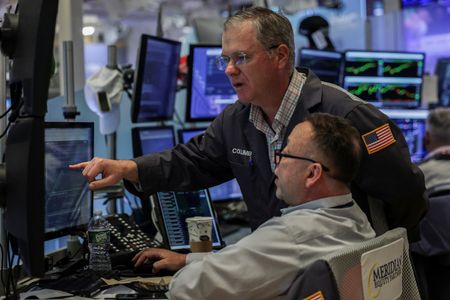

Wall Street is experiencing a remarkable comeback as major stock indexes climb to unprecedented levels, with investors now shifting their attention to what’s expected to be a strong corporate earnings season.
The easing of tensions between the United States and Iran has sparked a powerful market rally this month, pushing key stock benchmarks to fresh record territory. On Wednesday, the S&P 500 achieved its first record closing high since January 27, while the Nasdaq Composite reached its first all-time closing peak since October 29.
Market participants are now preparing for a busy week of first-quarter earnings reports, with approximately 20% of S&P 500 companies scheduled to release their financial results. Analysts anticipate these reports will provide strong support for the current bullish market sentiment.
Chuck Carlson, chief executive officer at Horizon Investment Services, acknowledged ongoing uncertainties while noting a shift in investor focus. “We’re certainly not out of the woods” from war-related developments that could cause daily market swings, Carlson explained. “But I think the market has shifted its attention now …toward corporate profits and how stocks respond to those profits.”
However, some market experts remain cautious about potential challenges ahead. Oil prices continue to trade at elevated levels, with U.S. crude hovering around $94 per barrel Thursday, compared to $67 in late February before military strikes on Iran began. This sustained increase in energy costs could lead to higher inflation and rising Treasury yields, potentially creating headwinds for equities.
Michael Mullaney, director of global markets research at Boston Partners, expressed skepticism about the market’s optimistic outlook. “The stock market is treating what has happened over the last six weeks as if it has just woken up from a bad dream,” Mullaney observed. “Like … there are no further ramifications or repercussions from this. Which I don’t agree with.”
The speed of the market’s recovery has been particularly striking. After declining 9% from its January peak following the start of the conflict, the S&P 500 has surged 11% since hitting its recent low on March 30, closing this week above the 7,000 level for the first time.
According to research from Bespoke Investment Group examining S&P 500 pullbacks of 5% to 10% since 1928, the index had never before returned to all-time highs in just 11 trading sessions, as it accomplished on Wednesday.
Jim Reid, head of macro and thematic research at Deutsche Bank, highlighted the unprecedented nature of this rally. “The velocity of this ascent has been nothing short of astonishing,” Reid noted in a research report.
Technology stocks, which have been leading the three-year bull market, experienced significant declines during the initial downturn but have since rebounded strongly. Companies like Alphabet and Meta Platforms have performed particularly well in the recent recovery, with the broader technology sector also outpacing other industries. The Nasdaq concluded Thursday with its 12th consecutive daily gain, marking the first such streak since the 2009 recovery that followed a sharp market decline.
Jeff Weniger, head of equity strategy at WisdomTree, views the broad participation in the rally as a positive sign. “If you are looking for broad participation in the market and you are making new highs and your generals are now coming back to life a little bit, I say that is probably something that is pretty healthy,” Weniger commented.
Some investors are monitoring signs of excessive market speculation, including the dramatic surge in Allbirds shares after the footwear company announced plans to pivot toward AI computing infrastructure.
Tesla is scheduled to report earnings on Wednesday, becoming the first of the “Magnificent Seven” megacap companies to announce results for the recently completed quarter. Other notable companies reporting include aircraft manufacturer Boeing, chip maker Intel, and consumer goods giant Procter & Gamble. Major technology companies including Microsoft, Alphabet, and Meta are expected to release their earnings the following week.
According to LSEG IBES projections, S&P 500 earnings are anticipated to increase approximately 14% in the first quarter compared to the same period last year. Major financial institutions began the reporting season this week, announcing substantial gains in trading revenues following a turbulent first quarter. These banks expressed caution regarding economic risks while indicating that consumers and households remain resilient.
Anthony Saglimbene, chief market strategist at Ameriprise, provided insight into consumer conditions based on early banking results. “The American consumer, while facing real pressure, has not broken based on early Q1 bank earnings,” Saglimbene wrote in a market commentary.
Interest rate policy will receive significant attention on Tuesday when Kevin Warsh, President Donald Trump’s nominee to lead the Federal Reserve, appears before Congress for confirmation hearings. While Trump has criticized current Fed Chair Jerome Powell for not reducing rates more aggressively, the war’s potential inflationary impact has led markets to essentially eliminate expectations for rate cuts this year.
Additional insight into the conflict’s economic consequences may emerge with Tuesday’s release of March retail sales data. With gasoline prices reaching $4 per gallon following the outbreak of hostilities, investors are keen to assess the impact on consumer spending patterns.
Robert Pavlik, senior portfolio manager at Dakota Wealth Management, expressed concern about the sustainability of current economic conditions. “I suspect these prices aren’t dropping down anytime soon and that is going to have an effect on discretionary spending going forward,” Pavlik said. “So the claim that the U.S. economy is in good shape is in my opinion near sighted.”