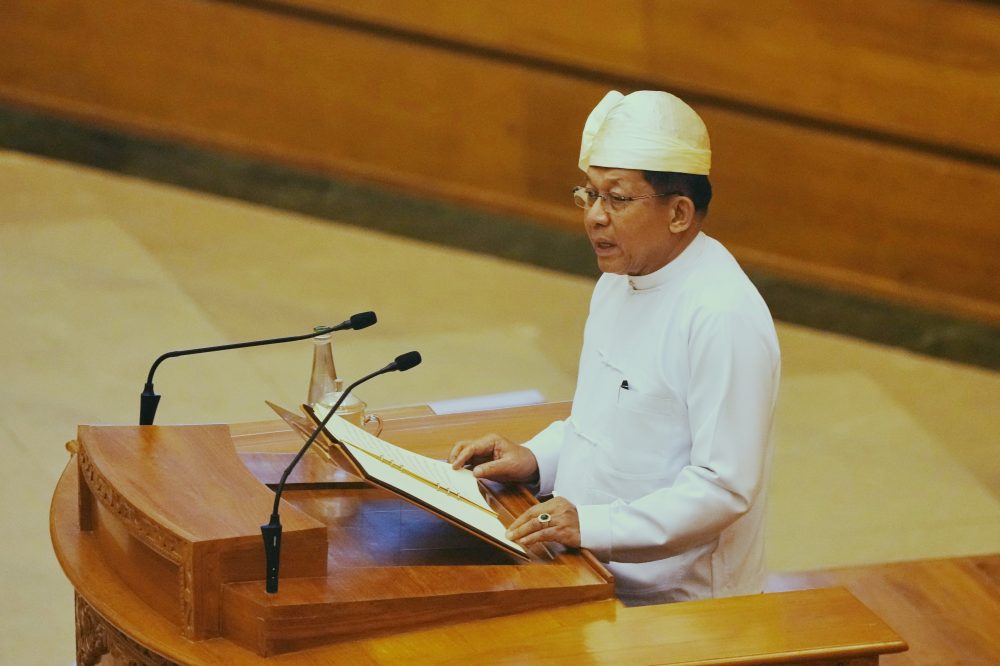

Myanmar’s military government has released over 4,500 inmates from prison as part of a customary new year clemency order issued by President Min Aung Hlaing, according to state media reports on Friday.
Officials have not disclosed the names of those set free. Family members and friends gathered outside Insein Prison’s main entrance in Yangon’s northern suburbs, waiting since early morning for their loved ones.
No indication has emerged that former leader Aung San Suu Kyi will be among those released, nor whether the clemency will extend to the thousands of political prisoners detained for resisting military authority.
This prisoner release follows Min Aung Hlaing’s swearing-in ceremony one week ago, after winning an election that opposition groups denounce as rigged and designed to maintain the military’s authoritarian control.
During his inaugural address, he pledged his administration would carry out pardons that promote social healing, fairness and stability while advancing the nation’s progress.
Government-controlled MRTV television announced that 4,335 inmates received pardons, while approximately 180 foreign nationals will also be freed and expelled from the country.
The release conditions stipulate that any former prisoners who commit new crimes must complete their original sentences plus any additional punishment. A separate announcement revealed that death penalties were changed to life terms, life sentences were shortened to 40 years, and prison terms under 40 years were reduced by one-sixth.
Based on that formula, Suu Kyi’s 27-year sentence would decrease by 4½ years.
Releasing prisoners during holidays and important events is a longstanding practice in Myanmar.
Following the military’s 2021 seizure of power, approximately 8,000 civilians have died and roughly 22,170 political detainees, including Suu Kyi, remain imprisoned, according to the Assistance Association for Political Prisoners, a human rights monitoring organization. Actual casualty figures from the continuing conflict are believed to be significantly higher.
Numerous political prisoners face incitement accusations, a statute frequently employed to detain government and military critics that carries up to three years imprisonment. Others have been charged under anti-terrorism legislation that allows the death penalty and has targeted political and armed opposition members, reporters and other dissidents.
The military coup sparked widespread peaceful protests, which have evolved into an ongoing civil conflict.