
Global financial markets are showing signs of optimism this week as President Donald Trump expresses confidence that the conflict in Iran could conclude soon, with diplomatic discussions potentially resuming over the weekend.
However, this positive sentiment faces challenges from upcoming economic data expected to reveal sluggish business performance and mounting inflationary pressures, along with what could be an intense congressional examination of the Federal Reserve’s nominee for chair.
Kevin Warsh, Trump’s selection to head the Federal Reserve and a former Fed governor, will face lawmakers during his confirmation hearing on April 21, giving investors insight into the administration’s monetary policy direction.
Warsh enters a challenging environment as he works toward Trump’s goal of reduced interest rates, complicated by energy price increases from the Iran conflict that are raising inflation worries. Market expectations for rate cuts have shifted dramatically since the war began in late February, moving from anticipating two quarter-point reductions by December to expecting virtually no cuts.
Trump has publicly criticized current Fed Chair Jerome Powell for insufficient rate reductions. This week, he intensified his pressure tactics by threatening to remove Powell from his Federal Reserve board position if he refuses to step down when his chairmanship expires on May 15.
Meanwhile, Tesla leads a busy schedule of U.S. corporate earnings reports, while March retail sales figures may reveal whether rising prices are dampening consumer purchases.
Iran continues to dominate market concerns as the United States and Pakistan promote the possibility of an agreement to resolve the conflict and reopen the vital Strait of Hormuz shipping route.
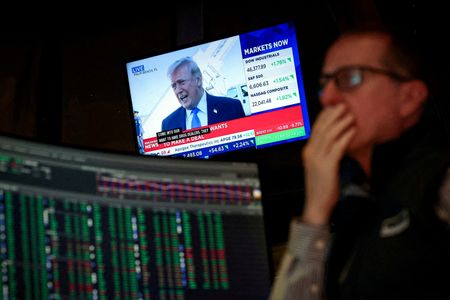
Stock markets, particularly in America, are anticipating a positive resolution. The S&P 500 has recovered to record territory, and despite Japan’s significant dependence on energy imports, the Nikkei has also reached record levels.
Market participants are betting that peace would restore the pre-conflict environment where robust earnings supported equity values.
Oil markets show more skepticism. While Brent crude prices sit below $100 per barrel, they remain 33% higher than late February levels. Physical crude prices for immediate delivery have reached unprecedented highs.
If diplomatic efforts fail to reopen the Strait, energy costs will stay elevated, compelling central banks to maintain high borrowing rates and potentially damaging corporate profits.
The upcoming week provides initial insights into how businesses worldwide managed as the Iran war reached its one-month milestone in April. March surveys indicated sharp increases in input costs and declining business activity as companies dealt with unstable energy markets, disrupted supply networks, and rapidly changing news developments.
While oil prices have moderated somewhat, the risk of global inflation remains present though reduced.
First-quarter earnings reports, especially from energy-import-dependent Europe, show airlines, retailers, and manufacturers facing significant uncertainty that could impact profitability.
The United States, being a net energy producer, enjoys some protection but cannot escape the impact of higher fuel costs. Investors will closely examine price and employment data in upcoming purchasing managers’ indices for indicators of economic strain.
Inflation data from Japan, Britain, New Zealand, and Canada are also expected to show concerning trends.
Emerging Asian central banks face their own pressures. China will announce its loan prime rate on April 20, though experts predict the central bank will maintain current benchmarks through year-end as economic growth resumes. Even with anticipated cooling due to Middle East crisis effects on corporate earnings and international demand, Asia’s largest economy remains in better position than many others.
Bank Indonesia, meeting April 22, must support a rupiah that recently hit record lows. The central bank’s governor indicated policy adjustments are needed to maintain financial market stability. The Philippines’ central bank, convening April 23, has cautioned about spillover effects after March inflation accelerated beyond policymakers’ target range.
Turkey’s central bank conducts one of its most important policy meetings Wednesday, testing its dedication to conventional monetary policy.
Given Turkey’s heavy reliance on imported energy, the nation has suffered severely from the Iran war’s economic consequences. It spent nearly $50 billion in reserves last month to stabilize the lira and became one of few countries to receive a credit rating outlook downgrade.
Prospects for lasting ceasefire will influence discussions. However, with inflation projected to reach nearly 30% by year-end according to economists, major financial institutions including JPMorgan and Bank of America anticipate rate increases of 300 basis points, returning to a punishing 40% level.