Drivers on northbound Interstate 495 are facing significant delays this morning after a vehicle accident forced the closure of two left lanes near Exit 1.
According to the Delaware Department of Transportation, the crash has created a traffic bottleneck in the area, with vehicles being directed around the incident scene. Transportation officials are on site managing the situation and working to restore normal traffic flow.
Motorists are advised to expect delays and consider alternate routes if possible while crews work to clear the accident and reopen the affected lanes.
No additional details about the crash or potential injuries have been released at this time.
CHARLOTTE, N.C. – The University of Delaware women’s lacrosse team secured their spot atop the Atlantic Sun Conference standings Thursday with a dominant 19-7 victory over Queens at Delaware Stadium.
Leading the charge for the Fightin’ Blue Hens was Jaclyn Marszal, who delivered a standout performance by recording career-best numbers in both assists and total points. Marszal distributed eight assists while accumulating 10 points overall in the conference matchup.
The decisive victory guarantees Delaware will claim at least a portion of the ASUN regular season championship while also locking up the number one seed position for the 2026 ASUN Championship tournament.
The Blue Hens controlled the game from start to finish, outscoring their opponents by 12 goals in what proved to be a comfortable afternoon on their home field.
For the past month, the Golden State Warriors accepted their destiny. Before officially qualifying for the play-in tournament, they understood their path would require winning two consecutive games to secure an improbable playoff berth.
They’ve been treating this as a two-game championship.
In their view, they’re only halfway to completing their objective.
The Warriors, Charlotte, Orlando, and Phoenix face elimination games Friday night as the play-in tournament concludes, determining which two franchises will claim the remaining playoff positions.
Charlotte travels to face Orlando, while Golden State heads to Phoenix. The victors will earn Game 1 matchups Friday evening — against Detroit in the Eastern Conference and Oklahoma City in the Western Conference.
“This is literally it,” Magic coach Jamahl Mosley said. “This is it.”
Golden State orchestrated a dramatic 41-23 surge during the final 9:49 minutes to complete a stunning road victory against the Los Angeles Clippers, erasing a 13-point disadvantage for a 126-121 triumph that extended their season. The Warriors connected on six more three-point shots than the Clippers during that crucial period, with those 18 additional points accounting for precisely their margin of victory in the closing stretch.
“That was fun,” Warriors guard Stephen Curry said. “That’s what you live for, right there.”
Charlotte advanced to Friday’s action with a triumph over Miami, though LaMelo Ball’s uncalled flagrant foul against Bam Adebayo dominated postgame discussions. The Magic fell in Philadelphia, handing the 76ers the seventh seed in the East and a first-round series against Boston. Phoenix suffered a home defeat to Portland, giving the Trail Blazers the seventh seed in the West and a playoff date with San Antonio.
Everything is now on the line. Miami and the Clippers have already been eliminated, and two additional franchises will begin their offseason Friday evening.
“We’ve got to be ready,” Magic forward Paolo Banchero said. “I’ve got to be ready.”
This marks Phoenix’s inaugural appearance in the play-in tournament format. The remaining three teams have all participated previously.
Golden State enters their fourth play-in appearance, Charlotte their third, and Orlando their second. Philadelphia and Portland, who have already advanced, were making their second play-in appearances.
Golden State holds a 2-3 play-in record. Orlando stands at 1-1, Charlotte at 1-2, and Phoenix at 0-1.
Regular season matchups: Charlotte won the series 3-1.
Vegas odds: Charlotte favored by 3.5 points.
What’s at stake: The victor advances to face top-seeded Detroit in the Eastern Conference quarterfinals beginning Sunday. The defeated team’s season ends.
Game preview: Multiple storylines converge here. LaMelo Ball delivered the game-winning shot in their previous contest, injured Bam Adebayo, and learned a day later from league officials that he should have been ejected. Orlando dropped their last three encounters against Charlotte by a total of 61 points and has struggled with consistency throughout the campaign. Charlotte captured both previous games in Orlando this season; no visiting team has achieved three or more victories against the Magic in a single season — excluding the bubble year — since Detroit in 2006-07. Charlotte’s Miles Bridges has appeared in more regular-season contests (501) than any other active player without playoff experience. Friday could end that streak.
Regular season matchups: Golden State won the series 3-1.
Vegas odds: Phoenix favored by 2.5 points.
What’s at stake: The winner advances to face top-seeded Oklahoma City in the Western Conference quarterfinals beginning Sunday. The losing team’s season concludes.
Game preview: Golden State captured their initial meeting by 11 points, with Phoenix trailing by 25 before possessing the ball with an opportunity to cut the deficit to single digits with three minutes remaining. The remaining contests were decided by margins of one, three, and four points. The Warriors approach this game with a fearless mentality, understandably so after an injury-riddled campaign that produced a 37-45 record and a month-long preparation for an expected play-in run. Phoenix exceeded most preseason projections by winning 45 games but must now defeat Stephen Curry, arguably basketball’s greatest shooter, to avoid becoming the first franchise to lose twice at home during a play-in tournament.
LONDON — UK Prime Minister Keir Starmer is confronting mounting pressure to step down following Thursday’s disclosure that Peter Mandelson was originally rejected for security approval before being named ambassador to the United States, a position he ultimately lost due to his ties with convicted sex offender Jeffrey Epstein.
After The Guardian broke the story, government officials acknowledged that Starmer remained unaware the Foreign Office had bypassed standard security protocols for Mandelson’s Washington ambassadorship “until earlier this week.”
The prime minister had previously maintained that proper procedures were adhered to during the selection process and claimed Mandelson, dismissed in September 2025, had been dishonest regarding his Epstein connections.
Upon learning of the situation, a government representative stated Starmer “immediately instructed officials to establish the facts about why the developed vetting was granted, in order to enact plans to update the House of Commons.”
Political opponents are demanding Starmer’s resignation if parliamentary deception occurred.
Conservative Party leader Kemi Badenoch declared Starmer is “definitely in resigning territory,” while Liberal Democrat chief Ed Davey stated Starmer “must go” if he deceived Parliament and the British people.
Starmer’s leadership encountered its most severe challenge in February when the US Justice Department released extensive Epstein-related documentation revealing the depth of Mandelson’s association with the financier.
Questions surrounding Starmer’s decision-making intensified after correspondence within the Epstein Files indicated Mandelson may have shared confidential government intelligence with the disgraced businessman in 2009 during his Labour government tenure.
The prime minister has issued multiple public apologies to citizens and Epstein’s trafficking victims for trusting what he called “Mandelson’s lies.” During these statements, he consistently maintained that appropriate screening procedures for the prestigious US ambassador role were properly executed.
Law enforcement subsequently initiated a criminal investigation, conducting searches of Mandelson’s London and western England residences. Authorities arrested Mandelson on February 23 for suspected misconduct in public office, releasing him on bail after over nine hours of interrogation.
Mandelson maintains his innocence and faces no formal charges at this time.
Prior to Mandelson’s arrest, Andrew Mountbatten-Windsor, previously Prince Andrew, was detained on identical charges. King Charles III’s brother also maintained close connections with Epstein.
Despite awareness of the Epstein relationship, Starmer selected Mandelson for the ambassadorial position in late 2024. Officials valued Mandelson’s trade knowledge as crucial for convincing the Trump administration to avoid imposing substantial tariffs on British exports, a strategy that appeared successful when both nations reached a trade agreement months later.
Starmer terminated Mandelson’s appointment in September following earlier Epstein connection revelations.
Recently released British documentation, including vetting materials, confirmed Starmer proceeded with Mandelson’s selection despite advisories about potential “reputational risk.” Officials have committed to releasing additional documents concerning Mandelson’s appointment following parliamentary pressure.
American military personnel finished evacuating the Qasrak air base on Thursday as the final group of soldiers and equipment left the facility located in Syria’s Hasakah province, according to officials from both nations.
Syrian forces have now assumed complete authority over nearly all military installations throughout the nation that previously housed American troops.
Damascus issued a statement through Syria’s foreign ministry declaring that “the Syrian state’s restoration of sovereignty over areas that were outside its control, including the northeast and border regions, is the result of the Syrian government’s continuous efforts to unify the country within the framework of a single state.”
The ministry attributed the American pullout to successful negotiations between Damascus and the Kurdish-led Syrian Democratic Forces, which had previously maintained authority over much of northeastern Syria, along with victories against remaining Islamic State fighters.
Capt. Tim Hawkins, chief spokesperson for U.S. Central Command, verified the evacuation.
“U.S. forces have completed turning over all of our major bases in Syria, as part of a deliberate and conditions-based transition,” Hawkins stated, noting that American military operations will “continue to support partner-led counterterrorism efforts, which are essential to ensuring the enduring defeat of ISIS and strengthening regional security.”
Military vehicles and equipment could be observed departing the installation Thursday aboard truck convoys.
American personnel started evacuating Qasrak in late February as part of what seemed to be a broader reduction of U.S. military presence in Syria. Earlier in February, Central Command and Syria’s defense ministry revealed that American forces had also departed the al-Tanf installation in eastern Syria near Jordan’s border.
The military evacuation followed the completion of transferring approximately 5,700 suspected Islamic State fighters from detention facilities in northeastern Syria to Iraqi prisons, where they await trial.
The primary objective of American troops in Syria has been preventing an Islamic State comeback. While the terrorist organization lost its final territorial holdings in Syria in 2019, dormant cells continue launching sporadic attacks across Syria, Iraq and internationally.
AUSTIN, Texas — A Colombian national who served as a Drug Enforcement Administration informant for over two decades escaped prison time this week despite admitting he never paid taxes on almost $4 million in government payments.
Andres Zapata, 48, received a sentence of time served Wednesday in an Austin federal court after agreeing to assist in an extensive corruption probe that has ensnared multiple DEA agents, according to two sources familiar with the ongoing investigation who spoke anonymously to the Associated Press.
Authorities extradited Zapata from Colombia last year, where he had maintained close ties with José Irizarry, a disgraced former DEA agent now serving 12 years in prison for stealing millions from money laundering operations to bankroll lavish trips, high-end vehicles and wild parties.
Court documents reveal the DEA compensated Zapata $3.8 million between 2015 and 2020 for his services as a confidential source. The professional money launderer entered a guilty plea last July to one count of tax evasion. While DEA policy requires informants to declare such payments to the Internal Revenue Service, prosecutions for non-compliance are uncommon.
Neither the Justice Department’s criminal division, which handled the prosecution, nor the DEA provided statements when contacted for comment.
Defense attorney Don Bailey contended during the sentencing that pursuing someone who endangered his life assisting American law enforcement against dangerous cartels for a violation he was unaware of committing was unprecedented.
Bailey explained that Zapata and similar informants “don’t get 1099s or W-9s,” referencing standard tax forms for independent contractors. “You don’t know what you owe. You sign a piece of paper for money. You don’t get receipts.”
During the proceedings, Zapata expressed his desire to rebuild his life after spending more than a year in harsh conditions at a Medellin-area detention facility while awaiting extradition.
“I’ve learned my lesson,” Zapata stated, according to court transcripts.
U.S. District Judge David Ezra praised Zapata’s cooperation with federal authorities during the hearing. The judge rejected an Associated Press motion to make sentencing documents public. Along with the time-served ruling, Ezra mandated Zapata pay $1.2 million in restitution to cover the government’s tax losses.
DEA internal documents obtained by the AP reveal Zapata’s recruitment as an informant began in 1998, when the agency enlisted the former vacuum cleaner salesman after his brother-in-law faced drug trafficking charges.
Throughout the following twenty years, he emerged as one of the agency’s most productive sources, facilitating undercover cash collections and supporting investigations spanning from Peru to Los Angeles, accumulating over $4.6 million in DEA payments.
However, Zapata provided more than intelligence gathering services.
Using his DEA assignment as cover, the dual Colombian-American citizen traveled internationally with agents and Miami-based prosecutors in what Irizarry characterized as a “world debauchery tour” that violated strict regulations against inappropriate relationships with informants.
A confidential WhatsApp group chat used by agents to document their international escapades reveals Zapata’s involvement in arranging prostitutes and assisting what Irizarry dubbed “Team America” in avoiding consequences. During a 2018 Madrid assignment, Zapata was present when an agent was temporarily held and accused of sexual assault while drinking.
Irizarry informed investigators that Zapata shared portions of his informant payments as kickbacks. He described one incident where Zapata arrived at his Colombian residence carrying $40,000 in cash, which Irizarry used to buy his wife a Tiffany ring.
Zapata allegedly also facilitated payments that Irizarry acknowledged receiving from Diego Marin, Colombia’s “Contraband Czar” — a former DEA informant apprehended in Spain in 2024 during a Colombian corruption investigation. Video footage obtained by the AP shows Marin and Zapata celebrating with agents at a Madrid establishment.
Worcester County officials have announced an upcoming Technical Review Committee meeting scheduled for Wednesday, May 13, 2026, beginning at 1:00 PM.
The session will be held in the Commissioners Meeting Room, located on the first floor of the Worcester County Government Center at 1 West Market Street in Snow Hill, Maryland 21863.
An agenda for the meeting has been made available to the public through the county’s website. Residents interested in attending or reviewing the agenda items can access the documentation online.
The meeting represents part of the county’s ongoing technical review processes and regular governmental operations.
Federal agencies could soon receive access to a cutting-edge artificial intelligence system designed to strengthen cybersecurity defenses, according to a Bloomberg News report published Thursday.
The Biden administration is exploring plans to distribute a specialized version of Anthropic’s advanced AI model, known as Mythos, to key government departments. However, officials are proceeding cautiously due to concerns that the powerful technology could potentially create new security risks.
Mythos was unveiled on April 7 as part of Anthropic’s controlled program called “Project Glasswing.” Under this limited rollout, selected organizations can access the unreleased Claude Mythos Preview model specifically for protecting against cyber threats.
The AI system has demonstrated remarkable capabilities, discovering “thousands” of significant security flaws in operating systems, internet browsers, and various software applications. Technology experts note that Mythos possesses advanced programming skills that give it extraordinary abilities to detect cybersecurity weaknesses and understand how they might be exploited.
Gregory Barbaccia, who serves as federal chief information officer at the White House Office of Management and Budget, sent an email to Cabinet department leaders on Tuesday outlining plans to establish security measures for agency use of Mythos, Bloomberg reported.
“We’re working closely with model providers, other industry partners, and the intelligence community to ensure the appropriate guardrails and safeguards are in place before potentially releasing a modified version of the model to agencies,” Barbaccia wrote in the message titled “Mythos Model Access,” according to the report.
Bloomberg noted that Barbaccia’s communication did not guarantee that agencies would ultimately receive Mythos access, nor did it specify when such access might be granted or how the technology would be implemented.
Neither the White House nor Anthropic provided immediate responses to requests for comment from Reuters.
Anthropic co-founder Jack Clark revealed on Monday that the company has been in discussions about Mythos with the Trump administration. These talks continue despite the Pentagon recently ending its business relationship with the AI company following a contractual disagreement.
Chile’s newly elected President Jose Antonio Kast has begun delivering on his tough immigration campaign promises, with officials announcing Thursday that the country conducted its first deportation flight since he took office.
According to Deputy Interior Minister Maximo Pavez, the aircraft departed from Iquique in northern Chile carrying 40 foreign nationals who were returned to Bolivia, Colombia, and Ecuador.
Officials refused to disclose how frequently these deportation operations will occur going forward.
“This flight, the first of many, is part of a commitment and an immigration reform plan that we have been working on since this government took office on March 11,” Pavez told the media. “From now on, we will intensify these measures through a planned approach.”
Government records show that among those removed from the country, 15 individuals had been ordered deported by courts due to criminal convictions for offenses such as theft and narcotics violations, while the remaining 25 faced administrative immigration violations.
During his presidential campaign, Kast frequently connected unauthorized immigration with increasing criminal activity and has since called on undocumented immigrants to depart voluntarily or face forced removal.
Chile’s immigration service director Frank Sauerbaum reported that 2,180 Venezuelan nationals have chosen to leave Chile voluntarily since Kast won the election.
WASHINGTON – In an unusual challenge to President Donald Trump’s immigration policies, the U.S. House of Representatives passed legislation Thursday that would extend deportation protections for approximately 350,000 Haitians currently residing in America.
The chamber approved the measure by a vote of 224-204, with some Republicans crossing party lines to support the bill alongside Democrats. The legislation would grant Haitians an additional three years of eligibility for Temporary Protected Status, even after the Department of Homeland Security moved to end these humanitarian safeguards.
The bill now moves to the Senate, where Republican leadership makes its prospects unclear.
Thursday’s vote demonstrates growing Republican willingness to oppose the White House on immigration matters, particularly as the Supreme Court considers whether the Trump administration can legally eliminate the deportation protections currently shielding Haitians.
Eleven lawmakers broke ranks with their party – ten Republicans and one independent – to support the Democratic-backed legislation.
Temporary Protected Status serves as a safety net for individuals from countries facing natural disasters, military conflicts, or other exceptional circumstances. The designation grants qualifying immigrants permission to work legally in the United States while protecting them from removal proceedings.
NEWARK, Del. – The University of Delaware Blue Hens softball program has made adjustments to their upcoming contest versus Maryland, moving the matchup to an earlier date and different start time.
The game was initially set for Wednesday, April 22 at 3:00 p.m., but will now take place one day earlier on Tuesday, April 21 with a 6:00 p.m. first pitch.
The scheduling modification affects the Blue Hens’ weekly slate as they continue their season. No additional details were provided regarding the reason for the timing adjustment.
MURFREESBORO, Tenn. – The University of Delaware women’s tennis squad made program history Thursday by claiming their inaugural victory at the Conference USA Championships, defeating Jacksonville State by a score of 4-2.
This landmark achievement marks a significant milestone for the Blue Hens tennis program as they secured their first-ever win in the prestigious conference tournament.
With this quarterfinal victory now behind them, Delaware will advance to compete against Louisiana Tech in the semifinal round of the championship tournament.
The historic win represents a breakthrough moment for the program as they continue their pursuit of conference championship glory in Murfreesboro, Tennessee.
The United States industrial hemp market has reached a substantial $739 million in value for 2025, according to newly released federal agricultural data.
The National Agricultural Statistics Service has documented this milestone for the hemp industry, which has experienced remarkable expansion since federal legalization removed previous restrictions on cultivation.
This valuation reflects the growing acceptance and commercial viability of hemp products across various industries, from textiles and construction materials to food products and wellness items.
The hemp sector’s growth represents a significant development in American agriculture, providing farmers with new crop opportunities and contributing to rural economic development nationwide.
Federal agencies continue to monitor and report on this emerging agricultural market as it establishes itself within the broader farming economy.
A federal jury has reached a verdict that Live Nation and Ticketmaster function as a monopoly, determining that the entertainment giants have been suppressing competitive practices and inflating costs for consumers attending live events.
The companies, which joined forces through a merger in 2010, now face the next phase of legal proceedings as Washington D.C. and 33 states must present arguments supporting specific penalties and corrective measures.
However, music fans hoping for immediate ticket price relief may need to wait. The implementation of any remedies could face delays if Live Nation chooses to challenge the decision through an appeals process.
Industry analysts indicate that predicting the long-term effects on ticket pricing remains difficult, even with this legal victory against the entertainment conglomerate.
Three educational institutions across Delaware have been awarded Purple Star School status in recognition of their exceptional support for students from military families.
The 2026 honorees include J. Ralph McIlvaine Early Childhood Center in the Caesar Rodney School District, Lake Forest High School within the Lake Forest School District, and the charter institution Providence Creek Academy.
This prestigious designation acknowledges schools that demonstrate outstanding dedication to addressing the specialized academic and emotional requirements of military-connected students and their families.
NEW YORK — Former professional basketball player and assistant coach Damon Jones will likely become the initial defendant to enter a guilty plea in a sweeping gambling investigation that resulted in more than 30 arrests, including alleged organized crime members and other basketball personalities.
Court documents filed Thursday reveal that Jones has a plea change hearing set for May 6 in federal court in Brooklyn.
The 49-year-old Jones had initially entered not guilty pleas to two separate indictments. The charges accuse him of benefiting from manipulated poker games and sharing confidential injury information about NBA superstars LeBron James and Anthony Davis with sports gamblers.
Both cases include charges of wire fraud conspiracy and money laundering conspiracy against Jones.
His attorney Kenneth Montgomery could not be reached for comment immediately. During Jones’ November court appearances, Montgomery informed the judge that they “may be engaging in plea negotiations.”
The arrest of Jones occurred in October alongside Portland Trail Blazers head coach and Basketball Hall of Fame member Chauncey Billups, Miami Heat player Terry Rozier, and several others, including a gambler accused of profiting from insider injury details.
Among all defendants, Jones faces charges in both the poker manipulation and sports betting conspiracies. He continues to remain out of custody on bond.
Born in Galveston, Texas, Jones accumulated over $20 million during his professional career, playing for 10 different franchises across 11 seasons between 1999 and 2009. He was teammates with James in Cleveland from 2005 to 2008 and worked as an unofficial assistant coach with James’ Los Angeles Lakers during the 2022-2023 campaign.
Federal prosecutors allege that Jones sold or tried to sell confidential information to gamblers regarding James’ injury status before a February 9, 2023, matchup against the Milwaukee Bucks. He allegedly texted an unidentified accomplice: “Get a big bet on Milwaukee tonight before the information is out.”
At the time Jones sent the message, James wasn’t included on the Lakers’ official injury report. However, the NBA’s career scoring champion was subsequently ruled out due to a lower body ailment, and Milwaukee defeated Los Angeles 115-106.
On January 15, 2024, authorities claim sports gambler Marves Fairley compensated Jones roughly $2,500 for inside information that Davis, then the Lakers’ forward-center, would have restricted playing time against Oklahoma City Thunder due to injury.
Fairley subsequently wagered $100,000 on the Thunder to win, but the information proved inaccurate. Davis played his typical minutes, recording 27 points and 15 rebounds in a 112-105 Lakers victory, leading Fairley to request a $2,500 refund, according to prosecutors.
Regarding the poker conspiracy, authorities say Jones was among former NBA athletes recruited to attract unsuspecting players into rigged games using modified shuffling devices, concealed cameras, specialized eyewear, and even X-ray technology embedded in tables.
The indictment states Jones received $2,500 for participating in a Hamptons game where he was directed to cheat by carefully observing other scheme participants. His instructor compared those individuals to James and NBA All-Star Stephen Curry. When uncertain, Jones was advised to fold, prosecutors stated.
Jones allegedly responded via text: “y’all know I know what I’m doing!!”
The poker operation frequently utilized illegal games controlled by New York organized crime families, requiring operators to share profits with the Gambino, Genovese, and Bonanno crime families.
These crime family members also participated in violent activities, including assault, extortion, and robbery, to ensure debt collection and maintain operational success, court documents indicate.
Known for his three-point shooting ability, Jones once declared himself in an insidehoops.com interview as “the best shooter in the world.” He appeared in every regular season contest for three straight seasons from 2003 to 2006.
Following his playing career, he served as a “shooting consultant” for the Cavaliers and worked as an assistant coach when the James-led team captured the NBA championship in 2016.
LIMA, Peru — Thursday’s election results from Peru revealed an extremely close contest for second and third positions, potentially requiring several weeks to determine which two candidates will advance to the mandatory June runoff election.
A nationalist representative with ties to a jailed former president and an ultraconservative political figure advocating for capital punishment restoration are the leading contenders to challenge Keiko Fujimori, who appears certain to claim first place among the 35 presidential hopefuls from Sunday’s voting.
Official tallies covering 93% of cast ballots showed Fujimori, the conservative offspring of discredited ex-President Alberto Fujimori, commanding 17.06% of votes — well short of the 50% threshold required to prevent a runoff.
In second position, Roberto Sánchez, a nationalist representative and former cabinet member under jailed ex-President Pedro Castillo, captured 11.97% of votes. Following closely in third was Rafael López Aliaga, the ultraconservative ex-mayor of Peru’s capital city, Lima, with 11.91%.
Uncertainty grew regarding which candidate would proceed to the June 7 runoff, as fewer than 8,000 votes separated Sánchez and López Aliaga according to the latest tallies.
The two politicians represent completely opposite political philosophies.
Sánchez, regularly appearing in his signature wide-brimmed peasant hat, has pledged significant economic reforms, including substantial increases in government expenditures, comprehensive tax system overhauls, and partial state control of Peru’s natural resources.
López Aliaga, the ultraconservative former Lima mayor, emphasizes strict security measures, proposing Amazon region prison construction, allowing judicial anonymity, and deporting undocumented foreign residents.
The slim vote difference is complicated by roughly 1,600 outstanding ballot counts from isolated communities and overseas locations. Furthermore, another 5,000 ballot sheets face disputes, creating an appeals procedure that may require weeks to complete.
“In Peru, a percentage of tally sheets are always ‘challenged’ due to potential mathematical errors,” explained Álvaro Henzler, president of Transparencia, a democracy-watchdog group that deployed 4,000 observers. “When this occurs, they are sent to 60 special electoral boards for review.”
During 2021, Peru’s electoral tribunal announced first-round outcomes 37 days following the April 11 election. However, the gap between second-place competitors exceeded 238,000 votes initially, eliminating uncertainty.
“In this case, since the race is so tight, the contested tally sheets could end up altering the standings; that is why it is taking longer,” Henzler noted.
Presidential candidates require over 50% of votes for immediate victory. The two highest vote-getters in the initial round proceed to the June 7 runoff.
The victor will become Peru’s ninth president within a decade and will succeed José María Balcázar, who gained the interim presidency in February. He followed another temporary leader who was removed due to corruption charges just four months after taking office.
In her fourth presidential campaign, Fujimori has pledged to combat crime while supporting legislation that analysts claim hinders criminal prosecutions. These laws, endorsed by her political party recently, eliminated pretrial detention in specific situations and increased requirements for confiscating criminal proceeds.
MANILA, Philippines — A former Philippine legislator at the center of a massive corruption investigation has been taken into custody in Prague, according to President Ferdinand Marcos Jr., who announced Thursday evening that his administration is working to bring the suspect back to the Philippines.
Zaldy Co, who stepped down from his position in the House of Representatives this past September following accusations of financial misconduct related to flood control infrastructure projects, was apprehended by Czech authorities after entering the country with inadequate documentation, the president stated without providing additional details.
“We are in close coordination with the Czech government to ensure that all legal processes are followed and to arrange for his return to the Philippines at the soonest possible time,” Marcos said in a statement.
The absence of an extradition agreement between the Philippines and the Czech Republic complicates efforts to secure Co’s return, though Marcos did not specify the legal strategy his administration plans to pursue. Philippine authorities have already revoked Co’s passport and requested assistance from Interpol to track down and apprehend the affluent former representative.
Co is among multiple high-ranking legislators, including former House Speaker Martin Romualdez and former Senate President Francis Escudero, who face allegations of receiving substantial illegal payments from flood control infrastructure contracts in a nation frequently devastated by flooding and tropical storms.
While Co, Romualdez, Escudero and other officials have rejected the accusations, they remain under official investigation. Multiple former government engineers, public works administrators, construction company leaders and a former senator are currently in custody awaiting trial on corruption-related charges.
Investigators have examined no fewer than 9,855 flood control infrastructure projects valued at over 545 billion pesos ($9 billion) that were scheduled for completion since Marcos assumed the presidency in mid-2022. Audits revealed that numerous projects were poorly constructed, inflated in cost, or never actually built.
During a September congressional hearing, then-Finance Secretary Ralph Recto testified that approximately 118.5 billion pesos (nearly $2 billion) earmarked for flood control infrastructure may have been stolen through corruption since 2023.
The enormous scope of the financial irregularities, combined with media coverage exposing the extravagant lifestyles and collections of luxury European vehicles owned by some defendants, triggered widespread anti-corruption demonstrations throughout the previous year in a nation where countless citizens continue to endure severe poverty.
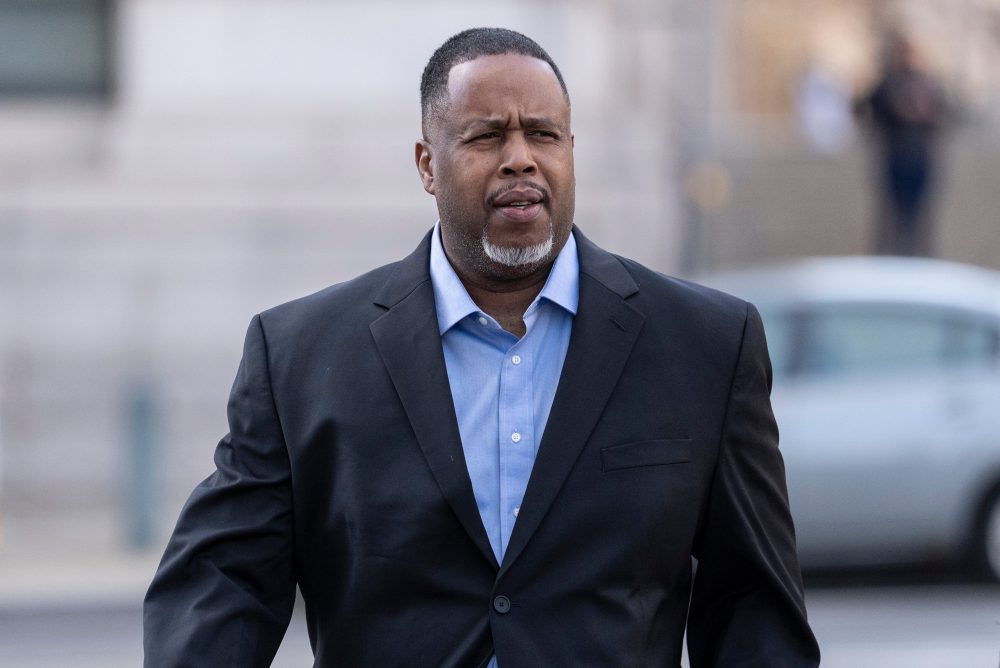
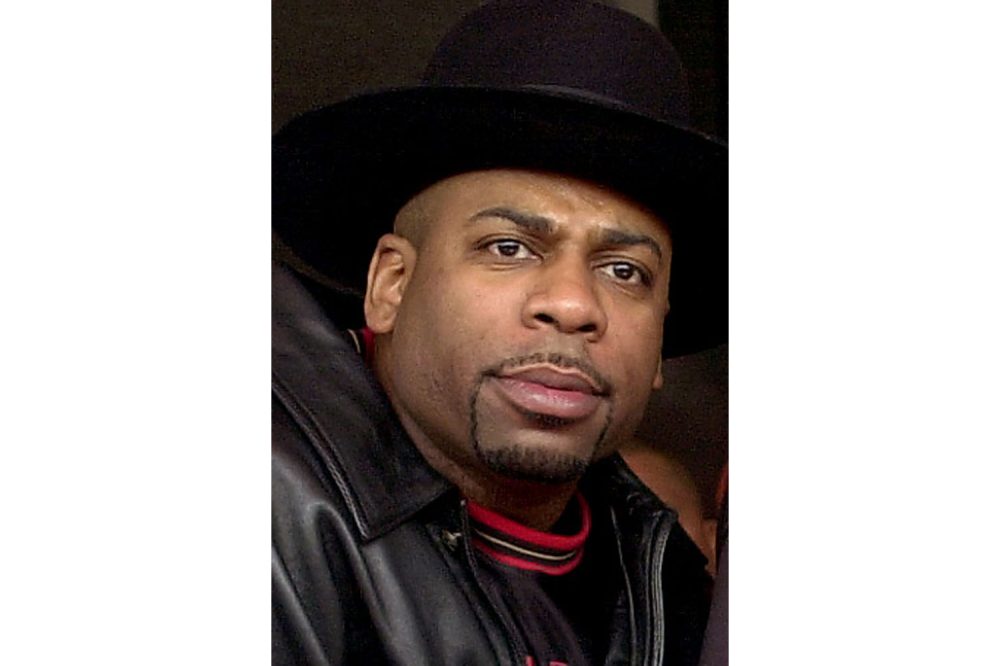
Court documents reveal that Jay Bryant, one of three defendants accused in the 2002 murder of Run-DMC’s Jam Master Jay, is preparing to enter a guilty plea, marking what would be the first courtroom confession of involvement in the hip-hop legend’s death.
Following his 2023 indictment, Bryant initially entered a not guilty plea to murder charges. However, recent correspondence between his defense attorney and federal prosecutors indicates ongoing negotiations for a plea deal.
Thursday’s court filing showed Bryant’s intention to modify his plea, though details about specific charges he may admit to or potential sentencing remain undisclosed. No scheduling has been announced for the plea change, and prosecutors have not provided comment. Bryant’s legal representative has not yet responded to inquiries.
Legal experts note that such notices don’t guarantee finality, as defendants retain the right to withdraw from plea agreements even during court proceedings.
Should Bryant proceed with the guilty plea, it would add both resolution and additional complexity to an already intricate case. His co-defendants Karl Jordan Jr. and Ronald Washington faced jury trial, resulting in convictions that were later overturned for Jordan by a judge. Bryant’s case has remained distinct from the others.
Authorities indicted Bryant nearly three years after his co-defendants when investigators allegedly discovered his DNA on headwear found at the recording studio where the shooting occurred. The victim, born Jason Mizell, served as the DJ for Run-DMC and helped create the distinctive beats and scratches that brought rap music into mainstream popularity during the 1980s. The group’s notable tracks included “It’s Tricky” and their collaboration with Aerosmith on “Walk This Way.”
When investigators allegedly connected Bryant’s DNA to evidence, prosecutors had already established their theory that Jordan and Washington targeted Mizell due to disputes over a botched narcotics transaction. Trial testimony and prosecutor statements indicated that Jordan fired the fatal shots while Washington prevented escape by blocking the entrance and commanding one of Mizell’s associates to lie down. Both defendants maintained their innocence throughout proceedings.
The relationships between the parties varied significantly. Jordan was Mizell’s grandson, while Washington had maintained a friendship with the DJ since childhood. Bryant, however, appeared to have minimal or no direct relationship with the rap icon. Trial testimony suggested Bryant shared mutual acquaintances with Jordan and Washington, but evidence of any personal interaction with Mizell remained unclear.
Following the alleged DNA discovery, prosecutors theorized that Bryant entered the studio facility and unlocked a rear emergency exit, allowing Washington and Jordan to bypass the building’s security system and launch their surprise attack on the DJ.
Conflicting accounts emerged when Bryant’s uncle testified that his nephew confessed to shooting Mizell in self-defense when the musician allegedly reached for a weapon. However, no additional witnesses confirmed Bryant’s presence in the studio during the incident, and prosecutors disputed the uncle’s version of events despite calling him as their own witness. Instead, they proposed that Bryant had contact with the hat before Jordan or Washington transported it into the studio and left it behind.
Court documents indicate that neither Washington’s nor Jordan’s DNA appeared on the recovered headwear.
Michael Hueston, representing Jordan, contended that the charges against Bryant created reasonable doubt regarding his client’s guilt. Jordan’s conviction was subsequently reversed due to separate legal issues.
Bryant, currently 52 years old, was already in federal custody on narcotics and weapons violations when charged in Mizell’s death. He has since entered guilty pleas in the drug and firearm matter and awaits sentencing in that case.
Delaware Department of Transportation officials have temporarily shut down southbound traffic on Power Mill Road, also known as Route 141, at the intersection with Children’s Drive following a traffic incident.
The closure affects southbound lanes only, with no timeline provided for when the roadway will reopen to normal traffic flow.
DelDOT is advising drivers to plan alternate routes and expect delays in the area while emergency responders and transportation crews work to address the situation and clear the roadway.
This is a developing situation and motorists should check DelDOT’s traffic incident updates for the latest information on road conditions.
The Trump administration is reportedly evaluating attorney Michael Murray for a senior antitrust enforcement role at the Department of Justice, according to a Bloomberg News report published Thursday that cited sources with knowledge of the discussions.
Murray previously held multiple positions within the Justice Department during Trump’s first term in office.
WASHINGTON – Federal officials announced Thursday they have broadened travel restrictions throughout the Americas, blocking visas for 26 people accused of working against U.S. interests.
The State Department’s expanded policy focuses on individuals who officials say have been collaborating with nations hostile to the United States to damage American objectives across the region.
“We have taken steps to impose visa restrictions on 26 individuals across our hemisphere who have engaged in these activities,” department officials stated in their announcement.
The department characterized the move as part of ongoing efforts to counter foreign influence operations targeting American interests throughout the Western Hemisphere.
BEIRUT, April 16 – The militant group Hezbollah issued its initial response Thursday regarding proposed ceasefire negotiations, declaring that any peace agreement must restrict Israeli military operations within Lebanese borders.
The organization warned that continued deployment of Israeli forces on Lebanese soil would provide Lebanon and its citizens “the right to resist,” marking the group’s first public position on the potential truce discussions.
Meanwhile, Nabih Berri, who serves as Lebanon’s Parliament speaker and maintains ties with Hezbollah, issued guidance to displaced Lebanese citizens in a written statement. Berri advised residents to “postpone their return to their towns and villages until the situation becomes clearer, in accordance with the ceasefire agreement.”
The statements come as diplomatic efforts continue to establish terms for ending hostilities between the two sides.
A growing number of American businesses are making dramatic shifts toward artificial intelligence and technology sectors, hoping to capture investor enthusiasm for these hot markets.
The latest example came when footwear manufacturer Allbirds announced its transformation into NewBird AI, focusing on AI computing instead of shoes. The company’s stock price skyrocketed more than 600% following the announcement. Social media company Myseum followed suit, seeing its shares climb nearly 150% after incorporating “AI” into its corporate name.
This pattern of corporate reinvention has become increasingly common as Wall Street’s appetite for technology investments continues growing. Several notable American companies have made similar strategic pivots in recent years.
Michael Saylor’s MicroStrategy began as a financial data analysis software company before becoming one of the largest corporate bitcoin holders in 2021, eventually shortening its name to Strategy. The company experienced massive stock gains exceeding 300% in both 2023 and 2024 as bitcoin values doubled, though shares have since fallen more than 70% from their November 2024 peak.
The cryptocurrency mining sector has seen particularly dramatic transformations. CoreWeave started as an ethereum mining operation in 2017 but closed that business and relaunched as a cloud infrastructure provider. The company went public on Nasdaq in April 2025 with a $23 billion valuation, surging over 85% in its first year and gaining 64% in 2026.
Other former crypto miners have followed similar paths. Applied Blockchain rebranded as Applied Digital in early 2023, shifting focus to data center hosting. HUT 8 has also expanded into data center operations while maintaining some mining activities. Applied Digital’s stock performance has remained relatively flat, but Hut 8 has posted annual gains since 2023 due to both rising bitcoin prices and increased data center demand.
Core Scientific emerged from bankruptcy in January 2024 and quickly embraced the AI trend, partnering with CoreWeave to repurpose its bitcoin mining infrastructure. The company’s shareholders rejected a CoreWeave acquisition offer last year.
President Donald Trump’s media company, Trump Media & Technology, originally operated as the parent company of the Truth Social platform. The firm expanded into digital finance last year by establishing a bitcoin treasury and creating a partnership with Crypto.com through a blank-check acquisition. Despite considering spinning off the platform as a separate public company in December 2025, which triggered significant daily stock gains, the company’s value dropped by more than half in 2025.
Dominari Holdings began life as Alkido Pharma before restructuring in December 2022 to move from healthcare into finance. The company later established American Data Centers, which included Donald Trump Jr. and Eric Trump among its members, capitalizing on demand for high-performance computing infrastructure.
The Singing Machine Company, known for karaoke products, acquired AI logistics firm SemiCab in September 2024 and transformed into Algorhythm Holdings. While the stock dropped over 37% that month, it had gained more than 42% in August 2024. The company completed the sale of its karaoke business for $4.5 million in August 2025, though it recorded losses in both 2024 and 2025.
JanOne divested its Arca recycling operations in March 2023 to concentrate on biopharmaceuticals but later acquired ALT 5 Sigma in 2024 to enter the cryptocurrency market. This move drove the stock up more than 800% that year, marking the company’s best performance on record. ALT 5 Sigma has been purchasing tokens from Trump’s World Liberty Financial but faces challenges from volatile investor interest in cryptocurrency investments.
Some transformations date back to earlier technology booms. Diagnostic equipment manufacturer Bioptix announced its rebranding to Riot Blockchain in October 2017 during cryptocurrency’s emergence. The stock surged over 500% in the following three months and closed 2017 with gains exceeding 730%, the company’s second-largest annual increase ever. The firm now operates under the name Riot Platforms.
Long Island Iced Tea became Long Blockchain Corp in December 2017, nearly tripling its share price by shifting from beverage production to blockchain technology. The company sold its drink-related assets in 2019, months after receiving a Nasdaq delisting notice.
Even established companies joined the trend. Photography giant Eastman Kodak launched “KODAKCoin” cryptocurrency for photographers in January 2018 while maintaining its core imaging business. The announcement sent shares soaring 156% that month, representing the second-largest monthly gain in company history.
Delaware officials will formally dedicate a new historical marker celebrating Fort Delaware’s important role in the state’s military and cultural heritage. The ceremonial unveiling is set for Saturday, April 25, 2026, beginning at 9:30 a.m.
The dedication will be held at Battery Park, situated at 55 Clinton Street in Delaware City. This new State of Delaware Historical Marker represents an effort to preserve and highlight a crucial piece of the First State’s past.
Fort Delaware holds special significance in Delaware’s history, serving as both a military installation and cultural landmark that shaped the region’s development over the years.
Drivers using Route 12 southbound should expect delays this afternoon as construction crews have closed one lane between David Street and Market Street.
The Delaware Department of Transportation reports the lane restriction will affect traffic flow until 4 PM today. Motorists are advised to allow extra travel time and use caution when passing through the work zone.
The construction activity is taking place along the Frederica Road corridor, which serves as a key transportation route for the area.
Dallas Stars netminder Jake Oettinger is welcoming the challenge ahead. The veteran goaltender is fully embracing what promises to be one of the most difficult playoff paths in recent memory.
The route through the Central Division to reach the Western Conference Final presents an incredibly demanding gauntlet for both Dallas and Minnesota. Despite ranking third and seventh respectively in NHL points this season, the Stars and Wild will clash in the opening round, with the victor potentially meeting the league-leading Colorado Avalanche in round two.
“If you can get through that and win it all, I think it just makes it that much better,” Oettinger said. “It just makes it more fulfilling.”
The Stanley Cup championship never comes without a fight, and even the Pacific Division bracket offers no relief. Edmonton, fresh off back-to-back Cup Final appearances, joins the Vegas Golden Knights, who surged with seven victories in their last eight contests after bringing in John Tortorella as head coach.
“It’s the most exciting time because everybody’s playing at a different level, and it’s a good test to see how high you can get as a team,” Tortorella told reporters in Las Vegas after the regular season finale. “Everything’s going to be amped up. As each game goes by in the series, it’s going to be harder and harder, and so it’s a great challenge.”
Colorado enters as the clear Western Conference favorite after capturing the Presidents’ Trophy. The Avalanche have dominated since October, boasting elite talents Nathan MacKinnon and Cale Makar, while addressing their center position by reacquiring 2022 Cup winner Nazem Kadri before the trade deadline.
While home-ice advantage helps, carrying the top seed brings added expectations. Colorado players say they’re ready for that responsibility.
“Pressure is a privilege — it’s the old cliche, but it truly is,” forward Logan O’Connor said. “You just have to be dialed in the whole time, and I think that’s the challenge for any team. There can’t be any lapses. You can’t have any passengers. Everyone all in, all the time. I think we obviously have the capability to do that.”
Vegas claimed the Pacific Division title following their coaching change from Bruce Cassidy to Tortorella, who brings extensive postseason experience with 13 playoff appearances across four different franchises.
Dallas has reached three straight Western Conference Finals and possesses all the necessary pieces, particularly if star defenseman Miro Heiskanen returns to full health.
“It’s never a straight line to win all these things,” said first-year coach Glen Gulutzan, who was an Edmonton assistant when the Oilers made back-to-back trips to the Cup final. “You keep getting yourself back in the dance and win a round and win two rounds, and then finally you break through. Hopefully that experience is going to allow us to do it.”
Minnesota features superstar Kirill Kaprizov, who will soon begin the most lucrative contract in hockey history. Matt Boldy has emerged as another offensive threat on a roster that needs only center depth to become a legitimate Western Conference Final contender.
Labeling Connor McDavid and Edmonton as underdogs seems questionable given their recent Cup Final runs against Florida, but the team has logged significant playoff minutes. Strong goaltending and Leon Draisaitl’s return from his season-ending injury will be crucial factors.
The Utah Mammoth represent the West’s inspiring success story, reaching the playoffs in just their second season since relocating from Arizona. Playing without pressure could benefit a franchise simply celebrating their postseason berth in Salt Lake City.
Los Angeles dismissed coach Jim Hiller and found stability under interim leader D.J. Smith. The February acquisition of Artemi Panarin has transformed the Kings into a legitimate threat.
Could an LA-area team surprise everyone? Joe Quenneville’s championship pedigree has guided Anaheim into playoff contention, and his experience combined with young talent and Lukas Dostal’s goaltending could produce some upsets.
McDavid’s two-year, $25 million extension without a salary increase essentially gave Edmonton a two-season window to prove their championship credentials. The superstar could very well elevate his team to a third consecutive Cup Final appearance.
Colorado’s championship opportunity remains wide open, with captain Gabriel Landeskog returning from his chronic knee problems to support MacKinnon and Makar. Another title run like their 2022 championship seems possible.
Can Minnesota finally advance past the first round for the first time since 2015? The Wild have dropped eight straight opening-round matchups, but this season marked their first without being shut out, while adding Quinn Hughes on defense provides offensive confidence.
“There’s a lot of pushback with our team,” coach John Hynes said. “We have guys that can score. One of the things we talk about is trying to create offense in multiple ways.”
MIAMI — The NBA’s determination that LaMelo Ball’s grab of Bam Adebayo constituted a flagrant foul worthy of ejection generated little response in Miami.
In Charlotte, however, the fact that the league’s ruling stopped short of a suspension provided significant relief.
Ball remains available for Friday’s crucial play-in elimination matchup when the Hornets face Orlando — exactly the outcome Charlotte head coach Charles Lee was hoping for, and a decision that Miami’s Erik Spoelstra appeared comfortable with.
“I didn’t believe he should face additional penalties going forward. That wouldn’t have made sense to me,” Spoelstra commented Thursday during the Heat’s season-ending discussions — occurring two days following their postseason elimination in a 127-126 defeat at Charlotte, a contest where Adebayo sat out significant time after sustaining injury when Ball grabbed his ankle during a fall.
“I don’t believe he’s a dirty player. I just think, in that moment, all things can be true,” Spoelstra explained. “It was a dirty play and a dangerous play. It should have been caught at that moment. But it wasn’t and then, you know, you move on.”
The NBA determined Ball committed “unnecessary and reckless contact” against Adebayo. Ball received a $35,000 fine for the incident, along with an additional $25,000 penalty for using profanity during a postgame court-side interview.
Had the flagrant foul from Tuesday’s contest been assessed as a Category 2 violation during live action, Miami would have received two free throws and ball possession — while Ball would have faced immediate ejection.
League investigations following such incidents are routine procedure; official Zach Zarba informed a pool reporter Tuesday evening that the NBA would conduct additional review of the sequence. The league’s decision arrived late Wednesday evening, finally allowing Lee to feel relieved.
“I believe the league issued what they considered appropriate,” Lee stated in Charlotte Thursday prior to the team’s departure for Orlando. “And we’re pleased that we still have him available for the upcoming game. I know he never intends to injure anyone on the basketball court. But I’m relieved everything’s resolved now.”
According to NBA regulations, Miami could not contest the play’s ruling since no foul was initially called. Action continued without pause, preventing any replay review opportunity. Adebayo received a lower-back contusion diagnosis resulting from the fall.
This marks at least the second occasion Ball has been involved in such an incident with Adebayo. During a January 2024 game in Miami, Ball grabbed Adebayo’s leg while the Heat player was running downcourt. Adebayo stumbled but remained upright.
NEW YORK (AP) — The search for the next 007 is gaining momentum in Hollywood.
Director Denis Villeneuve has been attached to helm the upcoming James Bond film for nearly twelve months, marking the franchise’s first installment following Daniel Craig’s departure from the iconic role. Producers Amy Pascal and David Heyman came aboard the project in March 2025. The major question remaining: Which actor will don the famous tuxedo?
The selection process represents a significant shift, as it’s the first time the Broccoli family won’t oversee casting decisions after transferring creative authority to Amazon MGM last year. Despite the typical secrecy surrounding the process, widespread conjecture continues about Craig’s successor.
Betting establishments currently favor several contenders, including Callum Turner, Jacob Elordi, and Aaron Taylor-Johnson. However, entertainment analysts suggest this presents an opportunity to explore unconventional possibilities, given that this marks the first new Bond casting in over twenty years.
Some industry observers are proposing unexpected alternatives, ranging from highly unlikely to surprisingly feasible options.
One suggestion involves Steve Buscemi taking on the spy role, which proponents argue would generate unprecedented audience interest and instantly become a must-see film. They note that if leadership roles can transcend traditional expectations, so too could this legendary character.
Another unconventional proposal features Sandra Hüller, whose versatility spans serious dramatic work in films like “The Zone of Interest” and “Anatomy of a Fall” to comedic performances in “Project Hail Mary” and “Toni Erdmann.” Supporters argue she possesses the compelling, dangerous sophistication that defines Bond, while potentially delivering memorable musical sequences.
Hugh Laurie emerges as another candidate, with advocates noting that while studios reportedly seek a younger actor, an older Bond could offer fresh storytelling opportunities. The 60-something performer has experience in espionage entertainment through “The Night Manager,” demonstrated crisis management skills in “House,” and combines comedic talent with sophisticated style.
Tony Hale also receives mention, with supporters drawing connections between his diverse roles and the potential for an unexpected Bond interpretation.
Dominic West, age 56, represents a more traditional choice, having previously auditioned when Craig was selected. Proponents highlight his charismatic appeal and roguish charm as qualities reminiscent of Sean Connery, plus his prior spy work in “Johnny English Reborn” and association with law enforcement through “The Wire.”
The most serious consideration goes to Aaron Pierre, the 31-year-old British performer, whom many view as an exceptionally suitable candidate. His sophisticated presence and natural charisma, particularly evident in “Rebel Ridge,” position him as an ideal choice for the legendary character, with many believing he possesses all necessary qualities for the role.
The parent company of television shopping networks QVC and HSN is preparing to seek Chapter 11 bankruptcy protection as traditional home shopping channels struggle against modern digital competitors.
QVC Group disclosed in a Securities and Exchange Commission filing this week that it plans to file for bankruptcy protection in the U.S. Bankruptcy Court for the Southern District of Texas following negotiations with creditors on a restructuring deal.
The West Chester, Pennsylvania-based company hopes to complete the bankruptcy process by late summer, though officials acknowledge uncertainty about securing adequate funding. The company cited substantial expenses related to bankruptcy preparations.
“We cannot assure that cash on hand, cash flow from operations will be sufficient to continue to fund our operations,” company officials stated in the filing.
QVC Group has battled declining revenue for several years, with 2024 sales falling nearly 30% from the company’s 2020 peak of over $14 billion. Stock prices have plummeted from more than $900 per share ten years ago to under $3 this week.
Joseph Myron Segel established QVC in 1986, with the acronym representing Quality Value Convenience. The network developed a loyal customer base primarily consisting of women over 50, according to Lawrence Duke, a clinical marketing professor at LeBow College of Business. Duke explained that QVC thrived on repeat purchases from dedicated viewers, but this demographic is aging and declining.
Meanwhile, competition has intensified dramatically. Consumers are canceling cable subscriptions and moving away from scheduled television programming, Duke observed. Traditional TV shopping has been displaced by live shopping platforms like TikTok Shop, where social media influencers with massive followings promote products to their audiences on Instagram and YouTube. Budget-friendly online retailers such as Shein and Temu are also capturing increased market share.
Despite QVC’s efforts to boost digital sales and strengthen its social media presence, these initiatives have proven insufficient to reverse the company’s fortunes.
“QVC competes in a crowded marketplace where attention is fragmented and switching costs are low,” Duke explained.
WASHINGTON — By a razor-thin margin of just one vote, the U.S. House of Representatives defeated a measure Thursday that would have forced President Donald Trump to pull American troops from the Iran conflict without congressional approval for military operations.
The 213-214 vote demonstrated the narrow divide in Congress over Trump’s military strategy, with GOP lawmakers continuing to back the president’s approach while Democrats expressed alarm about America getting mired in another prolonged Middle Eastern war.
Democratic leaders warned they will continue pushing for more war powers votes in upcoming weeks, raising persistent questions about the military engagement that began when the U.S. and Israel launched strikes against Iran on February 28. A tenuous ceasefire has held for two weeks.
New York Representative Gregory Meeks, the top Democrat on the House Foreign Affairs Committee, painted a dire picture of the current trajectory. “We’re standing at the edge of a cliff and Congress must act before the president pushes off,” Meeks stated. “Every day we delay, we inch closer to a conflict with no exit ramp.”
GOP members countered by accusing Democrats of applying double standards. House Foreign Affairs Committee Chairman Brian Mast of Florida pointed to the lack of war powers resolutions when President Biden ordered attacks on Iranian-backed Houthis in Yemen throughout 2024.
“When Joe Biden was responding to merchant marine vessels being attacked, it was OK. No war power needed. It went on for about a year,” Mast argued. “President Trump responds — war power, war power, war power. … That’s the hypocrisy.”
The 1973 War Powers Act establishes a 60-day window for Congress to either declare war or authorize force, with that deadline approaching at April’s end for the Iran situation. While lawmakers could grant a 30-day extension, they have signaled they want the Trump administration to present a clear exit strategy soon.
Despite the failed vote, Democrats seized the chance to spotlight the conflict’s mounting costs: billions in spending, at least 13 military deaths, skyrocketing fuel prices, and strained relationships with allies opposing Trump’s actions.
Washington Representative Pramila Jayapal highlighted the domestic impact, saying “Gas prices at home are up to $7 in my home state, and families are hurting. Another 10,000 U.S. troops are being sent in to join 50,000 already stationed in the Middle East with absolutely no strategy, no plan and no exit.”
Republicans rallied around Trump’s firm stance against what they described as Iran’s long history of regional terrorism and oppression of its citizens.
“President Donald Trump has sent a message that those who threaten the United States and our partners will be ultimately held accountable,” declared South Carolina Representative Joe Wilson.
The voting breakdown showed minimal party defections, with Kentucky Republican Thomas Massie as the sole GOP member supporting troop withdrawal, while Maine Democrat Jared Golden was the only Democrat opposing the measure.
This marked the second unsuccessful attempt by House Democrats to limit Trump’s Iran military operations, following an earlier March vote that failed 212-219. Wednesday saw a similar effort fall short in the Senate.
HAVANA — Cuba’s leader Miguel Díaz-Canel delivered a defiant message Thursday, declaring his nation stands ready to defend itself against potential U.S. military action while emphasizing Cuba has no desire for armed conflict.
Speaking to hundreds gathered for a rally marking the 65th anniversary of when the Cuban Revolution declared its socialist principles, Díaz-Canel addressed mounting tensions between the two nations.
“The moment is extremely challenging and calls upon us once again, as on April 16, 1961, to be ready to confront serious threats, including military aggression. We do not want it, but it is our duty to prepare to avoid it and, if it becomes inevitable, to defeat it,” Díaz-Canel said.
His remarks come as relations between Washington and Havana have deteriorated, with Cuba facing severe hardships due to what officials call a U.S. energy embargo.
President Trump recently suggested his administration might turn its attention to Cuba following the conclusion of military operations in Iran.
“We may stop by Cuba after we finish with this,” he said.
Trump characterized the island as a “failing nation” and claimed it has “been a terribly run country for a long time.”
The former president has previously issued threats regarding Cuba, similar to his actions in early January when U.S. forces struck Venezuela and disrupted crucial oil deliveries from that nation.
Subsequently, Trump warned of imposing tariffs on any nation that sells or supplies oil to Cuba.
Trump and Secretary of State Marco Rubio — whose family left Cuba in the 1950s prior to the revolution — have both criticized the island’s leadership as incompetent and oppressive.
Díaz-Canel dismissed their statements as attempts to create a false “narrative” without basis.
“Cuba is not a failed state. Cuba is a besieged state. Cuba is a state facing multidimensional aggression: economic warfare, an intensified blockade and an energy blockade,” said Díaz-Canel, who served as the primary speaker at Thursday’s event.
“Cuba is a threatened state that does not surrender. And despite everything. And thanks to socialism. Cuba is a state that resists, creates, and make no mistake, a state that will prevail,” Díaz-Canel added.
Officials from both nations have confirmed discussions are underway to address the escalating tensions, though specific details remain confidential.
The Cuban leader highlighted accomplishments stemming from the revolution and its social programs, including universal education that has produced thousands of skilled professionals, many of whom have been compelled to leave the country due to current difficulties.
Trump’s oil restrictions have intensified already severe conditions caused by a five-year economic downturn that began with the COVID-19 pandemic and increased U.S. sanctions designed to force political changes on the island.
Analysts have raised concerns about a potential humanitarian emergency.
Policies preventing Cuba from obtaining petroleum from Venezuelan, Mexican and Russian sources are worsening the population’s difficult circumstances, including extended power outages and fuel shortages.
Thursday’s gathering honored the 65th anniversary of a significant address by former leader Fidel Castro during a previous standoff with the United States. That pivotal moment established the ideological direction the Caribbean island would follow and its resistance to Washington’s regional influence.
NEW CASTLE – State officials have unveiled an enhanced online platform designed to streamline how Delaware employers report their new hires to government agencies.
The Delaware Department of Health and Social Services’ Division of Child Support Services worked with technology partner YoungWilliams to create the upgraded State Directory of New Hire Reporting website.
The refreshed platform offers employers a more user-friendly interface that meets full accessibility standards under the Americans with Disabilities Act. Officials say the improvements will make the process of reporting both new hires and rehired workers simpler and faster for businesses statewide.
The modernized system represents part of ongoing efforts by state agencies to digitize services and improve the experience for Delaware employers who must comply with federal reporting requirements.
Defense Secretary Pete Hegseth used religious scripture during a Pentagon press briefing Thursday to launch an attack on news media, drawing parallels between reporters and the Pharisees who conspired against Jesus Christ.
Speaking to assembled journalists, Hegseth referenced a recent Sunday sermon about how religious leaders sought to undermine Jesus despite witnessing his miracles. The Defense Secretary’s remarks appeared aimed at pushing back against what he viewed as unfavorable media coverage of the ongoing U.S.-Israeli military operations against Iran.
“Their hearts were hardened against Jesus,” Hegseth stated, quoting scripture, “and the Pharisees went out and immediately held counsel against him, how to destroy him.”
“I sat there in church and I thought, our press are just like these Pharisees,” Hegseth told the briefing room, clarifying he wasn’t targeting all journalists, just “the legacy, Trump-hating press.”
“The Pharisees scrutinized every good act in order to find a violation. Only looking for the negative. The hardened hearts of our press are calibrated only to impugn,” he continued.
The comments occurred as tensions escalate between President Trump and Pope Leo, the first American-born Catholic Church leader who has criticized the Iranian conflict. This week, Trump posted social media images showing Jesus embracing him and depicting himself in Christ-like imagery.
Both Hegseth and Trump have increasingly incorporated Christian terminology when discussing the war, describing the Easter Sunday rescue of a downed American pilot in Iran as miraculous. At a prayer gathering last month, Hegseth asked for troops to deliver “overwhelming violence of action against those who deserve no mercy.”
According to John Fea, a Messiah University history professor specializing in evangelical politics, while American leaders have historically referenced Christian faith during wartime, the Trump administration stands out for its “stark, unequivocal religious language.”
The approach has deepened divisions with Pope Leo, who posted on social media shortly after Hegseth’s briefing: “Woe to those who manipulate religion and the very name of God for their own military, economic, and political gain, dragging that which is sacred into darkness and filth.”
Hegseth regularly criticizes American news organizations, claiming bias against Trump. The Pentagon is currently appealing a federal court ruling that found its media credentialing restrictions unconstitutional after an extensive legal fight with news outlets.
SALISBURY, Md. – A standout athlete from Salisbury University’s volleyball program has earned recognition on the international stage after being selected for a coveted academic opportunity overseas.
Beitris Boyreau-Millar, who plays setter for the Sea Gulls volleyball squad, has been chosen to receive the Fulbright UK Summer Institute Award, according to a university announcement made this week.
The prestigious scholarship will allow Boyreau-Millar to pursue academic studies at King’s College London during the upcoming summer session. The Fulbright program represents one of the most competitive and respected international educational exchange initiatives available to students.
This marks another achievement for Salisbury University’s athletic program, as Boyreau-Millar becomes the latest Sea Gull to earn this distinguished academic honor.
WASHINGTON, D.C., April 16, 2026 – Armed with fresh retail and federal agriculture data that highlights California Proposition 12’s harmful effects on both farmers and shoppers, 105 American pork farmers representing 23 states traveled to Capitol Hill this week to lobby federal legislators about protecting their operations.
Analysis conducted by researchers at North Dakota State University’s Agricultural Risk Policy Center reveals that price hikes linked to Prop. 12 have continued, even two full years since the regulation went into complete effect. When comparing California’s price jumps to those across the rest of the nation, covered pork products cost consumers 20% more on average because of Prop. 12. The most recent data shows the law has pushed pork loin prices up by 32%, rib prices by 22%, shoulder prices by 16%, and bacon prices by 16%.
Additionally, California shoppers have spent an extra $350 million on pork items while their overall pork purchases have dropped substantially because of Prop. 12. With food costs becoming increasingly burdensome, Prop. 12 keeps generating instability for agricultural operations and is creating an unworkable maze of differing state animal housing regulations.
The NPPC supports the bipartisan Farm, Food, and National Security Act of 2026 (also known as Farm Bill 2.0) which provides security to family farming operations nationwide by preventing any single state from dictating agricultural methods for farmers operating beyond its boundaries.
“We’re all singing from the same songbook – real pork producers of all sizes. We need relief from a patchwork of state animal housing laws, which will surely be the nail in the coffin for a number of farms across the country,” said NPPC President Rob Brenneman, a pork producer from Washington, Iowa. “The mission is clear: We need Congress to exercise their authority and fix Prop. 12.”
A coalition representing millions of agricultural producers and members has urged Congress to prevent one state from imposing its regulations on farming operations throughout the country.
Veterinary professionals also oppose Prop. 12. The American Veterinary Medical Association states that Prop. 12 does “not objectively improve animal welfare and may unintentionally cause harm.”
The National Pork Producers Council and the more than 60,000 farming operations it represents will keep spearheading efforts for producers to operate their enterprises without interference from regulations imposed by other states.
Delaware State Auditor Lydia E. York has released her comprehensive review of federal funding distributed to the state, examining how Delaware handled $4.17 billion in federal awards during the 2025 fiscal year.
The report, known as a Uniform Guidance Single Audit, was made public today from Dover. This type of audit is required for states that receive significant federal funding and provides oversight on how those taxpayer dollars are managed and spent.
The $4.17 billion figure represents the total amount of federal money that flowed to Delaware state government during the fiscal year under review. Such audits help ensure compliance with federal regulations and proper stewardship of public funds.
ARLINGTON, Va. — Washington Capitals superstar Alex Ovechkin jokingly suggested he wants a two-year contract extension from the team.
While he was likely kidding, the NHL’s all-time leading goal scorer’s future remains uncertain following the conclusion of his 21st professional season on Tuesday. Recent games felt like potential farewell moments to fans and even rival players, though Ovechkin hasn’t ruled out a comeback.
With his current deal now expired, the veteran forward met with media Thursday for an extended interview where he discussed upcoming conversations with head coach Spencer Carbery and general manager Chris Patrick. When reporters asked what he hoped to hear from Patrick regarding the franchise’s direction, Ovechkin responded with humor.
“Two more years,” he said, prompting laughter. “This is the contract. Sign it.”
Such a lengthy agreement would shock most observers given Ovechkin’s age of 40. The more pressing question centers on whether he’ll continue his NHL career at all. The Russian captain indicated his choice will hinge on his physical condition, family circumstances, and Washington’s competitive prospects.
Washington concluded their campaign with a victory over Columbus on Tuesday, finishing with 95 points. While that total would have topped the Pacific Division, it left them three points shy of an Eastern Conference playoff berth. Promising young talents like Ryan Leonard and Cole Hutson have shown development for the organization, leaving the team in reasonable shape regardless of Ovechkin’s decision.
Should he return, his salary negotiations would be fascinating after earning $9.5 million annually on his previous contract. This season, he led Washington with 32 goals while appearing in all 82 contests — impressive statistics for someone his age. However, his signature one-timer from the left wing wasn’t as dominant as in previous years, managing just five power-play goals on 86 attempts, and his defensive play showed signs of decline.
When asked about potentially joining another NHL franchise, Ovechkin noted his free agent status.
“I’m a free agent,” he stated.
Pressed further about playing elsewhere after spending his entire career in Washington, he responded: “Probably not, no.”
Speculation has surrounded a possible return to Russia, but Ovechkin emphasized he must first resolve his NHL situation.
“I’m pretty sure it’s not my last game — I hope it’s not my last game, against Columbus. I have to make a decision to see where we’re at — the team, family,” Ovechkin explained. “Obviously, family are going to support me, like my wife and kids. Kids are already asking, ‘Dad, are you staying or not?’”
His response to his children?
“I tell them, ‘We’ll see,’” he said. “They want me to come back because they love the city, they love the team, they love the boys.”
Two NBA stars will remain in contention for major league honors this season after successfully appealing the league’s 65-game participation requirement, officials announced Thursday.
The NBA and National Basketball Players Association jointly decided that Luka Dončić of the Los Angeles Lakers and Detroit Pistons guard Cade Cunningham can compete for awards including Most Valuable Player and All-NBA team selections, even though neither met the standard game threshold.
Dončić appeared in 64 contests while Cunningham participated in 63 games during the regular season. However, both organizations determined that exceptional circumstances warranted their inclusion under a special provision within the collective bargaining agreement.
The scoring champion and MVP contender Dončić was absent for two games while traveling to Slovenia for his daughter’s birth. Meanwhile, Cunningham sat out 12 games following a collapsed lung diagnosis on March 17.
“The NBA and NBPA agreed that, taking into account the totality of the circumstances for Cunningham and Dončić, each player qualified for awards,” the league and union stated jointly.
Minnesota’s Anthony Edwards, who participated in 60 qualifying games, also challenged the rule through an independent arbitrator but received a denial for his appeal.
The eligibility question became a significant storyline as the season concluded. San Antonio’s Victor Wembanyama, considered an MVP finalist and probable Defensive Player of the Year winner, reached the 65-game threshold during the Spurs’ second-to-last contest. Denver’s three-time MVP Nikola Jokic secured his qualification on the regular season’s final day, extending his streak of finishing first or second in MVP voting over five consecutive seasons while capturing this year’s rebounding and assist championships.
Denver head coach David Adelman expressed hope last week that the 65-game requirement will face modification this summer, arguing that dedicated players like Jokic who compete in 64 games without wanting rest shouldn’t face award disqualification.
“That’s not the spirit of what that rule is,” Adelman commented.
Several prominent players will lose award eligibility this season due to the game minimum, including Los Angeles Lakers superstar LeBron James, whose remarkable 21-season All-NBA team streak will conclude. Milwaukee’s Giannis Antetokounmpo and Golden State’s Stephen Curry also missed excessive games to qualify.
Following the completion of appeals for Dončić, Cunningham, and Edwards, the NBA will distribute award ballots to its voting panel of league reporters and broadcasters within days. The timing for announcing award recipients remains undetermined.
Cecil County’s Board of Elections has called an emergency session to address changes needed for the upcoming 2026 primary election polling arrangements.
The special meeting has been organized specifically to give official approval for a substitute polling location that will be used during the 2026 primary voting process.
Election officials in the Maryland county determined the emergency session was necessary to ensure proper authorization for the alternate voting site before the primary election takes place.
The board meeting represents standard procedure when polling place modifications are required, ensuring voters will have access to approved voting locations during the election.
Home loan rates have fallen for the second consecutive week, providing some relief for potential buyers during the traditionally active spring housing period.
Freddie Mac reported Thursday that 30-year fixed mortgage rates decreased to 6.3% from the previous week’s 6.37%. This represents a significant improvement from the 6.83% rate recorded one year ago.
The current rate marks the lowest point since March 19, when it stood at 6.22%.
Homeowners looking to refinance also saw improved conditions, as 15-year fixed mortgage rates fell to 5.65% from 5.74% the previous week. Freddie Mac noted this compares favorably to the 6.03% rate from the same period last year.
Home loan rates fluctuate based on multiple economic factors, including Federal Reserve policy decisions and bond market expectations regarding economic growth and inflation trends.
Earlier this year in late February, 30-year mortgage rates briefly dipped below 6% for the first time since late 2022. However, rates began rising last month when conflict with Iran caused energy costs to spike, raising inflation concerns. This development increased yields on 10-year Treasury bonds, which lenders reference when setting home loan prices.
Thursday’s midday bond trading showed the 10-year Treasury yield at 4.29%, up slightly from 4.28% one week prior. This contrasts with the 3.97% yield recorded in late February, before the Iranian conflict began.
Bond yields started declining last week following a two-week ceasefire agreement between the U.S. and Iran. Pakistan’s military leadership met with Iranian parliamentary officials Thursday as part of ongoing efforts to extend the temporary truce.
The conflict has intensified concerns about inflation and economic direction while consumer confidence in employment markets weakens. Combined with mortgage rate increases over the past seven weeks, these factors have cooled the traditional spring homebuying period.
“The ceasefire announcement earlier this month may have temporarily eased mortgage rates; however, right now, the outlook for the spring market is still unclear,” Lisa Sturtevant, chief economist at Bright MLS, said in an email. “Mortgage rates are probably going to remain volatile as there is still significant uncertainty about a long-term resolution of the conflict with Iran.”
The housing market has struggled since 2022, when mortgage rates started climbing from pandemic-era lows. Previously owned home sales remained virtually unchanged last year, hitting a three-decade low. Sales have continued to lag this year, with January, February, and March all showing declines compared to the same months in the previous year.
CAPE TOWN, South Africa — A controversial South African opposition leader who recently compared Donald Trump to Adolf Hitler received a five-year prison sentence Thursday for discharging a rifle during a 2018 political gathering.
Julius Malema, head of the far-left Economic Freedom Fighters party, has sparked controversy across South Africa for years through inflammatory statements that critics say fuel racial divisions with anti-white language. His supporters view him as a champion for South Africa’s impoverished Black population.
The politician has drawn scrutiny from U.S. officials and was highlighted in footage shown during a tense Oval Office encounter last year between Trump and South Africa’s president.
In recent statements, Malema characterized Trump as an “Adolf Hitler of (the) modern day.”
Malema’s controversial history began during his time leading the African National Congress youth wing from 2008 to 2012. His behavior frequently frustrated party leadership, particularly when he started openly attacking then-President Jacob Zuma, despite previously declaring his loyalty. He once stated “we are prepared to take up arms and kill for Zuma.”
In 2010, he verbally attacked a BBC reporter, labeled him a British “agent,” and ejected him from a news conference, drawing condemnation from the ANC. Malema consistently portrays the United States and Britain as having “imperialist” and racist policies toward South Africa.
After numerous inflammatory statements and criticism of Botswana’s leadership as a puppet government, the ANC removed him from the party in 2012.
The following year, Malema established the Economic Freedom Fighters as a radical left-wing, anti-capitalist organization.
His new party advocates for dramatic reforms in South Africa, including seizing land owned by white citizens and redistributing it to Black South Africans who suffered under apartheid’s racial segregation system.
As “Commander in Chief” of the EFF, Malema’s rhetoric has been condemned for inflaming racial tensions in the diverse nation that achieved reconciliation after apartheid ended.
“We are not calling for the slaughter of white people — at least for now,” Malema declared in one of numerous speeches targeting South Africa’s white minority population.
He has also made derogatory comments about South Africans of Indian descent.
Malema attracted international attention by reviving the apartheid-era slogan “Kill the Boer,” chanting it at rallies both as ANC youth leader and with the EFF. The term “Boer” refers to white farmers, and white minority advocacy groups condemn the chant as hate speech.
Trump and his allies, including South African-born Elon Musk, have pointed to Malema’s party and the chant to support their unfounded assertions about systematic violence targeting white South African farmers.
Video footage featuring Malema and the EFF was displayed in the Oval Office during Trump’s confrontational meeting with South African President Cyril Ramaphosa last year, when Trump challenged Ramaphosa on the farmer issue.
The Trump administration’s claims that South Africa’s Black-majority government pursues anti-white policies has created a significant diplomatic rift between the nations.
Although Malema and fellow EFF members hold parliamentary seats, their party has never achieved national governing power and captured 10% of votes in the most recent 2024 national election. The EFF remains outside the coalition government.
Malema and his party have also targeted criticism at Ramaphosa and the ANC, resulting in multiple ejections from Parliament for disrupting sessions.
In 2023, Malema and other EFF legislators wearing their signature red work uniforms rushed the stage during a presidential address, resulting in physical confrontations with security personnel.
Malema’s firearm conviction in October came seven years after he discharged a rifle into the air at a political event.
An organization representing South Africa’s Afrikaner white minority filed legal action that ultimately forced prosecutors to pursue charges against Malema.
While sentenced to five years imprisonment Thursday, Malema filed an appeal and was released on bail pending the appeal process. Should the sentence stand, he would be barred from legislative service for five years following his prison term.
A dangerous weather system moving through America’s heartland claimed at least one life Thursday as severe conditions continue threatening communities with tornadoes, flooding, and deadly lightning strikes.
The fatality occurred Wednesday evening in Waukesha, located west of Milwaukee, where authorities say a man was apparently killed by lightning while walking through a parking lot during intense storms. According to local police, the “area was experiencing heavy rainfall accompanied by significant thunder and lightning” when someone spotted the victim on the ground.
“Preliminary information indicates the individual was struck by lightning while walking through the parking lot during the storm,” police said.
The widespread severe weather outbreak has been fueled by an atmospheric setup combining extremely humid conditions with a powerful jet stream, creating a dangerous corridor stretching from central Texas northward into the Midwest and eastward across the Great Lakes region. Between Monday and Wednesday alone, the National Weather Service documented more than 1,100 incidents of damaging weather including large hail, winds exceeding 60 mph, and tornado touchdowns, according to Bill Bunting, a meteorologist with the Storm Prediction Center.
These dangerous conditions have persisted across numerous states throughout the week and may extend into the weekend.
“There’s been a tremendous amount of lightning with these storms over the last few days,” said Mark Gehring, a meteorologist with the weather service in Milwaukee.
“We’ve had the temperature and humidity of summer and it’s lasting an entire week — in mid-April,” he added. “In addition to a very stormy pattern, nearly every day we’re having heavy rain. We’ve had tornadoes nearly every day, very large hail.”
Weather officials have confirmed five tornado touchdowns across southern and central portions of Wisconsin, though Gehring expects that number to grow as damage surveys continue. He warned that Friday evening could bring another round of severe weather to the region.
Beyond the tornado and lightning threats, the storm system has delivered torrential rainfall, prompting weather officials to issue numerous flood warnings and watches spanning multiple states.
Emergency crews in Cheboygan, Michigan worked frantically this week to pump water from a threatened dam, even removing floodgates to reduce pressure buildup. City officials warned residents and businesses Monday to prepare emergency bags with essential medications, documents, and supplies while staying alert for evacuation orders due to rising flood risks.
The small northern Michigan community of Bellaire, home to about 1,000 residents, announced Thursday that excessive rainfall has overwhelmed its sewage treatment facilities, forcing officials to discharge partially treated wastewater into nearby wetlands. Village leaders asked residents to minimize household water usage to help reduce the burden on the failing system.
Carl Johnson, 59, owns property along the rapidly swelling Muskegon River in western Michigan and has offered to help neighbors with his boats as waters continue rising.
“It’s out of the banks everywhere. It’s really bad,” he told The Associated Press. “It’s not supposed to crest until Saturday.”
In Portage, Wisconsin, the Wisconsin River has reached major flood stage and forecasters predict it could meet or exceed the record level of 20.7 feet sometime Friday morning, meteorologist Gehring reported.
“Right now, it’s at 19.9 feet, not that far off,” he said. “In Portage, there’s a large area of low-land flooding. Many roads are flooded. There’s a levee there. It’s important that the levee holds.”
Wisconsin Governor Tony Evers issued a state emergency declaration earlier this week as conditions worsened.
Motorists became stranded Wednesday night when floodwaters overtook a Milwaukee-area highway, prompting the Milwaukee County Sheriff’s Office to post urgent warnings advising residents to avoid driving in southeastern Wisconsin.
However, relief may be approaching for Wisconsin residents dealing with the relentless weather pattern.
“We have one more severe, heavy rain event coming this way before we get a good break,” Gehring said. “That’s going to be on Friday evening. That’s going to be the last gasp of severe rain.”
Friday’s weather system will still pose risks for additional tornadoes, heavy downpours, and flooding concerns.
“It just keeps coming, but that will be the last one,” Gehring said.
ORLANDO, Fla. — The defense team representing professional golfer Tiger Woods is mounting a legal challenge against prosecutors who want access to his medical prescription records as part of a driving under the influence case in Florida.
Defense attorney Doug Duncan filed court documents this week arguing that Woods maintains constitutional privacy protections regarding his medication history. Duncan has requested that the Martin County judge presiding over the case schedule a hearing to evaluate whether obtaining these medical records is essential to the prosecution’s case.
Should the court rule that the prescription information is required for the investigation, Duncan has petitioned for strict limitations on who can access the records, requesting they be restricted to prosecutors, investigating officers, state forensic specialists, and Woods’ legal representatives.
The golf legend has entered a not guilty plea to the DUI charges. According to law enforcement documentation, officers discovered two pain medication pills on Woods during the incident and observed indicators of impairment after his vehicle struck a truck’s trailer and overturned.
The crash occurred on Jupiter Island, where Woods was driving at excessive speeds on a coastal residential street with a posted limit of 30 mph. His Land Rover caused approximately $5,000 in damages to the truck, investigation records show. While Woods consented to breath testing that revealed no alcohol presence, he declined to provide a urine sample, officials reported.
Court filings reveal that prosecutors plan to subpoena prescription medication records for the championship golfer from Lewis Pharmacy in Palm Beach, Florida, covering the period from January through the end of last month.
Additionally, prosecution attorneys filed a Wednesday court motion requiring Woods to disclose the identity and whereabouts of any defense witnesses he intends to call during proceedings.
WASHINGTON — A federal judge in Washington has clarified that underground security construction may move forward at the White House, despite his earlier decision to block President Donald Trump’s proposed $400 million ballroom project.
U.S. District Judge Richard Leon issued the updated ruling Thursday, specifying that work on below-ground bunker facilities and other security infrastructure can continue at the location. His decision came after a federal appeals court directed him to reassess how national security concerns factor into his construction ban.
The appeals court had asked Leon to reconsider whether stopping all work at the site could compromise security interests. Administration attorneys had contended that the project incorporates essential protective elements designed to defend against various potential dangers, including drone attacks, missile strikes, and biological hazards.
Leon’s original order required congressional authorization before any construction could begin, though he temporarily paused enforcement of that directive for a two-week period. The appeals court then extended that suspension through Friday.
Republican lawmakers in Congress have successfully passed a measure aimed at eliminating federal restrictions on mining operations near Minnesota’s protected Boundary Waters Canoe Area Wilderness, potentially opening the door for a Chilean-owned company to extract valuable metals from the environmentally sensitive region.
Following House approval last month, Senate Republicans secured a narrow 50-49 victory Thursday to advance the resolution to President Trump’s desk, despite strong opposition from environmental advocates who fear irreversible damage to one of America’s most pristine wilderness areas.
Democratic senators argued during floor debate that removing these protections would establish a troubling precedent that could threaten conservation efforts on federal lands nationwide. Minnesota’s Democratic Senators Amy Klobuchar and Tina Smith particularly criticized their Republican colleagues for undermining their state’s natural heritage.
Klobuchar, who previously backed iron mining but is currently seeking the Minnesota governor’s office, described the Boundary Waters as a place where visitors experience “mist over meadows” and “sunlight on leaves.” Smith accused the GOP of disregarding Minnesotans who oppose destroying the wilderness.
“You can support mining, but that does not mean you support every mine in every place,” Smith stated during the debate.
Notably, no Republican senators offered remarks defending the ban’s removal.
The protected wilderness spans approximately 150 miles through the Superior National Forest along the Minnesota-Canada border, featuring crystal-clear lakes, expansive forests of pine, spruce and birch trees, spectacular sunsets and starlit skies. Visitors who venture beyond popular routes can experience profound solitude interrupted only by loon calls and occasional wolf howls.
Current regulations prohibit logging activities, restrict aircraft to altitudes above 4,000 feet except during emergencies, and limit motorized boats to designated areas. Forest Service records show tens of thousands of paddlers and campers visit annually.
The surrounding national forest sits atop the Duluth Complex, a geological formation rich in copper, nickel, lead, zinc, iron, silver and gold deposits, according to Forest Service documentation.
Twin Metals Minnesota LLC, owned by Chilean mining giant Antofagasta Minerals, presented a proposal to the Interior Department in 2019 seeking permission to extract copper, nickel and other valuable metals from the national forest. Company representatives claimed their operation would generate hundreds of union positions, over a thousand additional jobs, and significant tax revenue for economically challenged northeastern Minnesota communities.
“With this Project, Minnesota can be a model for modern, sustainable and environmentally and socially responsible mining,” their operational proposal stated.
While the initial Trump administration renewed the company’s mineral rights in 2019, Biden administration officials canceled those agreements in early 2022. The following year, a 20-year prohibition was established covering 400 square miles of forest land, with officials citing watershed and wilderness protection as justification.
Twin Metals responded with federal litigation claiming their leases remained legally binding, but a judge dismissed their case in 2023. The company’s appeal remains under review.
President Trump has emphasized increasing domestic energy and mineral production, declaring an energy emergency shortly after returning to office in January 2025. His administration restored a 2017 legal interpretation last fall that permitted Twin Metals to renew Superior National Forest leases, and Minnesota regulators approved the company’s exploratory activities in December.
Duluth Republican Representative Pete Stauber introduced the moratorium-lifting resolution in January, arguing the prohibition has eliminated Minnesota jobs and compromised national mineral security. During House floor remarks, he emphasized the benefits of domestic mining over dependence on China or Russia for essential minerals.
While the moratorium’s removal would permit mining in national forest areas bordering the Boundary Waters rather than within the wilderness itself, the proposal has generated significant opposition from environmental groups and outdoor recreation enthusiasts. Critics warn that mining-related contamination could spread through the wilderness watershed, introducing mercury and sulfide compounds that would harm fish, wildlife and vegetation, including wild rice crucial to Minnesota’s Chippewa tribal traditions.
Descendants of President Theodore Roosevelt, including his great-grandson, sent correspondence to Republican senators requesting they maintain the current moratorium. The Friends of the Boundary Waters organization has coordinated protests outside Stauber’s Hermantown office and organized a demonstration at Minnesota’s state capitol in St. Paul. This controversy adds to existing tensions between Minnesota and the Trump administration following fatal shootings of two Minneapolis residents by federal immigration agents in January.
Twin Metals defended their 2019 proposal by highlighting northeastern Minnesota’s mining heritage, noting eleven previous mining operations in the area. Company officials also emphasized that emerging low-carbon technologies require precious metals – copper for wind turbines, cobalt for electric vehicle batteries, and nickel for corrosion-resistant materials in desalination facilities.
The proposed $1.7 billion operation would function continuously year-round, according to company documents. Their plan included environmental safeguards such as underground extraction, above-ground waste elimination to prevent acid drainage, and post-closure site restoration.
Trump is anticipated to approve the resolution, though mine development could still require years even without the moratorium. Twin Metals estimated two to three years for construction in their 2019 filing, though this timeline may prove optimistic.
While Trump could expedite federal lease renewal and pressure agencies like the Forest Service and Army Corps of Engineers for rapid permitting, Twin Metals must still obtain up to 18 state permits according to their proposal. The company would face additional obstacles if voters elect Klobuchar as governor this November.
Environmental organizations retain the option to challenge permits through litigation, potentially delaying construction for years during court proceedings.
DENVER — When playoff season arrives, Denver Nuggets superstar Nikola Jokic finds his relaxation in an unexpected place: his backyard swimming pool.
The versatile big man traditionally opens his pool around this time each year, weather allowing, creating a peaceful retreat where he and his children can unwind. For Jokic, these quiet moments floating in the water provide the perfect mental break from the intense pressure of championship aspirations.
The Nuggets secured the third playoff position after winning 54 games this season and will square off against Anthony Edwards and the Minnesota Timberwolves in their opening playoff round beginning Saturday.
This campaign has been extraordinary for Jokic in terms of both performance and physical challenges.
From a statistical standpoint, Jokic accomplished something not seen in over five decades, becoming the first player since 1969-70 to top the league in both rebounds and assists per game. The only other player to achieve this feat was Wilt Chamberlain in 1967-68, though that was based on total numbers rather than averages.
From a health perspective, the three-time Most Valuable Player faced his first significant NBA injury when he hyperextended his left knee, forcing him to sit out 16 contests between late December and January. Denver managed a 10-6 record during his absence.
“It’s not a difficult year, but an inconsistent year, with the injuries, with the lineups, with everything,” Jokic said, having averaged a triple-double for the second consecutive season with 27.7 points, 12.9 rebounds and 10.7 assists. “We still managed to be one of the top teams. That’s something telling about this team, and the group that we have in the locker room. We definitely show ourselves that we can answer to anything, and hopefully we’re going find a way and in the playoffs when the moment is big.”
Denver approaches the postseason with tremendous momentum, having won 12 straight games. When asked about the streak, Jokic displayed his characteristic wit.
“It’s definitely better than a 12-game losing streak,” Jokic remarked. “When you’re playing well, everybody’s feeling good.”
The Serbian center recorded 34 triple-doubles across 65 games this season, including an unforgettable Christmas Day showcase against Minnesota when he exploded for 56 points, 16 rebounds and 15 assists in a 142-138 overtime victory.
“It’ll probably take a little bit of everything,” Timberwolves forward Julius Randle said regarding the challenge of defending Jokic. “Probably got to call God and talk to him for a little bit and ask him for a few favors. … He’s an incredible player. He does so much on the floor for that team.”
Standing 6-foot-11 and weighing 284 pounds, Jokic possesses the court vision of a point guard combined with unstoppable post moves and three-point shooting ability.
“He’s a joy to watch,” said San Antonio coach Mitch Johnson, whose squad could potentially meet Denver in the second round. “He’s just so unique in so many ways.”
Denver teammates emphasize they never take Jokic’s nightly excellence for granted. His 198 career triple-doubles rank second only to former teammate Russell Westbrook’s 209, while his 21 playoff triple-doubles trail just Magic Johnson (30) and LeBron James (28).
“Nothing has shocked me this year,” said teammate Christian Braun, who was a rookie during Denver’s 2023 championship run. “But that’s probably not the right way to say it. Everything (Jokic) does shocks me. Every time I watch him, he shocks me.”
The organization breathed a collective sigh of relief when doctors determined Jokic would miss only several weeks after his December 29 injury in Miami. The incident looked frightening as Jokic collapsed and clutched his knee after stepping on Spencer Jones’ foot.
Following his January 30 return, he’s missed just one additional game. This healthy stretch allowed him to reach the 65-game minimum required for major awards consideration.
“He’s in a great place,” Nuggets coach David Adelman said, “physically and mentally.”
Jokic’s signature trait remains his ability to elevate teammates’ performance, whether delivering passes to Cam Johnson on the perimeter, creating screens to free Jamal Murray for drives, or finding Aaron Gordon for open shots.
“We need everybody,” Jokic explained. “Everybody needs to step up.”
Coach Adelman remains baffled by the lack of MVP discussion surrounding his star player, with current betting favorites pointing toward Oklahoma City’s Shai Gilgeous-Alexander.
“I would say what stands out to me is how much he has not been talked about,” Adelman said. “I think it’s absolutely insane. I have no idea what the narrative is and why.”
Minnesota center Rudy Gobert has developed deep admiration for Jokic’s approach to the game.
“Whatever he does, he plays to win. He’s selfless,” Gobert said. “He’s just here to show up, help his team win and go home. I like that. I respect that.”
Young learners from Rehoboth Elementary School joined Mayor Stan Mills and city officials for a community Arbor Day celebration that combined education with environmental stewardship.
Elementary students in grades four and five participated in multiple activities designed to highlight the importance of trees and environmental conservation. The festivities began with both students and Mayor Mills delivering a special city proclamation recognizing the significance of Arbor Day.
The celebration also honored young artists who earned recognition in the Delaware Department of Agriculture’s annual poster competition. Winners received awards for their creative work promoting tree conservation and environmental awareness.
Musical entertainment came from the students themselves, who performed the “Tree Song” as part of the educational programming. The highlight of the day was a hands-on tree planting ceremony held at Stockley Street Park, where students worked alongside city officials to add new trees to the community green space.
Photos from the community celebration capture students actively participating in each aspect of the environmental education event.
Workers at a CVS Health distribution facility in Fredericksburg, Virginia are preparing for a potential work stoppage next month after voting to authorize strike action.
Over 500 drivers and warehouse employees represented by Teamsters Local 592 approved the strike authorization for May 1st, according to union officials who announced the decision Thursday.
The labor dispute centers around contract negotiations, with workers rejecting what they describe as the company’s demands for benefit reductions. Union representatives say CVS is seeking to cut affordable healthcare coverage and other essential benefits.
“If CVS keeps pushing concessions and refusing to take bargaining seriously, we will be forced on the picket line May 1,” stated Chris Donald, a 38-year-old warehouse employee and Local 592 member.
Jim Smith, who serves as president of Teamsters Local 592, expressed strong opposition to the company’s negotiating position. “CVS is choosing greed over its workforce. We will not accept a concessionary contract and we will fight to protect every benefit our members have earned,” Smith declared.
The Fredericksburg facility serves CVS locations throughout the Mid-Atlantic area, including stores in Washington D.C. and Baltimore. Union officials warn that a work stoppage could significantly impact supply chains across the region.
CVS responded to the strike threat by telling Reuters that no walkout is immediately expected and that negotiations with the union remain ongoing. The healthcare giant expressed optimism about reaching a resolution.
Company representatives said they believe an agreement can be achieved that addresses “workplace safety and competitive wages and benefits.”
CVS also indicated it has backup plans ready to maintain product deliveries to stores and pharmacies, stating the company can rapidly restock any items affected by potential supply disruptions.
The Teamsters union had not provided additional comment when contacted by Reuters.
NEWARK, Del. – The University of Delaware men’s basketball program has welcomed David ‘Tee’ Johnson to its coaching ranks, with head coach Martin Ingelsby making the announcement on Thursday.
Johnson will take on dual responsibilities as an assistant coach and director of player development for the Blue Hens. Prior to his arrival in Newark, he worked as an assistant coach with the University of Massachusetts Lowell basketball program.
The addition of Johnson represents another step in Coach Ingelsby’s efforts to strengthen the Blue Hens’ coaching staff and enhance player development within the program.
The University of Delaware Blue Hens softball squad is set to take on Kennesaw State University as part of their ongoing series of home games.
The team will look to build momentum during this stretch of contests played on their home field. Among the players featured on the roster is Ellie Mulligan, who will be part of the Blue Hens’ effort in the upcoming matchup.
The game represents another opportunity for Delaware fans to support their team during this extended period of home competition at the university’s softball facility.
LAS VEGAS (AP) — Paramount Pictures showcased its future film projects to cinema operators Thursday during CinemaCon in Las Vegas, as the studio navigates controversy surrounding its massive acquisition deal with Warner Bros.
David Ellison’s Paramount Skydance finalized an agreement in late February worth $111 billion to purchase Warner Bros. Discovery, creating significant buzz at the industry gathering as attendees speculate about potential impacts on the struggling theater exhibition sector.
During Warner Bros.’ extensive Tuesday presentation lasting more than two hours, no speakers addressed the Paramount situation directly. However, multiple filmmakers who appeared at the event were among thousands of industry professionals who signed a public letter condemning the merger, including Denis Villeneuve and J.J. Abrams. Amazon MGM was the sole studio to acknowledge the deal at all, making a lighthearted reference in a promotional video for the upcoming “Spaceballs” sequel.
Director James Cameron stands as one of the rare filmmakers endorsing the transaction, expressing confidence in a Paramount-controlled Warner Bros. Cameron is co-directing Paramount’s forthcoming concert documentary “Billie Eilish — Hit Me Hard and Soft: The Tour (Live in 3D).” Speaking with The Associated Press recently, Cameron described Ellison as a “natural born storyteller” who “really cares about movies.”
“He’s the right man for the job to run a major studio, and now it looks like he’s going to have two of them, you know, swept under his leadership, which doesn’t bother me at all,” Cameron stated.
Following Paramount’s recent $8 billion Skydance merger completed just months earlier, the company committed to distributing 15 theatrical releases during 2026. Ellison has announced plans for 30 annual theater releases once the Warner Bros. and Paramount combination is complete. The transaction requires shareholder approval later this month plus government oversight at both state and federal levels. The U.S. Justice Department must still evaluate this major consolidation that could grant Paramount enhanced pricing control over films and additional services, potentially harming consumers.
In Securities and Exchange Commission filings, Paramount stated, “Our priority is to build a vibrant, healthy business and industry — one that supports Hollywood and creative, benefits consumers, encourages competition, and strengthens the overall job market.”
Company officials have indicated plans to achieve approximately $6 billion in savings through workforce reductions in “duplicative operations.”
Paramount leadership contends that joining forces with Warner will enable competition with larger competitors, especially in streaming services, while providing expanded content collections for subscribers. The century-old Warner Bros. possesses an extensive film catalog featuring “Harry Potter,” “Superman” and “Barbie.”
Democratic Senator Cory Booker conducted a focused hearing Wednesday in Washington, D.C., examining possible anti-competitive consequences of combining two major Hollywood studios.
Actor Mark Ruffalo, among the merger’s most vocal opponents, warned that “tens of thousands of workers will be left poorer, along with the audiences we serve.”
Oscar winner David Borenstein, who recently received recognition for his documentary “Mr. Nobody Against Putin,” expressed concern about diminished documentary filmmaking opportunities, “because a small number of distributors have consolidated power and decided to feed audiences a narrow and politically safe diet of content.” Although neither Paramount nor Warner Bros. are recognized primarily for documentary distribution, WBD properties CNN and HBO maintain strong non-fiction programming.
At CinemaCon, Paramount will likely focus attention on upcoming film releases. The studio has already achieved success this year with “Scream 7,” which has earned more than $212 million globally.
NAIROBI, Kenya — A Kenyan High Court delivered a significant ruling Thursday, allowing a major class action lawsuit against oil giant BP to move forward over claims of environmental contamination dating back decades.
Nearly 300 residents filed the legal action in February through the Land and Environment Court in Isiolo, claiming BP’s oil exploration activities resulted in widespread toxic contamination that poisoned drinking water supplies across northern Kenya.
According to the legal filing, the contamination included dangerous radioactive substances that infiltrated groundwater systems, leading to illness and death among hundreds of local residents and their livestock.
“During operations at the sites, hazardous and toxic contaminants were improperly disposed, discharged and released into the environment,” the petition states.
The controversial drilling operations took place during the 1980s under Amoco Corporation, which BP purchased in 1998. During that era, Amoco conducted unsuccessful drilling attempts at multiple locations near Kargi and Kalacha communities within the Chalbi Desert region of northern Kenya.
The legal complaint claims that over 500 people residing close to the drilling locations succumbed to cancer and related diseases after consuming water tainted with dangerous heavy metals and cancer-causing substances. Legal documents identify specific pollutants including radium isotopes, arsenic, lead and nitrates that were allegedly placed in unprotected disposal sites or abandoned in the open.
The lawsuit additionally targets several Kenyan government departments and agencies overseeing environmental protection, water resources, mining operations and public health, accusing them of inaction despite clear evidence of environmental damage.
Court proceedings are set to continue in May.
BP has remained silent on the matter and did not provide a response to requests for comment.
GUADALAJARA, Mexico — At a zoo in western Mexico, a tiny patas monkey named Yuji starts each morning wrapped around his most treasured possession: a stuffed dog that serves as his substitute mother.
The 6-week-old primate, weighing just 1.4 pounds, depends on his plush friend for emotional support after his biological mother Kamaria abandoned him shortly after birth. The first-time parent was unable to develop the necessary maternal connection with her offspring.
Yuji’s touching story has resonated throughout Mexico, reminding many of Punch, a Japanese macaque who became an internet sensation for his attachment to a stuffed orangutan after facing similar maternal rejection.
However, Yuji’s situation differs from Punch’s case. The young monkey remains isolated from other primates, spending his days in a specialized enclosure at the Guadalajara Zoo’s Comprehensive Center for Animal Medicine and Welfare, known as CIMBA. A team of 12 veterinarians and biologists oversees his daily care.
Zoo officials have not established a timeline for introducing Yuji to the facility’s colony of 12 adult patas monkeys and three other young primates. According to veterinarian Iván Reynoso Ruiz, who leads the zoo’s primate department, this transition will occur once Yuji graduates from his current milk-only nutrition to a mature diet including fruits and vegetables, likely around 6 months of age.
The crisis began just hours after Yuji’s birth on March 3, when Kamaria displayed troubling maternal behaviors. She appeared unable to properly support her newborn, preventing the infant from maintaining the crucial grip needed for survival.
Recognizing the emergency, zoo staff quickly intervened by removing the 443-gram newborn from his mother’s care. The fragile infant required immediate incubator treatment at CIMBA to regulate his body temperature and ensure his survival, Reynoso Ruiz explained.
This marked the beginning of Yuji’s human-assisted upbringing, a common zoo practice designed to protect vulnerable young animals. Staff members chose his name as a tribute to a beloved Japanese manga character.
Throughout his initial weeks, Yuji received continuous monitoring and regular bottle feedings with enriched formula.
Zoo staff provided Yuji with stuffed companions from day one. Reynoso Ruiz noted that these toys function as maternal substitutes, offering him essential emotional security. To ensure cleanliness, caregivers cycle between three different plush animals — the original dog, plus a bear and monkey — guaranteeing Yuji always has a sanitary comfort object.
Staff members have enhanced Yuji’s living space with developmental tools including a miniature hammock and climbing ropes. As the young monkey has gained weight and extended his sleep periods, his care team has modified his feeding routine. Yuji now begins his day with the first of four daily bottles at 7:00 a.m.
Although both Punch and Yuji have gained social media fame, certain animal welfare advocates question the ethics of human-raised wildlife programs.
Animal rights campaigner Diana Valencia contends that natural environments cannot be replicated artificially, stating that creatures “have the right to be born, grow, develop, and die where they belong.”
Addressing such concerns, the Guadalajara Zoo’s primate specialist stressed that contemporary zoological facilities offer crucial protection for species facing worldwide dangers. He characterized the intervention as essential for survival, noting that Yuji would likely have died in natural conditions without this “second chance” at life.
Accomack County employees in Virginia now have the opportunity to enroll in their workplace benefits for the upcoming 2026 year.
The county has launched its annual benefits enrollment process, allowing staff members to review and choose from available healthcare plans and other employee benefit options.
During this enrollment window, county workers can make changes to their current benefit selections or sign up for new coverage that will take effect in 2026.
Employees are encouraged to carefully review all available options to ensure they select the benefits package that best meets their individual and family needs for the coming year.
Delaware State Police have taken a 30-year-old Wilmington resident into custody following an extensive investigation into retail theft operations and banking fraud that spanned several months.
Nyejierra Drummond faces multiple felony charges after authorities say she orchestrated a series of shoplifting schemes from September through December 2025, targeting stores in Newark’s Christiana Mall and Fashion Center areas. According to investigators, Drummond collaborated with various partners to steal substantial amounts of clothing items and fragrances during this three-month timeframe.
The investigation expanded when Drummond allegedly attempted to deposit a fake check worth more than $4,000 at a Wilmington banking institution on March 17, 2026. Banking staff grew suspicious during the transaction and reached out to the legitimate account holder, who verified the check was counterfeit.
Through ongoing detective work, authorities identified Drummond as the main perpetrator and calculated that she was responsible for stealing merchandise valued at more than $24,800 from various retail establishments. Police continue working to identify her co-conspirators in the operation.
Officers apprehended Drummond in Wilmington on April 9, 2026. Following her arrest, she was transported to Troop 6 headquarters where she faced formal charges. After appearing before Justice of the Peace Court 11, she was sent to the Delores J. Baylor Women’s Correctional Institution under a $25,000 cash bond plus an additional $1,000 unsecured bond.
The charges against Drummond include: Attempted to Commit Theft $1500 or Greater Victim is 62 Years of Age or Older (Felony), Forgery Second Degree (Felony), Theft Organized Retail Crime Over $1500 (Felony) – 4 counts, Shoplifting Over $1500 (Felony), Conspiracy Second Degree (Felony) – 5 counts, and Shoplifting Under $1500.
TOKYO (AP) — China’s diplomatic mission in Japan issued complaints Thursday about what it calls inadequate security response from local authorities, following a series of threatening incidents that have targeted the embassy.
According to acting Chinese ambassador Shi Yong, the diplomatic facility received threatening correspondence on March 5 from individuals identifying themselves as former law enforcement and military personnel. The letter contained threats of attacks against Chinese diplomatic facilities throughout Japan and mentioned “wiping out all Chinese” residents in the nation.
Embassy officials posted on X that they promptly notified Japanese law enforcement about the threats but criticized authorities for not treating the situation with appropriate seriousness or implementing adequate protective measures.
Japan’s Foreign Ministry has refused to provide comment on the allegations.
Diplomatic relations between the nations have deteriorated following Prime Minister Sanae Takaichi’s November statement suggesting Japan might respond militarily to any Chinese aggression toward Taiwan. China responded with diplomatic and economic sanctions against Japan.
Late in March, Japanese authorities arrested a military officer who illegally entered the Chinese Embassy grounds while carrying a blade. China formally protested the incident, prompting Japanese police to increase security measures around the diplomatic compound.
Shi revealed that one week following the knife incident, the embassy received bomb threats through social media from someone claiming military reserve status. The threat prompted a two-hour explosive device search, though Shi did not indicate whether any devices were discovered.
While Shi recognized that Japanese police have enhanced security around the embassy facility, he maintained that the diplomatic mission continues to face ongoing security risks.
A troubling pattern has emerged in colon cancer deaths among younger Americans, with new research showing the increase is heavily concentrated among individuals who didn’t complete a four-year college education.
The study, published Thursday in JAMA Oncology, marks the first national research to identify which groups are most impacted by the concerning uptick in colorectal cancer fatalities among young adults. High-profile cases like actor Chadwick Boseman’s death in 2020 and James Van Der Beek’s recent diagnosis have brought attention to this growing health crisis.
Researchers from the American Cancer Society analyzed government records of more than 101,000 adults between ages 25 and 49 who succumbed to colorectal cancer between 1994 and 2023. Their findings revealed that virtually all increases in young adult deaths from this disease occurred among people lacking bachelor’s degrees.
The data shows colorectal cancer death rates in this age group climbed from approximately 3 per 100,000 to about 4 per 100,000 over the study period. However, among those with only high school education, rates jumped from 4 to 5.2 per 100,000, while rates for college graduates remained steady at 2.7 per 100,000.
Education level itself doesn’t determine cancer risk, but serves as an indicator of broader socioeconomic challenges. Individuals without degrees typically face lower incomes, limited access to healthcare, poor nutrition, and reduced physical activity levels.
Dr. Paolo Boffetta from Stony Brook Cancer Center in New York, who wasn’t part of the research team, noted the significance of the findings. “It’s not totally unexpected that the death risk is concentrated in the less advantaged, but the paper published Thursday in JAMA Oncology is the first national study to actually show the connection,” Boffetta said.
Lead researcher Ahmedin Jemal emphasized that these results highlight the importance of public education about colorectal cancer and adherence to screening guidelines for younger adults. Warning signs include bloody stools, persistent changes in bowel movements, unexplained weight loss, and ongoing abdominal discomfort.
The American Cancer Society projects over 158,000 new colorectal cancer diagnoses nationwide this year. As the country’s second-deadliest cancer after lung cancer, it’s anticipated to cause more than 55,000 deaths in 2026.
While deaths among adults under 50 represent roughly 7% of total colorectal cancer fatalities—approximately 3,900 cases—this demographic now faces the highest cancer mortality rate in their age group. Since 2005, colorectal cancer deaths in Americans under 50 have increased by 1.1% annually.
The underlying causes of this increase remain unclear to scientists. Known risk factors include excess weight, sedentary lifestyle, diets heavy in red and processed meats but low in produce, and family cancer history. In response to rising cases, the American Cancer Society updated its screening recommendations in 2021, lowering the suggested starting age from 50 to 45.
Researchers focused on education levels because death certificates routinely record educational attainment but lack details about income or other lifestyle factors. Previous studies have shown education data often correlates with information about earnings, insurance coverage, exercise habits, and chronic health conditions.
“The focus on education is really (due to) something which was available in the data,” Boffetta observed.
Whether it’s a fake miracle cure advertisement or a video featuring a celebrity’s cloned voice, deceptive online content has become increasingly common—and artificial intelligence is making it worse.
The widespread availability of AI technology has intensified the longstanding problem of digital fraud and spam that has plagued the internet since its early days. However, as criminals gain access to these powerful tools, major technology companies are also strengthening their own AI defenses to combat the growing threat.
“It’s not that this is a new problem. It is an old problem, supercharged,” said Nate Elliott, a principal analyst at Emarketer. “The biggest difference is the speed and the scale that AI offers both the good actors and the bad actors.”
In its annual advertising safety report released Thursday, Google acknowledged that fraudsters are launching increasingly complex malicious campaigns while highlighting how its AI-driven systems serve as powerful protection tools.
The tech giant’s AI platform called Gemini successfully identified and stopped more than 99% of rule-breaking advertisements before users ever saw them during the past year.
Throughout 2025, Google eliminated or blocked over 8.3 billion advertisements, which included 602 million ads containing violations typically linked to fraudulent schemes. The company also shut down more than 4 million advertiser accounts due to scam-related activities.
Google maintains its position as a leading player in online advertising. According to Emarketer data, the company generated over $200 billion in global advertising revenue last year, though researchers predict Meta will surpass Google’s performance by 2026.
The company employs thousands of workers dedicated to developing and implementing its advertising standards on a massive scale. Keerat Sharma, Google’s vice president and general manager of ads privacy and safety, explained that incorporating advanced AI into their protection framework has produced more effective outcomes against harmful content.
Gemini now enables the team to examine hundreds of billions of data points—such as account history, user behavior patterns, and advertising campaign characteristics—to better understand the “nuance of what an advertisers intent actually is,” Sharma said. This capability allows them to accurately assess legitimacy or identify potentially harmful advertiser motives. Achieving this sophisticated analysis has also helped legitimate businesses keep their advertisements active, with the report showing that wrongful advertiser account suspensions decreased by 80% last year.
Gemini has also dramatically improved processing speed, according to Sharma. Previously, examining digital elements within an advertisement could require several seconds to minutes or longer, but now this analysis occurs within milliseconds. This speed “allows us to stop things right at the front door,” he said. Google also utilizes various other protective measures, including a comprehensive advertiser verification system, that work collectively to strengthen security.
The types of content Google targets for removal span a wide range. Problematic advertisements could appear as “all the forms of spam and scam that have always existed, just people are able to produce them faster and at higher volume,” Elliott said.
Specialists who discussed the issue with The Associated Press indicated that the ongoing battle between AI-driven fraud and AI-powered protection systems will continue as technology evolves.
“We’re already close, but it’s going to be heading even more to (where) it’s just AI versus AI,” said Matt Seitz, the director of the AI Hub at the University of Wisconsin-Madison. “The volume of this problem is so large that it can’t be managed directly through humans.”
NEW YORK (AP) — Prior to receiving her autism diagnosis, Megan Pilatzke couldn’t understand why she returned home from work feeling completely exhausted every day.
Throughout her workdays, she struggled to figure out the right moments to contribute to discussions or when to remain quiet during meetings. She would mentally review workplace conversations afterward, concerned she had misinterpreted something or responded inappropriately. Loud workplace settings caused her distress. She observed colleagues advancing in their careers while she remained in the same position.
“I would come home burnt-out, anxious,” Pilatzke said of her days working as an insurance claim specialist. “That just kept going, week after week, day after day.”
Following her diagnosis, her workplace struggles with communication, noise sensitivity and other challenges finally made sense, she explained.
Today, the 36-year-old dedicates her career to educating employers about creating more supportive work environments for individuals with autism. She serves as an inclusion specialist with Specialisterne Canada, a nonprofit organization that assists companies in better supporting neurodivergent employees.
She has also changed her perspective on characteristics commonly linked to autism, now recognizing her capacity for intense concentration and providing straightforward, honest feedback as valuable assets.
Here are several strategies to make meetings and workplace practices more accessible for people with autism, based on insights from autistic adults and neurodiversity professionals.
Autism spectrum disorder affects approximately 1 in 45 adults across the United States, according to data from Autism Speaks, a nonprofit that supports individuals with autism and their families through research funding, resource provision and advocacy efforts.
The condition manifests differently in each person but can create difficulties with social interactions, verbal and nonverbal communication. Typical traits may include repetitive behaviors and heightened sensitivity to sounds.
“Start by learning about different communication styles and being open-minded,” Subodh Garg, who appeared in the first season of the Netflix reality TV show “Love on the Spectrum,” said. “Inclusion begins with giving people a chance and making space for diverse ways of thinking and working. Employers can start with small intentional steps.”
Garg works part-time at a Southern California deli, where he handles invoices and restocks pastries. He also is studying to earn a bachelors degree and is a “champion of change” advocate at Autism Speaks.
Companies may hold misconceptions about autism, when “the reality is, it is a massive spectrum,” said Rita Ramakrishnan, who is autistic and founded a consulting company that provides leadership coaching for neurodivergent executives. “There’s a community of people with much higher support needs, and then there are folks who are twice exceptional or otherwise extraordinarily high functioning. Their support needs are not as high, and their production capabilities are different. But they’re all valid autistic experiences.”
Companies should involve autistic staff members when developing policies aimed at creating more inclusive workplaces, Ramakrishnan emphasized.
“No one’s expecting you to be an expert in this, but we are expecting a level of curiosity, not judgment, and we would love the ability to have a conversation around our needs,” she said. “It doesn’t mean you have to accommodate all of them or redesign for all of them, but at least listening is the first step.”
Direct, in-person communication can present challenges for some autistic individuals, making virtual meeting participation or written communication valuable alternatives, according to specialists.
“Changing the expectations for social engagement during a meeting is really important,” Ramakrishnan said. “In a neurotypical normative situation, things like eye contact are highly prized. I trust someone who makes eye contact with me. But for an autistic person, that is a scary thing.”
Allowing participants to turn off their cameras during virtual meetings provides helpful accommodation since autistic individuals often experience pressure to “mask” their authentic behaviors by copying the facial expressions of neurotypical coworkers, Pilatzke explained.
“Things like that can actually cause a lot of anxiety for individuals that are neurodivergent,” she said. “So having that pressure removed can be helpful.”
Some autistic people concentrate better during virtual or face-to-face meetings while doodling or moving around, said Natalie Longmire, a professor of organizational behavior at Tulane University’s Freeman School of Business. Supervisors can explicitly communicate that these behaviors are acceptable, she noted.
Workers can also request and normalize these accommodations by explaining something like, “Hey if I get up and walk around, I’m doing that so I can be more engaged in what you’re saying,” Longmire suggested.
Keith Wargo, president & CEO of Autism Speaks, said that before holding meetings, his organization sends out agendas broken into five-minute chunks. “Having that kind of structure, it’s good practice for everyone,” he said.
Permitting written contributions before and after meetings — rather than only valuing verbal participation during scheduled time — helps organizations benefit from autistic employees’ insights, Ramakrishnan noted.
“Be explicit about, for each agenda item, is this a discussion? Is this a brainstorm? Are we making a decision here?” Ramakrishnan added. “That gives an autistic person the chance to prepare what they need to.”
“These are the folks that are going to come up with the ideas that nobody else thinks about,” she added.
Offer various ways for people to engage in meetings, including chat features where attendees can type their thoughts, said Abigayle Jayroe, senior vice president for strategic operations at NEXT for Autism. “There may be people who just don’t feel comfortable speaking,” Jayroe said. Activating captions can assist people who prefer processing information through reading, she added.
Making noise-canceling headphones and written communication standard practice can provide relief, specialists recommend. To minimize sensory overload, an autistic meeting participant might say, “I might ask a question over chat instead of raising my hand because it’s easier for me,” Longmire suggested.
Garg, who received his autism diagnosis at age 3, was initially non-verbal but developed communication and social connection skills over time.
“One of the biggest challenges has been interviews because they focus a lot on social skills instead of the actual work,” he said. “Sometimes people misunderstand my communication style or underestimate what I can do. Even small things like clear instructions or written feedback really help me do my best.”
A common workplace challenge for autistic individuals involves having their direct communication style misunderstood as insensitivity, Ramakrishnan observed. Coworkers can clarify whether straightforward communication is appropriate or if they prefer softer language, she suggested.
From Pilatzke’s perspective, many autistic people have a strong moral compass and feel compelled to address perceived unfairness. “I describe myself as a blunt person. I’m very honest. I’m going to say what I think,” she added.
Companies can harness employees’ directness by fostering a culture where universal agreement isn’t expected. Consider appointing a designated contrarian or devil’s advocate during brainstorming sessions, Jayroe recommended.
“The best ideas are built off of poking holes in what everyone agrees on. So it lays the groundwork longer term for a company to have their employees feel comfortable raising red flags or building on ideas,” she said.
WASHINGTON — The Pentagon announced Thursday that over 10,000 American service members are currently participating in naval operations designed to restrict Iranian shipping access, with military leaders warning they’re prepared to use escalating force against vessels attempting to bypass the maritime restrictions.
According to U.S. Central Command, which is overseeing operations against Iran, 14 vessels have already reversed course during the first three days rather than challenge the naval presence.
Maritime tracking companies report that Iranian-connected or sanctioned ships departing the Persian Gulf via the Strait of Hormuz have been observed stopping their movements, disabling radio transponders, or returning to Iranian coastal waters.
Gen. Dan Caine, chairman of the Joint Chiefs of Staff, explained to Pentagon reporters that approaching vessels receive initial warnings before potential force escalation. The maritime restrictions are being implemented both within Iran’s territorial boundaries and in international shipping lanes, though not within the Strait of Hormuz itself.
“Any ship that would cross the blockade would result in our sailors executing pre-planned tactics designed to bring the force to that ship — if need be, board the ship and take her over,” he said.
Military officials have distributed radio warnings throughout the region, with Central Command releasing recordings of broadcasts informing vessels that force may be necessary to ensure compliance.
“Vessels will be boarded for interdiction and seizure transiting to or from Iranian port,” the message said.
Defense Secretary Pete Hegseth characterized the current deployment as utilizing “less than 10% of America’s naval power.” The operation involves 16 warships from the Navy’s approximately 300-vessel fleet, including 11 destroyers, three amphibious assault vessels, one aircraft carrier, and one littoral combat ship positioned throughout the Middle East.
Supporting the maritime operation are various aircraft platforms along with surveillance, reconnaissance and intelligence capabilities providing real-time vessel information to Navy commanders.
Caine emphasized the international scope of Iran’s maritime restrictions, noting that American military assets positioned globally, including Pacific operations, would pursue vessels illegally transporting Iranian petroleum or providing material assistance to Tehran.
The Joint Chiefs chairman described the operational challenges using an analogy about the congested maritime environment around the restricted zone.
“There is a lot out there,” Caine said. “It is like driving a sports car through a supermarket parking lot on a payday weekend, with thousands of kids in that parking lot, as you attempt to maneuver through there to get to that ship that would attempt to run that blockade.”
Federal weather experts and military personnel will bring their specialized hurricane-tracking aircraft to Gulf Coast communities next month to help residents prepare for the 2026 storm season, which begins June 1.
During National Hurricane Preparedness Week, NOAA and U.S. Air Force Reserve teams will showcase four aircraft used to monitor dangerous storms. Community members and media representatives can get an up-close look at the planes and speak with meteorologists, scientists, and flight crews who risk their lives flying into hurricanes to gather critical data.
This year’s tour features an exceptional display of aircraft: NOAA’s Lockheed WP-3D Orion, which is marking its 50th year of hurricane tracking service, along with the agency’s Gulfstream IV-SP and Beechcraft King Air 350 CER. The U.S. Air Force Reserve will display their WC-130J aircraft.
The tour will make three stops across the region:
– Monday, May 4: Sarasota Bradenton International Airport, 9 a.m. to 3 p.m. – Tuesday, May 5: Mobile International Airport, 9 a.m. to 3 p.m. – Wednesday, May 6: Lake Charles Chennault International Airport, 9 a.m. to 3 p.m.
Leading hurricane experts will participate in the events, including Michael Brennan, who directs NOAA’s National Hurricane Center, and Robbie Berg, a warning coordination meteorologist at the center. Storm surge specialist Cody Fritz and Weather Prediction Center meteorologist Owen Shieh will also attend, along with flight crews from both agencies.
Media representatives seeking interviews with NOAA specialists can contact Public Affairs Officer Maria Torres at [email protected] or 305-433-1933. For Air Force Reserve interviews, contact Lt. Col. Marnee Losurdo at [email protected] or 228-377-2056.
The events aim to educate coastal residents about hurricane dangers and preparation strategies before the active season begins.
In an unprecedented move, Russian government officials have publicly responded to harsh criticism from a prominent social media personality who warned President Vladimir Putin that his people are being pushed to a breaking point.
Viktoria Bonya, a celebrity known for her reality television appearances and massive online following, created a video message directed at Putin that has garnered over 20 million views and more than 1 million likes on Instagram this week.
Living abroad but claiming to support Putin, Bonya delivered a stark warning about corruption and government failures in her homeland. She argued that Putin’s subordinates are concealing the truth about Russia’s genuine challenges from their leader.
“You know what the risk is?” she said. “That people will stop being afraid and they’re being squeezed into a coiled spring and that one day that coiled spring will shoot out.”
The influencer’s complaints covered multiple issues, including aggressive restrictions on internet access, social media platforms, and messaging applications. She also criticized the government’s delayed response to flooding in Dagestan and poor handling of a Siberian cattle disease outbreak that resulted in controversial animal culling.
“The people are afraid of you,” she told Putin. “There is a big wall between the people and you,” she said, blaming regional governors, government officials and lawmakers for not telling Putin the truth about what was going on.
Despite Instagram being prohibited in Russia along with Facebook, citizens can still access the platform through virtual private networks.
Kremlin spokesperson Dmitry Peskov broke from typical protocol by addressing Bonya’s viral message directly.
“Of course, we’ve seen it. It’s quite popular,” Peskov stated during a press briefing.
“It touches on many topics, on each of which, as you can see – as you have seen – work is actually being done,” he said.
“But, to be fair, a great deal of work is being done on them, a large number of people are involved, and none of this has been overlooked,” he added.
Political observers note that portraying Putin as a well-intentioned leader misled by corrupt advisers is a familiar narrative in Russian discourse. Some critics speculate that Bonya’s appeal might have been orchestrated by authorities to create an impression of government responsiveness ahead of upcoming parliamentary elections.
The timing of her public statements coincides with reported behind-the-scenes pressure from senior Kremlin figures and former business leaders who have expressed frustration over mobile internet restrictions and the blocking of the Telegram messaging service.
However, Bonya maintains that her decision to address Putin publicly was entirely independent and motivated by her desire to advocate for ordinary Russian citizens.
BUDAPEST – Viktor Orban’s unexpected electoral loss has sparked unprecedented internal criticism within his Fidesz party, marking the first time since 2010 that loyalists have openly questioned the Hungarian Prime Minister’s political future.
The conservative leader acknowledged defeat Sunday evening after center-right challenger Peter Magyar achieved an unexpected constitutional majority victory. This decisive win positions Magyar to potentially reverse many of Orban’s controversial judicial and legal system changes when he assumes the premiership next month.
Though Orban has remained largely silent about his intentions moving forward, any indication he might step away from Fidesz leadership could dramatically alter Hungary’s political landscape. His office declined to provide comment when contacted.
PARTY LEADERSHIP IN QUESTION
The electoral outcome has created uncertainty within Fidesz ahead of their scheduled April 28 party meeting, where members plan to analyze their significant loss, according to Andras Cser-Palkovics, the Fidesz mayor of Orban’s hometown Szekesfehervar.
Speaking to YouTube channel Partizan on Wednesday evening, Cser-Palkovics stated: “I think (Orban) does not have to resign at the moment. He should wait for the national caucus and then start assessing (the election result). Then we should have a leadership election soon in any case.” He predicted this leadership contest would occur during late summer or early fall.
These remarks highlight the difficult situation confronting Fidesz: determining the future role of a dominant Hungarian political figure who secured four consecutive electoral victories but apparently failed to recognize changing voter preferences across generations.
“We should have new faces in national politics. I think we need an entirely new presidency,” Cser-Palkovics explained, though he acknowledged uncertainty about who might best position Fidesz for future campaigns.
However, other party members like Janos Pocs have expressed continued support for Orban, telling news website 24.hu that he remains the optimal choice to reinvigorate Fidesz and guide a party that still maintains backing from approximately 2.4 million voters.
YOUNGER VOTERS SEEK CHANGE
Zoltan Novak from the Centre for Fair Political Analysis identified two crucial elements that will determine Orban’s political survival: confidence in his capacity to rebuild Fidesz, and the potential impact of Magyar’s anti-corruption campaign on the party’s standing.
Pre-election polling revealed strong appetite for change among younger demographics, while Orban’s support base consisted primarily of older voters – a trend that could present ongoing challenges in coming years.
“Whether Fidesz is able to engage voters below 65 will be decisive in the next four years,” Novak explained. “If it cannot expand to younger voter groups, its fate will be sealed.”
Magyar’s campaign promise to establish prime ministerial term limits, which could prevent Orban from seeking future office, adds another layer of complexity to the situation.
The overwhelming margin by which Magyar’s Tisza party – established just two years ago – defeated Orban represented a “huge slap in the face” for Fidesz, according to Eurasia Group analyst Orsolya Raczova, explaining the unusual public criticism directed at Orban.
“I do not think Orban would want to leave for the time being, but he will need to shore up his legitimacy if he wants to stay on,” Raczova observed. “I do not think Fidesz is finished, but it definitely needs a rethink and a strategic change.”
The legal team representing Tiger Woods is pushing back against prosecutors who want access to the golf legend’s prescription medication records as part of his ongoing DUI case.
The 50-year-old professional golfer has entered a not guilty plea to misdemeanor driving under the influence charges stemming from a rollover accident that occurred on March 31 in Florida.
State prosecutors are working to obtain a subpoena for the 15-time major champion’s pharmaceutical records from a Palm Beach, Florida pharmacy. According to court documents accessed by ESPN, they want comprehensive information about his prescriptions between January 1 and March 27, including refill frequency, pill quantities, dosage specifications, and any medication guidelines provided.
Woods’ legal representative, Douglas Duncan, submitted a motion on Wednesday asking for a court hearing on the issue while questioning both the relevance of the state’s demand and potential violations of his client’s privacy protections.
“This right is admittedly not absolute should the State show the relevance of the records to its criminal investigation and thus warrant intrusion into Mr. Woods’ privacy,” Duncan stated in his filing.
Law enforcement officers who responded to the crash scene reported that Woods displayed signs of impairment and was found with two pills in his possession.
Should the court approve the state’s petition for these records, Duncan has requested the judge implement a protective order limiting access to Woods’ prescription information exclusively to prosecutors, defense counsel, and law enforcement personnel.
“The records shall not be disclosed to any third parties, including Order prohibiting dissemination of the records by the State in response to any public records request,” Duncan explained in his motion. “If and when it becomes necessary for the State to publicly disclose said records or any portion of said records, that a hearing must be held to determine the necessity of said disclosure.”
Following the incident, Woods issued a public statement announcing his decision to take a break from professional golf to concentrate on his health recovery. Reports indicate he subsequently entered a treatment program at a facility in Switzerland.
Delaware transportation officials are alerting Kent County drivers about upcoming access limitations scheduled for this Friday in Camden.
The Delaware Department of Transportation has announced that temporary restrictions will affect driveway access along eastbound W. Lebanon Road on April 17, 2026. The impacted area stretches from First Tenth Court to Lordship Lane.
According to DelDOT, the access limitations are required to complete curb installation work that is part of a larger roadway enhancement project in the area. Motorists and local residents should plan accordingly for potential delays or alternative routes during the construction period.
PHILADELPHIA — The Philadelphia 76ers reached out to Joel Embiid to gauge whether their recovering star center might attend Wednesday night’s crucial play-in matchup, hoping his presence could provide a morale boost during their postseason pursuit.
The All-Star big man had been sidelined following emergency appendix surgery the previous week, and his teammates weren’t certain he would show up until Embiid unexpectedly entered the locker room roughly an hour before game time against the Orlando Magic. His mere appearance energized Tyrese Maxey and the entire squad.
“I gave him a big hug,” Maxey said. “I was glad to see him.”
When crunch time arrived, Maxey stepped up in the final period the same way Embiid has done during pivotal moments throughout his career.
The guard finished with 31 points while rookie V.J. Edgecombe contributed 19 points and 11 rebounds as Philadelphia defeated Orlando 109-97, clinching the Eastern Conference’s seventh playoff position.
Philadelphia will face Boston in the opening round starting Sunday.
Maxey, who earned his first All-Star starting selection this season, delivered seven consecutive points during the closing minutes to help seal the victory over the Magic.
“It was just me deciding I wanted to be aggressive,” Maxey said. “I had some really good looks that I missed early in the third, that I made in the first half. So I was just really confident I was going to make some shots.”
The franchise’s all-time leader in three-pointers connected on three shots from beyond the arc and converted 11 of 25 field goal attempts, helping the Sixers reach the playoffs after finishing 24-58 last season.
“He’s been doing a bit of that lately as far as understanding we need kind of his greatness at the right time,” coach Nick Nurse said.
While Philadelphia has historically relied on Embiid’s dominant performances, the organization has also learned to adapt when the frequently injured former MVP is unavailable.
Team officials haven’t established a timeline for Embiid’s comeback from the appendix procedure. The two-time scoring champion participated in video review sessions Wednesday and observed the contest from the sideline.
Maxey will need to maintain his high level of play for Philadelphia to compete effectively against Boston.
Home fans chanted “We want Boston!” during the game’s final moments, though history suggests caution — the 76ers have dropped their past six playoff matchups with the Celtics. Philadelphia’s last series victory over Boston came in 1982.
Those concerns can wait for future preparation sessions. Maxey departed the court to thunderous applause from the crowd, which included Allen Iverson, as teammates surrounded him in celebration.
“I promised some guys we were going to get in the playoffs,” Maxey said.
Last season’s disappointing campaign did yield one positive outcome: securing the third overall draft selection. The Sixers, who selected several unsuccessful prospects during their extensive rebuilding period, appear to have made an excellent choice by picking Edgecombe from Baylor.
The 20-year-old rookie began the campaign with 34 points against Boston, recording the third-highest point total for any NBA player in their debut game. He delivered another strong performance in his first play-in appearance with 19 points and 11 rebounds.
Officials assessed Edgecombe a taunting penalty following a dunk in the third quarter, and referees had to intervene when tensions escalated between both teams.
“I was tweaking a little bit tonight,” Edgecombe said. “I guess it happens when you let a kid play such a high-intensity game. I was out there having fun. If I’ve got to play wild for us to win, I’ll play wild.”
WASHINGTON (AP) — A centuries-old sycamore tree towers in western Massachusetts, its massive limbs thicker than most tree trunks, standing as a testament to what Eastern forests once looked like when the Constitution was written.
This ancient giant serves as a rare example of the towering trees that once dominated the landscape — a stark contrast to today’s smaller maples and pines that highlight how much old-growth woodland has vanished over time.
Across the Eastern United States, the American chestnut once provided that same sense of wonder on a massive scale.
These magnificent specimens commanded attention as they soared beyond the forest canopy, their trunks so wide they exceeded human height. The species formed the backbone of forest ecosystems, generating enormous crops of nuts that sustained populations of turkeys, bears and deer, which then carried the seeds to new locations. The wood’s exceptional straight grain made it perfect for furniture construction, while its natural resistance to insects and weather created long-lasting fence posts that surrounded countless farms.
At the dawn of the 1900s, billions of these trees flourished throughout the region, with their plentiful harvest shipped by train to urban markets where vendors sold them on city streets. Holiday songs still celebrate their memory today.
Then catastrophe struck.
A devastating combination of airborne fungal infection and deadly root disease transformed the American wilderness forever. Millions of trees succumbed to this lethal duo. By the 1950s, the species had essentially vanished from existence.
Enough time has passed that few people alive today recall what it meant to walk through forests filled with these giants. However, their legacy endures. Historic photographs continue to showcase their impressive stature. Organizations remain committed to preserving their history and working toward restoration.
The Chinese chestnut, brought to America for its valuable nuts, offers hope. While it doesn’t reach the same heights, this variety can withstand the diseases that destroyed its American cousin.
Tree specialists have attempted to transfer the disease-fighting characteristics into American chestnuts through breeding programs. This challenge has proven extraordinarily difficult. Traditional breeding methods have failed, and recent genetic analysis explains the obstacles — the beneficial traits exist in multiple locations throughout the tree’s DNA structure.
However, this genetic roadmap now offers scientists a clearer path toward developing trees capable of survival.
Researchers remain optimistic that future decades will produce sufficient healthy specimens to make the species self-sustaining, once again depending on wandering bears and absent-minded squirrels for natural propagation.
Authorities are working to determine what caused a deadly collision between a pickup truck and a riding lawn mower that claimed the life of a Caroline County man yesterday afternoon.
Joel Garcia, 42, from Denton, Maryland, died at the scene after the John Deere mower he was operating was struck by a Toyota Tundra. The 32-year-old pickup truck driver sustained injuries and was taken by ambulance to a nearby hospital for medical care.
The tragic incident unfolded around 3:30 p.m. on Burrsville Road close to Garland Road, prompting a response from Maryland State Police troopers stationed at the Easton Barrack. Initial findings suggest Garcia was riding the mower along the westbound shoulder when the Toyota veered off the roadway and collided with him, though investigators have not yet determined why the truck left the travel lane.
The crash scene remained active for over six hours as investigators worked to piece together what happened, forcing authorities to shut down traffic lanes during that time. Multiple agencies assisted with the emergency response, including Caroline County EMS crews, local fire department personnel, and workers from the Maryland Department of Transportation State Highway Administration.
The Maryland State Police Crash Team has taken the lead on the ongoing investigation into the fatal incident.
Bahraini authorities announced Thursday they have filed criminal charges against a member of the National Intelligence Agency following the death of a detained man whose body showed evidence of severe physical abuse.
Officials brought charges weeks after the Interior Ministry launched an inquiry into Mohamed al-Mousawi’s death. His family received his body on March 27 showing extensive bruising, burns and lacerations.
Five individuals who witnessed al-Mousawi’s remains at the morgue and funeral spoke with The Associated Press. A forensic specialist from Physicians for Human Rights examined photographs of the body. Those who saw the remains described evidence of beatings, cable whipping and electrical burns. The human rights organization determined the wounds were consistent with blunt force injuries and torture.
Al-Mousawi was detained along with many others during the Iran conflict. His relatives told AP he vanished on March 19 following prayer services with two companions, who remain imprisoned. Officials later confirmed his arrest on allegations of Iranian espionage, which his family has rejected.
Human Rights Watch and the Bahrain Institute for Rights and Democracy called for a thorough investigation. When the Interior Ministry announced its probe, officials dismissed photographs from the military hospital morgue as “inaccurate and misleading.”
The Public Prosecution Office Thursday labeled the charges as “assault resulting in death.” Investigators examined medical documentation, video footage and interviewed witnesses who observed the body. Officials did not mention torture or identify the accused individual, but stated the person confessed to the alleged crimes and was taken into custody. Authorities maintained the original arrest was legitimate.
In 2017, Bahrain reinstated detention authority to its intelligence service, reversing previous limitations enacted due to earlier abuse accusations as the nation intensified its ongoing efforts to silence opposition voices.
Rights organizations claim Bahrain — a Sunni monarchy governing a predominantly Shiite population similar to Iran — exploited the conflict to suppress critics. The island nation, home to the U.S. Navy’s Fifth Fleet, endured weeks of Iranian aerial attacks before a ceasefire was established. Security forces detained longtime Shiite activists, foreign workers who recorded strikes, and protesters who mourned Iran’s Supreme Leader Ayatollah Ali Khamenei’s death or opposed American military presence.
While authorities did not specify the charged individual’s position within the National Intelligence Agency, the Bahrain Institute for Rights and Democracy stated they believe the person was likely a security officer, based on the investigative unit’s responsibilities in examining al-Mousawi’s death.
The organization urged officials to share their conclusions with the victim’s family and highlighted that his two companions who disappeared in March have only contacted relatives twice and could not reveal their detention location.
LONDON — The leader of the Church of England voiced her support Thursday for Pope Leo XIV’s efforts to promote peace in Middle Eastern conflicts.
Archbishop Sarah Mullally, who took over leadership of the Church of England in January, announced her backing of the pope’s “courageous call for peace.” The pontiff’s recent statements have sparked criticism from U.S. President Donald Trump, who attacked the pope over the weekend as being “terrible for foreign policy.”
“As innocent people are killed and displaced, families torn apart, and futures destroyed, the human cost of war is incalculable,” Mullally said in a statement. “It is the calling of every Christian – and of all people of faith and goodwill – to work and pray for peace.”
While avoiding direct mention of Trump, Mullally emphasized that Christians must “urge all those entrusted with political authority to pursue every possible peaceful and just means of resolving conflict.”
Beyond her role with the Church of England, the Archbishop of Canterbury serves as the spiritual head of the global Anglican Communion. This association includes various Christian denominations, such as the Episcopal Church in the United States, representing over 100 million believers worldwide.
Ranch dressing claims the title as America’s most popular salad dressing, surpassing Italian varieties in sales during the final years of the 20th century.
While it continues to enhance lettuce salads, ranch has expanded far beyond its original purpose. The creamy condiment now rivals ketchup and other sauces, serving as a dip for hot wings, fried pickles, and even pizza — a pairing that sparks heated debates.
The versatile sauce has become deeply embedded in American food culture, appearing everywhere from grocery shelves to restaurant menus. Entire cookbooks celebrate the flavor, and at least one restaurant has built its identity around it.
Ranch generates strong reactions — both positive and negative. Food writers have dubbed it the “Great American Condiment” while others dismiss it as “extravagant and trashy.” Nick Higgins, an executive with Hidden Valley Ranch’s parent company, says the product taps into American nostalgia and cultivates devoted fans.
The company welcomes the passionate discussions their product generates. “We love it,” Higgins said. “It’s one of the things we can debate as people and it’s OK.”
The condiment’s rise to prominence reflects classic American entrepreneurship and ingenuity.
“What started out almost as a lark became a multimillion-dollar industry,” creator Steve Henson told the Los Angeles Times about his famous recipe and Hidden Valley Ranch, the mail-order company he established in the 1950s before selling to Clorox two decades later.
Henson initially prepared his blend of herbs, spices, buttermilk and mayonnaise for fellow plumbing contractors in Alaska. The mixture became so popular with visitors at Hidden Valley, the California dude ranch he operated with his wife, that he began marketing it as a do-it-yourself dry seasoning packet. Clorox eventually produced a ready-made bottled version, prompting competitors including Ken’s, Kraft Foods and Wish-Bone to create their own versions.
Debbie Wilson Potts remains a devoted fan. Her family operates Cold Spring Tavern in California, which became the first establishment beyond Henson’s ranch to offer the dressing. Her deceased aunt, who was acquainted with Henson, once described her initial experience: “It took off in my mouth like a freight train.”
The popularity spread nationwide. Food historian Paul Freedman includes ranch dressing in his book “American Cuisine and How It Got This Way” alongside sushi, arugula and other culinary trends from the 1980s — the same era that introduced Cool Ranch Doritos. After four decades of widespread appeal, Freedman believes ranch has secured its permanent place in American cuisine.
The round snout. The tiny black nose. Those button eyes and pair of soft, circular ears. What makes the teddy bear so irresistible to children that it has remained their faithful companion for more than 100 years?
This iconic American plaything began in 1902 when Morris and Rose Michtom, who owned a candy shop in Brooklyn and were Jewish immigrants, crafted the first version using fabric remnants and sawdust filling.
“Nothing says childhood better than a teddy bear,” explains Michael Kimmel, who wrote “Playmakers: The Jewish Entrepreneurs Who Created the Toy Industry in America” and happens to be Morris Michtom’s great-great-nephew. “It’s an utterly genderless toy. It is embraced by both boys and girls.”
The beloved bear’s creation story traces back to earlier that same year when President Theodore Roosevelt declined to kill a restrained black bear while on a hunting expedition. Political cartoonist Clifford Berryman illustrated Roosevelt’s compassionate choice, and this drawing sparked the Michtoms’ creativity. They designed a cuddly toy they named “Teddy’s Bear” in honor of the president’s popular nickname.
This marked the beginning of a cultural phenomenon.
Following initial sales success, the Michtoms found themselves flooded with additional requests. Imitators quickly appeared in the marketplace. According to Kimmel, the teddy bear represented the first stuffed plaything that wasn’t either a cloth or ceramic doll. It offered affordability, comfort, and child-appropriate sizing. Interestingly, some religious leaders expressed concern that these playful plush toys might somehow harm young girls and diminish their maternal instincts.
Through the years, the teddy bear achieved legendary status. Elvis Presley sang about wanting to be someone’s “lovin’ teddy bear.” One of the original Michtom-made bears holds a prestigious spot in the Smithsonian National Museum of American History. Additionally, calling someone a “teddy bear” has evolved into describing a person as gentle and affectionate.
Kimmel observes: “There are people who, when they finally move out of the house and go to college or get married, that’s the one thing that they just can’t part with because it connects them to that innocent childhood.”
FAIRFAX COUNTY, Va. — Authorities say former Virginia Lieutenant Governor Justin Fairfax killed his wife before turning the gun on himself in what investigators are calling a murder-suicide at the couple’s northern Virginia residence.
The tragic incident unfolded early Thursday morning in Annandale when the couple’s teenage child found both parents dead and contacted emergency services just after midnight, according to Fairfax County Police Chief Kevin Davis.
Investigators revealed the pair had been navigating divorce proceedings, with Fairfax recently receiving legal documents specifying his next required court appearance, Davis explained.
“That may have been a spark,” the chief said. “Detectives will figure out if that led to this tragedy here.”
Fairfax’s political trajectory took a dramatic turn in 2019 when he briefly appeared positioned to assume Virginia’s governorship after Democratic Governor Ralph Northam faced intense pressure to step down over a racist photograph controversy from his medical school days.
However, Fairfax’s own prospects collapsed when two women publicly accused him of sexual assault from incidents years prior. He consistently rejected these claims.
Vanessa Tyson alleged that Fairfax, then a Columbia Law School student working as an aide to Democratic vice presidential candidate John Edwards, compelled her to perform oral sex in his hotel room during the 2004 Democratic National Convention in Boston. Following Tyson’s public statement by two days, Meredith Watson made her own accusation, claiming Fairfax raped her in 2000 while both attended Duke University.
While The Associated Press typically protects the identities of alleged sexual assault victims, both women chose to speak publicly. Fairfax maintained the encounters were consensual and rejected demands for his resignation.
“It’s very sad for this community,” Davis said. “A lot of people who know the Fairfax family, everybody’s shocked. We’re shocked.”
If you or someone you know needs help, the national suicide and crisis lifeline is available by calling or texting 988. Online chat is also available at 988lifeline.org.
The Rehoboth Beach Police Department has achieved a significant milestone by receiving state accreditation from Delaware’s Police Accreditation Commission, officials announced April 14th.
The recognition came after DPAC evaluators conducted thorough on-site examinations of the department, analyzed policies and procedures for compliance with state standards, and interviewed personnel throughout the organization.
The Delaware Police Officer Standards and Training Commission made the announcement, noting that Rehoboth Beach joined three other departments – Clayton, Dewey, and Harrington police agencies – in earning this distinction.
Chief Keith Banks expressed his pride in the accomplishment, stating: “I’m incredibly proud of everyone in the City of Rehoboth Beach Police Department for earning this accreditation. This achievement belongs to every officer and staff member. I want to give special recognition to Lieutenant Mark Sweet and Captain Jaime Riddle for leading this effort on behalf of our entire department. Our team consistently upholds the highest standards of professionalism and dedication, and they make the City proud every day.”
City Manager Taylour Tedder also praised the department’s efforts, saying: “This is well‑earned recognition for the Rehoboth Beach Police Department. Our city is in excellent hands with our dedicated officers and staff, and we are deeply grateful for their high level of service and commitment.”
The Delaware Police Accreditation Commission, established in 2008, works to enhance law enforcement professionalism by creating professional benchmarks and providing formal evaluation processes for police agencies across the state. The accreditation process enhances officer and community safety, tackles high-risk administrative concerns, boosts operational effectiveness through policy creation, strengthens department credibility, draws top employment candidates, and builds public confidence.
Delaware law requires all police departments to obtain accreditation by 2028 under House Bill 206, with agencies currently working toward this goal through the POST/DPAC division of the Department of Safety and Homeland Security. Police departments in Delaware vary in size from single officers to 730 sworn personnel. Larger agencies often pursue national accreditation through The Commission on Accreditation for Law Enforcement Agencies, while smaller departments with limited resources and staffing can achieve state-level certification. Currently, 72 percent of Delaware’s police agencies have earned accreditation status.
The Police Officer Standards and Training Commission operates under the Department of Safety and Homeland Security and establishes standards and training protocols for Delaware law enforcement officers. POST works to enhance officer professionalism and conduct by establishing recruit qualifications, educational and training requirements, and instructional standards. The commission also advises the Delaware Police Accreditation Commission, creates guidelines for local oversight boards, and investigates potential officer misconduct related to certification.
A devastating outbreak of the deadly H5N1 strain of bird flu has struck a poultry operation in eastern Ivory Coast, according to confirmation from the World Organisation for Animal Health on Thursday.
The outbreak resulted in the deaths of approximately 95,000 birds at the facility located in the Koun-Fao district, which sits close to the border with Ghana. The Paris-based international health organization received the information from Ivorian government officials.
This particular strain of avian influenza has been causing widespread destruction to bird populations across the globe over the past several years, devastating commercial and backyard flocks alike.
Student transportation technology firm Zum has secured a major financial boost with a $100 million investment from private equity giant TPG, the company announced Thursday.
The funding deal places Zum’s value at approximately $1.7 billion, representing growth from its previous $1.3 billion valuation during last year’s Series E funding round. The company says it has now achieved breakeven status for adjusted earnings before interest, taxes, depreciation, and amortization.
TPG’s investment comes through its Rise Fund, which focuses on impact investing that seeks both financial returns and measurable social and environmental benefits. This brings Zum’s total fundraising to $430 million since its inception.
Ritu Narayan established Zum in 2016 to transform America’s fragmented student transportation infrastructure through modern technology solutions, including electric vehicle fleets, optimized routing systems, and real-time tracking capabilities. The platform currently supports over 4,500 schools spanning 17 states.
“Our ultimate goal is to bring (Zum) to all 26 million students who are taking the student transportation platform every single day,” Narayan explained during a Reuters interview.
“And the school districts see reduced absences and improved learning outcomes … We’d consider that student transportation is not just about transportation. It’s about access to education,” she added.
According to Narayan, the fresh capital will fuel expansion into new states and advance development of the company’s recently launched Connected Mobility Experience platform. She noted that acquisitions remain possible, along with potential plans for going public, though organic growth takes precedence.
TPG Rise Funds managing partner Steve Ellis highlighted the market opportunity, stating: “This business … is operating in a very large, $50-billion highly fragmented market. None of the existing legacy operators have built a modern, fully integrated technology stack … It creates a real right to win.”
As part of the investment agreement, Ellis will take a seat on Zum’s board of directors.
The Bank of New York Mellon Corporation announced Thursday that first-quarter earnings climbed substantially, with the global custodian bank benefiting from increased fee income and rising client asset valuations.
Market volatility stemming from Middle Eastern conflicts and declining artificial intelligence software stocks has led investors and fund managers to adjust their portfolios, creating more business activity for the bank.
During a media briefing, Chief Executive Officer Robin Vince noted that market risk tolerance appears to be recovering despite economic uncertainty, though he cautioned that sustained high energy costs could affect both commodity prices and lending expenses.
The financial institution, which generates substantial revenue from protecting and managing client investments, reported that assets under custody and administration increased 12% compared to the previous year, reaching $59.4 trillion by March 31. Meanwhile, assets under management totaled $2.1 trillion.
Fee-based revenue, representing the bank’s primary income source, increased 11% during the quarter to $3.77 billion, supported by stronger market performance and ongoing client participation.
Net interest income – the difference between what the bank earns on assets versus what it pays on liabilities – jumped 18% to $1.37 billion, helped by better returns on reinvested matured assets.
Vince explained that the net interest income growth wasn’t related to interest rate changes or yield curve shifts.
“It’s actually been a story for us more of volumes,” he stated.
Under Vince’s leadership, the company has focused on operational efficiency and technology investments to enhance performance and promote expansion. Return on tangible common equity – a measure of profitability using concrete assets – improved to 29.3% this quarter from 24.2% one year ago.
The bank reported net earnings of $1.63 billion, equivalent to $2.24 per share, compared to $1.22 billion or $1.58 per share in the same period last year. Total revenue reached a record $5.4 billion, representing a 13% year-over-year increase.
“BNY is firing on all cylinders thanks to both the environment and the ongoing benefits of investments in both efficiency and a business model more conducive to reliable growth,” analysts from Truist wrote in their assessment.
Company stock prices rose 1% during morning trading sessions.
Motorists traveling eastbound on Route 4 in the Ogletown-Stanton area are dealing with traffic delays this morning due to ongoing construction work.
Delaware Department of Transportation reports that the right lane is currently blocked on Ogletown Stanton Road (Route 4) eastbound in the stretch between Salem Church Road and Harmony Road.
The lane restriction is scheduled to remain in place until 12:00 PM today. Drivers are advised to allow extra travel time and use caution when passing through the construction zone.
Traffic is being directed around the work area, but delays are expected during the morning commute hours.
French President Emmanuel Macron delivered a direct message to high school students on Thursday, encouraging them to put down their devices and pick up books while advocating for comprehensive social media restrictions for young people.
Speaking to students in Villers-Cotterets, France, Macron proposed implementing a complete social media prohibition for anyone under 15 years old, along with establishing monthly ‘offline days’ where everyone would disconnect from screens.
“We left you in this jungle and it robbed you of your attention,” Macron said to the high school audience, referring to the current lack of social media regulations. “We need to slow down and help you become adults, and above all citizens.”
“That’s why what we want to do is say that before 15 years old, no more social media. And we’d like, one day a month, to have an offline day … to show it’s possible,” the French leader explained, suggesting these screen-free periods could include reading aloud, theater performances, or other activities.
France joins a growing movement of European countries examining social media restrictions following Australia’s pioneering ban on social platforms for children implemented last year. Rising concerns about the effects of social media on youth mental health and safety have prompted policy discussions across the continent.
Currently, French lawmakers are debating legislation to establish the under-15 ban, though the process faces complications. While the lower legislative chamber approved a complete prohibition, senators prefer targeting only platforms deemed dangerous to children. This disagreement may prevent Macron from achieving his goal of having new rules ready for September’s school year start.
At least twelve European nations, including Britain and Norway outside the EU, have either passed or are considering laws establishing minimum age requirements for social media use, typically ranging from 13 to 16 years old. The European Union is also developing an age verification application.
Later Thursday, Macron planned to lead a video conference with fellow EU leaders to coordinate regional approaches. Officials said the meeting would focus on establishing a ‘digital majority’ concept in Europe, restricting access for children below specific ages while requiring age verification systems.
Student reactions in Villers-Cotterets revealed divided opinions about the proposed restrictions.
Fifteen-year-old Sharonn Tsimi Meyong expressed opposition, stating, “I don’t agree, younger ones will feel left out.” Fellow 15-year-old Fabien Andronic also disagreed, arguing that monitoring screen usage should remain a parental responsibility. “I like social networks, we learn a lot there,” he said.
However, Manel Zerouali, also 15, supported protecting younger children through the ban. “On social network there is cyberbullying,” she emphasized.
Despite their varying views on the policy itself, all students agreed that most young people would likely find methods to circumvent any ban. Australia has experienced a significant increase in virtual private network (VPN) downloads since implementing its social media restrictions, as users attempt to access blocked platforms.
Meanwhile in Britain, Prime Minister Keir Starmer addressed social media company executives Thursday, demanding they accept responsibility for protecting children on their platforms and provide genuine safeguards rather than minor adjustments.
“Right now, social media is putting our children at risk,” Starmer told representatives from Meta, Snap, Google, TikTok and X at the meeting’s opening, requesting concrete action plans from the companies.
Britain is currently conducting consultations through next month regarding potential restrictions on children’s social media access, including possible bans for those under 16, usage curfews, application time limits, and restrictions on what officials describe as addictive design elements.
NEW YORK — Los Angeles established a new Major League Baseball spending benchmark in 2025, investing a combined $515 million in player payroll and luxury tax penalties while capturing their second consecutive World Series championship, according to final calculations released by the commissioner’s office. The franchise is expected to lead league spending again in 2026.
The Dodgers’ 2025 expenditures set new marks with a $345.3 million payroll and $169.4 million in tax penalties, totaling $514.6 million. Even with several player contracts reduced due to deferred payment arrangements, Los Angeles spent seven times more than Miami’s league-minimum $68.7 million payroll and exceeded the combined spending of the six lowest-budget franchises.
Los Angeles surpassed the previous spending record of $430.4 million established by the 2024 New York Mets. The Dodgers’ total also excluded the $6.5 million signing bonus paid to pitcher Roki Sasaki through a minor league deal.
Together, the Mets and Dodgers invested $948.3 million. The spending gap between the five highest and five lowest payrolls grew from a 3.6 ratio in 2021 to an unprecedented 4.7 last season.
Los Angeles broke New York’s three-year reign as the top-spending franchise in 2025, with additional costs including $8.5 million in performance bonuses earned by retiring pitcher Clayton Kershaw.
The Dodgers’ actual spending would have reached approximately $71 million higher without deferred payment structures for seven players that reduced their payroll calculations. Shohei Ohtani’s contract counts as $28.2 million because $68 million of his $70 million 2025 salary won’t be paid until 2035.
New York ranked second in payroll at $342.1 million and spent $433.7 million including tax penalties.
During Steve Cohen’s first five years as Mets owner, the franchise has invested $1.44 billion without securing a championship: $1.11 billion in player salaries and $320 million in luxury tax payments.
Both franchises exceeded the previous payroll record of $333.3 million set by the 2024 Mets.
Based on MLB’s opening-day projections, Los Angeles leads 2026 spending expectations with a $323.3 million 40-man roster payroll and projected $163.7 million tax bill for a $487.1 million total. The Mets started with a record $358.4 million payroll and face an estimated $124.1 million tax for $482.5 million in total spending.
Cleveland carries the smallest opening-day 40-man payroll this season at $75.5 million.
League-wide spending increased 3.1% to $5.32 billion in 2025 from $5.16 billion in 2024, representing a 31.3% rise over four seasons under the current labor agreement from $4.05 billion in 2021.
These totals exclude the $50 million annual pre-arbitration bonus pool established in the 2022 collective bargaining agreement and benefit allocations included in MLB’s luxury tax calculations.
Eight teams began 2026 above the $244 million luxury tax threshold. Following the Dodgers ($415.2 million), Mets ($379.2 million) and Yankees ($339.6 million) were Toronto ($319.5 million), Philadelphia ($315.2 million), Boston ($263.7 million), San Diego ($260.1 million) and Atlanta ($247.9 million).
The Chicago Cubs started $25,000 below the threshold while Detroit began $2.5 million under. Team payrolls fluctuate throughout seasons due to trades and roster adjustments.
New York finished 2025 with the third-largest regular payroll at $301.5 million, followed by Philadelphia ($291.9 million), AL champion Toronto ($253.1 million), Houston ($236.4 million) and Texas ($229.9 million).
Four of the five biggest spenders made the playoffs, excluding the Mets, alongside teams ranked ninth, 10th, 12th, 15th, 17th, 22nd, 23rd and 25th in payroll.
Los Angeles increased spending the most in 2025 by $74.4 million. Other significant increases came from Detroit ($61.9 million), Baltimore ($60.2 million to $165.6 million), San Diego ($45.6 million to $217.6 million), Philadelphia ($42.8 million) and Toronto ($34.7 million).
Fifteen franchises reduced payroll from 2024 to 2025, led by Chicago White Sox (down $66.1 million to $87.9 million), St. Louis (down $39.3 million to $139.1 million), Miami (down $29.4 million to $68.8 million) and San Francisco (down $28 million to $182.9 million). The Cardinals further reduced their opening-day payroll to $102.3 million this year, including approximately $47.4 million from trades involving Nolan Arenado, Sonny Gray and Willson Contreras, who no longer play for St. Louis.
The Yankees decreased payroll by $9.4 million from 2024 to 2025 but increased it to $302.8 million this season.
Eleven teams exceeded $200 million in 2025, matching the record established in 2023. Five teams operated below $100 million, one more than 2024’s record low.
Last year’s regular payrolls reflect 2025 salaries, earned performance bonuses and proportional shares of signing bonuses and non-cash compensation for 40-man rosters. Deferred salary and bonus payments are adjusted to current values, with termination payments, option buyouts and inter-team cash transactions factored in.
MLB calculated the average salary as of Aug. 31, the final day before active rosters expanded to 26 players, at $4,611,595. The players’ association, using different methodology, determined the average at $4,721,393.
Luxury tax calculations use payrolls with average annual values including benefits and the pre-arbitration bonus pool. The players’ association argues tax payments shouldn’t measure spending disparity since half the tax revenue goes to a commissioner’s discretionary fund distributed among revenue-sharing eligible teams that have increased their non-media local revenue.
WASHINGTON — New applications for unemployment benefits decreased last week, maintaining levels consistent with recent years despite ongoing global economic instability from the Iran conflict.
Weekly unemployment claims dropped by 11,000 to 207,000 for the week ending April 11, down from the prior week’s total of 218,000, according to Thursday’s Labor Department data. The figure came in below analyst expectations of 217,000 new claims as surveyed by FactSet, though it remains within typical ranges seen over recent years.
Weekly unemployment applications serve as a key indicator of U.S. layoff activity and provide near real-time insight into labor market conditions.
The ongoing Iran conflict, now entering its seventh week, continues creating significant uncertainty regarding impacts on both domestic and international economic conditions, despite a ceasefire agreement reached between Iran and the United States last week.
American financial markets have shown recovery in recent weeks, with oil prices stabilizing around $92 per barrel. While this represents improvement from last week’s $112 level, prices remain 37% above pre-war levels. Elevated gasoline costs continue creating financial pressure for both businesses and consumers.
March consumer prices jumped 3.3% compared to the same month last year, driven by the steepest monthly gas price increase in six decades, the Labor Department announced Friday. This marks a significant rise from February’s 2.4% annual rate and represents the highest yearly increase since May 2024. Month-over-month, prices climbed 0.9% from February to March, the largest such jump in nearly four years.
These developments occur as U.S. inflation already exceeds the Federal Reserve’s 2% goal, reducing prospects for interest rate reductions from central bank policymakers in the near term.
Federal Reserve officials implemented three rate increases to conclude 2025 due to concerns about labor market weakness but have avoided further rate cuts this year.
Earlier this month, the Labor Department revealed that U.S. employers surprisingly added 178,000 new positions in March, pushing the unemployment rate down to 4.3%. This followed February’s unexpected loss of 92,000 jobs. Revisions have also reduced December and January payroll figures by 69,000 positions combined, indicating continued labor market pressures.
Several major corporations have announced recent job cuts, including Morgan Stanley, Block, UPS, and Amazon.
Weekly unemployment benefit applications have remained relatively stable within a 200,000 to 250,000 range since the U.S. economy recovered from the pandemic recession. However, hiring activity began declining approximately two years ago and slowed further in 2025 due to President Donald Trump’s unpredictable tariff implementations, federal workforce reductions, and persistent effects of elevated interest rates designed to combat inflation.
Employers created fewer than 200,000 positions last year, compared to approximately 1.5 million in 2024, according to FactSet data.
The American employment landscape appears trapped in what economists describe as a “low-hire, low-fire” situation that maintains historically low unemployment rates while making job searches challenging for those seeking employment.
Thursday’s Labor Department data showed the four-week moving average of unemployment claims, which smooths weekly fluctuations, increased by 500 to 209,750.
The total number of Americans receiving unemployment benefits for the week ending April 4 rose by 31,000 to 1.82 million, matching analyst projections.
WASHINGTON – Fewer Americans applied for unemployment benefits last week, signaling that the job market continues to show resilience even as ongoing Middle East conflicts create uncertainty for employers nationwide.
New filings for unemployment assistance decreased by 11,000 to reach a seasonally adjusted total of 207,000 for the week ending April 11, according to Thursday’s report from the Labor Department. Economic forecasters had predicted the figure would be 215,000.
The weekly totals have stayed within the 201,000-230,000 bracket throughout this year. Although job cuts remain minimal, rising oil costs linked to the U.S.-Israel conflict with Iran may be discouraging companies from expanding their workforce.
A Federal Reserve report released Wednesday revealed that “several districts noted increased demand for temporary or contract workers, as firms remained cautious about committing to permanent hires.” The assessment, compiled from early April data, also highlighted how the Middle East situation “was cited as a major source of uncertainty that complicated decision-making around hiring, pricing and capital investment, with many firms adopting a wait-and-see posture.”
Petroleum costs have jumped over 35% since hostilities began in late February. These elevated energy prices contributed to higher costs for both consumers and businesses in March, according to recent government statistics. President Donald Trump has established a blockade of the Strait of Hormuz, stopping maritime commerce to and from Iran.
Even before the conflict erupted, the employment landscape had entered a cautious phase, which analysts attribute to uncertainty surrounding Trump’s extensive import duties and large-scale deportation initiatives. The Middle East crisis has simply added another element of unpredictability for business leaders, experts noted.
The count of individuals collecting unemployment assistance beyond their first week, which serves as an indicator of hiring activity, rose by 31,000 to a seasonally adjusted 1.818 million for the week ending April 4, the report indicated.
These ongoing benefit claims have declined from the elevated numbers seen last year, partly because recipients are reaching the end of their eligibility period, which is capped at 26 weeks in most jurisdictions. The statistics do not account for certain unemployed younger workers who may have minimal or no employment background. Finding work remains difficult for this demographic.
Pope Leo XIV touched down Thursday in Bamenda, located in Cameroon’s northwest region, where he will oversee peace discussions aimed at resolving a brutal separatist conflict that has taken thousands of lives over nearly ten years.
The pontiff’s visit represents one component of his four-country African tour, designed to spotlight interfaith efforts working to resolve the ongoing crisis and provide support to countless trauma survivors.
Fighting has escalated in recent years as government troops battle separatist armed groups seeking independence from Cameroon, a nation divided into eight French-speaking territories and two English-speaking areas.
The western territories of Cameroon have endured continuous warfare since English-speaking rebels initiated an uprising in 2017, aiming to split from the French-speaking majority and create their own nation. This devastating conflict has resulted in more than 6,000 deaths while forcing over 600,000 people from their homes.
The roots of this crisis trace back to World War I’s conclusion, when colonial powers divided Cameroon between British and French administration. Upon gaining independence in 1960-1961, these separate territories merged into a federal system, with French-speaking areas representing approximately 80% of both land mass and population.
Today’s English-speaking minority comprises roughly 20% of Cameroon’s 30 million citizens, who claim systematic discrimination by the French-majority administration under President Paul Biya’s leadership. Biya has governed for more than four decades and currently holds the distinction as the globe’s eldest head of state.
The situation reached a boiling point in 2016 when government officials tried to mandate French language use in schools and courtrooms within English-speaking territories, sparking demonstrations that security personnel brutally suppressed.
Multiple separatist organizations drive the insurgency, with most leadership operating from foreign countries after being banned by Cameroon’s government.
Security experts suggest this overseas presence may hinder domestic peace initiatives, as these leaders can easily secure funding and direct their supporters fighting Cameroonian military forces from abroad.
Norwegian authorities filed charges against Lucas Ayaba Cho, who commands the Ambazonia Defense Forces and plays a central role in the conflict, accusing him of encouraging crimes against humanity in September 2024. Cho has disputed these allegations.
This past December, an American federal jury found two people guilty of conspiring to supply money and equipment to separatist combatants.
Belgian law enforcement detained four individuals in March during investigations targeting Belgian citizens suspected of leading separatist activities and fundraising operations.
While Cameroon’s leadership has implemented various measures to combat the violence, a lasting resolution remains elusive.
National discussions held in 2019 resulted in special administrative status for the northwest and southwest regions, along with recommendations regarding governance, judicial systems, and educational policy. However, many of these suggestions remain unimplemented. Critics have also questioned a disarmament and reintegration initiative for lacking openness and having minimal impact.
Colbert Gwain Fulai, a civil society advocate from Bamenda, explained that government officials initially dismissed the conflict as disturbances caused by “a few misguided” groups in English-speaking areas.
According to Fulai, authorities continue to reject claims of marginalization and primarily treat the situation as requiring military rather than political solutions.
Meanwhile, separatist leadership appears “determined to double down, wagering on the absence of sustained peace efforts,” according to last year’s Crisis Group analysis. Some have established partnerships with Nigerian separatists who similarly aim to establish their own independent nation.
Local residents and community leaders have responded to the pope’s arrival and peace conference with mixed emotions of optimism and skepticism, partly because such government-separatist peace gatherings rarely occur, with the most recent major meeting taking place in 2022.
Lucas Asu, representing the Ambazonia Governing Council separatist organization, stated their dedication to resolving the conflict peacefully through negotiations while claiming government officials avoid meaningful discussions.
Cameroonian government representatives have not yet responded to requests for statements.
Morine Ngum, a mother of three whose spouse died fighting as a separatist in 2022, believes genuine progress must originate with government action.
“I see them (the government) using this crisis as an advantage. It brings them more profit. They just want to use this pope coming to cover up things,” Ngum said.
ISLAMABAD (AP) — Pakistan’s naval forces announced Thursday they had successfully conducted a test launch of a domestically-manufactured anti-ship missile system from a naval vessel.
According to military officials, the weapon “accurately engaged its target with high speed at extended range” during live-fire exercises observed by Chief of the Naval Staff Adm. Naveed Ashraf, alongside scientists and engineers who worked on the project.
The new missile system features improvements over previous versions, including sophisticated guidance technology and better maneuverability capabilities designed to “evade threats, adapt to dynamic conditions and deliver with precision and lethality,” according to the military’s announcement, which described the test as a showcase of Pakistan’s precision-strike capabilities.
Military officials stated that Thursday’s test demonstrated the navy’s dedication to preserving “credible sea-based deterrence” in conventional warfare and protecting maritime security and regional stability.
Pakistan routinely conducts test launches of weapons systems developed within the country, with its missile development program primarily focused on addressing potential threats from neighboring India.
SAN DIEGO — A putrid odor resembling rotten eggs fills Steve Egger’s Southern California residence, particularly during nighttime hours when the contaminated Tijuana River churns with Mexican sewage before flowing into the Pacific.
The 72-year-old resident reports that he and his spouse experience recurring headaches and wake up with congestion while coughing up mucus. Their residence features medical-grade air filtration that refreshes the atmosphere every quarter hour.
Even with these precautions, “most nights we breathe in a horrible stench,” he explained. “It’s awful.”
According to the International Boundary and Water Commission, over 100 billion gallons of untreated waste containing industrial toxins and debris have flowed through the Tijuana River since 2018. This waterway crosses territory where three generations of Egger’s family previously operated a dairy farm. Last year, both nations reached an accord to address this persistent issue by modernizing sewage treatment facilities to handle Tijuana’s expanding population and factory discharge from numerous American-owned manufacturing plants.
Meanwhile, tens of thousands of residents face exposure to this contamination. During a February trip to San Diego, Environmental Protection Agency Administrator Lee Zeldin stated that resolving this severe and prolonged environmental disaster affecting a predominantly low-income Latino community will require approximately two years.
Untreated waste creates more than just offensive odors. It releases hydrogen sulfide, a dangerous gas capable of damaging nasal neurons and triggering asthma episodes. According to the Centers for Disease Control and Prevention, it can produce headaches, nausea, confusion, trembling, coughing, breathing difficulties, skin and eye inflammation, and potentially death. Scientists are just beginning to comprehend its lasting health consequences.
No federal safety guidelines exist for hydrogen sulfide exposure except for employees at high-risk locations like sewage facilities or livestock waste areas. Several states established standards years ago, but these regulations are obsolete. A California legislative proposal would update the state’s 56-year-old guidelines to address current health concerns. Texas legislators are similarly considering revising their regulations.
“I think when you look back when the standard was first established and then it was reviewed, it was all about nuisance — basically it was all about odor,” explained Democratic Sen. Steve Padilla, who represents the Tijuana River Valley and authored the California legislation. “I don’t think we had the understanding scientifically of what the health impacts were here, and now we do.”
Should the legislation succeed, new standards would likely not take effect until 2030.
Egger’s property displays a “Stop the Stink” placard, part of Citizens for Coastal Conservancy’s initiative demanding officials address the international sewage problem.
The 120-mile waterway originates in Tijuana, Mexico, enters California, and flows into the ocean. Nearby San Diego County shorelines have remained closed for years, and Navy SEALs conducting training exercises in these waters have become ill.
Since January alone, the Tijuana River has transported 10 billion gallons of primarily raw waste and industrial pollutants into the United States, according to International Water and Boundary Commission records. For perspective, a major pipeline break in January released 244 million gallons of untreated sewage into the Potomac River, impacting wealthy, predominantly white neighborhoods. Federal authorities responded to that incident within weeks.
A 2024 study conducted by San Diego County and the CDC covering approximately 40,000 households near the Tijuana River revealed that 71% could detect sewage odors inside their homes, while 69% had at least one family member become ill from exposure.
Even at minimal concentrations, “you’re going to feel like it’s in your sinuses. You can’t get rid of the smell. It’s going to be a constant irritation,” stated Ryan Sinclair, an associate professor of environmental microbiology at Loma Linda University School of Public Health.
The EPA reports it is collaborating with local and state authorities to identify odor reduction methods.
San Diego County distributed more than 10,000 air purifiers to residences this year. However, atmospheric contamination persists. The river’s foam has become visible from satellite imagery.
In September 2024, University of California, San Diego chemistry professor Kimberly Prather and her research team installed atmospheric monitoring equipment in Egger’s neighborhood.
Their discoveries were shocking: Hydrogen sulfide levels reached 4,500 times normal urban concentrations and 150 times California’s air quality standards during peak nighttime river flows.
Numerous residents, including Egger, felt their concerns were finally validated.
“They’d been being more or less gaslit and told, ‘There’s gas. It’s a nuisance. It smells, but it’s not bad,’” Prather explained.
Her research team has since identified thousands of additional gases emanating from the river that are odorless “and many of them are more toxic.”
Egger reports that physicians have recommended relocation, though they haven’t provided written confirmation of hydrogen sulfide poisoning.
However, his family’s connection to the area runs deep. His spouse was raised in Tijuana. His brother and deceased brother’s family occupy adjacent properties on the former Egger Dairy grounds. The deteriorating milk barn and corroded farm machinery remain nearby.
“This is where I’ve lived all my life, with my family, my parents, my grandparents,” he stated. “This is home.”
During Egger’s childhood, he swam in the river that only flowed during rainy periods. Now primarily filled with sewage and industrial contamination, it runs continuously. He advocates restoring the river to its original path, which would place it closer to the border and farther from residential areas and schools. He believes this would prevent pooling that creates hydrogen sulfide concentration zones.
Less than half a mile from Egger’s residence, the odor becomes overwhelming where the river emerges from underground pipes near Saturn Boulevard.
Researchers refer to this location as “the Saturn hot spot.” The stench penetrates closed vehicles and remains inside for days.
Dr. Matthew Dickson and his wife, Dr. Kimberly Dickson, operate a medical practice approximately one mile from this contamination zone. Many patients experience migraines, nausea, wheezing, eye infections, and mental confusion. Asthma sufferers report increased inhaler usage when outdoor air quality deteriorates.
“They’d say, ‘You know, I feel better when it doesn’t smell outside,’” Dr. Kimberly Dickson noted.
Following a tropical storm in August 2023 that caused river overflow onto roadways, the physicians’ patient loads increased threefold within days.
Digital medical records validated the doctors’ suspicions. When river flow volumes spike, respiratory illness cases increase by 130%, they reported.
“Every day that this isn’t fixed,” Dr. Matthew Dickson emphasized, “more people are getting sick.”
JAKARTA, Indonesia (AP) — Indonesian government officials are currently evaluating an American request for military aircraft access through the country’s airspace, according to statements from the nation’s Foreign Ministry on Thursday.
The request became public knowledge through local news reports following the establishment of a Major Defense Cooperation Partnership between Indonesia and the United States, which was revealed by U.S. Defense Secretary Pete Hegseth during a Monday announcement at the Pentagon.
“It is still under internal consideration by the government and the regulatory mechanism continues to be examined carefully. And of course taking into account … Indonesia’s national interests, airspace sovereignty and our independent and active foreign policy,” Yvonne Mewengkang, spokesperson for Indonesia’s Ministry of Foreign Affairs, told reporters.
Indonesian Defense Ministry officials confirmed earlier this week that American authorities had submitted the overflight request and that discussions regarding the proposal remain ongoing.
“During the deliberation process, Indonesia made several important adjustments and emphasized that the document is non-binding and does not automatically take effect, and that it still requires further discussion through applicable technical mechanisms and national procedures,” the ministry said in a statement.
WASHINGTON—Agricultural entrepreneurs nationwide have the opportunity to win significant funding through a business competition designed specifically for rural innovators addressing farming challenges.
The American Farm Bureau Federation has partnered with Farm Credit to distribute $145,000 in startup funding through their annual Ag Innovation Challenge. This program supports entrepreneurs developing solutions for both longstanding agricultural problems and emerging issues affecting farming communities and rural areas.
Previous competition winners have included cutting-edge livestock protection technology, automated robots designed to keep farmers safely out of grain storage facilities, and hydroelectric systems for crop irrigation—demonstrating the diverse range of innovative solutions the program supports.
This marks the 13th consecutive year for the competition, which was pioneering as the nation’s first business contest dedicated entirely to rural entrepreneurship.
Prize distribution includes $100,000 for the top winner, $25,000 for second place, and $10,000 each for the remaining two finalists who reach the final round.
The application deadline is set for June 5, with ten semifinalists to be announced September 2. These selected teams will present virtual pitches competing for advancement to the final four round.
For media inquiries, contact Mike Tomko, AFBF communications director, at 202-406-3642 or [email protected], or Bailey Corwine, AFBF communications manager, at 202-406-3643 or [email protected].
The United States military has launched a sophisticated mine-clearing mission in the Strait of Hormuz, deploying cutting-edge technology including underwater drones and explosive-carrying robots to address Iran’s disruption of critical shipping lanes.
The operation comes as America works to secure the vital waterway after Iran’s interference with maritime traffic severely impacted worldwide energy deliveries following US and Israeli military actions against Iran in late February.
Military officials announced over the weekend that the mine-removal mission had begun, with two naval vessels navigating through the strait. Additional resources, including unmanned underwater craft, are expected to join the effort in upcoming days, though specific equipment details remain limited.
According to previous Reuters reporting, Iran had positioned approximately twelve mines throughout the Strait of Hormuz recently, though the exact locations of these devices have not been disclosed publicly.
President Donald Trump stated during the weekend that Iranian mine-deployment vessels had all been destroyed, though defense experts warn that Tehran might introduce additional explosive devices.
The effectiveness of mine warfare stems from the devices being inexpensive to deploy while requiring costly removal efforts, explained Jon Pentreath, a former British navy rear admiral now working as a consultant. “Even the threat of a minefield is enough to stop ships, especially commercial ships,” Pentreath noted.
The Navy has modernized its mine-clearing approach significantly from traditional methods. Previously, personnel-operated minesweeping vessels would directly enter dangerous areas, using sonar systems for detection and mechanical equipment towed behind ships to eliminate explosives, sometimes with human diver support. Most of this older fleet has been decommissioned.
Current operations utilize lighter vessels called littoral combat ships, equipped with advanced mine-detection technology including semi-independent surface and underwater drones, plus remote-controlled robots that allow crews to maintain safe distances from minefields. Three such ships are currently deployed.
A senior US official reported in late March that two of these vessels were receiving maintenance in Singapore. At that time, American mine-clearing resources in the Middle East consisted of unmanned underwater craft, four traditional Avenger-class ships, helicopters, and diving teams.
Neither the US Navy nor Central Command provided additional information about current mine-clearing capabilities in the region when contacted.
Intelligence suggests Iran possesses various types of maritime explosive devices, according to former naval personnel and defense specialists. These range from bottom mines that rest on ocean floors and detonate when ships pass overhead, to tethered mines anchored but floating near the surface, drifting mines that move freely with currents, and limpet mines that attach directly to vessel hulls.
The American mission will likely involve searching for mines using unmanned surface and underwater vehicles equipped with detection sensors. When mine-like objects are identified, information is transmitted to crews operating safely outside the minefield for device identification and neutralization planning.
Current Navy detection capabilities include sonar-equipped unmanned surface and underwater vehicles, plus helicopters for spotting near-surface mines, former naval officials report.
For mine destruction, the Navy can deploy systems like the Archerfish, a torpedo-shaped remote-controlled device measuring approximately two meters in length. This expendable unit carries explosive charges and transmits video footage to operators through cable connections, costing tens of thousands of dollars according to manufacturer BAE Systems.
Alternative methods include unmanned boats pulling mine-sweeping equipment that triggers detonations or collects devices, said Bryan Clark, a retired US naval officer and Hudson Institute senior fellow. Human divers are also occasionally deployed, particularly for intelligence collection purposes.
Clark estimates that clearing the strait could require two to three weeks, with potential Iranian attacks on mine-clearing personnel possibly extending the timeline and increasing dangers. Consequently, the US military may deploy protective measures including ships and airborne drones to safeguard crews and equipment.
“Finding and destroying mines is very time consuming,” stated US Admiral Daryl Caudle, chief of naval operations, in March. This extended timeframe leaves mine-clearing operations “vulnerable,” he added.
Technological developments aim to accelerate mine clearance, particularly through improved detection sensors, specialists report.
French defense company Thales claims its newest sonar technology can examine suspected mines from three different perspectives in a single pass, replacing a process that traditionally required multiple sweeps.
Artificial intelligence improvements also enable enhanced data processing aboard unmanned vessels.
The long-term goal involves deploying coordinated unmanned systems capable of searching, identifying, and destroying mines in a streamlined process rather than multiple separate steps.
“That doesn’t exist today,” explained Mark Bock, a retired US Navy captain now serving as vice president of business development for Thales’ US Navy operations. “But it is what all nations are trying to achieve now.”
Pentagon officials delivered a stark ultimatum to Iran on Thursday, declaring that American military forces stand ready to immediately resume warfare if Tehran refuses to accept a proposed peace agreement.
Speaking at a Department of Defense briefing, Defense Secretary Pete Hegseth outlined the administration’s dual approach of diplomatic outreach combined with military pressure against the Islamic Republic.
“You Iran, can choose a prosperous future, a golden bridge, and we hope that you do for the people of Iran,” Hegseth stated during his remarks to reporters.
“But if Iran chooses poorly, then they will have a blockade and bombs dropping on infrastructure, power and energy,” the Defense Secretary warned.
American naval forces have established a comprehensive maritime blockade, preventing vessels from entering or departing Iranian ports as part of the Trump administration’s strategy to compel Tehran toward negotiations.
Joint Chiefs of Staff Chairman General Dan Caine emphasized the military’s state of readiness, telling reporters that U.S. forces were “ready to resume major combat operations at literally a moment’s notice.”
The naval enforcement operation targets any vessel flying Iranian colors or attempting to deliver supplies to the country, according to Caine’s briefing details.
Vessels attempting to breach the maritime barrier face interception and warnings that “If you do not comply with this blockade, we will use force,” with enforcement extending into both Iranian territorial waters and international shipping lanes.
According to military officials, thirteen vessels have voluntarily reversed course rather than challenge the blockade, though no ships have required boarding procedures thus far.
Addressing Iranian leadership directly, Hegseth emphasized American military superiority, stating “this is not a fair fight, and we know what military assets you are moving and where you are moving them to.”
The Trump administration expressed cautious optimism Wednesday about potential diplomatic progress while simultaneously threatening expanded economic sanctions should Iran maintain its current stance.
Unemployment benefit applications decreased across the nation last week, signaling that job market stability continues even as Middle East tensions create economic uncertainty for employers hesitant to expand their workforce.
New filings for state unemployment assistance fell by 11,000 to a seasonally adjusted 207,000 during the week ending April 11, according to Thursday’s Labor Department report. Economic forecasters had predicted 215,000 applications for that period.
Application numbers have stayed within the 201,000-230,000 range throughout this year. Although job cuts remain minimal, rising oil costs from the U.S.-Israel conflict with Iran may be discouraging companies from adding staff.
Wednesday’s Federal Reserve Beige Book revealed that “several districts noted increased demand for temporary or contract workers, as firms remained cautious about committing to permanent hires.” The analysis, compiled from early April data, also found the Middle East situation “was cited as a major source of uncertainty that complicated decision-making around hiring, pricing and capital investment, with many firms adopting a wait-and-see posture.”
Petroleum costs have jumped over 35% since fighting began in late February. These elevated energy prices pushed up both consumer and business costs in March, according to recent government statistics. President Donald Trump has established a blockade of the Strait of Hormuz, stopping maritime commerce with Iran.
Employment conditions were already stagnant before the conflict started, which economists attribute to uncertainty from Trump’s extensive import duties and large-scale deportation efforts. The Middle East crisis has added another layer of business uncertainty, economic analysts noted.
Continuing unemployment benefit recipients, which indicates hiring activity, rose by 31,000 to a seasonally adjusted 1.818 million for the week ending April 4, the report indicated.
These ongoing claims have decreased from last year’s elevated numbers, partly because people are using up their benefit eligibility, which is capped at 26 weeks in most states. The statistics exclude some jobless young people who often lack substantial employment history. Finding work remains difficult for this demographic.
Recent Middle Eastern conflicts have highlighted significant shortcomings in Britain’s military readiness, intensifying pressure on Prime Minister Keir Starmer to fulfill his defense investment commitments following years of military leadership warnings about declining UK capabilities.
The vulnerability became apparent when a British military installation in Cyprus suffered a drone attack during March fighting involving Iran. Britain’s response was notably slow – requiring three weeks to position a single warship in the eastern Mediterranean, despite once commanding the world’s most powerful navy during World War Two.
In stark contrast, France, Greece and Italy managed to dispatch naval vessels to Cyprus within just days of the incident.
The reduced British military presence has drawn attention from U.S. President Donald Trump, who characterized Britain’s two aircraft carriers as “toys.” His defense secretary Pete Hegseth also ridiculed what he termed the “big, bad Royal Navy.”
Speaking Wednesday about his administration’s military record, Starmer stated his government had implemented the most significant continuous defense spending boost since Cold War times, despite being in office for nearly two years.
Today’s British military represents roughly half its Cold War size, with army personnel at historically low levels not seen since the early 1800s.
The Royal Navy currently maintains 38,000 service members, operating two aircraft carriers alongside 13 combined destroyers and frigates. This represents a dramatic reduction from 1991 figures of approximately 62,000 personnel, three aircraft carriers, and roughly 50 destroyers and frigates.
The Cyprus deployment delays sparked criticism regarding the navy’s available surface vessels. HMS Dragon, a Type 45 air defense destroyer, reached the eastern Mediterranean on March 23. The Royal Navy has announced ongoing upgrades to RFA Lime Bay to enhance minehunting and autonomous technology systems since the Iran conflict began.
This limited response contrasts sharply with the 1990-91 Gulf War deployment, when Britain sent 21 surface ships, two submarines, and 11 Royal Fleet Auxiliary vessels to the region.
The reduced fleet size follows decades of defense budget cuts since the early 1990s, when military spending represented about 3.8% of gross domestic product compared to 2024’s 2.3%.
Britain maintained Middle East naval presence for decades until December 2025, ending when HMS Lancaster was decommissioned in Bahrain just weeks before Iran conflict eruption.
The Royal Navy faces additional challenges as aging frigates require retirement before replacement vessels become operational, while destroyers undergo maintenance. Thirteen new Type 26 and Type 31 frigates are scheduled for service in coming years.
Russian threats closer to home further strain Royal Navy resources, with British warships recently spending a month tracking Russian submarines in the North Atlantic.
Approximately one-fifth of Britain’s defense budget supports nuclear submarines, including the Trident nuclear deterrent with four Vanguard-class submarines. The Continuous At-Sea Deterrence policy ensures at least one submarine remains on patrol constantly. Dreadnought-class submarines will replace the Vanguard fleet in the early 2030s.
The Royal Air Force operates over 150 fighter aircraft, with two-thirds being Eurofighter Typhoons and the remainder Lockheed Martin F-35s, supported by approximately 31,000 permanent staff.
In 1991, the RAF maintained about 700 fast-jet fighters and roughly 88,000 personnel. During the Gulf War, it deployed 157 aircraft including over 80 fighters to the region.
Prior to Iran conflict escalation, Britain positioned six F-35s in Cyprus and four Typhoons from the joint RAF-Qatar 12 Squadron in Qatar. Four additional Typhoons were sent to Qatar in early March following U.S. and Israeli strikes on Iran.
Unlike the Gulf War when Britain actively participated in the U.S.-led coalition against Saddam Hussein’s Iraq, current involvement remains limited to what Starmer describes as defensive missions protecting regional residents, including British citizens.
Britain’s army currently fields 74,000 full-time personnel, down from 148,000 in 1991. Main battle tank numbers have plummeted from approximately 1,200 at Cold War’s end to around 150 currently operational units.
The president of the Federal Reserve Bank of New York issued a warning Thursday that the ongoing Middle East conflict is already contributing to rising prices across the economy, creating new challenges for the central bank’s efforts to control inflation.
John Williams told attendees at the Federal Home Loan Bank of New York’s 2026 Member Symposium that “Developments in the Middle East are driving significant increases in energy prices, which are already lifting overall inflation.”
Williams explained that if the conflict ends quickly, energy costs should decline. However, he cautioned that a prolonged war “could also result in a large supply shock with pronounced effects that simultaneously raises inflation—through a surge in intermediate costs and commodity prices—and dampens economic activity.”
The Fed official emphasized that this economic impact “has begun to play out already,” pointing to emerging evidence of supply chain problems and rising fuel expenses that are translating into “higher airfares, groceries, fertilizer, and other consumer products.”
Despite these concerning developments, Williams reaffirmed his “unwavering commitment” to bringing inflation back to the Fed’s target level. While avoiding specific predictions about future interest rate decisions, he noted that current monetary policy “is well positioned to balance the risks to our maximum employment and price stability goals” during these “unusual set of circumstances.”
Williams’ Thursday statements aligned with his recent position that the central bank is taking a cautious approach while monitoring how the conflict and resulting energy price spikes will affect the broader economy.
The Federal Reserve maintained its benchmark interest rate at 3.5% to 3.75% during its March meeting and projected one potential rate cut later this year. The central bank’s next policy meeting is scheduled for April 28-29, with no rate changes anticipated.
Recent comments from Fed officials have provided little concrete direction on interest rate policy, though Cleveland Fed President Beth Hammack told CNBC Tuesday that the central bank could either raise or lower rates depending on economic conditions.
The energy price surge stemming from the Middle East war launched by President Donald Trump and Israel is adding to inflation pressures that were already elevated due to the president’s extensive import tariffs on American consumers.
Federal Reserve policymakers are monitoring whether the price increases will be temporary or if they will drive up broader inflation measures. The central bank faces a potential dilemma where high inflation might warrant rate increases, while those same elevated prices could reduce consumer demand, suggesting the need for lower rates.
In his presentation, Williams projected that inflation will likely climb to 2.75% to 3% this year before falling back to the 2% target by 2027. He forecast unemployment will reach 4.25% to 4.5% this year, with economic growth between 2% and 2.5%.
BLUEMONT, Va.—This April marks National Garlic Month, highlighting an essential kitchen ingredient that Virginia farmers are cultivating right in their backyard to satisfy growing consumer demand.
The month-long celebration recognizes the nutritional value, adaptability, and rich flavors of garlic that enhance dishes across different cooking traditions worldwide. Data from the U.S. Census of Agriculture shows that 9,231 farming operations cultivate garlic on 34,445 acres nationwide, generating more than $213 million in revenue during 2024.
Located in Loudoun County, Snickers Run Garlic Farm represents one of Virginia’s 195 garlic-producing operations. Farm operators Peter and Kathy Durand annually cultivate thousands of pounds across four distinct varieties: Music, German Extra Hardy, Chesnok Red, and Elephant garlic.
Beyond marketing fresh bulbs through farmers markets and internet sales, the couple creates specialty products including garlic powder, black garlic, scapes, and pickled garlic items.
“Each variety has its own characteristics—some are more robust and spicier, while others are milder and slightly sweet,” Peter said. “Chesnok Red is very popular with customers, especially for roasting, because it develops a slightly sweeter, more complex flavor when cooked.”
The Durands focus on hardneck garlic types that flourish in Northern Virginia’s cooler weather conditions. These hardneck varieties feature prominent stems and substantial cloves, earning recognition from professional chefs and home cooks for their intricate, bold taste profiles. In contrast, softneck garlic adapts better to warmer regions, producing smaller, densely arranged cloves with flexible stalks perfect for braiding and extended storage.
Farmers typically plant garlic during autumn months, allowing the crop to experience necessary cold temperatures throughout winter that promote proper bulb formation. Early spring brings the harvest of green garlic, followed by scapes and fully developed bulbs in late June.
Following harvest, bulbs undergo a curing period lasting several weeks—a vital process that enhances flavor development and enables appropriate storage conditions.
“Virginia is a great place to grow garlic, and it’s exciting to see more interest in locally grown specialty crops like this,” Peter said.
In Culpeper County, Don Haight, Jr. cultivates multiple garlic varieties across his 6-acre agricultural operation. Along with standard garlic bulbs and scapes, he focuses on producing black garlic—a specialized product created through extended aging in carefully monitored conditions.
“The aging process takes several months,” said Haight, owner of Farmer D’s Black Garlic, explaining that the cloves transform into a smooth, pliable consistency perfect for cooking applications or serving as a spread on crackers.
“It’s sweet and savory, like a date or a fig,” he described.
Haight chose to pursue black garlic production due to its enhanced health properties. Traditional garlic contains beneficial antioxidants and vitamins while supporting immune system function, but black garlic has gained popularity for its elevated antioxidant levels and potential benefits for blood sugar regulation and cholesterol reduction.
Those interested in garlic cultivation can view Real Virginia’s From the Ground Up program, while garlic recipe ideas are available on Heart of the Home. Local garlic producers can be located through the Virginia Grown directory.
CHARLOTTESVILLE—Planting just one tree can create benefits that spread across an entire community, improving local ecosystems, boosting economic value, and enhancing residents’ quality of life for years to come.
Communities worldwide come together annually to plant trees and recognize their widespread benefits during Arbor Day celebrations. The holiday originated in Nebraska during the 1870s and is now observed across the United States and in more than 30 nations, the Arbor Day Foundation reports.
Virginia officially observes Arbor Day each year on the final Friday of April, though many communities throughout the state hold their celebrations during autumn months to benefit from warmer soil conditions and the approaching dormant season, the Virginia Department of Forestry states.
“Celebrating Arbor Day honors trees in our communities, promotes the planting of trees, and highlights the vital role they play in our environment,” noted Lara Johnson, Virginia DOF urban and community forestry program manager.
“Trees are vitally important to the quality of life within a community,” emphasized Molly O’Liddy, Virginia DOF urban and community forestry partnership coordinator. “They provide a host of environmental, social and economic benefits.”
Trees offer numerous practical advantages, including slowing stormwater runoff through their canopy coverage while their root systems help stabilize soil and filter rainwater before it reaches local waterways. Strategic tree placement can also lower home heating and cooling costs, while research demonstrates that green spaces contribute to better mental health and reduced stress levels.
The Arbor Day Foundation has designated 62 Virginia communities as Tree City USA participants. This program, launched in 1976, aims to “raise awareness of the value of community trees, set foundational standards for communities of all sizes, and celebrate community improvement,” Johnson explained.
Although every Arbor Day event includes planting at least one tree, Tree City USA communities mark the occasion through various activities such as distributing native tree species, organizing educational programs for young people about trees, or conducting formal ceremonies recognizing individuals or groups dedicated to tree conservation.
Beyond bringing community members together for a shared purpose, Arbor Day tree planting events provide a special chance to observe the “tangible impact, year after year” of this straightforward action, O’Liddy noted.
“The act of planting a tree gives a person a first-hand connection to that greenspace within their community,” Johnson added.
Virginia residents can participate in Arbor Day through various activities including walking among trees and enjoying the oxygen they generate, joining community Arbor Day events, planting trees locally, or volunteering with environmental community organizations.
Planting Guidelines
Individuals planning to plant trees should consider these recommendations:
• Select appropriate tree species for the specific location, considering soil conditions, available space for growth, sunlight exposure, and potential conflicts with the tree’s full-grown size, including power line interference.
• Emphasize planting diverse tree species.
• Avoid invasive plant species. Additional details are available on the Virginia DOF website.
• Proper initial care is crucial for successful tree establishment. Apply mulch in a 2-4 inch layer around the tree base and maintain regular watering during dry periods.
Additional resources are available at arborday.org/celebrate/ways-to-celebrate or dof.virginia.gov/urban-community-forestry/learn-about-urban-community-forestry.
Security forces in Gabon have taken into custody the nation’s former prime minister, Alain-Claude Bilie-By-Nze, a prominent opposition leader who has been critical of the current military government, according to his political party’s announcement Thursday.
Intelligence officers from the General Directorate of Investigations detained the 58-year-old politician at his residence on Wednesday, his party Ensemble pour le Gabon (EPG) reported.
The political organization condemned the detention as “arbitrary, brutal, and manifestly contrary to the fundamental principles of the rule of law.”
EPG officials say their leader faces charges related to an outstanding debt of five million Central African francs (approximately $8,999) from 2008. The financial obligation stems from Bilie-By-Nze’s role in organizing the National Cultural Festival, a government-sponsored celebration of Gabon’s cultural traditions, where a contractor was never compensated and continues seeking payment.
Bilie-By-Nze served as the final prime minister under Ali Bongo Ondimba’s administration before military forces removed the president from power in August 2023. In Gabon’s most recent presidential contest – the first following the military takeover – he finished as runner-up to current junta leader Brice Oligui Nguema.
“We call on the authorities of the Republic to act responsibly and guarantee a peaceful democratic framework, in accordance with Gabon’s national and international commitments,” EPG said.
Authorities in Turkey confirmed Thursday that the casualty count from this week’s devastating middle school attack has reached 10 fatalities after another wounded victim succumbed to injuries at the hospital.
The tragic incident unfolded Wednesday when 14-year-old Isa Aras Mersinli carried out a deadly assault at his middle school in Kahramanmaras, located in southern Turkey. The teenager fatally shot one teacher and eight students while injuring 13 additional people before taking his own life.
Medical officials reported that six injured victims remained in serious condition prior to Thursday’s additional death.
Investigators discovered the young shooter had brought five weapons and seven ammunition clips to the school, all belonging to his father – a former police superintendent who has since been taken into custody.
This horrific event occurred merely one day following another school attack in the nearby Sanliurfa province, where a former student wounded 16 individuals at a high school before ending his own life. Most of those injured were students, and authorities have detained 20 people related to Tuesday’s incident.
In response to these unprecedented back-to-back tragedies, Turkey’s interior and education officials convened an emergency security conference Thursday in Ankara. The meeting brought together both cabinet ministers, all 81 regional governors, law enforcement commanders, and educational administrators from across the nation.
A disturbing detail emerged when national police revealed the Kahramanmaras shooter had displayed a photograph of Elliot Rodger as his WhatsApp profile image – referencing the California college student who murdered six people in 2014.
Turkey’s Ministry of Family and Social Services announced the formation of a specialized team to deliver mental health assistance to affected students and families, while also launching a comprehensive review of similar violent incidents.
Funeral services took place Thursday afternoon for the eight 11-year-old students who perished in the attack. Mathematics instructor Ayla Kara, age 55, was also laid to rest the same day.
Cevdet Yesil, father of victim Adnan Gokturk Yesil, described his agonizing experience rushing to the school after learning of the violence. “And unfortunately we searched for our child, our son, until 5 p.m. One way or another, our security forces found him,” Yesil said. “We went to the hospital and identified (his remains). We saw he had died.”
Hundreds of teachers and school staff demonstrated in both Ankara and Izmir, calling for enhanced campus protection measures. Such violent incidents at schools had been extremely uncommon in Turkey until this week’s attacks.
The crisis prompted widespread concern about copycat threats, leading to the arrest of dozens of students Thursday for social media posts suggesting they might carry out similar attacks. Justice Minister Akin Gurlek reported that 67 individuals were detained for online posts targeting 54 different educational institutions.
TOKYO (AP) — What began as a quiet late-night television program in Japan 14 years ago has transformed into an international sensation, featuring a businessman in a suit discovering the pleasure of dining alone at neighborhood restaurants after work.
Actor Yutaka Matsushige, who portrays protagonist Goro Inogashira, initially thought the series would have a brief run before disappearing. Instead, ‘Kodoku no Gurume’ has steadily built a devoted following throughout Japan and internationally, launching its 11th season this month.
The television series draws from a beloved manga created by writer Masayuki Kusumi and illustrator Jiro Taniguchi. Last year, Matsushige expanded the concept into a feature film, serving as director, writer and star of the movie adaptation.
‘The drama is about a man just eating food,’ Matsushige explained at a Thursday press conference in Tokyo announcing the new season’s debut. ‘But the simple notion of “delicious” can go beyond the differences of language or ethnicity, something everyone can easily relate to.’
The program has developed into a cultural phenomenon throughout Asia, with Matsushige building substantial followings in South Korea, Taiwan and China. Following the movie’s production in Japan, South Korea and Paris, he aims to bring the series to global audiences.
Every installment follows Inogashira as he conducts business with clients, often small family-owned shops in local neighborhoods. After completing his work, hunger strikes and he searches for nearby dining establishments. The eating sequences adopt a documentary approach, featuring his internal thoughts as he describes the satisfaction and liberation he finds in discovering appealing restaurants with excellent cuisine.
‘To me, eating is about telling a story,’ Matsushige explained, noting that his role involves conveying the narrative of each restaurant while showcasing the meals and their flavors. ‘What I intend to do in this drama is to show the audience to watch, imagine and enjoy.’
During an era marked by international tensions, Matsushige believes the fundamental act of sharing meals can foster cross-cultural understanding. He continues developing concepts for upcoming projects beyond Japan’s borders.
When asked about potential actors for an American adaptation, Matsushige proposed Nicolas Cage, citing physical similarities to the original comic book character that he feels exceed his own resemblance.
In a lighthearted moment with reporters, he suggested, ‘George Clooney could also be a good candidate.’
WASHINGTON — The Pentagon announced that American military forces launched a fatal attack on a boat in the Pacific Ocean Wednesday, resulting in the deaths of three individuals suspected of drug trafficking activities.
According to a statement from U.S. Southern Command posted on social media, no American service members were injured during the operation.
This incident represents another in a string of similar military actions that have occurred over recent days, as the Trump administration maintains its aggressive campaign against drug cartels operating in international waters. Military officials report that these operations have resulted in at least 178 fatalities since the initiative launched in early September, occurring months prior to the January military operation that led to the capture of former Venezuelan President Nicolás Maduro.
In its official statement, Southern Command characterized Wednesday’s action as a “lethal kinetic strike on a vessel operated by a Designated Terrorist Organization.” Military officials indicated the targeted boat was traveling through “known narco-trafficking routes in the Eastern Pacific.”
The military’s announcement did not specify which terrorist organization was involved, nor did it identify the three individuals who were killed in the strike or provide a more exact location where the incident occurred. Additionally, officials did not present evidence supporting their claims regarding the victims’ involvement in drug trafficking operations.
Motorists traveling along Cherry Lane are experiencing intermittent lane restrictions today as construction crews work in the area between Lukens Drive and the railroad tracks.
According to DelDOT officials, the temporary lane closures are expected to continue throughout the day until 5 p.m. this evening.
Drivers are advised to allow extra travel time and exercise caution when passing through the construction zone. Traffic may be slower than normal during peak travel periods.