
Florida is preparing to carry out two executions on the same day for the first time in more than six decades, after a stay was lifted for a former police officer originally set to be put to death earlier this year for the 1987 rape and murder of an 11-year-old girl.
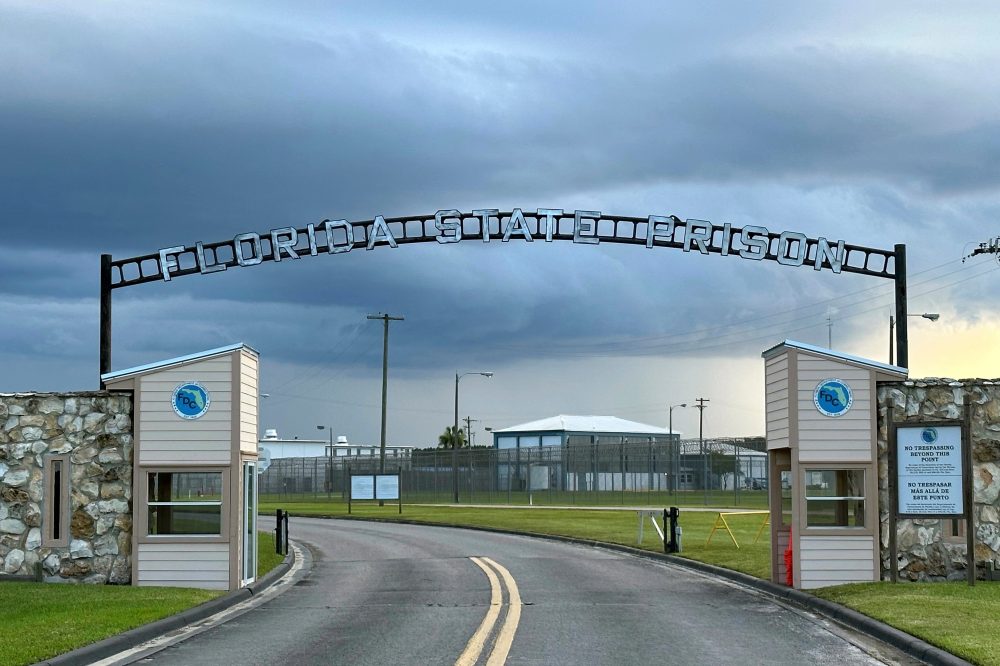
James Aren Duckett, 68, is now scheduled to be executed at noon on July 28 at Florida State Prison near Starke. Republican Gov. Ron DeSantis signed the death warrant on Tuesday. Duckett was found guilty of raping and drowning the young girl while he was serving as a police officer in a small central Florida city.
Also set to die that same day — at 6 p.m. — is Dominick Anthony Occhicone, 80, who was convicted of fatally shooting his former girlfriend’s parents in 1986. That execution had already been on the calendar before Duckett’s warrant was signed.
This marks the first time Florida has planned to execute two people on the same day since the U.S. Supreme Court restored the death penalty in 1976, following a temporary nationwide halt that began in 1972. Florida Department of Corrections records show that the last time two executions occurred on the same day was May 12, 1964, when Emmett C. Blake and Sie Dawson were both put to death for murder. Historical records indicate that multiple executions in a single day were far more common in earlier eras.
Should both executions proceed as planned, Duckett and Occhicone would be the 11th and 12th inmates executed in Florida this year. Both cases are expected to go through additional appeals, including review by the U.S. Supreme Court, before any execution is carried out.
Court documents reveal that on the night of May 11, 1987, Duckett was the sole officer on duty in Mascotte — a small city roughly 40 miles west of Orlando. Witnesses said they saw 11-year-old Teresa McAbee climb into Duckett’s patrol car outside a convenience store that evening. Her mother reported her missing hours later, and her body was discovered the following morning in a nearby lake. Investigators said DNA from fluids and hair found on the girl’s body were probable matches to Duckett, and fingerprints belonging to both Duckett and the victim were lifted from his patrol car.
In Occhicone’s case, investigators said he arrived on the morning of June 10, 1986, at a home in Holiday — a community just north of Clearwater — where his former girlfriend was living with her parents and two children. When the woman refused to speak with him, Occhicone left and returned about an hour later armed with a handgun. He cut the phone lines outside the home and then shot and killed Raymond and Martha Artzner as his former girlfriend escaped with her daughter. While Occhicone did not deny pulling the trigger, his defense team argued at trial that the killings were not premeditated.
DeSantis has overseen a record 19 executions in 2025 — more than any other Florida governor in a single year since capital punishment was reinstated in 1976. The previous record was eight executions, set in 2014.
DeSantis had previously signed a death warrant for Duckett back in February, setting March 31 as the execution date. However, the Florida Supreme Court stepped in with a stay just days before that date to allow for DNA testing of old evidence that could not be properly analyzed due to technological limitations at the time of the original trial. The test results came back inconclusive — neither clearing Duckett nor definitively tying him to the crime. Judges allowed the jury’s guilty verdict to stand, and Duckett’s stay was lifted earlier this month.
Duckett’s attorney, Mary Elizabeth Wells, issued a statement condemning the rescheduled execution and arguing that the inconclusive DNA results stem from how the state handled the evidence.
“Mr. Duckett has consistently maintained his innocence,” the statement read. “The State’s duty is to ensure that justice is done, and not rush to kill in a case with such serious doubts over guilt. We are committed to seeking every avenue of relief for Mr. Duckett ahead of his scheduled July 28 execution so that the State of Florida does not execute an innocent man.”
The governor’s office declined to address Duckett’s case or these specific executions directly, but DeSantis has spoken publicly about his approach to capital punishment before. At a November 2025 news conference, he said: “Some of these crimes were committed in the ’80s. Justice delayed is justice denied. I felt I owed it to them to make sure this ran very smoothly. If I honestly thought someone was innocent, I would not pull the trigger.”
If executed, Occhicone would become the oldest inmate ever put to death in Florida’s history. On June 25, the state executed 74-year-old Dusty Ray Spencer for killing his estranged wife — making him the oldest at the time. That record was then broken just days later on Tuesday, when Dennis Sochor — only a week older than Spencer — was executed for killing a woman in the early hours of 1982 after meeting her at a New Year’s Eve party.
Occhicone would also rank as the second oldest prisoner executed in the modern era of U.S. capital punishment, behind 83-year-old Walter Moody Jr., who was put to death in Alabama in 2018 for a series of mail bomb attacks that killed a federal judge and a Black civil rights attorney.
Florida carries out executions using a three-drug lethal injection protocol consisting of a sedative, a paralytic agent, and a drug that stops the heart, according to the state Department of Corrections.