
DUBAI — Iran announced Friday that it carried out new strikes against U.S. facilities in the Gulf, following a sixth consecutive night of American military operations targeting Iranian military infrastructure, marking the breakdown of a ceasefire agreement reached just last month.
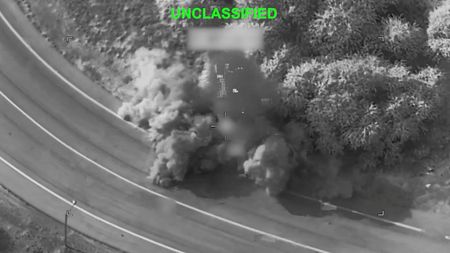
The U.S. military confirmed it had completed another round of strikes aimed at weakening Iran’s military capabilities, with targets including areas on Qeshm Island and near Bandar Abbas — the location of Iran’s largest port and major navy and Revolutionary Guards installations.
“U.S. forces, including fighter jets, aerial drones, and warships, launched precision munitions that hit dozens of Iranian military targets such as coastal surveillance and air defense sites, military logistics infrastructure, and maritime capabilities,” U.S. Central Command said in an official statement.
Iran has responded by firing missiles and drones at American military bases in neighboring countries, including an air base in Jordan. In the early morning hours of Friday, Iran’s military announced it had struck U.S. facilities in Bahrain and Kuwait. In the Qatari capital of Doha, witnesses reported hearing multiple explosion-like blasts, and that country’s Ministry of the Interior confirmed a child was wounded by shrapnel.
Iranian state media reported that five bridges were struck in the latest wave of U.S. attacks, along with the train station in the coastal city of Bandar Khamir and Iranshahr Airport in southeastern Iran. Seven people were killed in the bridge strikes in Bandar Khamir, a port city in southern Iran, according to state news agency IRNA. Those reports could not be independently confirmed by Reuters.
SHIPPING THROUGH HORMUZ HALTED AGAIN
The ongoing military exchange has once again brought traffic through the Strait of Hormuz to a near standstill. The strait is considered the world’s most critical shipping corridor for oil and gas, and the disruption has pushed global energy prices higher. Tehran has reinstated its blockade of the strait, while Washington reimposed a blockade of Iranian ports beginning Wednesday.
Iran has also signaled it may encourage its Houthi allies in Yemen to shut down another major waterway — the Bab al-Mandeb at the entrance to the Red Sea — if the U.S. continues striking Iranian infrastructure, according to sources who spoke with Reuters.
Last week, Iran attacked ships traveling through a corridor in the strait. White House press secretary Karoline Leavitt told reporters Thursday that U.S. President Donald Trump would not “sit by and allow these active acts of terrorism to take place in the strait without ensuring Iran pays consequences for that.” She also noted, however, that the president was “always open to diplomacy at the very same time.”
Iranian sources told Reuters that Tehran’s goal is to assert control over the strait, though Iran does not want the situation to escalate to the point of collapsing June’s memorandum of understanding — an agreement it views as largely favorable to its interests.
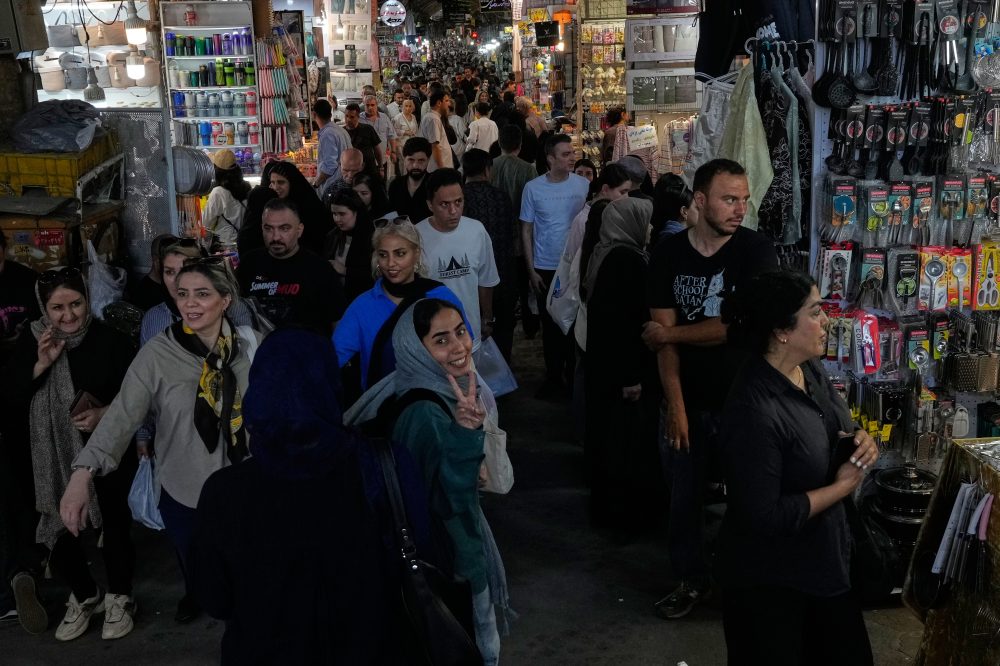
Inside Iran, the renewed bombing campaign has left residents on edge. “Living with this fear that war could start again is very exhausting. You cannot live like this… Personally, I want diplomacy to prevail,” said Mahlegha, 46, a government employee speaking to Reuters from Tehran.
IRAN’S DEMANDS OVER THE STRAIT
Iran is demanding that all vessels passing through the Strait of Hormuz travel along a route close to its coastline, and plans to begin collecting passage fees once a 60-day negotiation window established in last month’s memorandum expires. The U.S. has urged ships to take an alternate southern route along the Omani coast instead.
American forces said their airstrikes along the Iranian coastline are intended to undermine Iran’s ability to dominate the strait. However, Iranian Army spokesperson Brigadier General Mohammad Akraminia pushed back Thursday, saying the effort would fail because Iran has the capability to strike the strait from anywhere within its territory.
President Trump has not ruled out deploying ground forces, including a potential move to seize Kharg Island, where Iran’s primary oil export terminal is located. He has also repeated threats to target Iranian power plants and bridges in the coming week if Tehran does not return to the negotiating table.