
The White House announced Thursday that the man responsible for operating President Donald Trump’s teleprompter has been placed on unpaid leave, following reports that he allegedly used his behind-the-scenes access to win bets on an online prediction platform by wagering on what the president would say in public speeches.
According to a report from ABC News, Gabriel Perez — who has been running Trump’s teleprompter since 2016 — allegedly used his advance knowledge of speech content to win more than $100,000 on the platform Kalshi. Among the speeches he allegedly bet on was the State of the Union address earlier this year.
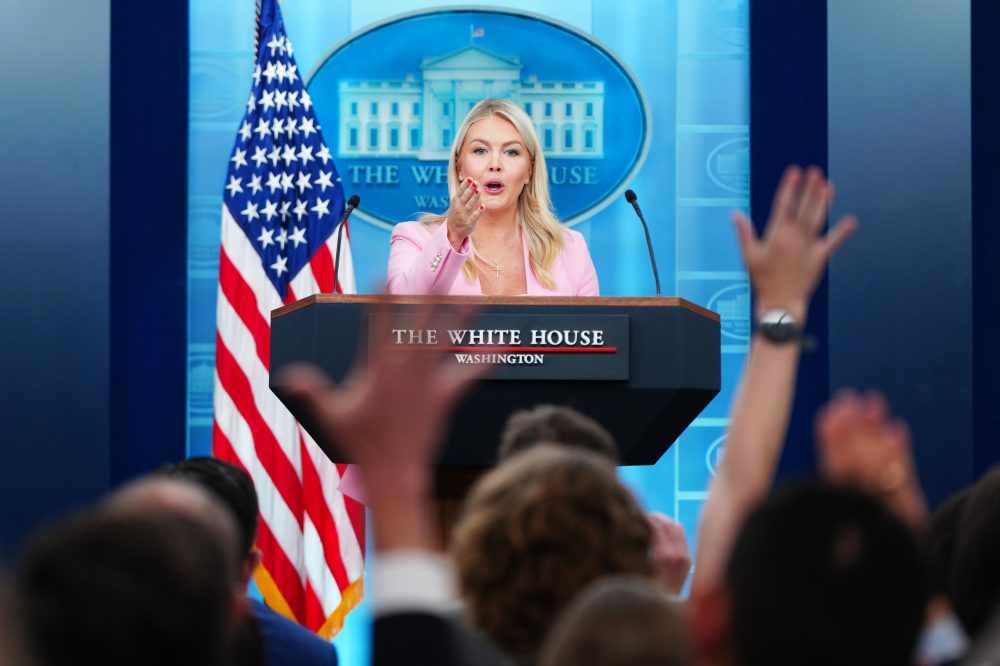
White House Press Secretary Karoline Leavitt addressed the situation with reporters, saying the president is aware of what happened and is not pleased. She called the situation “unfortunate” and “a disgrace.”
“The White House has extremely strict ethical guidelines with respect to issues like this,” Leavitt said, confirming the aide had been placed on unpaid leave.
Kalshi’s head of enforcement and legal counsel, Robert Denault, posted on X that the company’s surveillance team identified and investigated the suspicious trades before referring them to the U.S. Commodity Futures Trading Commission, the federal agency that oversees such matters. Denault’s statement did not identify Perez by name.
“We have been assisting regulators on this matter and provided all evidence that we collected, as we do with any referral,” Denault wrote.
The ABC News report was based on multiple sources with knowledge of the situation who requested anonymity in order to speak freely about the details. The report pointed to suspicious activity on Kalshi’s “Mentions” market, where users can place wagers on specific words or phrases that might appear in public speeches. Kalshi recently introduced a requirement for users to disclose where they work, and the platform’s rules bar users from betting based on information they obtain through their employment.
The incident is part of a broader conversation about members of the administration benefiting financially from their proximity to the presidency — a discussion that has extended to Trump himself.
In his most recent financial disclosures, Trump reported earning $1.2 billion from his cryptocurrency ventures in 2025, even as investors in those same markets saw losses. Trump has pushed back against stricter federal oversight of the crypto industry.
The disclosures, filed with the Office of Government Ethics, showed that Trump’s company World Liberty Financial brought in more than $500 million from selling new crypto products, including what are called “governance tokens.” A separate crypto venture, CIC Digital LLC, collected more than $600 million from sales of souvenir-style “meme” coins featuring his image. The value of both the tokens and the coins has dropped sharply since they were sold.
Beyond crypto, Trump has also generated income through merchandise deals and high-priced events held at his personal properties, substantially growing his net worth since returning to office.
When asked about the president’s financial activities earlier this year, Leavitt defended his conduct, saying, “The president is abiding by all conflict-of-interest laws that are applicable to the president,” and calling it “absurd for anyone to insinuate that this president is profiting off of the presidency.”