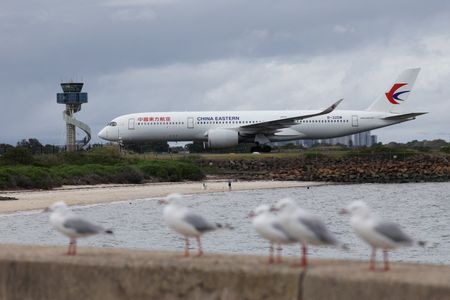

China’s three dominant carriers are entering the busiest travel months of the year under serious financial strain, having disclosed that their combined losses for the first half of 2025 could reach as high as 9 billion yuan — roughly $1.33 billion U.S. dollars.
Air China, China Eastern Airlines, and China Southern Airlines each issued warnings Tuesday about the expected losses, a dramatic turnaround from the combined profit they recorded in the first quarter, when strong Lunar New Year travel had boosted their bottom lines.
The airlines now face a difficult balancing act: raising ticket prices to offset surging fuel costs risks driving away passengers, but keeping fares low means the carriers must absorb those higher expenses themselves.
Parash Jain, HSBC’s global head of transport and logistics research, pointed to what he called a “negative wealth effect” reshaping how Chinese consumers spend money as economic growth has slowed. He warned that every fare increase risks pushing travelers away.
“The rising ticket prices are hurting demand and pushing people to use high-speed rail more for shorter distances,” Jain said, also citing weather disruptions and a shrinking school-age population as factors weighing on summer travel. “But the single largest reason for weaker demand is the increased ticket prices.”
HSBC analysts project the three major carriers will post combined losses of approximately 16.8 billion yuan in 2026 — a stark contrast to the current market expectation of a combined profit of 1.3 billion yuan.
In a filing with the stock exchange, Air China stated that elevated fuel prices had “drastically squeezed” profit margins across the airline industry.
Unlike many of their Asian competitors, Chinese airlines do not hedge much of their fuel purchasing, which has left them more vulnerable to the oil price spike triggered by the Iran conflict. While jet fuel prices have retreated from their peak in the second quarter, they still sit roughly 50% above pre-conflict levels.
“Given that jet fuel normalization will take time, weak demand conditions are likely to remain the key concern heading into the summer peak season,” analysts at Bank of America wrote in a recent note.
While the third quarter is historically the most profitable stretch for Chinese airlines, aviation data company Flight Master is forecasting that passenger traffic on both domestic and international routes will drop 3.6% compared to the same period last year — falling to 142 million passengers in July and August. That would represent the first contraction during peak summer travel since 2022.
Between July 1 and July 14, the average number of daily flights dropped 2.2% year-over-year, with domestic flights declining 1.8% and international routes falling 3.6%, according to Flight Master. Economy class tickets averaged 831 yuan during that stretch, down 1.2% from a year ago and 6.1% below 2019 levels.
China’s domestic air travel demand shrank 6.2% in May compared to the previous year, according to the International Air Transport Association — the weakest showing among major domestic aviation markets worldwide and the first monthly decline in China unrelated to Lunar New Year timing since the pandemic era.
The three big carriers, which depend on international routes for around 30% of their revenue, have seen a boost in bookings on European flights since the Iran conflict began, as travelers have avoided disrupted Middle Eastern hub airports. However, Flight Master data indicates those gains are beginning to erode as Gulf airlines resume operations and offer more competitive fares.