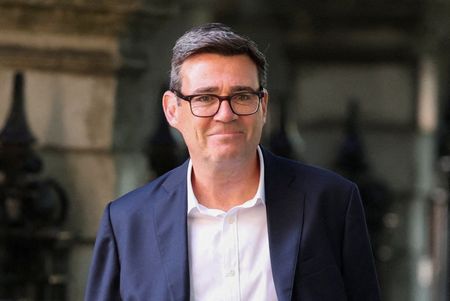

LONDON — Andy Burnham, widely known by his nickname the ‘King of the North,’ is poised to officially take the helm of Britain’s ruling Labour Party on Friday, placing him just days away from becoming the country’s next prime minister.
A specially convened party conference on Friday will serve as the formal occasion for Burnham’s election as Labour leader — a step widely regarded as a formality given the overwhelming backing he has already received from the party’s lawmakers. He is expected to replace Keir Starmer as Britain’s leader when Monday arrives, at which point attention will quickly turn to who he selects for his cabinet and what direction he plans to take the government.
Burnham, 56, earned his ‘King of the North’ reputation through years of fiercely advocating for the Greater Manchester region’s interests during his time as its mayor. He returned to parliament last month after winning a seat in Makerfield, kicking off the four-week process that will culminate in his installation as prime minister and the departure of Starmer, whose widespread unpopularity ultimately turned his own lawmakers against him.
A Major Shift of Power Away from London
Since returning to parliament, Burnham has laid out portions of his domestic vision, centering on what he describes as the ‘biggest rebalancing of power’ away from London and toward Britain’s various regions. He argues this approach will chip away at inequality and address the frustration felt by so-called ‘left-behind communities’ — areas that have increasingly thrown their support behind Reform UK.
It was precisely this strategy for countering Reform’s rise that persuaded Labour lawmakers to back him. Many feared losing their seats to the populist party led by veteran Brexit campaigner Nigel Farage, which has sat atop opinion polls for several months heading into the next national election, due no later than 2029.
Reform’s momentum has shown some signs of slowing in recent weeks, however, following Farage’s acceptance of money from wealthy donors — a development that could hand Burnham an opportunity to rebuild Labour’s standing with voters.
Still, time is not on his side. With a general election at most three years away, Burnham faces pressure to move quickly on his promises, many of which are built around longer-term thinking.
Nigel Wilcock, executive director at the Institute of Economic Development — an independent organization representing professionals in the economic development field — noted that Burnham has spent years championing a different model for economic growth. However, Wilcock cautioned: “The challenge is turning that vision into a reality.”