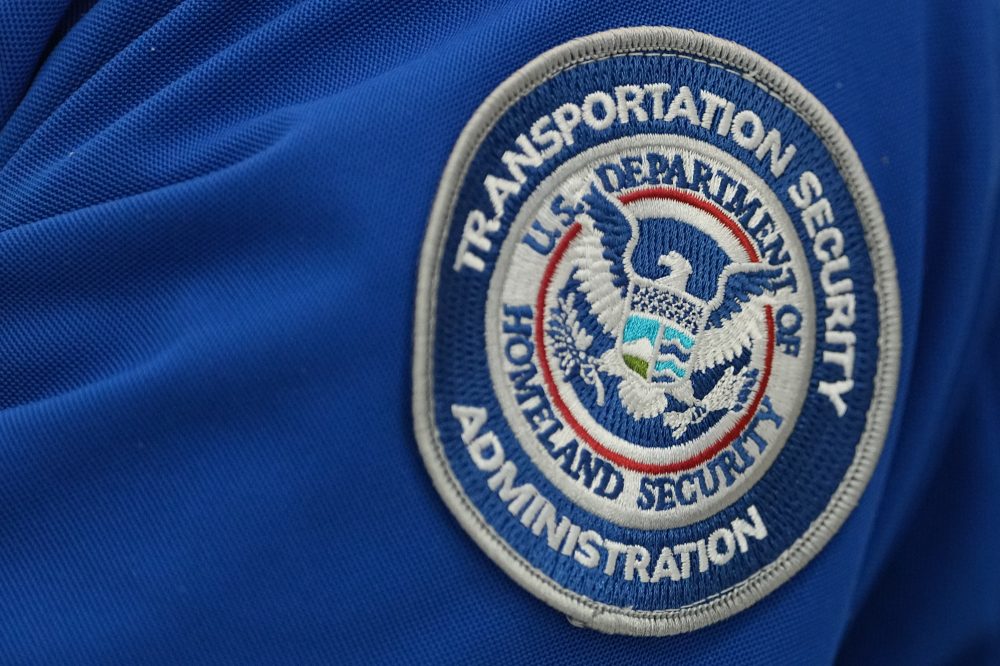

President Trump’s nominee to lead the Transportation Security Administration appeared before a Senate panel Thursday, working to calm fears about a push to expand private airport screening while promising to stand up for the agency’s workforce.
David Cummins, who previously served as a senior vice president at government contractor Serco, is being considered to head an agency with approximately 60,000 employees who handle security at more than 440 airports across the country. He would take the reins of an agency already struggling with staffing and morale issues — problems made worse by this year’s record-breaking partial government shutdown, during which TSA workers went weeks without a paycheck. That funding gap caused thousands of officers to call in sick and led roughly 1,100 to resign, resulting in lengthy lines at airports around the nation.
In his opening remarks, Cummins said his top priority upon confirmation would be visiting airports in person to reassure workers that he would “do everything in my power to protect and support them in the future.”
“The challenges ahead are significant,” Cummins told the Senate Committee on Commerce, Science and Transportation. “But the opportunities to transform the TSA on the eve of its 25th anniversary are even greater.”
The TSA, which operates under the Department of Homeland Security, was established following the September 11, 2001 terrorist attacks to consolidate passenger screening under one federal authority. However, a program created shortly afterward permits airports to hire private contractors for screening duties, with TSA maintaining oversight.
Democratic senators and the union that represents TSA officers have voiced concerns that growing this initiative — known as the Screening Partnership Program — essentially privatizes a critical government security role and could put TSA workers at a disadvantage.
Cummins pushed back on that view and stood behind the Trump administration’s intention to grow the program, arguing it is not hostile to workers. He pointed out that airports operating under the private screening arrangement continued paying their employees during previous government shutdowns.
“Some will suggest that the SPP is all about privatization and that it is anti-worker,” Cummins said. “I hold that it is in fact pro-worker to pay your employees, as the SPP airports did during the last shutdowns.”
Cummins also stated that current TSA employees would have the “right of first refusal” for screening positions at any airport that transitions to the program, adding that “in our experience, all of them take the jobs and they stay there.”
He expressed support for legislation including the bipartisan Keep America Flying Act, which would ensure TSA employees are paid during any future government funding gaps. He said there is “too much at stake” to allow the agency to remain exposed to political standoffs over the budget.
When Democratic lawmakers pressed Cummins about Homeland Security Secretary Markwayne Mullin’s threats to withdraw Customs and Border Protection officers from airports in so-called sanctuary cities, Cummins said he had not received any briefing on “near-term plans” to do so. He did, however, acknowledge the role politics can play in aviation security decisions.
“What I would say is that we are in a very sort of politicized environment. We all need to recognize that aviation security is impaired oftentimes by politics,” Cummins said, adding that he would be straightforward with Congress if any such order threatened TSA operations.
Before his nomination, Cummins worked at Serco, a firm that partners with federal, state, and local government agencies. A since-deleted LinkedIn profile indicated he helped develop transportation technologies and was co-awarded roughly a dozen patents in transportation systems. The profile also noted he directed operations planning for the 2002 Winter Olympics held in Salt Lake City.