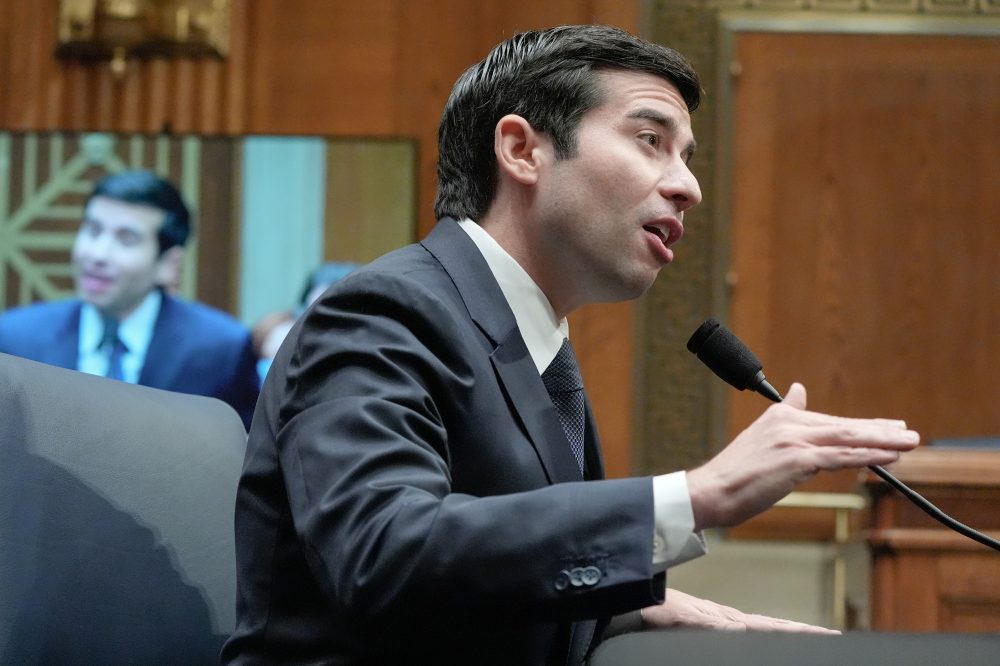

WASHINGTON — The man President Donald Trump wants to permanently lead the Department of Labor sat before a Senate panel Thursday, making the case that his background in private law practice, academic teaching, and federal service makes him the right person for the job.
Keith Sonderling has actually been running the department in an acting capacity since April, when the White House announced that his predecessor, Lori Chavez-DeRemer, was departing for a private sector role. Her exit came amid multiple allegations that she had misused the authority of her position.
Unlike some of the more contentious confirmation hearings that have marked Trump’s second term, Thursday’s session was relatively measured — though it was far from without disagreement. A notable point of contention was the administration’s decision to have the Department of Labor take on the management of certain grant programs that previously fell under the Department of Education.
Sonderling’s resume includes time as a senior advisor at the Labor Department during Trump’s first term, followed by a stint as a Republican member of the Equal Employment Opportunity Commission. He also taught labor law as an adjunct professor at George Washington University before returning to the department in Trump’s second term. He was confirmed as deputy secretary in March of last year.
“Few people have had the opportunity to experience the department from so many perspectives,” Sonderling told lawmakers during the hearing.
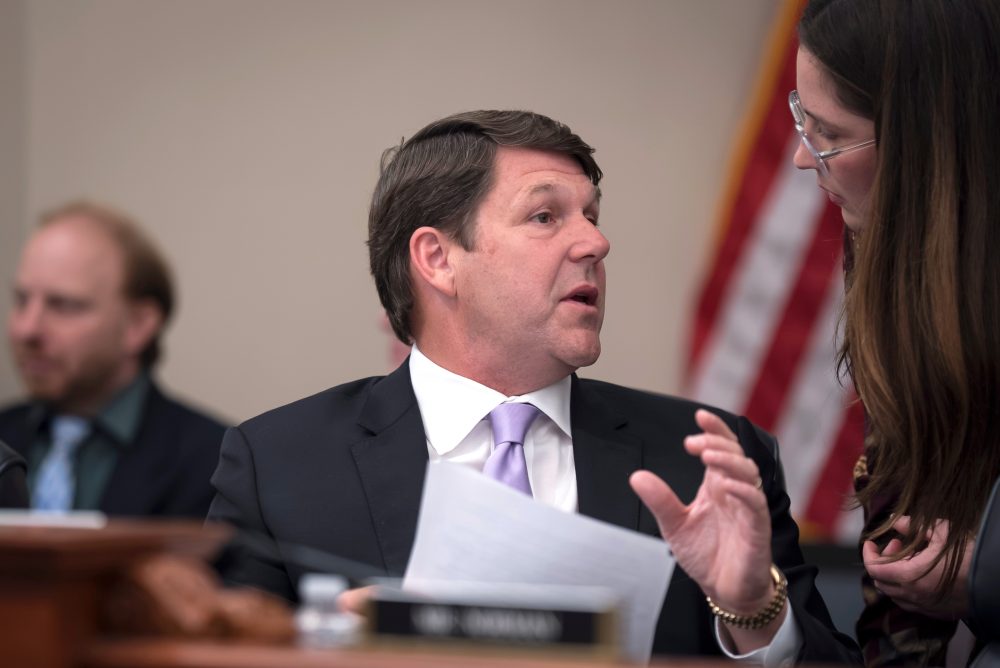
While Sonderling is widely expected to be confirmed, Sen. Patty Murray, D-Wash., made no effort to hide her opposition to his record. She pointed out that the department this year rolled back a Biden-era rule that had expanded overtime pay eligibility — a rule the department itself had estimated would have extended overtime protections to an additional 4 million lower-wage salaried workers. A federal judge had also placed the rule on hold during the final stretch of the Biden administration.
Murray further criticized the department’s pursuit of a new rule governing how workers are classified as either employees or independent contractors, arguing that the change would allow large corporations to label workers as contractors and pay them less — costing workers billions of dollars each year. She also highlighted that the department had dismissed the large majority of staff in the office responsible for shielding workers from discrimination by federal contractors.
“I fear any vote to confirm you is for more of the same: to strip overtime protections for our workers, to undercut our unions and to let giant corporations get away with robbery, literally,” Murray said.
On the other side of the aisle, Sen. Rick Scott, R-Fla., offered strong support for the nominee, calling him unquestionably qualified for the role. Scott also credited Sonderling with providing stability at the department following Chavez-DeRemer’s sudden departure.
“He is committed to making America the best place to get a job,” Scott said.
The question of Department of Education grant programs being handled by the Labor Department surfaced repeatedly throughout the hearing. Democrats raised concerns as Trump pushes forward with his campaign promise to shut down the Department of Education altogether. Sonderling explained that Education Department staff have been assigned to work within his department and are the ones making policy decisions, with the Labor Department handling the financial disbursement side. As one example, he said $1.5 billion arrived at his department at midnight on July 1 and was sent out to recipients within an hour or two.
“And the states love this,” Sonderling said.
Senators from both parties also raised questions about how the rapid expansion of artificial intelligence is affecting American workers. Sonderling said his department is gathering information from both companies and unions about how AI is being used in the workplace. The Bureau of Labor Statistics will then analyze that data to help direct job training funds to states more efficiently.
He pushed back on what he described as a “gloom and doom narrative” surrounding AI’s effect on jobs, saying that narrative is largely being driven by consultants and the technology industry.
“What we believe we’re going to see is that AI-impacted jobs can potentially make you more productive. It can make your workplaces safer, but we can’t get that information yet,” Sonderling said.
Sonderling also highlighted his collaboration with Vice President JD Vance on a task force aimed at reducing fraud in government programs. He said he is urging states to “verify first and pay later” when processing unemployment insurance claims, and noted that the department is partnering with Alabama on a centralized verification system.
“They have some of the lowest fraud and improper payment rates in the country because they are verifying,” Sonderling said.