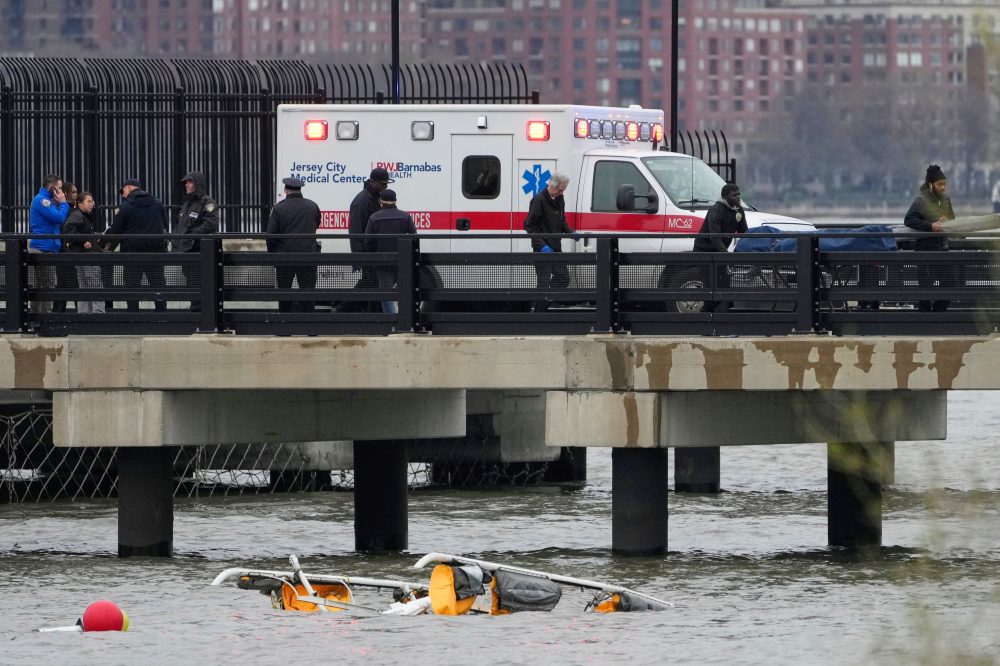

Investigators announced Thursday that goose remains were discovered among the wreckage of a sightseeing helicopter that plunged into the Hudson River in New York City last year, killing all six people on board.
The National Transportation Safety Board said both physical evidence and accounts from witnesses support the theory that the helicopter collided with multiple birds before going down on April 10, 2025.
According to the Federal Aviation Administration, helicopters face a heightened risk from bird strikes due to the low altitudes at which they typically operate. While such strikes are relatively rare for helicopters, the consequences can be catastrophic.
Those who lost their lives included a Siemens business executive from Spain, his family, and the aircraft’s pilot. Passengers Agustin Escobar, 49; his wife, Mercè Camprubí Montal, 39; and their three children — Victor, age 4; Mercedes, age 8; and Agustin, age 10 — all perished in the crash. The pilot, Seankese Johnson, 36, was a U.S. Navy veteran who had earned his commercial pilot’s license in 2023. Following the disaster, New Jersey’s governor called for tighter restrictions on nonessential helicopter flights in the region.
The hazard posed by bird strikes gained widespread attention back in 2009, when a US Airways jet collided with a flock of birds shortly after takeoff, causing both engines to fail. Pilot Chesley “Sully” Sullenberger became a national hero after successfully landing the powerless aircraft on the Hudson River, saving all 155 people aboard — an event that became known as the “miracle on the Hudson.”
Eyewitnesses to last year’s crash described a terrifying scene: the helicopter’s tail and main rotor appeared to break apart, and smoke was visible as the aircraft spun before hitting the water.
The flight had departed from a downtown heliport that afternoon and traveled north along the Manhattan skyline before turning south toward the Statue of Liberty. Wreckage began falling into the river less than 18 minutes after takeoff.
Rescue boats arrived at the scene within minutes and pulled the victims’ bodies from the water. Recovery crews later lifted the badly damaged Bell 206L-4 helicopter from the riverbed for examination by investigators.
New York Helicopter Tours ceased operations following the crash. The FAA also issued an emergency order grounding all of the company’s flights after discovering that the firm had terminated its operations director just minutes after he had agreed to voluntarily suspend flights during the investigation.
Federal aviation officials said at the time that they believed the firing was an act of retaliation against the director for making a safety-related decision.
The company’s director of operations, Jason Costello, had agreed to halt flights while the crash was under investigation. However, just 16 minutes after Costello emailed the FAA to confirm the voluntary suspension, the company’s chief executive officer sent a separate message to the agency stating he had not authorized the halt and that Costello was no longer employed by the company.