
MONTERREY, Mexico — To the sound of popping confetti and amid floating balloons, American Cal-Mex restaurant chain Chipotle threw open the doors of its very first Mexican location on Thursday, bringing burrito bowls and chicken salads to the very country where tacos were born.
The chain chose Monterrey’s upscale San Pedro Garza Garcia neighborhood for its debut — a corporate enclave widely regarded as the wealthiest municipality in all of Latin America, situated in Mexico’s northern border state of Nuevo Leon.
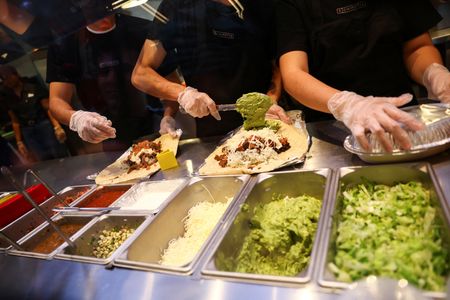
A dramatic chili-shaped covering was pulled away in a shower of confetti, and eager crowds quickly lined up to try the California-born chain for themselves, snapping photos as workers assembled wraps and salads along a bustling counter.
Ricardo Aguilar, a 26-year-old Mexican resident who showed up on opening day, said he first discovered Chipotle during trips to the United States and has been a fan ever since, praising the restaurant’s fresh ingredients and generous serving sizes.
“It’s a different kind of offering,” he said. “It’s definitely not your street-corner taco stand.”
Chipotle’s Mexico director Pablo de Brito spoke with Reuters at the opening, saying the company intends to launch six to eight additional Monterrey locations over the next 14 months before pushing into Mexico City and eventually the rest of the country.
“We’re more than happy with this opening,” he said, explaining that Monterrey was selected as the launch city partly because its population skews young and has strong ties to American culture, giving the brand a built-in familiarity.
Chipotle’s arrival comes after fast-food chain Taco Bell made two failed attempts to crack the Mexican market — once in 1992 and again in 2007 — both times finding that locals had little interest in its offerings when authentic Mexican food was readily available.
Mexico’s national statistics office, INEGI, counts more than 147,000 registered taquerias throughout the country. The overwhelming majority are informal street-side stands serving a variety of meat-filled tacos topped with salsas and garnishes.
In 2021, a geographer at Mexico’s National Autonomous University named Baruch Sangines mapped out 1.6 million taco shops across the country. His research found that 95% of Mexico City residents live within 400 meters — roughly a five-minute walk — of a taqueria. In the Monterrey metro area, home to more than 5 million people, that figure was still a substantial 75%.
Sara Senatore, a senior restaurants analyst at Bank of America, sees promise in Chipotle’s decision to partner with Alsea — a company that already franchises Starbucks and Domino’s Pizza throughout Latin America and Europe.
“They’re the ones building the restaurants and they bear a lot of the risk,” she said, adding that Alsea’s willingness to invest is a signal that the brand has real potential. She also noted that a certain cultural “mystique” surrounding U.S. brands often helps them perform well in foreign markets.
Senatore also pointed to Chipotle’s menu range — from mild carnitas to a “pretty darn hot” salsa — as a factor that could appeal to a wide variety of Mexican customers.
Spice levels have become a culturally charged issue in Mexico in recent years. A number of traditional sauces have reportedly been toned down due to gentrification, a trend that accelerated during the COVID-19 pandemic when large numbers of American remote workers relocated to Mexico, often outspending local residents.