
The state of the American economy took center stage this past week, with new data revealing both encouraging signs and fresh concerns for everyday consumers and businesses alike.
One of the biggest emerging threats to price stability is the enormous wave of money being poured into artificial intelligence infrastructure. Investment in data centers is expected to surpass $700 billion this year, driving up the cost of memory chips, computer processors, related equipment, and electricity. Economists warn this spending surge will likely keep inflation elevated at least through the end of 2025.
While the situation isn’t expected to mirror the severe inflation spike of 2021 through 2023 — when prices peaked at a 9.1% annual increase — the AI-driven cost pressures could prompt the Federal Reserve to raise its key interest rate later this year. When the Fed raises rates, borrowing costs for car loans, home mortgages, and business financing typically go up as well.
On a more positive note, inflation actually cooled in June. The cost of gasoline, clothing, and used vehicles all declined, giving consumers some breathing room. The Labor Department reported Tuesday that prices fell 0.4% between May and June — the steepest single-month drop in four years. Year-over-year, inflation came in at 3.5%, down from 4.2% in May and better than most economists had predicted.
However, oil prices climbed for a second straight day Tuesday after the United States launched renewed attacks on Iran and President Donald Trump announced a new blockade of the Strait of Hormuz — a critical shipping corridor that handles roughly one-fifth of the world’s oil supply. The ongoing conflict and years of elevated prices have left many Americans feeling pessimistic about the economy, which could create political headwinds for Trump and Republicans heading into the midterm elections.
Home financing also got more expensive this week. The average 30-year fixed mortgage rate climbed to 6.55%, up from 6.49% the previous week, according to mortgage buyer Freddie Mac. That’s still below the 6.75% average recorded one year ago, but the increase adds to the affordability struggles facing prospective homebuyers. Higher monthly payments reduce how much home buyers can afford, keeping many would-be owners on the sidelines.
Consumer spending showed signs of slowing down. Retail sales grew just 0.2% in June, a significant pullback from the revised 1% gain in May, the Commerce Department reported Thursday. Excluding gas station sales, retail was up 0.7%. Clothing and accessories stores saw a 0.3% decline, while online shopping surged 1.9%, boosted by Amazon’s Prime Day event, which ran from June 23 through June 26.
Wholesale inflation — which tracks price pressures before they reach consumers — also fell in June. The Labor Department’s producer price index dropped 0.3% from May, driven largely by a 12% plunge in gasoline prices. Still, compared to a year ago, wholesale prices were up 5.5% in June, slowing from a 6% annual increase in May. Gasoline remains nearly 43% higher than it was in June 2025, largely due to the ongoing conflict with Iran. Stripping out food and energy, core wholesale prices rose 4.7% from a year ago and 0.2% from May.
The job market offered some encouraging news. New unemployment claims fell by 8,000 during the week ending July 11, landing at 208,000 — the lowest level in 10 weeks and well below the 219,000 applications analysts had forecast. Weekly jobless filings are closely watched as a near real-time gauge of layoffs and overall labor market health.
That said, a broader government jobs report released earlier this month painted a more cautious picture. Employers added only 57,000 jobs in June — less than half of the previous month’s total — suggesting many companies remain hesitant to expand their workforces.
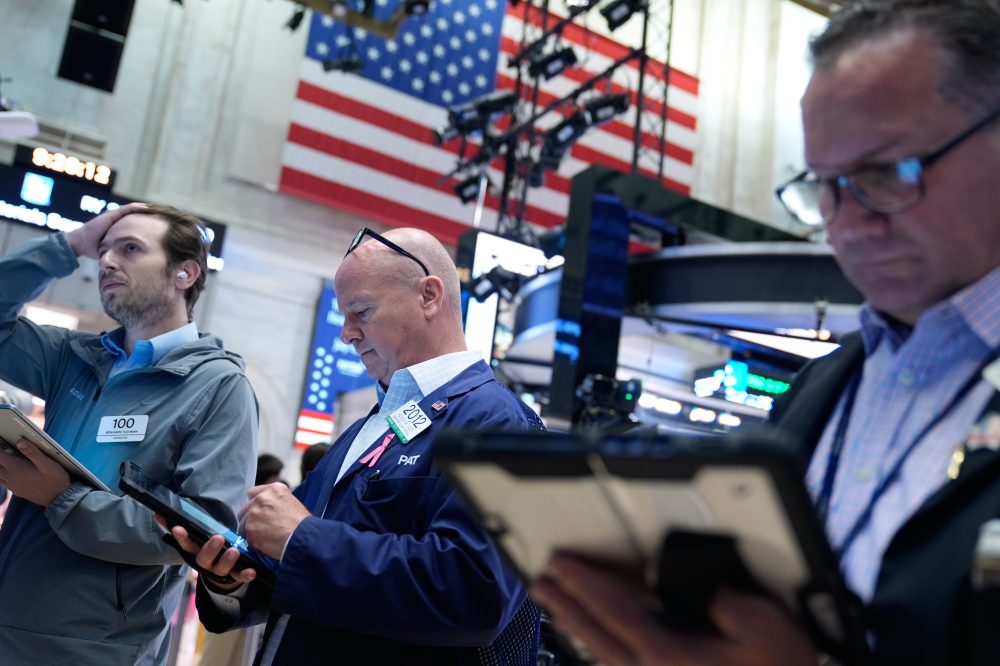
Stock markets ended the week on a down note. The S&P 500 fell and was on pace for its first losing week in three and only its third losing week out of the last 16. The Dow Jones Industrial Average and the Nasdaq composite also declined. Computer chip companies led the losses, continuing a weeks-long slide fueled by concerns that their valuations may have climbed too high and that demand for AI-related hardware might not hold up if the technology fails to deliver the profits and productivity gains investors are counting on.