
The FIFA World Cup has been a windfall for the American beer industry. Boston bars scrambled for emergency restocking to keep up with thirsty fans on some match days, and Philadelphia alone saw 290,000 stadium beers consumed across six games, according to FIFA organizers.
But behind all that celebratory foam lies a sobering truth: beer sales have been on a downward slide worldwide, and it remains to be seen whether this year’s tournament — co-hosted by three countries across 16 cities — can turn that around.
The Brewers Association, a trade group representing craft beer makers, reports that U.S. beer consumption has been declining steadily for ten years. Canada’s national statistics agency has recorded a similar drop, and the Brewers of Europe trade association says the European Union is experiencing the same pattern.
A growing number of consumers are stepping back from alcohol for health reasons. For the first time in Gallup’s polling history, a majority of Americans — 53% — said last year that having “one or two drinks a day” is harmful to one’s health.
Non-alcoholic beer has seen some growth, but it still accounts for only about 1% of the U.S. market, according to the Beer Institute, a trade group for brewers.
Financial pressures have also weighed on the industry. Overall U.S. alcohol consumption — covering beer, wine, and spirits — dropped 5% last year, with affordability concerns cited as a contributing factor by beverage market research firm IWSR.
Craig Purser, the president and CEO of the National Beer Wholesalers Association, points to another culprit: smartphones and streaming services. He believes they’ve pulled people away from the kind of social gatherings where beer has traditionally flowed.
“If you have this behavior where we’re cocooning and we’re not spending time with other folks, that’s going to affect beer consumption,” Purser said.
Then came the World Cup, bringing soccer fans from across the globe to cheer, commiserate, and gather together.
During the tournament’s first four weeks, beer sales at bars, restaurants, stadiums, and other venues climbed 14% in U.S. host cities compared to the same stretch last year, according to the Beer Institute. The momentum spread beyond those cities as well, with national sales rising 4%.
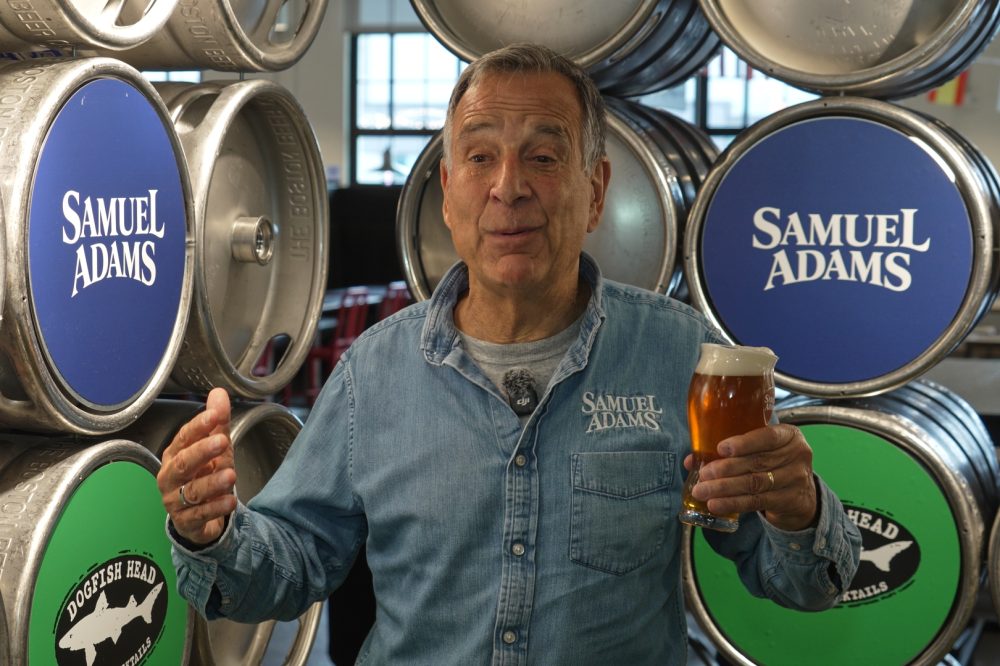
Jim Koch, the brewer, founder, and CEO of the Boston Beer Co. — maker of Samuel Adams and other brands — said his company had to arrange two emergency deliveries to its Sam Adams Boston Taproom on the first day Scotland’s fans arrived in town.
“At one point, we were pouring them a Sam Adams Boston Lager every 12 seconds. What a wonderful group of people,” he said.
But the brisk sales weren’t the only thing that impressed Koch.
“I didn’t see a single soul on their phone,” he said. “They had a beer in their hand and they were talking to each other. They were doing what beer is meant to do, which is helping people enjoy each other’s company.”
The open and enthusiastic drinking at this year’s venues was a sharp departure from the World Cup four years ago in Qatar, where the government prohibited the sale of alcoholic beer inside match venues.
Beer makers invested heavily in this year’s event. AB InBev, the maker of Budweiser and Michelob Ultra and the World Cup’s official beer sponsor, channeled marketing support to bars and organized 200,000 watch parties across 40 countries. Molson Coors announced it would increase its June and July marketing spending by 60% compared to the previous year and also introduced a limited-edition soccer ball designed to hold 12 cans of Miller Lite.
Maybell Romero, a law professor at Tulane University School of Law in New Orleans, typically reaches for a cocktail over a beer. But during the World Cup, she said she gravitates toward beer because of its lower alcohol content — a practical choice when watching games can stretch across an entire day.
“If I drink cocktail after cocktail, I will not be functional after a few hours,” Romero said.
Romero, who watched this year’s matches at bars in Mexico City, said she enjoyed sampling unfamiliar beers, including some made with distinctive ingredients like champagne yeast. She expects to return to cocktails once the tournament wraps up, though she might occasionally order a beer.
Beer consumption was already expected to dip in certain markets before the tournament concluded. Shares in AB InBev and Constellation Brands — which holds U.S. rights to Mexican beer labels including Corona and Modelo — fell after Mexico and Brazil were knocked out of the competition.
Romero noticed the shift in atmosphere in Mexico City following those defeats.
“The city is collectively depressed,” she said. “Everything is a lot quieter, and people aren’t going out as much.”
Purser is still optimistic that the World Cup can rekindle people’s love of gathering around live sports, particularly with the Summer Olympics set to come to Los Angeles in 2028. He noted that opportunities to enjoy a game-day beer are expanding, with college and professional football now being played on more nights of the week. He also pointed to the growing range of low- and no-alcohol beer options as a way to bring in new consumers.
In May, the NCAA lifted its long-standing prohibition on alcohol advertising during March Madness, opening the door for beer, wine, spirits, and hard seltzer brands to sponsor the college basketball tournament beginning next season.
Koch, for his part, said he isn’t losing any sleep over the industry’s recent struggles.
“People worry that the beer business has declined for a few years, and I always remind them that beer has been a part of human society, human civilization, for 10,000 years,” he said. “Beer will always be a part enhancing our enjoyment of our lives and the time we spend on this earth.”