
NEW YORK (AP) — American consumers tightened their wallets in June compared to May, as ongoing economic concerns mounted and the positive effects of generous government tax refunds began to wear thin.
According to a report released Thursday by the Commerce Department, retail sales increased just 0.2% in June — a significant pullback from the revised 1% gain recorded in May.
When gas station sales are removed from the equation, retail sales actually showed stronger growth, rising a solid 0.7%.
Clothing and accessories stores experienced a 0.3% decline in sales, while internet retail saw a strong 1.9% jump — driven largely by consumer activity surrounding Amazon’s Prime Day event, which ran from June 23 through June 26. Stores selling sporting goods, hobby items, musical instruments, and books posted a 1.3% gain, boosted in part by spending tied to the World Cup.
It’s worth noting that the retail sales data only captures part of the consumer spending picture and leaves out categories such as travel and hotel stays. Among service-related businesses tracked, restaurants showed a slight uptick of just 0.1%.
This report arrives as inflation showed signs of cooling last month. The cost of gasoline, clothing, and used vehicles all declined, giving consumers some financial breathing room. Underlying price pressures also eased more than most analysts had predicted.
As of Thursday, gas prices had fallen to $3.94 per gallon, compared to $4.04 a month earlier, according to motor club AAA.
The Labor Department reported Tuesday that consumer prices dropped 0.4% between May and June — the steepest monthly decline in four years — after having risen 0.5% the previous month. Year-over-year inflation fell to 3.5%, down from 4.2% in May and below what many economists had forecast.
Economists say that core inflation data suggests the spike in gas prices resulting from the Iran war, while it pushed up airfares and some other costs, has not yet triggered widespread, lasting inflation. However, the United States has resumed attacks on Iran, and President Donald Trump announced a new blockade in the Strait of Hormuz — a critical shipping corridor that handles roughly one-fifth of the world’s oil supply. That escalation threatens to reverse some of the inflation progress seen last month.
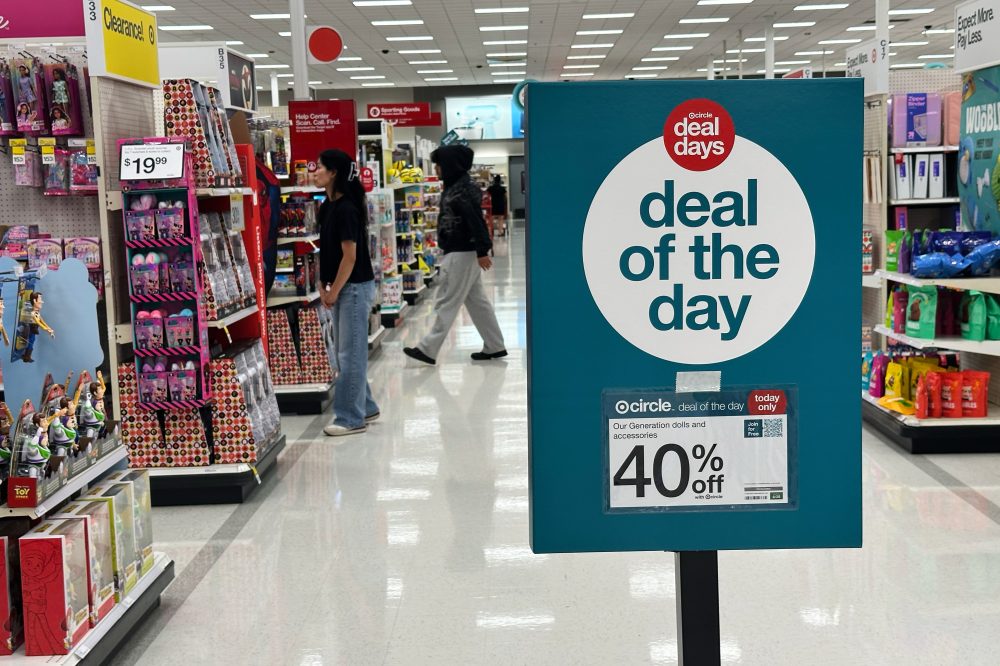
Looking ahead, major retailers including Walmart, Target, and Macy’s are expected to release their second-quarter earnings results next month, which should shed more light on how shoppers are behaving.
A recent report from the Conference Board found that Americans’ views of the economy improved slightly as gas prices came down, though consumer sentiment remains largely pessimistic by historical measures.
Sarah Williamson, a 27-year-old software support engineer from Raleigh, North Carolina, said she has become much more deliberate about her spending over the past year or so. While she feels financially stable thanks to steady employment, rising food and fuel costs have led her to cut back on non-essential purchases.
“I shop less overall as a hobby,” she said.
Williamson said she makes small but deliberate choices at the grocery store — for example, skipping pre-cut fruit like cantaloupe in favor of buying the whole fruit at a lower cost. She’s also more careful with clothing purchases. Recently, she bought a dress for $30, shipping included, through TikTok Shop, and spent $72 on a cotton nightgown from Amazon. While the nightgown was pricier than she’d typically spend, she felt it was justified given how often she wears it.
Brian Reynolds, CEO and founder of Just For Teens — a skincare brand targeting preteens and teenagers — said his budget-friendly products, including $5 pimple patches, are well-positioned for the current retail climate because they appeal to cost-conscious families.
Reynolds said his brand is on track to expand into 10,000 Dollar General locations by October, up from roughly 4,000 stores late last year. Sales have been steady so far, and he anticipates a stronger push during the back-to-school shopping season.
“There’s a lot of space for products that are everyday essentials that are value-priced,” he said.