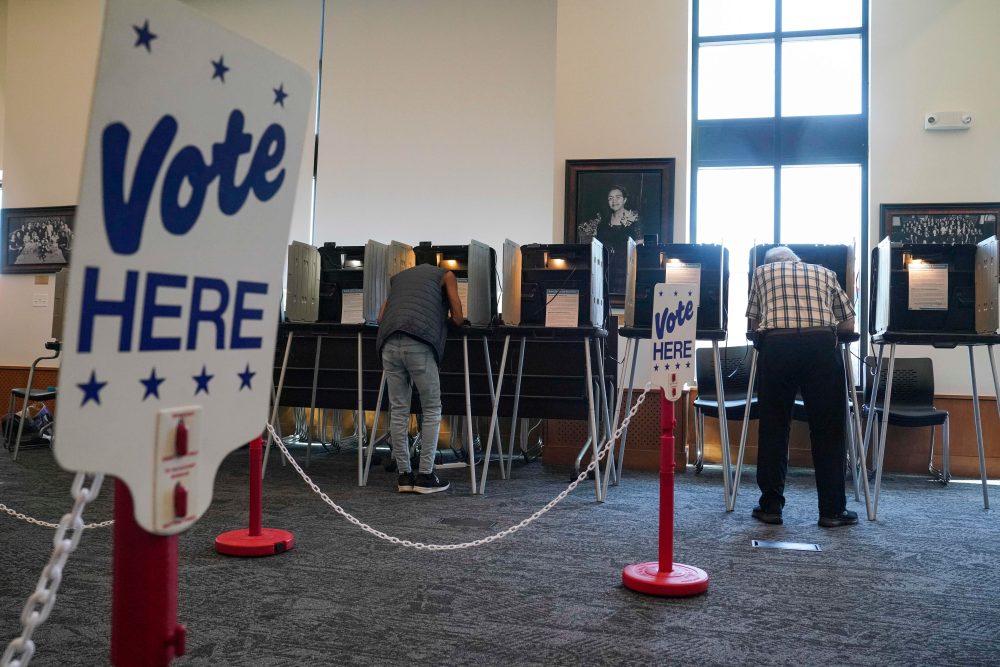

In a speech delivered Thursday evening, President Donald Trump told the country that Americans deserve secure elections, and he stated he was exercising federal authority to stop them from being “stolen.”
However, election security experts point out that one of the most powerful protections built into the U.S. voting system is the fact that elections are not run at the federal level. Voting in America takes place across more than 10,000 separate jurisdictions, each operating under rules established by state and sometimes local governments.
That highly fragmented structure makes the American election system extraordinarily complex — but also remarkably resistant to large-scale fraud. On the rare occasions when misconduct does occur, existing security measures typically catch it.
The decentralized nature of U.S. elections traces back to the nation’s founding. The Founding Fathers deliberately placed authority over elections with the states rather than the federal government. While Congress holds the power to regulate elections — and has exercised that power through legislation such as the Voting Rights Act — the Constitution clearly establishes that states hold primary responsibility for setting the “times, places and manner” of elections.
Unlike many other countries, the United States has no national election agency overseeing the presidential race. The day-to-day responsibility of running elections falls to local officials — typically a clerk or election supervisor — supported by staff and volunteers.
Although the variety of election laws across states can be confusing, experts in election security view this structure as a feature, not a flaw. Stealing a presidential election — as Trump has falsely claimed happened to him in 2020 — would require enormous numbers of election workers in the most competitive counties across the country to be willing to face prosecution, prison sentences, and fines. It would also require officials from both political parties to look the other way, with everyone involved somehow staying silent — a scenario experts describe as highly unlikely.
Beyond the structural safeguards, there are also widely shared security practices designed to ensure only eligible voters cast ballots and that each person’s vote is counted only once.
Stories of people casting multiple ballots, voting under a deceased relative’s name, or stealing mail-in ballots are not unheard of — but when these incidents do take place, they are frequently detected and prosecuted. Voting more than once, tampering with ballots, falsely claiming residency, or submitting someone else’s ballot are all crimes that carry significant fines and potential prison time. Non-citizens who violate election laws also face deportation.
For those who might still consider cheating the system, U.S. election infrastructure is built with multiple layers of protection and transparency designed to block such attempts.
For in-person voting, most states either require or request that voters show some form of identification at the polls. Others verify voters through alternative means, such as asking them to state their name and address, sign a poll book, or complete an affidavit.
For absentee voting, every state requires a voter’s signature on the ballot. Many states go further, requiring bipartisan teams to compare signatures against those on file, mandating notarization, or requiring a witness signature. These measures mean that even if a ballot is mistakenly sent to an old address and the current resident mails it in, election workers have checks in place to flag the irregularity.
Trump has spent six years asserting that he won the 2020 presidential election — a race he lost to former President Joe Biden.
A 2021 review by The Associated Press examined every potential case of voter fraud in the six battleground states Trump contested. The investigation uncovered fewer than 475 cases — a number that would have had no impact on the outcome of the election.
Trump’s claims of massive voter fraud have been rejected by numerous judges, state election officials, and even a division of his own administration’s Homeland Security Department. In 2020, then-Attorney General William Barr — a Trump appointee — told the AP that no evidence of widespread fraud had been found. “To date, we have not seen fraud on a scale that could have effected a different outcome in the election,” Barr said at the time.