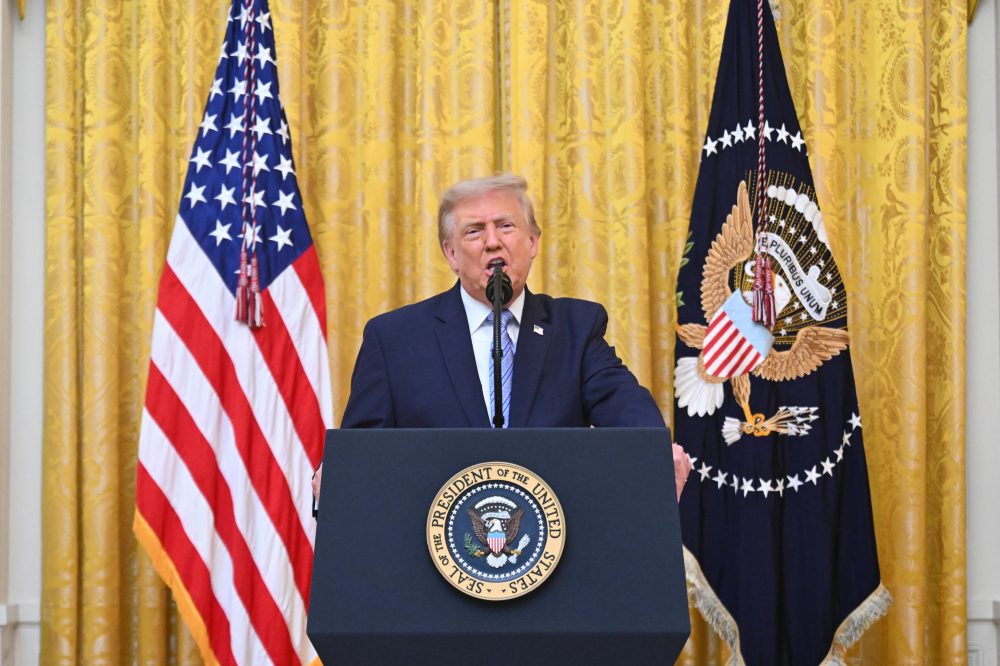

President Donald Trump took to national television Thursday night to once again cast doubt on the integrity of U.S. elections and contest his 2020 presidential loss — this time framing those claims as a reason to push forward a tough new voter ID law.
During the primetime address, Trump leveled allegations of outside interference and undue influence in past elections, but offered no evidence that any votes were changed or that election outcomes were affected. He also left out important context surrounding his claims.
Trump announced he would be declassifying documents connected to the 2020 and 2018 elections — years when he lost the presidency and when his party suffered congressional setbacks, respectively. Despite repeated audits and reviews — many conducted by Republicans — no credible intelligence has ever confirmed that the 2020 vote count was fraudulent or manipulated by foreign governments. Notably, Trump raised no doubts about his victories in 2016 or 2024.
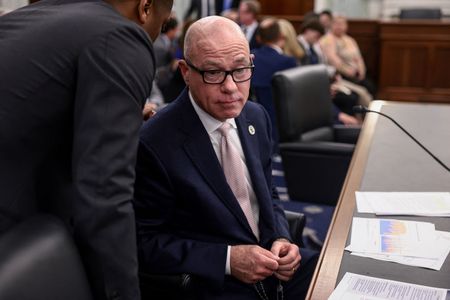
In a separate but related development, Democratic members of Congress are demanding answers from the Department of Homeland Security about how it screens and trains immigration enforcement officers. This comes after it was revealed Thursday that an ICE officer involved in a deadly shooting in Maine this week had a documented history of mental health problems and violent behavior.
The Associated Press reported that the officer, identified as David Brouillette, is an Army veteran whose close relatives say he has struggled with serious mental health issues since early childhood. Brouillette shot a Colombian man in Maine earlier this week.
Rep. Bennie Thompson of Mississippi, the top Democrat on the House Homeland Security Committee, said Brouillette’s background “directly call into question the supposed vetting and training ICE does of its recruits.”
Meanwhile, news organizations across the country faced a difficult decision ahead of Trump’s speech: broadcast it live or not? Trump had threatened sanctions against networks that chose not to carry it in real time. Broadcast and cable outlets spent hours debating how to handle the address, wrestling with the tension between covering the news and potentially amplifying false claims about the 2020 election.
Ultimately, most networks chose a similar approach — airing the speech while simultaneously fact-checking the president’s statements as he spoke. The situation unfolded amid ongoing friction between the press and a president who has repeatedly sought to exert influence over media coverage. Trump even used the speech itself to criticize networks that declined to air it live.
On the diplomatic front, Secretary of State Marco Rubio is set to travel to the Philippines next week for meetings with foreign ministers at an Association of Southeast Asian Nations gathering. The State Department says Rubio will meet with regional counterparts and senior officials as he promotes a free and open Indo-Pacific. He is scheduled to depart for Manila on Sunday and return to the United States on Thursday.
China pushed back Friday against Trump’s claims, with the Foreign Ministry flatly denying any involvement in U.S. elections. Spokesperson Lin Jian called the accusations fabricated. “The relevant allegations by the U.S. are entirely fabricated and aimed at vilifying China,” Lin said. “We have no interest in interfering in US elections and have never done so.” Lin urged Washington to stop what he called “groundless accusations” against China.
Sue Gordon, who served as principal deputy director of national intelligence during Trump’s first term, described the address as “a dangerous speech about an incredibly important topic.” She noted that the intelligence community had been raising alarms about foreign election interference throughout Trump’s first term, only to be dismissed. “He had an entire term to deal with it and I don’t know how you can believe how the same community that told him about it, that was excoriated about it” wouldn’t have warned him in 2020, Gordon said on CNN.
Conservative commentator John Solomon, who joined the White House staff last month and attended the speech in the East Room, said afterward that “the intelligence community has zero evidence that someone has flipped — that a foreign power flipped — a vote in 2020, ’22 or ’24.” He added, however, “We’re not through all the documents.”
In his remarks, Trump focused heavily on China while largely sidestepping Russia — a country that U.S. intelligence officials have said worked to boost Trump over Democrat Joe Biden in 2020 through widespread influence campaigns. Trump used the speech to call for passage of a strict voter ID bill that has stalled in Congress due to insufficient support even among his fellow Republicans.
“America is back and doing really well, but we still have a major challenge that must be urgently addressed, because no country can be great without fair and honest elections,” Trump said.