Catastrophe and risk modeling firm Verisk announced Thursday that it expects economic losses from the recent Venezuelan earthquake to surpass $10 billion.
Two powerful earthquakes struck north-central Venezuela near heavily populated areas on June 24. The death toll has climbed into the thousands, and the government has declared a national state of emergency in response.
According to Verisk, the hardest-hit areas were the Caracas metropolitan region and the coastal state of La Guaira. The firm noted that an estimated 1,400 buildings were destroyed across those areas.
Verisk also cautioned that estimating insured losses for this event carries more uncertainty than usual. The company pointed to several complicating factors, including difficult macroeconomic conditions, elevated inflation, low rates of insurance coverage among the population, and market complexities tied to international sanctions.
For years, the Education Department has gathered detailed civil rights information from schools nationwide, tracking issues ranging from bullying and harassment to the availability of disability services for students. That data has long served as a critical tool for holding schools accountable.
But the most recent collection of that information has not been made available to the public — and it is now running approximately six months behind schedule.
Advocates and researchers who depend on the data say the delay makes it significantly harder to identify patterns of discrimination or unequal treatment in schools. Without the numbers, parents, policymakers, and civil rights organizations are left with an incomplete picture of what is happening inside classrooms across the country.
The Education Department has not publicly explained the reason for the holdup, and no timeline has been given for when the data might be released.
Good morning, Delmarva! We are heading into a dangerously hot day across the peninsula, so please take this seriously. Expect wall-to-wall sunshine today with a high near 101°F — but here’s the kicker: heat index values could soar as high as 110°F this afternoon. That means it will feel like 110 degrees outside. A light west wind around 5 mph will offer little relief. Please stay hydrated, limit outdoor activity during peak afternoon hours, and check on elderly neighbors and pets.
Tonight brings clear skies with a low of 79°F — still quite warm heading into your holiday weekend.
Looking ahead to Friday, Independence Day eve, highs again reach around 102°F before isolated showers and thunderstorms develop later in the day and into Friday night. Those storms could offer some brief relief from the heat, but also bring lightning and gusty winds.
Stay cool out there, Delmarva — this is not a heat wave to take lightly. I’ll have updates throughout the day. Stay safe! 🌡️
Indian space startup Skyroot Aerospace announced Thursday that it is preparing to launch its Vikram-1 rocket — a historic first attempt by a privately owned Indian company to successfully place a satellite into Earth’s orbit.
The company was founded by former engineers from the Indian Space Research Organisation and is working to develop small rockets in a similar vein to those produced by companies like Rocket Lab and Firefly Aerospace.
Standing about seven stories tall, the Vikram-1 is a multi-stage launch vehicle built to carry payloads weighing up to 350 kilograms into low Earth orbit.
Skyroot recently reached a $1 billion valuation — becoming India’s first space startup to hit that milestone — after securing $60 million in funding from GIC and Sherpalo Ventures in May. The company has scheduled its first flight attempt during a window between July 12 and August 4, launching from the Satish Dhawan Space Centre, India’s primary spaceport.
The maiden flight will carry a combination of domestic and international customers. However, the primary goal of the mission is to gather performance data during flight, specifically looking at propulsion systems, guidance systems, and stage separation, the company explained.
The launch represents a broader shift happening in India’s space sector, which has historically been dominated by government agencies. The country is now welcoming private companies into the industry as it pursues a larger slice of the worldwide market for satellite launches and related services.
Major industrial players including Larsen & Toubro and Hindustan Aeronautics Limited are also entering rocket manufacturing, as the Indian government pushes toward building a $44 billion space economy by the year 2033.
President Trump made a stop in North Dakota on Wednesday to visit the nation’s newest presidential library, a facility built to honor the legacy of former President Theodore Roosevelt.
The newly opened library marks the latest addition to the country’s collection of presidential memorial institutions. NPR was granted a tour of the new facility in the days leading up to the president’s visit.
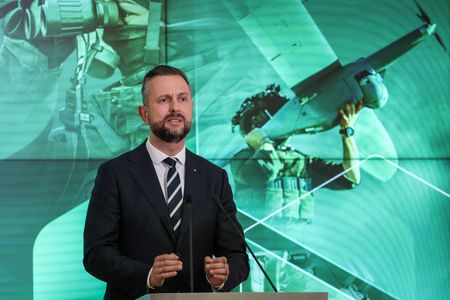
WARSAW — Poland’s defense minister is publicly accusing Ukraine of breaking a technology-sharing agreement, saying Kyiv has failed to hand over promised drone technology even as Poland has remained one of Ukraine’s most steadfast military allies.
Polish Defence Minister Wladyslaw Kosiniak-Kamysz made the accusation during an appearance on Polish radio broadcaster Trojka on Thursday, saying negotiations over exchanging the remaining MiG-29 fighter jets for access to Ukrainian drone technology had been ongoing for several months.
“Initially, they agreed to such a resolution, but today they are not honouring the agreement,” Kosiniak-Kamysz said.
Poland has stood firmly behind Ukraine since Russia launched its full-scale invasion in 2022, offering military assistance and functioning as a critical logistics corridor for aid flowing in from Western nations. Despite that strong partnership, the two countries have seen their relationship tested at times by disagreements over agricultural imports and unresolved historical grievances.
The current strain follows a decision by Polish President Karol Nawrocki to revoke Ukrainian President Volodymyr Zelenskiy’s highest Polish state honor. That move came amid a dispute over a Ukrainian military unit named after insurgents that Warsaw holds responsible for the killing of Polish civilians during World War Two.
Kosiniak-Kamysz pointed out what he sees as a double standard, noting that Ukraine has been selling drones commercially to other countries even while fighting a war.
“If Ukraine is already able to sell drones to Kuwait and generate revenue from it while at war, then it is capable of reciprocating to those who provide their equipment and — at times, symbolically — sharing its own capabilities,” he said.
When asked why Ukraine was refusing to follow through, the minister suggested that President Zelenskiy’s government was deliberately keeping historical disputes with Poland alive for political purposes back home.
“I think this stems from the strategy they have adopted now — that a conflict rooted in history is what is currently building President Zelenskiy’s image,” Kosiniak-Kamysz said.
He also warned that this approach is having unintended consequences, arguing that it is giving fuel to far-right political parties looking to exploit anti-Ukrainian sentiment among the Polish public.
RAMALLAH, West Bank — Just after 1 a.m. Wednesday, Abdelrahman Badr said he heard footsteps approaching his home in Hebron, located in the occupied West Bank. Moments later, Israeli forces were knocking at his door — and they were there for his wife.
The forces took away Itaf Badr, who sits on the board of a well-known health charity, telling her husband she was wanted for questioning. She was driven off in the middle of the night, according to Abdelrahman.
Itaf was one of five Palestinian women taken into custody by Israeli security forces across the West Bank that morning. The pre-dawn operations targeted several cities, among them Hebron, Ramallah, Nablus, and Bethlehem, according to the detainees’ families and Palestinian rights organizations.
Throughout most of Israel’s decades-long occupation of the West Bank, Palestinian men and boys have largely been the ones swept up in military detentions — jailed for years, sometimes for actions as minor as throwing rocks at Israeli troops. But that dynamic is shifting.
Abdullah Al-Zaghari, who heads the Palestinian Prisoners’ Club — a nongovernmental organization that advocates for political prisoners held in Israeli jails — said Israeli security forces are increasingly detaining women and girls. He said gender is no longer a factor in who his organization believes Israel is targeting, with arrests spanning political activists and student leaders at Palestinian universities alike.
According to Israeli rights group Hamoked, which collects data from the Israel Prison Service, women now represent a small but growing portion of the approximately 9,300 Palestinians currently held in Israeli detention.
The number of Palestinian women and girls in Israeli custody has more than doubled since the Israel-Hamas war began and has risen 80% since the start of 2026. Fifteen women have been arrested since the beginning of June alone, pushing the total to 99, based on data from the Prisoners’ Club.
Al-Zaghari said some of those arrested were taken in after posting content on social media, including messages critical of Israel’s occupation of the West Bank or the ongoing war in Gaza. Others were affiliated with student branches of Palestinian political parties at their universities.
Many detainees have been held without formal charges under Israel’s administrative detention policy, which permits authorities to imprison Palestinians for renewable periods of up to six months at a time.
Just last month, Israeli soldiers arrested at least five other young women, including four members of the Palestinian national soccer team and a 20-year-old Palestinian-American named Sama Safi. The military stated those women were suspected of “promoting terrorist activities.” At least one has since been freed, while the others have yet to be formally charged, according to their lawyers. Safi’s detention has prompted criticism from several U.S. senators, who have called for her immediate release.
On Wednesday, the Israeli military directed questions about the arrests in Ramallah and Nablus to Israel’s Border Police, which also operates in the West Bank. Regarding Itaf’s arrest in Hebron, the military said it was looking into the matter but did not provide a response explaining why she was detained.
The families of the women arrested Wednesday said they remained in the dark about the reasons behind the detentions.
In Nablus, Wael al-Faqih said Israeli forces came to his home and arrested his wife, Maiser al-Faqih. She had been detained before and, like Itaf, had previously worked with the Union of Health Work Committees, a charity that delivers medical services to low-income communities.
Israel has claimed the organization has ties to the Popular Front for the Liberation of Palestine, which it has labeled a terrorist group. The charity has denied those allegations.
“We still don’t know what it was about,” Wael said. He recounted how Israeli forces searched both him and his son before instructing Maiser to put on her hijab — and then taking her away.
Abdelrahman said he believes his wife’s involvement with the charity made her a target. His account of her arrest echoed Wael’s. Itaf was first brought outside and then handcuffed on the street.
“I looked at them from the window, they shouted at me and my son,” he said. Then, “they grabbed her, blindfolded her and put her in the military vehicle.”
LONDON — The British government is preparing to issue a formal apology Thursday for its role in forcibly separating tens of thousands of unmarried mothers from their babies — a practice that spanned several decades before ending in the 1970s.
Prime Minister Keir Starmer will take to the floor of the House of Commons to acknowledge the government’s involvement in forced adoptions and offer an apology to those who lived through the experience.
The United Kingdom joins a number of nations confronting a troubling history rooted in social stigma, religious institutions, and government policy — all of which combined to shame unwed mothers, confine them during pregnancy, and hand their children over to married couples for adoption.
Between 1949 and 1976, approximately 185,000 babies born to unmarried women were adopted in England and Wales. Advocates have spent years pushing for official recognition that many of these mothers were pressured, misled, and threatened into surrendering their children.
Ann Keen, a former U.K. health minister who had her own baby taken for adoption in 1966 when she was 17, said she is eager to finally feel “released from my shame.”
“We need this apology, because we have always been accused of giving up our babies, and we didn’t give them up,” she told the BBC. “We’ve now got the opportunity to really put this wrong right.”
A 2022 report from Parliament’s Joint Committee on Human Rights called on the British government to apologize for “the pain and suffering caused by public institutions and state employees that railroaded mothers into unwanted adoptions.”
Scotland and Wales, which operate with a degree of self-governance, both issued their own apologies the year after that report. However, the Conservative government in power at the time chose not to follow their lead.
The apology now coming from Prime Minister Starmer’s Labour government arrives just two weeks after the Church of England offered its own acknowledgment of wrongdoing in connection with forced adoptions.
Archbishop of Canterbury Sarah Mullally stated that “we are profoundly sorry for the pain, trauma and stigma experienced — and still carried — by many people because of historical adoption practices in homes affiliated to the Church of England.”
Several other countries have faced similar reckonings. In 2013, Australia’s then-Prime Minister Julia Gillard delivered a nationally significant apology for that country’s forced adoption history, calling it a source of “lifelong legacy of pain and suffering.”
Ireland has also grappled with the dark history of mother-and-baby homes operated by the Catholic Church, where tens of thousands of women were kept in frequently degrading conditions. A 2021 inquiry revealed that 9,000 children had died across 18 such homes during the 20th century.
Irish Prime Minister Micheál Martin offered an apology for the “profound and generational wrong” done to the mothers and children who passed through those institutions.
PARIS (AP) — Marine Le Pen, the French far-right leader, says a court order requiring her to wear an electronic monitoring bracelet would force her out of next year’s presidential race.
A Paris appeals court is scheduled to hand down its verdict on Tuesday in a case that could determine whether Le Pen is eligible to seek the French presidency.
Le Pen, who is 57 years old, is contesting a ruling from March 2025 in which a Paris court found her and fellow members of her National Rally party guilty of misappropriating European Union Parliament funds. The scheme allegedly involved hiring assistants between 2004 and 2016 who were said to be doing party work rather than fulfilling their parliamentary duties.
Should the appeals court uphold the conviction, Le Pen could face a ban from holding elected office, electronic monitoring, or both, along with other possible penalties.
Speaking in a late Wednesday interview on LCI channel, Le Pen made clear that her ability to campaign freely was the deciding factor. “If I can be a candidate, I will be a candidate, provided that I am able to campaign,” she said. “Because if I’m allowed to be a candidate but am effectively prevented from campaigning freely, then you understand that wouldn’t be possible.”
When a reporter asked whether the electronic bracelet specifically would be the main barrier to her running, she was direct: “Well, of course. I can’t be dependent on a judge to authorize me to go hold a campaign rally … or to visit a market.”
Le Pen has consistently rejected the allegation that she was the driving force behind what prosecutors described as a scheme to divert EU funds. The original March 2025 verdict concluded that Le Pen sat at the core of “a fraudulent system” her party used to siphon roughly 2.9 million euros — approximately $3.4 million — from the European Parliament. Under that ruling, she received a five-year ban from holding public office and two years of house arrest with electronic monitoring.
France’s next presidential election is scheduled to begin with its first round on April 18, followed by a runoff on May 2.
If the appeals court rules against her, Le Pen says she intends to exhaust every legal option available. “If I cannot be a candidate, I will make use of every available avenue of appeal,” she said. One such option would be taking the case to the Court of Cassation, a body that does not re-examine the facts but instead reviews whether lower courts properly followed the law. That process could take roughly six months.
Political observers widely consider Le Pen a leading contender to replace centrist President Emmanuel Macron if she is permitted to run. If she is barred, her 30-year-old protege Jordan Bardella is expected to step in as the party’s candidate.
When asked how she and Bardella differ, Le Pen pointed to her three previous presidential campaigns as evidence of her experience, while also praising her younger colleague. “We are complementary. I believe I have a certain experience, but Jordan has an absolutely incredible dynamism; he has the strength and energy of his youth,” she said.
Russia likely used so-called shadow fleet ships as launch platforms for drones that repeatedly flew over European nations, disrupting air travel and gathering intelligence on NATO military installations, according to a new report from the International Institute of Strategic Studies think tank published Thursday.
The report, which was shared with The Associated Press ahead of its release, tracked 144 suspected drone sightings across Europe — including over NATO member nations Germany, France, Belgium, the Netherlands, the United Kingdom, and Denmark — spanning 2024 through 2026.
The frequency of those sightings peaked in late 2025, forcing temporary closures at several European airports, including facilities in Germany, Spain, and Denmark.
Danish Prime Minister Mette Frederiksen called the events in her country the “most serious attack on Danish critical infrastructure to date.”
According to the IISS, Russia deliberately kept the campaign below the level that would trigger a formal NATO collective response. The think tank called the situation a “strategic failure” for Europe, saying the continent’s air defenses are simply not equipped to handle this type of threat.
Air Chief Marshal John Stringer, NATO’s deputy supreme allied commander in Europe, told AP that each alliance member nation bears the responsibility of deciding how to handle such threats — and that many are now treating them with increasing urgency.
While several senior European officials acknowledged the difficulty of directly attributing the drone activity to Russia, Stringer stopped short of blaming Moscow. However, he noted that the behavior fits a broader pattern of disruption across Europe that Western officials have attributed to Russia since its 2022 invasion of Ukraine.
Among the countries that have confirmed drone sightings, only Sweden has publicly pointed the finger at Moscow — in a case where a military drone flew toward a French aircraft carrier from a Russian spy ship.
Russian President Vladimir Putin stated in May that Russia is not conducting a sabotage campaign against Europe.
Drones present a unique detection challenge because they travel at low altitudes and slow speeds, often appearing on radar as birds or small aircraft. They can be launched from within or near a country’s borders, making traditional missile defense systems — built to intercept high-speed projectiles fired from far away — largely ineffective. Additionally, even when a drone is brought down, tracing its origin and identifying who deployed it remains extremely difficult.
The IISS concluded that European nations must rapidly upgrade their drone defense capabilities in response to the growing number of incursions.
Lt. Gen. Jonny Lindfors, Sweden’s military representative to NATO, told AP that building a full picture of drone threats is complicated by the fact that responsibility for addressing them is divided among multiple agencies and authorities. He also described the decision to shoot down a drone as a “tough decision” given the potential for civilian casualties.
A June report from Denmark’s Defense Command acknowledged that the country’s armed forces “could have been in a stronger position” to respond to drone sightings and identified weaknesses in detection equipment. Denmark and several other European nations have since pledged to strengthen their drone defenses.
Stringer noted that countries that may have taken a “benign” view of drone threats just a few years ago now recognize that counter-drone systems are an essential component of air defense.
The IISS analyzed the movements of Russian shadow fleet vessels — ships with unclear ownership used to help Russia evade international sanctions — and determined it is highly likely these ships are being used to deploy drones.
The report concentrated on drone activity across central and northwestern Europe and did not cover incursions along NATO’s eastern flank, where both Russian and Ukrainian attack drones have crossed into European airspace.
The IISS noted that on December 2, a shadow ship called the Vezhen — previously linked to the cutting of a Baltic undersea cable — was sailing in circles off the coast of Ireland at the same time Ukrainian President Volodymyr Zelenskyy arrived for his first official visit to the country. A second vessel was reportedly nearby with its tracking signal switched off.
During that same period, four large military drones were observed off the Dublin coastline, circling above an Irish navy vessel for roughly two hours. The Irish Defense Forces did not respond to a request for comment.
The report highlighted several additional incidents tied to the presence of shadow fleet ships, many of them in Denmark:
On January 3, 2025, as the shadow fleet vessel Arctica traveled along the Danish coast, up to 20 drones were observed flying over the port of Koege before heading back out to sea.
On September 22, drone activity led to the closure of Copenhagen Airport. The IISS identified several shadow ships in the surrounding waters at the time, including the Arctica and the Boracay.
Over the following days, as the Boracay navigated around Denmark and other vessels were in the vicinity, additional drones were reported throughout the country, including near military sites.
The IISS said suspicion for at least some of the September sightings centered on the Boracay. French military personnel boarded the vessel at the end of that month, and French President Emmanuel Macron said he could not rule out the ship’s involvement in the drone flights over Denmark.
Denmark’s Defense Command confirmed that drones were detected in Danish airspace during September and October 2025. While it stopped short of linking them directly to Russia, it noted that Moscow is conducting hybrid attacks against the West on a “character and scope far beyond what Russia carried out before the war in Ukraine.”
Lindfors called it “a reasonable assumption” that Russia is using shadow ships to launch drones, though he acknowledged it is often “almost impossible” to conclusively attribute them to any single country or actor.
The IISS report also concluded that Russia likely attempted to gather intelligence on military installations in the U.K., the Netherlands, Belgium, France, and Germany, while also forcing NATO nations to activate air defenses — potentially exposing radar positions and gaps in coverage. Notable incidents cited in the report include:
The U.S. Air Force in Europe reported multiple drone sightings in November 2024 over four American air bases in the United Kingdom.
German authorities logged more than 1,000 suspicious drone sightings in 2025, including over defense manufacturers and military bases where Ukrainian soldiers were receiving training.
Defense officials in the Netherlands and Belgium reported drones spotted over military installations in November and December 2025. The IISS noted those bases are believed to store American B61 nuclear weapons.
Drone sightings were also reported at the Ile Longue submarine base in France, home to the country’s nuclear-armed ballistic missile submarines.
The U.S. Air Force in Europe declined to provide additional details on the incidents in the U.K., Netherlands, and Belgium, and would not confirm the presence of American nuclear weapons at those sites.
A British defense official, speaking anonymously due to the sensitivity of the subject, said a defense police investigation found no conclusive evidence linking the U.K. drone sightings to Russia. The Dutch Defense Ministry confirmed that drones were observed over Volkel Air Base and said it took protective measures at military sites.
The French army’s chief of staff headquarters said an investigation into the drones spotted over Ile Longue remains ongoing and did not address questions about whether shadow fleet ships may have been involved.
Requests for comment were also submitted to defense ministries in Belgium, Denmark, and Germany.
With the sheer volume of incidents mounting, Lindfors said “it would be naive to believe it’s just a coincidence” — suggesting that drone threats of this kind have become the new normal for European security.
Indian authorities are working to retrieve the remains of a climber widely known as “Green Boots” from the upper slopes of Mount Everest — nearly three decades after the mountaineer lost his life on the world’s tallest peak.
The Indo-Tibetan Border Police, an Indian paramilitary organization, has launched the process of hiring specialists trained in high-altitude recovery missions. The goal is to bring back what officials believe are the remains of Dorje Morup from Everest’s northern route, which runs through Tibet.
Morup was among six Indo-Tibetan Border Police members who attempted to climb Everest in May 1996. As conditions near the summit turned dangerous, three members of the group turned around and headed back down. Morup and two other climbers pushed forward — and all three perished in a storm that ultimately killed eight people across several expeditions. It was considered one of the deadliest tragedies in Everest’s history at that time.
Morup’s remains earned the nickname “Green Boots” due to the vivid green mountaineering boots he was wearing when he died. His body rests in Everest’s so-called “death zone,” above 8,000 meters (26,247 feet), and has long been used as a reference point by climbers navigating the mountain’s northeast route.
Because the remains are located on Everest’s Tibetan side, any recovery operation requires approval from Chinese authorities, who tightly control access and climbing permits in that area. China has closed the mountain to foreign climbers for the 2026 spring climbing season, though no official explanation has been given for that decision.
Bringing in the recovery specialists is just the first step. The actual operation would still require Chinese authorization and favorable weather conditions before it could move forward. It remains unclear whether an Indian, Nepali, or Chinese team would ultimately carry out the retrieval. Chinese officials have made no public statement regarding the plan.
Pemba Sherpa, who founded the Kathmandu-based Xtreme Climbers Treks and Expedition, explained the challenges involved. “It is not impossible to retrieve the body from Everest, but the first challenge is getting permission from the Chinese officials and then only can they proceed to bring the body down,” he said.
Since Mount Everest was first successfully climbed in 1953, nearly 350 people have died attempting the ascent. The bodies of many climbers remain on the mountain’s frozen slopes because bringing them down is both dangerous and costly.
Recovering remains from the death zone is especially treacherous. Helicopters are unable to operate at that altitude, meaning experienced Sherpa guides and high-altitude climbers must physically carry bodies down steep terrain on foot — all while contending with avalanche dangers, brutal weather, and the physical toll of extreme altitude and oxygen deprivation.
BANGKOK — Eight Buddhist monks lost their lives Thursday after an 11-year-old boy drove a pickup truck into their group during a pilgrimage walk in northeastern Thailand, according to officials.
A total of 35 monks from Mukdahan province, located roughly 600 kilometers northeast of Bangkok, were participating in the religious walk when the crash occurred. Five monks died at the scene, while three more passed away at a hospital. Mukdahan Governor Worrayan Boonnarat confirmed the death toll and noted that 14 additional monks were taken to the hospital, with four of them in critical condition.
The pilgrimage group had only been walking for about 30 minutes when the crash happened. They were headed on a 260-kilometer journey to Ubon Ratchathani province.
Security camera footage released by a local rescue organization, the Ruam Jai Mukdahan Rescue Association, captured the terrifying moment. The video shows the monks walking in a single-file line along the roadside before the truck suddenly veers off the road and slams into the group.
The 11-year-old driver has been taken into custody, according to local police. Authorities said he will be formally questioned once state child protection officers are present.
Police are continuing to investigate the cause of the crash. Investigators said surviving monks reported seeing the truck swerving before it left the road and struck the group.
DUBAI, United Arab Emirates — Iran’s joint military command issued a stern warning Thursday, declaring that all oil tankers traveling through the Strait of Hormuz must stick to routes approved by Tehran — or face what it called a “forceful response.” The announcement marks another escalation in tensions surrounding one of the world’s most critical waterways for energy shipments.
The narrow passage at the mouth of the Persian Gulf has become a central flashpoint in ongoing efforts to negotiate a lasting end to the Iran war. The warning, issued by the Khatam al-Anbiya military command and broadcast on Iranian state television, came just one day after U.S. and Iranian diplomats separately met with mediators in Qatar on Wednesday.
The exact trigger for the threat was not immediately apparent. However, U.S. military’s Central Command had recently released a statement following a meeting with officials from Middle Eastern nations in Bahrain, in which “leaders underscored their shared commitment to the free flow of commerce through the Strait of Hormuz.” That language appears to have drawn Iran’s ire.
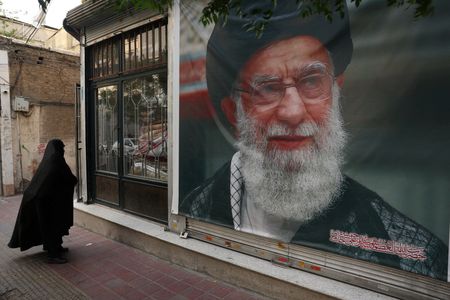
Iran is also preparing for funeral services beginning this weekend for the late Supreme Leader Ayatollah Ali Khamenei, who was killed during the opening moments of the war in February.
The Iranian military’s statement left little room for ambiguity: “Any failure to comply, deviation from the designated route, or disregard for the navigation protocols of the Islamic Republic of Iran in the Strait of Hormuz will be met with an immediate and forceful response from the armed forces, endangering the security of the violating vessels.”
The statement went further, taking direct aim at American air activity in the region. It declared that the ongoing presence of U.S. fighter jets above the strait “causes insecurity in this waterway and threatens regional security.” Iran also warned that “any attempt by the United States to interfere in security matters or any disruptive action in the Strait of Hormuz will be considered a threat to Iran’s national sovereignty and will be met with a rapid and decisive reaction.”
As part of a temporary agreement, Iran and the United States had agreed to allow ships to pass through the strait without fees for 60 days. However, Tehran has insisted it must control the paths those vessels take and has pushed for the right to collect passage fees going forward — a position that would overturn longstanding international practice in the waterway.
The United States and many Gulf Arab nations have refused to accept those fee demands. A recent attempt by Oman and a United Nations agency to establish an alternative shipping route near Oman’s coastline set off a series of attacks across the Middle East last weekend, underscoring just how volatile the situation remains.
DUBAI — A senior Iranian military commander issued a stern warning Thursday to the United States and Israel, urging both nations not to take any aggressive action against Iran as the country prepares to hold state funeral ceremonies for Supreme Leader Ayatollah Ali Khamenei, who was killed in airstrikes on the opening day of the war.
Ali Abdollahi, commander of Khatam al-Anbiya Central Headquarters, delivered the warning through Iranian state media. “We warn the enemies of Iran, especially the U.S. and the Zionist regime (Israel), to avoid any miscalculation and to think about the harsh retaliation our armed forces would make to any threat and aggression against our country,” he said.
Funeral processions for Khamenei are scheduled to begin on July 4 in Tehran. The ceremonies will also include stops in Qom and Iraq before concluding on July 9 with his burial in his hometown of Mashhad.
The warning echoes similar remarks made Wednesday by Iranian Foreign Minister Abbas Araqchi, who stated that Tehran would respond immediately and forcefully to any threat directed at its people or leadership. His comments came after Israeli Defence Minister Israel Katz described Iran’s current Supreme Leader Mojtaba Khamenei as “marked for death.”
Iranian media also reported that security has been significantly increased throughout the funeral period. The head of Iran’s Civil Aviation Organisation confirmed Wednesday that temporary flight restrictions will be put in place over several cities, including Tehran and Mashhad, during the ceremonies.
Chinese robotics company UBTech has introduced a new lineup of highly realistic humanoid robots designed to serve as companions and provide emotional support. Announced on Tuesday, the robots are powered by an artificial intelligence system built to recognize and respond to a broad spectrum of human feelings.
The unveiling quickly sparked conversation across Chinese social media, with users discussing the possibility of AI-powered “cyber boyfriends” and “cyber girlfriends.” The robots come in both male and female versions, with premium models carrying a price tag of up to 990,000 yuan — roughly $145,835.
The product line, called the U1 series, starts with robotic torsos priced at 119,800 yuan and goes up to full-sized humanoid figures featuring remarkably realistic physical details, including visible pores, blood vessels, and fingerprints.
Each robot is equipped with what UBTech describes as an emotional large language model, engineered specifically for long-term companionship. According to the company, the system can detect more than 20 distinct human emotions with an accuracy rate above 90 percent.
The humanoids are also built with expressive facial features and lifelike artificial skin, both intended to make interactions between humans and robots feel more natural.
UBTech reported that it has already received 13,361 orders for the U1 series and plans to fulfill all deliveries before the end of the year.
Looking ahead, the company sees enormous growth potential in this emerging market. “The industry will grow from tens of billions of yuan to trillions of yuan between 2026 and 2036,” said Tan Min, UBTech’s chief branding officer.
NEW DELHI — India and Japan formalized several new agreements Thursday aimed at deepening their partnership across artificial intelligence, metals, and energy, with the two nations also mapping out a shared strategy for economic security.
Indian Prime Minister Narendra Modi announced the deals following face-to-face discussions with Japanese Prime Minister Sanae Takaichi, who arrived in New Delhi for a three-day visit as part of the two countries’ 16th annual summit.
“The convergence of Japan’s precision technology and India’s software capabilities will give a new momentum and strength to global AI development,” Modi told reporters after the talks concluded.
According to Indian government figures, bilateral trade between the two nations hit $27.5 billion in fiscal year 2025/26, while Japanese investment flowing into India totaled $3.2 billion between April and December of 2025.
Both countries are also members of the Quad grouping, and Modi noted that they reached a milestone by signing an agreement on their very first joint defense co-development project.
Modi also highlighted a new initiative focused on clean energy. “Through the India-Japan bio-gas Initiative, we will set up 1,000 bio-gas and organic fertilizer plants in India,” he said.
Japan ranks among India’s top investors, with financial backing behind major infrastructure efforts such as the high-speed rail corridor connecting Mumbai and Ahmedabad. Japanese companies have also been increasing their stakes in Indian businesses, including a recent $1.6 billion investment for a 20% share in Yes Bank.
Takaichi made the trip accompanied by a sizeable business delegation and was scheduled to address a business conference later Thursday.
Central bank leaders from across the globe believe they may have found a reliable partner in the new head of the Federal Reserve, offering a rare moment of goodwill in what has otherwise been a strained relationship with Washington.
During a three-day gathering hosted by the European Central Bank in Sintra, Portugal, Federal Reserve Chair Kevin Warsh held a series of one-on-one meetings with counterparts from Europe and other regions. Among those meetings was an extended lunch with ECB President Christine Lagarde, held in the courtyard of the historic former convent where the conference takes place.
According to sources familiar with the discussions, the conversations stayed largely at a high level, with little focus on specific topics like inflation trends, shadow-banking risks, or cross-border policy coordination.
Even so, central bank officials read Warsh’s willingness to engage as a positive signal — an indication that the Fed intends to remain an active participant in the international forums that have long served as the backbone of global monetary cooperation.
That signal carried real weight. Behind closed doors, some central bankers had expressed concern that a Fed chair chosen by the Trump administration might be more vulnerable to White House pressure on interest rates, or less invested in the kind of international coordination that has defined global monetary policy for decades.
The stakes are considerable. The Federal Reserve serves as the primary source of dollar liquidity during financial crises and, for certain countries, holds a significant portion of their gold reserves. It also carries the most influential voice in worldwide conversations about monetary policy and financial regulation.
With that in mind, policymakers arrived in Sintra eager to determine whether the strong working bonds many had built with former Fed Chair Jerome Powell would carry over under new leadership.
Several attendees who had previously worked alongside Warsh — either during his time as a Fed governor from 2006 to 2011, or through his later participation in the Group of Thirty consultative organization — said they recognized the same policymaker they had known for years. Others urged caution, noting it was premature to draw conclusions about how he would handle the dual pressures of maintaining credibility and managing expectations from the White House.
Warsh’s reception at the conference stood out, particularly given that many of those same attendees had previously rallied around Powell during his extended public dispute with former President Trump. That group had publicly defended Powell’s independence, and participants at last year’s Sintra conference had given him a standing ovation.
This year’s atmosphere was notably warmer. Lagarde set the tone at the opening dinner, greeting the late-arriving Warsh with air kisses and publicly stating her eagerness to work together. Warsh responded in kind.
Fluent in French after having studied in France, Warsh conversed with several French attendees in their native language. Rather than staying in a tight circle as some high-profile guests tend to do, he moved freely among central bank governors at Tuesday’s informal dinner.
Appearing on a panel with Lagarde, Bank of England Governor Andrew Bailey, and Bank of Canada Governor Tiff Macklem, Warsh adopted a notably warm and collaborative tone, saying he was “honoured to be on stage with three colleagues.”
While such details might appear minor, personal relationships carry genuine importance in the tight-knit world of central banking — particularly when coordinated action is needed during moments of financial instability.
Conference participants also noted areas of agreement on how central banks communicate their policies. Warsh’s preference for straightforward messaging and his skepticism toward forward guidance — the practice of signaling future policy moves — appeared to align with a broader “back to basics” theme that emerged throughout the gathering.
He used the conference to reaffirm the Fed’s independence and acknowledged that policymakers across different countries share a number of “common calls.”
Lagarde suggested the ECB no longer required “complex forms of forward guidance,” while Bailey observed that such guidance was “much easier to put in place than it is to take it away.”
There were some underlying differences. Lagarde said the ECB would continue to explain how it responds to new economic data, describing the approach as “framework guidance” — a phrase that later appeared in Macklem’s remarks as well. Warsh, meanwhile, showed little inclination to discuss the Fed’s own policy approach in detail.
Despite those distinctions, attendees tended to emphasize the shared ground rather than the gaps. Some pointed to internal ECB discussions about normalizing bank reserve requirements as further evidence that central banks on both sides of the Atlantic are stepping away from the emergency-era policies that defined the past decade and a half.
Celea Therapeutics, a biotech company tied to PureTech Health, announced Thursday that it has closed a $180 million financing round aimed at funding a late-stage clinical trial of its experimental lung disease treatment, deupirfenidone, in patients diagnosed with idiopathic pulmonary fibrosis, or IPF.
According to a company statement released Thursday, Celea expects to begin a head-to-head trial during the third quarter of this year.
Several major investors joined PureTech in the funding round, including RA Capital, Leaps by Bayer, a large U.S.-based healthcare-focused fund, and a sovereign wealth fund.
Before the financing round closed, Celea and its transferred assets were valued at $100 million. Following the round, that figure climbed to $302.5 million on a fully diluted basis.
PureTech contributed $30 million to the current financing effort and has set aside an additional $70 million to provide future support to Celea. Once the financing is complete, PureTech will own a 35.4% stake in the biotech company and will be eligible to collect tiered royalties based on annual net sales of any Celea products that use deupirfenidone technology.
PureTech is also in line to receive up to $190 million in total milestone payments tied to the drug’s development progress.
Deupirfenidone is an experimental medication designed to slow or stop the scarring of lung tissue, while offering better tolerability than currently available treatments — potentially making it easier for patients to stay on their medication long-term.
Idiopathic pulmonary fibrosis is a disease with no known cause in which lung tissue becomes progressively damaged and scarred, making it increasingly harder for patients to breathe.
Former President Trump and members of his family reportedly took in more than $1 billion in cryptocurrency earnings over the course of last year, according to new reporting that is drawing significant attention.
On the political front, Democratic Socialists are emerging as a notable challenge to the broader Democratic Party, creating tension within the left side of the political spectrum as the two groups navigate their differences.
And in sports, the United States men’s national soccer team advanced in the World Cup, defeating Bosnia-Herzegovina in a knockout round matchup.
Listen to the Morning Delmarva Farm Report Update — July 2, 2026
DELMARVA — An Extreme Heat Warning is in effect through July 4th, with temperatures forecast to reach 100°F today and climb to 101°F Friday. Winds will be light with sunny skies, and no relief is expected until the holiday weekend. Farmers are urged to keep field workers hydrated, limit strenuous outdoor activity during peak afternoon hours, and check on anyone vulnerable to the heat.
Crop Concerns
The heat wave is raising national concern for the corn crop. A Purdue University Extension agronomist warns that extreme temperatures this close to pollination present a serious problem. While heat has helped some stressed fields recover, sustained highs could hurt yield potential if conditions stretch into the pollination period. Delmarva growers are advised to monitor their fields closely over the next several days.
Markets
Yesterday’s closing futures reflected mixed results across major commodities. September corn finished up 6 cents at $4.22¾. August soybeans gained 9 cents to close at $11.33¼. September Chicago wheat posted a strong session, rising 10¾ cents to close at $6.00.
On the livestock side, August live cattle slipped 60 cents to $241.82, and August lean hogs dropped $1.15 to $97.05.
At Laurel Grain Company in Laurel, Delaware, September corn is bringing $4.69/bu, and November soybeans are trading at $11.04.
Policy
The USDA announced Wednesday it is prepared to offer up to $500 million in aid to small and mid-sized beef processors dealing with the ongoing cattle shortage.
This article is based on the Delmarva Farm Report Update Morning Edition, July 2, 2026. Hosted by Tom Bradley.
BISHKEK — Kyrgyzstan has formally reached out to Kazakhstan, Belarus, Azerbaijan, Uzbekistan, and Turkmenistan for help securing stable fuel supplies, as fears mount over potential shortages stemming from Ukraine’s ongoing drone strikes against Russian oil refineries.
The landlocked Central Asian nation, home to approximately 7 million people, depends on Russia for more than 90% of its gasoline. That heavy reliance has become a serious vulnerability as Russia itself grapples with growing domestic fuel shortages caused by Ukrainian attacks on its energy infrastructure.
Russian President Vladimir Putin acknowledged the problem last week, saying Moscow may move to ban diesel exports as domestic supply pressures continue to mount.
Kyrgyzstan’s energy ministry confirmed the outreach in an official statement, saying: “To ensure sustainable fuel supplies, official requests have been sent to the relevant government authorities of the Russian Federation, the Republic of Kazakhstan, the Republic of Belarus, the Republic of Azerbaijan, the Republic of Uzbekistan and Turkmenistan.”
Despite the diplomatic requests, the ministry said current fuel stocks remain adequate and that deliveries are continuing on schedule. Kyrgyz authorities had already taken steps in June to stabilize prices, introducing retail price controls on certain types of fuel.
However, the country’s oil traders’ association painted a somewhat different picture, noting that some gas stations are experiencing shortages of AI-95 grade gasoline. The more commonly used AI-92 grade is reported to have sufficient reserves to last between 30 and 45 days. Diesel fuel, which is especially important during the harvest season, remains available.
Kyrgyzstan’s situation reflects a broader challenge facing Central Asian economies, which are deeply connected to Russia’s. Since Russia’s 2022 invasion of Ukraine, these nations have endured repeated bouts of inflation. At the same time, Kyrgyzstan has emerged as a major transit hub for goods being rerouted to Russia in response to Western sanctions.
BEIJING — China’s foreign ministry confirmed Thursday that senior lawmaker He Wei will travel to Tehran to attend funeral ceremonies for late Iranian Supreme Leader Ayatollah Ali Khamenei.
A ministry spokesperson revealed at a routine press conference that He is scheduled to attend an event on July 3.
He Wei holds the position of vice chairman of the Standing Committee of the National People’s Congress, which serves as China’s primary lawmaking body.
Khamenei died on February 28, the opening day of combined Israeli and U.S. airstrikes targeting Iran. According to Iranian state media, his official state funeral is set to begin in Tehran on July 4, with his burial planned for July 9 in his hometown of Mashhad, a holy city located in northeastern Iran.
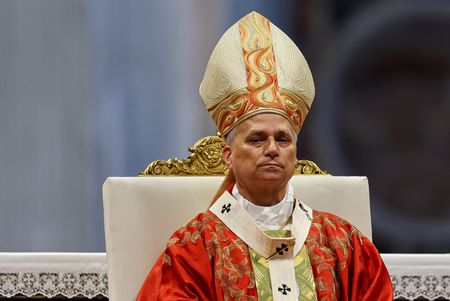
VATICAN CITY — The Vatican launched a forceful response Thursday against a traditionalist Catholic society that ordained new bishops without the pope’s blessing, formally declaring the Society of St. Pius X in schism, excommunicating its bishops and priests, and putting its own members on notice that they too could face the church’s most severe penalties.
The Vatican’s doctrine office went further than what the church’s canon law strictly required in responding to the Wednesday consecrations of four new bishops at the society’s seminary in Econe, Switzerland.
The society, widely referred to by its initials SSPX, is devoted to the ancient Latin Mass and stands in opposition to the modernizing changes of the Catholic Church, which it has condemned as riddled with heresies and errors and accused of abandoning the true Catholic faith.
The ordination ceremony Wednesday was a lengthy, ritual-heavy five-hour Mass attended by roughly 15,500 people and their families. The SSPX carried out the consecrations in open defiance of Pope Leo XIV, who had personally called on the group to hold off in the interest of preserving church unity.
Through a formal decree, the Vatican excommunicated all four newly ordained bishops along with the two bishops who participated in the ceremony. The consecrations were labeled a “schismatic act,” and the society itself was declared to have created a schism — a deliberate split from the Catholic Church.
The Vatican also put the society’s followers on notice, stating that those who formally align themselves with the SSPX are to be considered schismatic and therefore excommunicated. SSPX priests were likewise declared schismatic and excommunicated, and the sacraments of confession and marriage they perform were ruled invalid.
The breadth of the penalties — particularly those aimed at priests, laypeople, and the sacraments themselves — represented a sharp reversal of accommodations the Vatican had extended to the SSPX in recent years as part of efforts to bring the group back into full communion with Rome.
The SSPX was established in 1970 by French Archbishop Marcel Lefebvre, who created the organization to resist the modernizing reforms of the Second Vatican Council. Those 1960s meetings, commonly known as Vatican II, transformed the church’s relationships with other Christians, Jews, and people of other faiths, and permitted Mass to be conducted in local languages rather than Latin.
Lefebvre himself consecrated four bishops without papal authorization in 1988. The Vatican at that time excommunicated Lefebvre and all four bishops and similarly declared those consecrations a “schismatic act.”
Pope Benedict XVI lifted those excommunications in 2009 as part of a broader effort to reconcile with the group. Despite that gesture, the SSPX still holds no official standing within the church, and Thursday’s decree now places it formally in schism.
The situation created a significant challenge for Pope Leo XIV, who has made church unity a central theme of his papacy and has made particular efforts to reach out to the conservative and traditionalist segments of the church that felt sidelined during the pontificate of Pope Francis.
Nevertheless, the severity of Thursday’s sanctions signals that after nearly five decades of negotiations with the society, the Holy See has reached its limit.
Part of the Vatican’s forceful reaction stems from the threat the SSPX represents — a growing, parallel ultra-traditional Catholic structure that has expanded considerably since its original break with Rome. According to the society’s own figures, it now counts six bishops, 751 priests, 264 seminarians spread across five seminaries, 145 religious brothers, 88 oblates, and 250 religious sisters drawn from 50 different countries.
The SSPX has long accused the broader Catholic Church of embracing errors such as modernism and liberalism, and has maintained that it alone is preserving the authentic faith of Christ. The group justified the latest consecrations by invoking what it called a “state of necessity” to serve its faithful.
During Wednesday’s ceremony, SSPX superior the Rev. Davide Pagliarani delivered a homily defending the actions and framing them as an act of loyalty to the pope himself.
“We are accused of not respecting the pope,” Pagliarani said. “But it is precisely because we love the pope as the vicar of Christ, as the head of the church, that we don’t want to see the pope humiliated anymore, on the side of false shepherds representing false religions.”
Regional authorities in Germany confirmed Thursday that a fire broke out at a hospital in the northwestern city of Ludwigslust, resulting in the deaths of two patients, according to the German news agency dpa.
A spokeswoman for the Ludwigslust-Parchim district told dpa that both victims were patients at the facility, which is located northwest of Berlin. Early indications suggest the fire originated inside one of the patient rooms.
The blaze spread to the hospital’s roof before sunrise, prompting staff to evacuate both patients and personnel from the building. While additional people were reported injured in the incident, dpa indicated that none of those injuries were considered serious.
The U.S. National Highway Traffic Safety Administration announced Thursday that it has officially closed a preliminary investigation it opened in 2022 into 695,000 Tesla vehicles that were experiencing sudden, unexpected deceleration.
The probe focused on Tesla’s Model 3 and Model Y vehicles, and regulators said the decision to close the case was based on the low level of danger posed to drivers and a significant decrease in the number of complaints received.
According to the agency, Tesla rolled out software updates in early 2022 specifically designed to address the unexpected slowing issue. The updates appear to have made a measurable difference — when the investigation first launched, there were 300 incident reports on file. That number fell to 45 in 2024, dropped further to 19 in 2025, and only three reports have come in since the beginning of 2026.
Regulators also noted that the sudden deceleration events did not cause vehicles to drift out of their lanes, nor did they result in dangerous reductions in following distance that could have led to rear-end collisions.
This closure comes just one week after the same agency separately wrapped up an expanded investigation into approximately 376,241 Model 3 and Model Y vehicles that had been flagged for issues related to loss of steering control.
BERLIN — Facing intense political scrutiny, German Chancellor Friedrich Merz’s governing coalition announced a broad set of policy reforms Thursday that includes approximately €10 billion ($11 billion) in yearly tax relief aimed at lower-income workers, along with changes to the country’s pension structure and efforts to expand affordable housing.
Merz and his coalition partners have been under considerable pressure to deliver results, as polling shows the coalition trailing behind the far-right Alternative for Germany party. The chancellor has also faced challenges navigating internal disagreements within the coalition that have slowed his ability to build political momentum.
Speaking to reporters Thursday, Merz struck a determined tone. “We want to get Germany back on track,” he said.
The reform package covers a wide range of issues and is designed to reduce bureaucratic red tape across multiple sectors. Among the measures included are an action plan to combat benefit fraud, the elimination of workers’ ability to obtain sick leave documentation over the phone, and a target to reduce staffing levels at federal ministries by 8% through increased digitization of government services.
To help pay for the tax relief benefiting lower earners, the government plans to raise the top income tax rate from 45% to 47% for individuals earning €280,000 or more annually.
Google and its parent company Alphabet have suffered a major legal defeat in Europe, with the continent’s highest court upholding a record-breaking antitrust fine stemming from practices tied to the Android mobile operating system.
Back in 2018, the European Commission slapped Google with a €4.34 billion penalty, citing agreements the company had in place that required phone manufacturers to pre-install Google Search, the Chrome browser, and the Google Play app store on Android devices. Those agreements also prevented manufacturers from using competing versions of the Android system.
Google challenged that penalty, and a lower court reduced the fine to €4.1 billion in 2022. The tech giant then took its case to the Luxembourg-based Court of Justice of the European Union — the EU’s top court — in hopes of overturning the ruling entirely.
That effort failed. The court ruled against Google and Alphabet, with judges stating: “The appeal brought by Google and its parent company Alphabet against the judgment of the General Court is dismissed, thereby confirming the penalty imposed for Google Search’s abuse of a dominant position in the context of the Android operating system.”
A Google spokesperson pushed back on the decision, arguing the ruling did not properly account for the company’s investments in keeping Android open, interoperable, and free of charge.
“In any event, we adapted our agreements to comply with the initial decision back in 2018 and we remain focused on continued innovation and openness for our users, partners and developers,” the company said in a statement.
This latest ruling adds to a growing pile of EU antitrust penalties against the tech giant. In total, Google has accumulated nearly €11 billion in fines from European regulators over the past several decades for various violations.
More fines could be on the horizon. Google is currently facing scrutiny under the EU’s Digital Markets Act for allegedly favoring its own products in search results and for certain practices related to its app store.
The case is officially recorded as C-738/22 P Google and Alphabet v Commission.
VATICAN CITY — The Vatican issued a sweeping declaration Thursday, announcing that members of a breakaway right-wing Catholic organization are officially in schism and excommunicated after the group ordained new bishops without the blessing of Pope Leo.
The Dicastery for the Doctrine of the Faith — the highest doctrinal watchdog for the 1.4-billion-member Catholic Church — issued the stern decree, warning Catholics around the world that the Switzerland-based Society of St. Pius X is now performing sacraments unlawfully.
According to the decree, the ultra-traditionalist organization, which rejects core Church teachings, does not have the authority to perform valid marriages or hear confessions.
Catholic Church doctrine holds that only the pope can authorize the consecration of new bishops, a requirement rooted in the Church’s belief in maintaining an unbroken line back to Jesus’ 12 apostles, who are regarded as the original priests and bishops.
When bishops are ordained without papal approval, Church law considers it so grave an offense that all participants are automatically excommunicated — meaning they are cut off from the broader Church community and barred from receiving sacraments unless they repent and seek forgiveness.
Thursday’s decree confirmed that the two bishops who led the unauthorized ordination ceremony, which took place in Switzerland on Wednesday, were excommunicated, as were the four priests who were elevated to bishop — an outcome that had been widely anticipated.
But the Vatican’s response went further than many observers expected. The decree stated that every priest within the Society of St. Pius X, as well as any Catholic who “adhere formally” to the group, is now considered to be in schism and excommunicated.
A schism refers to a serious and formal break within the Catholic community.
The Society of St. Pius X has long rejected the central conclusions of the Second Vatican Council, a major gathering of bishops held in the 1960s that introduced sweeping reforms to the global Church, including efforts to improve the Church’s relationship with Jewish people and other Christian denominations.
That Council also permitted Mass to be celebrated in local languages rather than exclusively in Latin. The Society rejected that shift, arguing that the Latin rite carries a unique sense of reverence and tradition.
The group — whose members are sometimes called Lefebvrists, after founder Archbishop Marcel Lefebvre — reports having 733 priests worldwide. Its leadership, which has long been at odds with the Vatican, argued that ordaining new bishops was necessary to ensure enough church leaders to guide the organization.
Ever since DeepSeek rattled financial markets early last year with a powerful yet affordable AI model, the technology world has operated under a familiar assumption: Chinese AI tools were cheaper but less capable, while American giants like OpenAI and Anthropic remained the gold standard — backed by billions in investment.
That assumption may now be shifting. A new model called GLM-5.2, released last month by Beijing-based startup Z.ai, is generating significant buzz in Silicon Valley for its coding abilities and what developers call “agentic” capabilities — meaning it can carry out complex, multi-step tasks with very little instruction from the user.
Some in the tech world are already calling it a “mini DeepSeek moment.”
On third-party AI developer platforms like OpenRouter, GLM-5.2 has rapidly climbed the usage charts, now ranking above models from Anthropic. High-profile figures including Snowflake CEO Sridhar Ramaswamy and venture capitalist Marc Andreessen have praised its performance.
David Sacks, who previously served as U.S. President Donald Trump’s AI czar, spoke about the model on the All-In podcast last week. “We now have a Chinese open-weight model that is as good as the currently available models from OpenAI and Anthropic,” he said. He described GLM-5.2 as “just a tick below” Anthropic’s Opus 4.8 and “right up there” with OpenAI’s GPT 5.5, warning that “we cannot afford to do things that slow our companies down.”
His comments came just before Washington lifted restrictions on Anthropic’s Fable and Mythos models on Tuesday. Experts say those curbs, along with delays in rolling out OpenAI’s latest GPT-5.6 model to the public, have helped drive global interest in the Chinese alternative.
“The international developer community is increasingly aware that relying solely on proprietary, U.S.-based API models carries significant risk,” said Brian Tse, founder and CEO of Concordia AI, a Beijing-based consultancy focused on AI safety.
According to performance rankings, GLM-5.2 currently sits in fifth place on Artificial Analysis’ large language model intelligence leaderboard, which evaluates AI systems across benchmarks including reasoning and coding. It holds second place on Code Arena’s front-end coding rankings — a measure of how well AI generates websites and web applications — all while operating at roughly one-sixth the cost of leading closed-source American models like Claude and the GPT series.
Z.ai has not revealed how much it spent building GLM-5.2. The company, also known as Zhipu AI, declined to comment for this story. Anthropic and OpenAI did not respond to requests for comment.
In a message posted to X last month in response to Elon Musk, Z.ai founder Tang Jie said the startup expects to produce a model on par with Anthropic’s Fable before the end of the first quarter of next year.
Tiezhen Wang, a former Asia-Pacific lead at Hugging Face — a platform widely used by developers working with open-source AI — said GLM-5.2 represents a meaningful shift. “The shift GLM-5.2 brings is that the open-source model has become a plug-and-play, out-of-the-box product,” Wang said. “You just deploy the model and without doing any complex fine-tuning systems, it is in a highly usable, ready-to-use state. This drastically lowers the barrier to entry for open-source adoption.”
Despite the excitement, significant obstacles remain before GLM-5.2 sees widespread adoption among American businesses. Data security concerns tied to the model’s Chinese origins have made many U.S. enterprises — especially in regulated sectors like banking and cybersecurity — reluctant to integrate it. Wang noted that migrating and upgrading enterprise AI systems typically takes several months.
Wei Sun, a principal AI analyst at Counterpoint Research, said European companies have begun discussing potential enterprise use. However, Sun cautioned: “In the EU and U.S., some clients, partners and regulated industries may simply be unwilling to accept Chinese models in their AI stack, regardless of technical performance or price.”
A report released earlier this year by the non-profit RAND, drawing on website traffic data from 135 countries, found that Chinese large language models’ global market share jumped from 3% to 13% in the two months following the launch of DeepSeek’s R1 model in January last year — a release that triggered a broad technology selloff due to the stark contrast between DeepSeek’s low development costs and the massive AI infrastructure spending by Western companies. The usage gains were most pronounced in developing nations and countries with close political and economic ties to Beijing.
Some analysts argue that fears about Chinese AI model security are exaggerated, pointing out that running such models on U.S. cloud infrastructure or a company’s own servers can adequately protect data. While large corporations move cautiously, smaller businesses and tech startups appear to be adopting the technology more quickly.
“Developers tend to care less about where a model comes from than whether it works, how much it costs and whether they can deploy or access it reliably,” said Poe Zhao, a China tech analyst and founder of the Hello China Tech newsletter.
Zhao added that the more likely outcome is gradual adoption rather than a sudden replacement of OpenAI or Anthropic. “The likely pattern is partial routing, not overnight replacement of OpenAI or Anthropic,” he said. “So yes, it is a mini DeepSeek moment but in a narrower, developer-centric sense.”
The National Weather Service office in Mount Holly, New Jersey has issued an Extreme Heat Warning for the region, set to remain in effect from 3:51 a.m. on Wednesday, July 2nd through 8:00 p.m. on Friday, July 4th.
The warning covers a multi-day stretch of dangerous heat that coincides with the Fourth of July holiday weekend, when many people may be spending extended time outdoors for celebrations and activities.
Residents are strongly encouraged to limit time outside during peak afternoon hours, stay hydrated, and check on elderly neighbors, young children, and pets who may be especially vulnerable to extreme heat conditions.
If you do not have access to air conditioning at home, consider visiting a local cooling center during the hottest parts of the day. Heat-related illnesses such as heat exhaustion and heat stroke can develop quickly and become life-threatening.
Stay with TV Delmarva for continuing updates on this Extreme Heat Warning and any changes to the forecast throughout the holiday weekend.
The National Weather Service office in Mount Holly, New Jersey has issued an Extreme Heat Warning for the region, effective from 3:51 AM on Wednesday, July 2nd through 8:00 PM on Friday, July 4th.
An Extreme Heat Warning is the highest level of heat alert issued by the National Weather Service and signals that dangerously hot conditions are expected. These conditions can pose a serious risk to public health, particularly for the elderly, young children, and those with underlying medical conditions.
Residents are strongly encouraged to stay indoors in air-conditioned spaces during the hottest parts of the day, drink plenty of water, and check on neighbors and loved ones who may be vulnerable to extreme heat. Never leave children or pets unattended in vehicles.
The warning covers the Fourth of July holiday weekend, when many people may be spending extended time outdoors for celebrations. Officials recommend limiting outdoor activities and taking frequent breaks in cool or shaded areas if you must be outside.
For the latest updates and safety information, residents should monitor forecasts from the National Weather Service.
A construction project is temporarily blocking the eastbound right turning lane at the intersection of Salem Church Road and Porter Road.
The lane closure is expected to remain in place until 6 a.m., according to traffic officials. Drivers traveling through that area should be prepared for the restriction and may want to consider alternate routes to avoid delays.
No additional details about the nature of the construction work were immediately available. Motorists are encouraged to use caution in the area.
Firefighters in the Aude region of southern France spent Thursday struggling to get a wildfire under control, as the country continued to deal with the fallout from a recent European heatwave.
Officials from the local administration in the Aude area, which sits near the border with Spain, posted on X that weather conditions were still working against crews on the ground. High winds, they warned, posed a serious risk of spreading the fire further.
Meanwhile, crews in the Lancon area of southern France reported better news — a separate wildfire there had been successfully contained, according to the local fire brigade.
France’s national weather office has issued a warning that the region could face yet another intense heat event as soon as next week, raising concerns that fire conditions may worsen before they improve.
Four new bishops were ordained Wednesday by a traditionalist Catholic splinter group in a small Alpine village in southwestern Switzerland, directly defying a personal appeal from Pope Leo to halt the unauthorized ceremony.
Cardinal Pietro Parolin, one of the Vatican’s most senior officials, condemned the event, saying it had “deeply wounded” the unity of the Catholic Church’s 1.4 billion members worldwide.
“This is in itself a schismatic act,” Parolin told reporters in Rome, using language that signals a serious break within the Catholic community.
Thousands of supporters gathered in the tiny hamlet of Écône to witness the ordination of bishops from the ultra-traditionalist Society of St. Pius X — just two days after Pope Leo had personally urged the group to stand down.
In a letter written Monday to the society’s leader, Rev. Davide Pagliarani, the pope wrote: “I plead with you and ask you with all my heart: please turn back!”
Under Catholic Church law, only the pope holds the authority to approve the consecration of new bishops, a tradition rooted in maintaining the Church’s spiritual lineage back to Jesus’ 12 apostles, who are considered the original priests and bishops.
The Church treats unauthorized bishop ordinations as one of the gravest possible offenses. Anyone who takes part in such a ceremony is automatically excommunicated — meaning they are cut off from the broader Church and barred from receiving sacraments unless they repent and seek forgiveness.
The Society of St. Pius X rejects the core teachings of the Second Vatican Council, a major gathering of Catholic bishops held in the 1960s that brought sweeping reforms to the global Church, including efforts to improve relations with Jewish communities and other Christian denominations.
Among those reforms was a change allowing Mass to be celebrated in local languages rather than exclusively in Latin. The society rejected that shift, arguing that the Latin rite preserves an important sense of mystery and formality in worship.
The group, which claims 733 priests around the world, has long maintained a strained relationship with the Vatican. Society leadership argued that ordaining new bishops was necessary to ensure enough church leaders to guide the organization.
The Vatican had put the society on notice back in May, warning that proceeding with unauthorized ordinations would result in excommunication.
A U.S. House Judiciary Committee interim report is accusing South Korean authorities of carrying out a sustained campaign of discrimination against Coupang, a Seattle-based online retailer that operates as the largest e-commerce platform in South Korea.
According to the Republican-controlled committee, that discrimination intensified following a data breach at Coupang last year, with the report describing what it called a “whole-of-government assault on Coupang” by South Korean agencies.
The committee’s report also stated that such discriminatory actions against Coupang and other U.S. and foreign companies “directly violates” a recent bilateral trade agreement between the two nations.
South Korea’s foreign ministry spokesperson Park Il fired back, calling the report one-sided and saying it reflected only Coupang’s version of events — despite months of communication between the South Korean government and the committee. He flatly denied that Coupang or any other U.S. companies had faced discrimination.
The data breach at the center of the controversy involved a former Coupang employee who accessed customer data tied to as many as 33.7 million accounts. Coupang later clarified that the individual only stored and kept data from approximately 3,000 of those accounts.
Following the breach, the report says more than 10 South Korean government agencies launched dozens of investigations into Coupang that had no connection to the breach itself. Those investigations generated more than 4,000 document requests and included at least 652 interviews with Coupang staff.
The report further alleges that South Korea’s National Intelligence Service, known as the NIS, pressured Coupang into conducting a risky recovery operation. That effort reportedly involved sending a company employee to China to retrieve devices and sworn statements from the former employee behind the breach. Coupang also hired divers to pull a discarded laptop from a river as part of the recovery effort.
The report states that South Korean President Lee Jae Myung was briefed on that recovery operation.
The NIS denied in December that it had directed or overseen Coupang’s investigation or recovery efforts, saying it had only requested materials from the company. Democratic Party lawmaker Park Sun-won, a member of South Korea’s National Assembly Intelligence Committee, said Thursday there had been “absolutely” no coercion involved. The presidential Blue House had no immediate comment.
In a statement, Coupang said it regretted the events that led to the House Judiciary Committee’s investigation. The company added that it is “committed to finding a constructive resolution so Coupang can once again serve as a bridge to strengthen the U.S.-Korea alliance, accelerating trade and investment that benefits both countries.”
The Chicago Cubs made history Wednesday, blasting eight home runs in a 23-3 demolition of the San Diego Padres at home — tying a franchise record for home runs in a single game and handing San Diego its worst defeat ever.
Dansby Swanson was the offensive star of the night, launching three home runs and driving in a career-best eight runs. Swanson now has five home runs over the last two games and nine in his past 13 contests. Michael Conforto added two homers, while Seiya Suzuki, Pete Crow-Armstrong and Michael Busch each contributed one as well.
Coming into this series, the Cubs had not hit more than three home runs in any game all season. They hit five on Tuesday in a 9-7 victory and then exploded for eight more Wednesday to sweep the series and win their fifth game in a row.
Starting pitcher Colin Rea (6-5) benefited from all that firepower, surrendering just two runs and six hits across five innings. The Padres, meanwhile, dropped their fifth consecutive game. Walker Buehler (5-4) had a rough outing, giving up a career-worst nine runs on seven hits in four innings. San Diego had previously suffered losses by 19 runs on three occasions — twice in 1969 and once in 2005 — but Wednesday’s defeat surpassed all of them.
Rays 4, Royals 0
Junior Caminero made major league history in Kansas City, becoming the youngest player ever to hit home runs in six straight games. The 22-year-old — who is 22 years and 361 days old — broke a record previously held by Ken Griffey Jr., who was 23 at the time he set the mark. Caminero’s two-run blast in the first inning was his ninth homer in the past eight games as Tampa Bay cruised to its seventh straight win.
Shane McClanahan was dominant on the mound, allowing just three hits — all singles — over six innings without issuing a walk and striking out four. McClanahan improved to 7-5. Cedric Mullins chipped in with a solo home run and an RBI single, and Taylor Walls went 3-for-4 for the Rays, who matched their longest winning streak of 2026.
Kansas City has now dropped six of its last seven games, including four in a row against Tampa Bay. Jac Caglianone had two of the Royals’ six hits. Seth Lugo allowed three runs on nine hits over six innings.
Twins 8, Astros 3
Minnesota came away with the series finale against Houston, getting home runs from Josh Bell, Kody Clemens and Luke Keaschall while starter Taj Bradley tied his career high with 11 strikeouts.
Bell extended his career-best road hitting streak to 16 games with a two-run homer in the first inning. Clemens followed with a three-run blast in the second. Bradley (7-3) worked five innings, giving up just four hits and one run.
Houston starter Tatsuya Imai (5-4) struggled badly, surrendering five runs on four hits and five walks in just 1 1/3 innings — the third time this season he has failed to complete two innings in a start.
Orioles 6, White Sox 1
Baltimore avoided a three-game sweep by defeating Chicago, with Dean Kremer making a successful return from the injured list. Kremer (1-1), who had not appeared in the majors since April 18 while recovering from a quadriceps injury, held the White Sox to one run on four hits.
Tyler O’Neill and Leody Taveras each hit home runs for the Orioles, who used seven hits efficiently to snap a four-game losing skid. Blaze Alexander contributed two hits, including a run-scoring triple.
Sam Antonacci homered for one of Chicago’s four hits and also added a single, but the White Sox fell despite having won six of their previous nine games. Noah Schultz, also recently activated from the injured list, went 4 1/3 innings and was charged with three runs on two hits.
Phillies 10, Pirates 6
Trea Turner homered for the third consecutive game as Philadelphia roughed up Pittsburgh ace Paul Skenes. Brandon Marsh and Alec Bohm also went deep for the Phillies.
Skenes (6-8), the reigning National League Cy Young Award winner, gave up eight runs — seven earned — in four innings. It was the most runs he had ever allowed in any of his 72 major league starts.
Jared Triolo drove in three runs for Pittsburgh, and Nick Gonzales had three hits and an RBI. Henry Davis also homered for the Pirates in the loss.
Nationals 10, Red Sox 2
Washington rolled past Boston behind first home runs of the season from Andres Chaparro and Nasim Nunez, plus a three-run blast from James Wood. Chaparro’s two-run shot in the first inning and Nunez’s solo homer in the fourth were enough to secure the series win for the Nationals.
Four Washington players recorded multi-hit games, and Wood, Chaparro and Luis Garcia Jr. each drove in multiple runs. Andrew Alvarez (2-1) came out of the bullpen and delivered 4 2/3 scoreless innings on just two hits. Washington held a 13-9 advantage in hits, while Boston pitchers combined to walk 10 batters.
Tigers 6, Yankees 2 (11 innings)
Detroit completed a three-game road sweep of New York — its first such sweep of the Yankees since 2008 — thanks to a four-run 11th inning. Zach McKinstry delivered the key blow, a bases-loaded two-run single off Camilo Doval (3-1) to put the game away. Spencer Torkelson set up the rally by drawing a walk.
Detroit reliever Drew Anderson had blown a two-run lead in the ninth, forcing extra innings. The Yankees, who managed just seven hits, have now lost seven straight — their longest skid since dropping nine in a row from August 12-22, 2023. New York has gone 4-10 in its last 14 games against Detroit.
Blue Jays 9, Mets 3
Sean Keys slugged a three-run homer for his first career major league home run as Toronto defeated New York on Canada Day to win the three-game series. The Blue Jays finished a disappointing 3-7 homestand, while the Mets were outhit 12-5 to fall to 1-2 on their seven-game road trip.
Carson Benge hit a two-run homer and Francisco Lindor added a solo shot for New York. Starter Freddy Peralta was tagged for five runs on seven hits in four innings.
Braves 5, Cardinals 1
Ozzie Albies homered and Atlanta’s pitching staff retired the final 20 batters in a row as the Braves beat St. Louis to end a three-game losing streak and even the series at one game each. Albies went 2-for-4 with two runs scored and two RBIs. Starter Reynaldo Lopez (4-1) went five innings, allowing just one run on two hits — both coming in the first inning.
St. Louis starter Michael McGreevy (3-7) pitched six innings and gave up two runs on three hits. The Cardinals’ offense was limited to just those two hits on the night.
Guardians 9, Rangers 4
Cleveland salvaged the final game of its three-game series against Texas behind a five-run second inning, sparked by a three-run homer from David Fry. Austin Hedges added a two-run blast, and Chase DeLauter went 3-for-the-game with an RBI single. Starter Joey Cantillo (7-3) allowed two runs on three hits in five innings and has gone 3-0 over his last four starts.
For Texas, Elias Diaz hit a solo homer, Nicky Lopez ripped a two-run double and Ezequiel Duran collected three hits. The loss ended the Rangers’ six-game winning streak. MacKenzie Gore (5-7) gave up five runs on seven hits over five innings.
Brewers 4, Reds 2
Garrett Mitchell went 4-for-4 and capped his big night with a tiebreaking two-out RBI triple into the left-center gap in the seventh inning, lifting Milwaukee past Cincinnati. Mitchell then scored on a wild pitch from Brock Burke (3-4). Reliever Aaron Ashby (12-1) picked up the win — the most in the major leagues — after tossing 1 1/3 scoreless innings. Trevor Megill worked around a double in the ninth for his 12th save.
Noelvi Marte hit a two-run homer for Cincinnati, which has now lost four straight. Starter Andrew Abbott allowed two runs and five hits over five innings while walking five.
Rockies 6, Marlins 3
Mickey Moniak hit for the cycle almost single-handedly, doubling, tripling and homering as Colorado beat Miami in Denver to snap a three-game losing streak. Hunter Goodman and Kyle Karros also went deep for the Rockies. Kyle Freeland (2-7) earned his first win since April 7, limiting Miami to two runs and six hits over five innings.
Joe Mack hit an inside-the-park home run for the Marlins, and Liam Hicks had two hits and scored a run. Miami had won six of its previous seven games. Max Meyer (9-1), who was chasing his 10th win, was derailed by four unearned runs in the fourth inning and finished with five runs allowed — just one earned — on six hits over six innings.
Giants 6, Diamondbacks 4
San Francisco finally got the better of Arizona, snapping an 0-8 record against the Diamondbacks this season with home runs from Heliot Ramos and Victor Bericoto leading the way in Phoenix. Starter Trevor McDonald (3-6) was excellent, throwing six shutout innings. Caleb Kilian closed things out with a clean ninth inning for his seventh save.
Ketel Marte saw his four-game home run streak come to an end but still contributed an RBI double and a single for Arizona. Zac Gallen (3-8) allowed six runs on seven hits in 5 2/3 innings.
Athletics 7, Dodgers 1
Jonah Heim, Shea Langeliers and Alika Williams all homered, and J.T. Ginn pitched six solid innings as the Athletics ended a four-game losing streak by beating Los Angeles in West Sacramento, California. Heim drove in two runs, and he, Langeliers, Nick Kurtz, Joshua Kuroda-Grauer and Henry Bolte each had two hits. Ginn (7-4) gave up just one run on three hits.
Freddie Freeman homered and Miguel Rojas had two hits for the Dodgers, who finished a 7-2 road trip. Los Angeles managed only five hits after combining for 18 runs and 31 hits in winning the first two games of the series. Shohei Ohtani went 0-for-5 with two strikeouts.
After falling to the Arizona Diamondbacks eight times in a row this season — including five consecutive losses in Phoenix — the San Francisco Giants finally got the better of their rivals Wednesday night, pulling out a 6-4 win on the road.
The offensive spark came from Heliot Ramos and Victor Bericoto, both of whom went deep, while starting pitcher Trevor McDonald was nearly untouchable through six innings of shutout ball. McDonald improved to 3-6 on the season with the performance.
Arizona’s Zac Gallen, who fell to 3-8, kept pace with McDonald early on, but the Giants broke through in the fifth inning when Ramos crushed the first pitch he saw over the center field wall for his sixth home run of the year. Jung Hoo Lee followed with a base hit, and Bericoto then launched a blast to left-center for his fourth homer, putting San Francisco up 3-0.
The Giants added three more runs in the sixth inning, with Ramos driving in one on a triple and Lee and Drew Cavanaugh each contributing run-scoring singles. Gallen was pulled with two outs in that frame, having surrendered all six Giants runs on seven hits, with one walk and four strikeouts.
McDonald was equally impressive, retiring 18 of the 19 batters he faced and striking out five. The only blemish on his outing came when Ketel Marte led off the fourth with a single, then stole both second and third base — but was left stranded.
Arizona mounted a comeback attempt in the eighth inning against Giants reliever Ryan Walker. Pavin Smith singled in a run, and two more scored when Marte’s double resulted in a throwing error by Giants shortstop Christian Koss. After Dylan Smith entered to pitch, a run-scoring infield out by Corbin trimmed the deficit to 6-4.
With the bases clear, Gabriel Moreno singled and advanced to third on a second throwing error by Koss, but Smith struck out Lourdes Gurriel Jr. to end the threat with the potential tying run on base.
Caleb Kilian handled the ninth inning without issue, recording a 1-2-3 frame for his seventh save of the season.
Ramos, Bericoto, Lee, and Cavanaugh each recorded two hits for San Francisco, who out-hit Arizona 11-7. Despite seeing his four-game home run streak come to an end, Marte finished with a double and a single for the Diamondbacks.
In Russia’s grain-growing heartland, farmers are worried they may not be able to bring in their harvests as a fuel crisis — set off by Ukrainian drone strikes on oil refineries and storage facilities — disrupts everyday life across the country.
Ukraine has been targeting Russia’s energy infrastructure in an effort to pressure Moscow toward peace talks. The resulting damage has squeezed fuel supplies in a country that is itself rich in oil, triggering restrictions across most regions and growing unrest among the public.
With fuel hard to come by, drivers have turned to crowd-sourced maps and online tips to track down stations that still have gas and shorter wait times. Tempers have flared as well, with videos circulating on social media showing drivers coming to blows while waiting to fill their tanks.
In one widely shared clip titled “The Ultimate Luxury 2026,” a man slowly fills his lawnmower from a jerry can and quips: “What riches. Who can afford this now?”
The desperation is showing up in internet searches too. Online queries for “how to siphon fuel” skyrocketed from 697 searches to more than 9,300 by June 21, according to the website iPhones.ru, which cited data from the search engine Yandex.
The situation is an uncomfortable one for Russian authorities, who had initially tried to dismiss the fuel shortages as isolated supply problems. But social media posts are painting a broader picture — including farmers in the fertile Black Earth region struggling to pay for fuel needed to run their equipment, and one account describing a farmer who had to drive his combine harvester directly to a regular gas station because he wasn’t permitted to fill a container.
Reuters was unable to independently confirm those accounts.
Russia has repeatedly struck Ukraine’s own energy infrastructure since launching what it calls its special military operation in 2022, leaving millions of Ukrainians without electricity or heat during the winter months.
On Sunday, President Vladimir Putin publicly admitted there were problems and pledged action to steady the fuel market. He stressed the importance of keeping the agricultural sector supplied, saying “the harvest depends on it.”
Deputy Prime Minister Alexander Novak, Putin’s point person on energy matters, said Wednesday that the issues were being worked through. Reuters also reported exclusively that Russia has begun importing gasoline by sea from India, and that Kazakhstan has agreed to ship 50,000 metric tons of fuel to Russia in July and August.
Even before the shortages worsened last month, a new poll showed Russians were already feeling more economically pessimistic than at any point in the last two decades.
Some regions are already seeing cutbacks in basic services. In the Zabaikalsky region, which borders China and Mongolia, authorities have cancelled certain bus routes and a waste collection company suspended operations in four districts, both citing lack of fuel.
“More scary is how much groceries will cost. All deliveries are done by road,” one person wrote in response to a story about the service cuts on the regional news site Chita.ru. The comment received more than 100 likes.
If the strikes continue and fuel shortages drag on, analysts warn the hardship could chip away at public support for the war, which began in February 2022 with Russia’s invasion of Ukraine and is now in its fifth year.
At a filling station in the southern city of Rostov-on-Don on Monday, a resident named Tatiana Sedykh told Reuters she was relieved to be driving a diesel vehicle. “The line for gasoline is just insane,” she said. “I’m starting to think maybe I should begin walking to work.”
Phil Mickelson is flatly rejecting allegations published by Skratch Golf, which claimed the veteran golfer was expelled from three golf clubs due to inappropriate conduct with women and that he showed a nude photo of himself to another woman.
A statement released by Mickelson’s representatives to The New York Post on Wednesday characterized the Skratch article as an “anonymously sourced drive-by shooting” designed to craft “a compelling, click-bait narrative over an accurate one.”
The controversy began last month when Golf Digest reported that Mickelson had his membership terminated at The Farms Golf Club in Rancho Santa Fe, California, following allegations of unwanted and inappropriate physical contact with a female employee at the club.
Skratch then expanded on that report, claiming Mickelson is also no longer permitted at The Madison Club in La Quinta, California, or at The Bridges at Rancho Santa Fe. Anonymous sources cited by Skratch suggested that Phil’s wife, Amy Mickelson, played a role in his removal from those clubs.
Ashley Perez, the former wife of professional golfer Pat Perez, told Skratch that in 2015, Mickelson showed her a nude photograph of himself and suggested she come visit him after her then-husband had fallen asleep.
Mickelson’s team strongly disputed the claims in their statement: “Mr. Mickelson has never been expelled from a golf club. His membership has never been revoked by a golf club. Those decisions were his alone.”
The statement also addressed the incident involving Ashley Perez, saying the Skratch article misrepresented what took place. It added, “Mr. Mickelson’s willingness to apologize for his conduct should not be misconstrued as an admission of every allegation made against him.”
Mickelson’s representatives also raised questions about Skratch’s ties to the PGA Tour — the organization Mickelson departed in 2022 to join the upstart LIV Golf circuit. The statement read, “None of those relationships mean Skratch cannot report independently. They do, however, create a corporate relationship that reasonable readers may consider relevant when evaluating an extensive investigation into Phil Mickelson, one of the most consequential players ever to leave the PGA Tour for LIV Golf.”
Skratch’s editor in chief, Ben Boskovich, told The Post that Mickelson and his team were offered a chance to respond to the allegations before publication but chose not to. Boskovich said, “It’s bizarre that (Mickelson’s team) is now challenging our reporting through The New York Post. Skratch Golf stands by its reporting.”
Mickelson, 56, is one of golf’s most decorated players, having won the Masters in 2004, 2006, and 2010; the PGA Championship in 2005 and 2021; and the Open Championship in 2013. He recorded 45 victories during his career on the PGA Tour.
ALGIERS, Algeria — Algerians headed to the polls Thursday in a parliamentary election marked by widespread economic frustration and controversy over the exclusion of candidates who have challenged the ruling government.
Close to 25 million eligible voters across Africa’s largest nation by land area are selecting from 1,235 candidates vying for 407 seats in the lower chamber of Parliament, each carrying a five-year term.
Officials are watching turnout closely after citizens largely stayed away from campaign events in the lead-up to the vote. To boost participation, the government designated Thursday a paid national holiday.
For many Algerians, the election takes a back seat to pressing daily concerns — including the rising cost of living, declining public services, and shrinking freedoms in the political, media, and labor sectors.
Adding to the distraction, many Algerians are fixated on the World Cup, where their national soccer team is set to face Switzerland in a knockout-round match early Friday.
The current pro-government majority controls roughly 300 seats in the outgoing Parliament, with the Islamist MSP party holding the second-largest bloc at 64 seats.
Some MSP candidates were among the 269 people barred from participating in the election. The banned group notably included former leaders and activists tied to the Hirak pro-democracy movement, which played a key role in ousting longtime autocratic President Abdelaziz Bouteflika in 2019. Since then, freedoms have continued to erode under his successor, President Abdelmadjid Tebboune, who won reelection to a second term in 2024.
The country’s electoral authority said those disqualified were excluded due to alleged “links to illicit financial networks” and “suspicious political activities.”
Security personnel were deployed outside polling stations in the capital city of Algiers beginning Wednesday.
In Algeria’s southern regions and across the Sahara Desert, voting was moved up by 48 hours so that nomadic communities could participate. Ballot boxes were transported by off-road vehicles belonging to local administration and escorted by police in Land Rovers.
Among Algerians living abroad — approximately 854,225 registered voters, with the largest concentration in France — voting took place over the previous Saturday and Sunday at consular offices. State news agency APS reported strong turnout and a “family atmosphere” at those locations.
The government also rescheduled end-of-year school exams to free up classrooms and teachers, who typically serve as polling station workers in exchange for a daily stipend.
With campaign venues mostly empty, political parties and independent candidates shifted to informal outreach — holding small gatherings in streets, markets, and neighborhood cafes. A widely circulated video from last week showed the leader of one political party unsuccessfully attempting to persuade a young man to cast a ballot.
Despite the lackluster atmosphere, parties pressed forward with their messages. The presidential majority, spearheaded by the long-established FLN party, called for high voter participation to strengthen the country in the face of global geopolitical pressures.
The Trotskyist opposition Workers’ Party focused its campaign on raising pensions and wages and opposing a mining sector overhaul that it says favors foreign investors.
Meanwhile, the head of the Socialist Forces Front — considered the leading party of the democratic movement — urged the freeing of political prisoners and greater media freedom, arguing that boycotting the election would ultimately benefit the government rather than challenge it.
Two workers at Super Micro’s Taiwan division are being held in detention pending a court hearing, while two others were released on bail following questioning by Taiwanese prosecutors, the company confirmed Wednesday.
The investigation centers on the alleged illegal export of high-end AI servers built by Super Micro and equipped with Nvidia chips — components that fall under U.S. export controls that ban their shipment to China.
All four employees were among six individuals questioned earlier this week after Taiwan’s Keelung District Prosecutors’ Office announced a second wave of searches in the ongoing probe. The six were questioned on suspicion of document forgery and breach of trust. Investigators searched 12 locations in total, including the private residences of six suspects and the offices of three companies.
The businesses searched included Super Micro Taiwan, Albatron Technology — which serves as Super Micro’s distributor in Taiwan — and Chief Telecom, a data center operator.
In a letter sent to customers in the United States on Wednesday, Super Micro’s Chief Revenue Officer Matthew Thauberger confirmed the four employees had been questioned on June 29 as part of what he described as a Taiwanese investigation into the company’s sale of products to a technology firm in Taiwan.
“Two of the four employees have been detained pending a hearing, and the other two have been released on bail,” Thauberger wrote.
He also stated clearly: “Super Micro is not a target of this investigation,” and noted the company had been working alongside Taiwanese authorities for several months. Thauberger added that Super Micro gave investigators access to the employees’ workstations and electronic devices, and immediately placed all four workers on administrative leave while the investigation continues.
This latest round of activity follows an earlier phase of the probe launched in May, when Taiwanese prosecutors detained three individuals suspected of illegally exporting Super Micro’s advanced AI servers — also outfitted with Nvidia chips. Those three individuals remain in custody.
In a statement released in May, Super Micro said it had been assisting Taiwanese authorities in investigating the alleged diversion of its AI servers to the restricted Chinese market. That cooperation resulted in the seizure of 50 servers, which the company said had been obtained through deception after being sold to an authorized reseller.
The case also has a U.S. legal dimension. In March, the U.S. Justice Department filed charges against three individuals connected to Super Micro, including one of the company’s co-founders, alleging they helped smuggle at least $2.5 billion worth of American AI technology to China in violation of U.S. export laws.
Taiwan is the world’s leading producer of advanced chips used in artificial intelligence applications. In recent years, the island has strengthened its export controls to keep cutting-edge technology from reaching China, which claims Taiwan as its own territory — a position Taiwan firmly rejects.
SEOUL — Samsung Group on Thursday laid out a sweeping investment plan totaling 140 trillion won, equivalent to approximately $90 billion, targeting production facilities for display panels, batteries, microchips, and chip materials in South Korea’s central Chungcheong province.
Samsung Display is set to commit 67 trillion won toward operations in the cities of Asan and Cheonan, while Samsung Electronics plans to put in 56 trillion won to construct packaging facilities for high-bandwidth memory chips in Onyang and Cheonan.
The announcement builds on broader investment plans the conglomerate introduced earlier in the week. Samsung Display CEO Yi Chung provided the specifics at a Thursday event organized by President Lee Jae Myung.
Battery subsidiary Samsung SDI will direct 9 trillion won toward its Cheonan operations through 2040, focusing on the production and research of next-generation battery technology.
Samsung Electro-Mechanics is also committing 8 trillion won by 2040 in the city of Sejong, with plans to manufacture advanced chip packaging materials designed for AI servers while also working to develop homegrown technical talent.
Goaltender Frederik Andersen, who helped carry Carolina to a Stanley Cup championship last month with a remarkable 13-2 playoff record, has agreed to terms with the Edmonton Oilers on a one-year contract worth $2.8 million.
The 36-year-old netminder’s deal is structured with incentives in mind. While the contract carries only a $1 million salary cap hit for the 2026-27 season, Andersen can earn up to an additional $1.8 million in bonuses depending on how many regular season games he appears in and how well he performs in the postseason, according to multiple media reports.
The signing gives Edmonton a seasoned veteran presence in goal. The Oilers already have goaltender Tristan Jarry on the roster — a veteran who struggled during the regular season with an .857 save percentage after arriving in a Dec. 12 trade with the Pittsburgh Penguins. Edmonton also acquired 24-year-old Devon Levi in a separate trade with the Buffalo Sabres just one day before the Andersen signing.
Andersen put together an impressive postseason performance for Carolina, finishing with a 1.89 goals-against average and a .910 save percentage across 16 playoff games. However, following the Stanley Cup Final victory over the Vegas Golden Knights, he disclosed that he had suffered a knee injury during the series. Rookie Brandon Bussi stepped in and played a major role in helping the team capture its first Cup title since 2006.
During the 2025-26 regular season — his fifth with Carolina — Andersen went 16-14-5 with a 3.05 goals-against average and an .874 save percentage.
Originally selected by the Anaheim Ducks in the third round of the 2012 NHL Draft, the Denmark native has compiled a career record of 324-149-58 across 552 games (538 starts) over 13 seasons. He previously suited up for the Ducks from 2013 to 2016, the Toronto Maple Leafs from 2016 to 2021, and Carolina from 2021 to 2026. For his career, Andersen holds a 2.59 goals-against average and a .913 save percentage.
One thousand days have now passed since a Hamas-led assault on Israel set off the ongoing war in Gaza — a conflict that has reshaped the region, spawned additional fighting on multiple fronts, and left millions of lives in limbo.
The fate of more than 2 million Palestinians in Gaza remains deeply uncertain. Under the ceasefire that went into effect on October 10, Israeli forces already controlled more than half of the territory — and Israel’s government has since expanded that footprint, stating it intends to hold 70% of Gaza.
Movement in and out of the territory is severely restricted. Meanwhile, the next phases of the ceasefire agreement — including Hamas giving up its weapons and the enormous undertaking of rebuilding Gaza — have ground to a halt.
“Much more needs to be done so that even a semblance of normality can come back, and we are far, far away from this,” said Nicolas von Arx, the International Committee of the Red Cross regional director, in comments made this week.
Although Israeli airstrikes have decreased significantly since the ceasefire began, they have continued nearly every day. Gaza’s Health Ministry reported that 1,053 Palestinians have been killed since the ceasefire took effect, as of Tuesday — a count that includes more than 350 women and children. Among the recent victims were a teenage girl who was on her way to school and a mother along with her one-year-old daughter.
One Palestinian woman, Wisal Abu Khater, expressed raw frustration following yet another deadly strike this week. “Where is this ceasefire they keep talking about?! Shame on them,” she said, directing her anger at Arab nations she accused of abandoning Gaza’s people while watching World Cup matches.
The United Nations issued a warning Wednesday that Israel’s territorial expansion in Gaza is putting civilians at greater risk of being killed in “areas lacking clear demarcation on the ground.”
Gaza’s Health Ministry, which operates under the Hamas-led government and keeps detailed casualty records considered generally credible by U.N. agencies and independent analysts, reported more than 3,400 wounded since the ceasefire began. The ministry does not separate civilian deaths from militant deaths but notes that women and children account for roughly half of those killed. Israel’s military maintains that it targets Hamas fighters and other armed groups, often stating those individuals were preparing attacks, and charges Hamas with using civilians as cover.
The October 7, 2023 Hamas-led attack on southern Israel killed approximately 1,200 people and resulted in 251 hostages being taken. All of those hostages — or their remains — have since been released or transferred, with some survivors describing mistreatment during their captivity. In total, Israel’s retaliatory campaign has killed 73,066 Palestinians as of Tuesday, according to Gaza’s Health Ministry.
The senior diplomat managing the ceasefire, Nickolay Mladenov, has been direct about the impasse: progress toward the next stages of the U.S.-brokered agreement has stalled over the contentious question of Hamas disarming.
This situation has become a significant test for the Board of Peace, an initiative created and led by U.S. President Donald Trump. Launched with considerable attention and billions of dollars in international funding commitments earlier this year with the specific goal of helping Gaza recover from war, the board has gone largely quiet in recent weeks.
Hamas disarming would unlock other steps in the process, including establishing new governance in Gaza and bringing in an international stabilization force to help with security and rebuilding. Hamas has not flatly refused to disarm, but has signaled it wants to retain some weapons and is seeking additional concessions from Israel.
For Israelis, the past 1,000 days have been marked by trauma stemming from the October 7 attack — the deadliest in Israel’s history — as well as fighting that spread to Lebanon against the Iranian-backed Hezbollah militant group, to Yemen against Iranian-backed Houthi rebels, and against Iran itself. Iran’s armed proxy forces had launched attacks on Israel, claiming solidarity with Palestinians. Prime Minister Benjamin Netanyahu pushed U.S. President Trump on February 28 to join in striking Iran, a move that reignited the conflict in Lebanon, where Israeli forces have now pushed to their deepest position in more than 25 years.
None of those additional conflicts has fully quieted. The cumulative weight of these wars — including rising Israeli soldier casualties, continued attacks along the Lebanese border, and international accusations of genocide in Gaza that Israel disputes — is taking a toll on Israeli society as Netanyahu prepares to seek reelection this fall.
While Netanyahu has maintained a confident public posture, he faces serious political headwinds. A poll published last month by The Israel Democracy Institute found that more than 60% of Israelis believe he should not run again. Public anger remains elevated over the security lapses that allowed the October 7 attack to happen, the absence of a formal government inquiry into those failures, and controversial military service exemptions extended to Netanyahu’s ultra-Orthodox coalition partners.
Palestinians in Gaza describe themselves as pushed to their breaking point. Many are sheltering in sprawling tent camps with little or no basic services, or in the gutted remains of bombed buildings, all while living under the constant buzz of Israeli surveillance drones and the ever-present threat of strikes.
The ceasefire was supposed to allow a significant increase in humanitarian supplies, including medicine and fuel. Aid organizations and others say that surge has not materialized. All border crossings into Gaza remain tightly controlled and have closed entirely at various points. The United Nations reported last month that 17 hospitals are still not operational.
U.N. humanitarian chief Tom Fletcher said last month that Israeli approval and customs procedures are “cumbersome” and are blocking essential supplies — noting that even prosthetic limbs have been held up over concerns they could potentially be used as weapons.
Famine was declared in Gaza City last August, though food security specialists later noted “notable improvements” following the ceasefire. The Israeli military body responsible for coordinating civilian matters in Gaza, COGAT, said Wednesday that “the quantities of food that are being brought in far exceed the nutritional needs of the Gazan civilian population.”
As Israeli forces push further into Gaza and Hamas militants face accusations of illegally executing Palestinians suspected of collaborating with Israel or committing crimes such as looting, residents describe themselves as exhausted and under constant stress.
“We had everything before the war,” said Mahmoud Ashour, a 33-year-old shop owner in Khan Younis. “And now we’re just craving a bite to eat.”
BUNIA, Congo (AP) — The mourners kept their distance as a tiny coffin was gently placed into the earth. Health workers dressed in masks and gloves stood alongside a priest as he offered prayers over the grave.
The child being buried was a 6-month-old girl — the third young resident of her orphanage to lose her life to the Ebola outbreak tearing through eastern Congo. She was the latest victim of a crisis that has now claimed hundreds of lives.
After spending a month on the ground at the outbreak’s epicenter alongside AP photographer Moses Sawasawa, that quiet, heartbreaking funeral is the image that remains most vivid.
From a distance, outbreaks like this one are reduced to statistics: more than 1,300 confirmed cases, hundreds of deaths, and tens of thousands of people who may have come into contact with those infected. But standing at that graveside, the true weight of what is unfolding became impossible to ignore.
Ebola makes no distinctions — it strikes the young and the old, the wealthy and the impoverished, civilians and healthcare workers alike.
And the crisis is far from over. Medical experts say the outbreak has not yet reached its peak. There are currently no approved treatments for this particular strain — known as Bundibugyo — and a vaccine is reportedly still months away from being available.
Another death that left a lasting mark was that of a medical student who was just a few months away from completing her degree. She had been her family’s greatest hope and would have been a desperately needed healthcare provider in a remote area where outbreaks can go unnoticed for weeks. At her funeral, her mother was overcome with grief.
It is difficult to imagine a more difficult environment in which to confront a deadly disease.
Each day of reporting began and ended with a meticulous process of protection and decontamination. Ebola spreads easily through bodily fluids — including vomit, blood, and semen — which meant suiting up in gloves, masks, and hair nets while enduring 80-degree Fahrenheit (26 Celsius) temperatures and 80% humidity. Our vehicle, microphones, and other equipment all had to be disinfected after every visit to an affected area. Eventually, the routine felt automatic.
At overwhelmed health centers, the sounds of grieving families were constant. The air hung heavy and hot, and people dripped with sweat. Healthcare workers moved through packed wards, pausing repeatedly to wash their hands.
The suffering witnessed here echoed memories of covering a previous catastrophe in this region — the seizure of Goma, a major humanitarian hub, by M23 rebels last year. Then, as now, hospitals were filled with the wounded and the dying, surrounded by the sounds of weeping loved ones.
The current Ebola outbreak is centered in neighboring Ituri province, a region already scarred by years of armed conflict. Rebel groups control parts of the area, nearly a million people have been forced from their homes, and economic conditions have grown increasingly desperate. Some residents were found trying to wash their hands using oatmeal and sand.
In just the first three weeks after the outbreak was officially declared in mid-May, the World Health Organization reported at least 520 security incidents — including direct attacks on health workers — that disrupted response efforts. Those attacks have continued. Burned-out hospital beds were found abandoned after patients fled.
People confirmed or suspected to have Ebola have also been abducted, vanishing into areas with poor mobile phone coverage and roads that are barely passable.
Amid these conditions, local coordinators like Husein Twaibu are working to organize the community response. Twaibu described how at least four health zones in Ituri — home to thousands of people — remain completely out of reach because they are under rebel control. Response teams have had to rely on rebel leaders to carry Ebola prevention messages into those areas and encourage residents to cooperate with containment efforts.
But that arrangement comes with its own complications.
A recurring concern heard from doctors and aid workers throughout the reporting trip: many local residents simply do not believe the outbreak is real. In a region with a long history of violence and exploitation of its natural resources, outsiders are viewed with deep suspicion. Because Ebola’s early symptoms — such as fever — can easily be mistaken for more familiar illnesses like malaria, the strict precautions being enforced can seem unnecessary and alarming to many.
Particular anger has erupted around burial practices. Families are being told they cannot do what tradition calls for — washing and preparing a loved one’s body before burial. That prohibition has fueled resentment.
The widespread distrust is one reason health officials cannot determine the true scale of the outbreak. They have still not identified the first person who fell ill.
Some residents are avoiding health centers altogether. Even community health workers who themselves survived Ebola infections have struggled to convince others to take the disease seriously.
One such worker is nurse Étienne Ezo, who contracted Ebola earlier this year. He said people frequently question why he survived when others did not.
HONG KONG (AP) — Stock markets across Asia mostly fell Thursday, driven by heavy selling in semiconductor shares, while U.S. futures showed little movement following a day of modest declines on Wall Street.
Oil prices dropped after negotiators from the United States and Iran held separate meetings with mediators from Qatar and Pakistan on Wednesday, as traders watched for signs of a lasting end to the war in Iran.
South Korea’s Kospi index took the steepest hit, plunging 5.1% to 7,877.45. Chip-related companies led the losses, with memory chip manufacturer SK Hynix dropping 7.7% and Samsung Electronics falling 6.4%.
In Tokyo, the Nikkei 225 declined 1.5% to 69,443.16. Chip equipment manufacturer Tokyo Electron saw its shares drop 5.6%.
Taiwan’s Taiex slipped 1.1%, with chipmaking giant TSMC — formally known as Taiwan Semiconductor Manufacturing Corp. — falling 1.8%.
Hong Kong’s Hang Seng bucked the trend, rising 0.8% to 23,060.63. Chinese electric vehicle company BYD saw its shares jump 8.7% after reporting a second consecutive month of rising sales. Meanwhile, the Shanghai Composite index dropped 0.9% to 4,075.58.
Australia’s S&P/ASX 200 edged down 0.1% to 8,710.30, while India’s Sensex gained 0.5%.
Markets across South Korea, Japan, and Taiwan had been riding high in recent months, fueled by surging interest in artificial intelligence. The Kospi and Nikkei 225 have climbed roughly 85% and 34%, respectively, so far this year. However, growing worries about a potential oversupply — given the enormous amounts being invested by major U.S. tech companies and others — have begun to weigh on investor confidence.
U.S. chip stocks also largely fell on Wednesday. Micron Technology dropped 10.6%, Intel fell 9%, AMD (Advanced Micro Devices) lost 6.9%, Broadcom slid 2.2%, and Nvidia declined 1.3%.
Wall Street’s S&P 500 finished Wednesday down 0.2% at 7,483.23. The Dow Jones Industrial Average slipped less than 0.1% to 52,305.24, and the tech-focused Nasdaq composite fell 0.7% to 26,040.03.
Economists Megan Fisher and Vicky Redwood at Capital Economics offered a cautious outlook in a note published Thursday. “AI demand may continue to grow but at a slower pace than expected,” they wrote. “Firms and investors may be underestimating the barriers to AI adoption.”
The economists noted that even widely adopted transformative technologies may not generate sufficient financial returns quickly enough to justify the massive scale of investment many companies have committed to.
Oil prices fell early Thursday to levels below where they stood before the Iran war began in late February. Traders are hopeful that crude supplies will improve significantly with the reopening of the Strait of Hormuz — the narrow but critical waterway for global oil transport — though the number of ships passing through remains limited.
Brent crude, the international benchmark, fell 1% to $70.89 per barrel, dipping below the roughly $72 per barrel price seen before the war began. U.S. benchmark crude also fell 1%, settling at $67.91 per barrel.
In currency markets, the U.S. dollar traded at 162.39 Japanese yen, down slightly from 162.58 yen, a day after the yen sank to its lowest level against the dollar in four decades. The euro traded at $1.1387, up from $1.1377.
A punishing heatwave that shattered temperature records across Europe last month has put a spotlight on a critical blind spot for a continent that has prided itself on its ambitious climate goals: being ready for the effects of global warming happening right now.
The European Union has long positioned itself as a global leader in fighting climate change, becoming one of the first major economies to enshrine a legally binding commitment to reach net-zero greenhouse gas emissions by 2050.
But when temperatures soared past 40 degrees Celsius — that’s 104 degrees Fahrenheit — in parts of Europe this June, it became clear that businesses, public services, and essential infrastructure across the continent were woefully unprepared to handle the real-world consequences of a warming climate.
Poland’s Deputy Climate Minister Krzysztof Bolesta was blunt in his assessment. “We’ve not been good enough on adaptation,” he told Reuters, speaking as power outages hit parts of the region, outdoor labor was prohibited in some areas, train service was halted in Germany, and a cargo train in Sweden derailed after extreme heat warped the metal rails beneath it.
Spain was among the hardest-hit nations, reporting 1,000 excess deaths attributed to the record temperatures.
Responsibility for making buildings and public spaces more heat-resistant falls largely on individual nations and regional governments rather than the EU itself. EU Climate Commissioner Wopke Hoekstra, who plans to unveil an EU-wide “climate resilience plan” later this year, explained the reasoning to journalists: “There’s no point in trying to say from Brussels how the Greeks or the Spaniards need to battle wildfires. They know that much better than we do as the Dutch know much better how to build dikes.” He said the EU plan would center on shared scenarios and best practices.
Nevertheless, the EU’s own financial commitment to adaptation has remained modest. Official data shows that between 2021 and 2025, nearly three-quarters — 72% — of climate-related spending from the EU’s shared budget went toward mitigation, meaning efforts to reduce the greenhouse gases driving warming. Only 18% was directed at adaptation, with 9% addressing both areas. This is despite Europe warming faster than any other continent on Earth.
The EU does have an array of financial tools designed to cut emissions, including renewable energy subsidies and its Emissions Trading System, which places a ceiling on how much companies can pollute and allows cleaner businesses to sell their unused pollution permits for a profit. But Poland’s Bolesta noted that no comparable financial incentives exist to push businesses toward investing in adaptation.
“It’s easier to see the business case for mitigation, because you have the cap-and-trade system, you have carbon credits, you have renewables companies,” he said. “Adaptation, it’s mostly regarded as a cost with very long-term benefits, so delayed gratification, but also sometimes just an insurance policy — it might or it might not kick in.”
The economic toll is becoming impossible to ignore. Dutch bank ING reported this week that climate-driven extremes such as heatwaves, drought, and flooding shaved 0.3 percentage points off Europe’s already sluggish economic output last year. “The uncomfortable truth is that heatwaves have quietly graduated from ‘weather event’ to ‘macro variable,’” ING wrote, adding: “The thermometer, it turns out, has become a leading indicator.”
The economic damage takes many forms — from lost tourism and farming income in southern countries to reduced worker productivity in office buildings not built for hot weather. Germany offers a striking example: official estimates put the cost of a single day above 30 degrees Celsius at €430 million — roughly $465 million — in lost productivity. Yet only about half of German office buildings have air conditioning, compared with 90 to 95 percent in southern Europe, according to the Federal Environment Agency.
“For decades, we built against cold and not against heat and that’s an adaptation gap,” said Geraldine Dany-Knedlik of the German Institute for Economic Research DIW.
Irene Seemann, who leads climate adaptation efforts for businesses in the large German state of North Rhine-Westphalia, said attitudes are beginning to shift. “To use a football analogy, Germany has been one-nil down because heat has not been much of an issue,” she said. “Now companies see that it has a direct impact on their operations.”
Some solutions are surprisingly straightforward and affordable. A German flooring company called Project Floors, whose historic glass-domed headquarters in Cologne is protected by heritage laws that prevent structural changes, applied reflective film to its windows and cut indoor temperatures by 10 degrees Celsius. “It was simple, effective, and required no power,” said managing director Bernd Greve.
Other fixes demand deeper changes — rescheduling work shifts to cooler parts of the day, redesigning public transit systems, and rethinking how urban spaces are built and used.
Progress has been made since the devastating 2003 heatwave, when peer-reviewed research found approximately 70,000 excess deaths occurred across Europe over that summer. The World Health Organization estimated this week that heat-related deaths in Europe would have been around 80% higher today without the adaptation steps already taken — including heat-health action plans, early warning systems, cooling centers, and targeted outreach to vulnerable populations.
“They are saving lives right now,” said the WHO’s regional director for Europe, Hans Henri P. Kluge. “We need more of them, across all of the European region.”
EDITOR’S NOTE: The following is a recount of events from June 6, 1989, when millions of Iranians gathered to mourn Ayatollah Ruhollah Khomeini, the driving force behind the 1979 Islamic Revolution. The situation spiraled out of control almost immediately. As Iran now prepares to lay Supreme Leader Ayatollah Ali Khamenei to rest, The Associated Press has released its original reporting and historic photographs from Khomeini’s funeral.
Mourners packed the sweltering streets of Tehran, rhythmically striking their heads and chests in grief, while the cries of women pierced through the deafening noise of the crowd. The scene turned dangerous when the massive throng surged toward the casket, causing the 86-year-old cleric’s white-shrouded body to spill out into the sea of people.
Early reports indicated the mayhem left at least eight people dead and approximately 11,000 others injured. Guinness World Records would later recognize the event as the largest share of any nation’s population ever to attend a funeral — an estimated 10.2 million people, representing roughly one-sixth of Iran’s entire population at the time.
By ALEX EFTY — TEHRAN, Iran (AP)
Countless mourners beating on their own heads and chests brought Ayatollah Ruhollah Khomeini’s funeral procession to a complete standstill, with scores of people — including Khomeini’s own son — being crushed in the overwhelming chaos.
The relentless crowd left authorities with no choice but to postpone the burial entirely.
The full toll of casualties — whether killed, injured, or simply overcome by the 91-degree heat — was not immediately known. At least eight people had already died and hundreds more were hurt the previous day, Monday, during a similarly massive outpouring of grief.
Security forces discharged weapons into the air in an attempt to push the crowds back, but the grieving masses refused to disperse, according to the official Islamic Republic News Agency.
Members of the Revolutionary Guards physically struck mourners on their hands to force them to release their grip on Khomeini’s coffin.
Khomeini’s only son, Ahmad, 43, was knocked to the ground in the dusty north Tehran square outside the Mosalla Mosque, where Khomeini’s body had been lying in state since Monday inside an air-conditioned, glass-enclosed bier. Ahmad Khomeini’s white turban fell from his head as he was lifted above the crowd and passed from person to person until he reached an ambulance waiting at the edge of the square. He appeared pale and sluggish, but remained conscious.
The hearse transporting the body became stranded in a vast ocean of black-clad mourners, completely unable to advance, IRNA reported.
Tehran television declared it was “impossible” to push through the grieving masses and complete the burial before sundown. Islamic tradition prohibits burying the dead after nightfall.
Khomeini had died the previous Saturday at the age of 86.
He was to have been laid to rest at the Baheshte Zahra cemetery, located 22 miles south of Tehran, alongside those who died during the Islamic revolution that brought him to power a decade earlier, as well as thousands who perished in the Iran-Iraq war.
Television broadcasters said alternative plans for the burial would be announced at a later time.
Cries of “Allah Akbar!” — God is Great — rang out across the city. Two hours into the procession, the hearse had barely traveled half a mile.
Many of Tehran’s 6 million residents came out to say their final farewell to Khomeini, while millions more traveled into the city from surrounding regions, according to official state media.
The procession got underway at 7 a.m., when Khomeini’s devoted Revolutionary Guards lifted his body down from the bier.
Five helicopters circled overhead as a military band performed solemn music below.
Khomeini’s body, draped in the Islamic republic’s flag, was placed on the ground in the open air while the white-bearded Ayatollah Mohammad-Reza Golpaygani led prayers. Golpaygani, one of only four senior ayatollahs remaining in Iran, frequently paused to compose himself, lifting his glasses to dry his eyes with a handkerchief.
Following the 30-minute ceremony, Khomeini’s body was placed inside a wooden coffin covered with a white cloth, then carried by the Revolutionary Guards from hand to hand into a white van.
The crowds wept uncontrollably. Recitations from the Koran blared from the mosque’s minaret as the masses cried out, “Farewell beloved imam!” and “Oh Khomeini, why have you left us?”
They struck their heads and chests with closed fists in the traditional Shiite Muslim expression of mourning.
Amid the disorder, women dressed head to toe in black chadors found themselves pressed against men — a breach of the Islamic prohibition on physical contact between women and men outside of marriage.
Firefighters turned their hoses on the crowd in an effort to cool people down.
Roughly 2 million frenzied mourners had maintained an all-night candlelit vigil around the bier.
Some in the crowd scratched their own faces until they bled and threw ashes over their clothing.
Khomeini had died of a heart attack 11 days after undergoing intestinal surgery, leaving the question of his successor unresolved. He left behind a 29-page political testament, excerpts of which were read on Tehran radio the previous Monday.
The portions made public contained no guidance on how Iran should be governed following his death, though such instructions may have been contained in sections not yet released.
President Ali Khamenei, 49, had been named caretaker leader on Sunday. A presidential election and a referendum on constitutional changes — which were expected to expand the president’s executive authority — were scheduled for August 18.
Khamenei’s rapid appointment was seen primarily as a move to fill the power vacuum created by political instability that had been building since February, when Khomeini called for the death of British novelist Salman Rushdie.
With no single figure capable of matching Khomeini’s combined religious and political stature, analysts believed Iran would likely be governed by a collective leadership going forward.
Khamenei had thrown his support behind Parliament Speaker Hashemi Rafsanjani, 55, a political ally and the only announced presidential candidate at the time.
Former Iranian President Abolhassen Bani-Sadr, speaking from exile in France, said Khamenei’s appointment represented a “total failure” by the government.
“Imagine a church that cannot find a pope. It is exactly the same, like a dynasty that cannot find a king. … It will not last,” he said.
ROME (AP) — U.S. President Donald Trump’s sharp attacks on Italy’s prime minister have produced a result he likely did not intend.
After Trump questioned whether Italy could be counted on as a wartime ally and claimed that Italian Prime Minister Giorgia Meloni had groveled for his attention, European leaders rushed to her defense. In doing so, they began warming up a relationship that had previously been cold due to Meloni’s far-right political background.
This is just the latest sign of how the frequently polarizing American president is inadvertently pushing European nations toward greater unity.
Across the continent, leaders are finding more common ground on issues like defense spending, trade tariffs, and foreign policy as they deal with wars in Ukraine and Iran, a growing trade gap with China, and ongoing threats from Russia. Analysts say this trend leaves Trump — who has typically preferred to deal with European countries one at a time — with less room to do so.
“Most of the mainstream leaders realize that Europe is getting squeezed between China and America, and so, if not now, then when?” said Sudha David-Wilp, vice president at the German Marshall Fund. “They need to act as a bloc in order to maintain Europe’s place in the world.”
This growing sense of European solidarity faces a significant test next week when NATO leaders gather for a summit in Turkey.
Meloni’s public clash with Trump has actually helped her build stronger relationships with European leaders who once viewed her party’s post-fascist history with suspicion.
A turning point came in March when Meloni refused to allow U.S. bombers heading to the Middle East to use a military base in Sicily without first getting approval from Italy’s parliament.
For years before that, France and Germany often left Meloni out of the smaller, informal talks that helped shape Europe’s approach to major international crises. That exclusion continued into 2026, fueled in part by disagreements over how to handle Russia’s war on Ukraine — including Meloni’s opposition to a British and French proposal to send European troops to Ukraine in the event of a ceasefire.
But Trump’s increasingly harsh words toward Meloni — who had already called his criticism of Pope Leo “unacceptable” — changed the atmosphere. European leaders began rallying around her, in part because they, too, have been targets of Trump’s criticism.
By late June, Meloni was firmly included in a Berlin meeting with the leaders of Germany, France, Britain, and Poland. The following day, she sat down with French President Emmanuel Macron in southern France for the first bilateral summit between the two countries since the pandemic.
Even far-right and nationalist parties across Europe that once embraced Trump’s political brand are now stepping back. His trade policies and the war with Iran have proven unpopular with voters, forcing a recalibration.
In France, far-right leader Jordan Bardella recently condemned U.S. actions as “foreign interference” and described Trump as “erratic” and “extremely unsteady.” That’s a sharp reversal from Bardella’s earlier praise of Trump’s nationalism as a “wind of freedom.”
In Germany, top figures in the far-right Alternative for Germany party have spoken out against the U.S. military campaign in Iran. The party’s co-leader, Tino Chrupalla, said in March that he was “extremely disappointed” with Trump, a politician he had believed would steer clear of new military conflicts.
This shift in tone is happening as elections draw closer in several countries, putting more emphasis on issues closer to home.
“This pushes everyone to consider a European horizon more than an international one,” said Lorenzo Castellani, a political analyst and professor at Rome’s LUISS University.
These forces are reshaping politics well beyond the European Union’s borders, stretching from the Arctic to the Balkans.
When Trump threatened to seize Greenland by force, protests broke out both in Greenland’s capital of Nuuk and in Copenhagen, Denmark. Leaders from across the political spectrum reacted with alarm at the perceived threat to European sovereignty and worried it could fracture the already strained NATO alliance.
In Albania, a luxury development project tied to Trump’s family business has become a flashpoint in domestic politics, sparking protests in June.
Perhaps nowhere was the political danger of aligning too closely with Trump more clearly demonstrated than in Hungary. Prime Minister Viktor Orbán — long considered Trump’s most loyal supporter within the European Union — was voted out of office in April, despite receiving backing from Trump himself and prominent figures in the MAGA movement.
An analysis by the consultancy Maplecroft suggested that negative views of the Trump administration may have contributed to Orbán’s political downfall.
While Meloni remains in step with Trump on issues such as immigration and security, she has long disagreed with him on Ukraine. Her consistent support for Kyiv has helped repair and strengthen Italy’s relationships with European partners, making it a central element of the continent’s increasingly unified stance toward Washington.
During their very public dispute last month, Meloni acknowledged that her friendship with Trump had come at a significant political cost.
Responding to Trump’s claim that she had “begged” to be photographed with him at the recent G7 summit in France, Meloni wrote on social media: “As for my popularity, being your friend has certainly not helped it, nor does it depend on my relationship with you.”
A recent Pew Research Center survey confirmed that Trump is deeply unpopular in Italy. The poll found that 83% of Italians have no confidence in Trump’s ability to make sound decisions on international affairs. His handling of issues including Iran, tariffs, and U.S. immigration policy all received low marks.
With a national election required by 2027 — and possibly coming as soon as next spring — Meloni is under growing political pressure from multiple directions, including public backlash over the Iran war and her past closeness with Trump.
Voters across Europe may ultimately hold their own leaders responsible for the consequences of decisions made in Washington, noted Castellani.
“At a certain point, when voters see the price of gasoline rising because of a war perceived as distant, they ask Meloni for the bill, not Trump.”
MEXICO CITY — Wherever you look during the World Cup in Mexico, you’re likely to spot one: a masked wrestler wandering near stadiums, mingling at bars, or marching through city streets surrounded by fellow lucha libre enthusiasts. The iconic figure has emerged as one of the tournament’s most memorable symbols.
Visitors from across the globe have been drawn into the spectacle of lucha libre, a sport that — alongside soccer — sits at the heart of Mexican national identity. On the same evening that Spain and Uruguay faced off in a tense World Cup match in Guadalajara, tens of thousands of fans chose a different kind of showdown: a lucha libre card at the legendary Arena México — known as the cathedral of the sport — featuring Místico and Máscara Dorada taking on The Beast Mortos and Sammy Guevara.
“It was simply fantastic, we enjoyed it immensely,” said Andy Winston, originally from Manchester, who has followed England through all three World Cup host nations — Canada, the United States, and now Mexico — bringing his family along for the journey. “You can’t come to Mexico and not come to watch lucha libre. It’s a great tradition, a classic.”
Inside the arena, the crowd was a patchwork of international soccer jerseys — England, Japan, South Korea, Brazil, Colombia, Spain, and Mexico among them — as fans cheered for their favorite wrestlers. “It was a wonderful night, much better than I imagined,” said Henrique Nunes dos Santos, a visitor from Brazil. “You connect with the spectacle in a way that makes it all seem real. … There’s a gigantic energy.”
Lucha libre traces its roots to the early 1900s, blending techniques from American and Greco-Roman wrestling with high-flying acrobatics and theatrical performance. Over time, this combination developed its own distinct identity and became woven into the fabric of Mexican culture. Mexico City officially recognized lucha libre as part of its cultural heritage in 2018.
“Lucha libre is in our roots. For almost 93 years, it has been part of us Mexicans and has also become a calling card for Mexicans,” said Julio César Rivera, a spokesperson for the World Wrestling Council.
Each match is built around the timeless battle between good and evil — with the heroic “técnicos” squaring off against the villainous “rudos,” or bad guys. The sport blends athletics, theater, and tradition, with the colorful masks serving as its most recognizable element. These masks — sometimes bold and vibrant, sometimes fearsome — depict everything from superheroes to animals to mythological figures. Far more than a disguise, each mask represents the wrestler’s alter ego, cultural roots, and power in the ring, carefully crafted to carry deep personal and cultural meaning.
Behind those masks, wrestlers take on secret identities and transform into national icons. Most guard their real names closely, preserving the air of mystery that surrounds the sport.
“Lucha libre is my life,” said Star Black, a 30-year-old wrestler who grew up helping his grandparents sell masks at a small family shop. “I started to fall in love with the masks, the capes, the aerial maneuvers, the moves of lucha libre, and one day I decided to train.” That passion eventually turned him into an idol in his own right.
While lucha libre already attracted tourists before the World Cup, the arrival of the planet’s biggest soccer event has pushed the sport’s visibility to new heights, with masks and spontaneous wrestling moments spilling out well beyond the arena walls.
With costs rising sharply in other parts of the world, Mexico has become a popular base for international fans who travel to other host countries to watch their teams play, according to José Ángel Garfias Frías, a lucha libre expert at the National Autonomous University of Mexico.
“Lucha libre was already popular, but now with the World Cup, the arenas are much more crowded, and we see many tourists there wearing their jerseys and shirts of their respective national teams,” Garfias said.
Outside Mexico’s World Cup venues, masks are nearly as common as national flags, with street vendors selling both side by side. Although FIFA’s security rules prohibit masks inside stadiums, some fans were spotted wearing them anyway. FIFA pointed to its code of conduct when asked about the issue and did not respond to a follow-up question about how the rule is being enforced.
The bond between lucha libre and soccer runs deep, Garfias noted. One well-known example is Argentine soccer player Gabriel Pereyra, who famously donned Místico’s mask after scoring for Mexican club Cruz Azul. In the ring, wrestlers like América Salvaje — a 1970s icon inspired by Club América who wore the team’s colors on his mask — have long bridged the two worlds.
“Lucha libre is Mexico. It’s part of our identity. And it’s as popular as soccer,” said Claudio Díaz, one of many masked figures who hit the streets of the capital to mark Mexico’s second win and advancement to the knockout stage of the tournament.
And while soccer remains the country’s top passion, lucha libre holds a special place for many — drawing devoted fans of all backgrounds to Friday night events week after week.
“I feel that soccer doesn’t represent us Mexicans as much; lucha libre represents us way more,” said wrestler Dragón Legendario. “People from all walks of life come here: from grandmothers to businessmen to the women who run small restaurants — it has all kinds of fans.”
Without waiting to formally take over Infowars, the satirical publication The Onion is moving ahead with its own spoof of Alex Jones’ conspiracy-driven media platform — and it’s putting money directly in the hands of Sandy Hook families to do it.
After more than a year of legal efforts to purchase Infowars, The Onion is set to launch a parody version on its own website this Thursday. A portion of the revenue will go toward families of victims from the 2012 Sandy Hook Elementary School shooting in Connecticut.
Those families have yet to see a single dollar from Jones, even though courts have ordered him to pay more than $1 billion after he repeatedly and falsely claimed the shooting — which killed 20 first graders and six adults — was staged.
The Onion’s CEO Ben Collins said the company will kick things off by sending the families $100,000 raised through merchandise sales. The products blend Infowars branding with The Onion’s own logo, rendered in rainbow colors. Collins’ company is still fighting in court to gain full control of Infowars.
“Don’t give comedy writers a grudge for 18 months,” Collins said.
The parody is set to include a lineup of shows and other content produced under the Infowars name, mocking Jones’ signature style — a chaotic mix of conspiracy theories, questionable health claims, attacks on tragedy victims, and aggressive marketing of supplements and survival products.
Jones’ followers, fueled by his false claims that Sandy Hook families were “crisis actors,” went on to harass those families and even issue death threats against them.
At its height, Jones’ Infowars drew 10 million visitors per month and brought in more than $50 million in yearly revenue, according to the company. But defamation judgments totaling $1.4 billion — handed down in both Connecticut and Texas, where Jones is based — pushed him into bankruptcy and effectively dismantled his media operation.
“All he’s been left with is an iPhone and a fancy microphone,” said Chris Mattei, an attorney representing nine of the Sandy Hook families.
Jones has since relocated his show to a different website. A request for comment sent to his team went unanswered.
The families acknowledged they could never fully silence Jones or stop him from spreading his message. But Mattei said they could make sure he never profits from it again.
“Every dime Alex Jones makes from here until the end of eternity is going to be claimed by the families,” Mattei said.
Collins said he decided to get involved after spotting that Infowars’ assets were headed to auction. He reached out to the Sandy Hook families, who were initially skeptical. But they quickly came around when they understood how The Onion’s team could use Jones’ own style and branding against him — reclaiming the platform to mock those who caused them so much suffering and, in their view, did lasting damage to society.
Collins held back details about the new content ahead of Thursday’s launch, but offered a few hints. The parody site will feature a section selling a fictional penis-flattening device, a fake supplement pill called “pro oxygen” that a host claims can replace breathing, and a lengthy debate over how many Bozo the Clowns exist.
“It’s old-fashioned Infowars — using the tricks that they use to get people addicted to outrage and, I would say, addicted to anticipation, trying to find the thing that’s around the corner that’s going to save your life,” Collins said.
The Onion is continuing its legal push to seize more of Jones’ assets. Collins said he expects the company to soon gain control of the Austin, Texas, studio that Infowars once operated out of. One Sandy Hook parent, Robbie Parker, whose daughter was killed in the shooting, has expressed plans to read from his book about grieving and fighting Jones — while sitting in the very spot where Jones once broadcast.
While the families originally hoped to see Infowars shut down for good and Jones permanently silenced, they have since warmed to the idea of what The Onion has in store, according to attorney Mattei.
“The idea that it could be turned to some social good. I think it’s even better,” Mattei said. “So, yeah, I think the families are both pleased and amused with what they’ve been able to achieve here.”
NEW YORK (AP) — For 25 years, scholar Jane Calvert has been fighting a battle that very few historians have taken up: defending the legacy of John Dickinson, a founding father best known today — when he is remembered at all — as the man who refused to put his name on the Declaration of Independence.
“It has been a constant struggle,” says Calvert, a former associate professor at the University of Kentucky who has written extensively about Dickinson and founded the John Dickinson Writings Project, an effort to make his body of work more widely accessible.
As the country prepares to mark the 250th anniversary of independence this Saturday, most Americans will be celebrating and reflecting on the nation’s founding. But for Calvert and a small group of like-minded scholars, the milestone is also an opportunity to push back against the enduring image of a man who has been dismissed, mocked, or simply left out of the story altogether.
Dickinson was born in Maryland and spent much of his life in Delaware and Pennsylvania. In his day, he was considered one of the most influential and admired founders. His “Letters from a Farmer in Pennsylvania” — a series of twelve essays published in the 1760s — were widely circulated critiques of Britain’s authority to tax the colonies, and they helped forge a common sense of identity among Americans. He also wrote the lyrics to one of the young nation’s earliest patriotic songs, “The Liberty Song.” Admirers gave him the title “Penman of the Revolution.”
Yet Dickinson also pushed for a peaceful resolution with Britain long after the first shots rang out at Lexington and Concord. In July 1775, he was a key author of the Olive Branch Petition, an appeal for reconciliation that King George III effectively rejected. When the Continental Congress voted for independence in July 1776, Dickinson and fellow Pennsylvanian Robert Morris chose to abstain. Morris eventually signed the Declaration — Dickinson never did.
“He wasn’t opposed to independence per se, but he thought it should happen gradually and without bloodshed,” Calvert explains.
“America wasn’t prepared in any sense, including militarily, and there was no constitution, no foreign allies, and no domestic manufacturing. Neither was there unanimity on the independence question,” Calvert adds. “But as critical as all these things were, Dickinson’s main concern was that there were no legal protections for the most vulnerable Americans. He was most worried about religious dissenters, particularly the Quakers in Pennsylvania.”
His reputation as a man of hesitation rather than action has followed him ever since. At the Signers’ Hall exhibit inside Philadelphia’s National Constitution Center, Dickinson’s statue stands alone in a corner, posed in quiet reflection. Prominent storytellers of the Revolution — from documentary filmmaker Ken Burns to “Hamilton” playwright Lin-Manuel Miranda — have largely left him out. In the musical “1776,” he appears as a smug, pro-British character. In the 2008 HBO miniseries about John Adams, he is cast as a compromising obstacle to Adams’ bold patriotism.
“It’s pretty egregious,” Calvert says. “He is depicted as a scowling and sunken-eyed naysayer of the Patriot cause. We know that he was a compelling and charismatic figure, well-liked among his colleagues and seen as a devoted Patriot leader. He did not wear a wig, don fancy clothes, walk with a cane or speak with a Scottish brogue — all things added in the show to make him appear aristocratic.”
After independence was declared, Dickinson did not retreat from public life or align himself with the British. He served in both the Pennsylvania and Delaware militias. He helped draft the Articles of Confederation, supported the U.S. Constitution as a Delaware delegate, and served as president of both Delaware and Pennsylvania. He and his wife, Mary, lent their name to the first college chartered after the founding of the United States — located in Carlisle, Pennsylvania. When Dickinson died in 1808, President Thomas Jefferson remembered him as “one of the great worthies of the revolution.”
Calvert believes Dickinson deserves a place in the top tier of founders, alongside figures like Adams and Jefferson. Thomas Donnelly, lead scholar at the Constitution Center, says Calvert has deepened his appreciation of Dickinson, and he speculates that the statue’s contemplative pose was intended as a nod to Dickinson’s “scholarly nature.”
Not all historians agree. Joseph Ellis, the Pulitzer Prize-winning author of “Founding Brothers,” acknowledges Dickinson as the leading voice of colonial resistance in the decade before 1776, but regrets that he failed “to take the last step.” Fellow Pulitzer winner Jack Rakove describes Dickinson’s 1776 decision as a “quirk of his conscientious political personality” that shouldn’t overshadow his other contributions — but he still wouldn’t place Dickinson in the first rank of founders. He puts him just below that level, alongside figures such as Benjamin Rush and John Jay. “Perhaps his qualms of conscience in 1776 have affected his reputation,” Rakove says.
Dickinson himself acknowledged the damage, calling his opposition to the Declaration a “finishing blow” to his “diminished popularity.” John Adams was among his harshest critics, dismissing him as a “piddling genius whose fame has been trumpeted so loudly.” In the 1840s, historian George Bancroft helped cement a negative view of Dickinson by condemning him for how he “dulled the resentment of the people, and paralyzed the manly impulse of self-sacrificing courage,” according to Calvert.
Calvert has not been alone in making the case for Dickinson. His defenders include the late conservative commentator William Murchison, who authored a 2013 biography drawing on Calvert’s research, as well as historians and Dickinson Project editors Ian Iverson and Nathan R. Kozuskanich. Calvert even credits the creators of “South Park” for a 2003 episode, aired during the Iraq War, in which the character Cartman travels back to 1776 and witnesses the independence debate — finding echoes of modern-day protests along the way.
“It’s the only pop culture representation of Dickinson I’ve seen that portrays him as being motivated by principle — that we shouldn’t found a country based on war,” Calvert says.
“Here Dickinson is the forefather of those antiwar protesters,” she adds. “Whether he would have gone so far as to say that the reasons for the Revolution were trumped up, I don’t know. Maybe. In any case, there is a lot to like!”
NEW YORK (AP) — The city is glowing right now. Draped in the afterglow of a Knicks championship, buzzing with World Cup energy, and swirling with rumors of a Taylor Swift wedding, New York is experiencing a summer unlike any in recent memory — one where confetti, fireworks, parades, and pure elation seem to be colliding all at once.
“This city has always known how to celebrate big moments. But this summer, so many of them have collided at once,” said Rabbi Yael Buechler, 40, of the Riverside section of the Bronx. She is planning a “Swiftie Shabbat” this weekend, complete with friendship bracelet cookies and a bedazzled challah bread she describes as being inspired by her “Chuppah Era.” “When I look back on the summer of 2026, I won’t remember just one event. I’ll remember a season when New York felt united in celebration.”
New York has never been an easy city to love unconditionally. The subway struggles, the sky-high prices — $9 boxes of cereal, $32 burgers — the microscopic apartments with enormous rent tags, the sidewalk trash piles, and the occasional unsavory surprise underfoot have a way of wearing people down. For some, it all eventually becomes too much.
But then there are those magical days when the city transforms into something almost storybook — impromptu classical concerts on stoops, parks that look like paintings, affordable dumplings, perfect pizza, and fresh bagels. On those days, everything clicks, and the city feels like it was made for dreaming.
This summer, many New Yorkers feel like those days have been strung together into something special. The city’s usual edge has softened a bit. Even the beaming young mayor, fresh off announcing that a large number of the city’s renters would face no rent increase, was spotted jumping into a public pool in a suit and tie.
“It’s easy to feel alone in the big city, but we all feel a bit closer right now,” said Dallas Short, a 38-year-old publicist who lives in the Two Bridges neighborhood of Manhattan. “Anything seems possible and attainable right now.”
At the heart of it all is the Knicks’ championship run — a story of underdogs swinging back, rallying from behind, and delivering clutch moments that left millions of fans breathless. Jalen Brunson’s steady play and OG Anunoby’s improbable tip-in shot had the city sliding into what one observer called “a warm bath of delight.”
Filmmaker Spike Lee, a longtime courtside fixture and one of New York’s most recognizable faces, had once captured the city’s dark side in his film “Summer of Sam,” set during the notorious summer of 1977. This year, he was beaming long before the final buzzer.
“This is truly Fun City,” he declared in The New York Times, “born again!”
Before that excitement could even fade, the World Cup arrived, turning Times Square into a festival of flags and drums. In a city whose most famous landmark stands as a symbol of welcoming newcomers, fans from Cape Verde to Paraguay to Congo found local supporters and fellow countrymen alike.
“There is electricity in the air,” said Steven Gottlieb, a real estate agent and lifelong New Yorker who lives in the Flatiron neighborhood of Manhattan. “Many of us have a love-hate relationship with New York City, but there’s a lot to love right now.”
And then there is Taylor Swift. After relocating to New York more than a decade ago, she wrote “Welcome to New York,” a song that described the city as a “true love” — “ever-changing,” “drives you crazy,” “keeps you guessing.” When asked about her new home at the time, she told Rolling Stone, “In terms of being happy, I’ve never been closer.”
Swift was seen courtside at Madison Square Garden during Game Four of the Knicks’ championship run. Now, rumors are swirling that she may return to the arena this week for a wedding ceremony with football player Travis Kelce. If true, the celebration would fall during a week already packed with festivities marking the country’s 250th anniversary of independence — complete with fireworks and tall ships.
No New Yorker is naive enough to believe the good times will roll forever. Rents will climb again. The complaints will return. The city will go back to being its complicated, maddening self.
But for now, as one observer put it: for a blissful stretch in the summer of 2026, joy is ruling New York City.
New Jersey is moving forward with a new policy that will charge businesses whose employees are covered by Medicaid instead of company-sponsored health insurance — and other states across the country are watching closely.
Democratic governors and lawmakers are pushing these types of measures as a way to help cover the rising costs of Medicaid, the joint federal-state insurance program designed for lower-income residents. Expected changes at the federal level could make the program more costly for states and may result in fewer people having coverage.
Supporters of the policy also argue it’s a matter of fairness, pointing out that employers benefit when their workers receive taxpayer-funded health coverage instead of being enrolled in company plans.
The idea, however, faces pushback — both from business organizations and from some left-leaning policy groups.
New Jersey Gov. Mikie Sherrill signed the legislation Tuesday evening. The measure applies to employers with at least 50 workers enrolled in Medicaid, and the state budget she approved earlier that week projects the program will generate $145 million in revenue this year.
Under the new structure, businesses will be billed for each employee and dependent covered by Medicaid. The fee starts at $325 per year for companies with 50 to 249 Medicaid recipients among their workforce, and climbs to $725 annually for employers with 500 or more recipients.
California also took action this week, though its legislation stops short of immediately imposing a charge. Instead, the bill instructs the state administration to bring lawmakers a set of options for implementing such a fee next year. That task will fall to whoever succeeds Gov. Gavin Newsom, a Democrat leaving office in January. Democratic gubernatorial candidate Xavier Becerra has already included an employer charge in his campaign platform.
California State Sen. John Laird, a Democrat who sponsored the bill, pointed to the major federal tax and policy law signed by President Donald Trump a year ago as a driving force behind the need for action. He said that law could require the state to spend more on Medicaid to make up for gaps created by federal policy shifts.
The nonpartisan Congressional Budget Office has projected that more than 10 million people will be left without insurance as a result of that federal law by 2034. The law requires certain Medicaid recipients to be working, attending school, or volunteering — and mandates that even more recipients document whether they meet those requirements. Workers at larger companies who are putting in at least 20 hours per week would generally not face a loss of Medicaid eligibility.
Laird also framed the issue as one of economic fairness. “If you’re a small business person in California, you are quite likely paying for health insurance for your employees. And through your taxes, you’re paying for health insurance for some of the biggest employers in California,” he said. “And that’s not fair.”
Similar legislation passed one chamber of the state legislature in both Colorado and Oregon this year but did not advance to become law in either state. A related bill was also introduced in Washington state.
Connecticut Gov. Ned Lamont, a Democrat running for a third term in November’s election, has called for a similar policy in his state, proposing it as part of the state budget that would take effect two years from now.
Business organizations have been vocal in their opposition, arguing the fees would unfairly punish employers.
“The fact remains that many job-creators are still going to be penalized for something they have no control over,” said Christopher Emigholz, the chief government affairs officer at the New Jersey Business and Industry Association, in a written statement. “If an employee declines an employer-provided health plan because they’d rather be on Medicaid, it is unfair to penalize the employer for that employee’s decision.”
Opposition also comes from some progressive policy circles. Gideon Lukens, a health policy analyst at the left-leaning Center on Budget and Policy Priorities, acknowledged the good intentions behind the idea but warned it could have unintended consequences. He said companies might become less likely to hire people from low-income households or single-parent families. Employers could also factor the policy into decisions about hiring, layoffs, and where to set up operations.
Lukens also warned the fees could discourage workers from enrolling in Medicaid if they worry it will make them less appealing to employers. “Usually, when I see a tax on something it’s going to discourage whatever being taxed,” he said.
New Jersey’s law includes several provisions aimed at addressing those concerns. Temporary, seasonal, and part-time workers are exempt from the fee calculation. The legislation also prohibits employers from making hiring or firing decisions based on a worker’s Medicaid enrollment status.
This type of employer charge isn’t a brand-new concept. At least two states have tried it before, and versions of the idea have been proposed in Congress as well.
In 2017, Massachusetts lawmakers approved a fee of up to $750 per non-disabled Medicaid-covered worker. The program launched in 2018 but was not renewed when it expired the following year.
An earlier attempt in Maryland dates back to 2006 and initially targeted only Walmart. A business industry group challenged the law in court and prevailed, halting the fees. A federal judge ruled that the policy required the company to track and manage employee benefits differently in Maryland than in other states, which violated a federal law governing self-insured health plans.
Legal experts suggest the current wave of proposals may sidestep that same legal challenge by deliberately avoiding any direct reference to those self-insured health plans in the legislation’s language.
WASHINGTON — When the United States and Iran reached a tentative agreement to end the war, President Donald Trump managed to simultaneously praise the deal and cast doubt on it — sometimes within the same breath.
“It’s a very strong deal,” Trump said. “Nobody knows what it is. But it’s very strong.”
That kind of contradiction has become a hallmark of Trump’s presidency. He’ll appear to firmly take one side of a major issue, then pivot to the opposite position — and then suggest he hasn’t really made up his mind at all.
Just as Ronald Reagan earned the nickname “Great Communicator” and George W. Bush called himself “The Decider,” Trump appears increasingly comfortable occupying the role of what some are now calling the “Great Equivocator” — bouncing between contradictions within a single topic or even within a single social media post.
By staking out multiple positions, the president is rarely completely wrong, and different audiences can latch onto whichever statement aligns with their own views. Analysts note this is distinct from Trump’s tendency to make false claims, which can serve a deliberate political purpose.
“Trump is, generally, all over the map,” said Daniel Immerwahr, a historian at Northwestern University and author of “How to Hide an Empire: A History of the Greater United States.” “His friends forgive him, and his enemies hate it.”
White House spokesperson Kush Desai pushed back on questions about the president’s shifting stances, calling it an “asinine obsession with splitting hairs.”
“President Trump’s results speak for themselves,” Desai said, pointing to the ceasefire agreement, falling energy prices, and efforts to reduce prescription drug costs as “many other victories for the American people.”
Former aides from Trump’s first term say he leans on a business concept called “optionality” — keeping himself flexible enough to always have multiple paths forward. That allows him to change course quickly as political circumstances or personal priorities shift.
Deepak Malhotra, a Harvard Business School professor and author of “Negotiating the Impossible,” finds that explanation unconvincing.
“Business leaders and politicians have always sought to create option value whenever possible. But they wouldn’t go about it by taking incoherent, or mutually inconsistent, positions on major issues,” he said. “That erodes credibility.”
Even so, Trump’s unpredictability can make him a formidable negotiator, since no one can anticipate his next move. Some observers compare it to President Richard Nixon’s so-called “madman” theory of foreign policy, in which Nixon tried to gain leverage by keeping adversaries guessing about his volatility.
Trump has largely stepped away from the traditional U.S. role as the anchor of a rules-based international order. While that could hurt America’s global standing, it also gives Trump more freedom to maneuver, Immerwahr said.
Most presidents “are interested in systemic power, the whole chessboard,” Immerwahr said. Trump, by contrast, is “interested in what’s in front of his face.”
“That’s not just a pathology of his, that’s his worldview,” Immerwahr added. “That is a strategy.”
While most politicians work hard to avoid being labeled a flip-flopper, Trump has long been unbothered by contradicting himself — even when it rattles financial markets or frustrates fellow Republicans heading into November’s midterm elections.
On Iran, Trump had previously insisted that stripping Tehran of its enriched uranium stockpile and eliminating its ballistic missile capability were top priorities. More recently, he has suggested Iran should be allowed to keep both, citing the need for fairness among countries in the region.
“You’re not letting them have it for purposes of electricity and things like that,” he said in June about the enriched uranium. “You have to use a little common sense.”
On Iran’s missiles, Trump now says, “They have to have some because other people have some.”
Malhotra said Trump “has become accustomed to people not holding him accountable for outcomes because he is typically able to change the subject or declare victory regardless.”
“We are now witnessing what happens when someone like that realizes there are limits to how much you can spin reality,” he said. “You start to promise everything and nothing, and you get fixated on making excuses for yesterday rather than strategizing for tomorrow.”
Desai countered that the ceasefire deal was “the Art of the Deal in practice.”
Trump also repeatedly offered conflicting accounts of the war itself — claiming it was already won even as fighting intensified, dismissing it as “a little excursion” and “not a big thing,” while also citing it as the reason he couldn’t attend his son’s wedding in the Bahamas.
“I think there’s a point where he goes into default sales mode for whatever he’s trying to sell,” said Thomas Wright, a former special assistant to President Joe Biden and senior director for strategic planning at his administration’s National Security Council. “And he’ll say, with great conviction, points that will sometimes be in contradiction to each other.”
On Cuba, Trump has said the country is “ready to fall” without U.S. military action, while also suggesting the quick-strike operation that removed Venezuelan President Nicolás Maduro could serve as a blueprint for dealing with Cuba’s communist government.
“Sometimes you have to use it,” Trump said of the military during a March investment forum. “And Cuba is next, by the way.” In a more recent speech in North Dakota, he went further, saying of Cuba: “After many, many decades, it’s coming our way.”
After years of attacking his predecessor for rising prices, Trump recently declared, “I love the inflation,” as costs climbed under his own watch during the Iran war.
Even on the question of seeking a third presidential term, Trump has gone back and forth — teasing another run one moment and suggesting he’s only joking the next, or maybe not.
Reagan earned his nickname through a background in radio, film, and television that gave him a natural gift for storytelling and connecting with audiences. Bush claimed the title of ultimate decision-maker during a difficult stretch of the Iraq War when asked whether he would fire his Defense Secretary.
Trump has never had trouble communicating. As a real estate developer in 1980s New York, he was so focused on controlling his public image that he reportedly used fake names to call reporters and pose as his own spokesperson.
Today, he speaks constantly to the press and is unquestionably the decision-maker in the White House, where aides often scramble to align their own statements with whatever position the president has most recently taken.
Trump still routinely talks in circles. After a sometimes tense lunch with Senate Republicans, he told reporters: “We like everybody really in the room. I don’t like a few people, but that’s OK.”
Daniel Ames, a professor at Columbia Business School who studies social judgment and behavior, suggested Trump may be motivated by a desire for showmanship.
“We could look at President Trump’s behavior through the lens of content production and managing for viewership,” Ames said. “Constant twists and cliffhangers may seem like attractive levers for engagement, leaving viewers wondering and having to tune back in to find out ‘What will I do?’”
Wright, now a senior fellow at the Brookings Institution, said Trump’s constantly shifting positions also mean he can fully back something one day and abandon it the next without warning — leaving even close allies in a difficult spot. He noted that Israeli Prime Minister Benjamin Netanyahu has been politically weakened as the Iran war’s major goals went unmet.
“It’s a little bit like riding the tiger,” Wright said. “You might sometimes get him to move in your direction. But, when all is said and done, one might wonder if it was better just to leave the tiger alone.”
WASHINGTON — A closely watched government jobs report set for release Thursday could reveal whether the U.S. labor market has truly turned a corner after a rough stretch of sluggish employment growth.
The Labor Department’s June hiring figures are expected to show approximately 100,000 new jobs added last month, based on a survey of economists conducted by data provider FactSet. If that holds true, it would represent the fourth month in a row of meaningful job creation — a notable turnaround after a difficult stretch from late last year through February, when employers were actually cutting positions. The unemployment rate is expected to have held steady at a low 4.3% in June.
Some economists, however, believe the actual number could come in even higher. Businesses have spent recent months adjusting to a range of pressures — including higher tariffs, the Iran war, and widespread investment in artificial intelligence — and many now feel more confident that economic growth will continue. From March through May, employers added an average of 188,000 jobs per month, a sharp improvement compared to the average loss of 4,000 jobs per month seen between December and February.
A newly released report funded by the European Union is painting a grim picture for the continent’s computer chip industry, warning that pressures from both China and the United States are pushing the sector toward a difficult road ahead.
The independent study, produced by the EU’s Institute for Security Studies and French think-tank Institut Montaigne, was released Thursday. It concluded that Chinese export controls on critical minerals and magnets — along with the threat of armed conflict in the Taiwan Strait — represent serious dangers to the semiconductor supply chain.
The report also flagged Europe’s heavy dependence on the United States for key technology, including chip design software. Adding to that concern is the possibility that Washington could force ASML, Europe’s most valuable company and a major chipmaking equipment supplier, to halt exports to China.
That scenario is not far-fetched. The U.S. Congress is currently debating legislation that would give Washington the authority to unilaterally impose export restrictions on allied countries and their companies.
“While Beijing still appears to be the biggest threat, dependence on Washington seems to have become of much greater concern under the second Trump administration,” said Joris Teer, a policy analyst at the Institute for Security Studies and co-author of the report.
In response to these challenges, the European Commission has been working to strengthen the bloc’s chip industry. In June, it put forward a Chips Act 2.0 proposal that EU lawmakers are now tasked with reviewing. The proposal includes incentives to boost demand for chips made within Europe and also aligns the EU with Washington’s “Pax Silica” initiative, a cooperative effort among allied nations to secure semiconductor supply chains.
Teer said that beyond working with allies to counter China, Europe’s “only viable path” is to capitalize on areas where it already holds strength — such as the chipmaking equipment sector anchored by ASML — to improve its negotiating leverage.
The report drew from industry, political, and academic sources and also pointed to additional factors dragging down Europe’s competitiveness, including persistently high energy costs, a shortage of private investment capital, and a decline in the industries that rely on chips.
Washington — After a run of impressive hiring numbers, the pace of U.S. job growth is expected to have slowed in June, though economists say the labor market remains on solid footing. The unemployment rate is forecast to stay at 4.3% for the fourth consecutive month.
The anticipated pullback comes on the heels of three straight months of payroll gains that exceeded expectations. Economists said the closely watched Labor Department employment report, released Thursday — a day early due to Friday’s public holiday marking the country’s 250th anniversary of independence on Saturday — keeps a possible September interest rate increase by the Federal Reserve in play, given rising inflation tied to the U.S.-led conflict with Iran.
“A few months ago, I was actually worried because we had lost jobs in five months,” said Dan North, senior economist at Allianz Trade Americas. “We’ve seen the labor market firm up over the past three months, and I don’t see any particular imbalance. We’re in this very tiresome phrase of ‘no hire, no fire’ labor market.”
A Reuters survey of economists projected nonfarm payrolls grew by 110,000 jobs in June, down from 172,000 in May. Estimates ranged widely, from a low of 25,000 to a high of 200,000. Economists noted the economy needs to add somewhere between zero and 50,000 jobs monthly to keep pace with growth in the working-age population — a threshold that has dropped due to an immigration crackdown that has shrunk the labor force and helped hold the unemployment rate steady.
Payrolls climbed 214,000 in March and 179,000 in April, pushing the three-month average through May to 188,000 — a sharp contrast to the 63,000 average seen during the same stretch in 2025. Economists had difficulty pinpointing the exact cause of the improvement, but most agreed that an unusually low rate of layoffs played a major role. Companies have been reluctant to cut workers after facing significant difficulty filling positions in the wake of the COVID pandemic, even as they navigate uncertainty from tariffs and the ongoing Middle East conflict.
Still, the strength in payroll numbers hasn’t shown up in other labor market measurements. A Conference Board survey released Tuesday found that the share of consumers who consider jobs “hard to get” was near a five-and-a-half-year high in June. Small business hiring plans have also remained subdued.
“The rather confusing thing is that the jobs numbers have been pretty strong, while all the other labor market indicators haven’t been anywhere nearly as robust,” said James Knightley, chief international economist at ING. “There is a little bit of caution that it could come to an end at any point; it could be that the relative softness in the business surveys starts to materialize in the payrolls numbers.”
Some economists, however, believe the risks facing the labor market have lessened following a ceasefire agreement between the U.S. and Iran, which has pushed oil prices back to pre-war levels. They expect the recent broadening of job growth — which has expanded beyond the healthcare sector — to continue through the rest of the year.
“The downside labor risks that prompted last year’s rate cuts have not materialized,” said Shruti Mishra, an economist at Bank of America Securities. “Combined with sticky inflation, that strengthens the case for reversing those cuts.”
Financial markets placed roughly a 50.7% probability on the Fed raising interest rates at its September 15-16 meeting, according to CME Group’s FedWatch tool. Last month, the central bank held its benchmark overnight rate in the 3.50%-3.75% range, though updated projections from policymakers indicated they expect to raise borrowing costs before year’s end.
The expected dip in June hiring was partly attributed to payback after certain sectors — including local government — posted unusually large gains the month before. Economists were also divided on how much the FIFA World Cup, co-hosted by the United States, Canada, and Mexico, influenced the numbers. Leisure and hospitality payrolls surged 70,000 in May, with some analysts crediting the tournament.
Economists at Goldman Sachs said historical data suggests the World Cup may have boosted payroll growth by 40,000 in June, particularly in leisure and hospitality, professional and business services, and trade and transportation. Analysts at JPMorgan, meanwhile, were less convinced the World Cup drove May’s leisure and hospitality gains — pointing instead to the early timing of the Memorial Day holiday relative to 2025 — but said World Cup-related hiring could still help offset some of June’s expected pullback in that sector.
On the wage front, average hourly earnings are projected to have risen 3.5% year-over-year in June, up slightly from 3.4% in May — a pace some economists say does not warrant tighter monetary policy from the Fed.
“Wage trends and the unemployment rate will be the two most important signals regarding whether stronger job growth is leading to a retightening in the labor market, putting upward pressure on wages and price inflation,” said Veronica Clark, an economist at Citigroup. “So far, there are limited signs that this is the case.”
Japanese government officials are quietly changing their approach to defending the yen, moving away from advance warnings and toward surprise currency market interventions designed to catch speculators off guard, according to two sources familiar with the situation.
In the past, Japan’s Ministry of Finance typically signaled its intentions before stepping into currency markets, giving traders time to adjust their positions. Now, according to the sources, officials are deliberately staying silent to keep markets guessing — using that uncertainty as a tool to raise the cost of betting against the yen.
Rather than pointing to a specific exchange rate as a trigger for action, officials are now focused on the buildup of speculative bets against the yen as the key factor that could prompt intervention. The sources spoke on condition of anonymity given the sensitivity of the issue.
The Ministry of Finance’s quieter approach, combined with continued hawkish statements from the Bank of Japan, appears to reflect a coordinated effort to push back against yen bears, two additional sources said.
Even after raising interest rates last month, the Bank of Japan has continued issuing warnings about how a weak yen drives up inflation. BOJ Deputy Governor Ryozo Himino stated in June that “currency moves are among key factors affecting Japan’s economy and inflation,” noting that rising import costs from a weak yen could push underlying inflation higher — a concern echoed by other board members.
The yen recently fell to a 40-year low of 162.66 per dollar and was trading at 162.50 during midday Thursday in Tokyo. Japan had already spent a record 11.7 trillion yen — roughly $72 billion — intervening in foreign exchange markets between late April and early May, but that boost to the currency was short-lived.
Because the earlier intervention was well-telegraphed, traders had time to unwind their short positions and avoid major losses. Any future action would not offer that luxury, according to sources.
“The timing of intervention is difficult. The purpose would be to hit speculators hard so if needed, authorities will step in,” one source said, a view shared by another. The same source added that “it’s not about yen levels” but rather about preventing excessive drops in the currency.
The decision on when to act rests with Japan’s top currency diplomat Atsushi Mimura, who has avoided issuing any verbal warnings since the last intervention. Finance Minister Satsuki Katayama also held back from escalating official language on Tuesday despite the yen’s fresh lows, saying only that Japan was prepared to “respond appropriately” to currency moves at any time.
Some within the Japanese government are hoping that U.S. jobs data released Thursday would reduce market expectations of an early interest rate increase by the Federal Reserve. A pullback in those expectations could slow the dollar’s rise and help reverse the yen’s slide. If that doesn’t happen, the likelihood of intervention could grow, the sources said.
“By refraining from commenting on the yen, Mimura is probably trying to make it harder for markets to gauge the next intervention timing,” said Rinto Maruyama, FX and rates strategist at SMBC Nikko Securities.
Japan is also watching its G7 partners closely, particularly the United States, whose backing is considered important because currency intervention is generally only justified when markets are behaving in a disorderly way. The yen’s slow, steady decline has raised investor questions about whether Washington would support another round of intervention.
U.S. Treasury Secretary Scott Bessent has indicated a need for further Bank of Japan rate hikes while remaining silent on Japan’s most recent currency market actions.
The gap between Japan’s policy rate — currently at 1% — and the Federal Reserve’s rate of 3.50% to 3.75% remains wide, continuing to encourage yen-selling. Hawkish commentary from the Fed has further boosted the dollar.
The Bank of Japan and the Ministry of Finance have a history of working together on currency issues, including in July 2024, when the BOJ raised its policy rate to 0.25% just weeks after the MOF intervened to support the yen.
BOJ officials have repeatedly noted that yen weakness is having a larger inflationary impact than in the past, as more companies are now passing higher import costs on to consumers. A quarterly business survey released Wednesday showed business sentiment climbing to its highest point in eight years, with corporate inflation expectations hitting record highs — reinforcing the argument for additional rate increases.
“Japan’s policy rate remains low compared with that of other countries. The BOJ’s cooperation is necessary to stop the yen’s falls,” said Mari Iwashita, executive rates strategist at Nomura Securities.
A coalition of technology and telecommunications giants is moving forward with plans to construct a new undersea cable system connecting India with Malaysia and Singapore, as companies race to build out artificial intelligence and cloud infrastructure in one of the world’s fastest-expanding data markets.
The consortium behind the project includes Microsoft, telecom startup Lightstorm, Tata Communications, Singapore Telecommunications, Singapore’s ASEAN Cableship, and Japan’s NEC Corporation. Together, they announced plans Thursday to build the I-2SEA cable, which is intended to handle AI, cloud, and large-scale computing demands. The companies did not reveal how much money is being invested in the project.
The cable system will cover 3,600 kilometers and include landing stations in Machilipatnam, located in the southern Indian state of Andhra Pradesh — the same area where Meta and Alphabet have already announced plans for data centers.
Lightstorm Group CEO and Managing Director Amajit Gupta told Reuters the cable is expected to go live in the fourth quarter of 2029. He added that the company currently connects 19 AI and cloud zones across India through land-based fiber networks, and the new undersea cable would expand that number to 29.
The demand for such infrastructure is significant. A report from Macquarie Equity Research issued last October projected that India’s operational data center capacity — currently at 1.4 gigawatts — could double by 2027 based on projects already under construction, and grow five times larger by 2030 if planned projects are accelerated.
Undersea cables are the backbone of global internet connectivity, carrying approximately 95% of the world’s internet traffic. India currently has 17 active submarine cables capable of handling up to 960 terabits per second, with at least 10 more publicly announced, according to telecommunications research firm TeleGeography.
In a separate development, Gupta said Lightstorm is also planning to list its shares on an Indian stock exchange around mid-2027, though he offered no further details. A media report from March indicated the company was seeking a valuation of as much as $1.5 billion.
TOKYO — SoftBank’s LY Corp and Bain Capital have once again raised their offer to acquire Kakaku.com, the Japanese operator of a popular price-comparison website, placing the company’s total value at 670 billion yen — approximately $4.12 billion — and pulling further ahead of a competing bid from Sweden’s EQT.
The legally binding proposal, announced late Wednesday, sets the per-share price at 3,384 yen, up from the 3,232 yen per share that LY and Bain had proposed back in May.
The two bidders also indicated the offer could climb even higher — to 3,500 yen per share — if KDDI Corp, one of Kakaku.com’s largest shareholders, agrees to back the deal.
EQT’s current standing offer remains at 3,000 yen per share, now trailing the LY-Bain proposal by a significant margin.
In response to the revised bid, Kakaku.com announced Thursday that it plans to open talks with EQT about its offer price, while still expressing general support for the Swedish investment firm. However, the company pulled back its formal recommendation that shareholders back EQT’s bid, moving to a “neutral” position and stating it would engage with both competing bidders going forward.
Jaylen Brown’s run in Boston has come to a stunning close, as the Celtics have agreed to ship him across the rivalry divide to the Philadelphia 76ers.
Brown — the 2024 NBA Finals MVP, a five-time All-Star, and the fourth-highest scorer in the league this past season — is headed to Philadelphia, according to a source familiar with the agreement who spoke Wednesday on the condition of anonymity, citing the fact that the trade still awaits required league approval.
In return, Boston will receive Paul George along with a package of draft selections that could amount to two first-round picks and two second-round picks, the source said. ESPN was first to report the deal, which was subsequently confirmed by The Boston Globe.
The move is the latest in a series of major roster shakeups around the NBA this offseason. LeBron James is departing the Los Angeles Lakers as a free agent, while other headline deals have included Giannis Antetokounmpo moving from Milwaukee to Miami, a swap between the Toronto Raptors and Los Angeles Clippers centered on Kawhi Leonard and Brandon Ingram, and Ja Morant being sent from Memphis to Portland.
Pennsylvania Gov. Josh Shapiro wasted no time reacting on social media, writing: “Welcome to Philly, JB! Sixers get way better and, as a bonus, the Celtics got worse!”
The trade dissolves one of the most productive duos in recent NBA history. Brown and Jayson Tatum formed the backbone of the team that won the 2024 NBA championship. With Tatum sidelined for much of this past season recovering from an Achilles tear suffered during the 2025 playoffs, Brown shouldered an even heavier burden — finishing with career-high averages of 28.7 points, 6.9 rebounds, and 5.1 assists per game.
Reports had surfaced that Brown felt undervalued in Boston, particularly after it emerged that the Celtics had included him in trade discussions with Milwaukee when Antetokounmpo was available. Over the weekend, Brown took to social media to make his case: “Nobody has won more combined regular-season and playoff games since I entered the league 10 years ago.” The numbers back him up — Boston has won 523 games with Brown in uniform, including postseason contests, which is six more than Denver has won with Nikola Jokic over the same stretch.
Brown now heads to a Philadelphia squad that already features guard Tyrese Maxey and center Joel Embiid — the latter of whom Brown recently called a flopper during a livestream. Brown didn’t mince words, saying: “Joel Embiid is a great player, one of the best bigs in (expletive) basketball history. Flops. He know it. This ain’t breaking news.”
The potential trio of Brown, Maxey — who ranked fifth in the league in scoring this past season — and Embiid, a two-time NBA scoring champion, could be a formidable force. The fact that Boston played a hand in assembling that group only deepens the mystery around why the Celtics chose to move Brown at all.
For Paul George, the trade closes the book on a deeply disappointing two-year stretch in Philadelphia. The 36-year-old, who was acquired with two years remaining on a four-year, $212 million contract, never came close to recapturing the All-Star form that earned him nine selections at that level. His time with the Sixers was further derailed by a 25-game suspension last season after he failed a drug test, with George citing mental health reasons for the violation of the NBA’s anti-drug program.
George averaged just 16.7 points across his two seasons in Philadelphia — a stark drop from the nine consecutive seasons in which he eclipsed 20 points per game while playing for Indiana, Oklahoma City, and the Los Angeles Clippers. His first year was plagued by knee and adductor injuries that led to one of the worst statistical seasons of his career, averaging 16.2 points in only 41 games. He then underwent surgery on his left knee in July and missed the first 12 games of the following season.
The deal marks the first major move under new team president Mike Gansey, who took over after Daryl Morey was let go. Morey was fired following the Sixers’ inability to advance past the second round of the Eastern Conference playoffs during his tenure. Philadelphia was swept by the eventual NBA champion Knicks in last season’s second round — though not before pulling off a stunning comeback from a 3-1 deficit to eliminate Boston in the first round.
Brown himself reflected on that series after the Game 7 defeat: “Philadelphia is a good basketball team” — words that now carry extra weight, given that he’ll soon be suiting up for them. His mission going forward will be to make that good team even better — and chase the franchise’s first title since 1983, something a succession of stars including Ben Simmons, James Harden, and George all failed to deliver when paired alongside Embiid and Maxey.
Former NFL running back Chris Johnson is working to revive the Ice Bucket Challenge as he wages his own personal battle against ALS, a deadly disease that attacks the nervous system.
The Ice Bucket Challenge first swept the nation in the summer of 2014, encouraging people to film or photograph themselves having a bucket of ice-cold water poured over their heads, then daring friends and family to do the same. The viral movement made a significant impact — the ALS Therapy Development Institute reports it generated roughly $135 million in the United States and approximately $220 million across the globe for ALS research and treatment efforts.
Johnson made his push to restart the challenge through an Instagram post on Wednesday, just two days after he publicly revealed his diagnosis on “Good Morning America.” He said the inspiration came after watching a video posted by former Utah men’s basketball player Hunter Mecum, who poured ice water over himself in a show of support for the 40-year-old former running back.
“The support you’ve shown me over the last few days has meant more than I can put into words,” Johnson wrote in his post. “Seeing this video reminded me of something powerful. Years ago, the ALS Ice Bucket Challenge united millions of people around one cause and helped change the fighting against this disease. Today, I’m asking you to help me do it again.”
Johnson specifically called out former All-Pro running back Marshawn Lynch, along with ex-Tennessee Titans teammates LenDale White and Adam “Pacman” Jones, urging them to take part. He later shared Instagram Story clips showing White and others getting soaked in the challenge.
During his “Good Morning America” appearance, Johnson disclosed that he received his ALS diagnosis last year.
A first-round draft pick in 2008 out of East Carolina, Johnson had a standout 10-year career in the NFL that included time with the Titans from 2008 to 2013, the New York Jets in 2014, and the Arizona Cardinals from 2015 to 2017. His best season came in 2009, when he rushed for 2,006 yards and earned The Associated Press offensive player of the year honor. Over his entire career, he accumulated 9,651 rushing yards.
Chicago Police Superintendent Larry Snelling announced Wednesday that he plans to retire, ending a three-year run at the helm of one of the country’s largest law enforcement agencies.
Snelling took charge of the 12,000-officer department three years ago, making community trust and reducing violent crime central priorities of his leadership. He emphasized innovation and stronger relationships between officers and the neighborhoods they serve.
Crime statistics from the department show that murders and shootings — traditionally the key indicators of crime trends in Chicago — have dropped significantly this year, falling 32% and 41%, respectively, compared to 2023.
In a written statement, Snelling did not specify what motivated his decision to leave, but expressed appreciation for the support he received. “I am closing out this chapter of my life with a heart full of gratitude for every Chicagoan and every community partner who embraced me during my time at the Chicago Police Department,” he said.
The superintendent’s role in Chicago has long been a challenging one. Many of Snelling’s predecessors lasted only a few years before stepping down amid pressure from various interest groups, including the local police union.
Among the more difficult periods of his tenure, Snelling oversaw the department as hundreds of National Guard troops were deployed to Chicago as part of President Donald Trump’s immigration enforcement efforts targeting cities with Democratic leadership. He had to balance maintaining public safety without appearing to align too closely with federal immigration authorities — a position that risked damaging community trust and sparking protests.
In 2024, Snelling helped coordinate security for the Democratic National Convention, during which then-Vice President Kamala Harris formally accepted her party’s presidential nomination. Officers received training in constitutional policing and de-escalation techniques, while a select group underwent specialized preparation for responding to civil unrest and riots.
Snelling also guided the department through its ongoing compliance with a federally monitored reform plan — known as a consent decree — approved by a federal judge in 2019. The plan was put in place following a U.S. Justice Department report that identified widespread civil rights violations within the department. It called for expanded community policing efforts and enhanced training on the use of force.
Mayor Brandon Johnson praised Snelling’s service in a statement of his own. “We’re grateful for Superintendent Snelling’s dedicated leadership and the work we’ve accomplished together to advance a community safety strategy rooted in strong partnerships and deep community engagement across Chicago,” Johnson said.
Snelling, who grew up on Chicago’s South Side, joined the police department in 1992 as a patrol officer, according to the mayor. He later rose to lead the department’s counterterrorism division. In 2023, the City Council voted unanimously to confirm him as superintendent.
His retirement takes effect July 15. Fred Waller will serve as interim superintendent while officials conduct a search for a permanent replacement, Mayor Johnson said.
HERSHEY, Pa. — The small Pennsylvania community of Hershey is widely celebrated as the “Sweetest Place on Earth,” a nod to its chocolate-making heritage. But these days, the town has another claim to fame: it’s the hometown of Christian Pulisic, the biggest star on a U.S. national soccer team that’s making a serious run at the World Cup as one of the tournament’s co-hosts.
The Americans punched their ticket to the round of 16 on Wednesday with a 2-0 victory over Bosnia-Herzegovina, setting up a Monday showdown against Belgium.
“Hershey to me is everything — it’s where my family is from, it’s where I grew up,” Pulisic said in a recent Instagram post, where he was also promoting limited-edition Pulisic’s Milk Chocolate Bars produced by the Hershey Company, complete with custom wrappers bearing his signature. “It’s where I learned how to play. It’s just home.”
Pulisic was raised in this south-central Pennsylvania town, nestled among farms and gently rolling hills, where even the streetlights along Chocolate Avenue are shaped like Hershey’s Kisses. The community was established in 1903 by Milton S. Hershey, the American businessman and philanthropist who also built worker housing, a hotel, and a theme park — one Pulisic frequently visited with his family growing up.
More than 120 years later, the Hershey Company remains the backbone of what locals call Chocolatetown, USA. But the “Man Behind the Chocolate Bar” now shares the title of hometown hero with the soccer player the world knows as “Captain America.”
Pulisic’s ties to Hershey go far beyond geography, and as the U.S. team has delivered some of the most thrilling soccer in recent memory, his community has been cheering every step of the way.
“It’s pretty amazing that he came from Hershey and played for my club,” said Cecelia Stefanelli, a rising freshman at Hershey High School, who was recently seen scoring a goal against her father on a field where Pulisic once played.
The U.S. team’s win Wednesday evening marked their first World Cup elimination-round victory in 24 years. Despite playing shorthanded for more than 35 minutes, they defeated Bosnia-Herzegovina 2-0 in the round of 32. Pulisic was back on the field after missing the second group-stage game with a calf injury and playing only 33 minutes as a substitute in the final group match against Turkey.
“I’d love if USA won the World Cup; it’d make me happy,” said Stefanelli, a center back who also plays for the Pennsylvania Classics soccer club — the same organization Pulisic credits with shaping his development. He spent eight years with PA Classics and returned in 2021 to cut the ribbon on new fields he personally funded and helped design. Those fields are now called the Pulisic Stomping Grounds.
The club sits in Lancaster County, surrounded by chicken and dairy farms whose pungent smell of manure and fermenting feed drifts across the fields.
On a recent afternoon, players Liam Gustafson and Moussa Oumarou were juggling and passing a soccer ball during warm-ups in front of a sprawling photo collage documenting Pulisic’s journey — from early childhood training sessions to his starring role on the U.S. World Cup squad.
“It’s really special to see someone from around here, where we live, playing in the World Cup,” said Gustafson, a 17-year-old forward who dreams of a professional career and looks up to Pulisic as his role model. “It’s really inspiring to see someone who paved the way, so that we can do that someday.”
Pulisic’s path to soccer stardom began early, shaped in large part by his parents. He was born in Hershey on September 18, 1998, to Kelley and Mark Pulisic, who both played collegiate soccer at George Mason University. His father later played professional indoor soccer for the Harrisburg Heat. The family spent a year in England while his mother participated in a Fulbright Program teacher exchange, during which a 7-year-old Pulisic played for the Brackley Town youth team.
“Mark and Kelley could write a playbook on how to raise a humble, smart, kind superstar, while maintaining family relationships,” said Tara Seymour, a family friend and retired health and physical education teacher at Hershey Middle School. Seymour met the Pulisics at a soccer camp and developed a close friendship with Pulisic’s mother.
“She just quietly said to me one time, ‘We have never seen anything like this,’” Seymour recalled. “This is a kid who could juggle the soccer ball hundreds of times when he was in elementary school.” Pulisic, she added, would spend hours in his backyard practicing moves he watched professional players perform on television.
“He has an intensity that couldn’t be taught,” Seymour said. “I think he had the opportunity to go pro earlier or go to Europe earlier and they held back just to make sure emotionally and maturity-wise he was ready.”
After the family returned to Hershey, Pulisic joined PA Classics at age 10. Doug Harris, the club’s president and co-founder, said Pulisic’s exceptional ability allowed him to compete with older age groups, even though he was often the smallest player on the pitch.
“I think if you were to pull kids in the world who want to achieve the level of Christian Pulisic, you’d have millions that would step up, raise their hand. They’re all gifted; they all can play,” Harris said. “But there’s something fundamental about what Christian has been able to do and I’d credit Mark and Kelley Pulisic with a lot of that.”
The last time the U.S. men’s team won a World Cup knockout match was June 17, 2002, when they beat Mexico 2-0 in the round of 16 in South Korea. Pulisic has said the team’s mentality heading into this round remains unchanged, and the atmosphere in the squad stays relaxed despite the enormous pressure.
“It’s just special to be here,” he said. “You just don’t want it to end.”
Before the Bosnia-Herzegovina match, PA Classics coaches Brittney Jakobson and Nick Jakobson brought their children, Declan and Camden, out to kick a ball at Pulisic’s former training ground. Both coaches believe the U.S. has a real shot at winning the whole tournament — but they say the team’s impact goes well beyond any trophy.
“Their goal is to inspire a generation and it’s really fun to see that happening in real time … to hear people going out and watching the games, to see people buying the jerseys,” Brittney Jakobson said.
“Pulisic, obviously, in the short term is a great kind of figure to follow,” Nick Jakobson added. “But he does very much encourage that it’s not just about him. It’s not about just these four years. It’s about the next eight, 12, 16. It’s forward-thinking, and they’re laying a good foundation for what we can build on.”
Federal authorities confirmed Wednesday that the case of a missing elderly woman — mother of a well-known television news personality — is still being handled as a kidnapping for ransom investigation, even after several purported ransom notes were found to be fraudulent.
The FBI’s Phoenix field office released a statement on the social media platform X, saying that over the five months since 84-year-old Nancy Guthrie vanished from her Tucson, Arizona home, investigators have received multiple notes that lacked legitimacy.
“Some have been determined to be extortion attempts without legitimacy. Other ransom demands may potentially be legitimate and are still being investigated as such,” the FBI stated.
“This case continues to be investigated as a kidnapping for ransom case,” the agency added.
An FBI official had told Reuters on Tuesday, speaking under the condition of anonymity, that investigators concluded three high-profile kidnapping-related messages were not credible. Two of those messages had been characterized as ransom notes, and the third was a message reported by a celebrity news outlet.
Nancy Guthrie, the mother of “Today” show co-host Savannah Guthrie, was 84 years old and in fragile health with limited mobility when she was last seen on January 31 at her residence. A friend alerted family members the following day after she failed to appear at church as expected. When relatives went to check on her, they found her gone.
A search of her home revealed she had left behind critical personal belongings, including her wallet, cellphone, hearing aid, and medication. DNA testing later confirmed that blood discovered on her front porch was hers.
The first of the three widely publicized notes was received by a CBS-affiliated television station in Tucson on February 2 — two days after Nancy Guthrie was reported missing. That note set two deadlines for ransom payment in Bitcoin cryptocurrency. The FBI acknowledged the note at the time but said it had not yet confirmed its authenticity.
A second note, reported by NBC News last week, reportedly referenced Guthrie as having died, but did not include a demand for payment or any offer to return her remains.
The celebrity news website TMZ.com also reported last week that it had received a third note from someone claiming to know who carried out the abduction, saying they possessed video footage of the person they described as the “main guy” involved, as well as video of Guthrie on the day she allegedly died.
The anonymous FBI official told Reuters that the first two notes were traced to the same sender and were both ruled not credible, as was the third note obtained by TMZ.
Separately, the head of the Phoenix FBI field office, Heith Janke, disclosed at a February 5 news conference that an individual had been taken into custody in connection with a fraudulent ransom demand sent to Guthrie’s family members.
Court documents from that date show that Derrick Callella was charged with two counts of harassment by telecom devices. Prosecutors allege he sent a fake ransom demand by text message to Savannah Guthrie’s sister and brother-in-law on February 4.
Callella entered a not guilty plea, but court records indicate a change-of-plea hearing in his case was scheduled for Thursday in federal court in Tucson.
Folarin Balogun’s Wednesday night at the World Cup was one for the record books — though not entirely for the right reasons. The American striker opened the scoring and paid homage to an NBA legend, only to be sent off the field later in the same game, leaving his team shorthanded heading into a crucial knockout round.
Balogun netted his third goal of the tournament to give the United States a first-half advantage in their 2-0 round-of-32 victory over Bosnia on Wednesday. After putting the ball in the net, he channeled LeBron James, mimicking the basketball star’s well-known “Silencer” celebration — raising his knees, pounding his chest, and pushing both arms downward repeatedly in front of a fired-up crowd in Santa Clara.
James himself caught the moment. “Helluva goal there Young King!” the NBA star posted on social media while the match was still underway, amplifying Balogun’s highlight with some added celebrity shine.
The good feelings didn’t last long. After halftime, a Video Assistant Referee review resulted in Balogun receiving a red card for making contact with Bosnia defender Tarik Muharemovic’s ankle with his boot. The contact appeared unintentional, and no card had been issued on the field initially — but the VAR review changed everything, forcing the U.S. to finish the match with ten men.
The moment briefly threatened to cast a shadow over everything Balogun had contributed. It also brought back difficult memories for American soccer supporters of Tim Weah’s red card against Panama at the 2024 Copa America, when the U.S. fell apart and was eliminated in the group stage on home soil.
This time, the outcome was different. Rather than crumbling under the pressure, coach Mauricio Pochettino’s squad stayed organized and disciplined, holding their shape while still threatening on the attack. Malik Tillman eventually doubled the lead with a free kick, sealing the win despite the numerical disadvantage.
“We had to dig deep for that one,” said Christian Pulisic.
“Obviously, I felt we put on such a good performance and didn’t deserve the red card. I mean, I didn’t see it, but it’s unfortunate. But for us to dig in deep, get another goal and defend the way we did, it took a real team effort, but we’re proud of that,” Pulisic added.
For Balogun, the evening was a study in contrasts — another sharp finish that cemented his role as the centerpiece of the U.S. attack, followed by a suspension that will force him to watch from the sidelines when the Americans take on Belgium in the round of 16 in Seattle on Monday.
The U.S. showed Wednesday they can survive without him. Come Monday, they’ll need to prove they can do it again — right from the opening whistle.
The United States men’s soccer team advanced to the knockout stage of the World Cup on Wednesday with a hard-fought 2-0 victory over Bosnia, ending a 24-year wait for a win at that stage of the tournament.
The match, played in the San Francisco Bay Area in Santa Clara, California, was a high-energy, physical affair that saw the Americans finish with just 10 men but still manage to secure the win.
Folarin Balogun opened the scoring near the end of the first half, giving the crowd-backed hosts an early advantage. However, Balogun was shown a red card after halftime for a serious foul on Tarik Muharemovic — a challenge that appeared to be accidental — leaving the U.S. a man down for the remainder of the game.
Despite the disadvantage, Malik Tillman sealed the result with a beautifully struck free kick eight minutes before the final whistle, putting the outcome beyond doubt.
The Americans had additional goals from Balogun and Christian Pulisic ruled out during the match, adding to the drama of the evening. Still, the U.S. showed plenty of quality throughout, with Pulisic returning to the lineup and making his presence felt, while Weston McKennie and Tillman also impressed.
The win snapped a 10-match losing streak for the United States against European competition and set up a round-of-16 showdown with Belgium in Seattle. Belgium earned their spot in that match by coming from two goals behind to defeat Senegal 3-2 in extra time.
Asian stock markets took a hit Thursday as investors moved away from chipmaker stocks after a remarkably strong quarter, while currency and bond markets held their breath ahead of a key U.S. employment report that could shape expectations around interest rate increases.
Oil prices slid to their lowest levels in four months, with Brent crude falling 0.8% to $71 per barrel. The drop came after U.S. President Donald Trump indicated that talks with Iran had gone well in Qatar, and as additional oil tankers began moving through the Strait of Hormuz.
MSCI’s broadest measure of Asia-Pacific stocks outside Japan declined 0.8% on Thursday, while Japan’s Nikkei fell 1.1%, continuing losses from the first day of the new quarter.
South Korea’s KOSPI index was among the hardest hit, dropping 2.7% — extending a 2% decline from Wednesday. The pullback followed a stunning 68% surge during the second quarter, driven by soaring demand for memory chips tied to artificial intelligence.
SK Hynix shares plunged 7.7% and Samsung fell 6.2%. The selloff came after a report revealed that Meta Platforms is developing a cloud business to sell off excess AI computing capacity. That news sent Meta’s own shares — the company that owns Facebook — up 8.8% in overnight trading.
Hong Kong’s Hang Seng index went against the regional trend, posting a gain of 1.8%.
In a broader trend, foreign investors sold off Asian stocks at the fastest pace in at least 16 years during the first half of 2026. The AI-fueled rally had pushed valuations so high that investors began trimming their biggest winners in South Korea and Taiwan while searching for cheaper alternatives.
All eyes are now on the U.S. non-farm payrolls report, which is being released Thursday this month because Friday is a federal holiday for Independence Day — which falls on a Sunday this year.
Economists surveyed by Reuters are forecasting a gain of 110,000 jobs for June, though estimates range widely from 25,000 to 200,000, leaving plenty of room for a surprise. The unemployment rate is expected to hold steady at 4.3%.
Chris Weston, head of research at Pepperstone, weighed in on what traders are hoping for: “For the equity traders, there is probably no single rigid playbook to work from. Ideally, equity players want a Goldilocks outcome: respectable job creation, a stable unemployment rate.”
Weston added, “Anything that avoids a marked increase in the implied probability of near-term rate hikes is likely to be welcomed by equity bulls.”
At the Sintra Forum, Federal Reserve Chair Kevin Warsh said inflation risks had eased somewhat in recent weeks, though his comments gave only brief relief to Treasury markets. Warsh also made clear he would hold firm to the 2% inflation target and would “disappoint” anyone expecting a looser approach to monetary policy. Markets are currently pricing in roughly 80% odds of a rate hike in September.
Treasury yields have been climbing as traders prepare for a potentially strong jobs number, which could further increase bets on a near-term rate hike. U.S. 2-year yields edged up 1 basis point Thursday to 4.1785%, and are up 9 basis points so far this week. The 10-year yield held at 4.4811% after rising 10 basis points over the same period.
Rising Treasury yields continued to support the U.S. dollar.
The euro slipped 0.4% against the dollar overnight after European Central Bank President Christine Lagarde said inflation and growth risks were becoming more evenly balanced. The euro steadied during Asian trading hours Thursday at $1.1379.
The Japanese yen was little changed at 162.59 per dollar, after hitting a fresh 40-year low of 162.84 on Wednesday. The decline has prompted the usual warnings of possible intervention from Tokyo, though previous interventions in April and May had only short-term effects — even after Japanese authorities spent nearly 12 trillion yen.
Gold bounced back 0.5% to $4,050 per ounce, recovering slightly after a difficult quarter.
A California man has been handed a one-year jail sentence in connection with the death of a Jewish man during a clash between pro-Israeli and pro-Palestinian protesters in late 2023.
Loay Abdel Fattah Alnaji was sentenced to one year in Ventura County Jail along with two years of felony probation for the November 2023 death of Paul Kessler. Ventura County District Attorney Erik Nasarenko announced the sentence in a statement Wednesday.
Alnaji entered a guilty plea in May to felony involuntary manslaughter and felony battery causing serious bodily injury, according to prosecutors.
Prosecutors say Alnaji turned a verbal dispute with Kessler into a physical confrontation during competing street demonstrations in Thousand Oaks — a community located roughly 35 miles west of Los Angeles. The two men were participating in opposing pro-Palestinian and pro-Israeli rallies at the time.
During the altercation, Alnaji hit Kessler in the head with a megaphone, causing Kessler to fall and strike his head on the pavement. Prosecutors noted that Alnaji remained at the scene, dialed 911, and gave a statement to investigators. Kessler later died from the injuries he sustained. Alnaji was taken into custody within days and formally charged with causing Kessler’s death.
Prosecutors pushed for a state prison term and formally objected to the court’s decision to impose the one-year jail sentence combined with probation rather than a harsher punishment.
Civil rights advocates have raised concerns about a surge in threats against Jewish, Muslim, and Arab Americans since Israel launched its military campaign in Gaza following Hamas’s October 2023 attack.
A series of deadly incidents has deepened those concerns. Among them: a 2023 fatal stabbing of a 6-year-old Palestinian American child in Illinois, whose killer was sentenced to 53 years in prison and later died in custody; a 2026 shooting at a San Diego mosque that left five people dead, including two teenage suspects; a 2025 shooting that killed two Israeli embassy staff members in Washington; and a 2025 fire-bomb attack in Colorado that killed one woman, with the attacker receiving a life sentence.
KYIV, Ukraine — A massive Russian assault using missiles and drones hammered Ukraine’s capital overnight into Thursday, with powerful explosions rattling the entire city of Kyiv for hours.
The strikes left one person dead and wounded numerous others, according to Tymur Tkachenko, the head of the Kyiv City Military Administration. Mayor Vitali Klitschko confirmed that at least 11 people were injured in the attacks, which also caused damage to residential buildings throughout the city.
The assault — carried out with ballistic missiles, cruise missiles, and drones — hit all 10 of Kyiv’s districts, spanning both banks of the Dnipro River. As Ukrainian President Volodymyr Zelenskyy and other officials issued early warnings about the incoming attack, many residents sought safety inside metro stations.
Klitschko urged the public to stay in shelters, calling it a relentless “furious enemy attack” on the capital. He reported that five people were hurt in the Shevchenkivskyi district, including one paramedic who was left in extremely critical condition.
In the Desnianskyi district, residents became trapped inside a damaged nine-story apartment building, prompting rescue crews to rush to the scene. A fire ignited on the roof of a multistory building in the Holosiivskyi district, while blazes and debris trapping people were also reported in the Sviatoshynskyi and Darnytskyi districts.
Tkachenko said the attack partially destroyed a residential structure in the Desnianskyi district and sparked fires near homes in two locations within the Pecherskyi district, as well as near an administrative building in the Solomianskyi district. Additional damage was recorded in the Obolonskyi and Podilskyi districts as well.
The assault comes amid a period of escalating Russian strikes on Kyiv in recent weeks, even as Ukraine has continued its own long-range drone campaign targeting Russian military installations and energy infrastructure — a campaign that has triggered fuel shortages and disrupted supply lines inside Russia.
SEOUL, South Korea — When Lee Geon Hui wanted to give his father a meaningful gift, he came up with something far from ordinary. His father, who raised him alone and sacrificed greatly as a single parent, deeply missed Lee’s late grandfather. So Lee hired a Seoul-based technology company to bring that grandfather back to life — digitally.
In December, Lee, 28, worked with the tech firm Vaice to produce a short AI-animated video clip featuring a digital version of his grandfather delivering a heartfelt message. In the video, the virtual likeness referred to Lee’s father as “my most precious son,” offered an apology for putting him to work on the farm as a child, and expressed regret for having opposed his son’s dream of becoming a hairstylist.
“My father said he wouldn’t watch the video. But then he did, and he shed tears. So I felt rewarded,” said Lee, an office worker. “I wrote the script … as it was what I actually wanted to tell my father.”
Lee’s story is not unique. A rising number of tech-savvy South Koreans are exploring AI’s power to recreate the deceased on screen. Several startups now offer services that produce video likenesses of late loved ones, and television programs have featured AI-generated versions of dead celebrities, including pop stars and actors.
The trend is generating both hope and concern. Supporters say the technology can bring comfort to people who are grieving, while critics raise difficult questions about the ethics, psychological impact, and legal implications of simulating the dead.
“It’s a double-edged sword, as it deals with human emotions,” said Yong Man Ro, an AI specialist at the Korea Advanced Institute of Science and Technology. “As AI technologies become part of people’s lives, they can also bring about cultural experiences and shocks that we have never experienced.”
Vaice’s CEO, Jeongu Won, said the company handles around 300 clients per month. Most are people in their 40s or 50s seeking videos of their deceased parents, while others — like Lee — commission videos of late grandparents to give as gifts to their own parents.
Won explained that creating a likeness requires only a handful of photographs and brief audio samples of the deceased. A standard video running three to five minutes is priced at 600,000 won, which comes to roughly $390.
Customers often play these AI videos during family memorial gatherings or major Korean holidays, Won said. Clients typically write the scripts themselves, and most include the phrase “I love you.” Some also address unresolved conflicts with their late parents or express hopes for healing.
Lee’s grandfather passed away unexpectedly in a car accident before Lee was even born. Lee said he sensed that his father carried regret — that he never got the chance to show his grandfather that he had succeeded as a hairstylist and had a son of his own.
“I don’t know much about my grandfather. But when I saw tears running down my father’s face, I felt a bit emotional as I realized my father still misses him,” Lee said.
Another company, JL Standard, launched a comparable service five years ago. According to company executive Choi Yu Ha, it initially faced skepticism from some grieving potential customers who worried the technology would reopen their wounds. However, acceptance has grown, partly driven by the appearances of deceased celebrities in AI-simulated form on television.
Won said he has not received any reports from customers saying the videos made their grief more difficult to handle.
Still, observers caution that recreating the dead digitally raises serious ethical concerns and could put vulnerable individuals at risk by blurring the boundary between what is real and what is virtual.
Choung Wan, an emeritus professor at Kyung Hee University Law School in Seoul, said legislation is urgently needed to protect the dignity and rights of deceased individuals. He argued that laws should prohibit creating AI versions of people who objected to such use before their death, and should place firm restrictions on the commercial use of a person’s image and voice.
Looking ahead, experts say the ethical challenges could become even more complicated as the industry moves toward so-called “griefbots” or “deathbots” — AI systems capable of simulating two-way conversations between a bereaved person and a digital version of someone who has died. Some startups are already testing these products.
“Psychologically, a healthy mourning involves a process to acknowledge the absence of the deceased and pass through the pains of their losses,” Choung said. “But speaking with an AI system simulating a living person could undermine the process of accepting deaths and rather cause a negative effect of leaving bereaved families trapped in a fantasy.”
Won said he is proceeding carefully when it comes to launching an AI chatbot service, noting that real-time conversations cannot be monitored by company staff and could lead to unforeseen ethical issues.
Nevertheless, both the technology and public acceptance of it continue to advance rapidly.
Choi noted that technological improvements now allow companies to replicate even fine details like wrinkles and skin pores, and that customers are increasingly saying the AI likenesses truly resemble their loved ones.
Ro said interactive chatbots still face technical obstacles, including mismatches between what the AI says and its facial expressions, as well as a tendency to seem less convincingly human as conversations grow longer.
“Some people ask why we can’t have an hour-long conversation with chatbots, though we can talk with them for five minutes. There are efforts to develop the technology to make an hour-long conversation possible,” Ro said.
Ro shared that he personally created a one-minute AI video featuring likenesses of both of his parents after they died last year, and screened it at a family gathering with his siblings. Seeing digital versions of their parents say “Don’t worry” and “Take care” moved the entire family deeply.
Even so, Ro said neither he nor his siblings have watched it since. “One time was enough to watch it to honor our late parents who were quite elderly. We moved on,” he said.
SEOUL — South Korean chipmaker SK Hynix announced Thursday that it intends to pour 80 trillion won — roughly $51.46 billion — into building a brand-new factory dedicated to NAND memory chip production, with the project set for completion by 2029.
The new facility, which the company has designated M17, is slated to break ground next year in the South Korean city of Cheongju. The announcement was made at a company event attended by SK Hynix CEO Kwak Noh-jung and South Korean President Lee Jae Myung.
According to the company, the push to expand production capacity comes in response to a growing shortage of NAND memory chips, a shortage being fueled largely by the explosive growth of artificial intelligence technology.
In addition to the new chip factory, SK Hynix has outlined plans to invest another 20 trillion won to construct a chip packaging plant, also located in Cheongju, with that facility expected to be finished by late 2027.
Crude oil prices declined in early Thursday trading after Qatar announced that the United States and Iran had achieved “positive progress” during indirect negotiations that wrapped up Wednesday in Doha.
Brent futures slipped 73 cents, or 1.02%, to $70.84 per barrel as of 0102 GMT. Meanwhile, U.S. West Texas Intermediate crude dropped 83 cents, or 1.21%, settling at $67.75 per barrel. Both benchmarks had already fallen more than 1% in the prior session, reaching their lowest points in four months.
According to sources familiar with the talks, negotiators from both countries spent two days in Doha working through issues related to shipping through the Strait of Hormuz — a critical waterway that handled one-fifth of the world’s oil supply before the war — as well as the release of frozen Iranian assets.
While tanker traffic through the strait has begun to recover, tensions remain high. The two nations exchanged military strikes last weekend following an Iranian attack on a cargo ship. U.S. Vice President JD Vance stated that oil flows through the waterway had returned to pre-war levels, though he did not provide specific figures.
Two senior Iranian sources indicated that Iran is intent on securing international recognition of its authority over the strait, by force if necessary. Tehran has also repeatedly stated it plans to begin collecting tolls on shipping starting in mid-August, once a toll-free grace period established under an earlier agreement runs out.
Market analysts at Haitong Futures noted in a research report that as the strait remains open and oil continues to flow, competition for market share is driving prices lower, with growing concerns about an oversupply situation developing.
Adding further pressure to the market, sources said Wednesday that OPEC+ member nations are expected to agree on another increase in production targets when they convene Sunday. The planned output hike for August is approximately 188,000 barrels per day — matching the same increases applied in June and July.
On the domestic front, the U.S. Energy Information Administration reported Wednesday that crude oil stockpiles dropped by 3.8 million barrels last week to 408.4 million barrels — the lowest level recorded since September 2018. However, that decline fell short of analyst expectations from a Reuters survey, which had projected a draw of 4.5 million barrels.
China’s government-backed iron ore purchasing body has directed some of the country’s steel mills to refuse deliveries of specific iron ore products from Australian mining company Fortescue, according to industry insiders familiar with the situation.
China Mineral Resources Group, known as CMRG, verbally informed certain mills that beginning July 15, they are prohibited from accepting portside shipments of two Fortescue products — Super Special Fines and Fortune Fines — both of which are considered lower-grade iron ore. Five sources with knowledge of the situation confirmed the directive, all of whom requested anonymity due to the sensitive nature of the matter.
Fortescue declined to offer any comment on the situation. Despite the news, Fortescue’s share price remained essentially unchanged as of 12:57 GMT Thursday, while shares of competing miners BHP and Rio Tinto each dropped more than one percent.
The action represents an escalation of CMRG’s broader effort to tighten its grip on how iron ore flows into the Chinese marketplace. A similar standoff with BHP stretched on for months before concluding in April, when Beijing lifted restrictions on several of that company’s products after supply contract negotiations wrapped up.
Fortescue sends the majority of its iron ore exports to China and is currently in the middle of supply negotiations with CMRG. CMRG did not respond to requests for comment made outside of business hours on Wednesday.
According to a separate anonymous trader, stockpiles of Fortescue’s Super Special Fines sitting at major Chinese ports totaled 7.22 million tons as of June 30. Based on data from the consulting firm Steelhome, Reuters calculated that figure represents close to five percent of all iron ore held at Chinese ports.
The friction between the two parties has been building for some time. Last month, CMRG told some Chinese steelmakers not to hold any discussions with Fortescue regarding a new product called Fortune Fines, which was set to begin shipping in July.
Adding to the turbulence, Fortescue’s China president stepped down in June after only four months in the role — a departure the company confirmed last week.
CMRG was created in 2022 as part of a Chinese government initiative to consolidate iron ore purchasing and gain stronger bargaining power against major global mining companies.
Motorists traveling southbound on Route 13 near the Route 40 split leading toward Schafer Boulevard should plan for a lane restriction currently in place.
The right lane in that area is closed, and drivers are advised to use caution and allow for extra travel time when passing through the affected stretch.
The lane closure is expected to be lifted by 6 a.m.
Authorities in Greece ordered residents of two villages in the central part of the country to leave their homes Wednesday as a massive wildfire raged through the area — coming just one day after a forest fire in northern Greece claimed the lives of a father and his 12-year-old son.
Firefighters confirmed Wednesday that a body discovered inside a home destroyed by the previous day’s blaze was that of the young boy. His father had already been found dead Tuesday outside the same property, which was located in a wooded area northeast of the northern city of Thessaloniki. The children’s mother survived the fire but sustained burns and is currently receiving hospital treatment.
The Wednesday wildfire was tearing through both forested land and farmland in the central Greek region of Fthiotida, according to the fire department. A massive response was mounted, including 19 water-dropping planes, six helicopters, and 135 firefighters working alongside volunteers and specialized forest fire units.
Three additional wildfires ignited across Greece on Wednesday — one in the northern region of Halkidiki, another on the island of Salamina near the nation’s capital, and a third in the country’s south. Fire officials said all three were brought under control quickly.
Greece regularly contends with wildfires during its hot, dry summer months, though the country has so far avoided the intense heatwaves that have gripped much of western Europe in recent weeks.
The nation has a painful history with such disasters. In 2018, a fire east of Athens killed more than 100 people. In 2023, a massive blaze that swept through a remote nature reserve in northeastern Greece became the largest wildfire ever documented in the European Union.
In response to the growing threat — worsened by climate change — Greece has been ramping up its use of technology. The country is now integrating a dedicated group of four satellites, launched into low orbit this past May, that will be used to detect and monitor wildfires.
Viewed from above, more than 3 million solar panels arranged in the shape of a galloping horse shimmer across the desert landscape at the Dalad Banner solar farm — a nod to Inner Mongolia’s nomadic roots. Just a short distance away, one of the region’s numerous coal-fired power plants hums along, sending electricity 700 kilometers, or about 435 miles, to Beijing.
That striking contrast captures what energy experts describe as an ‘all-of-the-above’ approach to power in Inner Mongolia, which has emerged as China’s top producer of both renewable energy and coal. The region’s energy path reflects the broader situation across China: wind and solar are growing at a rapid pace, but coal remains a cornerstone of the country’s power supply.
China has been adding wind and solar capacity faster than any other nation on Earth. Even so, coal-fired plants still accounted for roughly 51% of China’s electricity generation in 2025, according to the most recent figures from the National Energy Administration.
Energy consultant David Fishman of The Lantau Group, who has personally toured Inner Mongolia’s coal plants and solar installations, put it plainly: “While China as a whole is transitioning away from coal, Inner Mongolia is most certainly the most paradoxical part of the story. In Inner Mongolia’s case, more renewables often means more coal capacity as well.”
Regional officials say they want wind and solar to gradually take over electricity duties currently handled by coal, while also keeping up with the country’s surging power needs. For now, however, both coal and renewables will keep growing — coal is still needed to step in when clouds block the sun or the wind dies down.
Gu Qing, an official with Inner Mongolia’s energy administration, addressed the apparent contradiction while standing at the edge of the Dalad Banner solar farm. “Many people see there is a conflict or a competitive relationship between traditional energy and renewable energy,” he said. “As more renewable energy capacity is added, coal-fired power will also continue to grow, although the pace will gradually slow.”
Associated Press reporters visited the Dalad Banner solar farm on a recent government-organized tour. The facility currently produces around 2 billion kilowatt-hours of electricity each year and is part of a larger clean energy initiative launched in 2018 in northern China’s Kubuqi Desert.
Inner Mongolia plays a central role in China’s West-to-East Power Transmission Project, which moves electricity from resource-rich western regions to the industrialized east. In 2025, about 40% of Inner Mongolia’s electricity output — roughly 350 billion kilowatt-hours — was shipped to other parts of the country, enough to power 120 million households for an entire year.
Over the past five years, solar and wind capacity in Inner Mongolia has more than doubled, yet coal still dominates actual electricity production. Coal plants generated approximately 590 billion kilowatt-hours in 2025, compared to about 277 billion kilowatt-hours combined from solar and wind. Coal power capacity in the region has continued to expand throughout that same period.
Huang Zhiqiang, vice governor of Inner Mongolia, explained the ongoing dependence at a recent news briefing: “Because wind and solar are intermittent…we cannot do without the support of coal-fired power.” He added that the role of coal is shifting: “What is changing is that coal power units are turning from supply-guarantee units to serving as a supporting and regulating role.”
Inner Mongolia has mined roughly 1.2 billion tons of coal in recent years, making up about one quarter of China’s total coal output. More than 60% of that coal is transported to other provinces. Ordos, the city that oversees the Dalad Banner area, is also one of five major coal-producing centers designated by China’s central government.
Officials say coal plants are being retooled to ramp down when renewable energy is plentiful and ramp back up when it isn’t. Huang said all coal power units in the region have been refurbished to operate at as low as 15% of their capacity, reducing coal consumption during periods of high renewable output.
However, Fishman cautioned that operating at 15% capacity is “an aspirational or best-unit capability rather than something that applies across the whole fleet in day-to-day operations,” noting that doing so creates both technical and financial strain.
Anika Patel, China section editor at the climate change research organization Carbon Brief, echoed that concern: “Just because a plant can operate flexibly doesn’t mean that it is operating flexibly.” She said economic and political incentives tied to coal make it difficult to truly push the fuel into a backup role. She also pointed out that long-term power contracts in China limit how much flexibility the grid has to buy renewable electricity, and that lengthy trading agreements between provinces make it harder to incorporate solar and wind power.
The government says Inner Mongolia is not only expanding renewables to meet rising electricity demand from artificial intelligence computing, electric vehicle charging, and manufacturing — it is also investing in energy storage, transmission upgrades, and other grid improvements. Gu said the region plans to encourage factories to shift their production schedules to better align with times when wind and solar generation is highest, making renewable energy use more efficient.
For more than a decade beginning in the early 2010s, China saw a surge in solar and wind development driven largely by government targets and financial incentives, which eventually led to problems including overcapacity.
Coal’s role in Inner Mongolia goes beyond power generation. The region is also a major center for coal chemical industries, where coal is converted into chemicals or fuels used to make other products — a process that releases more carbon dioxide than burning coal for electricity. Huang said Inner Mongolia plans to deploy carbon-capture technology to reduce those emissions.
He also said the region is expanding its coal-to-oil, coal-to-gas, and coal chemical production capacity. Citing the Iran conflict and the closure of the Strait of Hormuz as examples of how global energy supply chains can be disrupted, Huang argued that domestic coal conversion offers China a buffer against reliance on imported energy. “At the industrial level, this can help offset and ease China’s reliance on imported oil and gas, reducing dependence on overseas supplies,” he said.
While the FBI has dismissed certain ransom notes tied to the disappearance of Nancy Guthrie as fraudulent extortion attempts, the agency announced Wednesday that other notes received in the case are still being assessed and may be legitimate.
The FBI declined to give a specific count of how many notes have been received, saying only that there have been “several.” The agency reaffirmed its position on the case, stating, “This case continues to be investigated as a kidnapping for ransom case.”
The Pima County Sheriff’s Department is also working the investigation alongside the FBI. While the department would not comment specifically on the ransom notes Wednesday, officials said they are treating every lead and tip in the case with full seriousness.
Tucson television station KOLD reported that it received two notes — one demanding millions of dollars in Bitcoin in exchange for Guthrie’s safe return, and a second claiming she had died. Entertainment outlet TMZ also reportedly received a note.
Nancy Guthrie is the mother of Savannah Guthrie, who has long hosted the “Today” show. Investigators believe she was kidnapped or otherwise taken against her will on February 1. Blood was discovered near the front entrance of her home located just outside Tucson, and the FBI later released surveillance video capturing a masked individual on her porch that same evening.
In the weeks following her disappearance, volunteers and search teams combed through the surrounding desert landscape — an area dense with cactuses, bushes, and boulders. More recently, a volunteer group conducted a search for her remains near the Arizona-Mexico border.
SAN JUAN, Puerto Rico — A federal audit made public Wednesday revealed a stark reality for Puerto Rico: just 25% of approximately $14 billion in federal money committed to rebuilding the island’s power grid has actually been delivered, nearly ten years after Hurricane Maria destroyed it.
Of the roughly $11 billion committed by the U.S. Federal Emergency Management Agency, only about $2.7 billion has been paid out — primarily for equipment, materials, and architectural and engineering design work — according to the U.S. Government Accountability Office. When the government obligates funds, it is legally required to spend that money for the designated purpose.
The 86-page report stems from an audit conducted between August 2024 and June 2026 and was released by Democratic members of Congress.
“The people of Puerto Rico have waited nine years for their government to keep its word,” said Rep. Jared Hoffman, a California Democrat, in a written statement. “They watched billions get appropriated and almost none of it arrive.”
Hurricane Maria slammed into Puerto Rico in September 2017 as a ferocious Category 4 storm, leaving some neighborhoods without power for nearly a full year — the longest blackout in U.S. history. An estimated 2,975 people died in the brutal heat and chaos that followed.
Just two weeks before Maria made landfall, Hurricane Irma had already clipped the island’s northeastern edge as a Category 5 storm, also knocking out electricity. The power infrastructure was further weakened by a string of powerful earthquakes that struck southern Puerto Rico in late 2019 and into early 2020.
The relentless blackouts led Puerto Rico’s governor to declare a state of emergency in April 2025, yet outages continue. Roughly half of those incidents are attributed to vegetation growing over transmission and distribution lines.
As of February, federal funds had paid for clearing only 400 miles out of a planned 16,000 miles of power lines. In total, nearly 2,800 miles of lines were cleared during fiscal year 2025, according to Luma Energy, the private company responsible for overseeing power transmission and distribution on the island. Luma Energy is currently the target of a lawsuit by Puerto Rico’s government seeking to end its contract; the company has filed a counter lawsuit in response.
The audit identified several factors slowing progress, including high staff turnover, what it called “onerous” project review processes, and the dire financial condition of Puerto Rico’s Electric Power Authority, which is still working to restructure more than $10 billion in debt.
An additional setback came in June 2025 when the then-Homeland Security Secretary implemented a policy requiring personal approval of any Department of Homeland Security expenditure exceeding $100,000. That policy was reversed in April by the incoming Homeland Security Secretary.
As of December 2025, nine large FEMA-funded projects had been completed — most tied to power generation — while 133 projects remain in various stages of progress. FEMA has also committed roughly $1.3 billion toward 24 critical generation projects, seven of which are finished.
The report also pointed out that repair work frequently requires planned outages, and that sourcing replacement parts can take as long as two years.
Of the $2.9 billion allocated by the U.S. Department of Housing and Urban Development to modernize and fix the grid, only around $589 million had been paid out as of February. The U.S. Department of Energy, which obligated $1 billion, has disbursed approximately $255 million so far.
About $365 million originally set aside for solar energy projects has been redirected toward the power grid for what department officials described to auditors as “practical fixes and emergency repairs.” The Department of Energy also canceled up to $350 million in grants under a solar access program. However, the full $1.2 million designated for hubs meant to supply electricity to vulnerable communities during disasters was fully disbursed.
The Government Accountability Office recommended that FEMA update its guidance to reflect available flexibilities, and urged the Department of Energy to clarify roles and responsibilities and develop a coordination plan.
“Given the complexity of funding, the numerous players involved, and the various plans for grid recovery, extensive coordination across Puerto Rico and federal entities is vital,” the report stated.
Both the Department of Energy and the Department of Homeland Security agreed with the recommendations, though Homeland Security noted that “the government of Puerto Rico is ultimately responsible for developing a comprehensive solution and rebuilding the electrical grid.”
Tropical Storm Douglas came to life Wednesday in the Pacific Ocean, according to the National Hurricane Center — though residents along any coastline have nothing to worry about.
The storm’s center remains entirely at sea, sitting roughly 1,220 miles west-southwest of the southern tip of Mexico’s Baja California peninsula. No land areas are currently under threat from the system.
As of the latest update, Douglas is packing maximum sustained winds of around 40 mph, with occasional stronger gusts. The storm has been tracking northward at about 7 mph, and forecasters say a gradual shift toward the northwest is anticipated later this week.
Tropical-storm-force winds are reaching outward up to 90 miles from the storm’s center. The National Hurricane Center noted that Douglas could gain some strength Wednesday night before beginning to weaken on Thursday.
Currency markets were largely quiet on Thursday as investors held their breath ahead of a closely watched U.S. jobs report, while the Japanese yen’s dramatic decline to levels not seen in four decades kept traders on edge about possible government intervention.
The dollar index, which tracks the greenback’s value against a group of major currencies including the yen and euro, slipped just 0.02% to 101.38.
Economists surveyed by Reuters expect Thursday’s non-farm payrolls report to show U.S. employers added around 110,000 jobs in June, with the unemployment rate remaining at 4.3%.
Federal Reserve Chairman Kevin Warsh said Wednesday that inflation expectations and price risks have eased in recent weeks. Separately, the ADP National Employment Report showed private-sector hiring increased in June, though the gain fell short of forecasts.
Despite the cautious mood, Mitsubishi UFJ Bank senior analyst Akihiko Yokoo warned in a note that a stronger-than-expected jobs number could push the dollar higher. “If the payrolls data exceed market expectations, the dollar could accelerate higher on a rebound,” he wrote.
The dollar has been buoyed by growing expectations that the Federal Reserve will raise interest rates this year. A strong labor market has reinforced optimism about U.S. economic growth, particularly after job numbers beat forecasts for three consecutive months. The rapid expansion of artificial intelligence has also drawn investment into U.S. assets, providing additional support for the dollar.
The euro was trading at $1.138 against the dollar, while the British pound edged up 0.06% to $1.3279.
JAPAN ON WATCH FOR CURRENCY INTERVENTION
The Japanese yen has been among the hardest-hit currencies amid the dollar’s rise, placing Japan’s Ministry of Finance in a tough spot regarding whether to step in to prop up its currency.
During overnight trading, the yen fell as low as 162.84 per dollar — a 40-year low — surpassing the levels that previously prompted Japanese officials to intervene just weeks ago. In early Thursday trading, the yen was little changed at around 162.50 per dollar.
Many traders believe Friday’s U.S. public holiday could offer Tokyo a strategic opening to intervene, as reduced market activity would likely magnify the impact of any action taken.
Tony Sycamore, a market analyst at IG Australia, suggested that the U.S. jobs data could itself serve as the trigger. “A robust jobs print would provide fresh fuel for momentum and macro accounts to add to longs, pushing the pair toward the top of the trend channel 165–166 area,” he said. “Conversely, a softer-than-expected report — for example, payrolls of around +65k with the unemployment rate ticking up to 4.4% or higher — would take some of the heat out of the recent rally.”
In that case, Sycamore added, Japan’s finance ministry might choose to intervene during the low-volume trading period ahead of the Fourth of July weekend to get “more bang for their buck.”
The Australian dollar fell 0.09% against the greenback to $0.6885, while the New Zealand dollar traded at $0.5672.
In digital currency markets, bitcoin dipped 0.2% to $59,934.94, and ether dropped 0.7% to $1,605.88.
The United States government is deep in negotiations with major artificial intelligence companies to develop voluntary guidelines governing how new AI models are released to the public, the Financial Times reported Wednesday, citing unnamed sources familiar with the discussions. An official announcement could come as soon as next week.
Federal officials have been stepping up oversight of new AI model releases amid concerns that cutting-edge artificial intelligence technology could be exploited by military or intelligence agencies in China, Russia, or other nations considered adversarial to the U.S.
According to the Financial Times report, the proposed standards would establish performance benchmarks for advanced AI models along with release timelines, and would clarify who is permitted to access those models — both within the United States and internationally.
Reuters, which first covered the story, was unable to independently confirm the report. The White House, Anthropic, and OpenAI did not respond to requests for comment made outside of normal business hours.
The negotiations follow an executive order signed by President Donald Trump in June, which directed federal agencies to collaborate with leading AI developers on testing advanced models prior to their public release and drafting formal standards for the industry.
Google has separately been in talks with the government ahead of plans to release advanced coding models with significantly enhanced capabilities, a source told Reuters Wednesday. That source added that Google is also participating in the broader industry-wide standards discussions. The Financial Times was first to report those details.
The U.S. Commerce Department also made headlines this week when it lifted export restrictions Tuesday on Anthropic’s most advanced AI models — known as Fable and Mythos — less than three weeks after suspending their export over national security concerns.
OpenAI has faced its own set of restrictions. The company delayed a full public rollout of its GPT-5.6 model last week at the request of the U.S. government, restricting access to a limited group of pre-approved partners. Both OpenAI and Anthropic are currently preparing for initial public offerings.
Bayer announced Wednesday that it is moving all of its U.S. glyphosate operations under its Ruveon unit, just one day after the company asked Washington to impose tariffs on Chinese imports of the chemical — the same ingredient found in its well-known Roundup weedkiller.
Bayer holds the distinction of being the only domestic manufacturer of glyphosate in the United States. On Tuesday, the company stated that “the domestic glyphosate business as it stands today is not sustainable,” a comment that drew sharp criticism from farmers who warned the tariff push would drive up the cost of herbicides they rely on.
The Ruveon unit, headquartered in St. Louis and remaining under Bayer’s ownership, will take control of all facets of U.S. glyphosate operations — including pricing decisions, sales strategies, manufacturing, and distribution logistics.
Bayer described the restructuring as part of a broader five-year plan for its Crop Science division. In the company’s own words, “Ruveon is expected to be a more nimble and well-positioned player within its commodity-based market, which requires a specialized approach to address competitive dynamics.”
The announcement follows a significant legal win for the German pharmaceutical and agriculture giant. Last week, the U.S. Supreme Court blocked thousands of state-level lawsuits accusing Bayer of failing to inform users that glyphosate may cause cancer.
Bayer veteran Alfonso Alba Ordonez has been named to lead the Ruveon unit going forward.
Darnell Nurse’s 12-year run with the Edmonton Oilers has come to an end. The veteran defenseman, originally selected by Edmonton with the seventh overall pick in the 2013 NHL draft, has been traded to the San Jose Sharks.
The deal, completed Wednesday, sends Nurse to San Jose in return for defensemen Shakir Mukhamadullin and Zack Sharp.
Nurse, 31 and a native of Hamilton, Ontario, leaves Edmonton with an impressive statistical legacy. Over 798 regular-season games between 2014 and 2026, he recorded 88 goals, 236 assists, and a plus-66 rating. He also contributed seven goals and 22 assists across 100 Stanley Cup playoff appearances. Among all-time Oilers, he sits first in career blocked shots with 1,466 and hits with 1,692, second in games played, and fifth in total points with 324.
Nurse carries a hefty $9.25 million salary cap hit tied to an eight-year contract that runs through the 2029-30 season. The Sharks, who have considerably more cap flexibility than Edmonton, were able to absorb that contract as part of the transaction.
Mukhamadullin, 24, was originally a first-round pick of the New Jersey Devils in the 2020 draft. This past season with San Jose, he put up five goals and seven assists in 50 games, bringing his career NHL totals to seven goals and 15 assists over 83 games.
Sharp, 21, has not yet played professional hockey. The Sharks drafted him in the fourth round of the 2025 draft. He spent two seasons at Western Michigan, contributing 10 goals and 18 assists while helping the program capture the 2025 NCAA championship.
Wednesday was a busy day for the Oilers beyond the Nurse trade. Edmonton also signed free agent defenseman Ryan Shea to a five-year contract worth $20 million. Shea, 29, put together a strong season with the Pittsburgh Penguins, tallying 35 points — six goals and 29 assists — over 80 regular-season games.
Additionally, Edmonton acquired goaltender Devon Levi from the Buffalo Sabres, sending a 2028 third-round draft pick and a 2028 seventh-round selection back to Buffalo. Levi, 24, went 2-7-0 last season with a 4.12 goals-against average and a .872 save percentage in nine games, including eight starts.
Travelers using Valley Road between Hunter Way and Grove View Drive should be prepared for intermittent lane closures as construction work continues in the area.
The lane restrictions are scheduled to remain in place until 6 a.m., according to traffic officials. Drivers are encouraged to use caution when passing through the construction zone.
Motorists may want to consider alternate routes to avoid potential delays during this time.
A westbound left lane on Kirkwood Highway is shut down for construction between Meadowwood Drive and Pike Creek Road, according to Delaware Department of Transportation traffic information.
The closure is expected to remain in effect until 6 a.m. Motorists traveling westbound in that stretch should be prepared for lane restrictions and may want to consider alternate routes to avoid delays.
No further details were provided about the specific nature of the construction work taking place in the area.
Travelers using DE-2 between Dillwyn Road and Cleveland Avenue should be aware that the right lane is currently closed.
The lane restriction is expected to remain in place until 6 AM, according to Delaware transportation officials. Drivers in the area are encouraged to allow extra travel time or consider using an alternate route until the lane reopens.
State fire investigators are working to determine what sparked a house fire in Smyrna on Wednesday afternoon.
The Delaware State Fire Marshal’s Office reported that the fire broke out shortly before 2:30 PM on July 1, 2026, at a residence in the 100 block of South Main Street in Smyrna.
The Citizens Hose Company of Smyrna responded to the scene, joined by several mutual aid fire companies and EMS personnel to help bring the situation under control.
The cause of the fire remains under investigation by the State Fire Marshal’s Office.
Newly released documents from crash investigators show that UPS never mandated the in-depth inspections that could have detected the defect responsible for an engine breaking away from one of its aircraft before it went down — even though Boeing had recommended those inspections years before the accident.
However, UPS pushed back in its own filing with the National Transportation Safety Board, arguing that the reason it never required those enhanced inspections of bearings inside the pylons — the structures that attach engines to the wings of its MD-11 freighters — was because Boeing had incorrectly told the company that a failure of those bearings would not pose a threat to flight safety.
The aircraft went down last fall while picking up speed on the runway at Louisville’s Muhammad Ali International Airport. Three pilots and 12 people on the ground were killed, and 23 others were hurt.
The inspection failures that prevented mechanics from closely examining the critical components holding the engines to the wings were brought to light during two days of investigative hearings in May. However, the documents made public Wednesday added new layers of detail to what was already known.
The NTSB may not release its final report on the deadly crash — which occurred as the UPS aircraft attempted to take off in Louisville, Kentucky, last November — until late this year or possibly into early next year. Still, UPS stated it is already evident that “once the pylon separated from the aircraft, the crash was inevitable.”
During the hearings, officials from both Boeing and the Federal Aviation Administration admitted they had misjudged the dangers tied to a potential failure of a steel bearing and metal sheath in the engine mount. They had not recognized that such a failure could cause the fasteners securing engines to the MD-11’s wings to break apart. Because the bearings are buried deep near the pylons, spotting problems requires removing each engine for thorough inspections.
Aviation safety expert Jeff Guzzetti said that the actions of Boeing, UPS, the FAA, and maintenance company STE San Antonio Aerospace all played a role in causing the crash.
“There’s just lots of subtleties and semantics that these four entities are using. But in the end, this got missed and to some degree, all four have some role to play in that,” said Guzzetti, who previously investigated crashes for both the NTSB and the FAA. “Safety is a shared responsibility, and I think the NTSB’s task now is to apportion that responsibility.”
Chris Hentz, Vice President of STE San Antonio Aerospace, said UPS only required its mechanics to look for corrosion, not for evidence of bearing failure. Both Hentz and UPS pointed out that even when Boeing acknowledged that changes to the bearing inspection requirements were warranted, the manufacturer stated in the same correspondence that the existing inspection requirements were already sufficient.
Hentz noted in his letter that Boeing “stated that while the MD-11 inspection intervals and requirements for an inspection of the aft bulkhead were sufficient, changes to the inspection requirements of the spherical bearing were warranted to ensure that the migration of the outer race would be reliably detected and identified during inspection.”
UPS also noted that while Boeing developed an improved inspection procedure and added it to the MD-11 maintenance manual, the company never incorporated that procedure into its federally approved maintenance schedule.
“Relying on Boeing’s representations that the issue was not safety-of-flight and that existing MPD inspections were sufficient, UPS determined that no additional changes to its maintenance program were necessary beyond what was already being performed,” the package delivery company said.
At one point, Boeing successfully lobbied the FAA to stretch the required inspection interval from once every 19,900 takeoff-and-landing cycles to once every 29,260, allowing airlines to bundle major maintenance tasks together and reduce downtime.
Boeing sought that extension even after it had already received reports of seven instances of bearing defects — all discovered well before the planes had reached the original inspection thresholds. In the years following the loosened schedule, three additional cases were found before the crash occurred.
The UPS plane that went down after losing its engine had completed 21,043 cycles, meaning it should have undergone a thorough inspection under the original schedule. Only one other crash involving a similar aircraft losing an engine has been recorded, and that incident, which happened decades ago, was attributed to improper maintenance rather than the same type of defect.
FedEx and other MD-11 operators reported at least 10 additional instances of bearing failures or failures of the surrounding components in the years leading up to the UPS crash. It remains unclear whether those other carriers were following different maintenance practices.
FedEx resumed flying its MD-11 fleet in May after the FAA signed off on Boeing’s safety plan. Engine mounts were thoroughly inspected following the November crash, and going forward, the spherical bearings will be swapped out on a regular basis — after every 4,000 takeoff-and-landing cycles. UPS, meanwhile, chose to retire its entire MD-11 fleet early in the wake of the disaster.
Sixteen children have been rescued by authorities from a deteriorating rural home in Hamden, Ohio, where officials say the young victims endured horrific living conditions over the course of approximately four years.
According to authorities, the children were largely restricted to one room inside the dilapidated property for much of that time, with conditions described as deeply troubling.
The Associated Press has put together a photo gallery, curated by AP photo editors, offering a visual look at the home where the children were found.
Motorists traveling southbound on US-13 should be aware of a right lane closure currently in place between 2nd Avenue and Wilton Boulevard.
The closure is expected to remain in effect until 7 AM. Drivers are encouraged to allow extra travel time or consider alternate routes until the lane reopens.
The Boston Red Sox announced Wednesday that starting pitcher Connelly Early has been placed on the 15-day injured list, sidelined by inflammation in his left elbow.
Along with Early’s IL placement, the Red Sox made a series of additional roster moves: left-handed pitcher Jovani Moran was activated from the 15-day injured list after recovering from his own elbow inflammation, lefty Alec Gamboa was called up from Triple-A Worcester, and right-hander Tommy Kahnle was designated for assignment.
Early, who is 24 years old, took the mound Tuesday and turned in four innings of work — allowing just three hits and two walks while striking out five — before leaving the game with left shoulder soreness. Boston dropped that contest to the Washington Nationals by a score of 8-1 at home.
Early reflected on the situation after the game. “It’s tough,” he said. “I thought I was throwing the ball really well. I felt really good going into the game, so just a little unfortunate thing that happened there.”
The first-year pitcher carries a 7-5 record with a 3.44 ERA, 34 walks, and 93 strikeouts across 91 2/3 innings this season. He was scheduled to undergo an MRI on Wednesday to assess how serious the injury is.
Red Sox interim manager Chad Tracy addressed the decision Wednesday, explaining why the team wasn’t willing to push Early through the discomfort. “Yeah, he comes out of the game. There’s soreness,” Tracy said. “He’s feeling better today, but it’s still a little sore. So with one more start remaining prior to the All-Star break — it’s not just the start right, it’s like, (are we really) going to have this guy go out in two days and throw a side? That’s not something we’re going to do with that kid.”
Tracy added that Early had pushed back against being shut down, but the organization made the call for his well-being. “Connelly will tell you that he fought to not have it happen. But between that and having to use as much bullpen as we did and some of the moves we had to make to make sure we got arms, that’s an easy decision to make sure you take that out of his hands and do right by him.”
Early made his big league debut last September and holds an overall record of 8-7 with a 3.24 ERA, 38 walks, and 122 strikeouts over 21 starts at the major league level. Boston selected him in the fifth round of the 2023 MLB Draft out of the University of Virginia.
As for Kahnle, the 36-year-old right-hander struggled in Tuesday’s loss, surrendering four runs on four hits and a walk in a single inning of work. In his first season with Boston, he finished with a 0-0 record, an 8.00 ERA, six walks, and five strikeouts across nine innings. Over his entire career, Kahnle is 11-19 with 17 saves and a 3.70 ERA in 464 relief appearances across six different teams dating back to 2014.
Moran, 29, has put together a solid season, going 1-2 with a 3.00 ERA, 15 walks, and 38 strikeouts in 33 innings over 21 appearances, including three starts. For his career, he is 3-5 with one save and a 3.94 ERA in 102 games, having previously pitched for the Minnesota Twins from 2021 to 2023 before joining the Red Sox.
Gamboa, a 29-year-old rookie, made his major league debut with Boston on May 5 and impressed in two appearances, retiring five batters without allowing a hit, run, or walk while striking out three. At Triple-A Worcester this season, he went 2-3 with a 3.21 ERA, eight walks, and 40 strikeouts over 42 innings in 13 outings.
The Boston Celtics are making a major move, agreeing to send All-NBA forward Jaylen Brown to the Philadelphia 76ers in return for veteran forward Paul George and four draft picks, multiple media outlets reported Wednesday.
According to ESPN, the draft package heading to Boston includes two first-round selections — a 2028 pick that could include a swap favorable to Boston, and an unprotected 2031 pick — along with two second-round picks in 2028 and 2030. Brown, who finished sixth in NBA MVP voting this past season, put up career-best numbers with 28.7 points, 6.9 rebounds, and 5.1 assists per game.
Brown’s standing in Boston had been in question after he was reportedly offered as the centerpiece of a failed bid to acquire Milwaukee Bucks superstar Giannis Antetokounmpo. He still has three years remaining on the five-year, $285 million supermax contract he signed back in July 2023.
The 29-year-old has been a Celtics fixture since Boston selected him with the eighth overall pick in the 2016 NBA Draft. Over 674 games across 10 seasons, he has posted averages of 20.0 points, 5.5 rebounds, and 2.9 assists. A five-time All-Star and two-time second-team All-NBA selection, Brown earned NBA Finals MVP honors when the Celtics defeated the Dallas Mavericks for the 2024 championship.
In Philadelphia, Brown will join former MVP Joel Embiid and standout guards Tyrese Maxey and VJ Edgecombe, giving the 76ers a roster that could suddenly emerge as a serious Eastern Conference threat.
George, 36, spent the past two seasons in Philadelphia following earlier stints with the Indiana Pacers from 2010 to 2017, the Oklahoma City Thunder from 2017 to 2019, and the Los Angeles Clippers from 2019 to 2024. Knee, adductor, and finger injuries plagued his time with the Sixers, limiting him to just 78 games over those two seasons. The nine-time All-Star has put up 20.5 points, 6.2 rebounds, and 3.7 assists per game across 945 games over 16 NBA seasons.
Minnesota Attorney General Keith Ellison announced Wednesday that his office is closing its Conviction Review Unit — a program dedicated to examining cases where individuals may have been wrongfully convicted — pointing directly to a funding cut by the Trump administration as the reason.
“Following the Trump Administration’s refusal to renew federal grant funding that supported the program, my Office is suspending our Conviction Review Unit,” Ellison said in an official statement. “Current budget constraints do not allow the program’s costs to be absorbed without compromising other core responsibilities.”
The Conviction Review Unit was established in 2020 and began accepting case applications in 2021. Ellison explained that the unit initially received a $300,000 federal grant covering its first two years, which funded the work of one attorney. That grant was later renewed at $500,000 for an additional two-year period. However, when the office sought another renewal, the Trump administration’s Justice Department turned down the application.
Minnesota, which is governed by Democrats, has been a repeated target of the Trump administration’s efforts to freeze federal funding. The state has also been at the center of a sweeping federal immigration enforcement operation that brought thousands of federal agents to conduct deportation roundups.
President Trump has defended the immigration crackdown as a necessary step to strengthen domestic security and reduce illegal immigration. Critics, including various civil rights organizations, have pushed back sharply, arguing the effort infringes on free speech and due process rights and has created a climate of fear — especially among ethnic minority communities who have raised concerns about racial profiling.
Earlier this year, the enforcement operation in Minnesota resulted in the shooting deaths of two U.S. citizens by federal agents, sparking widespread protests across the state.
Beyond Minnesota, the Trump administration has moved to cut or freeze federal funding to universities, colleges, school districts, and Democratic-led states over a variety of policy disagreements. Those disputes have involved issues including transgender policies, climate-related programs, pro-Palestinian protests, and diversity initiatives.
Maryland’s Veterinary Technician Committee has announced a virtual meeting set for July 9th, 2026, beginning at 7pm.
Those attending will see several topics addressed during the session, including reviews of licensing and VTNE applications, as well as consideration of applications for appointment to the Veterinary Technician Committee itself.
Anyone looking for additional information can contact the board by calling 410-841-5862 or by sending an email to [email protected].
Drivers heading northbound on US-13 near School Lane should be aware of ongoing traffic restrictions related to signal work in the area.
According to traffic officials, the three right lanes on northbound US-13 at School Lane remain open, however side streets in the vicinity have been closed as crews carry out the signal work.
Motorists are advised to use caution when traveling through the area and should anticipate possible delays until the work is completed.
Travelers passing through the intersection of East 4th Street and North Church Street should expect intermittent lane closures that are scheduled to remain in place until 4 a.m.
The closures may cause delays in the area, and drivers are encouraged to use caution when approaching the intersection. Alternate routes may be advisable for those looking to avoid potential slowdowns.
No additional details regarding the cause of the closures were provided. Motorists should stay alert to changing traffic conditions in the area.
NEW YORK — Former NBA shooting guard Malik Beasley appeared in Brooklyn federal court Wednesday and entered a not guilty plea to charges alleging he intentionally manipulated his performance in certain 2024 games to benefit sports bettors and help erase his own financial debts.
Beasley, the latest high-profile name swept up in a wide-ranging federal gambling investigation, said very little during his arraignment. He responded to the judge’s questions with “yes, your honor” and allowed his attorney, Jason Goldman, to formally enter the plea on his behalf.
Following the hearing, the 6-foot-4 shooting guard stood silently as Goldman addressed reporters outside the courthouse. When a reporter asked whether he had a message for his fans, Beasley declined to respond. The 29-year-old, who spent nine years playing for six different NBA franchises, sat out the most recent season while under federal investigation. During that time, he played for a Puerto Rican basketball team co-owned by rapper Bad Bunny.
“He looks forward to fighting. He’s fought every day,” Goldman told reporters. “He’s presumed innocent and that has to mean something still, obviously.”
Beasley and sports agent Paolo Zamorano, 39, both entered not guilty pleas Wednesday. They are among six individuals named in an indictment unsealed earlier this week.
The two are the most recent defendants in a gambling crackdown that has produced more than three dozen arrests. Others caught up in the investigation include former Miami Heat star Terry Rozier, accused of conspiring with associates to help them win bets, and Basketball Hall of Famer Chauncey Billups, who faces accusations of conspiring to fix high-stakes poker games.
Zamorano previously represented fellow co-defendant and former NBA player Ed Davis, who had lent money to Beasley. Davis is accused of serving as Beasley’s “gatekeeper” in the alleged scheme.
“We look forward to our day in court,” Zamorano’s attorney, Kenneth Breen, told reporters outside the courthouse.
Both Beasley and Zamorano were released on bond. A status conference is scheduled for August 6.
According to the indictment, Beasley is accused of fixing or attempting to fix his on-court performance in at least four games while playing for the Milwaukee Bucks in 2024 — either underperforming or overperforming against bookmakers’ expectations. In return, the indictment alleges, bettors bribed Beasley and his debts to Davis were reduced or wiped out entirely.
“Only way you can beat Vegas is sports betting,” Davis wrote to Beasley in a January 26, 2024 text message cited in the indictment. “Everything else they got the edge.”
One specific example detailed in the indictment involves a March 10, 2024 game between the Milwaukee Bucks and the Los Angeles Clippers. Beasley allegedly told Davis he would try to exceed the 3.5 rebound line set by sportsbooks for that game. With one second remaining and the Bucks leading by seven, Beasley contested a Clippers shot, weaved past four defenders, and snagged his fourth rebound just as the buzzer sounded — securing a win for the bettors.
The indictment says one bettor walked away with a $3,252 profit on a $2,838 wager, while another earned $2,107 on bets totaling $2,400. However, some bettors lost money after what appeared to be a miscommunication led them to wager incorrectly on Beasley underperforming the rebound total.
“What’s funny is after he got it he had a big sigh of relief,” a co-conspirator wrote in a text message quoted in the indictment.
Beasley reportedly racked up millions of dollars in gambling losses and borrowed money from Davis, a former teammate, to cover them. His well-documented financial troubles include disputes with a Detroit landlord, a Milwaukee barber, and a Minnesota dentist. A 2025 lawsuit filed by a sports marketing agency resulted in a $1 million default judgment against him.
Goldman used the case to call attention to broader issues within the sports gambling industry. “There’s a bigger conversation here about the industry, about individuals and institutions that are profiting billions and billions of dollars and fueling the addiction,” he said.
Assistant U.S. Attorney Benjamin Weintraub noted that Beasley has been aware of the federal investigation for approximately one year.
Beasley last played in the NBA for the Detroit Pistons under a one-year, $6 million contract during the 2024-2025 season, averaging 16 points per game. He scored 20 points in his final game, a playoff loss to the New York Knicks. He is one of only five players in NBA history to record more than 300 three-pointers in a single season.
Beasley’s release was co-signed by his parents, actors Michael and Deena Beasley, who participated in the arraignment by phone from their Georgia home. Beasley remained stone-faced for most of the hour-long proceeding but cracked a smile when his mother responded to Magistrate Judge Taryn Merkl’s question about how frequently they speak.
“I probably call him every day. He might not answer every day,” Deena Beasley said, drawing laughter from the courtroom. “If I call him six times a week, he’ll answer five times.”