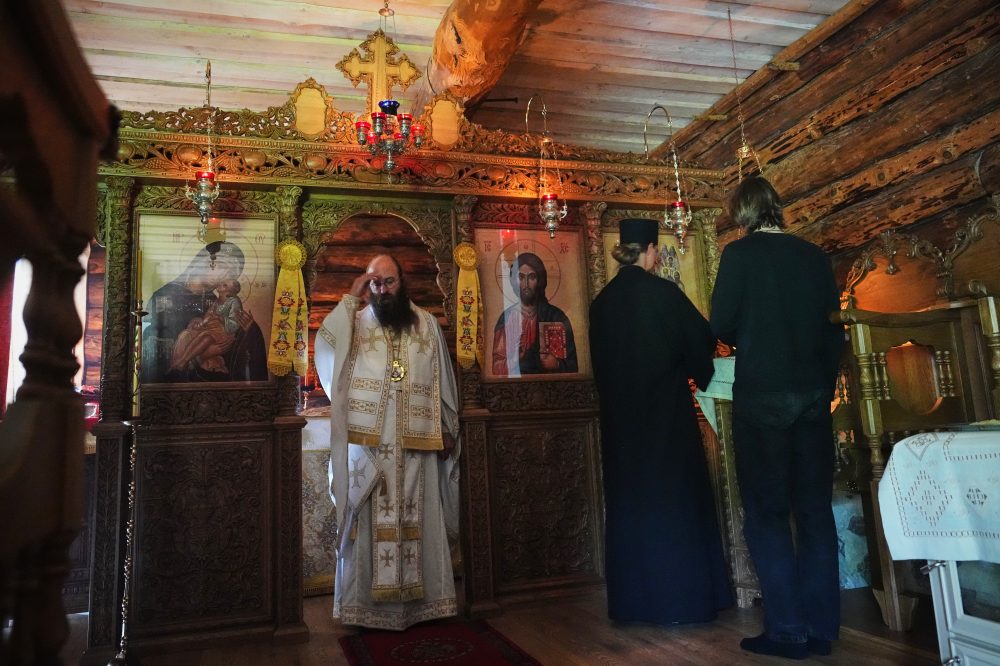

BUNIA, Congo (AP) — The mourners kept their distance as a tiny coffin was gently placed into the earth. Health workers dressed in masks and gloves stood alongside a priest as he offered prayers over the grave.
The child being buried was a 6-month-old girl — the third young resident of her orphanage to lose her life to the Ebola outbreak tearing through eastern Congo. She was the latest victim of a crisis that has now claimed hundreds of lives.
After spending a month on the ground at the outbreak’s epicenter alongside AP photographer Moses Sawasawa, that quiet, heartbreaking funeral is the image that remains most vivid.
From a distance, outbreaks like this one are reduced to statistics: more than 1,300 confirmed cases, hundreds of deaths, and tens of thousands of people who may have come into contact with those infected. But standing at that graveside, the true weight of what is unfolding became impossible to ignore.
Ebola makes no distinctions — it strikes the young and the old, the wealthy and the impoverished, civilians and healthcare workers alike.
And the crisis is far from over. Medical experts say the outbreak has not yet reached its peak. There are currently no approved treatments for this particular strain — known as Bundibugyo — and a vaccine is reportedly still months away from being available.
Another death that left a lasting mark was that of a medical student who was just a few months away from completing her degree. She had been her family’s greatest hope and would have been a desperately needed healthcare provider in a remote area where outbreaks can go unnoticed for weeks. At her funeral, her mother was overcome with grief.
It is difficult to imagine a more difficult environment in which to confront a deadly disease.
Each day of reporting began and ended with a meticulous process of protection and decontamination. Ebola spreads easily through bodily fluids — including vomit, blood, and semen — which meant suiting up in gloves, masks, and hair nets while enduring 80-degree Fahrenheit (26 Celsius) temperatures and 80% humidity. Our vehicle, microphones, and other equipment all had to be disinfected after every visit to an affected area. Eventually, the routine felt automatic.
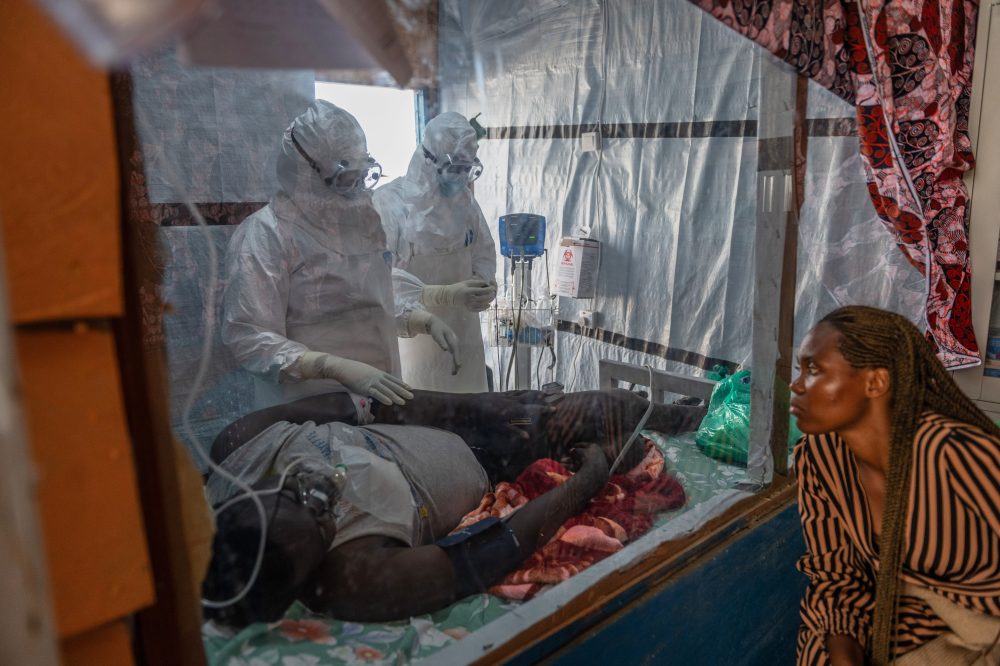
At overwhelmed health centers, the sounds of grieving families were constant. The air hung heavy and hot, and people dripped with sweat. Healthcare workers moved through packed wards, pausing repeatedly to wash their hands.
The suffering witnessed here echoed memories of covering a previous catastrophe in this region — the seizure of Goma, a major humanitarian hub, by M23 rebels last year. Then, as now, hospitals were filled with the wounded and the dying, surrounded by the sounds of weeping loved ones.
The current Ebola outbreak is centered in neighboring Ituri province, a region already scarred by years of armed conflict. Rebel groups control parts of the area, nearly a million people have been forced from their homes, and economic conditions have grown increasingly desperate. Some residents were found trying to wash their hands using oatmeal and sand.
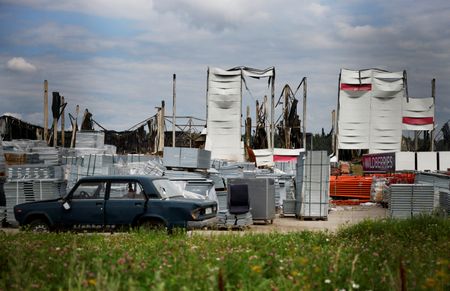
In just the first three weeks after the outbreak was officially declared in mid-May, the World Health Organization reported at least 520 security incidents — including direct attacks on health workers — that disrupted response efforts. Those attacks have continued. Burned-out hospital beds were found abandoned after patients fled.
People confirmed or suspected to have Ebola have also been abducted, vanishing into areas with poor mobile phone coverage and roads that are barely passable.
Amid these conditions, local coordinators like Husein Twaibu are working to organize the community response. Twaibu described how at least four health zones in Ituri — home to thousands of people — remain completely out of reach because they are under rebel control. Response teams have had to rely on rebel leaders to carry Ebola prevention messages into those areas and encourage residents to cooperate with containment efforts.
But that arrangement comes with its own complications.
A recurring concern heard from doctors and aid workers throughout the reporting trip: many local residents simply do not believe the outbreak is real. In a region with a long history of violence and exploitation of its natural resources, outsiders are viewed with deep suspicion. Because Ebola’s early symptoms — such as fever — can easily be mistaken for more familiar illnesses like malaria, the strict precautions being enforced can seem unnecessary and alarming to many.
Particular anger has erupted around burial practices. Families are being told they cannot do what tradition calls for — washing and preparing a loved one’s body before burial. That prohibition has fueled resentment.
The widespread distrust is one reason health officials cannot determine the true scale of the outbreak. They have still not identified the first person who fell ill.
Some residents are avoiding health centers altogether. Even community health workers who themselves survived Ebola infections have struggled to convince others to take the disease seriously.
One such worker is nurse Étienne Ezo, who contracted Ebola earlier this year. He said people frequently question why he survived when others did not.