
Central bank leaders from across the globe believe they may have found a reliable partner in the new head of the Federal Reserve, offering a rare moment of goodwill in what has otherwise been a strained relationship with Washington.
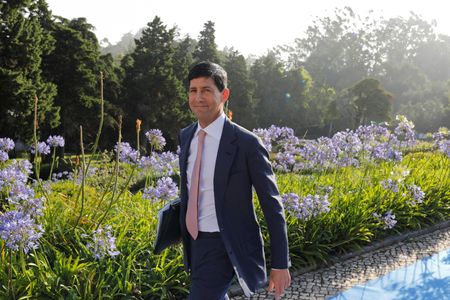
During a three-day gathering hosted by the European Central Bank in Sintra, Portugal, Federal Reserve Chair Kevin Warsh held a series of one-on-one meetings with counterparts from Europe and other regions. Among those meetings was an extended lunch with ECB President Christine Lagarde, held in the courtyard of the historic former convent where the conference takes place.
According to sources familiar with the discussions, the conversations stayed largely at a high level, with little focus on specific topics like inflation trends, shadow-banking risks, or cross-border policy coordination.
Even so, central bank officials read Warsh’s willingness to engage as a positive signal — an indication that the Fed intends to remain an active participant in the international forums that have long served as the backbone of global monetary cooperation.
That signal carried real weight. Behind closed doors, some central bankers had expressed concern that a Fed chair chosen by the Trump administration might be more vulnerable to White House pressure on interest rates, or less invested in the kind of international coordination that has defined global monetary policy for decades.
The stakes are considerable. The Federal Reserve serves as the primary source of dollar liquidity during financial crises and, for certain countries, holds a significant portion of their gold reserves. It also carries the most influential voice in worldwide conversations about monetary policy and financial regulation.
With that in mind, policymakers arrived in Sintra eager to determine whether the strong working bonds many had built with former Fed Chair Jerome Powell would carry over under new leadership.
Several attendees who had previously worked alongside Warsh — either during his time as a Fed governor from 2006 to 2011, or through his later participation in the Group of Thirty consultative organization — said they recognized the same policymaker they had known for years. Others urged caution, noting it was premature to draw conclusions about how he would handle the dual pressures of maintaining credibility and managing expectations from the White House.
Warsh’s reception at the conference stood out, particularly given that many of those same attendees had previously rallied around Powell during his extended public dispute with former President Trump. That group had publicly defended Powell’s independence, and participants at last year’s Sintra conference had given him a standing ovation.
This year’s atmosphere was notably warmer. Lagarde set the tone at the opening dinner, greeting the late-arriving Warsh with air kisses and publicly stating her eagerness to work together. Warsh responded in kind.
Fluent in French after having studied in France, Warsh conversed with several French attendees in their native language. Rather than staying in a tight circle as some high-profile guests tend to do, he moved freely among central bank governors at Tuesday’s informal dinner.
Appearing on a panel with Lagarde, Bank of England Governor Andrew Bailey, and Bank of Canada Governor Tiff Macklem, Warsh adopted a notably warm and collaborative tone, saying he was “honoured to be on stage with three colleagues.”
While such details might appear minor, personal relationships carry genuine importance in the tight-knit world of central banking — particularly when coordinated action is needed during moments of financial instability.
Conference participants also noted areas of agreement on how central banks communicate their policies. Warsh’s preference for straightforward messaging and his skepticism toward forward guidance — the practice of signaling future policy moves — appeared to align with a broader “back to basics” theme that emerged throughout the gathering.
He used the conference to reaffirm the Fed’s independence and acknowledged that policymakers across different countries share a number of “common calls.”
Lagarde suggested the ECB no longer required “complex forms of forward guidance,” while Bailey observed that such guidance was “much easier to put in place than it is to take it away.”
There were some underlying differences. Lagarde said the ECB would continue to explain how it responds to new economic data, describing the approach as “framework guidance” — a phrase that later appeared in Macklem’s remarks as well. Warsh, meanwhile, showed little inclination to discuss the Fed’s own policy approach in detail.
Despite those distinctions, attendees tended to emphasize the shared ground rather than the gaps. Some pointed to internal ECB discussions about normalizing bank reserve requirements as further evidence that central banks on both sides of the Atlantic are stepping away from the emergency-era policies that defined the past decade and a half.