
Indian authorities are working to retrieve the remains of a climber widely known as “Green Boots” from the upper slopes of Mount Everest — nearly three decades after the mountaineer lost his life on the world’s tallest peak.
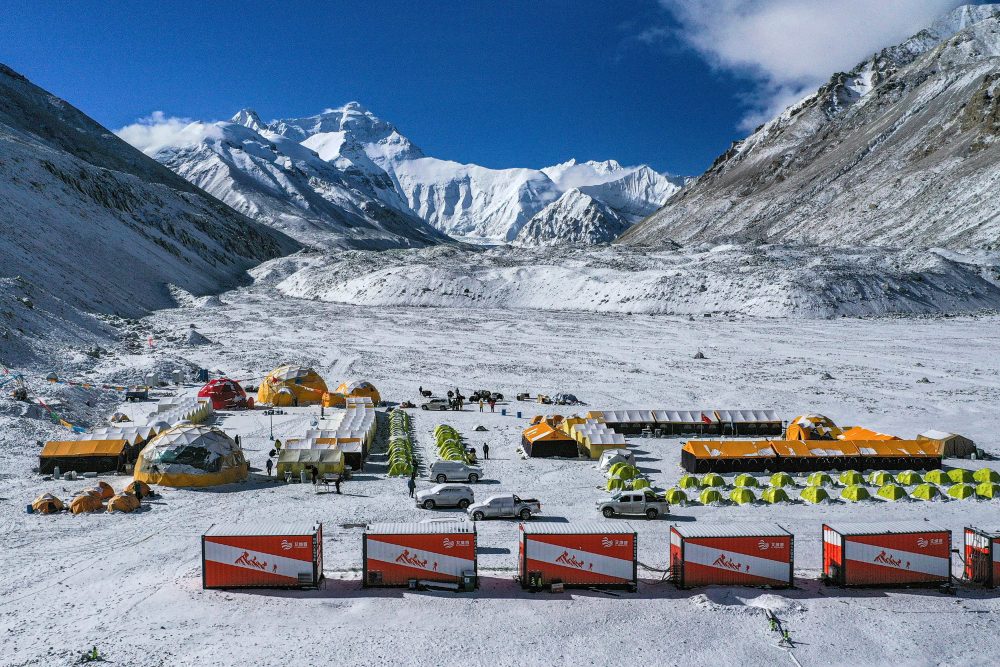
The Indo-Tibetan Border Police, an Indian paramilitary organization, has launched the process of hiring specialists trained in high-altitude recovery missions. The goal is to bring back what officials believe are the remains of Dorje Morup from Everest’s northern route, which runs through Tibet.
Morup was among six Indo-Tibetan Border Police members who attempted to climb Everest in May 1996. As conditions near the summit turned dangerous, three members of the group turned around and headed back down. Morup and two other climbers pushed forward — and all three perished in a storm that ultimately killed eight people across several expeditions. It was considered one of the deadliest tragedies in Everest’s history at that time.
Morup’s remains earned the nickname “Green Boots” due to the vivid green mountaineering boots he was wearing when he died. His body rests in Everest’s so-called “death zone,” above 8,000 meters (26,247 feet), and has long been used as a reference point by climbers navigating the mountain’s northeast route.
Because the remains are located on Everest’s Tibetan side, any recovery operation requires approval from Chinese authorities, who tightly control access and climbing permits in that area. China has closed the mountain to foreign climbers for the 2026 spring climbing season, though no official explanation has been given for that decision.
Bringing in the recovery specialists is just the first step. The actual operation would still require Chinese authorization and favorable weather conditions before it could move forward. It remains unclear whether an Indian, Nepali, or Chinese team would ultimately carry out the retrieval. Chinese officials have made no public statement regarding the plan.
Pemba Sherpa, who founded the Kathmandu-based Xtreme Climbers Treks and Expedition, explained the challenges involved. “It is not impossible to retrieve the body from Everest, but the first challenge is getting permission from the Chinese officials and then only can they proceed to bring the body down,” he said.
Since Mount Everest was first successfully climbed in 1953, nearly 350 people have died attempting the ascent. The bodies of many climbers remain on the mountain’s frozen slopes because bringing them down is both dangerous and costly.
Recovering remains from the death zone is especially treacherous. Helicopters are unable to operate at that altitude, meaning experienced Sherpa guides and high-altitude climbers must physically carry bodies down steep terrain on foot — all while contending with avalanche dangers, brutal weather, and the physical toll of extreme altitude and oxygen deprivation.