
New Jersey is moving forward with a new policy that will charge businesses whose employees are covered by Medicaid instead of company-sponsored health insurance — and other states across the country are watching closely.
Democratic governors and lawmakers are pushing these types of measures as a way to help cover the rising costs of Medicaid, the joint federal-state insurance program designed for lower-income residents. Expected changes at the federal level could make the program more costly for states and may result in fewer people having coverage.
Supporters of the policy also argue it’s a matter of fairness, pointing out that employers benefit when their workers receive taxpayer-funded health coverage instead of being enrolled in company plans.
The idea, however, faces pushback — both from business organizations and from some left-leaning policy groups.
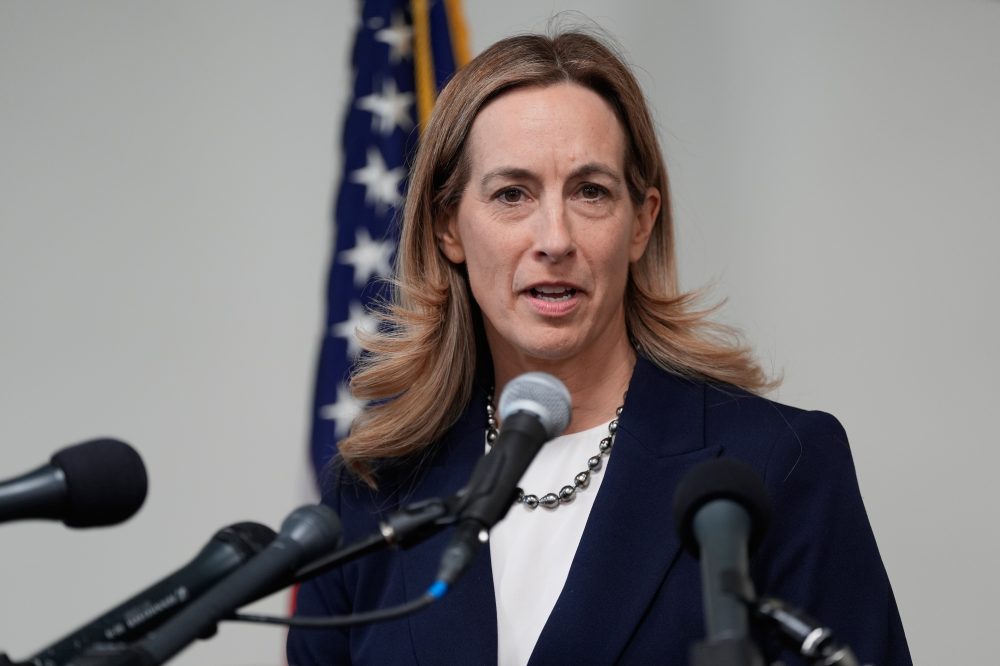
New Jersey Gov. Mikie Sherrill signed the legislation Tuesday evening. The measure applies to employers with at least 50 workers enrolled in Medicaid, and the state budget she approved earlier that week projects the program will generate $145 million in revenue this year.
Under the new structure, businesses will be billed for each employee and dependent covered by Medicaid. The fee starts at $325 per year for companies with 50 to 249 Medicaid recipients among their workforce, and climbs to $725 annually for employers with 500 or more recipients.
California also took action this week, though its legislation stops short of immediately imposing a charge. Instead, the bill instructs the state administration to bring lawmakers a set of options for implementing such a fee next year. That task will fall to whoever succeeds Gov. Gavin Newsom, a Democrat leaving office in January. Democratic gubernatorial candidate Xavier Becerra has already included an employer charge in his campaign platform.
California State Sen. John Laird, a Democrat who sponsored the bill, pointed to the major federal tax and policy law signed by President Donald Trump a year ago as a driving force behind the need for action. He said that law could require the state to spend more on Medicaid to make up for gaps created by federal policy shifts.
The nonpartisan Congressional Budget Office has projected that more than 10 million people will be left without insurance as a result of that federal law by 2034. The law requires certain Medicaid recipients to be working, attending school, or volunteering — and mandates that even more recipients document whether they meet those requirements. Workers at larger companies who are putting in at least 20 hours per week would generally not face a loss of Medicaid eligibility.
Laird also framed the issue as one of economic fairness. “If you’re a small business person in California, you are quite likely paying for health insurance for your employees. And through your taxes, you’re paying for health insurance for some of the biggest employers in California,” he said. “And that’s not fair.”
Similar legislation passed one chamber of the state legislature in both Colorado and Oregon this year but did not advance to become law in either state. A related bill was also introduced in Washington state.
Connecticut Gov. Ned Lamont, a Democrat running for a third term in November’s election, has called for a similar policy in his state, proposing it as part of the state budget that would take effect two years from now.
Business organizations have been vocal in their opposition, arguing the fees would unfairly punish employers.
“The fact remains that many job-creators are still going to be penalized for something they have no control over,” said Christopher Emigholz, the chief government affairs officer at the New Jersey Business and Industry Association, in a written statement. “If an employee declines an employer-provided health plan because they’d rather be on Medicaid, it is unfair to penalize the employer for that employee’s decision.”
Opposition also comes from some progressive policy circles. Gideon Lukens, a health policy analyst at the left-leaning Center on Budget and Policy Priorities, acknowledged the good intentions behind the idea but warned it could have unintended consequences. He said companies might become less likely to hire people from low-income households or single-parent families. Employers could also factor the policy into decisions about hiring, layoffs, and where to set up operations.
Lukens also warned the fees could discourage workers from enrolling in Medicaid if they worry it will make them less appealing to employers. “Usually, when I see a tax on something it’s going to discourage whatever being taxed,” he said.
New Jersey’s law includes several provisions aimed at addressing those concerns. Temporary, seasonal, and part-time workers are exempt from the fee calculation. The legislation also prohibits employers from making hiring or firing decisions based on a worker’s Medicaid enrollment status.
This type of employer charge isn’t a brand-new concept. At least two states have tried it before, and versions of the idea have been proposed in Congress as well.
In 2017, Massachusetts lawmakers approved a fee of up to $750 per non-disabled Medicaid-covered worker. The program launched in 2018 but was not renewed when it expired the following year.
An earlier attempt in Maryland dates back to 2006 and initially targeted only Walmart. A business industry group challenged the law in court and prevailed, halting the fees. A federal judge ruled that the policy required the company to track and manage employee benefits differently in Maryland than in other states, which violated a federal law governing self-insured health plans.
Legal experts suggest the current wave of proposals may sidestep that same legal challenge by deliberately avoiding any direct reference to those self-insured health plans in the legislation’s language.