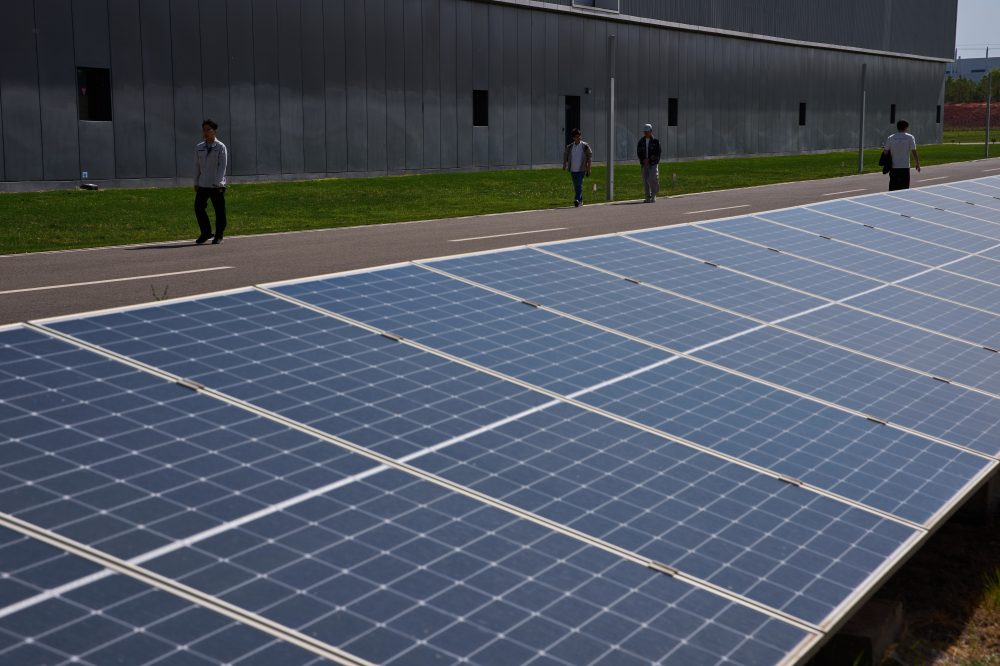

Viewed from above, more than 3 million solar panels arranged in the shape of a galloping horse shimmer across the desert landscape at the Dalad Banner solar farm — a nod to Inner Mongolia’s nomadic roots. Just a short distance away, one of the region’s numerous coal-fired power plants hums along, sending electricity 700 kilometers, or about 435 miles, to Beijing.
That striking contrast captures what energy experts describe as an ‘all-of-the-above’ approach to power in Inner Mongolia, which has emerged as China’s top producer of both renewable energy and coal. The region’s energy path reflects the broader situation across China: wind and solar are growing at a rapid pace, but coal remains a cornerstone of the country’s power supply.
China has been adding wind and solar capacity faster than any other nation on Earth. Even so, coal-fired plants still accounted for roughly 51% of China’s electricity generation in 2025, according to the most recent figures from the National Energy Administration.
Energy consultant David Fishman of The Lantau Group, who has personally toured Inner Mongolia’s coal plants and solar installations, put it plainly: “While China as a whole is transitioning away from coal, Inner Mongolia is most certainly the most paradoxical part of the story. In Inner Mongolia’s case, more renewables often means more coal capacity as well.”
Regional officials say they want wind and solar to gradually take over electricity duties currently handled by coal, while also keeping up with the country’s surging power needs. For now, however, both coal and renewables will keep growing — coal is still needed to step in when clouds block the sun or the wind dies down.
Gu Qing, an official with Inner Mongolia’s energy administration, addressed the apparent contradiction while standing at the edge of the Dalad Banner solar farm. “Many people see there is a conflict or a competitive relationship between traditional energy and renewable energy,” he said. “As more renewable energy capacity is added, coal-fired power will also continue to grow, although the pace will gradually slow.”
Associated Press reporters visited the Dalad Banner solar farm on a recent government-organized tour. The facility currently produces around 2 billion kilowatt-hours of electricity each year and is part of a larger clean energy initiative launched in 2018 in northern China’s Kubuqi Desert.
Inner Mongolia plays a central role in China’s West-to-East Power Transmission Project, which moves electricity from resource-rich western regions to the industrialized east. In 2025, about 40% of Inner Mongolia’s electricity output — roughly 350 billion kilowatt-hours — was shipped to other parts of the country, enough to power 120 million households for an entire year.
Over the past five years, solar and wind capacity in Inner Mongolia has more than doubled, yet coal still dominates actual electricity production. Coal plants generated approximately 590 billion kilowatt-hours in 2025, compared to about 277 billion kilowatt-hours combined from solar and wind. Coal power capacity in the region has continued to expand throughout that same period.
Huang Zhiqiang, vice governor of Inner Mongolia, explained the ongoing dependence at a recent news briefing: “Because wind and solar are intermittent…we cannot do without the support of coal-fired power.” He added that the role of coal is shifting: “What is changing is that coal power units are turning from supply-guarantee units to serving as a supporting and regulating role.”
Inner Mongolia has mined roughly 1.2 billion tons of coal in recent years, making up about one quarter of China’s total coal output. More than 60% of that coal is transported to other provinces. Ordos, the city that oversees the Dalad Banner area, is also one of five major coal-producing centers designated by China’s central government.
Officials say coal plants are being retooled to ramp down when renewable energy is plentiful and ramp back up when it isn’t. Huang said all coal power units in the region have been refurbished to operate at as low as 15% of their capacity, reducing coal consumption during periods of high renewable output.
However, Fishman cautioned that operating at 15% capacity is “an aspirational or best-unit capability rather than something that applies across the whole fleet in day-to-day operations,” noting that doing so creates both technical and financial strain.
Anika Patel, China section editor at the climate change research organization Carbon Brief, echoed that concern: “Just because a plant can operate flexibly doesn’t mean that it is operating flexibly.” She said economic and political incentives tied to coal make it difficult to truly push the fuel into a backup role. She also pointed out that long-term power contracts in China limit how much flexibility the grid has to buy renewable electricity, and that lengthy trading agreements between provinces make it harder to incorporate solar and wind power.
The government says Inner Mongolia is not only expanding renewables to meet rising electricity demand from artificial intelligence computing, electric vehicle charging, and manufacturing — it is also investing in energy storage, transmission upgrades, and other grid improvements. Gu said the region plans to encourage factories to shift their production schedules to better align with times when wind and solar generation is highest, making renewable energy use more efficient.
For more than a decade beginning in the early 2010s, China saw a surge in solar and wind development driven largely by government targets and financial incentives, which eventually led to problems including overcapacity.
Coal’s role in Inner Mongolia goes beyond power generation. The region is also a major center for coal chemical industries, where coal is converted into chemicals or fuels used to make other products — a process that releases more carbon dioxide than burning coal for electricity. Huang said Inner Mongolia plans to deploy carbon-capture technology to reduce those emissions.
He also said the region is expanding its coal-to-oil, coal-to-gas, and coal chemical production capacity. Citing the Iran conflict and the closure of the Strait of Hormuz as examples of how global energy supply chains can be disrupted, Huang argued that domestic coal conversion offers China a buffer against reliance on imported energy. “At the industrial level, this can help offset and ease China’s reliance on imported oil and gas, reducing dependence on overseas supplies,” he said.