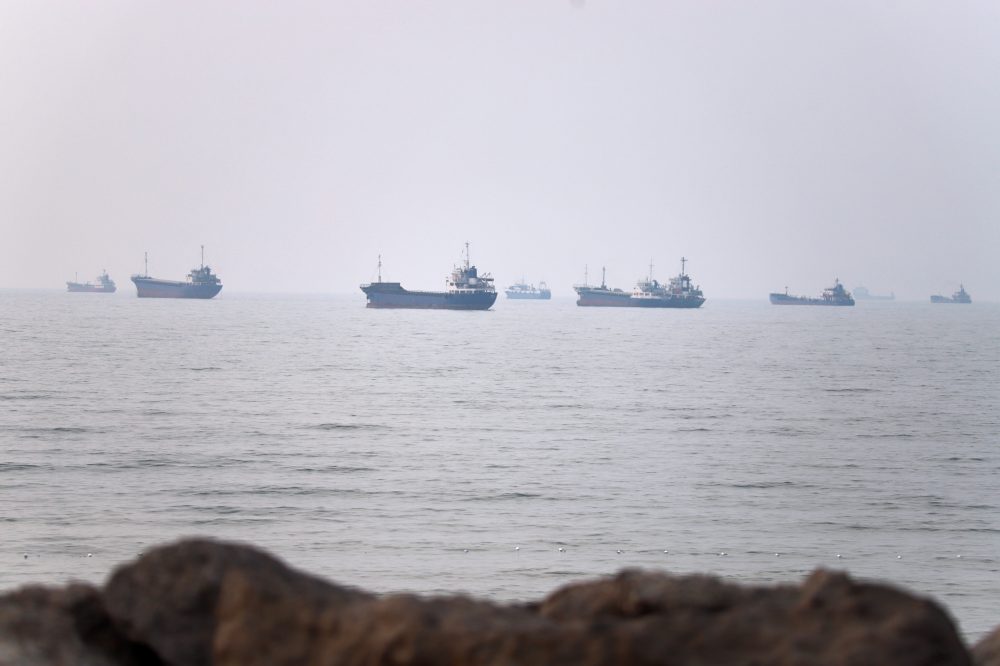

DUBAI, United Arab Emirates — Iran’s joint military command issued a stern warning Thursday, declaring that all oil tankers traveling through the Strait of Hormuz must stick to routes approved by Tehran — or face what it called a “forceful response.” The announcement marks another escalation in tensions surrounding one of the world’s most critical waterways for energy shipments.
The narrow passage at the mouth of the Persian Gulf has become a central flashpoint in ongoing efforts to negotiate a lasting end to the Iran war. The warning, issued by the Khatam al-Anbiya military command and broadcast on Iranian state television, came just one day after U.S. and Iranian diplomats separately met with mediators in Qatar on Wednesday.
The exact trigger for the threat was not immediately apparent. However, U.S. military’s Central Command had recently released a statement following a meeting with officials from Middle Eastern nations in Bahrain, in which “leaders underscored their shared commitment to the free flow of commerce through the Strait of Hormuz.” That language appears to have drawn Iran’s ire.
Iran is also preparing for funeral services beginning this weekend for the late Supreme Leader Ayatollah Ali Khamenei, who was killed during the opening moments of the war in February.
The Iranian military’s statement left little room for ambiguity: “Any failure to comply, deviation from the designated route, or disregard for the navigation protocols of the Islamic Republic of Iran in the Strait of Hormuz will be met with an immediate and forceful response from the armed forces, endangering the security of the violating vessels.”
The statement went further, taking direct aim at American air activity in the region. It declared that the ongoing presence of U.S. fighter jets above the strait “causes insecurity in this waterway and threatens regional security.” Iran also warned that “any attempt by the United States to interfere in security matters or any disruptive action in the Strait of Hormuz will be considered a threat to Iran’s national sovereignty and will be met with a rapid and decisive reaction.”
As part of a temporary agreement, Iran and the United States had agreed to allow ships to pass through the strait without fees for 60 days. However, Tehran has insisted it must control the paths those vessels take and has pushed for the right to collect passage fees going forward — a position that would overturn longstanding international practice in the waterway.
The United States and many Gulf Arab nations have refused to accept those fee demands. A recent attempt by Oman and a United Nations agency to establish an alternative shipping route near Oman’s coastline set off a series of attacks across the Middle East last weekend, underscoring just how volatile the situation remains.