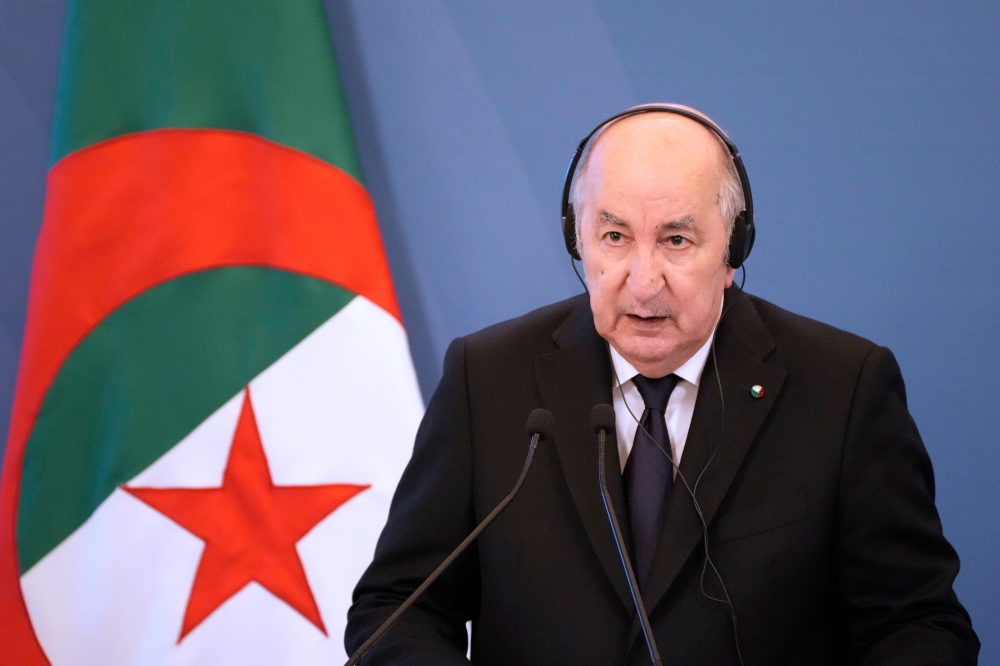

ALGIERS, Algeria — Algerians headed to the polls Thursday in a parliamentary election marked by widespread economic frustration and controversy over the exclusion of candidates who have challenged the ruling government.
Close to 25 million eligible voters across Africa’s largest nation by land area are selecting from 1,235 candidates vying for 407 seats in the lower chamber of Parliament, each carrying a five-year term.
Officials are watching turnout closely after citizens largely stayed away from campaign events in the lead-up to the vote. To boost participation, the government designated Thursday a paid national holiday.
For many Algerians, the election takes a back seat to pressing daily concerns — including the rising cost of living, declining public services, and shrinking freedoms in the political, media, and labor sectors.
Adding to the distraction, many Algerians are fixated on the World Cup, where their national soccer team is set to face Switzerland in a knockout-round match early Friday.
The current pro-government majority controls roughly 300 seats in the outgoing Parliament, with the Islamist MSP party holding the second-largest bloc at 64 seats.
Some MSP candidates were among the 269 people barred from participating in the election. The banned group notably included former leaders and activists tied to the Hirak pro-democracy movement, which played a key role in ousting longtime autocratic President Abdelaziz Bouteflika in 2019. Since then, freedoms have continued to erode under his successor, President Abdelmadjid Tebboune, who won reelection to a second term in 2024.
The country’s electoral authority said those disqualified were excluded due to alleged “links to illicit financial networks” and “suspicious political activities.”
Security personnel were deployed outside polling stations in the capital city of Algiers beginning Wednesday.
In Algeria’s southern regions and across the Sahara Desert, voting was moved up by 48 hours so that nomadic communities could participate. Ballot boxes were transported by off-road vehicles belonging to local administration and escorted by police in Land Rovers.
Among Algerians living abroad — approximately 854,225 registered voters, with the largest concentration in France — voting took place over the previous Saturday and Sunday at consular offices. State news agency APS reported strong turnout and a “family atmosphere” at those locations.
The government also rescheduled end-of-year school exams to free up classrooms and teachers, who typically serve as polling station workers in exchange for a daily stipend.
With campaign venues mostly empty, political parties and independent candidates shifted to informal outreach — holding small gatherings in streets, markets, and neighborhood cafes. A widely circulated video from last week showed the leader of one political party unsuccessfully attempting to persuade a young man to cast a ballot.
Despite the lackluster atmosphere, parties pressed forward with their messages. The presidential majority, spearheaded by the long-established FLN party, called for high voter participation to strengthen the country in the face of global geopolitical pressures.
The Trotskyist opposition Workers’ Party focused its campaign on raising pensions and wages and opposing a mining sector overhaul that it says favors foreign investors.
Meanwhile, the head of the Socialist Forces Front — considered the leading party of the democratic movement — urged the freeing of political prisoners and greater media freedom, arguing that boycotting the election would ultimately benefit the government rather than challenge it.