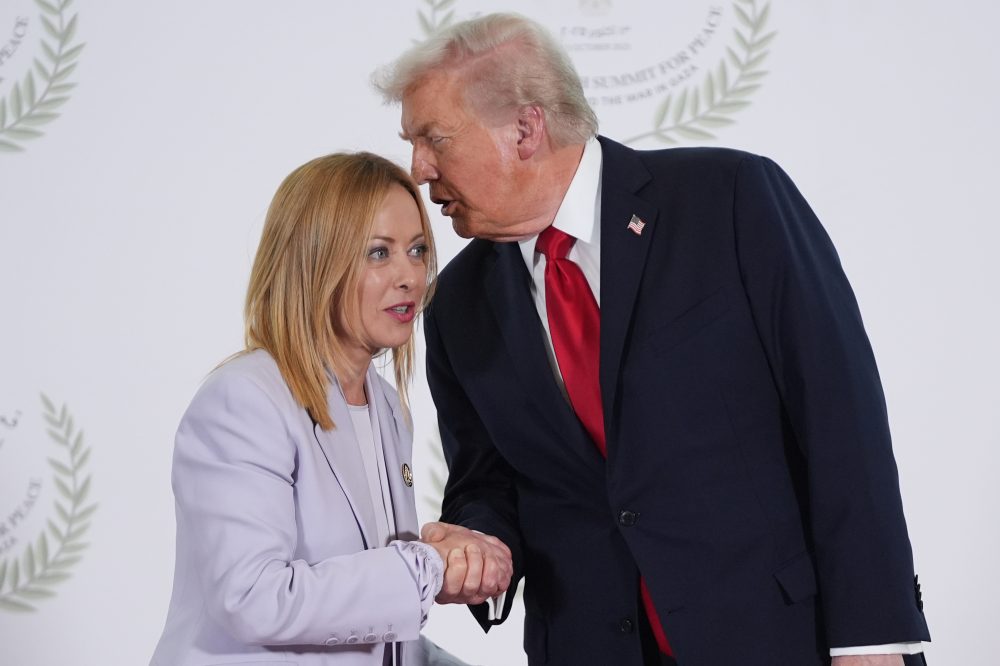

ROME (AP) — U.S. President Donald Trump’s sharp attacks on Italy’s prime minister have produced a result he likely did not intend.
After Trump questioned whether Italy could be counted on as a wartime ally and claimed that Italian Prime Minister Giorgia Meloni had groveled for his attention, European leaders rushed to her defense. In doing so, they began warming up a relationship that had previously been cold due to Meloni’s far-right political background.
This is just the latest sign of how the frequently polarizing American president is inadvertently pushing European nations toward greater unity.
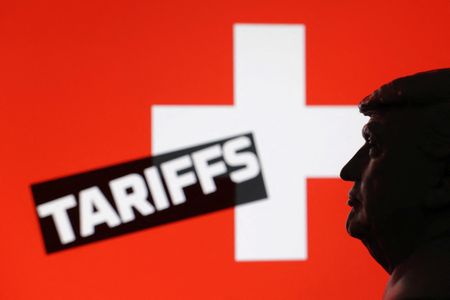
Across the continent, leaders are finding more common ground on issues like defense spending, trade tariffs, and foreign policy as they deal with wars in Ukraine and Iran, a growing trade gap with China, and ongoing threats from Russia. Analysts say this trend leaves Trump — who has typically preferred to deal with European countries one at a time — with less room to do so.
“Most of the mainstream leaders realize that Europe is getting squeezed between China and America, and so, if not now, then when?” said Sudha David-Wilp, vice president at the German Marshall Fund. “They need to act as a bloc in order to maintain Europe’s place in the world.”
This growing sense of European solidarity faces a significant test next week when NATO leaders gather for a summit in Turkey.
Meloni’s public clash with Trump has actually helped her build stronger relationships with European leaders who once viewed her party’s post-fascist history with suspicion.
A turning point came in March when Meloni refused to allow U.S. bombers heading to the Middle East to use a military base in Sicily without first getting approval from Italy’s parliament.
For years before that, France and Germany often left Meloni out of the smaller, informal talks that helped shape Europe’s approach to major international crises. That exclusion continued into 2026, fueled in part by disagreements over how to handle Russia’s war on Ukraine — including Meloni’s opposition to a British and French proposal to send European troops to Ukraine in the event of a ceasefire.
But Trump’s increasingly harsh words toward Meloni — who had already called his criticism of Pope Leo “unacceptable” — changed the atmosphere. European leaders began rallying around her, in part because they, too, have been targets of Trump’s criticism.
By late June, Meloni was firmly included in a Berlin meeting with the leaders of Germany, France, Britain, and Poland. The following day, she sat down with French President Emmanuel Macron in southern France for the first bilateral summit between the two countries since the pandemic.
Even far-right and nationalist parties across Europe that once embraced Trump’s political brand are now stepping back. His trade policies and the war with Iran have proven unpopular with voters, forcing a recalibration.
In France, far-right leader Jordan Bardella recently condemned U.S. actions as “foreign interference” and described Trump as “erratic” and “extremely unsteady.” That’s a sharp reversal from Bardella’s earlier praise of Trump’s nationalism as a “wind of freedom.”
In Germany, top figures in the far-right Alternative for Germany party have spoken out against the U.S. military campaign in Iran. The party’s co-leader, Tino Chrupalla, said in March that he was “extremely disappointed” with Trump, a politician he had believed would steer clear of new military conflicts.
This shift in tone is happening as elections draw closer in several countries, putting more emphasis on issues closer to home.
“This pushes everyone to consider a European horizon more than an international one,” said Lorenzo Castellani, a political analyst and professor at Rome’s LUISS University.
These forces are reshaping politics well beyond the European Union’s borders, stretching from the Arctic to the Balkans.
When Trump threatened to seize Greenland by force, protests broke out both in Greenland’s capital of Nuuk and in Copenhagen, Denmark. Leaders from across the political spectrum reacted with alarm at the perceived threat to European sovereignty and worried it could fracture the already strained NATO alliance.
In Albania, a luxury development project tied to Trump’s family business has become a flashpoint in domestic politics, sparking protests in June.
Perhaps nowhere was the political danger of aligning too closely with Trump more clearly demonstrated than in Hungary. Prime Minister Viktor Orbán — long considered Trump’s most loyal supporter within the European Union — was voted out of office in April, despite receiving backing from Trump himself and prominent figures in the MAGA movement.
An analysis by the consultancy Maplecroft suggested that negative views of the Trump administration may have contributed to Orbán’s political downfall.
While Meloni remains in step with Trump on issues such as immigration and security, she has long disagreed with him on Ukraine. Her consistent support for Kyiv has helped repair and strengthen Italy’s relationships with European partners, making it a central element of the continent’s increasingly unified stance toward Washington.
During their very public dispute last month, Meloni acknowledged that her friendship with Trump had come at a significant political cost.
Responding to Trump’s claim that she had “begged” to be photographed with him at the recent G7 summit in France, Meloni wrote on social media: “As for my popularity, being your friend has certainly not helped it, nor does it depend on my relationship with you.”
A recent Pew Research Center survey confirmed that Trump is deeply unpopular in Italy. The poll found that 83% of Italians have no confidence in Trump’s ability to make sound decisions on international affairs. His handling of issues including Iran, tariffs, and U.S. immigration policy all received low marks.
With a national election required by 2027 — and possibly coming as soon as next spring — Meloni is under growing political pressure from multiple directions, including public backlash over the Iran war and her past closeness with Trump.
Voters across Europe may ultimately hold their own leaders responsible for the consequences of decisions made in Washington, noted Castellani.
“At a certain point, when voters see the price of gasoline rising because of a war perceived as distant, they ask Meloni for the bill, not Trump.”