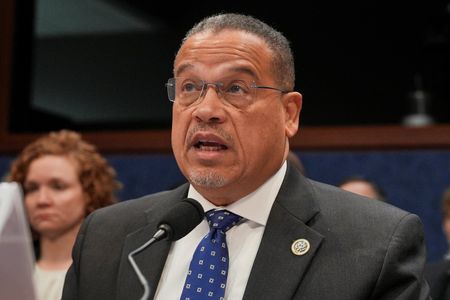

Minnesota Attorney General Keith Ellison announced Wednesday that his office is closing its Conviction Review Unit — a program dedicated to examining cases where individuals may have been wrongfully convicted — pointing directly to a funding cut by the Trump administration as the reason.
“Following the Trump Administration’s refusal to renew federal grant funding that supported the program, my Office is suspending our Conviction Review Unit,” Ellison said in an official statement. “Current budget constraints do not allow the program’s costs to be absorbed without compromising other core responsibilities.”
The Conviction Review Unit was established in 2020 and began accepting case applications in 2021. Ellison explained that the unit initially received a $300,000 federal grant covering its first two years, which funded the work of one attorney. That grant was later renewed at $500,000 for an additional two-year period. However, when the office sought another renewal, the Trump administration’s Justice Department turned down the application.
Minnesota, which is governed by Democrats, has been a repeated target of the Trump administration’s efforts to freeze federal funding. The state has also been at the center of a sweeping federal immigration enforcement operation that brought thousands of federal agents to conduct deportation roundups.
President Trump has defended the immigration crackdown as a necessary step to strengthen domestic security and reduce illegal immigration. Critics, including various civil rights organizations, have pushed back sharply, arguing the effort infringes on free speech and due process rights and has created a climate of fear — especially among ethnic minority communities who have raised concerns about racial profiling.
Earlier this year, the enforcement operation in Minnesota resulted in the shooting deaths of two U.S. citizens by federal agents, sparking widespread protests across the state.
Beyond Minnesota, the Trump administration has moved to cut or freeze federal funding to universities, colleges, school districts, and Democratic-led states over a variety of policy disagreements. Those disputes have involved issues including transgender policies, climate-related programs, pro-Palestinian protests, and diversity initiatives.