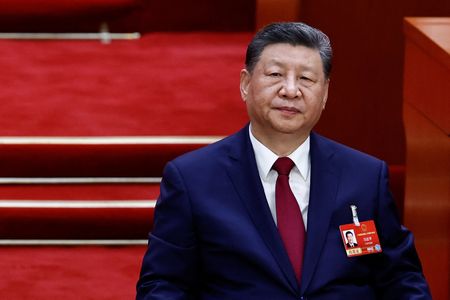
Chinese President Xi Jinping is pushing for rapid expansion of his nation’s energy infrastructure as Middle East conflicts continue to shake global oil markets, according to reports from Beijing.
The leader of the world’s second-largest economy stressed the importance of water-based power generation and environmental protection while calling for careful expansion of atomic energy programs, state media CCTV reported Monday.
Xi referenced the ruling Communist Party’s leadership in his remarks, stating: “The Party Central Committee has gained a profound grasp of global energy development trends and made major decisions by advancing the new energy security strategy in depth.”
The Chinese president’s comments did not specifically reference the ongoing Middle East warfare, though the timing comes as the United States and Iran consider a Pakistani-mediated proposal to resolve their five-week conflict. Tehran continues to resist international pressure to quickly reopen the critical Strait of Hormuz shipping lane.
Energy experts note that China faces less vulnerability to rising petroleum costs compared to other major economies. The nation relies on coal for over half its power needs, maintains substantial oil reserves, and receives only about 5% of its total energy consumption through imports passing the Strait of Hormuz.
Xi defended China’s energy strategy, saying: “The path we took in being the first to develop wind and solar power has now proven to be forward-looking. At the same time, coal-fired power remains the foundation of our energy system and must continue to play its supporting role.”
China currently operates more than half the globe’s coal-burning power facilities, making it the largest producer of carbon emissions worldwide. This has created ongoing tensions with Western climate programs. The country continues treating coal power as essential backup infrastructure while simultaneously expanding renewable energy sources.
Despite highlighting coal’s importance in China’s power grid, Xi emphasized his nation’s commitment to environmentally-friendly development approaches.
State media quoted officials saying: “A greener, more diversified and resilient new energy system will provide a strong guarantee for China’s energy security and economic development.”
Major infrastructure projects are moving forward, including construction that began last July on what will become the world’s largest hydroelectric dam along the Tibetan Plateau’s eastern edge.
Additionally, China General Nuclear Power Group started building a solar thermal facility Monday at 4,550 meters elevation in Tibet, according to state news agency Xinhua.
Major technology corporations are encountering growing pressure from shareholders regarding the environmental consequences of their massive data center operations, following recent project cancellations due to community resistance.
Amazon, Microsoft, and Google’s parent company Alphabet have all recently halted construction on billion-dollar data center projects after facing local opposition, and now investors are demanding greater accountability for these facilities’ environmental effects.
Over a dozen investment firms are intensifying their demands ahead of this spring’s annual shareholder meetings, pushing for detailed information about water consumption and conservation practices as these tech companies expand their computing infrastructure, according to recent interviews.
Boston-based Trillium Asset Management, which oversees more than $4 billion in assets, submitted a proposal to Alphabet in December requesting transparency about meeting climate commitments despite rising energy demands from data centers, according to Andrea Ranger, the firm’s director of shareholder advocacy.
Alphabet committed in 2020 to cutting emissions in half and transitioning to carbon-free energy by 2030. However, Trillium reported that emissions actually increased by 51%, leaving investors “in the dark” about the company’s strategy for achieving these targets.
A comparable proposal from Trillium the previous year gained backing from nearly 25% of independent shareholders.
Giovanna Eichner, a shareholder advocate at Green Century Capital Management, revealed ongoing conversations with Nvidia about potentially filing a proposal “to ensure that short-term AI gains do not come at the cost of long-term climate and financial risk,” though she declined to provide additional specifics.
Investors are particularly focused on obtaining comprehensive water usage information. Data centers across North America consumed almost 1 trillion liters of water in 2025, according to market research firm Mordor Intelligence, matching approximately what New York City uses annually.
Although Meta, Google, Amazon and Microsoft have implemented closed-loop cooling systems in their data centers that significantly reduce water requirements, the reporting on consumption varies considerably between companies.
Meta’s 2025 environmental report included water usage for company-owned facilities but excluded leased properties and construction sites. Overall consumption jumped 51% from 3,726 megaliters in 2020 to 5,637 megaliters in 2024, representing enough water to serve over 13,000 households annually.
Google’s 2025 environmental report covered owned and leased facilities but omitted third-party operated sites. Both Amazon and Microsoft disclosed total water consumption in their 2025 sustainability reports without providing site-by-site breakdowns.
Josh Weissman, Amazon’s director of infrastructure capacity delivery, stated the company is “increasingly disclosing site-specific water consumption data where we operate.” An Amazon representative emphasized the company’s commitment to being a “good neighbor” through efficiency investments, new energy development, and water usage reduction.
Facility-specific data is essential for investors to properly evaluate operational risks and company performance in managing them, according to investment professionals who also seek information about water supply replenishment efforts.
“We haven’t seen them disclosing enough about their water consumption (and the) impact on the local community,” explained Jason Qi, lead technology analyst at Calvert Research and Management.
A Microsoft representative described environmental sustainability as “a core value” and stated the company is “proactively addressing sustainability challenges and accelerating solutions for long‑term impact.”
Google declined to provide comment and Meta did not respond to requests for comment.
Dan Diorio, vice-president of the Data Center Coalition, a lobbying organization representing the major tech companies, said enhanced community engagement has become a primary focus over the past year.
“Being upfront with them regarding energy and water use, and so that residents can understand that this project will not stress their resources… and will protect them as rate payers is crucial,” Diorio said.
LONDON – A new analysis reveals how the blockade of a critical Middle Eastern shipping route has created vastly different economic outcomes for oil-producing nations in the region.
The shutdown of the Strait of Hormuz – which normally handles roughly 20% of the world’s oil and natural gas shipments – has resulted in massive financial gains for some countries while devastating others, according to recent data.
Iran closed off the strategic waterway following American and Israeli military strikes against Iranian targets in late February, which escalated into broader regional hostilities. Tehran later announced it would permit passage for ships without American or Israeli connections, allowing some tankers to navigate the narrow passage, though global energy markets remain severely disrupted.
The crisis sent international Brent crude prices soaring 60% during March, marking the largest monthly price jump on record.
President Donald Trump has issued an ultimatum to Iran, warning he will unleash “hell” on Tehran unless a deal is reached by Tuesday’s end to restore normal shipping traffic through the strait.
The financial impact on regional oil exporters has been determined largely by their geographic advantages or disadvantages.
Countries with access to alternative shipping methods – including Iran itself, along with Oman, Saudi Arabia, and the United Arab Emirates – can utilize pipelines and ports that avoid the blocked strait entirely.
Meanwhile, oil from Iraq, Kuwait, and Qatar remains effectively stranded, as these nations lack backup routes to reach global markets.
An Iranian government source told reporters that Iran refuses to reopen the strait as part of any temporary truce agreement, following Trump’s latest demands. Tehran has consistently rejected previous American ultimatums, stating it will not accept humiliation.
Neil Quilliam, an associate fellow with the Chatham House think tank, noted the long-term implications: “Now that Hormuz has been closed, it can be closed again and again, and that poses a major threat to the global economy. The genie is out of the bottle.”
The International Energy Agency has characterized this conflict as the most severe energy supply disruption in global history, with over 12 million barrels daily of regional production halted and approximately 40 energy installations damaged.
March export data analysis shows Iraq and Kuwait both experienced roughly 75% drops in estimated oil export earnings compared to the previous year. In contrast, Iran’s revenues jumped 37% while Oman’s increased 26%. Saudi Arabia saw a 4.3% revenue boost, and the UAE experienced a modest 2.6% decline as higher prices compensated for reduced shipping volumes.
For Saudi Arabia, elevated oil prices translate to increased government income through royalties and taxes from state-controlled Aramco, which is predominantly owned by the government and its investment fund.
This revenue boost comes at an opportune time for the kingdom, which had been running budget shortfalls due to heavy investments in economic diversification projects aimed at reducing oil dependency.
Aramco representatives declined to provide comments regarding the revenue calculations. Officials from other affected nations and their petroleum companies have not yet responded to inquiries.
Saudi Arabia’s primary alternative shipping route is its 746-mile East-West pipeline system, constructed during the 1980s Iran-Iraq conflict specifically to circumvent Hormuz. The pipeline links eastern oil production areas to the Red Sea port of Yanbu and currently operates at its maximum 7 million barrel daily capacity.
With approximately 2 million barrels consumed domestically, Saudi Arabia has roughly 5 million barrels available for export daily. Yanbu port handled an average of 4.6 million barrels per day during the week beginning March 23, despite attacks on the facility on March 19.
Saudi crude exports declined 26% year-over-year in March to 4.39 million barrels daily, but higher prices still increased export values by approximately $558 million compared to the previous year. The kingdom had strategically increased February exports to their highest levels since April 2023, anticipating potential American military action against Iran.
Despite the East-West pipeline advantage, Quilliam warned that Saudi Arabia remains exposed to additional attacks by Iran or its Yemeni allies, the Houthis, targeting western energy infrastructure and ships transiting the Bab el-Mandeb Strait toward the Red Sea.
The UAE has received partial protection through its Habshan-Fujairah pipeline, which can handle 1.5-1.8 million barrels daily while bypassing the strait. However, the country’s estimated oil export revenues still dropped more than $174 million year-over-year in March, and Fujairah has faced multiple attacks causing loading interruptions.
Among Gulf producers, Iraq suffered the steepest revenue decline – falling 76% to $1.73 billion. Kuwait followed with a 73% drop to $864 million.
Iraq’s state oil marketing organization SOMO reported April 2 that March oil revenues totaled approximately $2 billion, closely matching independent estimates.
Both nations likely face even sharper April declines, as their March figures benefited from shipments that departed during the conflict’s early days. One Iraqi crude tanker successfully navigated the strait last week after Iran announced Iraq would be exempt from shipping restrictions.
Adriana Alvarado, VP of sovereign ratings at Morningstar DBRS, explained that Gulf governments have options to maintain financial stability, including utilizing fiscal reserves or accessing debt markets.
“Apart from Bahrain, the Gulf states have enough fiscal room to deal with the shock, with government debt at moderate levels below 45% of GDP,” she stated.
The crisis’s long-term consequences remain uncertain. While some Western oil companies and political leaders advocate for increased fossil fuel investment to guard against supply disruptions, other analysts argue renewable energy offers superior protection.
Demonstrating how the crisis might accelerate the transition away from oil dependence, France’s TotalEnergies and UAE state-backed renewable firm Masdar announced a $2.2 billion joint venture last week to rapidly expand renewable energy infrastructure across nine Asian nations.
Salisbury University has made available details regarding their 2026 Sea Gull Invitational golf tournament, according to information posted on the university’s athletics website.
The annual collegiate golf competition represents a signature event for the Sea Gulls athletics program, bringing together golf teams from various universities to compete in the invitational format tournament.
Additional specifics about the tournament format, participating schools, dates, and venue information are expected to be announced as the event approaches.
The Delaware Division of Motor Vehicles announced it will extend its appointment-only service at the Wilmington office indefinitely after receiving overwhelmingly positive response from customers.
Since the Wilmington DMV location reopened with the appointment system, more than 12,500 people have received services through the scheduled booking process, according to state officials.
Customers can schedule their visits by going online to appointments.dmv.de.gov. For those who don’t have internet access, appointments can be arranged by calling 302-744-2500.
The decision to continue the appointment system comes after officials reviewed customer satisfaction and the effectiveness of the new process at the Wilmington facility.
Ocean City, Maryland officials have announced a special municipal election scheduled for Tuesday, April 21, 2026, to fill a vacant city council position.
Residents will be able to cast their ballots from 7:00 a.m. until 8:00 p.m. at the Roland E. Powell Convention Center, specifically in the Dockside Exhibit Hall.
The special election focuses on selecting a candidate to occupy one open council seat. Multiple candidates are vying for the position to represent the community on the municipal council.
An elevated risk for fire spread is expected across the Delmarva Peninsula today, with conditions becoming more concerning on Tuesday as a much drier air mass moves into the region.
This afternoon, relative humidity values are forecast to fall into the 30 to 40 percent range. At the same time, westerly winds will increase to around 10 to 15 mph, with gusts reaching 20 to 25 mph. While these conditions support an elevated fire risk, they are not expected to reach critical thresholds today.
However, the situation changes heading into Tuesday.
A secondary cold front will move through the region early Tuesday, ushering in a significantly drier air mass. Dew points are expected to drop into the teens, which will allow relative humidity levels to fall even further, into the 20 to 30 percent range by the afternoon.
In addition, northwest winds will strengthen to around 15 to 20 mph, with gusts as high as 30 to 35 mph. This combination of low humidity and gusty winds will create conditions that are close to meeting Red Flag Warning criteria, which signals a high potential for rapid fire spread.
While the meteorological setup strongly supports critical fire weather conditions on Tuesday, recent rainfall may help limit the overall threat. Many areas across Delmarva picked up between a quarter and a half inch of rain on Sunday, with locally higher amounts near one inch across southern Delaware and parts of New Jersey.
That recent moisture could keep fine fuels, such as grasses and small vegetation, from drying out as quickly. Still, ongoing drought conditions across much of the region mean that fire risk remains elevated overall.
Officials are continuing to coordinate with fire weather partners to determine whether additional alerts, such as a Special Weather Statement or a Red Flag Warning, will be issued for Tuesday.
Residents are urged to avoid outdoor burning and use caution with any potential ignition sources, as fires could spread quickly under these conditions.
Delaware transportation officials are alerting drivers about upcoming overnight construction that will impact traffic flow on a busy New Castle County roadway.
Starting Monday, April 13th, the Delaware Department of Transportation will begin pavement repair work along McKennans Church Road in the Milltown area. The project involves warm mix patching to fix deteriorated sections of roadway between Newport Gap Pike and Bardell Drive.
Construction crews will be working during nighttime hours from 8:00 PM until 6:00 AM each night through Friday, April 17th. Traffic control personnel will be stationed at the work site to direct vehicles safely around the active construction zone.
Drivers who regularly use this route should plan for potential delays and consider alternate paths during the overnight hours when the repair work is taking place.
The Delaware Division of Motor Vehicles has announced it will maintain its appointment scheduling system at the Wilmington office for the foreseeable future, citing exceptional results and customer satisfaction.
Since implementing the appointment-only model when the Wilmington DMV location reopened, the facility has successfully processed services for over 12,500 customers. Officials say the overwhelmingly positive response from the public has led to the decision to keep the system in place without a set end date.
Residents looking to schedule their DMV visit can book appointments through the state’s online portal at appointments.dmv.de.gov.
Delaware State Police are working to piece together details of a deadly multi-vehicle collision that claimed one life on Interstate 495 in Wilmington late Saturday evening.
According to authorities, the fatal sequence of events began around 11:30 p.m. on April 4, 2026, when a Kia Optima collided with the back of a Ford Windstar in the right lane of northbound I-495 near 12th Street. The impact sent the Ford into a guardrail.
After the initial collision, the Ford’s driver got out of his vehicle and began walking on the interstate when he was hit by an oncoming Ram 1500 pickup truck.
The pedestrian, identified as 45-year-old Mark Barnett of Upper Darby, Pennsylvania, was transported to a nearby hospital where he succumbed to his injuries.
The 65-year-old driver of the Ram pickup from Gillett, Pennsylvania, escaped injury in the incident.
Police report that the Kia driver left the crash site before troopers could arrive on scene.
The interstate remained shut down for about five hours as investigators worked to document the scene and clear the roadway.
The Delaware State Police Troop 2 Collision Reconstruction Unit is handling the ongoing investigation. Authorities are appealing to the public for assistance, asking anyone who captured video footage or has information about the crash to reach out to Cpl. D. McKenna at (302) 365-8486. Tips can also be submitted through private message to the Delaware State Police Facebook page or by calling Delaware Crime Stoppers at (800) 847-3333.
Those affected by crime or sudden loss can access support through the Delaware State Police Victim Services Unit and Delaware Victim Center, which provides 24-hour assistance via their hotline at 1-800-VICTIM-1 (800-842-8461) or email at [email protected].
Dover Police Department has issued updated registry notifications for sex offenders currently residing within the city boundaries. The notifications, released on April 6th, include photographic identification cards and relevant information as required under state law.
These updates are part of ongoing community notification requirements that help keep residents informed about registered offenders in their neighborhoods. The information is provided through the department’s official notification system.
Residents who have questions about these notifications or need additional information are encouraged to reach out to Dover Police Department’s Sex Offender Enforcement Unit directly. The specialized unit handles all matters related to offender monitoring and community notifications within the city.
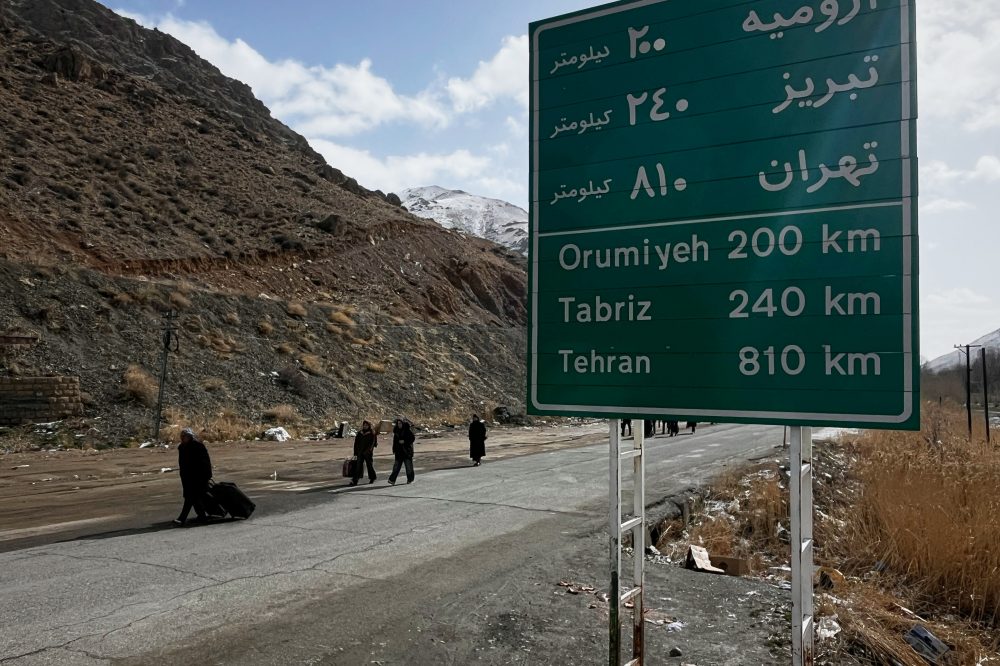
ZANJAN, Iran — Dark banners drape the border checkpoint while images of Iran’s fallen Supreme Leader Ayatollah Ali Khamenei look down, vowing revenge against America and Israel.
Yet during the lengthy 12-hour journey south toward Tehran, ordinary life persists, with scattered evidence of the current conflict, including a Shiite religious facility that authorities report was struck in a recent aerial attack.
Reporters from the Associated Press completed this trek on Saturday following their entry into Iran from Turkey. Their journey provided insights into a nation positioned at the heart of a regional conflict that has disrupted global markets and continues unabated five weeks following Khamenei’s death in the initial American and Israeli offensive.
The Iranian government has authorized the Associated Press to deploy an additional reporting team for a limited assignment. AP maintains existing operations within Iran. The visiting journalists must work alongside a handler from a government-connected organization, though AP maintains complete editorial authority over its reporting.
Evidence of wartime devastation first appeared in Zanjan, a northwestern city located roughly six hours from the border crossing.
Government representatives report that an aerial bombardment struck a religious community facility called a husseiniyah, resulting in two fatalities and destroying both a medical clinic and library. Additional sections of the complex, portions dating back centuries, sustained damage including its golden dome structure.
When questioned regarding the attack, Israeli military officials stated they had targeted “a military headquarters,” adding that they attempt to prevent damage to civilian infrastructure, without providing further details.
“It has hurt me a lot and distressed me a lot,” said Somayeh Shojaei, a local resident who has attended religious and cultural events at the center. “With these airstrikes, (the U.S. and Israel) are showing their malicious intent to the whole world,” she said.
The bombardment claimed the lives of the library’s caretaker and an Iranian Red Crescent volunteer responder, according to Jaafar Mohammadi, the regional director of cultural and Islamic guidance.
Mohammadi explained that economically disadvantaged individuals had accessed free medical care at the clinic while students utilized the library containing over 35,000 volumes, including historical manuscripts.
He stated he remained uncertain about the reasoning behind targeting the facility.
“Iran wanted to negotiate for peace with (U.S. President Donald) Trump, but Trump responded with war,” Mohammadi said. “He started the war, but we will definitely be the victorious side.”
American and Israeli forces have conducted thousands of bombing missions throughout the nation, while Trump has threatened to attack Iran “back to the Stone Ages, where they belong.” During the weekend, he restated his Monday ultimatum for Iran to reopen the Strait of Hormuz, a crucial passage for petroleum and natural gas transport.
Iran’s remaining leadership has maintained their defiant stance and governmental control, dismissing what they characterize as unrealistic American peace terms. Israel has shown no signs of reducing its military operations and has encouraged Iranians to remove their current government.
Despite the war creating international upheaval — along with fear and worry among Iranians — everyday activities persist.
Throughout multiple cities along the Tehran route, AP journalists observed regular vehicle traffic, operating businesses, and pedestrians on sidewalks. One restaurant offered traditional Iranian cuisine including grilled lamb with rice, barley soup, and saffron beverages while R.E.M.’s “Losing my religion” played through speakers.
Numerous women were visible conducting daily activities without the government-mandated head coverings, enforcement of which has relaxed in recent years.
The reporting team traveled through two security checkpoints approaching Tehran without being detained.
The capital appeared unusually quiet after midnight hours. Intense aerial bombardments had targeted mountainous areas surrounding the city the night before.
Tehran remains on the conflict’s front lines, experiencing repeated bombing waves that American and Israeli officials claim target military and domestic security installations. Iranian authorities report more than 1,900 casualties, though the breakdown between military personnel and civilians remains unclear.
The AP team observed multiple destroyed government facilities and police stations. They encountered several checkpoints staffed by plainclothes Basij internal security personnel and uniformed Revolutionary Guard members.
Security forces stopped them once, requesting they open their vehicle and display press credentials before allowing them to proceed.
Government fuel subsidies keep gasoline prices at approximately 15 U.S. cents per gallon, though citizens can only purchase about 5 gallons per transaction. No evidence of fuel shortages or waiting lines was apparent.
In Zanjan, Mohamoud Maasoumi, a former military member, described the American conflict as involving “the world’s arrogance” — tensions tracing back to a 1953 CIA-supported overthrow that remains vivid in many Iranians’ memories. He voiced confidence that Iran’s leadership would protect the nation.
“The enemy sees that we are not ever succumbing,” he said.
NEWTON, Mass. — Growing up, Matthew Shifrin shared the same passion for constructing Lego creations that countless children experience. However, his blindness meant he constantly needed assistance from relatives and friends to finish his projects — often offering them tea as an incentive to visit and help.
Everything transformed when Shifrin reached age 13. A family friend who also served as his babysitter arrived at his Newton, Massachusetts residence carrying a binder containing accessible building directions for a Middle Eastern palace set. These braille-written instructions enabled him to assemble the entire creation independently, without depending on the vibrant visual guides that normally accompany Lego products.
“This was the first time that I was able to build a Lego set on my own,” Shifrin said at his home, surrounded by sets he has built including a Statue of Liberty figurine and NASA’s Apollo Saturn V rocket. “It was truly an amazing experience because I was completely in control of the whole building process. I knew where the pieces went and I was able to learn about the world around me.”
Following his babysitter’s passing, Shifrin decided to preserve her legacy by improving and expanding the instructions they had previously shared online to help other blind builders.
Shifrin established Bricks for the Blind three years ago. The 28-year-old now collaborates with 30 volunteers including sighted writers and blind testers. His platform offers free downloadable directions to anyone experiencing blindness or visual impairment. Users can print the detailed instructions in braille, access them through braille computers, or utilize screen reader software that converts text to spoken words.
While the directions enable independent building for blind users, Shifrin’s platform notes that sighted assistance may be required for sorting Lego pieces. Alternatively, blind builders can use various apps that employ artificial intelligence to identify specific bricks.
The nonprofit organization has developed instructions for over 540 different Lego sets, from simple 100-piece vehicles to complex 4,000-piece structures. Approximately 3,000 builders have utilized these resources throughout the United States and internationally, including users in Australia.
In 2017, Shifrin contacted the Denmark-headquartered Lego Group regarding accessibility improvements for their products, which motivated the company to develop audio and braille instructions for an expanding selection of sets, launching this initiative in 2019.
Additionally, the company released Lego Braille Bricks in 2020, available in French, English, and Spanish, featuring raised studs that represent letters, numbers, and symbols. The company has also incorporated characters with vision loss into various sets.
Shifrin, who pursues careers as an actor, composer, and opera singer, reports receiving numerous messages from individuals who previously couldn’t enjoy building Lego.
He has heard from visually impaired grandparents expressing their newfound ability to construct sets with grandchildren. “We couldn’t build with our kids. They didn’t want our help, but now we can teach our grandkids about Lego,” Shifrin said. “Or blind parents who say, ‘My kids are sighted, they don’t want my help, but it’s amazing to really understand what all this hype about Lego is about because now I can build on my own’”
Daniel Millan, who experienced sight loss in 2024, discovered Bricks for the Blind after a tumor damaged his optic nerves. The 31-year-old graduate student from San Diego, pursuing studies to become an assistive technology instructor, initially completed a Lego ornament set, then assembled a Lego rose set with his wife on their anniversary.
“Being able to do it independently, it’s freedom,” he said, adding that his sudden vision loss left him wondering about what he wouldn’t be able to do again.
Following his Lego building experiences, he realized that “It’s not about what I can’t do anymore. It’s more about what I can do,” he said.
For Natalie Charbonneau, who experiences blindness, these instructions have enabled her to complete sets without depending on her sighted husband’s help. They’ve also allowed her to enjoy activities with her 5-year-old son, building numerous fire trucks and other vehicles together.
“If he has questions, I have the ability to check his work or to follow along instead of saying, ‘You have to wait for your dad’ or ‘You have to ask your dad.’ It’s something that I can now do with him as well, which is empowering,” she said. Charbonneau, who tests products for Bricks for the Blind, is pursuing doctoral studies while residing in Bellingham, Washington.
Teri Turgeon, education director for community programs at Perkins School for the Blind in Watertown, Massachusetts — where Shifrin attended as an infant — explained that accessible instructions provide blind children with the same enjoyment as their sighted counterparts. The activity also helps them understand spatial concepts and develop “fine motor and tactile skills.”
“He’s created a space around innovation and accessibility that was otherwise not there prior and he’s done so with a toy that children play with every day,” she said.
At his residence, Shifrin assisted fellow blind builder Minh Ha in constructing a go-kart. Ha selected Lego pieces from two containers and began assembling a driver figure.
“It’s just legs, torso, head, helmet. You’ve built this before. It’s a piece of cake. I believe in you,” Shifrin told her.
“Awesome,” she said with a smile. “All right, I’m gonna put the helmet on the head. And then … put the legs on the body.”
She remembered her experience that started two years earlier when she constructed a lotus flower.
“A lot of blind people have been left out of this cultural and kind of childhood phenomenon of being able to build Lego, play with Lego,” Ha said. “There is something incredibly satisfying and also relaxing to be able to put together these very intricate, very beautiful and architecturally complex builds.”
Motorists traveling on Wiggins Mill Road should plan for potential delays as construction crews continue work that requires periodic lane restrictions.
The affected area spans the section of Wiggins Mill Road from Green Giant Road to Main Street, where workers are causing intermittent lane closures throughout the day.
According to traffic officials, these construction-related lane restrictions are expected to remain in effect until 4 PM today.
Drivers are advised to allow extra travel time when using this route and to exercise caution when passing through the work zone.
An unusual hush descended upon Jerusalem’s historic Christian Quarter on Sunday, April 5th, as both Easter celebrations and Palm Sunday observances took place against the backdrop of ongoing conflict.
Western Christian denominations including Catholics and Protestants marked Easter Sunday while Orthodox Christians commemorated Palm Sunday, but the typical bustling crowds were notably absent from the ancient streets. The sound of individual footsteps echoed clearly off the weathered stone pathways as visitors navigated through the Christian Quarter.
Security measures and the continuing war have significantly impacted religious observances in the Old City, creating a stark contrast to the usually vibrant atmosphere during major Christian holidays. The Muristan Square area, typically a busy central marketplace within the Christian Quarter, showed signs of the reduced activity affecting the entire district.
The subdued celebrations highlight how the current conflict has transformed even the most sacred religious observances in one of Christianity’s holiest sites.
NBC Today show co-anchor Savannah Guthrie made her return to television Monday morning, resuming her hosting duties more than two months after her elderly mother disappeared in what authorities are investigating as a kidnapping case in Arizona.
Broadcasting from NBC’s Manhattan headquarters at 7 a.m., Guthrie dove into the day’s top stories, covering topics ranging from U.S.-Iran tensions to NASA’s Artemis II lunar mission, before taking a moment to address her extended time away from the program.
“We are so glad you started your week with us, and it is good be home,” Guthrie told viewers.
Her co-host Craig Melvin welcomed her back, saying “Yes, it is good to have you back at home,” while offering a supportive gesture by patting her hand.
“Well, here we go, ready or not, let’s do the news,” Guthrie responded.
Guthrie’s last appearance behind the anchor desk was in January, just before the disappearance of her 84-year-old mother, Nancy Guthrie, from her residence in the Tucson area. Security footage captured a masked, armed individual interfering with the home’s doorbell camera system before Nancy Guthrie went missing.
The family launched a desperate search effort, with Savannah Guthrie and her brothers and sisters making heartfelt public appeals for information about their mother’s whereabouts. They put up a $1 million reward for her safe return, but Nancy Guthrie’s location remains unknown.
During a February video message, Guthrie shared that her family was “blowing on the embers of hope” that her mother might still be alive, while also confronting the painful possibility that “she may already be gone.”
Software giant Oracle Corporation announced Monday that Hilary Maxson will take on the role of chief financial officer for the technology company.
The appointment was made public in a corporate announcement released earlier this week, marking a significant leadership change at the multinational software firm.
Two Democratic members of Congress recently completed a groundbreaking trip to Cuba, becoming the first legislative delegation to visit the Caribbean nation this year as tensions between Washington and Havana reach new heights under President Trump’s aggressive policies.
Representatives Pramila Jayapal, a prominent progressive Democrat, and Jonathan Jackson, who has long focused on Cuban affairs, concluded their five-day mission on Sunday after witnessing what they described as widespread hardship caused by the Trump administration’s energy restrictions.
The pair characterized their visit as an effort to “see the suffering that is happening on the ground” due to what they termed “an illegal blockade of energy supplies” implemented by the current administration in an attempt to pressure Cuba’s communist leadership.
Speaking to journalists at a private guesthouse near Havana’s coastline, Jackson emphasized the severity of the situation facing the island nation located just 90 miles from American shores.
“This is the most sanctioned part of Planet Earth right now, just 90 miles off our shores,” Jackson stated. “Let´s bring the rhetoric down. People are suffering. And they are suffering for no good reason.”
The congressional visit occurs during an exceptionally strained period in U.S.-Cuba relations, with the Trump administration implementing sweeping measures including restrictions on money transfers to Cuba, threats of penalties against nations supplying oil to the island, and Cuba’s placement on the terrorism sponsor list.
During their stay, the lawmakers held discussions with Cuban President Miguel Diaz-Canel, members of Cuba’s legislature, and senior foreign ministry officials. Both countries have confirmed preliminary conversations are underway, though specific details remain largely confidential.
Following her meetings with Cuban leadership, Jayapal provided insight into the current state of bilateral discussions.
“There has been dialogue – the beginnings of dialogue,” Jayapal explained. “I don´t think it´s reached the state of negotiation that we were told. But I think there is a desire to ensure that there is a real negotiation…about what needs to happen in order for the situation to change.”
The representatives expressed particular concern after touring medical facilities in Havana, including cancer treatment centers and maternity wards that have faced decades of decline but experienced especially severe impacts from the current fuel restrictions.
President Trump has recently made bold statements about Cuba, claiming he anticipated having the “honor” of “taking Cuba in some form” and asserting “I can do anything I want” regarding the neighboring country.
However, despite such aggressive language, the administration allowed a Russian vessel to deliver 700,000 barrels of crucial crude oil to Cuba last week without interference.
“President Trump saw in his heart to let the Russian ship come in, whatever changed his heart we are grateful for,” Jackson observed.
The Democratic legislators also acknowledged recent positive steps taken by Cuban authorities, including an invitation for exiles to invest in island businesses, cooperation with FBI investigations into a deadly maritime incident that claimed five lives off Cuba’s northern coast, and plans to release more than 2,000 prisoners.
Jayapal viewed these developments as evidence that conditions are favorable for meaningful negotiations between the two nations.
“There are a number of things that indicate that the moment is here for us to have a real negotiation between our two countries and to reverse failed U.S. policy of decades, a Cold War era remnant, that no longer serves the American people or the Cuban people,” she said.
The congresswoman indicated that Democrats would continue advocating for legislation preventing military action against Cuba while working to eliminate what she considers ineffective sanctions.
Jackson warned that failure to reach a compromise could result in significant consequences for both nations.
“We can either help (the Cuban) people stay at home and live a healthy normal life, or there´s going to be a huge migration coming towards the United States,” Jackson predicted. “People will not simply stay here, suffer and die.”
Motorists should expect delays on Pike Creek Road today as construction crews continue work that requires intermittent lane restrictions between Abbey Lane and Abbey Drive.
According to DelDOT, the temporary lane closures will remain in place until 5 PM this evening. Drivers are advised to plan alternate routes or allow extra travel time when passing through the construction zone.
The ongoing work is causing periodic disruptions to traffic flow as crews alternate which lanes remain open to vehicles.
Drivers using Kenton Road should expect delays today as construction crews have shut down one southbound lane in a busy stretch of the roadway.
The Delaware Department of Transportation reports that the southbound lane closure affects the section of Kenton Road running from Burning Tree Road to Carnoustie Road. Work crews are expected to complete their activities and reopen the lane by 5 PM this evening.
Motorists are advised to plan for extra travel time or consider alternate routes during the closure period.
Delaware Department of Transportation crews are working on a construction project that is affecting traffic flow on Penny Lane today.
The roadwork is taking place along the stretch of Penny Lane between Winding Road and Abbey Road, where drivers can expect periodic lane restrictions through 5 PM.
Motorists traveling through the area should plan for possible delays and consider alternate routes if available. The lane closures are not continuous but will occur intermittently as construction work progresses throughout the day.
Motorists traveling on Loveville Road should plan for potential delays as construction crews work in the area today.
The Delaware Department of Transportation reports that ongoing construction activities are causing periodic lane restrictions along Loveville Road between Newport Gap Pike and Lancaster Pike.
The intermittent lane closures are scheduled to continue until 5 PM today, according to DelDOT traffic alerts.
Drivers are advised to allow extra travel time and exercise caution when passing through the work zone area.
Drivers traveling northbound on Route 1 should expect lane restrictions today as construction crews work along a busy stretch of the highway.
The Delaware Department of Transportation has temporarily shut down the right shoulder on Route 1 northbound between Wilkins Road and Route 36 to accommodate ongoing construction activities.
The shoulder closure began earlier today and is expected to remain in place until 5 PM this evening, according to DelDOT traffic officials.
Motorists are advised to use caution when traveling through the work zone and to expect potential delays during peak traffic hours.
Motorists traveling through Wilmington should expect delays on a busy stretch of Wilmington Road due to active construction work.
According to the Delaware Department of Transportation, crews are working between Baldt Avenue and West 6th Street, causing periodic lane restrictions that will remain in effect until 3 PM today.
Drivers are advised to use alternate routes when possible or allow extra travel time when navigating through the construction zone.
Motorists traveling through a section of Wilmington are encountering periodic lane restrictions today as construction crews continue their work.
According to DelDOT, drivers can expect intermittent lane closures along Wilmington Road in the area between Baldt Avenue and West 6th Street. The construction-related lane restrictions are expected to remain in effect until 3 PM this afternoon.
Drivers are advised to plan for potential delays and consider alternate routes if possible while crews complete their work in the area.
Delaware Department of Transportation crews are conducting construction work that has forced the closure of a southbound travel lane on Nassau Road today.
The affected stretch runs between Coastal Highway (Route 1) and Queen Anne Way, with the lane restriction expected to remain in place until 4:30 PM this afternoon.
Motorists traveling through the area should expect delays and are encouraged to use alternate routes when possible during the construction period.
Motorists traveling on Pike Creek Road should expect delays this afternoon as construction crews continue work that requires periodic lane restrictions.
The Delaware Department of Transportation reports that the section of Pike Creek Road running from Abbey Lane to Abbey Drive is experiencing intermittent lane closures as construction activities progress.
Officials indicate the lane restrictions will remain in effect until 5 PM today. Drivers are advised to allow extra travel time and use alternate routes when possible to avoid potential delays in the area.
The construction work is causing periodic disruptions to normal traffic flow as crews complete their scheduled activities along this stretch of roadway.
Drivers in downtown Wilmington should expect delays on East 4th Street today due to ongoing construction activity.
According to DelDOT, the right lane of East 4th Street between North Spruce Street and North Church Street will remain closed through 5 PM while crews complete their work.
Motorists are advised to use alternate routes or allow extra travel time when passing through the area during the closure period.
A tourism cruise ship carrying 30 passengers became stranded on a coral reef in Fiji waters over the weekend, prompting a safe evacuation of all aboard, according to the vessel’s operating company.
The incident involving the MV Fiji Princess occurred Saturday when the ship became grounded near Monuriki Island, which gained fame as the filming location for the Tom Hanks movie ‘Cast Away’ in 2000, Blue Lagoon Cruises announced Monday.
According to the company’s official statement, the 182-foot vessel was initially anchored in calm conditions when unexpected severe weather moved through the area. “Whilst the investigation is in its early stages, conditions upon the ship anchoring in the area were calm, and it appears a severe squall caused the ship’s anchor to drag towards a nearby reef whereby the ship became grounded,” the statement said.
Rescue operations began at dawn Sunday when a ferry arrived to assist the stranded vessel. All 30 passengers successfully left the ship with their personal items and luggage intact, with no reported injuries during the evacuation process.
The evacuated travelers were transported to Denarau Island for safety.
Environmental protection measures were implemented quickly, with Blue Lagoon Cruises confirming that all removable fuel and oils had been extracted from the vessel by Monday to prevent potential contamination of the surrounding waters.
Recovery operations have been ongoing since Sunday under the supervision of an Australian salvage expert who arrived on scene to coordinate the ship’s removal efforts.
Officials from the Maritime Safety Authority of Fiji, the agency responsible for regulating marine operations in the region, have not yet provided comment on the incident.
Wisconsin residents cast ballots Tuesday in a statewide election featuring a contest for state Supreme Court justice that could shape the court’s direction for years to come.
Two Appeals Court judges are vying for the high court position: Chris Taylor, a former Democratic state lawmaker backed by the court’s four current liberal justices, and Maria Lazar, who previously worked as assistant state attorney general during Republican Scott Walker’s governorship and has conservative Justice Annette Ziegler’s endorsement.
The candidates are seeking to fill the seat being vacated by retiring Justice Rebecca Bradley, who served on the court’s conservative wing. Taylor brings legislative experience from her time as a Democratic state representative, while Lazar has support from Ziegler, who announced in March her intention not to pursue a third term in 2027.
While this election hasn’t drawn the same intense scrutiny as recent Wisconsin Supreme Court battles, the outcome remains significant. The winning candidate will serve a 10-year term and could play a crucial role in potential disputes involving the 2028 presidential election or upcoming congressional redistricting efforts in the early 2030s.
Liberal candidates have secured victories in the past three consecutive state Supreme Court elections. The court’s liberal faction achieved a 4-3 advantage in 2023 for the first time in a decade and a half when Justice Janet Protasiewicz captured a previously conservative-held position. Justice Susan Crawford’s successful campaign in 2025 maintained that liberal edge, despite millions in spending by Elon Musk and affiliated organizations supporting her conservative opponent.
Wisconsin’s electoral patterns typically show Democrats performing strongly in densely populated Milwaukee and Dane counties, where Madison is located, while Republicans dominate in smaller rural areas across much of the state. Republican hopefuls often depend on solid performances in the “WOW” counties of Waukesha, Ozaukee, and Washington near Milwaukee to offset Democratic urban advantages.
During the 2024 presidential race, Kamala Harris captured 68% of Milwaukee County votes and 75% in Dane County but still lost Wisconsin overall. By contrast, both Protasiewicz and Crawford achieved even stronger showings in those areas during their successful campaigns, earning 73% and 75% respectively in Milwaukee County and 82% each in Dane County, leading to comfortable statewide victories.
Both justices also prevailed in more than 10 swing counties that supported Trump in 2024, including Brown County, home to Green Bay, which Trump has carried in all three of his presidential campaigns.
Meanwhile, Waukesha is experiencing its first open mayoral contest in two decades. Common Council President Alicia Halvensleben faces state Representative Scott Allen to succeed Mayor Shawn Reilly, who decided against seeking a fourth term. Allen has established himself as one of the Legislature’s most conservative Republicans since taking office in 2014, while the Waukesha County Democratic Party has thrown its support behind Halvensleben.
Reilly, who operates as an independent after departing the Republican Party following the January 6, 2021, Capitol insurrection, has given his endorsement to Halvensleben.
Polling locations remain open until 8 p.m. local time, or 9 p.m. Eastern. Wisconsin’s spring election is open to all registered voters in the state, with approximately 3.6 million active registered voters among roughly 4.5 million eligible voting-age adults as of April 1.
The 2025 spring Supreme Court election drew nearly 2.4 million votes, representing about 62% of registered voters, with 29% casting ballots before election day. Early voting numbers show nearly 281,000 ballots had already been submitted by Friday.
Vote counting and reporting procedures vary across Wisconsin counties, with some releasing early and absentee results immediately after polls close while others provide updates throughout the evening alongside same-day voting tallies.
Voters in northwest Georgia will head to polling stations Tuesday to select their next congressional representative, filling the vacancy created when Marjorie Taylor Greene stepped down from her House seat following tensions with President Donald Trump three months ago.
This special runoff election represents the second opportunity in less than 30 days for constituents in Georgia’s 14th Congressional District to choose their Washington representative. The initial special election held March 10 featured 17 candidates, but since no contender secured a majority, the top two finishers advanced to Tuesday’s decisive contest.
The results will have immediate implications for the precarious power structure in the narrowly divided House of Representatives, where Republicans maintain a slim 217-214 advantage. One additional seat belongs to a former GOP member who switched to independent status in March, with two seats currently unfilled.
In the initial Georgia special election, which featured all candidates on a single ballot regardless of party, Democrat Shawn Harris captured the highest vote total. Harris narrowly outpaced Republican Clay Fuller by approximately 2 percentage points, benefiting from the fact that Republican support was distributed among a dozen GOP contenders.
Harris, a former Army brigadier general, previously challenged Greene unsuccessfully in the 2024 general election. Fuller serves as a district attorney and has secured Trump’s backing. Both candidates are simultaneously pursuing their respective party nominations for a complete term in the May 19 primary, looking ahead to November’s midterm contests.
Historically, this congressional district has demonstrated strong Republican preferences in general elections. Trump secured the district in 2024 with 68% support. The 37% that Harris obtained in March represented a slight improvement over the approximately 36% he earned in his direct competition against Greene in 2024.
Harris managed to increase his vote percentage in nine of the district’s ten counties compared to 2024. He also exceeded former Vice President Kamala Harris’s 2024 presidential performance across all ten counties. However, winning the seat requires him to substantially exceed the mid-30% range that Democrats have typically achieved in recent district-wide general elections.
His strongest showings in the special election occurred in Cobb and Paulding counties, the two most densely populated metro Atlanta counties within the northwest Georgia district. Nevertheless, Greene carried every county in that election year.
Harris faced minimal Democratic competition in the special election and accumulated $6.4 million in campaign funds, significantly outpacing Fuller’s approximately $1.3 million. Campaign finance reports from March 18 showed Harris maintaining about $745,000 in available funds, while Fuller had roughly $53,000 remaining.
Trump’s support should provide Fuller with an advantage, given that the president’s district performance exceeded Greene’s numbers. However, special election participation typically falls well below presidential election levels, and runoff contests generally see even lower voter engagement.
Georgia will conduct additional runoff elections Tuesday for state Senate District 53 and state House District 94. Republicans maintain control of both General Assembly chambers, and these special runoff outcomes will not challenge their majorities.
Georgia law does not mandate automatic recounts, though losing candidates may request one if the final margin equals 0.5% or less of total votes cast.
Polling locations will remain open until 7 p.m. Eastern Time on Tuesday.
All registered voters within their respective districts may participate in the special runoff election, regardless of whether they cast ballots in the March 10 special election.
Current registration figures show approximately 571,000 total registered voters in the 14th Congressional District, including roughly 524,000 active voters. Georgia does not require party registration.
The March 10 House special election drew about 116,000 votes, with roughly 52% cast prior to Election Day. As of Friday, nearly 47,000 ballots had already been submitted for the House special runoff.
During the March 10 special election, initial results appeared at 7:05 p.m. Eastern Time, five minutes after poll closure. The final vote update came from Paulding County at 9:51 p.m. Eastern Time with approximately 99.9% of votes tallied.
All ten counties in the 14th Congressional District typically report some or all absentee ballot results in their first vote update. Four counties, including the two largest – Paulding and Cobb – also usually include complete early voting results in their initial reports. Since 2020, Democrats have shown greater tendency to vote early or by mail, potentially giving Democratic candidates initial leads in vote counts until Election Day ballots are processed.
Following Tuesday’s outcome, this congressional seat will be contested again in 210 days during the 2026 midterm elections.
TEMPE, Ariz. (AP) — Escalating home electricity costs and debates over data center development are transforming typically overlooked elections for utility oversight positions — the boards that oversee power plant construction and transmission lines, then charge consumers for those expenses.
These conflicts took center stage in last year’s electoral contests across Georgia, New Jersey and Virginia, and are now spreading to Arizona and Alabama, where previously quiet races have evolved into heated political battles.
National organizations such as Turning Point Action — primarily recognized for mobilizing young conservative voters for President Donald Trump — are now participating through door-to-door campaigns and text messaging efforts. The group aims to limit environmental advocates’ control over the Phoenix-area Salt River Project, America’s largest public utility, in Tuesday’s voting.
These disputes signal upcoming campaigns throughout the year, as at least six states will conduct elections for utility oversight positions. Georgia is among them, where another intensely competitive race is expected.
This increased focus is bringing the typically private politics of elected utility commissioners — historically controlled by influential insiders or monopolistic corporations, according to critics — into a heated national discussion about powering artificial intelligence while preventing electricity cost increases.
“And that means suddenly there’s all this pressure,” stated Dave Pomerantz from the Energy and Policy Institute, an organization advocating for affordable utility rates and renewable energy adoption.
For Tuesday’s Salt River Project control election, early ballot requests have exceeded the previous election by more than triple. Campaign signs line neighborhood intersections while property owners — land ownership is required for voting eligibility — receive text messages, promotional materials and personal visits from campaigners.
The utility already faces demands to decrease dependence on fossil fuels including coal and natural gas that release climate-warming emissions. However, campaign groups are now focusing on this race as the rapidly expanding Phoenix region attracts data centers and semiconductor manufacturing facilities. The utility estimates needing to double its generating capacity over the next ten years.
Two competing candidate groups are seeking board control. Turning Point Action supports one faction opposing “radical environmentalists.” The Jane Fonda Climate PAC backs the other, fighting against “oil-loving candidates.” Additional participants include local progressive organizations, energy companies, construction businesses and data center developers.
“If they want to just overnight switch us to solar, there’s a reliability issue, there’s a cost issue there, and we just can’t keep up,” explained Jimmy Lindblom, a construction industry executive who established the business-supported Arizonans for Responsible Growth. “We’d have blackouts. And so these things are really important to the growth of Arizona.”
Turning Point Action is supporting the Arizonans for Responsible Growth candidates while using this election to generate enthusiasm before this year’s midterm elections in the competitive state.
The opposing “clean energy” candidates claim Salt River Project’s current leadership too readily approves natural gas connections, increases rates and welcomes data centers. They also argue the board dismisses clean energy solutions for meeting rising demand and provides no solar panel installation incentives.
“It’s insane, especially now,” commented Randy Miller, a clean energy supporter serving on SRP’s board.
Approximately twelve supporters met at Tempe park picnic tables last week, gathering at sunset to contact voters who requested but hadn’t returned ballots. Following a brief motivational speech, they dispersed throughout the area.
Several voters expressed concern about Turning Point’s participation.
“Very, very, very troublesome,” said Laura Kajfez, a 66-year-old Tempe retiree. “We don’t need that intervention in our local politics. We have enough problems as it is.”
Previous elections averaged 7,500 submitted ballots. By Thursday, with five voting days remaining, participation had already exceeded 22,000, according to SRP data.
Salt River Project board campaigning presents unique challenges. The utility serves over 2 million electricity and water customers under complicated regulations. Most position votes are weighted by land acreage, giving large property owners disproportionate influence.
In heavily Republican Alabama, concerns over increasing power costs are affecting state legislature discussions and campaign activities, driving efforts to restructure the Alabama Public Service Commission. Alabama maintains some of the South’s highest electricity rates, based on U.S. Energy Information Administration data.
State legislators this week approved commission restructuring, essentially transferring additional authority to the governor. Advocates described this as addressing affordability concerns. However, it precedes this year’s elections, which some candidates want to focus on electricity pricing — similar to how Georgia Democrats achieved decisive victories in two state commission races in 2025.
Former U.S. Senator Doug Jones, running as a Democratic gubernatorial candidate, characterized the legislation as a “first-rate con job” targeting voters.
“Republicans in the Alabama Legislature want to completely revamp the PSC because all of the sudden after two wins in Georgia, they realize that maybe the people don’t like what’s going on with the PSC,” Jones posted on social media.
The signed legislation from Governor Kay Ivey expands the three-member commission to seven elected positions. The governor will initially appoint four new members. Additionally, utilities cannot increase retail base rates until 2029.
Republican legislative leadership described the bill as significant consumer protection progress.
“The Alabama Legislature passed HB475 to put a freeze on electric rates and to give the people of Alabama broader representation on the Public Service Commission,” Ivey stated. House Speaker Nathaniel Ledbetter and Senate President Pro Tem Garlan Gudger jointly announced that lawmakers “stood united to reform how utilities are regulated and demand an unprecedented amount of accountability for consumers across the state.”
Two current commission seats face election this year, with Republican incumbents confronting both primary challengers and Democratic opponents campaigning on affordability messages.
Democrats reference Georgia’s election as a blueprint for party success, even in GOP-controlled states like Alabama.
“What happened in Georgia could happen in Alabama,” noted Tabitha Isner, Alabama Democratic Party vice chair. “That’s why the alarm bells are going off and so much money is being poured into maintaining the status quo.”
SRN News has launched a new daily audio program called “Global Landscape” that focuses on faith-related news stories from across the globe. The brief two-minute segment offers listeners a quick overview of the most important religion-focused developments happening worldwide each day.
The program is designed to keep audiences updated on major religious events, cultural changes, and significant happenings where faith intersects with international news. Each episode provides timely information about developments that impact religious communities and shape global conversations about spirituality and culture.
The audio feature represents SRN News’ effort to deliver focused coverage of religious affairs in an accessible format for busy listeners seeking to stay informed about faith-related current events.
A federal court in Rhode Island has struck down a Trump-era policy that would have cut federal funding to homeless shelters permitting men to access women’s restrooms and changing facilities. Multiple nonprofit organizations challenged the Department of Housing and Urban Development rule in court last year. HUD had defended the policy in legal documents, stating it aimed “to ensure the availability of funding to protect our nation’s most vulnerable individuals and families from the trauma of homelessness while simultaneously promoting self-sufficiency.”
In international news, a new survey reveals widespread concern among British citizens about Christianity’s declining influence in their country. The Whitestone Insight poll found 52 percent of Britons believe the ongoing move away from Christian faith will negatively affect future generations. Only about 20 percent view the decline as beneficial. Nearly three-fifths of survey participants said Christianity still offers value to Britain through moral guidance or practical daily influence, even though fewer than half of England’s population now identifies as Christian.
American Christians are increasingly incorporating artificial intelligence into their spiritual practices, according to new research from the Barna Group that has sparked debate among religious leaders. The study found nearly one-third of U.S. adults place equal trust in spiritual guidance from AI and pastoral advice, while 40 percent of practicing Christians report using AI for prayer assistance or biblical study. However, only 12 percent of pastors feel prepared to address AI technology with their congregations. This disconnect has created space for numerous apps featuring chatbots designed to simulate conversations with biblical characters, though critics warn believers should exercise caution given AI’s current limitations.
Belarus has enacted legislation similar to Russia’s anti-LGBTQ laws, with lawmakers approving penalties for promoting what they term the “LGBT agenda.” The upper legislative chamber gave final approval to the measure, which now awaits expected approval from President Alexander Lukashenko. The new law establishes fines, community service, and up to 15 days of detention for “propaganda of homosexual relations, gender charge, refusal to have children and pedophilia.” While Belarus legalized homosexuality in 1994 following the Soviet Union’s collapse, the country does not recognize same-sex marriages.
ATHENS, April 6 (Reuters) — Greece’s Prime Minister Kyriakos Mitsotakis called on European Union prosecutors Monday to rapidly determine whether to bring charges against members of his conservative New Democracy party who are under investigation in a major agricultural subsidy fraud case, as he works to limit political damage from the growing scandal.
The investigation has shaken the government following European prosecutors’ decision last year to charge numerous Greek livestock farmers with fraudulently claiming pastureland ownership to illegally obtain millions of euros in EU agricultural subsidies, reportedly with assistance from government workers and conservative political figures.
Expanding their investigation, prosecutors requested last week that Greece’s parliament remove legal immunity from at least 11 conservative members of parliament, including previous cabinet ministers, to enable investigation into suspected crimes against the European Union’s financial interests.
The charges facing the legislators, who enjoy constitutional protection from prosecution under Greek law, include encouraging breach of trust and computer fraud, based on evidence collected by Greek law enforcement.
Mitsotakis, who has reorganized his cabinet, acknowledged in a public statement that the request represents a significant development but noted the cases differ in seriousness and expressed his commitment to protecting the lawmakers’ right to be presumed innocent.
“I am calling on the European Public Prosecutor’s Office, once (their) parliamentary immunity has been lifted, to proceed swiftly with all investigative acts and to decide whether, how many and whom it intends to prosecute,” he said.
Mitsotakis additionally promised reforms to enhance transparency and combat favoritism, including a proposal that parliament members appointed as ministers be replaced in parliament rather than serving in both roles simultaneously.
EU PROSECUTORS PROVIDE EVIDENCE TO GREEK PARLIAMENT
Parliament received the evidence provided by European prosecutors along with their immunity removal request on Saturday.
The materials, reviewed by Reuters, include recorded conversations between the parliament members — some former ministers or their staff — and high-ranking officials from OPEKEPE, the agency responsible for managing EU agricultural subsidies.
“We’ll be exposed … we certainly need to fix this,” one legislator told an OPEKEPE representative. Prosecutors contend in the documents that the lawmakers used their political influence to pressure agency personnel.
Greek constitution protects lawmakers and ministers from prosecution, requiring parliamentary action to remove their immunity.
New Democracy controls 156 seats in the 300-member parliament. Two former ministers involved in the investigation have rejected any wrongdoing and proactively requested their immunity be removed.
An ethics committee will examine the matter on Tuesday, with parliament anticipated to vote on removing the lawmakers’ immunity next week.
A deadly Israeli airstrike late Sunday targeted an apartment building in a Christian community outside Beirut, claiming the lives of a local political figure and escalating tensions within Lebanon regarding Hezbollah’s involvement in the ongoing conflict.
The attack occurred in Ain Saadeh, a Christian-majority town located in the hills east of Lebanon’s capital. Three people died in the strike – a man and two women who were located one floor beneath the apartment that was actually targeted, according to Lebanon’s health ministry and the town’s mayor.
Among the casualties were Pierre Moawad, a regional official with the Lebanese Forces Party, and his spouse Flavia, the anti-Hezbollah Christian political organization confirmed.
The month-long warfare has intensified existing rifts between those who support the Iran-backed Hezbollah movement and Lebanese citizens who hold the militant group responsible for sparking another confrontation with Israel barely over a year since the previous conflict ended.
“We are paying a heavy price for a war into which we have been dragged by the lawless organisation Hezbollah,” Lebanese Forces parliamentarian Razi El Hage told Lebanese broadcaster MTV.
Israel launched its comprehensive air and ground offensive following Hezbollah’s March 2 rocket attacks into Israeli territory, which the group conducted in support of Iran. Lebanese officials report that more than 1,460 people have died in the Israeli campaign.
The Israeli military’s evacuation orders have affected vast portions of southern Lebanon, eastern regions, and Beirut’s southern neighborhoods, forcing over one million residents to flee their homes. The majority of displaced people belong to the Shi’ite Muslim population that forms Hezbollah’s primary base of support.
Christian area residents and local leaders have voiced worries that displaced populations might be sheltering militants who could become Israeli targets. Some local governments are now screening individuals seeking rental housing in their communities.
Christian legislator Nadim Gemayel, who opposes Hezbollah, expressed concerns to Reuters last month that Israel might be intentionally forcing Shi’ite populations into other Lebanese regions to create inter-community conflicts.
Unlike many previous strikes, Israeli forces issued no evacuation warning before Sunday’s attack. Local residents confirmed that no displaced individuals were residing in the targeted building or nearby structures.
“I’ve been in my house for 20 years, I’ve never even seen this apartment lit. There’s no one in it,” Antoine Aalam, a 70-year-old man who lives across from the targeted apartment, told Reuters on Monday.
Israeli military officials told Reuters they had attacked a “terror target east of Beirut” but provided no additional information.
“Reports that several uninvolved individuals were harmed as a result of the strike are being reviewed,” the military stated.
Military representatives refused to address concerns that attacks on Christian communities were designed to increase sectarian hostilities.
Despite the 2024 ceasefire that concluded the previous Hezbollah conflict, Israeli forces have maintained their presence in southern Lebanon while continuing periodic strikes. Lebanese appeals for new peace negotiations have been ignored by Israel.
The Sunday evening attack occurred just hours after Lebanese President Joseph Aoun delivered his first televised speech since hostilities began, declaring that the nation’s “primary concern is preserving civil peace, which is a red line.”
Additional Israeli strikes on Sunday killed five people in Beirut’s southern suburbs, including a teenage girl and two Sudanese migrant workers. Another attack on a vehicle in southern Lebanon killed a married couple and wounded their two children.
MOSCOW – Russian government officials on Monday accused Ukraine of likely being behind explosive devices discovered near a major gas pipeline in Serbia that transports Russian energy to Hungary, though they acknowledged lacking definitive proof at this time.
The allegations emerged after Hungarian Prime Minister Viktor Orban called an emergency defense meeting on Sunday following the discovery of explosives near the TurkStream pipeline. Orban, who is facing a challenging reelection campaign ahead of Sunday’s vote, has previously stated that Ukraine has spent years attempting to disconnect Europe from Russian energy sources, but stopped short of directly accusing Kyiv of responsibility for this specific incident.
Ukraine’s foreign ministry has categorically denied any connection to the explosive devices found near the pipeline infrastructure.
Kremlin spokesperson Dmitry Peskov described the situation as extremely concerning during a press briefing with reporters. “The situation is potentially very dangerous. This is a vital energy artery, which is currently operating under extreme strain. And prior to this, as we know, the Kyiv regime was directly involved in such acts of sabotage against critical energy infrastructure,” Peskov stated.
“It is highly likely that signs of the Kyiv regime’s involvement will be found this time too,” he continued, expressing Moscow’s expectation that Hungarian and Serbian authorities would take steps to reduce the security threat.
Peskov also referenced recent diplomatic discussions, saying: “We also hope that, during recent talks (Ukrainian President Volodymyr) Zelenskiy held in Ankara, the head of the Kyiv regime was made aware that such aggressive actions against the infrastructure of the South Stream and Blue Stream pipelines are unacceptable.”
Those wondering whether the dairy industry’s recent surge in popularity will stick around need only examine cottage cheese sales for their answer.
Remember 2023? Pink dominated fashion thanks to “Barbiecore,” understated luxury was trending, Ozempic was making headlines as a promising new medication, and political analysts were preparing for another Trump-Biden showdown. That same year, Americans rediscovered their love for cottage cheese.
Driven by viral TikTok videos and embraced by younger consumers, cottage cheese became a cultural phenomenon that boosted sales following years of steady decline. Many questioned whether this resurgence would prove temporary – just another social media trend destined to disappear once influencers moved on to the next big thing.
The answer is clear: absolutely not.
Three years of sales data prove cottage cheese has evolved far beyond a fleeting internet sensation. After hitting rock bottom in 2022 with 534.6 million pints sold, sales climbed 9.4 percent in 2023 – an impressive initial spike. However, 2024 saw an even stronger 12.5 percent increase. Most remarkably, 2025 delivered another 14.3 percent jump, bringing total sales to 746.6 million pints.
Industry experts recognize this pattern as a genuine, sustainable trend that continues gaining speed. The question now becomes: how much higher can these numbers climb?
Government consumption data from the USDA supports this upward trajectory. These statistics, spanning from 1975 through 2024, reveal additional compelling insights. Per-person consumption reached its lowest point in 2022 at 1.91 pounds annually per American. The following two years showed steady growth, with 2024 reaching 2.37 pounds per person.
Here’s where things get particularly interesting. Overall dairy consumption has reached levels not seen since the 1950s. Butter consumption stands at its highest since the 1960s. Cottage cheese consumption, meanwhile, has climbed to its peak since 2009 – the year of Kanye West’s infamous Taylor Swift interruption, vampire entertainment dominance, and Barack Obama’s historic presidency. While 2009 seems recent, it represents significant room for continued expansion.
This relatively modest historical high suggests enormous growth potential. Back in 1976, when America celebrated its 200th birthday and “Disco Lady” ruled the charts, Americans consumed 4.63 pounds of cottage cheese per person annually – nearly double the 2024 figure.
Such statistics indicate substantial opportunity for expansion, especially as America approaches its 250th anniversary this year.
Future observers looking back at 2026 may not remember it as the cottage cheese era simply because consumption could reach much higher levels by then. However, those experiencing this revival firsthand are witnessing the comeback of a nutritious, protein-rich snack option.
All indicators point toward continued growth. The dairy industry simply needs to sustain current momentum and messaging strategies. Social media platforms, where this revival reportedly began, remain crucial for maintaining consumer engagement.
Prominent evangelist Franklin Graham has publicly challenged Pope Leo’s recent statement regarding warfare and prayer during a television appearance. The Pope had declared that God rejects the prayers of individuals who engage in war, commenting specifically on the U.S.-Israeli military action against Iran.
During his appearance on the Piers Morgan program, Graham offered a contrasting biblical perspective. “King David prayed that God would train his hands how to fight his enemies. We know that God does take sides in history,” Graham stated.
While the well-known religious leader expressed his desire for global peace, he maintained his belief that certain conflicts can be morally justified. Graham’s comments represent a theological disagreement with the Pope’s position on the relationship between faith and warfare.
A comprehensive new study from the Pew Research Center has examined the landscape of faith-based radio broadcasting across America, revealing significant insights about religious programming on the airwaves.
According to the extensive research, Christian programming dominates what researchers classify as “religious radio,” accounting for 74% of all faith-based stations nationwide. Catholic programming represents 8% of religious radio content, while the remaining stations fall into various other categories that researchers could not specifically classify.
The Pew study found that Christian radio stations split their programming nearly evenly between musical content and talk-based shows, with approximately half of broadcast time dedicated to each format. Additionally, the research discovered that evangelism serves as the main objective for 77% of these religious broadcasting stations.
A recent worldwide survey conducted by the Pew Research Center examined global perspectives on the moral acceptance of homosexuality, revealing dramatic differences across nations. Nigeria emerged as the country with the highest percentage of residents who view homosexuality as morally unacceptable, with an overwhelming 96% of respondents expressing this view. Indonesia and Turkey also ranked among the countries with similarly high levels of moral disapproval. On the opposite side of the global spectrum, Sweden led nations where homosexuality is widely accepted, with 94% of those surveyed considering it morally acceptable. Within the United States, the survey found that 60% of participants expressed moral acceptance of homosexuality.
The National Center on Sexual Exploitation has taken the unusual step of naming Meta CEO Mark Zuckerberg individually on their annual “Dirty Dozen” list, which typically targets companies contributing to sexual exploitation. This year’s list breaks from tradition by including Zuckerberg as a person rather than just naming his company among the 11 other organizations cited.
The NCSE specifically called out Zuckerberg’s role as leader of Meta’s platforms, stating “Under his leadership, Facebook, Instagram, Messenger, and WhatsApp have become breeding grounds for child sexual abuse, grooming, sextortion, and sex trafficking.” The organization releases this list annually to highlight entities they believe facilitate exploitation.
Medical specialists treating obesity across the nation report that patients beginning weight-loss treatment are increasingly drawn to pill-form medications due to their affordability and ease of use, according to interviews with seven physicians in the field.
Novo Nordisk’s oral Wegovy became available in January, and Eli Lilly’s newly-approved Foundayo enters the market this week, creating competition in what experts predict will become a $100 billion annual obesity treatment industry within the next ten years.
The Danish pharmaceutical company Novo Nordisk first introduced injectable Wegovy in 2021. Both the pill and injection forms contain semaglutide, the same active component found in diabetes medication Ozempic.
Since receiving approval three months ago, the tablet version has attracted patients seeking lower costs and simpler administration, physicians report.
Dr. Christina Nguyen, who practices obesity and family medicine in Atlanta, explained that tablets offer several advantages: they don’t require refrigerated storage, provide discretion, and eliminate needle use.
“One person said I’d rather stay fat than ever use a needle. That’s a true fear,” she said.
Lilly’s Foundayo tablets, containing the active compound orforglipron, will start shipping Monday.
All seven medical professionals interviewed have begun prescribing oral Wegovy, with three reporting that approximately 10% of their patients now receive the pill form.
Most patients choosing pills are beginning GLP-1 treatment for the first time rather than switching from injections, and haven’t yet reached maximum dosages, doctors noted.
Dr. Stefie Deeds, who specializes in internal and obesity medicine in Seattle, said the oral option is “expanding access to people who are not sure that an injectable is something they would feel comfortable doing on themselves, might be leery of needles, and they’re excited to have an option that is easier and more familiar to take.”
Physicians typically avoid switching patients from injections to pills if the injectable treatment is working effectively.
Dr. Louis Aronne, who directs the Comprehensive Weight Control Center at Weill Cornell Medical College, explained: “The patients we see who are taking medicines, whether it’s Wegovy or (Lilly’s) Zepbound, we’re not telling them to switch to oral Wegovy if they’re doing well.” Aronne has provided consulting services to Lilly, participated in orforglipron clinical trials, and serves on advisory boards for both companies.
Zepbound, which contains tirzepatide, has demonstrated weight reduction of 20% or more in clinical studies, making it the preferred choice for severe obesity cases, particularly complex situations.
“For somebody who is in the lower end of the weight spectrum, people who are more likely to be seen by primary care physicians, they would be more likely to use the orals,” Aronne noted.
Clinical trials showed Foundayo achieved 12% body weight reduction while oral Wegovy resulted in approximately 14% weight loss.
Multiple physicians expressed enthusiasm for Lilly’s orforglipron approval, anticipating greater flexibility in patient treatment options.
Oral Wegovy requires specific timing: patients must take it on an empty stomach with minimal water, waiting 30 minutes before consuming food, beverages, or other medications. Foundayo can be taken at any time without dietary or fluid restrictions.
Nguyen indicated that if Lilly’s pill matches oral Wegovy’s pricing, “most likely everyone will go with the orforglipron.”
Novo spokesperson Liz Skrbova stated that company surveys suggest most patients wouldn’t find the timing requirements disruptive.
Clinical research has also identified additional health benefits from semaglutide, including reduced cardiovascular risks.
Dr. Michael Weintraub, an endocrinologist at NYU Langone Health, expressed caution about the new Lilly medication: “I can’t guarantee that this totally different type of molecule is going to carry the same benefits.”
A Lilly representative said the company continues studying Foundayo and noted that many clinical trial participants showed improved cardiovascular risk markers.
Cost remains the primary consideration for patients selecting GLP-1 medications, according to all physicians interviewed.
Pills offer financial advantages, with both oral Wegovy and Foundayo starting at $149 monthly for initial doses, compared to $299 for Zepbound and $349 for Ozempic and injectable Wegovy.
Insurance coverage restrictions for GLP-1 medications require doctors to spend considerable time helping patients navigate affordability options. When insurance covers treatment, patient costs may drop to $25-50 monthly.
Dr. Catherine Varney, an obesity medicine physician and associate professor at the University of Virginia School of Medicine who participates in Lilly’s speakers bureau and advisory board, said: “I feel more like a financial planner these days than a physician.”
Despite lower-cost pill options, Varney and colleagues worry that weight-loss medications remain financially out of reach for many Americans.
“This still is a market for upper-middle-class and above,” Varney concluded.
The head of America’s largest bank issued a stark warning Monday about how Middle Eastern conflicts could impact the U.S. economy, specifically pointing to Iran as a potential source of market disruption.
In his yearly message to investors, JPMorgan Chase Chief Executive Jamie Dimon expressed concern that military actions involving Iran could trigger significant disruptions in oil and commodity markets, potentially leading to persistent inflation and higher borrowing costs than financial markets currently anticipate.
The 70-year-old banking executive, who has led JPMorgan for twenty years, delivered this assessment just one day after President Donald Trump escalated tensions with Iran, issuing threats to strike the nation’s infrastructure including power facilities and transportation networks if Iran fails to reopen the Strait of Hormuz shipping channel.
Addressing the broader economic landscape, Dimon acknowledged multiple global challenges facing the nation.
“The challenges we all face are significant,” Dimon stated, pointing to various international tensions including the ongoing conflict in Ukraine, widespread Middle Eastern hostilities, and strained relations with China.
“Now, because of the war in Iran, we additionally face the potential for significant ongoing oil and commodity price shocks, along with the reshaping of global supply chains, which may lead to stickier inflation and ultimately higher interest rates than markets currently expect,” he added.
The banking chief noted that only time would reveal whether military action in Iran accomplishes American strategic goals, while emphasizing that nuclear weapons development remains the most serious threat posed by Iran.
Financial markets have already responded to war-related inflation concerns by essentially eliminating expectations for interest rate reductions this year, a sharp reversal from the monetary policy easing that helped drive stock markets to record levels in the previous year.
The benchmark S&P 500 stock index recently completed its weakest quarterly performance since 2022, declining steadily since late February due to the conflict and subsequent energy price increases.
Despite these concerns, Dimon characterized the American economy as maintaining its strength, with consumers continuing to earn and spend money, though he noted some recent softening in activity, while businesses remain financially sound.
However, he cautioned that economic growth has been supported by substantial government deficit spending and previous stimulus measures, while noting that infrastructure investment needs continue to grow.
Dimon identified several positive economic factors, including fiscal stimulus from President Trump’s legislative package he referred to as the “Big, Beautiful Bill,” deregulation initiatives, and business investment driven by artificial intelligence technology.
Regarding the private credit market, Dimon suggested the $1.8 trillion sector likely does not pose a systemic threat to the financial system, despite recent investor withdrawals from such funds amid concerns that AI advances could harm underlying borrowers.
The banking leader warned that when credit conditions eventually deteriorate, losses across all leveraged lending will exceed expectations due to gradually weakening credit standards throughout the industry.
He also noted that private credit markets often lack transparency and rigorous loan valuations, increasing the likelihood that investors will sell their holdings if they anticipate worsening conditions.
This assessment came after Blue Owl recently informed investors it was restricting withdrawals from two investment funds following unprecedented first-quarter redemption requests, with AI-related concerns driving investors away from its technology-focused fund.
Dimon also used his shareholder letter to strongly criticize updated capital requirements proposed by federal banking regulators last month, describing certain elements as continuing to be “nonsensical.”
JPMorgan was among several major banks that successfully lobbied to weaken initial 2023 versions of the Basel-III regulations and Global Systemically Important Banks’ surcharge rules.
Nevertheless, Dimon maintained Monday that the current proposals remain “very flawed,” arguing that JPMorgan’s required capital surcharge would only decrease to 5.0%, a level he characterized as punishment for the bank’s success and described as “absurd” and “un-American.”
MIAMI – The Republican Party’s solid backing from Cuban and Venezuelan communities in South Florida faces potential erosion as the 2026 midterm elections approach, creating opportunities for Democratic gains in what has been a GOP fortress.
Economic struggles, rising costs of living, and President Donald Trump’s strict immigration enforcement are creating friction with many Latino voters, according to interviews with approximately 50 business leaders, politicians from both parties, and community members who spoke with Reuters.
The upcoming midterm elections could reveal weakening GOP support among South Florida’s Latino population, the same group whose conservative shift helped Republicans capture Miami-Dade County in 2024’s presidential race for the first time in over thirty years. Democratic success in building Latino coalitions could have lasting effects beyond 2026, party officials believe.
“I think there is a tremendous opportunity for the Democratic Party to make inroads,” said Marta Arnold, 80, who fled the Cuban Revolution with her family the night Fidel Castro took power on January 1, 1959, and who voted for former Vice President Kamala Harris in 2024 as an independent.
Recent Democratic victories have boosted party confidence: Emily Gregory captured a Florida House seat in March representing an area including Trump’s Mar-a-Lago property, despite Trump winning that district by 11 points in 2024. Additionally, Democrat Eileen Higgins defeated Trump-endorsed candidate Emilio Gonzalez by 19 points in December’s Miami mayoral contest.
However, Democrats face significant challenges convincing committed Republican supporters to switch allegiances, based on interviews with over a dozen GOP voters, party insiders, and Miami community leaders.
“There’s a 50-50 chance now,” said Juan “Big Papa” Cardona, operator of D’Asis Guayaberas, on Calle Ocho in the heart of Little Havana in Miami. Cardona, who’s Puerto Rican, has heckled and joked with tourists outside the quaint but vibrant store selling traditional Latin American men’s shirts for more than 20 years.
While still early in campaign season, Democratic candidates have increased voter outreach through community meetings, door-to-door canvassing, and public rallies. Florida’s primary is scheduled for August 18, and Democratic National Committee chairman Ken Martin has allocated resources for voter mobilization and registration drives, according to Millie Herrera, a Florida DNC member.
IMMIGRATION ENFORCEMENT CREATES CONCERNS
The current administration’s tough immigration stance may pose the biggest challenge for Republicans, Arnold explained, since in a region home to over 250,000 Venezuelans and 1.2 million Cubans according to Pew Research Center data, virtually everyone knows someone who has been “torn away” from their community.
During 2025, the Trump administration deported at least 1,379 Cubans directly to Cuba through deportation flights and sent at least 3,753 Cubans to Mexico via land border crossings, according to Human Rights First, a nonpartisan advocacy organization tracking immigration enforcement.
“That’s a very big mistake,” said U.S. Representative María Elvira Salazar, a Republican whose district includes most of Miami-Dade County.
The administration’s aggressive approach to rounding up undocumented immigrants could cost Republicans the midterm elections without a “course correct,” she warned, an acknowledgment echoed by party leadership.
This situation could also threaten Salazar’s own seat, according to Dario Moreno, an associate professor of politics at Florida International University. Among all area congressional contests, Salazar faces the greatest vulnerability, he noted.
Salazar won Florida’s 27th Congressional District in 2020 by defeating Democratic Representative Donna Shalala, who had claimed the seat two years prior when longtime Republican incumbent Ileana Ros-Lehtinen stepped down. Salazar secured victory by roughly 20 percentage points over her challenger in 2024.
Salazar is promoting her signature DIGNIDAD Act, comprehensive immigration reform legislation with nearly 40 bipartisan co-sponsors, as key to her reelection strategy.
However, the proposal faces significant political obstacles and an uncertain path to becoming law, according to analysis from Greenberg Traurig’s Immigration and Compliance Practice.
National Republican leadership dismisses concerns about South Florida. “Republicans have earned and will continue to earn Latino voters’ support by focusing on what matters most to working families in Florida: lowering the cost of living, safe neighborhoods, good schools, and a secure border,” National Republican Congressional Committee spokesperson Christian Martinez stated.
Nevertheless, with one of the smallest congressional majorities in recent memory, a few competitive races could determine Washington’s balance of power.
TRUMP’S DOMESTIC AND FOREIGN POLICY IMPACT
Many Cuban American voters maintain loyalty to Trump, who has intensified pressure on Cuba’s communist leadership and spoken openly about regime change. Luis Medina, 78, a member of the historic Domino Park club in Miami’s Little Havana neighborhood, expressed unwavering Trump support.
Medina immigrated to the United States 26 years ago, became a citizen soon after, and voted for Trump in all three elections. As dominoes clicked and tumbled on surrounding tables, fellow players looked over and nodded approvingly as he spoke.
Trump’s Venezuela actions have also pleased many exiles. When President Nicolas Maduro was captured by U.S. forces in January, Venezuelan diaspora communities worldwide celebrated with dancing and parties, hoping authoritarianism would end with Maduro’s imprisonment.
But when Trump publicly stated his Venezuela interest focused on the country’s oil resources rather than regime change, doubts emerged for Venezuelan Americans like Gustavo Grossmann, a former HBO executive and longtime Miami resident.
Grossmann, who supported Trump in recent elections, initially felt relief at Maduro’s capture and expected political transformation. However, with Maduro’s government structure remaining intact, his hopes have diminished as the “comprehensive” changes he anticipated haven’t occurred.
For many residents, Trump’s domestic policies carry greater weight. In Trump’s second term’s first year, over two-thirds of Latinos reported their situation had deteriorated, while approximately 80% believed Trump’s policies harmed rather than helped Latino communities, according to a November Pew Research Center survey.
Manuel Carranque, 56, a Venezuelan American South Florida resident, considers Trump’s immigration crackdown morally wrong, particularly following two American citizens’ deaths at immigration enforcement officers’ hands in Minneapolis. “I think Republicans are going to lose the midterms,” said Carranque, vice president of international markets for vegetable oils at StoneX, a global financial services company.
Martha Arias encounters the same message weekly from Cuban American families at her immigration law practice: “I never thought this would happen to me,” most tell her regarding detained and deported family members.
Last year marked Arias’s busiest period as a partner at Arias Villa Law PLLC during nearly 30 years practicing immigration law in Miami.
Cuban Americans seeking Arias’s assistance for family members in Immigration and Customs Enforcement detention repeatedly share identical sentiments: “I regret my vote.”
MADRID, April 6 – New polling data reveals that Spain’s Socialist Party has experienced a boost in voter approval following Prime Minister Pedro Sanchez’s firm stance against the U.S.-Israeli military campaign targeting Iran, while the far-right Vox party’s support has weakened, according to two surveys released Monday.
Sanchez has positioned himself among the most outspoken Western leaders condemning what he describes as an unlawful and dangerous military action, taking concrete steps including shutting down Spanish airspace to American aircraft participating in the strikes and prohibiting their use of shared military installations in Spain’s southern region.
The far-right Vox party – which maintains close ties to U.S. President Donald Trump’s MAGA movement – has strongly condemned Sanchez’s position on the conflict.
Recent polling by the state-run CIS organization revealed that 85% of Spanish citizens oppose the military action.
Fresh survey results from Sigma Dos, conducted for El Mundo newspaper, indicate the Socialist Party’s support climbed to 27.7% from the previous month’s 26.4%, narrowing the gap with the conservative People’s Party (PP). A separate poll by 40dB for El Pais newspaper placed Socialist support at 28.6%, representing an increase from 27.7%.
Conversely, Vox experienced a decline to 17.1% in April from 18.3% according to Sigma Dos polling, while the 40dB survey showed a smaller decrease of 0.1 percentage point to 18.7%.
The People’s Party maintained its lead in both surveys, capturing 32.5% and 31.1% of voter preferences respectively, with modest gains of less than one percentage point in each poll. The party has criticized Sanchez for harming Atlantic alliance relationships and has avoided publicly condemning Trump and Israel, although its leadership has adopted the “no to war” message.
Both surveys indicate a notable pattern of voter migration from political extremes toward the two major mainstream parties. The People’s Party appears to be preventing further voter defection to Vox, while the Socialists are attracting previous supporters of Sumar, their hard-left coalition partner.
Despite these shifts, Spain’s divided political landscape continues to require coalition governments, with both polls suggesting a potential right-wing majority if elections occurred today.
The country’s next scheduled general election is set for August 2027.
Both polling organizations surveyed approximately 2,000 respondents, with each study carrying a 2.2% margin of error.
Senior Iranian leadership has rejected President Trump’s ultimatum regarding the reopening of the Strait of Hormuz, adopting a confrontational stance as both nations continue to exchange missile strikes.
The dismissal of Trump’s deadline comes amid heightened tensions between the two countries, with military actions escalating on both sides. Iranian officials have maintained their defiant position despite increasing pressure from the United States.
The ongoing conflict has seen continued missile exchanges between the warring nations, with no immediate signs of de-escalation as diplomatic efforts appear to have stalled.
HOUSTON — Four astronauts aboard NASA’s Artemis II spacecraft pushed toward a historic milestone Monday, preparing to break humanity’s distance record from Earth during an ambitious lunar flyby that promises breathtaking views of the moon’s hidden far side.
The six-hour close encounter with the moon marks the centerpiece of NASA’s first crewed lunar mission since the Apollo program, featuring three American astronauts and one Canadian crew member as part of the agency’s plan to land astronauts near the moon’s south pole within two years.
Just under an hour before beginning their detailed lunar observations and flyby maneuver, the four crew members were positioned to claim the title of most distant humans ever, breaking Apollo 13’s record of 248,655 miles (400,171 kilometers) established in April 1970.
NASA’s Mission Control anticipated Artemis II would exceed that benchmark by more than 4,100 miles (6,600 kilometers).
The spacecraft follows the identical flight path used by Apollo 13 following the famous “Houston, we’ve had a problem” oxygen tank failure that ended that mission’s lunar landing hopes.
This flight pattern, called a free-return lunar trajectory, harnesses gravitational forces from both Earth and the moon to minimize fuel consumption. The celestial figure-eight path will automatically guide the astronauts homeward after they swing around the moon’s backside Monday evening.
Mission Commander Reid Wiseman, along with pilot Victor Glover, Christina Koch, and Canada’s Jeremy Hansen, were scheduled to approach within 4,070 miles (6,550 kilometers) of the lunar surface as their Orion spacecraft sweeps past, executes a dramatic turnaround, and begins the journey home. The return trip will span four days, ending with a Pacific Ocean splashdown Friday to complete their test mission.
Wiseman’s team dedicated years to mastering lunar topography in preparation for this moment, even incorporating solar eclipse observations into their training over recent weeks. Their Wednesday launch timing guarantees them a total solar eclipse experience from their unique position behind the moon.
Leading their scientific observation list is Orientale Basin, a massive impact crater featuring three circular rings, with the largest spanning nearly 600 miles (950 kilometers) in diameter.
Additional viewing targets include the Apollo 12 and 14 landing locations from 1969 and 1971, plus sections of the south polar area where future missions plan to touch down. Beyond the moon, the crew will have clear views of Mercury, Venus, Mars, Saturn, and Earth itself.
NASA geologist Kelsey Young, serving as the crew’s lunar advisor, anticipates they will capture thousands of photographs.
“People all over the world connect with the moon. This is something that every single person on this planet can understand and connect with,” Young commented before the flyby while sporting eclipse-themed earrings.
This marks NASA’s first crewed lunar expedition since Apollo 17 concluded in 1972, paving the way for next year’s Artemis III mission, where another Orion crew will rehearse docking procedures with lunar landing vehicles in Earth orbit. The ultimate goal of landing two astronauts near the moon’s south pole will come with Artemis IV in 2028.
Though Artemis II follows Apollo 13’s trajectory, it more closely mirrors Apollo 8, when humans first traveled to the moon, orbited on Christmas Eve 1968, and famously read passages from Genesis.
Glover reflected that traveling to the moon during Christianity’s Holy Week emphasized for him “the beauty of creation.” He described Earth as an oasis surrounded by “a whole bunch of nothing, this thing we call the universe” where humanity exists as one unified presence.
“This is an opportunity for us to remember where we are, who we are, and that we are the same thing and that we’ve got to get through this together,” Glover stated while joining hands with his fellow crew members.
American crude oil prices have skyrocketed to unprecedented heights as refineries worldwide engage in fierce competition for supplies, following disruptions to Middle Eastern oil shipments due to ongoing regional conflicts, according to industry experts.
While European nations traditionally purchase the majority of American crude exports, the competition has intensified dramatically as Asian buyers aggressively seek alternative sources from the Americas, Africa, and Europe to compensate for Middle Eastern oil that cannot pass through the Strait of Hormuz.
The surge in oil costs is creating significant financial strain and expanding losses for refineries across both continents, according to sources and market analysts. This pressure is particularly severe for government-owned companies mandated to maintain fuel production for national security purposes.
“Asian refiners, shut out of Middle Eastern supply, are bidding aggressively for every available Atlantic Basin barrel,” said Paola Rodriguez-Masiu, chief oil analyst at Rystad Energy, in a note dated April 3.
Market traders report that West Texas Intermediate Midland crude bound for North Asia in July on large tanker vessels now commands premiums between $30 and $40 per barrel, depending on the pricing benchmark used.
One trading professional valued the premium at $34 per barrel compared to Dubai pricing, while another placed it at $30 per barrel above dated Brent. Two additional sources indicated offers have approached $40 per barrel over an August ICE Brent reference point.
These figures represent a significant increase from premiums of approximately $20 per barrel for transactions completed in late March and early April, when Japanese refineries including Taiyo Oil acquired WTI crude, traders noted.
“Every day there’s a new price,” one of the traders said, adding that Asian refiners face severe losses from the premiums.
Another market participant suggested refineries might benefit more from reducing crude processing and purchasing refined products instead, if suppliers are available.
The premium surge occurred after the immediate monthly spread for WTI futures reached its most extreme backwardation on Thursday, a market condition where current prices exceed future month values.
Increased discounts on American crude compared to the global Brent benchmark have also boosted demand for shipping vessels along the U.S. Gulf Coast, limiting tanker availability in the area and elevating transportation costs.
In European markets, purchase offers for WTI Midland delivered to the continent rose to an unprecedented premium approaching $15 per barrel against dated Brent on Thursday.
“At current physical differentials and freight rates, European refiners buying spot crude cannot make money running those barrels through their systems,” Rodriguez-Masiu said.
International investors poured $15.02 billion into worldwide stock funds during the week ending April 1, marking the second consecutive week of positive investment flows as market participants expressed optimism about potential easing of Middle East tensions.
According to data from LSEG Lipper, this followed an even stronger performance the previous week when global equity funds attracted approximately $40.14 billion in new investments.
The investment surge occurred despite escalating rhetoric from President Donald Trump, who on Sunday issued warnings to Iran about targeting infrastructure including power facilities and bridges if the crucial Strait of Hormuz shipping lane remains closed by Tuesday.
American stock funds captured $7.05 billion in fresh investment during the latest reporting period, down from the previous week’s massive $36.95 billion influx. Meanwhile, European equity funds drew $3.25 billion in new money, while Asian markets attracted $2.96 billion.
In contrast to the equity market enthusiasm, bond funds experienced significant outflows as investors pulled $19.58 billion from fixed-income investments, marking the first week of net withdrawals since December 31, 2025.
High-yield bond funds saw particularly heavy selling, with investors removing $5.1 billion, while euro-denominated bond investments lost $3 billion in the same period.
Money market funds continued their downward trend for a second straight week, experiencing $16.93 billion in withdrawals as investors sought alternatives.
Precious metals investments showed signs of recovery, with gold and other commodity funds receiving $78.33 million in new investments, representing their first positive week since February 25.
Emerging market investments remained unpopular for the fourth consecutive week, with investors withdrawing approximately $3.29 billion from emerging market bonds and $1.98 billion from emerging market stocks, according to data covering 28,838 different funds.
Iranian officials announced Monday they have developed their own counter-proposal to recent ceasefire initiatives that were delivered through diplomatic intermediaries, according to the country’s foreign ministry spokesperson.
Foreign ministry spokesperson Esmaeil Baghaei told reporters that Tehran has established a list of conditions based on the nation’s interests, which have already been transmitted through diplomatic back-channels. He noted that previous American proposals, including a 15-point framework, were turned down for being “excessive.”
Baghaei emphasized during Monday’s news briefing that diplomatic talks were “incompatible with ultimatums and threats to commit war crimes.”
“Iran does not hesitate to clearly express what it considers its legitimate demands and doing so should not be interpreted as a sign of compromise, but rather as a reflection of its confidence in defending its positions,” Baghaei stated during the press conference.
When questioned by an Iranian reporter about ongoing diplomatic efforts to establish a ceasefire between Iran and the United States, Baghaei confirmed “We have formulated our own responses” and indicated that specific details would be revealed at an appropriate time.
Federal safety officials announced Monday they have wrapped up their investigation into Tesla’s remote vehicle summoning technology, which had been under scrutiny across approximately 2.59 million cars nationwide.
The National Highway Traffic Safety Administration examined Tesla’s “actually smart summon” capability, which enables drivers to use their smartphones to remotely guide their vehicles short distances through parking lots and on private property while watching the process.
Safety investigators determined the technology was mainly connected to slow-speed collisions that caused minimal property damage, finding no reports of injuries or deaths linked to the feature.
Tesla has not yet provided a statement regarding the investigation’s closure.
According to NHTSA findings, most reported problems involved cars hitting stationary objects like other parked vehicles, garage doors, or entrance gates. These incidents typically occurred at the beginning of summon operations when drivers had poor visibility or limited awareness of surroundings.
Federal officials stated that the infrequent nature and minor severity of these incidents, combined with Tesla’s corrective measures, did not justify additional regulatory action currently.
The agency emphasized that ending this investigation does not mean they’ve determined no safety defects exist, and they maintain authority to pursue further measures if circumstances change.
Tesla resolved the identified problems by releasing multiple wireless software upgrades designed to enhance obstacle recognition, improve detection of blocked cameras, and better handle moving objects like gates.
The software improvements also targeted reducing malfunctions caused by weather conditions such as snow or moisture interfering with camera systems.
Last month, regulators elevated their separate examination of Tesla’s Full Self-Driving technology to a more serious “engineering analysis” phase, which often leads to vehicle recalls. That expanded investigation now covers roughly 3.2 million vehicles.
This development underscores ongoing regulatory oversight of Tesla’s automated driving and assistance technologies amid concerns about accidents, visibility challenges, and whether these systems properly alert drivers during real-world use.
In a related decision last month, the agency dismissed a petition calling for recalls of 2.26 million Tesla vehicles over unintended acceleration issues related to pedal confusion, stating they found no evidence of safety defects.
Stock market futures showed gains Monday morning as Wall Street responded to encouraging signs that Middle East hostilities could be winding down, following the strongest weekly performance for major indexes in four months.
Both the United States and Iran have been presented with a framework proposal aimed at ending the ongoing conflict, coming just one day after President Donald Trump issued stark warnings to Tehran, threatening to unleash “hell” if no agreement was reached. Iranian officials indicated the Strait of Hormuz would remain closed during any temporary truce.
Market participants found encouragement in reporting from Axios, which cited four knowledgeable sources indicating that American officials, Iranian representatives, and regional mediators are actively negotiating terms for a possible 45-day pause in fighting.
Energy sector stocks declined in pre-market activity as oil prices softened Monday. Exxon Mobil dropped 1.3%, while Chevron decreased 1% and Occidental Petroleum fell 1.7%.
Major market indexes closed with mixed results Thursday but managed to secure their first positive weekly showing in six weeks as hopes for conflict resolution provided market relief.
The conflict has now stretched into its second month after delivering significant blows to global financial markets throughout March. Both the S&P 500 and Nasdaq experienced their steepest monthly declines since 2022, while the Dow, Nasdaq, and Russell 2000 all entered correction territory by dropping 10% from their peak levels.
Market activity was anticipated to be lighter than usual Monday due to holiday closures across European and Asian markets.
As of 4:50 a.m. Eastern Time, Dow E-mini futures had advanced 73 points or 0.16%, S&P 500 E-minis gained 24.25 points or 0.37%, and Nasdaq 100 E-minis rose 159.25 points or 0.66%.
This week, market watchers will closely examine domestic inflation statistics to determine whether elevated energy costs resulting from the Iranian conflict have begun affecting the broader economy.
These upcoming reports will follow Friday’s employment data revealing that U.S. job creation exceeded expectations in March, marking the largest monthly increase in nonfarm payrolls in 15 months.
Money market traders are no longer anticipating any Federal Reserve rate reductions this year, a significant shift from the two cuts they had projected before the conflict began, according to CME Group’s FedWatch Tool.
In individual stock movement, Soleno Therapeutics shares jumped more than 30% following a Financial Times report Sunday indicating Neurocrine Biosciences was close to acquiring the rare genetics pharmaceutical company for over $2.5 billion.
Good morning, Delmarva! We’re starting this Monday with beautiful sunshine across the peninsula and pleasant spring temperatures climbing to around 60 degrees. It’s a gorgeous day to get outside, though you’ll want to secure any loose items as we’re seeing breezy conditions with west winds around 10 mph and gusts reaching up to 25 mph.
Tonight, expect partly cloudy skies as temperatures drop to a comfortable 42 degrees – perfect for evening walks or outdoor dining.
Looking ahead to Tuesday, we’ll see another sunny day, though slightly cooler with highs reaching 55 degrees. Tuesday night is where things get interesting – clear skies will allow temperatures to plummet to 33 degrees, and we’re expecting patchy frost to develop across parts of the peninsula. If you have any tender plants or early spring gardens, you’ll want to cover them up Tuesday evening.
Overall, it’s shaping up to be a beautiful couple of days here on Delmarva, with that classic spring weather we all love. Stay weather-aware, and I’ll see you back here tomorrow!
KYIV, Ukraine — Ukrainian officials reported Monday that a nighttime Russian drone strike on the southern port city of Odesa claimed the lives of three civilians, including two women and a 2-year-old child, as Ukraine simultaneously launched its own drone offensive against Russian oil export facilities along the Black Sea.
The devastating assault severely damaged a residential apartment building in Odesa, prompting rescue teams to work through the night using floodlights to extract four survivors from the debris.
Ukrainian President Volodymyr Zelenskyy reported on X that eleven individuals required hospitalization following the attack, among them a pregnant woman and two young children, with the youngest victim being under one year of age.
Since launching its invasion more than four years ago, Russia has consistently targeted civilian areas throughout Ukraine, resulting in over 15,000 deaths according to United Nations data.
The overnight bombardment extended beyond Odesa, with Russian forces also striking power infrastructure across the Chernihiv, Sumy, Kharkiv and Dnipro regions, Zelenskyy confirmed.
Regional power companies reported that more than 300,000 homes lost electricity in northern Chernihiv after distribution centers sustained damage from the attacks.
Zelenskyy revealed that Russian forces have unleashed more than 2,800 attack drones, nearly 1,350 powerful glide bombs and over 40 various missiles against Ukraine in just the past seven days.
During a recent Associated Press interview, Zelenskyy voiced concerns that conflicts involving Iran are depleting weapon stockpiles Ukraine desperately needs for defense, particularly American-manufactured Patriot air defense systems capable of intercepting missiles.
“Russia has no intention of stopping” its invasion, Zelenskyy stated Monday, emphasizing that the country’s allies “need to strengthen air defense together so that the interception rate of drones and missiles continues to increase.”
Ukraine has responded by developing indigenous long-range drone technology capable of striking targets up to 1,500 kilometers (900 miles) within Russian territory.
These Ukrainian drones have recently focused on Russian oil infrastructure, particularly as Moscow seeks to increase exports following temporary sanctions relief from the Trump administration aimed at easing supply shortages. Ukrainian officials argue that Russia will use additional oil revenues to purchase more weapons for continued attacks.
Russian Defense Ministry officials claimed their air defenses successfully intercepted 50 Ukrainian drones during overnight operations.
Krasnodar Governor Veniamin Kondratyev reported that eight individuals, including two children, sustained injuries during multiple Ukrainian drone strikes on Novorossiisk, a major Russian Black Sea port. The assault damaged six apartment complexes and two residential homes, according to his statement.
Unverified media sources suggested the drones specifically targeted the Sheskharis oil terminal located at the Black Sea port.
Ukrainian drone operations last week successfully struck oil facilities in Russia’s Gulf of Finland region in the northwest part of the country.
Iran’s top nuclear official has sharply criticized the United Nations’ atomic oversight body, claiming its failure to respond decisively to attacks on nuclear facilities is encouraging further aggression.
Mohammad Eslami, who leads Iran’s atomic energy organization, sent a formal complaint Monday to the head of the International Atomic Energy Agency regarding repeated strikes against the Bushehr nuclear power station.
According to Eslami’s letter, Iran’s sole operational nuclear facility has come under attack four separate times, with the latest incident occurring April 4 near the plant. That assault resulted in the death of one security worker and left several others wounded.
The Iranian official expressed grave concern about potential catastrophic outcomes, warning that strikes on an active nuclear reactor could lead to radioactive contamination with “irreparable consequences” affecting both people and the environment across the region.
Eslami characterized these incidents as violations of international law and condemned what he termed the agency’s “lack of decisive action.” He argued that simply voicing concern without taking concrete steps would only encourage additional attacks on nuclear infrastructure.
Major Indian technology companies are bracing for another disappointing quarter as they prepare to release earnings reports beginning April 9th, according to analysis from seven financial firms.
The anticipated revenue and profit increases of approximately 10% compared to last year are primarily attributed to favorable currency exchange rates rather than genuine business growth, analysts report.
Global conflicts, reduced discretionary client spending, and mounting concerns about artificial intelligence’s impact on traditional services continue to pressure company budgets and client investments, making next year’s revenue projections a critical focus for investors.
Companies scheduled to announce fourth-quarter results include Tata Consultancy Services, Infosys, HCLTech, and other major software service providers.
Ambit Capital analysts noted in their preview assessment: “We expect limited deal win surprises, patchy ex-BFSI growth and slow start to (the first half of 2027) on macro/gen AI uncertainty.”
The Indian rupee declined 4% against the dollar during the March quarter, reaching historic lows. This currency weakness typically benefits software companies since they invoice clients in foreign currencies while paying most expenses in rupees, boosting profits when converting dollar earnings.
The technology sector, valued at $315 billion and employing approximately 5.9 million workers, last achieved double-digit revenue growth during the March 2023 quarter. Since that time, market demand has weakened as customers reduced discretionary expenditures, extended decision-making timelines, and redirected investments toward cost-cutting initiatives and AI-focused projects.
Financial analysts predict Infosys and HCLTech will announce annual revenue growth targets of 2%-4% and 4%-6% respectively for fiscal year 2027.
The six largest companies—TCS, Infosys, HCLTech, Wipro, Tech Mahindra, and LTM—are projected to achieve combined revenue growth of 10.9% year-over-year for the March quarter, with net profits increasing 10.3%.
However, when accounting for currency fluctuations, the top four technology firms are expected to show only 1.8% revenue growth for the year, Ambit researchers indicated.
Yes Securities analysts anticipate uneven performance across sectors, with banking and financial services showing relative strength while retail, healthcare, and technology segments may struggle due to greater reliance on discretionary spending.
Jefferies analysts stated in their preview: “Our recent interactions suggest that overall client budgets have not increased materially and discretionary spending remains at bay.”
HSBC analysts suggested that even conservative revenue projections could support stock valuations, noting that current prices reflect expectations of minimal growth.
Motilal Oswal analysts commented on AI concerns: “While the fears around the impact due to AI are difficult to validate or falsify, the burden of proof now sits with IT companies. Re-rating, thus, depends on proof of surviving and thriving.”
Technology company shares have dropped 20% this year as investors worry that advanced AI platforms from companies like Anthropic and Palantir could disrupt established business models and reduce traditional service demand. The broader Nifty 50 index has declined 13%.
Iranian military officials announced Monday they conducted a drone attack against American forces stationed on Bubiyan Island in Kuwait, according to a video statement released through state-controlled media.
Ebrahim Zolfaqari, speaking for Iran’s Khatam al-Anbiya Central Headquarters, claimed the operation specifically targeted satellite communications equipment and weapons stockpiles on the island using unmanned aircraft. He stated that American troops had moved to this location from the Arifjan military installation following multiple previous Iranian strikes on that facility.
The island represents Kuwait’s largest coastal landmass and sits in the northwestern section of the Persian Gulf region.
Kuwait’s health ministry reported that six individuals sustained injuries from debris that fell into a residential neighborhood in the country’s northern region during the Iranian assault.
Ukrainian military forces have successfully recaptured 185 square miles of territory across southeastern and eastern front line areas since the end of January, according to the nation’s top military commander Oleksandr Syrskyi.
Following a recent front line inspection, Syrskyi reported that Ukrainian forces had restored control over a dozen settlements – eight located in the eastern Dnipropetrovsk region and four in the southeastern Zaporizhzhia region.
However, the military leader warned that Russian forces remain committed to their spring assault campaign across the battle lines.
“Russian troops are not abandoning their plans for further offensive operations and are regrouping their available forces and equipment,” Syrskyi wrote on the Telegram messaging platform late Sunday evening.
“Despite significant losses in personnel and military equipment, the invaders aim to seize more Ukrainian territory and establish a ‘buffer zone’ in the Dnipropetrovsk region.”
Syrskyi emphasized that Ukrainian defenders have successfully held their defensive positions throughout the recent fighting.
Ukrainian President Volodymyr Zelenskiy declared last week that the battlefield conditions for Ukraine represented the most favorable circumstances since mid-2023.
Defense experts indicate that Ukraine’s southeastern counterattacks are effectively hampering Russian military operations near Pokrovsk in the eastern Donetsk region, while also disrupting the broader Russian spring campaign along more than 750 miles of front line positions.
“Ukrainian counter attacks in the Hulyaipole and Oleksandrivka directions continue to present the Russian military command with dilemmas that overstretched Russian forces appear challenged to meet,” stated the Washington-based Institute for the Study of War in Monday’s analysis.
Russian forces have maintained their advance in eastern Donetsk territory, particularly north of Pokrovsk, a crucial supply center, according to statements from Russia’s defense ministry reported by state media last week.
The fight for Pokrovsk has continued since summer 2024 as Russian forces attempt to solidify their hold over the Donetsk region.
Syrskyi confirmed he toured the Pokrovsk area and directed additional ammunition and supply deliveries to reinforce Ukrainian positions in that sector.
As diplomatic efforts to resolve the conflict remain stalled, Ukraine has escalated its long-distance strike operations targeting Russian petroleum facilities. During the previous two weeks, Ukrainian forces have attacked Russian Baltic coastal ports and oil installations in the Leningrad region.
NBC Today Show co-host Savannah Guthrie has made her way back to television several months following the mysterious vanishing of her mother.
Nancy Guthrie disappeared without a trace after arriving home from a family meal on the night of January 31st, and authorities have been unable to locate her since that time.
The veteran television journalist’s absence from the morning program had been linked to the ongoing search for her missing mother, though specific details about the investigation remain limited.
Guthrie’s return to the Today Show marks her first appearance on the program since the family crisis began earlier this year.
Two visually impaired students who met as undergraduates at West Virginia State University are speaking out about educational obstacles they’ve faced while pursuing graduate degrees at West Virginia University.
Harold Rogers and Miranda Lacy, who both consider their undergraduate campus home, have encountered substantial difficulties accessing digital educational content as blind students in graduate school.
The challenges they describe highlight a broader problem in higher education, where digital technology has become essential for learning but accessibility features for students with disabilities are frequently overlooked.
Universities increasingly depend on computers, smartphones, and online platforms for coursework delivery, yet many institutions have failed to ensure these digital tools work properly with assistive technologies used by students with disabilities.
A new federal regulation currently in development aims to address these accessibility gaps that have long hindered educational opportunities for disabled students across the country.
The proposed rule could require colleges and universities to make their digital platforms and educational materials more accessible to students who rely on screen readers and other assistive devices.
For students like Rogers and Lacy, such changes could mean the difference between struggling to access course materials and having equal educational opportunities alongside their peers.
Listen to the Morning Delmarva Farm Report Update — April 6, 2026
DELMARVA — Planting season is accelerating across Delmarva as the region enters early April with ideal soil conditions. Many growers wrapped up early oat seeding last week and are now turning attention to corn.
Delaware extension offices report fieldwork is running about 5 to 7 days ahead of the 5-year average thanks to a dry March. Soil temperatures at 4 inches are holding steady in the mid-50s across most of Sussex County, right where corn needs to be for good germination.
Markets
July corn futures opened this morning at $5.18 a bushel. November soybeans are trading at $10.72. July wheat is at $5.41. Local grain elevators on Delmarva are offering $4.90 for cash corn and $10.15 for soybeans.
Forecast
Monday will bring sunny skies and highs near 58 degrees with west winds around 10 miles per hour. Tonight temperatures will drop to 42 under partly cloudy skies.
Tuesday stays dry and sunny, topping out around 55, but the Tuesday night low will drop to 30 degrees with patchy frost possible Wednesday morning. Growers with tender transplants or early vegetables out will want to cover them Tuesday night. Otherwise, conditions remain prime for fieldwork through midweek.
This article is based on the Delmarva Farm Report Update Morning Edition, April 6, 2026. Hosted by Tom Bradley.
SEOUL, South Korea — Intelligence officials in South Korea now believe it’s reasonable to consider North Korean dictator Kim Jong Un’s teenage daughter as his likely successor, marking their most definitive statement yet about the girl’s rising prominence in the isolated nation’s power structure.
The teenager, whom North Korean state media has called Kim’s “most beloved” or “respected” child, has been appearing alongside her father at major public events since the end of 2022, fueling international speculation that she’s being prepared to take over leadership.
During a private briefing with South Korea’s National Assembly, National Intelligence Service director Lee Jong-seok told lawmakers the girl should be viewed as Kim’s potential successor when questioned about her political position, according to lawmaker Lee Seong Kweun who was present at the meeting.
When lawmakers asked about potential objections from Kim’s sister Kim Yo Jong, who has long been considered the regime’s second-most powerful figure, the intelligence director indicated she lacks meaningful authority, citing what he called “reliable intelligence” sources.
This represents the intelligence service’s most confident evaluation of the girl’s status to date. Earlier in 2024, the agency first officially suggested she was probably being groomed as her father’s heir. By February, intelligence officials said they believed she was nearly certain to be named the country’s future leader.
However, some experts question this analysis, arguing that North Korea’s deeply patriarchal culture makes it unlikely to accept female leadership. Others point out that Kim, who is 42 years old, may be too young to designate a successor, which could potentially undermine his current authority.
The girl is believed to be named Kim Ju Ae and approximately 13 years old, though North Korean media has never confirmed these personal details. Her suspected name comes from former basketball player Dennis Rodman, who mentioned holding Kim Jong Un’s infant daughter during a 2013 visit to Pyongyang.
Since its founding in 1948, North Korea has been continuously governed by male members of the Kim dynasty. Kim Jong Un assumed control following his father Kim Jong Il’s death in late 2011. Kim Jong Il had previously taken power after the death of his father and the nation’s founder, Kim Il Sung, in 1994.
Recent public appearances by the girl have included operating a tank during military exercises overseen by her father and both of them shooting handguns during a tour of an ammunition manufacturing facility.
During Monday’s intelligence briefing, officials suggested North Korean leadership has deliberately arranged these military-focused events to strengthen her defense credentials and “dispel skepticism about a woman successor,” lawmaker Lee reported.
Park Sunwon, another legislator who attended the briefing, provided similar accounts of the intelligence agency’s analysis regarding the girl’s recent military-themed public appearances.
MOSCOW – A high-ranking Russian military officer perished in a fatal aircraft accident that claimed 30 lives in Russian-occupied Crimea last week, according to statements from Russian officials reported Monday.
Alexander Otroshchenko, who led the 45th Army of the Northern Fleet’s Air Force and Air Defence units, was among those who died in the incident, according to Andrei Chibis, the governor of Russia’s northern Murmansk region where the fleet operates.
The military transport An-26 aircraft struck a cliff in Crimea on March 31. Russia’s Defence Ministry reported soon after the incident that initial investigations pointed to technical failure as the likely cause.
The An-26 aircraft model entered military service in the late 1960s and has also been utilized by commercial carriers for cargo operations, though the aircraft type has been linked to several fatal incidents in recent years.
In 2022, a Ukrainian An-26 went down in Ukraine’s southeastern Zaporizhzhia region, resulting in one fatality. Two years earlier, another aircraft of the same model crashed during a training mission in northeastern Ukraine, killing 26 of the 27 individuals aboard.
An An-26 crash in South Sudan in 2020 killed eight people, including five Russian nationals. In 2017, four out of 10 passengers died when an An-26 crashed while attempting to land in Ivory Coast in West Africa.
Electric vehicle giant Tesla experienced a remarkable surge in car registrations throughout South Korea during March, according to data released by market research firm Carisyou on Monday.
The company registered 11,134 vehicles in the country last month, representing a dramatic 330% increase compared to March of the previous year, the research firm reported.
The significant boost in registrations follows Tesla’s recent decision to reduce pricing on select Model Y and Model 3 electric vehicles produced at its Chinese manufacturing facilities. These price reductions have intensified competitive pressure among electric vehicle manufacturers operating in the South Korean market.
Iranian state television confirmed Monday the passing of Majid Khademi, who served as the intelligence chief for Iran’s Revolutionary Guards forces.
Government media outlets made the announcement without providing any circumstances or details surrounding Khademi’s death.
The Revolutionary Guards represent Iran’s elite military force, and Khademi held a senior leadership position overseeing the organization’s intelligence operations.
JAKARTA – Civil rights organizations in Indonesia filed criminal charges Monday against Myanmar’s recently-elected President Min Aung Hlaing, alleging he committed genocide against the Rohingya Muslim minority population.
Myanmar holds membership in the Association of South East Asian Nations (ASEAN), though diplomatic ties have deteriorated following Min Aung Hlaing’s 2021 military takeover, which sparked ongoing civil conflict and created a humanitarian emergency that has displaced countless Rohingya Muslims into refugee camps.
Indonesia serves as ASEAN’s headquarters and represents the world’s largest Muslim-majority nation, making it a destination for Rohingya refugees escaping Myanmar or overcrowded camps by sea.
Under Min Aung Hlaing’s military leadership, Myanmar’s forces conducted a 2017 campaign that drove more than 730,000 Rohingya people from their communities into neighboring Bangladesh, where survivors reported systematic murders, widespread sexual violence and deliberate burning of villages.
The formal complaint submitted to Indonesia’s Attorney General came from Yasmin Ullah, a Rohingya refugee who escaped Myanmar, alongside prominent Indonesian leaders including a former attorney general and the head of Muhammadiyah, a major Indonesian Muslim organization, according to their Monday statement.
The complainants indicated they would provide documentation of systematic displacement affecting the Rohingya – recognized as the world’s largest population without citizenship – along with evidence of killings carried out by the military government, noting that Indonesian prosecutors have officially accepted their case.
“It is the first time under Indonesia’s new penal code that a case has been officially received and I warmly welcome this historic development as a milestone for all Rohingya people on their long march to justice and accountability,” Ullah said.
The legal team explained that Indonesia’s criminal laws permit “universal jurisdiction” for particularly severe crimes, allowing prosecution without regard to the victims’ citizenship or the location where alleged crimes occurred.
Indonesia’s Attorney General’s Office has not yet provided a response to requests for comment.
Gambia, another nation with a Muslim majority, presented arguments in January before the United Nations’ highest court, claiming Myanmar systematically targeted the Rohingya Muslim minority for elimination and subjected them to horrific conditions in a groundbreaking genocide case.
Myanmar has consistently rejected genocide accusations. The military government did not immediately respond to Monday’s request for comment.
Min Aung Hlaing secured the presidency through legislative voting last week following his military-supported party’s victory in December and January elections that Western nations condemned as fraudulent, cementing his political control.
The 2021 military coup has generated continuous public demonstrations and nationwide opposition movements.
Stephen Curry made his return to the court after missing two months due to injury, putting up 29 points in his comeback performance, but Alperen Sengun delivered the decisive blow for Houston with a clutch inside basket in the final 11.1 seconds, securing a 117-116 victory for the Rockets over the Golden State Warriors on Sunday evening in San Francisco.
Former Warriors star Kevin Durant, making his first appearance in San Francisco as a member of the Rockets, led all scorers with 31 points for Houston (49-29). The victory puts the Rockets just one game behind both the Los Angeles Lakers and Denver Nuggets in the tight race for the Western Conference’s third seed.
The Warriors (36-42) received solid support for Curry from Brandin Podziemski, who contributed 18 points. With this loss, Golden State has essentially locked themselves into the 10th position for the Western Conference play-in tournament.
The superstar guard had been sidelined for 27 consecutive games following a knee injury sustained on January 30 against Detroit. During his 26 minutes of action, Curry connected on 11 of 21 field goal attempts. The Warriors struggled without their leader, posting a disappointing 9-18 record while he rehabilitated his sore right knee.
Golden State also got contributions from Gui Santos with 15 points and Payton with 14. However, the Warriors suffered a setback when Kristaps Porzingis fouled out after just 23 minutes, managing only nine points despite grabbing a team-leading eight rebounds. Draymond Green facilitated the offense with a game-high 12 assists while adding seven points.
Celtics 115, Raptors 101
Jaylen Brown led the scoring attack with 26 points while Jayson Tatum recorded 23 points, 13 rebounds and seven assists as Boston defeated Toronto at home.
The Celtics received valuable contributions from Neemias Queta (18 points, seven rebounds), Payton Pritchard (17 points) and Derrick White (10 points). Nikola Vucevic made his return after fracturing his right ring finger on March 6, contributing four points and four rebounds in his first game back.
Boston extended their home dominance over Toronto to nine straight victories. The Raptors haven’t tasted victory in Boston since 2021, and the Celtics have now won 21 of their past 24 regular-season matchups against Toronto. Ja’Kobe Walter paced Toronto with 16 points, while Brandon Ingram and RJ Barrett each added 15.
Mavericks 134, Lakers 128
Cooper Flagg followed up his remarkable 51-point showing with another spectacular performance, recording 45 points, nine assists and eight rebounds to power Dallas past a depleted Los Angeles squad at home.
The Mavericks built their advantage to as many as 22 points with help from P.J. Washington’s 15 points, 13 each from Naji Marshall and Brandon Williams, and Klay Thompson’s three three-pointers en route to 11 points supporting Flagg’s effort.
LeBron James nearly recorded a triple-double with 30 points, 15 assists and nine rebounds as he tried to compensate for Los Angeles being without their leading scorers Luka Doncic and Austin Reaves, both sidelined for the remainder of the regular season. Luke Kennard achieved his first career triple-double with 15 points, 16 rebounds and 11 assists.
Suns 120, Bulls 110
Devin Booker tallied 30 points, Jalen Green contributed 25 and Dillon Brooks connected on crucial shots in the closing moments as Phoenix defeated Chicago on the road.
Phoenix’s starting five all reached double figures, with Mark Williams shooting efficiently at 6-of-8 for 14 points and eight rebounds, while Jordan Goodwin added 12 points on perfect 5-of-5 shooting along with seven rebounds.
Tre Jones paced Chicago with 29 points on 12-of-20 shooting. Collin Sexton nearly achieved a double-double with 18 points and nine rebounds, while Leonard Miller grabbed a game-high 10 rebounds and scored 17 points on 7-of-14 shooting.
Cavaliers 117, Pacers 108
Donovan Mitchell exploded for 38 points and James Harden added 28 points with seven assists as playoff-bound Cleveland rallied from an early deficit to defeat Indiana at home.
Thomas Bryant recorded a double-double with 14 points and 10 rebounds for Cleveland, which trailed throughout the first half before mounting their comeback for their eighth victory in 10 games. The Cavaliers are close to securing fourth place in the Eastern Conference, which would provide home-court advantage in the opening playoff round.
Indiana, playing with only nine available players and holding the league’s second-worst record, got 21 points each from Micah Potter and Obi Toppin. Jalen Slawson achieved a career-best 19 points, and Quenton Jackson chipped in 15.
Hornets 122, Timberwolves 108
LaMelo Ball scored 35 points on efficient 13-for-22 shooting as Charlotte pulled away for a convincing road victory over Minnesota in Minneapolis.
Miles Bridges provided strong support with 25 points, eight rebounds and seven assists for Charlotte, which extended their winning streak to four games. Coby White added 17 points coming off the bench.
Julius Randle led Minnesota with 26 points and eight rebounds. Bones Hyland contributed 18 points as a reserve, and Rudy Gobert posted a double-double with 12 points and 10 rebounds. The Timberwolves played without Anthony Edwards (right knee inflammation) and Jaden McDaniels (left knee soreness).
Magic 112, Pelicans 108
Desmond Bane scored 27 points as Orlando erased a 15-point third-quarter deficit to upset New Orleans on the road.
Paolo Banchero recorded 23 points and 16 rebounds for the Magic, who took control after gaining the lead midway through the final quarter to win their third contest in four tries.
Saddiq Bey led New Orleans with 32 points, but the Pelicans fell to their eighth consecutive defeat. Jeremiah Fears added 19 points, Yves Missi contributed 18 and Zion Williamson scored 17 for New Orleans.
Clippers 138, Kings 109
Kawhi Leonard scored 26 points and John Collins added 25 as Los Angeles climbed into eighth place in the Western Conference with a dominant road win over Sacramento.
Darius Garland and Kobe Sanders each contributed 17 points, while Kris Dunn and Jordan Miller added 13 apiece as the Clippers snapped a two-game losing streak. Los Angeles now holds the eighth seed via tiebreaker over Portland after winning two of three head-to-head meetings.
Devin Carter led Sacramento with 21 points and Nique Clifford added 18 as the Kings saw their two-game winning streak end. Maxime Raynaud recorded 11 points and 15 rebounds for Sacramento, which has battled injuries all season but managed a 7-8 record since March 8.
Bucks 131, Grizzlies 115
Ryan Rollins scored 24 points, Cormac Ryan contributed 21 and Myles Turner finished with 19 points and 11 rebounds as Milwaukee defeated Memphis at home.
Milwaukee also received 19 points from Taurean Prince, who shot 7-of-8 from the field including 5-of-5 from three-point range. The team shot 60.2% overall and 50% from beyond the arc, maintaining control throughout the second half despite Memphis cutting the deficit to one point twice early in the fourth quarter.
Rayan Rupert made history for Memphis with a 30-point triple-double, just the third in franchise history, finishing with 33 points, 10 rebounds and 10 assists. Walter Clayton Jr. added 20 points for the Grizzlies, who dropped their fourth straight game and 17th in 19 contests.
Nets 121, Wizards 115
Rookie Nolan Traore established a career high with 23 points and dished out a game-high seven assists as Brooklyn held off Washington in a battle between Eastern Conference cellar dwellers in New York.
Jalen Wilson added 19 points and five rebounds, while Josh Minott and E.J. Liddell each scored 15 as the Nets captured just their second victory in 14 games. Brooklyn also claimed the season series against Washington 3-1.
Will Riley shot 9-for-16 from the field to pace Washington with 30 points. The rookie has led the Wizards in scoring in five of the last six games, averaging 22.5 points during that span. Julian Reese contributed 17 points and 16 rebounds for Washington.
Olympic silver medalist Sha’Carri Richardson claimed victory Monday at one of Australia’s most prestigious running events, charging from the back of the pack to win the Stawell Gift handicap race.
The competition, Australia’s longest-running and most lucrative handicap sprint, awards A$40,000 (approximately $27,628) to the winner. Contestants race 120 meters uphill on grass, with starting positions determined by their athletic abilities and past sprint performances.
Richardson, who earned silver in the 100-meter dash at the Paris Olympics and helped the United States capture gold in the 4×100 relay, finished with a time of 13.15 seconds to claim first place. Australian teenager Charlotte Nielsen took second despite starting nine meters ahead of the 26-year-old American.
The Olympic champion secured her spot in the six-woman championship race after advancing through a semifinal that required a photo finish to determine the winner.
“Thank you. The love, the support, the true enjoyment that I had on the track, I know everybody’s having here. I had a great time,” Richardson told Channel 7 following her victory.
Richardson’s triumph makes her just the third female athlete to capture the women’s Stawell Gift starting from the back position since the event launched its women’s division in 1989. Bree Rizzo accomplished the feat in 2025, while Melissa Breen did so in 2012.
In the men’s competition, Richardson’s boyfriend Christian Coleman, the 2019 world 100-meter champion, was eliminated during semifinal rounds. Australia’s Olufemi Komolafe ultimately won the men’s title.
The historic race takes place annually during Easter weekend in the small Victorian community of Stawell, where it has been held since 1878. The event was only interrupted for four years during World War Two and once in 2020 due to the COVID-19 pandemic.
A diplomatic initiative spearheaded by Pakistan has delivered a peace framework to both Iranian and American officials, with implementation potentially beginning Monday, according to a source familiar with the negotiations.
Pakistan developed and transmitted the peace proposal overnight to both nations, presenting a dual-phase strategy that begins with an immediate halt to hostilities and progresses toward a comprehensive settlement, the source revealed.
“All elements need to be agreed today,” the source stated, explaining that the initial agreement would take the form of a memorandum of understanding completed electronically with Pakistan serving as the exclusive communication bridge between the parties.
Earlier reporting by Axios on Sunday indicated that American, Iranian and regional diplomatic intermediaries were exploring a possible 45-day truce as part of a two-stage agreement that might ultimately bring permanent resolution to the conflict.
According to the Reuters source, Pakistan’s military leader Field Marshal Asim Munir maintained continuous overnight communication with U.S. Vice President JD Vance, special diplomatic representative Steve Witkoff, and Iran’s Foreign Minister Abbas Araqchi.
The proposed agreement would establish an immediate cessation of hostilities and reopen the strategically important Strait of Hormuz, allowing 15 to 20 days for negotiating a more extensive resolution. Officials have tentatively named this potential agreement the “Islamabad Accord,” which would establish a regional framework governing the strait and conclude with face-to-face negotiations in Pakistan’s capital.
Neither American nor Iranian representatives provided immediate responses to requests for comment. Pakistan’s foreign ministry spokesman Tahir Andrabi refused to discuss the matter.
Iranian leadership has previously communicated to Reuters their desire for a lasting ceasefire with assurances against future attacks from both America and Israel. They confirmed receiving diplomatic messages through multiple intermediaries including Pakistan, Turkey and Egypt.
The comprehensive agreement is anticipated to include Iranian pledges to abandon nuclear weapons development in return for sanctions relief and access to previously frozen financial assets, according to the source.
Two Pakistani officials indicated that Iran has not yet committed despite intensive diplomatic and military engagement efforts.
“Iran has not responded yet,” one official explained, noting that proposals supported by Pakistan, China and the United States for temporary hostilities suspension have received no firm commitment.
Chinese officials did not immediately respond to requests for comment regarding their involvement.
This latest diplomatic effort emerges as escalating tensions have sparked concerns about potential disruptions to maritime traffic through the Strait of Hormuz, a crucial pathway for international oil transportation.
President Donald Trump has recently made public appeals for swift conflict resolution, issuing warnings about potential consequences if a ceasefire agreement is not achieved within a brief timeframe.
The ongoing conflict has created increased instability in energy markets, with commodity traders monitoring developments that could impact oil flows through the strategic waterway.
South Korean intelligence officials say they have reliable evidence that North Korean leader Kim Jong Un is preparing his teenage daughter to take over the isolated nation, according to lawmakers briefed on the assessment Monday.
The National Intelligence Service told parliamentary members that their conclusion stems from what they called “credible intelligence” rather than speculation, following a closed-door briefing attended by both ruling and opposition party representatives.
Intelligence officials pointed to recent propaganda footage showing Kim’s daughter operating a tank as evidence designed to showcase her military credentials and address potential concerns about a female successor, lawmakers reported.
North Korea’s official news agency KCNA released photographs last month depicting Kim and his daughter driving a new tank, adding to previous images that showed her shooting rifles and handling pistols at firing ranges.
These military-themed photo opportunities mirror Kim Jong Un’s own public appearances during the early 2010s when his father was preparing him for leadership, noted ruling Democratic Party lawmaker Park Sun-won, who described the scenes as paying “homage” to that earlier succession period.
The intelligence agency’s latest evaluation represents an upgrade from previous assessments that suggested the girl, believed to be approximately 13 years old and named Ju Ae, was simply being prepared for potential succession.
According to lawmakers citing the intelligence briefing, Ju Ae’s frequent appearances at military and defense events aims to reduce skepticism about female leadership while building a succession storyline.
Previous intelligence reports indicated the agency views her growing public profile as evidence she’s already functioning as the second-most powerful figure in North Korea’s hierarchy.
People Power Party lawmaker Lee Seong-kweun said intelligence officials dismissed speculation that Kim’s sister Kim Yo Jong might oppose the focus on Ju Ae, noting that Kim Yo Jong lacks independent authority.
However, some regional experts cautioned against reading too much into the tank imagery as definitive proof of succession planning.
Hong Min, a researcher at the Korea Institute for National Unification, argued that Ju Ae’s tank appearance alone doesn’t confirm her status as heir apparent, pointing out that she appeared with her father rather than alone, unlike Kim Jong Un’s independent military demonstrations during his preparation for power.
Former President Donald Trump announced his backing Monday for Steve Hilton, a Fox News host and former British political strategist, who is seeking the California governorship.
The dual-citizen candidate previously worked as strategy director for former UK Prime Minister David Cameron and was among his inner circle of advisors until departing from Downing Street in 2012 to relocate to California.
“I have known and respected Steve Hilton, who is running for Governor of California, for many years … With Federal help, and a Great Governor, like Steve Hilton, California can be better than ever before! Steve Hilton has my COMPLETE & TOTAL ENDORSEMENT,” Trump declared on his Truth Social platform.
California’s electoral system allows the two candidates receiving the most votes in the June 2 primary to proceed to the general election in November, without regard to political party affiliation.
Current polling indicates Republican contenders Hilton and Chad Bianco, who serves as Riverside County sheriff, are running neck-and-neck with three Democratic hopefuls: Congressman Eric Swalwell, former Congresswoman Katie Porter, and wealthy activist Tom Steyer.
Both Hilton and Bianco have aligned themselves with Trump while emphasizing California-centered concerns including public safety and tax burdens in their campaign messaging.
Current Democratic Governor Gavin Newsom, who assumed office in 2019, faces term limits that prevent him from seeking reelection.
The state has not elected a Republican governor since Arnold Schwarzenegger completed his tenure in 2011 after serving from 2003.
Dallas Mavericks rookie Cooper Flagg delivered another spectacular performance Sunday, recording 45 points, nine assists and eight rebounds as Dallas defeated the injury-plagued Los Angeles Lakers 134-128 at home.
The impressive showing came just two days after Flagg made NBA history by becoming the youngest player ever to reach 50 points in a single game, achieving that milestone with 51 points against Orlando on Friday. In Sunday’s contest, the rookie nearly achieved his first career triple-double while putting up 26 points in the opening half alone.
Flagg’s explosive start helped Dallas (25-53) maintain control throughout most of the game against a Lakers squad (50-28) severely weakened by injuries.
The Lakers entered the matchup already missing MVP candidate Luka Doncic, who will be sidelined for the remainder of the regular season after suffering a Grade 2 left hamstring injury during Thursday’s lopsided defeat in Oklahoma City.
Los Angeles faced additional challenges when the team announced Saturday that Austin Reaves, their second-highest scorer this season, would also miss the rest of the regular season due to a Grade 2 left oblique strain.
LeBron James stepped up for the undermanned Lakers, coming close to a triple-double with 30 points, 15 assists and nine rebounds. James paced all five Los Angeles starters who reached double digits in scoring, including Luke Kennard, who recorded his first career triple-double with 15 points, 16 rebounds and 11 assists.
However, Los Angeles struggled with depth issues as Dallas’ reserves outscored the Lakers’ bench 46-35, while the Mavericks capitalized on turnovers for 21 points off 12 Los Angeles mistakes.
The Mavericks established a commanding 22-point advantage with strong supporting performances from P.J. Washington’s 15 points, along with 13 points each from Naji Marshall and Brandon Williams. Klay Thompson contributed 11 points off the bench, including three successful three-point attempts.
Thompson’s shooting helped Dallas dominate from long range, connecting on 14 of 32 three-point attempts compared to Los Angeles’ 8 of 27 performance from beyond the arc.
A senior United Arab Emirates official has declared that guaranteed passage through the Strait of Hormuz must be included in any future agreement between the United States and Iran, cautioning that failure to address Tehran’s nuclear ambitions and weapons programs could lead to greater regional instability.
Anwar Gargash, who serves as diplomatic adviser to the UAE president, emphasized during a weekend press conference that the Strait of Hormuz – the world’s most vital oil shipping channel – cannot be turned into a weapon. He stressed that protecting this waterway represents a global economic necessity rather than a regional negotiating tool.
“The Strait of Hormuz cannot be held hostage by any country,” Gargash stated, emphasizing that navigation freedom through this passage “has to be part and parcel of the settlement of any conflict with clear agreement on that.”
While expressing the UAE’s desire to see the conflict end, Gargash cautioned against a cease-fire that would leave underlying causes of regional tension unaddressed.
“We don’t want to see more and more escalation,” he explained. “But we don’t want a ceasefire that fails to address some of the main issues that will create a much more dangerous environment in the region…notably (Iran’s) nuclear programme, the missiles and drones that are still raining down on us and on other countries.”
President Donald Trump has issued ultimatums to Tehran, threatening to unleash “hell” unless Iran agrees to terms and reopens the Strait of Hormuz by his Tuesday deadline. In a profanity-filled social media post Sunday on Truth Social, Trump warned of additional attacks on Iranian energy and transportation infrastructure, moves that some critics argue would violate international law.
For over five weeks, American and Israeli forces have conducted sustained missile and air attacks against Iran, targeting what they describe as immediate threats from the nation’s nuclear weapons development, ballistic missile stockpiles, and backing of regional militant groups.
CRISIS SCENARIO BECOMES REALITY
Gargash announced the UAE’s willingness to participate in any American-led international mission to protect shipping through the strait.
Approximately 20 percent of the world’s oil and liquefied natural gas shipments typically move through this waterway daily, but Iranian military actions have dramatically reduced traffic, sparking a worldwide energy emergency.
The current crisis began on February 28, when American and Israeli forces struck Iran following the collapse of nuclear negotiations between Washington and Tehran. Iran responded with successive waves of missiles and drone attacks against Israeli targets, American military installations across the region, and crucial Gulf energy infrastructure, including aviation facilities, ports, and commercial districts.
Regional authorities report that the UAE has endured more intensive Iranian attacks than any other Gulf nation.
Gargash noted that for years, the UAE’s most feared worst-case scenario involved a comprehensive Iranian assault – a situation that has now materialized. Nevertheless, he said his country has shown remarkable strength and adaptability under these challenging circumstances.
He maintained that the UAE’s economic foundations remain solid and position the nation for eventual recovery, while acknowledging the considerable work ahead.
According to Gargash, Iran’s aggressive approach will likely strengthen rather than weaken Gulf state security partnerships with Washington, solidifying America’s military presence in the region and expanding Israel’s influence. He confirmed that the United States will continue as the UAE’s primary security ally and that Abu Dhabi plans to deepen this partnership as regional dangers grow.
Regional analysts view Iran’s attacks on Gulf energy infrastructure and shipping routes as a deliberate strategy to increase costs for Washington’s Arab allies. By targeting oil installations, ports, and critical waterways including the Strait, Iran hoped that Gulf states, concerned about economic damage and regional consequences, would pressure the United States to end its military campaign.
This approach built on years of Gulf efforts to maintain balanced relationships with both Washington and Tehran, contain regional tensions, and prevent direct military confrontation. Many Gulf countries had reestablished diplomatic ties with Iran and attempted to protect their economies from regional disruptions, believing that engagement would reduce risks.
Gargash argued that Iran’s leadership is battling to save the “regime, not the country,” contending that no responsible government would accept such devastation merely to claim resistance. He said the UAE does not desire conflict with Iran, but cautioned that trust remains impossible under Tehran’s current leadership.
The UAE official expressed appreciation for international support his country has received, specifically highlighting France as a reliable ally and commending Washington for its extraordinary assistance, especially in enhancing the UAE’s air defense systems.
Weekend military strikes across multiple Iranian cities resulted in over 25 deaths from Sunday through Monday, according to reports from the ongoing conflict zone. Meanwhile, Israeli rescue teams continue searching through debris in Haifa where two people died and two remain unaccounted for following Sunday’s Iranian missile attack.
President Donald Trump escalated his warnings against Iran on Sunday, threatening devastating attacks on the nation’s essential infrastructure unless Tehran reopens the Strait of Hormuz shipping lane before his Tuesday ultimatum expires.
In a profanity-laced social media message, Trump declared that Tuesday would mark “Power Plant Day, and Bridge Day, all wrapped up in one, in Iran.”
The military conflict, which started with combined U.S.-Israeli operations on February 28, has resulted in thousands of casualties, disrupted international markets, blocked crucial maritime trade routes, and driven fuel costs higher. Both nations have targeted civilian areas, prompting United Nations officials and international legal experts to warn about potential war crimes violations.
Recent developments include:
Iranian drone forces struck a telecommunications facility in Fujairah, United Arab Emirates, on Monday, according to the state-operated WAM news service. The assault focused on a building owned by the government-backed du telecommunications company. Fujairah authorities confirmed no injuries occurred in the incident, WAM reported.
South Korea’s intelligence officials told parliament members Monday that North Korea shows no evidence of supplying weapons or military assistance to Iran. Agency representatives suggested during a private legislative briefing that Pyongyang may be avoiding involvement to keep diplomatic options open with the Trump government, according to two attending lawmakers.
While North Korea’s Foreign Ministry has criticized the U.S.-Israeli military actions against Iran as unlawful, intelligence sources noted that Pyongyang hasn’t issued formal condolences for the death of Iran’s former supreme leader, Ayatollah Ali Khamenei. North Korean leader Kim Jong Un has recently promoted “new Cold War” concepts and sought expanded partnerships with nations opposing U.S. policies, including sending a trade delegation to Iran in April 2024.
South Korea announced plans to deploy at least five vessels to Saudi Arabia’s Yanbu port over the coming weeks, establishing alternative oil shipping pathways through the Red Sea. The Trade, Industry and Resources Ministry stated Monday that ship deployments will begin in phases starting mid-April, with potential fleet expansion based on Saudi partnership agreements.
Ministry officials declined to name participating companies but indicated some domestic oil refiners might contract with foreign shipping firms. South Korea also intends to dispatch special diplomatic representatives to Saudi Arabia, Oman, and Algeria to strengthen efforts securing backup fuel sources, according to ruling party representative Ahn Do-geol.
Iranian authorities executed another individual convicted on charges related to January’s nationwide protest movement. The judiciary’s Mizan news outlet identified the executed person as Ali Fahim in Monday’s report, though execution timing remained unclear. Fahim faced conviction for allegedly raiding a military installation to obtain weapons.
Amnesty International stated that Fahim and co-defendants “were subjected to torture and other ill-treatment in detention, including beatings, floggings, prolonged solitary confinement, and death threats at gunpoint before being convicted in grossly unfair trials that relied on forced ‘confessions’ extracted under torture and lasted only a few hours.”
The Human Rights Activist News Agency reported that Fahim and others had entered a Tehran facility belonging to the volunteer Basij militia, a Revolutionary Guard branch, after the building was already burned, then were coerced into confessions.
Israeli emergency services reported Monday morning that Iranian missiles targeted several locations across central Israeli cities. In Petah Tikva, medical personnel treated a woman with serious chest wounds from shrapnel fragments before transporting her to Beilinson Hospital. City firefighters worked to extinguish vehicle fires while conducting searches to ensure no individuals remained trapped beneath rubble.
Tel Aviv medics evacuated a man with minor glass fragment injuries to Ichilov Hospital. Magen David Adom rescue service footage documented residential building damage from the assault.
Israeli military forces issued their fourth public warning Monday morning about incoming Iranian missile volleys.
Emergency response teams in the northern port city of Haifa reported multiple Iranian missile impact sites early Monday. Four people sustained minor injuries at one location, including two children. The missile strikes damaged residential neighborhoods and an industrial facility, with the factory suffering shrapnel damage from defensive interceptions.
Officials could not confirm whether all reported damage resulted from interception debris or direct missile impacts. Magen David Adom video footage from affected areas showed active fires and destroyed vehicles in what appeared to be residential districts.
These latest missile attacks followed Sunday’s Iranian strike on another Haifa residential area that killed two people and wounded others. Two additional individuals remain missing beneath Sunday’s rubble, with their status unknown.
In Abu Dhabi, United Arab Emirates, local authorities reported that a Ghanaian man sustained shrapnel injuries after Iranian missile interception over the city’s Musaffah district. This area sits close to Al Dhafra Air Base, which houses U.S. military personnel and has faced repeated Iranian targeting throughout the conflict.
World number one tennis player Carlos Alcaraz expressed his excitement about returning to clay court competition in Monaco this week, as he begins preparation for defending his French Open championship.
The Spanish tennis star captured his fifth Grand Slam championship by defeating Jannik Sinner in a thrilling Roland Garros final last June, which followed his successful 2025 clay court victories in Monte Carlo and Rome, plus a second-place showing in Barcelona.
“This is probably one of the best times of the season for me,” Alcaraz shared with media members in Monaco on Sunday.
“I miss clay every time the clay season is over. It’s been a long time since Roland Garros that I haven’t touched clay. In my first practices, I said to my team that it’s time to get the socks dirty again. It feels amazing to be back on clay.”
The 22-year-old athlete, who was sidelined from last year’s Madrid Open due to injury, expressed hope for completing a full tournament schedule before the French Open main draw commences on May 24.
“Monte Carlo, Barcelona, Madrid, Rome … that’s the plan,” the young champion stated.
“It’s very demanding physically and mentally. The week in Barcelona is perhaps when I should rest, but Barcelona is a very important tournament for me.”
“My plan is to take care of my body as much as possible during matches and tournaments.”
The seven-time Grand Slam winner credited his Monte Carlo victory as a pivotal moment in his previous season’s success.
“After the feeling that I got here, I just got better and better,” he explained.
“I understood and I realised how I should play after this week. That’s why I did an exceptional year.”
Alcaraz is scheduled to begin his Monaco tournament run in the second round against either Stan Wawrinka or Sebastian Baez.
German defense officials are rushing to provide clarity on a newly implemented regulation that mandates men of military age to obtain government approval before departing the country for extended stays.
The provision became active in January as part of revised military service legislation, but the requirement affecting potentially millions of German men between ages 17 and 45 remained largely under the radar until a local news outlet brought attention to it on Friday.
A defense ministry representative emphasized that Germany maintains voluntary military service and noted the ministry is “currently drafting specific regulations for granting exemptions from the requirement for approval, also to avoid unnecessary bureaucracy.”
The updated military service legislation was enacted last year as part of Germany’s effort to strengthen its armed forces and fulfill NATO obligations, responding to growing concerns that the nation has depended too heavily on U.S. military support while tensions with Russia have heightened calls for enhanced European defense capabilities.
According to the defense ministry representative, the law aims to establish a comprehensive and dependable military registration framework.
“In the case of an emergency, we must know who may be residing abroad for an extended period,” the spokesperson explained in written comments.
The official declined to provide additional details about how the approval process might ultimately function.
German leadership aims to expand active military personnel from the current 183,000 to 260,000 by 2035, with Chancellor Friedrich Merz previously emphasizing to military commanders the urgent need for the country to develop self-defense capabilities and recruit additional soldiers.
Political opposition figures criticized the government over the weekend for generating uncertainty through the legislation’s implementation.
KYIV, April 6 – A deadly Russian drone assault struck Ukraine’s major Black Sea port city of Odesa in the early morning hours of Monday, leaving three people dead, including a child, and injuring ten others, according to regional officials.
Oleh Kiper, the regional governor for Odesa, announced the casualties on the messaging platform Telegram, stating that “Overnight, Odesa came under another heavy attack by the enemy.”
The drone strike caused extensive damage across the city, with Kiper reporting that “Residential buildings, critical infrastructure and administrative facilities were hit. There is significant damage.”
As the conflict enters its fifth year, Russian forces have intensified their targeting of Odesa, which serves as Ukraine’s primary port and a crucial logistics center in the country’s south. The city handles the bulk of Ukraine’s grain shipments and other maritime trade.
A mining operation in the war-torn Luhansk region has left 41 workers stranded underground after an attack damaged critical electrical systems at the Bilorichenska coal facility on Monday, according to Russian-appointed regional authorities.
The strike targeted infrastructure that powers the mining operation in the Moscow-controlled territory, cutting off normal evacuation routes for the trapped workers, officials reported.
“All the relevant services are taking steps to rescue the miners and restore power to the mine,” said Leonid Pasechnik, who serves as the Moscow-installed regional administrator.
Pasechnik confirmed that rescue teams have successfully made contact with the stranded workers and verified they have access to drinking water while emergency crews work to restore electrical power needed for safe evacuation procedures.
South Korean officials revealed Monday that North Korea’s recent rocket engine testing is part of an effort to develop advanced intercontinental ballistic missiles using carbon fiber construction capable of delivering multiple warheads.
The March ground test involved a solid-fuel rocket engine that intelligence analysts believe is being designed for North Korea’s newest long-range missile system.
According to South Korean lawmakers, this latest engine appears to generate more power than the version tested in 2024, which military experts already determined could reach any target across the continental United States.
North Korea typically launches its long-range missiles on high-arcing paths that end with the weapons landing in ocean waters near its eastern coastline or beyond Japan, rather than testing them at their full intended range.
Parliament member Park Sun-won told reporters that North Korean media displayed the missile’s carbon fiber construction during the engine test. “North Korean media showed the airframe of the missile at the new engine test that was built with carbon fibre, which is lightweight while strong, allowing the projectile to carry multiple warheads,” Park said.
Park made his comments after attending a private intelligence briefing conducted by South Korea’s National Intelligence Service.
North Korean leader Kim Jong Un attended the March 28 testing and described it as a major enhancement to his nation’s strategic military capabilities.
Despite United Nations Security Council prohibitions on missile and nuclear testing, North Korea continues to advance its development of increasingly sophisticated and powerful missile systems.
Four astronauts aboard NASA’s Artemis II mission are preparing for a groundbreaking journey around the moon this Monday, marking a significant milestone in space exploration.
The crew will approach within approximately 4,000 miles of the moon’s surface during their closest pass late Monday evening. This historic mission will also take the astronauts deeper into space than any human beings have ever traveled before.
The Artemis II mission represents a major step forward in NASA’s ambitious plan to return humans to lunar exploration and eventually establish a sustainable presence on the moon’s surface.
BUDAPEST, Hungary (AP) — The upcoming Hungarian elections scheduled for April 12 could send major ripples throughout the European Union, as numerous officials within the 27-member alliance are hoping to see the end of nationalist Prime Minister Viktor Orbán’s tenure, viewing him as a threat to the bloc’s future stability.
Currently trailing in polling data, Orbán has maintained control for 16 years as the EU’s most tenured leader, challenging the union’s governance framework designed to maintain peace through economic and political cooperation following the devastation of two world wars. His challenger Péter Magyar informed the Associated Press that he would work to restore Hungary’s relationship with the EU should he win the election.
The European Union currently faces massive challenges including the growth of right-wing populist movements, ongoing conflicts in Ukraine and Middle Eastern regions, Russian interference operations, China’s economic expansion, and a White House administration that has disrupted longstanding transatlantic partnerships.
However, Orbán’s blocking tactics have hampered EU responses to these issues. Political experts and lawmakers indicate he has exploited his veto authority and developed an intricate knowledge of how the union distributes member funding to consolidate his authority and wield disproportionate influence by obstructing decision-making processes to secure favorable deals.
“He entered a club, read the rules, figured out how he can rig the rules, and then started to be a free rider and blackmail all of the other club members,” said Dániel Hegedűs, deputy director with the Berlin-based Institute for European Politics. “The question is, how long will the club members tolerate it?”
The relationship wasn’t always contentious. Following the Cold War’s end, Hungary became an EU member alongside nine other nations in 2004 during the bloc’s most significant expansion. There was considerable optimism surrounding Hungary’s membership, according to Jim Townsend, a fellow at the Center for a New American Security.
However, following economic downturns, Orbán gained power by pledging economic prosperity for all social classes, explained Gábor Scheiring, a former Hungarian parliament member currently teaching at Georgetown University in Qatar. He also forged relationships with conservative leaders throughout the union.
Orbán subsequently began attacking the EU, frequently drawing comparisons between Brussels and the Soviet Union, despite receiving substantial EU financial assistance, while resisting demands to halt democratic deterioration.
Between 2014 and 2022, “Hungary was one of the biggest beneficiaries of EU funds,” Scheiring said. “Orbán could navigate the EU system really well: get all the money and get away with his political shenanigans.”
The EU became increasingly frustrated with Orbán’s inability to guarantee judicial independence and press freedom while controlling corruption. The union started withholding billions in funding from Budapest in 2022 due to violations of rule-of-law principles.
Following Russia’s comprehensive invasion of Ukraine in 2022, Orbán repeatedly employed his veto authority to obstruct efforts supporting Kyiv and imposing sanctions on Moscow. His close relationship with Russian President Vladimir Putin drew significant attention.
Last month, when Orbán backed out of a December agreement to provide Ukraine with a 90-billion euro ($104-billion) loan, the typically diplomatic European Council President Antonio Costa displayed visible frustration: “Nobody can blackmail the European Union institutions,” he said.
Many view the EU’s requirement for unanimous agreement on major decisions as a significant weakness. Critics argue this has prevented the bloc from taking stronger positions on other crucial matters like the Gaza conflict.
Internal European Parliament documentation reveals that Orbán has used his veto more frequently than any other leader in EU history, according to German lawmaker Daniel Freund.
“It’s staggering. No one else even comes close,” Freund said. “This is the biggest design flaw in the EU that he has exposed.”
Orbán’s obstructionist tactics have sparked discussions about reforming the union’s founding treaties to protect against future authoritarian leaders — or Orbán himself, should he secure reelection.
Several options exist for addressing this issue, though each comes with constraints.
The EU could decrease the number of matters requiring unanimous approval. This would enable measures to pass with simple majority support from the 27 national leaders representing approximately two-thirds of the bloc’s population.
Hegedűs suggested the European Commission “could play even more hardball” by developing sanctions targeting specific violations of EU regulations.
Some officials have even suggested invoking Article 7 of the EU Treaty, a legal mechanism that could strip Hungary of its voting privileges within the bloc.
Such action would need approval from all other EU leaders, but Slovak Prime Minister Robert Fico has indicated he would block such a proposal.
Additional tools remain available to the EU.
The European Commission has withheld approval for Hungary’s request to access approximately 16 billion euros ($18.4 billion) from an EU program designed to enhance member nations’ defense capabilities. The 18 other countries that submitted funding proposals have received approval.
Should Orbán win reelection, the EU could leverage this funding as negotiating leverage to secure concessions such as removing his veto of the 90 billion euros for Ukraine, Hegedűs suggested. However, there’s no assurance he won’t identify other policies to obstruct once Hungary receives the funds.
“What will the EU offer in two to three or four months when the next strategic decision will come and Orbán will block again?” Hegedűs said.
Orbán’s behavior has triggered a reassessment of how the EU evaluates new member applications and oversees existing members.
Current membership discussions with Moldova, Montenegro and Ukraine are increasingly influenced by the challenging experience with Hungary.
In February, European Commissioner for Enlargement Marta Kos noted that the 12 countries including Hungary that joined the EU from 2004-2007 “led to a new era of stability for our continent and an impressive level of economic convergence.”
Without specifically mentioning Hungary or other nations, Kos stated that a key lesson from 2004 is that “we need to have safeguards that ensure new members stick to the rules.”
“If countries go backwards on our fundamentals, such as democracy and rule of law, the safeguards must bite,” the commissioner said, adding: “No Trojan horses.”
KYIV, Ukraine — When darkness began settling over a nature preserve outside Ukraine’s capital, families gathered to witness volunteers carefully opening fabric pouches to set bats free into the evening sky.
Over 1,000 onlookers — including families, soldiers taking a break from duty, and wildlife lovers, some sporting Gothic clothing — erupted in cheers and clapping as each winged creature darted through the air.
The Saturday evening celebration featured the release of hundreds of bats, many of which had been saved from conflict zones in eastern Ukraine, as part of several springtime events happening across the nation.
“This is important for us as an organization because these are on a red list of endangered animals. Preserving them is very important,” said Anastasiia Vovk, a volunteer at the Ukrainian Bat Rehabilitation Center, which organized the release.
Ukraine’s 28 different bat species all receive protected status because their numbers continue dropping.
The gathering provided much-needed comfort and family entertainment following a brutal winter filled with freezing temperatures, constant Russian aerial bombardments, and devastating electrical grid failures.
During Saturday’s event, youngsters wearing bat-themed clothing watched volunteers use tweezers to feed the animals mealworms before setting them free. Some children were permitted to put on protective gloves and hold the creatures themselves.
“Life goes on despite the war,” said Oleksii Beliaiev, a 54-year-old Kyiv resident who attended with his family. “The war is the main thing right now, but there has to be something else as well.”
Beliaiev operates a small printing company and volunteers his time supporting military initiatives.
The ongoing conflict has forced both people and animals from their homes. Bombing destroys the shelters where bats live, while explosions frighten these small creatures, according to wildlife specialists.
“In winter, bats hibernate, and if they are disturbed, they can die. They reproduce slowly — one or two offspring per year — so populations recover very slowly,” said Alona Shulenko, who headed Saturday’s release.
“As natural hibernation sites disappear, bats move into cities, into cracks in buildings and balconies. But repairs or destruction of these places can kill entire colonies,” she said.
Ukraine’s bat population consists entirely of insect-eating species that receive legal protection, and the nation sits along a crucial eastern European migration pathway.
The rescue organization reports saving over 30,000 bats in total, including 4,000 during this past winter alone.
“We are all living in wartime, and everyone has their own struggles,” Shulenko said. “But we are doing what we know best. … If we stop what we are doing, thousands of bats will die.”
DUBAI, United Arab Emirates (AP) — A coordinated military campaign by Israel and the United States resulted in more than 25 deaths across Iran on Monday, while Tehran launched retaliatory missile strikes against Israel and neighboring Gulf states. The escalation comes as President Donald Trump’s ultimatum for Iran to reopen the Strait of Hormuz approaches its Monday night deadline.
Throughout the night, explosions echoed across Tehran as low-altitude aircraft conducted sustained operations over Iran’s capital city. Dense black smoke billowed near Azadi Square following a strike that damaged Sharif University of Technology facilities.
Israeli officials confirmed two fatalities in Haifa after debris from a residential building collapse, with search teams continuing efforts to locate two additional missing persons amid ongoing Iranian missile bombardments targeting northern Israeli communities early Monday.
Both Kuwait and the United Arab Emirates deployed their air defense networks to counter incoming Iranian missiles and unmanned aircraft as Tehran maintained pressure on regional allies. Iran’s continued assault on energy infrastructure throughout the region, combined with its control over the Strait of Hormuz—a waterway that typically handles one-fifth of global oil shipments during peacetime—has driven worldwide energy costs dramatically higher.
Facing mounting domestic pressure from worried consumers, Trump established a Monday night deadline for Tehran, warning that failure to negotiate the strait’s reopening would trigger American attacks on Iranian power facilities and infrastructure, potentially setting the nation “back to the stone ages.”
“Tuesday will be Power Plant Day, and Bridge Day, all wrapped up in one, in Iran,” Trump declared in a social media message, warning that Iran would be “living in Hell” if the strait remained closed.
Tehran has demonstrated no indication of abandoning its control over maritime traffic through the strait, which operated without restrictions before the February 28 U.S.-Israeli assault that initiated the current conflict.
After Trump’s profanity-filled Easter Sunday social media posts, Iranian parliamentary speaker Mohammad Bagher Qalibaf condemned the infrastructure targeting threats as “reckless.”
“You won’t gain anything through war crimes,” Qalibaf posted on X. “The only real solution is respecting the rights of the Iranian people and ending this dangerous game.”
Brent crude oil prices climbed to $109 during early Monday trading, representing approximately 50% growth since hostilities began.
While Iran has permitted limited vessel passage through the strait since fighting commenced, no ships from the United States, Israel, or nations perceived as supporting them have been allowed through. Some vessels have secured passage through payments to Iran, though overall maritime traffic has declined more than 90% compared to the same timeframe last year.
Despite Trump’s military ultimatums, diplomatic initiatives continue seeking solutions to restore waterway access.
Oman’s Foreign Ministry announced meetings between deputy foreign ministers and specialists from Iran and Oman to explore proposals ensuring “smooth transit” through the strategic passage.
Egypt reported that Foreign Minister Badr Abdelatty conducted discussions with U.S. envoy Steve Witkoff and Iranian Foreign Minister Abbas Araghchi, along with officials from Turkey and Pakistan. Russia confirmed that Araghchi also held talks with Russian Foreign Minister Sergey Lavrov.
Monday morning’s strikes included an attack on Tehran’s Sharif University of Technology, where Iranian outlets documented damage to campus structures and an adjacent natural gas distribution facility.
The specific targets within the university grounds remained unclear, as the institution has suspended in-person classes for online instruction due to the conflict. Multiple nations have previously imposed sanctions on the university due to its military collaboration, particularly regarding Iran’s ballistic missile development program overseen by the Revolutionary Guard paramilitary forces.
An attack near Eslamshar, located southwest of Tehran, claimed at least 13 lives according to the semi-official Fars news agency. The state-run IRAN daily newspaper reported five additional deaths when residential areas in Qom were struck, with six more fatalities in strikes across other cities.
Iranian state television confirmed three more deaths when an airstrike destroyed a Tehran residence.
Iranian casualties have exceeded 1,900 since the conflict began, though government officials have not provided updated figures in recent days.
In Lebanon, where Israeli ground forces have conducted operations, more than 1,400 people have died and over 1 million have been displaced. Eleven Israeli soldiers have lost their lives while engaging Iranian-supported Hezbollah fighters.
Additional casualties include more than two dozen deaths across Gulf Arab states and the occupied West Bank, 19 reported deaths in Israel, and 13 U.S. service members killed.
A nationwide shortage of skilled seamstresses and tailors is creating challenges for an industry experiencing unprecedented demand for their services. While fewer professionals enter the field, customers are increasingly seeking custom alterations and clothing modifications.
The growing interest stems from several trends, according to industry professionals. Consumers are looking to modify off-the-rack garments for better fit, update secondhand purchases, and extend the lifespan of their clothing investments.
Kil Bae, an experienced New York tailor, has observed another factor driving business growth. The popularity of weight-loss drugs like Zepbound and Wegovy has brought in customers needing clothing adjustments as their body sizes change. However, finding qualified workers to meet this demand proves increasingly difficult as veteran craftspeople leave the workforce through retirement.
To combat the skills gap, the Fashion Institute of Technology has launched a collaborative training initiative with Nordstrom, hoping to develop the next generation of sewing professionals and address the industry’s staffing challenges.
Los Angeles Lakers superstar Luka Doncic plans to travel overseas for specialized medical care to address his Grade 2 left hamstring injury, according to his representatives who spoke with ESPN.
The injury occurred during Thursday’s devastating 139-96 defeat against Oklahoma City. Following an MRI examination on Friday, the team confirmed Doncic would be sidelined for the rest of the regular season at minimum.
Medical experts typically expect a Grade 2 hamstring injury to require approximately four weeks of recovery time. Given that only one week remains in the regular season, this timeline threatens to keep the NBA’s top scorer (averaging 33.5 points per game) and Los Angeles’ leader in both assists (8.3) and steals (1.6) off the court for potentially their entire opening playoff round.
The Lakers face additional challenges as Austin Reaves (averaging 23.3 points and 5.5 assists per game) will also miss the regular season’s conclusion due to a Grade 2 left oblique strain. Medical reports indicate Reaves faces a four to six-week recovery period.
Currently sitting at 50-28 with four games remaining, Los Angeles matches Denver’s record but maintains the advantage for the third playoff seed through tiebreakers. This positioning would likely result in a first-round matchup against Minnesota.
The Lakers risk dropping to fourth or fifth place during the final week, which would eliminate their home-court advantage in the opening round.
Playing without both Doncic and Reaves for the first time, Los Angeles suffered a defeat at Dallas on Sunday. Their remaining schedule includes hosting Oklahoma City, visiting Golden State, and concluding the regular season at home against Phoenix and Utah.
Philadelphia rookie Porter Martone found the back of the net for the first time in his NHL career during overtime, delivering the Flyers a crucial 2-1 victory against the Boston Bruins at home on Sunday.
The game-winning sequence unfolded rapidly when Boston was assessed two penalties just seven seconds apart during the extra period. Philadelphia capitalized on the two-man advantage within 15 seconds, as Christian Dvorak fed a pass into the slot where Martone initially had his shot denied by goaltender Joonas Korpisalo. However, the young winger – appearing in only his fourth professional game – converted the rebound for the decisive tally.
Goaltender Dan Vladar turned aside 18 shots while Dvorak contributed the other Philadelphia goal. The victory propelled the Flyers past the New York Islanders into third place within the Metropolitan Division standings. Philadelphia had entered Sunday trailing the Islanders by one point and was part of a four-team deadlock for the Eastern Conference’s final wild-card position.
Pavel Zacha tallied Boston’s only goal, though the Bruins maintain their position atop the wild-card standings despite suffering their third consecutive defeat. Korpisalo finished with 29 saves, highlighted by a spectacular late-regulation sequence where he denied Jamie Drysdale’s shot and followed with an outstanding pad save on Tyson Foerster’s rebound attempt.
Senators 6, Hurricanes 3
Brady Tkachuk found the net twice during Ottawa’s final four-goal surge in a victory over visiting Carolina.
Dylan Cozens, Tim Stutzle and Shane Pinto each contributed one goal and one assist as the Senators secured a vital victory, winning for just the second time in their previous six contests. Ottawa currently occupies the Eastern Conference’s second wild-card position. Claude Giroux added an empty-net goal with 57 seconds left, while goaltender Linus Ullmark recorded 25 saves for the Senators, who converted twice on the power play.
Logan Stankoven, Andrei Svechnikov and Taylor Hall scored for Carolina, which suffered only its second loss in six games. Jackson Blake registered two assists and Frederik Andersen made 25 saves. The Hurricanes remain one point away from securing the Metropolitan Division title with five contests remaining.
Wild 5, Red Wings 4
Kirill Kaprizov completed a hat trick, capping it with the winning goal with 1:51 left on the clock, as visiting Minnesota overcame Detroit.
After Minnesota surrendered a 4-1 advantage during the opening 15 minutes of the final period, Kaprizov delivered his third goal of the game and 43rd of the campaign on a power-play opportunity. He fired a shot from the right circle past Detroit’s Cam Talbot following a feed from Matt Boldy. Boldy and Vladimir Tarasenko also found the scoresheet.
Axel Sandin-Pellikka and Patrick Kane each recorded a goal and assist for Detroit, though Kane drew the tripping penalty that resulted in Minnesota’s game-winner. Albert Johansson and J.T. Compher also scored for the Red Wings, who have dropped four of their last five games and nine of their previous 13 matchups.
Penguins 5, Panthers 2
Rickard Rakell scored twice while Evgeni Malkin contributed two assists as Pittsburgh defeated visiting Florida.
The triumph marked Pittsburgh’s second consecutive victory over the Panthers and completed a season series sweep. Sidney Crosby tallied once and added two assists, while Bryan Rust recorded a goal and assist for the Penguins, who extended their lead over the third-place New York Islanders to seven points in the Metropolitan Division.
Arturs Silovs made 29 saves for Pittsburgh, which improved to 4-1 in its last five outings. Cole Schwindt and Carter Verhaeghe scored for the Panthers (37-37-3, 77 points), who have lost consecutive games and been eliminated from playoff contention. Daniil Tarasov stopped 18 shots for Florida, which has fallen in five of seven games.
Devils 3, Canadiens 0
Jacob Markstrom earned his first shutout of the campaign as visiting New Jersey defeated Montreal, ending the hosts’ eight-game winning streak.
Timo Meier, Cody Glass and Connor Brown scored for the Devils to maintain their slim playoff aspirations. Markstrom made 18 saves for his 25th career shutout, including two spectacular stops that prevented Montreal’s dynamic forward Cole Caufield from reaching the 50-goal milestone.
New Jersey sits seven points outside playoff position with five games left and gained some revenge after dropping a 4-3 shootout decision to Montreal on Saturday. The Devils have now won 11 consecutive games in Montreal. Third-string goaltender Jacob Fowler made 17 saves for Montreal, which had already clinched a playoff berth before the game.
Rangers 8, Capitals 1
Will Cuylle scored twice within a 2:40 span during a five-goal second period en route to his first career hat trick, leading host New York to a dominant victory that prevented Washington from gaining ground in the competitive Eastern Conference playoff race.
Washington fell three points behind the Ottawa Senators for the second and final wild-card spot. The Capitals also trail the New York Islanders by two points and sit one point behind both the Detroit Red Wings and Columbus Blue Jackets. Charlie Lindgren made 24 saves but matched a career high by allowing eight goals for the second time.
Rookie Adam Sykora and Adam Fox also scored during the explosive second period as the Rangers won for the fifth time in six games following a six-game losing streak. Igor Shesterkin recorded 20 saves.
Davis Martin delivered six solid innings on the mound, guiding the Chicago White Sox to a 3-0 victory over the Toronto Blue Jays on Sunday, capping off an unexpected three-game sweep at home.
Martin improved to 2-0 on the season, surrendering four hits and issuing two walks during his outing. Bryan Hudson and Jordan Leasure combined to cover the seventh and eighth innings before Chris Murphy closed out the game despite allowing a leadoff walk in the ninth to secure the save.
The White Sox built their lead through timely hitting in the early frames, with Austin Hays, Miguel Vargas, and Lenyn Sosa each contributing RBI hits within the first four innings. Luisangel Acuna paced Chicago’s offense with two hits.
Toronto managed just two hits from Ernie Clement and continued their offensive struggles, going hitless in six attempts with runners in scoring position. The loss extended the Blue Jays’ losing streak to four games. Eric Lauer suffered the defeat, falling to 1-1 after allowing two runs on three hits and three walks during his brief two-inning start.
Cubs 1, Guardians 0 (Game 1)
Chicago’s pitching staff held Cleveland to a single hit as the Cubs squeaked out a victory in the opening game of their doubleheader.
Miguel Amaya delivered the game-winning hit, driving in Dylan Carlson from second base with an eighth-inning single off Connor Brogdon (2-1). Carlson had entered as a pinch-runner after Michael Conforto drew a leadoff walk. Caleb Thielbar (1-0) earned the victory despite allowing a walk over 1 1/3 innings of relief work, while Daniel Palencia secured his first save by retiring Cleveland in order during the ninth.
The Guardians’ offensive struggles overshadowed an excellent performance from starter Slade Cecconi, who matched Chicago by allowing just one hit while striking out six and walking one across six innings.
Guardians 6, Cubs 5 (Game 2)
Gabriel Arias drove in the go-ahead run with a single during Cleveland’s three-run eighth inning rally, helping the Guardians avoid a doubleheader sweep against Chicago.
CJ Kayfus went 2-for-2 off the bench, contributing a pinch-hit RBI single in the sixth and adding a home run in the eighth. Parker Messick limited Chicago to one run over five innings, while Shawn Armstrong (1-0) earned the victory despite surrendering the lead earlier. Cade Smith preserved the win by striking out the final batter with two runners in scoring position during the ninth for his third save.
Matt Shaw and Dansby Swanson each connected for their first home runs of the season for Chicago. Cubs starter Shota Imanaga allowed one run on three hits over five-plus innings, but Jacob Webb (0-1) took the loss after giving up three runs in just one-third of an inning.
Angels 8, Mariners 7 (11 innings)
Nolan Schanuel’s sacrifice fly brought home the winning run as Los Angeles outlasted Seattle in an 11-inning thriller in Anaheim.
Reliever Shaun Anderson (1-0) escaped a bases-loaded jam by striking out Cal Raleigh to end the top of the 11th. Adam Frazier went 3-for-4 with an RBI and scored the decisive run, while Schanuel and Jorge Soler each drove in two runs for the Angels.
Chase Young’s three-run homer gave Seattle a 5-4 advantage in the fifth inning, and Leo Rivas contributed two RBIs on a 1-for-3 performance. Gabe Speier (0-2), Seattle’s seventh pitcher of the contest, was charged with the loss.
Athletics 12, Astros 10 (10 innings)
Brent Rooker launched two home runs, including a three-run walk-off blast in the 10th inning, powering Oakland to a wild victory over Houston in West Sacramento.
Elvis Alvarado (1-0) earned the win after retiring the final two batters following Houston’s run in the 10th. Tyler Soderstrom went 1-for-4 but crossed the plate three times and drove in three runs, while Rooker finished with six RBIs.
Yordan Alvarez and Christian Walker each hit two-run homers for Houston, with Cam Smith going 2-for-5 and driving in three runs. Closer Bryan Abreu (0-1) suffered the loss, retiring just one of four batters he faced in Oakland’s 10th.
Diamondbacks 6, Braves 5 (10 innings)
Ketel Marte lined a walk-off double to lift Arizona past Atlanta in Phoenix, earning a series split for the Diamondbacks.
Corbin Carroll went 3-for-4 with an RBI triple, while Ildemaro Vargas contributed two RBIs on a triple. Taylor Rashi (1-0) earned his first career victory with a perfect 10th inning in his season debut.
Drake Baldwin went 3-for-5 with his fourth home run and four RBIs for Atlanta, which rallied from three separate deficits before falling short. Joel Payamps (0-1) was tagged with the loss after throwing just one pitch, which Marte drove to right field to score automatic runner Jorge Barrosa.
Rays 4, Twins 1 (10 innings)
Richie Palacios hit a go-ahead two-run homer in the 10th inning as Tampa Bay secured its first series victory of the season with a win over Minnesota in Minneapolis.
Junior Caminero, who had homered solo in the fourth inning, later drove in Tampa Bay’s fourth run via a walk. Kevin Kelly notched his second save in relief of Bryan Baker (1-0), who struck out two during a perfect ninth inning.
Nick Martinez delivered his second consecutive quality start for the Rays, allowing only a solo home run – the lone hit he surrendered – across six innings while striking out four and walking one. Matt Wallner homered for Minnesota, which managed just three hits in their second straight loss.
Padres 8, Red Sox 6
Jackson Merrill’s leadoff home run in the eighth inning snapped a late tie and propelled San Diego to a series-clinching victory over Boston.
Merrill finished 3-for-5 with two RBIs and three runs scored to pace the Padres, who collected 12 hits and overcame an early 4-0 deficit. Jeremiah Estrada (1-1) earned the victory with a scoreless inning of relief, while Mason Miller struck out three straight batters for his second consecutive save.
Wilyer Abreu (double, triple, RBI, two runs) and Masataka Yoshida (3-for-4, two doubles, three RBIs) accounted for six of Boston’s nine hits. Tyler Uberstine (0-1) suffered the loss in his major league debut, allowing one run on three hits over 2 2/3 innings.
Marlins 7, Yankees 6
Pinch hitter Graham Pauley delivered a go-ahead two-run double with the bases loaded against Jake Bird (1-1), sparking a four-run eighth inning that helped Miami hold on for victory over New York following a rain delay exceeding three hours.
Xavier Edwards, who drove in three runs total, followed with a two-run single off Ryan Yarbrough that proved crucial when Jazz Chisholm Jr. cut the deficit to one with a two-run double in the ninth before J.C. Escarra struck out to end the game.
Ben Rice smashed a three-run homer in the first inning for New York, which saw ace Max Fried allow his first three runs of the season over 6 2/3 innings after tossing 13 1/3 scoreless innings in his first two outings. John King (1-0) recorded the victory by retiring the final batter of New York’s seventh after Chris Paddack followed two openers with 4 2/3 scoreless innings.
Pirates 8, Orioles 2
Braxton Ashcraft struck out a career-high eight batters and Ryan O’Hearn drove in four runs to power Pittsburgh past Baltimore at home.
O’Hearn and Oneil Cruz each connected for two-run homers, helping the Pirates complete a three-game sweep of Baltimore and extend their winning streak to five games. Ashcraft (1-1) surrendered an RBI double to Pete Alonso in the fourth but limited further damage, working six innings without issuing a walk while allowing just four hits.
Taylor Ward led Baltimore’s offense with three hits, and Jeremiah Jackson added an RBI single. Starter Chris Bassitt (0-2) lasted only two innings, surrendering six runs on six hits.
Dodgers 8, Nationals 6
Shohei Ohtani, Dalton Rushing, and Teoscar Hernandez homered as Los Angeles rallied to defeat Washington, completing a three-game sweep.
The Dodgers scored four runs in the eighth inning to take the lead permanently. Former National Alex Call contributed two hits and scored twice. Jack Dreyer (1-0) worked a scoreless seventh inning for the victory, while Edwin Diaz earned his third save despite starter Roki Sasaki allowing six runs over five innings.
James Wood hit a three-run homer and Luis Garcia Jr. added a two-run shot for Washington, which has now lost five straight. Cionel Perez (0-1) was charged with the loss, spoiling a strong outing from Foster Griffin, who allowed one run on five hits across five innings.
Reds 2, Rangers 1
Elly De La Cruz singled home the decisive run in the eighth inning as Cincinnati edged Texas to complete a three-game sweep in Arlington.
De La Cruz collected two hits and scored once, while Will Benson also had two hits for Cincinnati. Reliever Sam Moll (1-0) earned the victory, and Brock Burke struck out three straight batters in the ninth for his first career save. Starter Chase Burns carried a shutout into the seventh inning.
Joc Pederson homered for Texas, which managed only four runs in the entire series and has now dropped four consecutive games. Robert Garcia (0-1) suffered the loss in relief.
Mets 5, Giants 2
Pinch hitter Luis Torrens delivered a go-ahead two-RBI double during a four-run eighth inning as New York rallied to defeat San Francisco.
The Mets strung together five consecutive one-out hits against two Giants relievers to secure their third straight victory. Jorge Polanco started the rally with a one-out double off Keaton Winn (0-1), followed by a Luis Robert Jr. single and stolen base.
Torrens, batting for Jared Young who had gone 3-for-3, greeted Erik Miller with an opposite-field double to right that gave New York the lead.
Matt Chapman and Rafael Devers had back-to-back RBI hits for San Francisco to chase Kodai Senga. Senga struck out seven over 5 2/3 innings, while Logan Webb threw seven innings of one-run ball for the Giants.
Rockies 4, Phillies 1
Former Philadelphia first-round selection Mickey Moniak hit two home runs and TJ Rumfield also went deep as Colorado salvaged the series finale in Denver.
Hunter Goodman collected two hits and starter Tomoyuki Sugano (1-0) worked six strong innings to earn his first victory for Colorado. Victor Vodnik recorded the final three outs for his first save.
Adolis Garcia homered and singled for Philadelphia. Starter Taijuan Walker (0-2) struggled in his second outing of the season, allowing four runs on seven hits across five innings.
Brewers 8, Royals 5
Gary Sanchez hit a two-run home run and William Contreras had two hits and two RBIs in Milwaukee’s series-clinching victory over Kansas City.
Brewers starter Kyle Harrison (1-0) earned the win by scattering three hits and two runs over 5 1/3 innings. Kris Bubic (1-1) took the loss for Kansas City, surrendering four hits and four runs across five innings.
Trevor Megill recorded his third save of the season. Contreras went 2-for-3 with a run and two walks for Milwaukee. Maikel Garcia was 2-for-5 with a two-run homer and three RBIs, while Vinnie Pasquantino went 2-for-5 with two RBIs for the Royals.
Cardinals 5, Tigers 3
Ivan Herrera’s tiebreaking two-run single capped a four-run fifth-inning explosion as St. Louis topped Detroit on the road.
Pedro Pages contributed an RBI single for the Cardinals, who salvaged the finale of their three-game series. St. Louis starter Kyle Leahy (1-1) allowed two runs and five hits across five innings. Riley O’Brien secured the final three outs for his second save.
Kerry Carpenter hit a two-run homer for Detroit, while Spencer Torkelson reached base four times. Tigers starter Keider Montero (0-1) gave up three runs (two earned) and three hits in 4 1/3 innings.
Major financial institution Citigroup has revised its predictions for when the Federal Reserve will begin cutting interest rates, moving the expected timeline from summer to fall following robust employment figures and ongoing inflation concerns.
In a research note released April 3rd, the prominent Wall Street firm adjusted its forecast to anticipate three quarter-point rate reductions occurring in September, October, and December, rather than the previously predicted cuts in June, July, and September.
“We continue to think signs of a weakening labor market will result in cuts later in the year. But the timing of upcoming data suggests a later start to rate cuts than we had previously been expecting,” Citigroup said.
The revision follows March employment data that showed job creation bouncing back beyond forecasts as a healthcare workers’ strike concluded and warmer weather conditions returned. However, analysts warn that labor market challenges may emerge due to ongoing international conflicts with uncertain resolution timelines.
The financial services company anticipates that reduced hiring activity will drive unemployment rates upward during summer months, following patterns observed in recent years.
Stock prices for Indian technology services company Wipro climbed sharply Monday morning after the firm announced a major acquisition worth $375 million. The company agreed to purchase the information technology operations of Singapore’s Olam Group, marking a significant expansion move.
Trading data showed Wipro’s stock climbing as high as 3.2% during Monday’s session, with shares still up 1.9% by 9:34 a.m. local time. The performance made Wipro the strongest performer on India’s technology sector index, which gained 0.5%. Wipro also ranked as the second-best performer on the benchmark Nifty 50 index, even as that broader market measure declined 0.2%.
According to Monday’s announcement, Olam Holdings will transfer 200 million shares of Mindsprint, its technology and digital services division, to Wipro Networks. Olam Holdings operates as part of Singapore’s food and agriculture business conglomerate.
Mindsprint delivers technology solutions, cybersecurity services, and digital transformation support across multiple industries. The company serves clients in food and agriculture, manufacturing, retail, consumer goods, healthcare, and life sciences sectors.
Financial analysts at ICICI Securities characterized the transaction as Wipro’s most substantial acquisition ever, noting it should improve revenue predictability while enhancing the company’s consulting abilities and specialized knowledge in food and agriculture markets.
The brokerage firm explained that this deal brings specialized industry knowledge, proprietary technology platforms, and dedicated service relationships that create more strategic partnerships compared to traditional outsourcing contracts.
As part of the broader agreement, Olam committed to an eight-year service contract guaranteeing $100 million in annual spending with Wipro. Company officials project this contract could exceed $1 billion in total value over its duration.
Despite Monday’s gains, Wipro shares remain down 24.5% for the year, while the broader technology sector index has fallen 19.2% during the same period.
Entertainment enthusiasts have plenty of new content to explore this week as streaming platforms debut fresh movies, television series, music releases, and video games.
Among the standout offerings are Sydney Sweeney’s portrayal of boxer Christy Martin in a biographical film, the concluding season of the Emmy-winning comedy ‘Hacks,’ country artist Ella Langley’s latest album, Nintendo’s new Pokémon battle game, and a nostalgic return of ‘Malcolm in the Middle’ featuring original stars Frankie Muniz, Bryan Cranston and Jane Kaczmarek.
MOVIES
Sydney Sweeney takes on the role of boxing champion Christy Martin in David Michôd’s biographical drama ‘Christy’ (HBO Max, Friday, April 10). Sweeney, who also serves as producer, delivers what critics call one of her finest performances. The film chronicles Martin’s journey from her humble West Virginia roots through her professional boxing career, which was overshadowed by her abusive manager-husband (Ben Foster). According to AP’s Jocelyn Noveck, Sweeney ‘imbues her no-holds-barred portrayal of Martin with both sweetness and rage, with brio and real vulnerability.’
Director Akinola Davies Jr.’s heartfelt family drama ‘My Father’s Shadow’ becomes available Friday, April 10, on MUBI. This semi-autobiographical work, written by Davies and his brother Wale, follows two Nigerian children during an unexpected day with their father (Ṣọpẹ́ Dìrísù) in Lagos during a crucial period in the nation’s history. AP Film Writer Lindsey Bahr described it as ‘a gem, a deeply felt memory piece and vibrant portrait of Nigeria in 1993.’
Jonah Hill steps behind the camera once again for ‘Outcome,’ a Hollywood satire featuring Keanu Reeves as movie star Reef Hawk, who worries a compromising video might ruin his career. Hill, who co-wrote the screenplay, also appears as Reef’s crisis management attorney. The film launches Friday, April 10, on Apple TV.
MUSIC
Country music sensation Ella Langley drops her second studio album on Friday, April 10. The artist behind hit singles like the nostalgic duet ‘You Look Like You Love Me’ with Riley Green and the chart-topping ‘Choosin’ Texas,’ co-written with Miranda Lambert, releases ‘Dandelion’ as her follow-up record.
British disco-pop performer Jessie Ware unveils ‘Superbloom,’ also arriving Friday, April 10. Her latest work continues her dance floor-ready sound, exemplified by the track ‘Ride,’ which samples the iconic theme from the 1966 Western ‘The Good, the Bad and the Ugly’ and blends it with shimmering synthesizers. ‘Come be my cowboy, baby, come, let’s ride,’ she sings, ‘You know I want you, I need you tonight, tonight.’
TELEVISION
‘The Boys’ wraps up with its fifth and final season Wednesday on Prime Video. This acclaimed superhero satire, adapted from comic books, depicts corrupt superheroes and the team working to stop them. Returning cast members include Jack Quaid, Karl Urban, Antony Starr, Erin Moriarty, Jessie T. Usher and Chace Crawford, along with newer additions Jeffrey Dean Morgan and Jensen Ackles. ‘Hamilton’ star Daveed Diggs joins the ensemble.
Hulu presents ‘The Testaments,’ a follow-up to ‘The Handmaid’s Tale,’ premiering Wednesday. Ann Dowd returns as Aunt Lydia, now overseeing an educational institution that prepares young women for marriage and motherhood in Gilead. The series stars Chase Infiniti and Lucy Halliday and adapts Margaret Atwood’s novel.
Elizabeth Banks and Matthew Macfadyen headline the science fiction comedy ‘The Miniature Wife’ on Peacock. The series follows a married couple attempting to repair their relationship when an unusual incident creates additional complications. It debuts Thursday.
‘Hacks’ concludes its run with a fifth and final season on HBO, starting Thursday. The award-winning series explores the complex dynamic between a veteran comedian (Jean Smart) and an ambitious writer (Hannah Einbinder). The show has earned numerous accolades, including an Emmy for outstanding comedy series, with Smart winning four consecutive Emmys and Einbinder claiming one.
Nostalgia takes center stage as ‘Malcolm in the Middle’ returns after two decades. The four-episode revival ‘Malcolm in the Middle: Life’s Still Unfair’ reunites Frankie Muniz, Bryan Cranston and Jane Kaczmarek, with Muniz’s character now parenting a teenage daughter. The episodes premiere Friday, April 10, on both Hulu and Hulu on Disney+.
GAMING
Nintendo marks Pokémon’s 30th anniversary with Pokémon Champions, a combat-focused game launching Wednesday on Switch and Switch 2. Following last month’s community-building Pokémon Pokopia, this title emphasizes battle mechanics as players recruit and train creatures for arena competitions. The free-to-start game offers ranked global tournaments and casual matches, with iOS and Android versions planned for later in 2026.
Annapurna Interactive releases People of Note on Tuesday for PlayStation 5, Xbox X/S and PC. This musical adventure follows pop singer Cadence as she forms a band and travels across the world of Note, where each city represents a different musical genre. When a Harmonic Convergence threatens to silence all music, Cadence and her bandmates must solve puzzles, explore dungeons and battle enemies to restore harmony. Developer Iridium Studios promises that ‘each battle is an interactive musical performance.’
Women experiencing hot flashes, night sweats, mood swings and sleep difficulties during menopause are facing an overwhelming wave of product advertisements promising relief.
The surge in frank discussions about menopause and the transitional phase beforehand, known as perimenopause, coincides with intensified marketing campaigns powered by social media platforms. Women encounter countless face creams, serums, light therapy devices, nutritional supplements, and various gadgets all claiming to address menopausal symptoms.
“The marketing has gotten very, very aggressive. It’s pervasive,” said Dr. Nanette Santoro, an OB-GYN professor at the University of Colorado Anschutz.
Medical experts like Santoro emphasize that women should consult healthcare providers about scientifically-backed treatments before investing in expensive products with grand promises that may prove ineffective or potentially harmful.
“It really pays to be very, very, very skeptical,” Santoro said.
During menopause, declining estrogen and progesterone levels can trigger various symptoms including hot flashes, night sweats, mood fluctuations, vaginal dryness and sleep disturbances in some women.
Dr. Angela Angel, an OB-GYN with Texas Health Presbyterian Hospital Dallas, noted a shift in how patients approach menopause discussions. Previously, physicians would inquire about symptoms during routine annual checkups for women around age 50. Now, patients are scheduling dedicated appointments to discuss these concerns.
Many patients arrive having already experimented with products they discovered online. “They’re coming to see me because it’s not effective or because it’s caused some other side effect,” Angel said.
Angel’s hospital recently launched a physician-led menopause support group, with an upcoming session dedicated to helping women navigate the marketing bombardment at participants’ request.
The marketplace includes everything from wristbands and rings marketed for hot flash relief to specialized cooling blankets and bedding.
Santoro advises patients to “balance what you’re going to spend over whether this might help you.”
“If it’s a bracelet that’s going to cost you $20, it’s not a big expenditure. It might provide some improvement,” Santoro said. “Things that are not well tested might still work but if you want something that works — come back, I’m not going anywhere and I’ll give you evidence based treatment.”
While dietary supplements haven’t demonstrated effectiveness for hot flashes in rigorous scientific studies, Santoro notes many are affordable with minimal risk of harm. She stresses that patients should inform their doctors about any online products they wish to try for proper monitoring or medical guidance against potentially problematic options.
Medical professionals point out that most over-the-counter items marketed specifically for menopausal women, including supplements, shampoos, and skincare products, contain identical ingredients to regular versions of these products.
Some marketed products may cause unwanted reactions.
Dr. Monica Christmas, director of the menopause program at the University of Chicago Medicine, explains that menopausal symptoms vary dramatically among women. While some experience few or no symptoms, others face severe impacts from multiple issues. She emphasizes that seeking professional medical guidance remains paramount.
Physician-prescribed hormone therapy can effectively address symptoms, as can non-hormonal prescription medications. However, some women cannot use hormone therapy due to specific medical histories.
“Not everybody needs hormone therapy, not everyone is a candidate for hormone therapy, not everybody should be on hormone therapy,” Angel said.
Regular physical activity and nutritious eating habits provide significant benefits, doctors emphasize. These lifestyle changes can promote weight loss, which research links to reduced hot flashes and night sweats.
Santoro recommends avoiding alcohol for those experiencing hot flashes, as it can intensify these episodes.
“Many of the symptoms actually get better over time, so sometimes it really is just a matter of lifestyle modifications and self-care and getting through this most tumultuous time frame,” Christmas said.
Brandi McGruder, a 49-year-old Dallas school librarian, recognized her perimenopause symptoms during a birthday dinner last year. She felt extremely cold entering the restaurant but was overheated within 20 minutes.
McGruder scheduled a doctor’s appointment and received an estrogen patch prescription that provided relief. While she notices advertisements targeting women her age, she chose to consult her physician first.
Though McGruder dislikes how symptoms remind her of aging, she’s learning to accept this life stage. Her recommendation: “Laugh. It’s OK. Reach out to others experiencing what you are going through, don’t take it so serious.”
Skin changes occur both from natural aging and menopause-related collagen and hyaluronic acid loss, which reduces skin thickness, explained Dr. Melissa Mauskar, a dermatologist and associate professor at UT Southwestern Medical Center in Dallas.
Mauskar recommends prescribed retinoids or over-the-counter retinol products, which boost collagen production and minimize wrinkle appearance.
Quality drugstore moisturizers work well, she advises. Look for products containing ceramides, which maintain skin hydration.
“But you don’t want to have anything that has too many additive ingredients — just because it’s natural and a botanical does not mean it’s better,” Mauskar said. “A lot of those actually are contact allergens that can make people more sensitive.”
Ingestible collagen supplements are heavily marketed to women, but Mauskar warns that research results are inconsistent and consuming collagen “doesn’t mean that it’s going to make its way to your skin and plump up your face” despite product claims. Light therapy masks won’t cause harm and some studies suggest potential benefits, but won’t produce overnight results. Any improvements would require consistent daily use over many years.
Sun damage causes most wrinkles patients develop, making consistent sunscreen application essential at every age.
“I think there’s a lot of new fancy things coming out and targeted to perimenopause, menopause patients,” Mauskar said, “but sometimes the tried and true things that we at least have the science for I think still are my kind of gold standard for my patients.”
SIDON, Lebanon — Dr. Mohammed Ziara witnessed firsthand how Israeli forces devastated Gaza’s medical infrastructure two years ago, bombing hospitals, targeting ambulances, and forcing patient evacuations.
Today, Ziara — alongside fellow healthcare professionals, human rights organizations, and civilians — cautions that an identical situation is developing in Lebanon.
Israeli forces are advancing deep into Lebanon’s southern regions during their offensive against Hezbollah, the Iranian-supported militant organization and political entity that has maintained effective authority over significant portions of Lebanon’s Shiite population.
When describing its military approach in this conflict, Israel’s armed forces reference the destruction they caused in Gaza following Hamas’s October 7, 2023, assault. Israeli aircraft distributed pamphlets over Beirut recently, stating that following “great success in Gaza, a new reality is coming to Lebanon, too.”
“I’ve lived this before,” said Ziara, a burn specialist originally from Gaza City, speaking to The Associated Press Thursday at the public hospital in Lebanon’s coastal city of Sidon. “I cannot go back to Gaza now,” Ziara explained. “But I can be here, in Lebanon.”
Similar to its accusations against Hamas in Gaza, Israel claims Hezbollah operates from civilian locations and utilizes hospitals and ambulances for military operations. Israeli forces have increasingly struck emergency responders and medical facilities, compelling multiple hospitals to evacuate.
“I was besieged in a hospital,” Ziara recalled about his Gaza experience. “I lost my brother in an airstrike. I feel what these people feel.”
Since fighting between Israel and Hezbollah resumed on March 2, Israeli bombardments have claimed the lives of at least 54 healthcare professionals through Sunday, Lebanon’s health ministry reports.
Israeli forces have conducted 152 strikes targeting emergency medical personnel and ambulances, while forcing six hospitals and 49 health clinics to close through direct attacks or intimidation, ministry officials state.
In Sidon, Ziara and his colleagues from the UK-based charity Interburns have established Lebanon’s public healthcare system’s first dedicated burn treatment center — an essential facility in this crisis-affected nation where the Israel-Hezbollah conflict has already claimed 1,461 lives and injured 4,430 people, ministry data shows. Israeli officials claim to have eliminated hundreds of Hezbollah fighters during recent bombing campaigns and ground operations.
Israel’s military contends that Hezbollah’s utilization of medical infrastructure renders these sites valid military objectives under international law. However, it provides no evidence supporting these assertions.
Hezbollah rejects claims of conducting military operations within civilian locations. While the organization’s presence in residential neighborhoods is well-established, no independent confirmation exists regarding its use of hospitals for military activities.
Interburns, which provides burn treatment training to local medical staff worldwide, started developing the Sidon unit during the 2024 Israel-Hezbollah conflict. Lebanese officials requested the team’s return when hostilities resumed last month.
As the first major city north of Israel’s evacuation zone encompassing nearly all of southern Lebanon, Sidon receives increasing numbers of wounded individuals daily.
Twenty-seven-year-old Kamal Fakih dislikes when people inquire about March 17 events.
His reluctance stems not from emotional pain but from complete memory loss. He regained awareness a day later at Sidon’s hospital, his body burned and cut by shrapnel from an Israeli airstrike.
After stabilization, Fakih attempted to contact the paramedic who rescued him and his friend Hassan from burning debris, hoping to learn details and express gratitude for saving their lives. However, by the time Fakih obtained contact information, Muhammad Tafili had perished alongside a fellow paramedic in an Israeli strike on ambulances in Kfar Tebnit village on March 28, according to Lebanon’s health ministry.
That identical day, Israeli attacks killed seven additional medics across four other villages, World Health Organization records show. The casualties included a medic struck while responding to an Israeli airstrike that killed three journalists from pro-Hezbollah television networks. Video evidence reveals two consecutive strikes — the first targeting journalists in their vehicle, the second hitting paramedics rushing to assist.
Israel’s military labeled the two medics and two of the three deceased journalists as Hezbollah operatives. This assertion concerned watchdog organizations that observed similar justifications for killing over 260 journalists and 1,700 healthcare workers in Gaza, United Nations humanitarian officials report.
While Lebanese medical personnel and journalists died during the 2024 Hezbollah conflict, “this time is different,” stated Ramzi Kaiss, Human Rights Watch’s Lebanon researcher.
He referenced a shocking pledge by Israeli Defense Minister Israel Katz last week that Israel would demolish all southern Lebanon houses to protect border communities from Hezbollah rockets “in accordance with the model used in Rafah and Beit Hanoun in Gaza” — two cities Israel nearly completely destroyed during its Hamas offensive in the territory.
“There’s a new kind of brazenness in declaring an intent to commit unlawful attacks,” Kaiss observed. “It appears impunity has emboldened the Israeli military.”
Extensive Israeli evacuation directives in recent weeks have displaced over one million Lebanese northward. As southern regions faced intense bombardment, medical clinics closed or halted services. Nabih Berri Hospital became overwhelmed with casualty influxes. To create space, it evacuated dozens of patients.
Such transfers require coordination between Lebanon’s army, health ministry, and UN peacekeeping forces — a communication chain that doctors say creates potentially fatal delays. Patient admissions present additional challenges; the Sidon burn unit must discharge patients to accommodate new arrivals.
However, referrals continue arriving, straining a healthcare system already devastated by economic collapse.
“The health system is on its knees,” Ziara said, as the hospital lost power until backup generators activated ten minutes later, reflecting Lebanon’s ongoing electricity crisis. “Now front-line hospitals are lacking staff and supplies. They’re overwhelmed.”
Lebanese civilians report that Israeli bombs strike without warning and hit randomly, creating a growing sentiment that Palestinians in Gaza understand well — that no location offers safety.
Fifty-three-year-old Mohammad Qubaisi said his Zuqaq al-Blat neighborhood in central Beirut had received no Israeli evacuation notice before March 18, when Israeli explosives struck his seventh-floor apartment.
While carrying his wife from the smoking wreckage, he called for his sons. His oldest, Adam, responded. But he heard nothing from Jad.
Qubaisi rushed back into the burning heat searching for his 15-year-old. When he awakened at the hospital hours later, his face scarred with second-degree burns, he understood his son was dead.
Israeli military officials stated they were targeting Hezbollah. Qubaisi disagreed.
“These are civilian buildings, not military targets. They hit us and we still don’t know why,” he said from the Sidon hospital. “We were sleeping safely in our home, and look what happened to us.”
At his Manhattan tailoring business, Kil Bae works intently at his sewing machine, adjusting a dress when a modeling agent walks in carrying a vintage Tommy Hilfiger jacket needing alterations.
The customer purchased the reversible bomber jacket—featuring plaid on one side and red on the other—for just $20 at a thrift store. He’s now prepared to pay $280 to have it fitted properly. Such dramatic price differences between purchase and alteration costs would have been unusual several years ago, but Bae says these requests are sustaining his business, 85 Custom Tailor.
Bae meticulously inspects the cotton jacket before beginning to pin adjustments, moving around his client with the precision of an artist. Having begun his tailoring apprenticeship at 17 in South Korea, the now 63-year-old craftsman represents a vanishing profession in America, where skilled garment workers are retiring faster than new ones are entering the field.
Consumers raised on inexpensive fast fashion are increasingly turning to professional seamstresses and tailors for custom-fitted clothing, revitalizing thrift store purchases, and extending garment lifespans, fashion experts report. Popular weight-loss medications such as Zepbound and Wegovy have also created greater demand for clothing adjustments including waistband modifications and sleeve alterations, according to Bae.
“I recommend this job to young people because this one cannot be AI’d,” Bae explained, acknowledging that while artificial intelligence handles pattern creation, it cannot duplicate the handcrafted skills of professional tailors. “Different bodies. Different shape. They cannot copy like this. If I close this door, I can go out and find another one.”
Similar to other specialized trades like engraving and musical instrument repair, custom garment creation and fitting has failed to attract sufficient new workers to replace retiring professionals who are ending decades-long careers.
Federal labor statistics from nearly two years ago showed fewer than 17,000 tailors, custom sewers, and dressmakers employed at business establishments nationwide—representing a 30% drop from the previous decade.
When including independent contractors and household workers, the median age for all garment professionals reached 54 last year, which is 12 years above the median for all employed Americans, government data shows.
Fashion industry analysts suggest that relatively low wages compared to required skills and the physical demands of detailed work likely discourage younger people from pursuing these careers.
As of May 2024, tailors, dressmakers, and custom sewers earned an average annual salary of $44,050, significantly below the $68,000 average for all occupations, according to federal wage data.
“Most of fashion training is really aimed at mass production, not spending time in a shop handmaking a garment,” explained Scott Carnz, provost at LIM College, which offers fashion business degrees. “The work is also tedious.”
Online employment listings for sewing professionals have remained relatively steady, reports Cory Stahle, an economist with Indeed’s research division. From February 2020 through the same month this year, job postings decreased only 2%, while marketing and software positions dropped nearly 30%.
“There is a kind of a craftsmanship … that I think is an important piece that we can’t ignore,” said Stahle, who analyzes U.S. employment trends.
Foreign-born workers have sustained America’s garment industry for more than a century, including immigrants with various legal statuses, refugees, and naturalized citizens.
Recent census analysis by the Migration Policy Institute revealed approximately 40% of tailors, dressmakers, and sewers were born outside the United States, according to Julia Gelatt, associate director of the nonpartisan organization’s immigration policy program. The largest populations originated from Mexico, South Korea, Vietnam, and China.
To combat the growing worker shortage, the fashion industry is developing programs to train future master tailors.
Nordstrom, which employs more tailors and alteration specialists than any other North American retailer, collaborated with New York’s Fashion Institute of Technology to create a nine-week advanced sewing and alteration program.
“Customarily, tailoring has never been part of the American skill set,” noted FIT instructor and Broadway costume designer Michael Harrell, who leads the course.
The fashion school received 200 applications for its first class of 15 students, who began in October and completed certification in February, said Jacqueline Jenkins, executive director of the school’s Center for Continuing and Professional Studies.
This practical training prepares participants for employment at Nordstrom, where the upscale department store employs 1,500 people for tailoring and alterations ranging from basic hem adjustments and repairs to complex suit fittings and evening gown modifications.
Ten graduates from the initial class have been hired or are currently in the hiring process, according to Marco Esquivel, Nordstrom’s alterations director.
“We owe it to the broader industry to ensure that this is an art form that exists for years and years to come and continues to serve customers both within our walls as well as outside,” Esquivel stated.
Other retailers are simultaneously expanding their tailoring operations due to customer demand.
Brooks Brothers, a luxury brand manufacturing custom menswear since the 1800s, piloted women’s tailoring services at five locations last year. This year, the company expanded custom women’s clothing to 40 additional stores, with prices beginning at $165 for shirts and $1,398 for suits.
At 85 Custom Tailor, Bae repeatedly confirmed that the customer with the Tommy Hilfiger jacket wanted to proceed with the expensive alterations. Jonathan Reiss, 33, remained committed to the investment, planning to wear the jacket frequently.
“I think I fell victim to buying cheap stuff, and then you realize it just falls apart or shrinks or it just doesn’t last long,” Reiss explained.
Bae’s son is one year older than Reiss. The tailor attempted to convince him to learn the trade, but his son pursued computer work before opening a bagel shop.
“Young people. They just want to find a job in computers,” Bae observed. “I think that’s too boring. I think this is very interesting. Every time, I am drawing in my head. I am like an artist.”
Bae learned his craft from his older siblings at their custom clothing business approximately 93 miles from Seoul. After five years of training, he relocated to South Korea’s capital for custom orders and sample work with various companies. He later moved to the New York area, working as a pattern maker for designer brands including Ralph Lauren and Donna Karan.
He established his own Connecticut shop in 2011, but the COVID-19 pandemic forced closure after a decade of operation. He reopened at his current Manhattan location one year later.
His workshop features three specialized sewing machines: a standard model, a heavy-duty version for materials like denim and leather, and an overlock machine that simultaneously cuts, trims, and finishes fabric edges.
Bae plans to continue working as long as his hands remain steady enough for precise work.
NEW YORK — NBC’s “Today” show co-host Savannah Guthrie will make her first appearance back on the morning program Monday, ending a break of more than two months following her mother’s mysterious vanishing in Arizona.
The television personality admits she has been fundamentally changed by the experience and struggles with moving forward without answers about what happened to her 84-year-old mother, Nancy Guthrie, who law enforcement officials suspect was forcibly taken from her Arizona residence.
Nancy Guthrie was reported missing on February 1st, and despite comprehensive search efforts involving thousands of federal agents, local law enforcement, and community volunteers, no trace of the mother of three has been discovered.
During an Easter Sunday video message shared by her New York congregation, Guthrie discussed experiencing “moments of deep disappointment with God, the feeling of utter abandonment.” However, she emphasized that Easter’s celebration remains incomplete “if we do not acknowledge the feelings of loss, pain, and yes, death.”
The veteran broadcaster expressed uncertainty about whether she would feel comfortable resuming her television duties.
“It’s hard to imagine doing it because it’s such a place of joy and lightness,” Guthrie explained during her first on-air interview since the incident just over a week ago. “I can’t come back and try to be something that I’m not. But I can’t not come back because it’s my family.”
Having served as a “Today” show co-anchor since 2012, Guthrie has become one of morning television’s most familiar personalities. She stated she won’t pretend to be upbeat during the typically cheerful program, which blends entertainment with serious breaking news coverage.
Considerable uncertainty had surrounded whether she would return to broadcasting.
“I want to smile, and when I do it will be real,” she explained to Hoda Kotb, who returned to temporarily replace Guthrie while she concentrated on the search efforts. “Being there is joyful, and when it’s not I’ll say so.”
Nancy Guthrie had appeared on “Today” several times throughout the years, participating in cooking segments and making surprise visits to see her daughter on set.
During a 2025 hometown visit to Tucson for a show segment, mother and daughter dined at a beloved local restaurant while discussing their shared affection for Arizona.
The family has posted a $1 million reward for information that leads to Nancy Guthrie’s safe return.
Law enforcement believes Nancy Guthrie was kidnapped or forcibly removed after discovering blood evidence near her home’s entrance in the Tucson foothills area. Federal investigators subsequently released surveillance footage showing a masked individual on her porch that evening.
Search crews and volunteers combed through the surrounding desert landscape of cacti, brush, and rocky terrain during the initial weeks following her disappearance.
However, public focus has diminished regarding an investigation that officials had designated as their highest priority. Investigators haven’t shared new evidence in recent weeks and report a decline in tip submissions. Both the FBI and Pima County Sheriff’s Department confirmed late last week they had no new developments to announce.
Initially, some news organizations reported receiving ransom demands connected to the case. Guthrie revealed that she and her siblings responded to two messages they considered legitimate and agreed to make payments.
Guthrie acknowledged that her fame might have motivated her mother’s abduction, calling that possibility “too much to bear.”
Drivers traveling on northbound Interstate 95 are facing significant delays this morning as two right lanes remain blocked at the Brandywine River Bridge due to a vehicle breakdown.
According to DelDOT traffic officials, the disabled vehicle is causing major congestion in the area as crews work to clear the roadway. The left lane remains open to traffic, but motorists should anticipate extended travel times through the corridor.
Authorities have not provided an estimated time for when all lanes will reopen. Drivers are encouraged to seek alternative routes or allow extra time for their commute until the situation is resolved.
(This story contains strong language in paragraph 7)
WASHINGTON/CAIRO, April 6 (Reuters) — President Donald Trump has issued an ultimatum to Iran, warning of severe consequences if the nation fails to negotiate and reopen the Strait of Hormuz by his Tuesday deadline, while simultaneously commending American special operations forces for their successful rescue of a downed airman in a dangerous mission deep within Iranian territory.
For over five weeks, American and Israeli forces have conducted sustained missile strikes and aerial bombardments against Iran, targeting what officials described as urgent threats from the nation’s nuclear weapons program, ballistic missile capabilities, and backing of regional proxy forces.
Iran has responded by effectively shutting down the Hormuz waterway, which serves as a crucial passage for approximately one-fifth of global oil and natural gas shipments, while launching attacks against American military installations and other strategic targets throughout the Gulf region.
Monday morning brought fresh explosions to Tehran, with a joint U.S.-Israeli attack on a residential structure south of the capital reportedly claiming at least 13 lives, according to an Iranian state media official. Reuters could not independently confirm this information.
Using his Truth Social platform on Sunday, Trump posted an expletive-filled message threatening additional strikes against Iranian energy and transportation infrastructure, actions that critics argue would constitute war crimes.
“Tuesday will be Power Plant Day, and Bridge Day, all wrapped up in one, in Iran,” he declared.
“There will be nothing like it!!! Open the Fuckin’ Strait, you crazy bastards, or you’ll be living in Hell – JUST WATCH! Praise be to Allah. President DONALD J. TRUMP”
Demonstrating the contradictory communication style that has confused allies, adversaries, and financial markets, Trump simultaneously told Fox News on Sunday that Iran was engaged in negotiations, with a potential agreement possible by Monday.
Sunday evening brought an Axios report indicating that the United States, Iran, and regional intermediaries are discussing terms for a potential 45-day ceasefire that could pave the way for a permanent resolution to the conflict, according to four sources with knowledge of the discussions from U.S., Israeli, and regional circles.
Reuters was unable to independently confirm this reporting. Neither the White House nor the State Department provided immediate responses to requests for comment.
According to the report, mediators are working on a two-stage agreement, beginning with a 45-day cessation of hostilities, followed by comprehensive terms for ending the war.
IRAN CONDEMNS ‘RECKLESS’ US, HITS GULF
Tehran is insisting on a complete halt to hostilities, with parliamentary speaker Mohammad Baqer Qalibaf criticizing Trump’s threats and accusing him of being influenced by Israeli Prime Minister Benjamin Netanyahu.
“Your reckless moves are dragging the United States into a living HELL for every single family, and our whole region is going to burn because you insist on following Netanyahu’s commands,” he wrote Sunday on X.
Despite the sustained U.S.-Israeli bombardment, Iran demonstrated its continued military capacity by expanding attacks on Gulf energy infrastructure, deploying drones and missiles against petrochemical facilities in Kuwait, Bahrain, and the United Arab Emirates.
The Revolutionary Guards also announced Sunday that they had struck an Israeli-connected vessel at Dubai’s Jebel Ali port.
In Kuwait, drone attacks ignited fires and caused “severe material damage” at petrochemical plants operated by Kuwait Petroleum Corporation subsidiaries, the company reported.
These attacks highlighted Iran’s continued ability to conduct cross-border operations and disrupt infrastructure across multiple Gulf nations, revealing weaknesses in energy and maritime security systems.
Israel also faced continued attacks, with media coverage showing search-and-rescue teams working through debris in the northern city of Haifa on Sunday following an Iranian missile strike on a residential building. Israeli emergency responders reported treating nine individuals, with media later confirming that rescuers had recovered two bodies from the wreckage.
COMMANDO OPERATION
Trump revealed the airman’s rescue in the early Sunday hours, characterizing the mission as “one of the most daring” operations in American military history.
The rescued airman, who served as weapons officer on an F-15 fighter jet downed on Friday, sustained injuries but “will be just fine,” Trump stated in an X message. The aircraft’s pilot had been recovered previously.
Operating under nighttime cover, American commandos penetrated deep into Iranian territory undetected, navigated a 7,000-foot (2,100-meter) mountain ridge, and successfully extracted the stranded American weapons specialist before Sunday dawn.
Two MC-130 transport aircraft that had delivered approximately 100 special operations personnel to the challenging terrain south of Tehran experienced mechanical problems and became unable to depart, a U.S. official informed Reuters.
Military commanders faced a critical decision, authorizing additional aircraft to enter Iran for a staged extraction of the forces.
The rescue teams were evacuated in phases, with U.S. forces destroying the disabled MC-130s and four additional helicopters within Iran to prevent sensitive equipment from falling into enemy hands.
Iranian officials confirmed that several American aircraft were destroyed during the operation.
The conflict, which began with coordinated U.S. and Israeli air strikes throughout Iran on February 28, has resulted in thousands of casualties, primarily in Iran and Lebanon.
Lebanese health ministry reports indicated that Israeli airstrikes claimed another 11 lives in Lebanon on Sunday.
Slovenian cycling star Tadej Pogacar secured his third Tour of Flanders victory on Sunday, matching a tournament record, but now finds himself potentially facing legal consequences after ignoring a red signal at a railroad crossing.
During the race, Pogacar and several other leading cyclists pushed through the railway intersection despite stop signals as they attempted to catch up with a breakaway group, while the remaining riders in the main pack stopped as directed.
The four-time Tour de France winner defended his actions, claiming race officials failed to provide adequate notice to brake for the crossing.
“Suddenly three guys jump on the middle of the road and start waving to stop,” he explained during a post-race media session. “How can you stop in one second? I think they could prevent this by stopping us before, no? Not 10 metres before the crossing.”
“I was thinking, maybe it’s like some protesters or something crazy is going on,” Pogacar added.
According to Belgian publication Het Laatste Nieuws, the East Flanders Public Prosecutor’s Office plans to pursue charges against the cyclists involved. The potential penalties could include monetary fines between 320 euros and 4,000 euros (approximately $4,609), along with an eight-day suspension from competition.
South Korean President Lee Jae Myung declared Monday that his nation must tolerate some level of risk to maintain crude oil imports from Middle Eastern countries, even as shipping disruptions plague the Strait of Hormuz.
During a cabinet meeting, Lee explained the difficult position his country faces. “There are not many alternative routes, and if shipments are cut off altogether because of heightened risk, it could have a serious impact on South Korea’s crude supply and pose a major risk to the public, so we need to strike a balance and accept a certain degree of risk,” the president stated.
South Korean officials have been working with oil-producing nations including Saudi Arabia, Oman and Algeria to establish backup supply channels, according to ruling Democratic Party lawmaker Ahn Do-geol, who spoke to reporters Monday.
Ahn revealed that diplomatic initiatives led by the foreign ministry could include sending special envoys to facilitate these discussions.
The Industry Ministry is advancing plans to send five South Korean-flagged ships along the Red Sea shipping route, Ahn noted. Government officials have also considered releasing oil from strategic reserves to private refineries initially, then replacing those supplies once alternative shipments reach the country.
Finance Minister Koo Yun-cheol held discussions Friday with representatives from Gulf Cooperation Council nations to maintain consistent deliveries of oil, liquefied natural gas, naphtha, urea and other essential materials, the ministry announced Sunday.
South Korea, similar to other Asian nations, depends heavily on energy imports, including shipments through the Strait of Hormuz. Before U.S. and Israeli air strikes targeted Iran on February 28, this waterway carried 20% of global oil supplies. Iran has since essentially blocked the passage, causing energy costs to surge and raising concerns about worldwide economic recession.
The Energy Ministry outlined plans to achieve a goal of generating 100 gigawatts of renewable energy by 2030 ahead of schedule, while increasing renewable power generation to over 20% of the total energy mix.
Border regions with North Korea will be designated for solar power development, and residents living near new high-voltage transmission lines will have opportunities to invest directly in these projects and receive income from them, ministry officials said.
South Korea has also established objectives for hydrogen-based steel production, which substitutes hydrogen for coal or gas. A 300,000-ton demonstration facility is scheduled for completion by 2028, with full commercial implementation planned for after 2037.