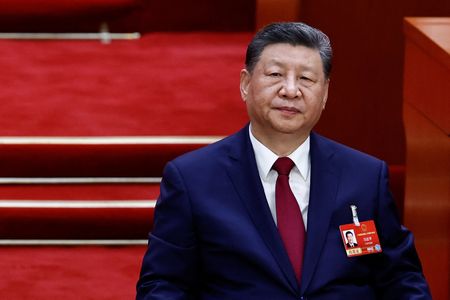

Chinese President Xi Jinping is pushing for rapid expansion of his nation’s energy infrastructure as Middle East conflicts continue to shake global oil markets, according to reports from Beijing.
The leader of the world’s second-largest economy stressed the importance of water-based power generation and environmental protection while calling for careful expansion of atomic energy programs, state media CCTV reported Monday.
Xi referenced the ruling Communist Party’s leadership in his remarks, stating: “The Party Central Committee has gained a profound grasp of global energy development trends and made major decisions by advancing the new energy security strategy in depth.”
The Chinese president’s comments did not specifically reference the ongoing Middle East warfare, though the timing comes as the United States and Iran consider a Pakistani-mediated proposal to resolve their five-week conflict. Tehran continues to resist international pressure to quickly reopen the critical Strait of Hormuz shipping lane.
Energy experts note that China faces less vulnerability to rising petroleum costs compared to other major economies. The nation relies on coal for over half its power needs, maintains substantial oil reserves, and receives only about 5% of its total energy consumption through imports passing the Strait of Hormuz.
Xi defended China’s energy strategy, saying: “The path we took in being the first to develop wind and solar power has now proven to be forward-looking. At the same time, coal-fired power remains the foundation of our energy system and must continue to play its supporting role.”
China currently operates more than half the globe’s coal-burning power facilities, making it the largest producer of carbon emissions worldwide. This has created ongoing tensions with Western climate programs. The country continues treating coal power as essential backup infrastructure while simultaneously expanding renewable energy sources.
Despite highlighting coal’s importance in China’s power grid, Xi emphasized his nation’s commitment to environmentally-friendly development approaches.
State media quoted officials saying: “A greener, more diversified and resilient new energy system will provide a strong guarantee for China’s energy security and economic development.”
Major infrastructure projects are moving forward, including construction that began last July on what will become the world’s largest hydroelectric dam along the Tibetan Plateau’s eastern edge.
Additionally, China General Nuclear Power Group started building a solar thermal facility Monday at 4,550 meters elevation in Tibet, according to state news agency Xinhua.