SALISBURY, Md. – Salisbury University is celebrating five student-athletes who earned conference recognition as Jersey Mike’s A Sub Above Players of the Week for their outstanding performances between March 30 and April 5, 2026.
The Sea Gulls dominated weekly honors across multiple sports, with athletes receiving recognition from both the Coast-to-Coast Athletic Conference and the Coastal Lacrosse Conference.
Women’s lacrosse continued its strong showing with Miranda Mears and Abby Fleishell both capturing C2C Player of the Week awards, marking another complete sweep for the program in conference weekly honors.
Track and field also earned recognition as Kai Smith claimed C2C track honors while Marlyse Haack secured the field athlete award for the week.
On the men’s lacrosse side, Matt Sentowski earned top defensive player recognition from the Coastal Lacrosse Conference for his performance during the period.
The weekly awards highlight the continued success of Salisbury University athletics across multiple sports and conferences during the spring season.
New York Giants defensive tackle Dexter Lawrence has formally asked the organization to trade him and plans to skip their offseason training activities, sources close to the situation revealed Monday.
Three individuals with knowledge of the matter shared this information with The Associated Press under the condition they remain unnamed, as the discussions have not been disclosed publicly.
The 28-year-old nose tackle has spent his entire seven-year professional career with New York after the team drafted him 17th overall from Clemson University in 2019.
Lawrence remains under contract for two more seasons, scheduled to receive $20 million this year and $19.5 million in the following season.
Despite suffering a dislocated left elbow during a Thanksgiving game in 2024, Lawrence appeared in every contest last season, starting all 17 games. However, he recorded career-low numbers with just 31 tackles and half a sack while playing for a defensive unit that finished 30th among the league’s 32 teams.
Throughout his professional career, Lawrence has accumulated 341 tackles and 30.5 sacks across 109 regular season appearances, adding 12 more tackles in two playoff contests.
The Giants kicked off their spring training sessions Tuesday with new head coach John Harbaugh leading the way. Harbaugh and general manager Joe Schoen recently brought in Dennard Wilson to serve as defensive coordinator. Following a disappointing 4-13 record, the team holds the fifth selection in the upcoming draft.
NEW YORK — The New York Mets will be without star outfielder Juan Soto for the next two to three weeks after he suffered a strained right calf muscle.
The team placed the four-time All-Star on the 10-day injured list on Monday, with the move dating back to Saturday. According to the Mets, this type of muscle strain typically requires approximately two to three weeks of recovery time before players can return to action.
To fill the roster spot, the organization brought up infielder Ronny Mauricio from their Triple-A affiliate in Syracuse.
The 27-year-old Soto is currently in his second year of a historic $765 million contract spanning 15 seasons. Through eight games this season, he has posted impressive numbers with a .355 batting average, one home run, and five RBIs. Last year in his debut season with New York, Soto compiled a .263 average along with 43 home runs, 105 RBIs, 38 stolen bases, 127 walks, and a .921 OPS.
The injury occurred during Friday evening’s contest when Soto attempted to advance from first base to third base in the Mets’ 10-3 victory over San Francisco.
Delaware State Fire Marshal investigators are examining the cause of a house fire that erupted in Houston earlier this week.
Emergency responders were called to a residence in the 800 block of Front Street in Houston on April 6, 2026, at approximately 11:45 a.m. after receiving reports of a structure fire.
Houston Fire Company crews arrived on scene along with backup units from several neighboring fire departments and Kent County Emergency Medical Services personnel to battle the blaze.
The investigation into what sparked the residential fire remains ongoing, according to the Delaware State Fire Marshal’s Office.
Delmarva Power & Light customers who rely on the utility’s default electricity service are bracing for higher monthly bills starting June 1st, with the company announcing a significant rate adjustment that will impact household budgets across the region.
The utility revealed that customers enrolled in Standard Offer Service (SOS) will experience an 18-20% jump in their electricity supply costs. This translates to roughly a 9% increase in total monthly electric bills for affected customers.
The rate adjustment affects customers who have not chosen an alternative electricity supplier and remain on the utility’s standard service option. This default service covers a substantial portion of Delmarva Power’s customer base throughout Delaware and Maryland’s Eastern Shore.
The timing of the increase adds another layer of financial pressure for residents already dealing with rising costs across various sectors of the economy. The utility company estimates the impact will be felt immediately when the new rates take effect at the beginning of June.
Customers concerned about the rate increase may want to explore alternative electricity supply options or energy conservation measures to help offset the additional costs on their monthly bills.
The National Agricultural Statistics Service has issued its weekly report tracking crop development and field conditions across the country.
The federal agency’s latest assessment provides agricultural producers and industry professionals with updated information on planting progress and the current state of growing conditions in farming regions nationwide.
These regular reports serve as important benchmarks for the agricultural sector, offering insights into seasonal crop advancement and environmental factors affecting production.
NEW YORK — During Major League Baseball’s inaugural week of robot umpire challenges, catchers significantly outperformed batters in successfully overturning calls, with the Detroit Tigers and David Dingler setting the pace.
Teams achieved an overall 55.2% success rate (299 of 542) with the Automated Ball-Strike System challenges, while defensive squads won 59.7% of their appeals (175 of 293), including a 60.4% success rate for catchers (169 of 280).
“I like it a little more. I was pretty staunch against it, which I still may be to some degree,” New York Yankees manager Aaron Boone said.
Pitchers made only 13 challenges, succeeding on six occasions. Hitters managed a 49.8% success rate (124 of 249).
“I think it’s fun. It’s its own game inside the game, almost,” Tampa Bay catcher Hunter Feduccia said.
The success rate improved from last year’s Triple-A performance of 49.5%, where defensive teams won 53.7% and batters succeeded 49.5% of the time.
Detroit topped all teams with a 75% success rate (15 of 20), followed by Arizona at 71%, while Baltimore and Cincinnati both achieved 67%.
Minnesota issued the most challenges with 32, winning 20 for a 63% rate. Texas made the fewest appeals, succeeding on 4 of 10 attempts.
Cleveland struggled most at 32% success, with Washington at 38% and both St. Louis and Texas at 40%.
Detroit’s catchers went perfect at 8-0, with Dingler accounting for seven victories.
The system’s influence became evident during Atlanta’s visit to Arizona last Thursday. With the Braves leading 2-1, Arizona’s Ryne Nelson delivered a 3-2 curveball to the upper, outside corner against Ozzie Albies that umpire Malachi Moore called a strike. Albies appealed and walked toward first base before the automated system revealed the pitch missed the strike zone by 1.1 inches. That walk sparked an eight-run rally in a 17-2 victory.
“In some of these games, it’s had a more of a swinging effect on outcomes of at-bats and how things change than maybe even you thought,” Miami manager Clayton McCullough said.
Los Angeles Angels catcher Logan O’Hoppe recorded the most individual wins, succeeding on 10 of 12 challenges. Miami’s Agustín Ramírez won 7 of 9 appeals and the Los Angeles Dodgers’ Will Smith succeeded 8 of 11 times.
Seattle’s Cal Raleigh won 4 of 9 challenges while Oakland’s Shea Langeliers succeeded 3 of 9 times.
Among hitters, New York Mets’ Mark Vientos and Iván Herrera both went 3-0. Los Angeles Angels’ Mike Trout finished 3-1 alongside Philadelphia’s Kyle Schwarber and Tampa Bay’s Jake Fraley.
Colorado’s Hunter Goodman and Washington’s Luis García Jr. both went 0 for 3.
Boone noted that Yankees personnel and players examine challenges made and missed opportunities on a daily basis.
Players continue adapting to the system. Washington’s Jorbit Vivas tapped his helmet requesting an appeal on March 31 after the Nationals had already used their two allowed challenges.
Regarding umpires, Mike Estabrook had 11 of 12 decisions overturned (91.7%), Andy Fletcher saw 15 of 17 reversed (88.2%), while Ron Kulpa and Paul Clemons each had 7 of 9 overturned (77.8%) and Chris Segal 10 of 13 (76.9%), according to taptochallenge.com.
Will Little had only 1 of 10 decisions reversed while Erich Bacchus maintained perfection with no overturned calls in five challenges. Additional umpires with low reversal rates among those with at least five challenges included Emil Jiménez (1 of 5), Jordan Baker (2 of 8), Ryan Additon and Nick Mahrley (both 2 of 7) and David Rackley (3 of 10).
Offensive production continued to struggle through the season’s first 139 games of 2,430 total.
The major league batting average of .234 dropped from .239 during last year’s opening week, when it concluded at .245. Averages typically rise as temperatures increase. The all-time low of .237 was established in 1968.
Mean fastball velocity reached 94.6 mph, rising from 94.1 mph during last year’s first week. The season-ending figure has climbed each of the past five years to a record 94.5 mph in 2025. It measured 91.9 mph when MLB began tracking in 2008.
“I wish I was facing the same pitching as I did my rookie year back when guys were throwing 88-mile-an-hour sinkers over the plate,” said 33-year-old Cleveland catcher Austin Hedges. “That pitch doesn’t exist anymore.”
CARACAS, Venezuela (AP) — Venezuela’s acting president Delcy Rodríguez continues in her temporary leadership role despite her court-mandated 90-day appointment ending last Friday, following Nicolás Maduro’s arrest by U.S. authorities in January.
The duration of Rodríguez’s continued presidency remains uncertain, as Venezuelan lawmakers have not held a public vote to extend her appointment beyond the Friday deadline.
The high court’s ruling maintains that Maduro retains his official presidential status, with his “forced” absence due to what officials call a “kidnapping” temporarily preventing him from carrying out presidential responsibilities.
Venezuela’s constitution allows the vice president — Rodríguez’s previous position — to serve during temporary presidential absences for up to 90 days, according to the constitutional article the court cited. The national assembly has the authority to extend these interim appointments for another 90-day period.
Should lawmakers declare the presidency permanently vacant, the National Assembly, which Rodríguez’s party controls, could call for emergency elections.
Government press officials have not responded to media inquiries about the situation.
Ronal Rodríguez, who studies Venezuelan politics at Colombia’s Universidad del Rosario Venezuela Observatory, noted the government’s history of using legal interpretations to maintain power, especially since Maduro assumed office in 2013.
“And it would be no surprise if they did so again now,” he said. “They will most likely try to come up with some kind of explanation, such as it being Good Friday or the way the days were counted, but in the end, everything will be validated by a ruling from the Supreme Tribunal of Justice.”
U.S. authorities arrested Maduro and his spouse, Cilia Flores, on January 3 in Caracas and transported them to New York to face drug trafficking accusations. Both individuals have entered not guilty pleas.
Rodríguez and other government officials have called for the couple’s release, characterizing their detention as an abduction. Similar demands appear on billboards and wall murals throughout Caracas.
The Trump administration surprised many Venezuelans by choosing to collaborate with Rodríguez after Maduro’s removal, rather than supporting opposition political groups. She has spearheaded cooperation with the administration’s step-by-step approach to resolving Venezuela’s multifaceted crisis, promoting her petroleum-rich country to global investors and opening the energy industry to private investment and international dispute resolution. Rodríguez has also dismissed key officials, including Maduro’s loyal defense secretary and chief prosecutor.
President Donald Trump has commended her efforts.
The U.S. Treasury Department removed sanctions against Rodríguez last week, while the State Department designated her as Venezuela’s “sole Head of State” last month.
The United States withdrew recognition of Maduro as Venezuela’s rightful leader in 2019, one year after he declared victory in an election widely viewed as fraudulent due to the exclusion of opposition parties and candidates.
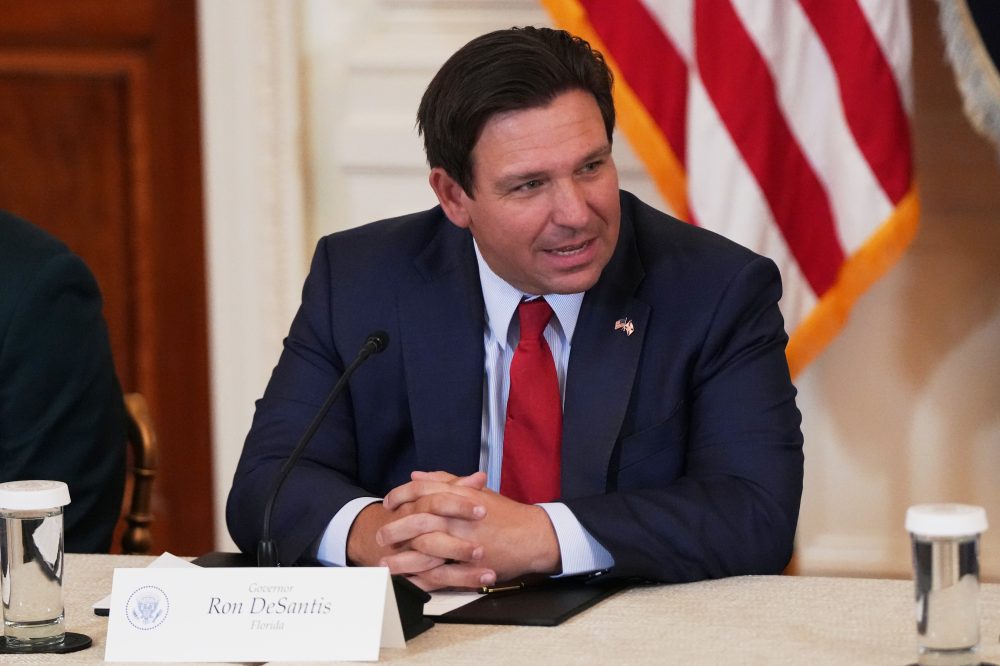
TAMPA, Fla. — Florida Governor Ron DeSantis enacted legislation Monday granting state leadership the authority to classify organizations as domestic or international terrorist entities and remove state university students who back such groups.
The legislation, which has drawn criticism from civil liberties organizations, empowers a senior official within the Florida Department of Law Enforcement to classify an organization as a domestic or international terrorist entity, subject to approval or denial by the governor and three additional Florida Cabinet members. The Cabinet consists of the state attorney general, chief financial officer, and agriculture commissioner, each elected independently alongside the governor.
After receiving a terrorist classification, an organization faces dissolution and loses eligibility for state funding through educational districts or government agencies. State universities must also notify U.S. Immigration and Customs Enforcement about the status of any removed students holding visas.
“So this will help the state of Florida protect you. It’ll help us protect your tax dollars,” DeSantis stated during a Tampa press conference. “It’ll help us protect things that should not be happening in the United States of America, but certainly shouldn’t be happening in the free state of Florida.”
In December, DeSantis classified the Council on American-Islamic Relations and the Muslim Brotherhoods as international terrorist organizations. A federal court judge issued a temporary injunction last month preventing enforcement of DeSantis’ executive directive.
PEN America, an organization advocating for free expression, criticized the new legislation for containing ambiguous wording that might limit educational initiatives considered to be “promoting” terrorism and could potentially target student demonstrators who oppose Florida leadership.
“The implications are fraught,” stated William Johnson, PEN America’s Florida director. The new law “could chill education at every level.”
A Connecticut judge declared a mistrial Monday in a decades-old murder case following shocking allegations that an 11-year-old rape and murder victim may have been placed in a contaminated body bag nearly 40 years ago.
The case involves Marc Karun, 60, who was standing trial for the 1986 murder and kidnapping of Kathleen Flynn, a sixth-grade student who was attacked while walking home from her Norwalk middle school. Karun, formerly a Norwalk resident, was taken into custody in 2019 at his residence in Stetson, Maine.
The bombshell revelation came Thursday during proceedings in Stamford when prosecutors revealed they had just received an email from former Norwalk police lieutenant Robert Fabrizzio. In his message, Fabrizzio reported that a state crime laboratory official had informed him shortly after Flynn’s death that her body had been placed in a previously used body bag, raising serious questions about potential evidence contamination.
According to Fabrizzio, the laboratory official who shared this information was Henry Lee, the renowned forensic expert famous for his involvement in the O.J. Simpson case and numerous other prominent criminal investigations nationwide. Lee, who was running the crime lab during that period, passed away last month at 87 years old. Attempts to reach Fabrizzio for comment were unsuccessful.
Judge John Blawie ruled Monday that he had no alternative but to declare a mistrial due to evidence integrity concerns, though he indicated the case would continue and not be dismissed entirely.
Prosecutor Paul Ferencek, who brought Fabrizzio’s email to the court’s attention last week, released a statement saying his office would collaborate with the state crime laboratory and medical examiner to investigate whether Fabrizzio’s allegations have merit.
“We’re obviously disappointed by this turn of events, especially for the family members of Kathy Flynn, who have waited forty years for justice and some degree of closure,” his statement said.
The body bag allegations caught crime laboratory officials off guard, according to Rick Green, who speaks for the lab and its supervising agency, the Department of Emergency Services and Public Protection. Green stated that forensic experts from the facility maintain confidence in their courtroom testimony.
Defense attorney Francis O’Reilly, representing Karun, refused to provide comment. Karun continues to be held on $5 million bail.
Authorities in Norwalk accused Karun of murdering Flynn on Sept. 23, 1986. He subsequently received convictions for sexually assaulting or kidnapping four additional female victims during the 1980s and spent approximately a decade behind bars.
Investigators said improvements in DNA analysis technology, combined with similarities between Karun’s previous attacks and Flynn’s murder, resulted in his 2019 arrest. A state forensic laboratory expert testified recently that DNA analysis of material collected from under Flynn’s fingernails indicated the genetic material was 22,000 times more likely to have come from Flynn and Karun together than from the girl and an unrelated individual, according to Hearst Connecticut Media.
Following Karun’s arrest, law enforcement discovered close to 90 rifles and handguns at his Maine residence. As a convicted felon, he was prohibited from possessing firearms, officials said. Karun entered a guilty plea to federal weapons charges in 2024 and faces sentencing in that matter this July, based on federal court documents.
Avalanche specialists are raising serious concerns about the judgment calls made by professional guides during California’s most devastating avalanche disaster in recent memory, which claimed nine lives two months ago.
A detailed assessment released Saturday by the Sierra Avalanche Center and featured on the National Avalanche Center website criticizes the tour guides from Blackbird Mountain Guides for allowing their large group to travel bunched together through hazardous terrain while avalanche alerts were active.
The skiers were moving in a condensed formation when proper protocol demanded they be spread apart to minimize danger, the assessment found.
“Exposing only one person at a time to avalanche terrain is an accepted best practice for backcountry travel,” the report said. “Analysis of past avalanche accidents has indicated that larger group sizes (4 or more people) have higher chances of being caught in avalanches.”
The February 17 disaster struck near Lake Tahoe in California’s Sierra Nevada mountains when an enormous mass of snow crashed down a mountainside, burying nine backcountry skiers while six others managed to survive.
Investigators also discovered that multiple group members carried avalanche safety backpacks with inflatable air bags, yet none of this potentially life-saving gear activated when the slide occurred.
Blackbird Mountain Guides responded Monday that their investigation continues.
“The report does not reflect the full scope of what transpired and does not include all of the facts and information currently under review,” the company stated via email. “We are cooperating fully with authorities and will share more when it is appropriate and based on verified and confirmed findings.”
According to the assessment, the 15-person party was traversing a known avalanche path near Castle Peak after heavy snowfall had created conditions ripe for slides.
While the avalanche center lacks enforcement authority, their reports typically offer crucial safety recommendations for mountain recreation.
Both the Nevada County Sheriff’s Office and state workplace safety officials are conducting separate investigations into the company’s actions before the tragedy.
The avalanche occurred on the final day of a three-day guided tour, as the group chose to cut their trip short and depart from mountain huts to outrun an approaching storm system.
The center’s analysis drew extensively from interviews with survivors Jim Hamilton and Anton Auzans, who shared their experiences with the New York Times. Both men had completed basic avalanche training and possessed limited backcountry skiing experience prior to the fatal outing.
The survivors reported that guides held private discussions, leaving uncertainty about whether the team knew about warnings of highly probable human-triggered avalanches before departing the huts, which had internet connectivity. The men explained that separate women’s and men’s groups were merged that morning under four guides’ supervision.
During the final mile-long ascent, Hamilton encountered equipment problems and lagged behind the main group. Thirteen skiers, predominantly women, remained clustered behind the lead guides as they entered avalanche-prone terrain. Auzans followed closely when the slide struck, according to the newspaper account. Though buried, he successfully freed himself before Hamilton and another guide arrived to attempt rescue operations.
The center acknowledged that other survivors might possess different perspectives and details that could provide a fuller understanding if they decide to share their accounts. The victims included three seasoned guides and six women who belonged to a tight-knit circle of friends with extensive backcountry skiing backgrounds.
Jess Weaver, speaking for the female friends’ group, indicated that survivors and victims’ families are declining media interviews currently.
Colorado avalanche specialist Dale Atkins said the group violated a fundamental principle of mountain travel by remaining clustered while crossing dangerous terrain. However, Atkins noted that staying together in safer areas made logical sense given the day’s poor visibility and the risk of participants becoming separated.
“Did they mess up? A lot of people will say, ‘Yes,’” said Atkins, who brings five decades of Colorado mountain rescue and avalanche research experience. “I’m not so sure about that. You want to keep the group together. But you don’t keep the group together on an avalanche slope. I suspect the guides in the group didn’t realize they were in an avalanche path.”
Atkins offered similar observations about the decision to ski during the storm: While hindsight suggests staying put until conditions improved would have been wiser, the guides may have reasonably believed that rapid evacuation was the safer choice.
“A lot of armchair quarterbacks, if they were in the middle of the storm out there, they might have made a similar decision,” he said. “Tragically for these people and their families, there’s no do over.”
Political adversaries in Venezuela are exploring unprecedented collaboration to protect the nation’s assets located within the United States, following Washington’s formal acknowledgment of interim President Delcy Rodriguez and the resulting confusion over legal representation in American courts.
Legal representatives for both Rodriguez’s administration and opposition forces submitted a joint request Monday to Manhattan-based U.S. Magistrate Judge Sarah Netburn, asking for a 45-day suspension of proceedings where creditors are attempting to claim funds connected to the state-owned oil enterprise Petroleos de Venezuela. The pause would allow time to establish proper legal representation for Venezuela’s interests.
This request indicates possible collaboration between previously hostile political factions in defending American assets, including the Houston-based oil refinery Citgo Petroleum, from various creditors. These creditors include bondholders of PDVSA and Venezuelan government debt, businesses that lost Venezuelan properties through expropriation, and individuals claiming damages from alleged terrorist activities.
Venezuela’s information ministry, responsible for handling government media inquiries, has not yet provided a response to requests for comment.
The relationship between Venezuela’s opposition and the country’s socialist administration has historically been marked by bitter conflict. Opposition forces have maintained control over American assets like Citgo since 2019, when Washington first implemented sanctions against PDVSA as part of efforts to pressure former President Nicolas Maduro, who is now imprisoned, to step down from power.
Following Maduro’s capture by American forces, Washington officially recognized Rodriguez as Venezuela’s legitimate leader in March. According to a Reuters report from April 1, citing four sources familiar with the transition, Rodriguez is now making preparations to assume control of PDVSA’s American subsidiary boards, including Citgo.
The American government’s recognition of Rodriguez’s administration led Judge Netburn to request clarification from all parties regarding who possessed the authority to speak for Venezuela in legal proceedings.
Judge Netburn approved the suspension request on Monday. Legal counsel for both the government and opposition are required to provide an update on selecting permanent legal representation for Venezuela’s interests by May 21.
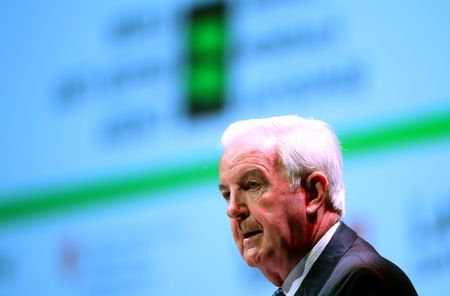
World Athletics announced Monday that Craig Reedie, a prominent leader in Olympic sports and anti-doping initiatives, passed away at 84 years old.
Reedie began his career as a competitive badminton player representing Britain before transitioning into sports leadership roles that would define his legacy on the international stage.
Throughout his distinguished career, Reedie held several high-profile positions including leading the World Anti-Doping Agency as president, serving as chairman of the British Olympic Association, and holding a vice presidency with the International Olympic Committee.
World Athletics President Sebastian Coe honored Reedie’s memory with a detailed tribute, describing his character and leadership style.
“Craig was a sportsman at heart, but he had the mind and tenacity of a politician. He was equal parts opinionated, wise, canny, and, most of all, loyal to those who legitimately wanted to serve sport,” Coe stated.
Coe continued his praise, noting Reedie’s direct approach and unwavering principles.
“He certainly did not suffer fools gladly, was authentic, and would speak his mind.
“He was laser-like in his directness, would go into battle to defend what he believed was right, and was in the lead tank during every battle. And, on the rare occasions he was wrong, he would admit so, explain his position, and apologise.”
The University of North Carolina’s hunt for a new basketball coach has generated mixed signals, with different media outlets pointing to two distinct NBA figures as the leading candidates.
According to The Field of 68’s Sunday report, the Tar Heels are concentrating their efforts exclusively on Billy Donovan, who currently leads the Chicago Bulls and previously guided the University of Florida to consecutive national titles in 2006 and 2007.
However, ESPN contradicted this Monday, stating that North Carolina plans to bring in Michael Malone, who captured an NBA championship with the Denver Nuggets in 2025 but lacks experience as a college head coach.
The 60-year-old Donovan built an impressive 467-186 coaching record at Florida between 1996 and 2015 before transitioning to professional basketball. His NBA tenure includes a 243-157 mark with the Oklahoma City Thunder from 2015 to 2020, followed by a 224-253 record with Chicago, including this season’s 29-48 performance.
Malone, age 54, has spent this season providing analysis for ABC and ESPN after Denver dismissed him on April 8, 2025. His head coaching career spans 510-394 across his time with the Nuggets from 2015-2025 and a brief stint with Sacramento in 2013-14. Before becoming a head coach, he served as an assistant with Golden State, New Orleans, Cleveland, and New York in the NBA.
His college experience includes assistant coaching positions at Manhattan from 1999-2001, Providence between 1995-98, and Oakland in 1994-95.
The Tar Heels dismissed Hubert Davis following their opening-round NCAA Tournament defeat to VCU last month. Other potential candidates, including Michigan’s Dusty May and Arizona’s Tommy Lloyd, have chosen to stay with their current programs.
The Chicago Cubs are planning to bring outfielder Seiya Suzuki back from the injured list this Friday as they prepare to host the Pittsburgh Pirates for a three-game series at home.
Suzuki hasn’t appeared in any games for Chicago this season after suffering a sprained knee ligament while representing Team Japan in the World Baseball Classic earlier this year.
During his rehabilitation stint with Double-A Knoxville, Suzuki has recorded three hits in eight at-bats, along with one walk and one RBI across three games.
Cubs manager Craig Counsell addressed reporters about Suzuki’s return, saying: “We’re probably dealing with at-bats as much as anything here. He didn’t get a full spring. Multiple weeks off. It’s just making sure he’s ready to go offensively.”
While playing for Knoxville, Suzuki has logged 10 defensive innings across two games in right field, and the Cubs organization plans to give him additional defensive work this week before his activation.
The 31-year-old outfielder enjoyed his best campaign with Chicago last season, launching 32 home runs while driving in 103 runs. Throughout his four-year tenure with the Cubs, Suzuki has maintained a .269 batting average with an .818 OPS, accumulating 87 home runs and 296 RBIs across 532 games.
The streaming service Netflix intensified its focus on interactive entertainment Monday by introducing Netflix Playground, a specialized gaming platform targeting young audiences with games featuring beloved characters like Peppa Pig and Sesame Street.
Industry experts note that the company’s venture into gaming has not yet become a significant revenue generator. According to analysts, Netflix faces obstacles due to its more restricted collection of recognizable characters and franchises when compared to competitors like Warner Bros Discovery, which controls major properties including DC Comics.
Among Netflix’s most successful gaming offerings are Rockstar Games’ “GTA: San Andreas” and titles connected to the platform’s original programming like “Squid Game: Unleashed.”
The company described the new platform as a “curated space where parents know kids are entertained, engaged and enriched.”
This initiative targets increased interaction with family subscribers, as children’s programming typically helps prevent subscription cancellations since parents tend to maintain their memberships longer.
The application caters to youngsters aged eight and below and comes at no additional cost with existing Netflix subscriptions.
All games function without internet connectivity, featuring titles such as “Playtime With Peppa Pig,” “Dr. Seuss’s Horton!” and “Sesame Street” games.
Beyond parental oversight features, the service guarantees an advertisement-free experience with no in-app purchases or hidden charges.
Netflix Playground became available for download Monday in the United States, Canada, the United Kingdom, Australia, the Philippines and New Zealand. The company plans a worldwide rollout by month’s end.
Delaware Attorney General Kathy Jennings has joined forces with 24 other states to challenge President Donald Trump’s executive order regarding voting procedures through a federal court filing made on Friday.
The multi-state legal action targets Trump’s executive directive that would limit voter eligibility and restrict mail-in ballot access to only those voters who receive prior federal authorization. State officials argue this presidential order represents an improper federal intrusion into election administration, which traditionally falls under state jurisdiction.
According to the lawsuit, the executive order poses a threat to the voting rights of qualified citizens and undermines the constitutional framework that grants states primary authority over their own electoral processes.
The coalition of attorneys general contends that Trump’s directive constitutes unlawful interference with established voting procedures and could prevent eligible citizens from exercising their fundamental right to vote.
Motorists traveling along Old Mill Bridge Road are experiencing periodic lane restrictions today due to ongoing construction work.
The intermittent closures affect the stretch of roadway between Millers Neck Road and Bayard Road, with work expected to wrap up by 4:00 PM this afternoon.
Drivers are advised to plan for potential delays and consider alternate routes if possible during the construction period.
A University of Maryland Eastern Shore track and field athlete has made history by breaking a long-standing school record, while two teammates delivered outstanding performances in jumping competitions.
Kollie achieved the record-breaking performance during recent competition, marking a significant milestone for the Hawks’ track and field program. The achievement highlights the continued growth and success of UMES athletics.
Meanwhile, teammates Simms and Prucien showcased exceptional talent in jumping events, delivering performances that elevated the team’s overall showing at the meet. Their efforts in the jumps demonstrated the depth of talent within the Hawks’ track and field squad.
The strong performances across multiple events signal positive momentum for the University of Maryland Eastern Shore track and field program as they continue their competitive season.
University of Maryland Eastern Shore men’s volleyball player Joshua Hightower has been selected as the Northeast Conference Rookie of the Week following his outstanding performance in recent home matches.
The recognition comes after Hightower played a key role in leading the Hawks to a pair of victories over Long Island University at their home venue. His contributions on the court were instrumental in securing both wins for the UMES volleyball program.
The Northeast Conference weekly honor highlights Hightower’s impact as a first-year player making significant contributions to his team’s success early in his collegiate career.
AUGUSTA, Georgia — The ceramic collectible gnomes that have become legendary souvenirs at the Masters Tournament could be approaching their final chapter, with speculation that 2026 might mark their last year of production.
These small figurines have dominated Augusta National Golf Club’s merchandise sales for the past decade, consistently selling out in under an hour with strict one-per-customer limits and generating astronomical prices on secondary markets.
Rumors circulating at the prestigious golf club indicate the gnomes may conclude their run in 2026, transforming these already precious collectibles into even more treasured items among golf enthusiasts.
Fans who successfully obtain one of these ceramic figures during their visit to Augusta National’s pristine grounds display them proudly, especially as this year’s first major championship begins Thursday.
The 2026 version features a white-bearded figure wearing a blue Masters vest, holding a coffee cup in one hand and a working miniature umbrella in the other, retailing for $49.50.
However, secondary market values tell a dramatically different tale. These gnomes, which debuted as Masters merchandise in 2016, are already commanding prices approaching $1,000 for the current 2026 model on resale platforms, while a complete collection spanning 2016-2025 has been listed on eBay for $39,999.
Lisa Endredi from Augusta, Georgia, demonstrated the dedication required to secure these items by arriving at the club at 4 a.m. Monday and waiting three hours in line before she and her spouse each obtained one.
“I got one for my best friend and she’s got tickets for (the opening round) Thursday so I am going to trade her a gnome for a ticket,” Endredi explained, noting that her second gnome will be displayed on her home mantel. “Don’t underestimate the power of the gnome.”
True to Augusta National’s tradition of maintaining strict confidentiality about club operations — from membership information to merchandise sales figures — the gnomes’ future remains officially unconfirmed. The club has not responded to requests for verification regarding whether this represents the collectibles’ final year.
Ava Powell, traveling from nearby Aiken, South Carolina, refused to risk missing out. After three previous unsuccessful attempts, she finally secured a full-sized gnome during her fourth Masters visit.
“I would die if I didn’t get this gnome this year,” Powell declared. “This will be in my home and it will be brought out during Masters week just like a Christmas decoration would be brought out.”
Augusta National’s social media reveal of this year’s gnome included footage showing the bearded figure holding a green and white umbrella bearing the tournament logo. The video then shows the gnome using the opened umbrella for shelter while a groundskeeper waters nearby yellow flowers.
Chris Flanagan from Detroit, Michigan, attending his first Masters, learned about the gnome phenomenon through experience. Missing the opportunity for a full-sized version, he settled for the miniature alternative, which maintains a consistent caddie appearance rather than the themed costume variations of the larger editions.
“I’d heard it was a holy grail item so of course you want to have something that’s special like that,” Flanagan said. “We didn’t know how early you had to get here to get one so we found out now that you have to get here by at least 5:30 a.m. to wait.”
For future gnome hunters, consider this advance notice of the commitment required.
A federal court has ruled in favor of the company behind Stanley tumblers, throwing out a class-action lawsuit that alleged the manufacturer hid the presence of lead in their wildly popular water bottles.
U.S. District Judge Tana Lin in Seattle issued her ruling Friday, determining that consumers could not prove a “specific and plausible risk of harm” from lead exposure when using the tumblers manufactured by Pacific Market International.
The vibrant-colored drinkware, often called Stanley cups, gained massive popularity especially among female consumers through social media influencer marketing campaigns.
Neither attorneys representing the consumers nor lawyers for Pacific Market International provided immediate responses when contacted Monday about the court’s decision.
The legal battle emerged after concerns about potential lead contamination spread rapidly across social media platforms in early 2024.
Seattle-based Pacific Market International explained that their manufacturing process includes pellets designed to maintain proper beverage temperatures, acknowledging these pellets contain “some lead” while emphasizing the material remains sealed and unreachable by users.
Consumer plaintiffs argued they either wouldn’t have purchased the Stanley cups or would have expected to pay lower prices if they had been aware of potential health risks.
However, Judge Lin’s comprehensive 41-page ruling concluded that plaintiffs failed to establish that lead usage in Stanley tumblers would matter to typical consumers making purchasing decisions.
The court found no evidence showing that simply having lead present created danger, or that the pellets could contaminate beverages, leading to ingestion or inhalation risks.
“Without even a hypothetical explanation of how any consumer might be harmed by the lead in defendant’s product, the problem remains that the dangers plaintiffs warn of are completely disconnected from the Stanley cups,” Judge Lin stated in her decision.
She further explained: “If Stanley tumblers work as advertised and pose no plausible risk of harm, any representations by defendant that the tumblers are ‘safe and suitable for ordinary use’ cannot be shown to be ‘false’ or ‘misleading.’”
While Judge Lin dismissed the current lawsuit, she indicated plaintiffs may file an amended complaint, warning that failure to address the case’s fundamental weaknesses “particularly as related to materiality” would result in permanent dismissal.
WASHINGTON – The Trump administration has unveiled a sweeping plan to eliminate more than 9,400 positions from the Transportation Security Administration while slashing $1.5 billion from the agency’s budget, new federal documents reveal.
The proposal, announced Friday by President Donald Trump, would force smaller airports across the country to abandon TSA services in favor of private security companies as an initial phase toward fully privatizing the federal agency established following the September 11, 2001 terrorist attacks. Administration officials estimate this privatization move alone would eliminate over 4,500 TSA positions from the agency’s current workforce of 60,000 employees.
The remaining job cuts – approximately 4,800 additional positions – would come through what the TSA describes as operational improvements, including removing personnel from airport exit lane monitoring and eliminating what officials call duplicated roles within the organization.
Motorists traveling along Route 1 should expect delays today as construction crews have closed the left lane in both the northbound and southbound directions.
The Delaware Department of Transportation reports that the lane restrictions are affecting the stretch of Coastal Highway between Primehook Road and the Slaughter Neck Road/Sugar Hill Road intersection, also known as Route 215.
Officials say the construction-related closures are expected to be lifted by 3 PM this afternoon. Drivers are advised to allow extra travel time and use caution when passing through the work zone.
A Ukrainian defense company responsible for creating the nation’s Flamingo cruise missile is collaborating with European firms to develop an affordable air defense system, according to a senior company official speaking with Reuters.
Fire Point’s co-founder and chief designer Denys Shtilierman revealed that his company is working to create a budget-friendly alternative to the increasingly scarce Patriot missile defense system, with plans to launch by next year.
As global conflicts in Ukraine and Iran create widespread security concerns, Shtilierman explained that Fire Point wants to reduce the expense of stopping a ballistic missile to under $1 million.
The executive also disclosed that Fire Point is waiting for government clearance on a potential investment from a Middle Eastern business group. This deal would value the company at $2.5 billion and could lead to new ventures, including satellite launches in low Earth orbit.
Ukraine’s battlefield experience fighting Russian military forces has positioned the country as a pioneer in affordable defense technology. Following recent conflicts in the Gulf region, Kiev has used this expertise to establish security partnerships with governments throughout the area.
Numerous Ukrainian defense companies are now looking to export their additional production capacity and capitalize on increased global military spending. Although the government has recently relaxed wartime export limitations, each potential agreement still faces thorough review and requires state authorization.
Ukraine and many Western allies depend heavily on the American-manufactured Patriot system for ballistic missile defense. However, Patriot missiles are becoming increasingly difficult to obtain due to extensive use in Gulf operations against Iranian attacks. Europe’s sole anti-ballistic system, the Italian-French SAMP/T, has limited production numbers.
According to Shtilierman, the Patriot system – built by Raytheon and Lockheed Martin – typically needs two or three defense missiles to destroy a ballistic projectile, with each missile costing several million dollars.
“If we can decrease it to less than $1 million, it will be … a game changer in air defence solutions,” he stated during the interview. “We plan to intercept the first ballistic missile at the end of 2027.”
While Shtilierman refused to identify the European companies participating in development discussions, he said Fire Point is “deeply interested” in partnerships involving radar, missile guidance, and communication systems – technologies where the company needs additional expertise.
He mentioned that European firms such as Weibel, Hensoldt, SAAB and Thales offer strong radar capabilities.
Established following Moscow’s 2022 invasion, Fire Point has become Ukraine’s largest producer of long-range drones used in most attacks deep within Russian territory.
Recently, the company’s FP5 long-range cruise missile – widely called the Flamingo – has struck Russian military installations and weapons factories, including a ballistic missile facility located nearly 1,400 kilometers inside Russian borders.
Shtilierman reported that Fire Point is completing development of two supersonic ballistic missiles. The smaller FP-7 missile, with approximately 300-kilometer range, will see its first military use “in the close future,” he said, comparing it to Lockheed Martin’s ATACMS short-range ballistic system.
The larger FP-9, designed to deliver an 800-kilogram warhead up to 850 kilometers, is entering testing phases and would put Moscow within Ukraine’s ballistic weapon range, he added.
Shtilierman suggested that attacks on Moscow, protected by some of the world’s strongest air defenses, would create a “mass shift in the Russian mind and the mind of top guys in Russia.”
Russia’s defense ministry did not provide comment when contacted.
Fabian Hoffmann, a missile specialist and senior researcher at the Norwegian Defence University College, noted that while Russia has successfully intercepted ATACMS missiles, increased ballistic missile usage could strain Russian air defenses already weakened by Ukrainian attacks.
Although Fire Point’s 2027 timeline for launching a low-cost air defense system appears “ambitious,” Hoffmann said strong government demand would exist beyond Ukraine’s military requirements, even if the system’s effectiveness per missile was lower than the Patriot’s.
Ukraine’s anti-monopoly agency has until approximately October to approve the proposed $760-million purchase of a 30% Fire Point stake by the Middle Eastern investor, Shtilierman explained.
Ukrainian news outlets have named the potential buyer as Emirati defense company Edge Group. Neither Edge Group nor Ukraine’s anti-monopoly authorities responded to requests for comment.
This investment would initiate a project to construct a space launch facility in the UAE, ultimately aiming to establish a network of low-orbit European satellites. Shtilierman noted that the country’s proximity to the Indian Ocean and geographic conditions favor space launches.
“We built a carbon winding machine, which allows us to wind a big solid rocket booster for satellite delivery,” he explained, adding that while the project remains conceptual, agreements exist “with a couple of Western companies.”
Whether or not the UAE agreement moves forward, Shtilierman said Fire Point would avoid additional investors until demonstrating success with its missile defense system, which will utilize the company’s FP7 missile.
Fire Point has received inquiries from Gulf nations regarding purchases of existing drone products and awaits Ukrainian government approval to begin exports. Shtilierman stated the company can export up to 2,500 long-range drones monthly.
However, exporting the Flamingo missile faces greater challenges due to regulatory obstacles, he noted.
Fire Point reports producing hundreds of long-range strike drones daily, each costing approximately 50,000 euros ($57,775), plus three Flamingo missiles at roughly 600,000 euros each. He acknowledged certain “bottleneck” problems with Flamingo production, particularly engine manufacturing.
Fire Point will boost Flamingo production when a new internal engine begins mass production in October and a rocket fuel facility in Denmark becomes operational later this year, he said. The Danish plant awaits two final government approvals.
President Donald Trump delivered a stark warning to Iran on Monday, stating the nation could face complete military devastation within a single evening if officials fail to agree to ceasefire terms by Tuesday night.
Speaking during a White House press briefing, Trump issued the ultimatum: “The entire country can be taken out in one night, and that night might be tomorrow night.”
The president had previously established Tuesday evening as the final deadline for Iran to accept a ceasefire agreement or face extensive attacks targeting power facilities and other vital infrastructure.
Defense Secretary Pete Hegseth announced during the same briefing that Monday would see the most intensive military strikes since operations against Iran began, with Tuesday expected to bring even greater force.
Trump also provided extensive details about a weekend rescue operation that successfully retrieved a downed American pilot from Iranian soil. The president explained how the unidentified airman sought refuge in mountainous terrain, continuously moving to higher elevations to improve his chances of being found.
“It was like finding a needle in a haystack,” Trump remarked about the search efforts.
The recovery mission involved hundreds of American military personnel working to locate the pilot before Iranian forces could capture him, according to Trump.
CIA Director John Ratcliffe, present at the briefing, revealed that the agency conducted a “deception campaign” designed to mislead Iranian officials about the airman’s actual location.
Ratcliffe reported that Saturday morning brought confirmation that “one of America’s best and bravest was alive and concealed in a mountain crevice, still invisible to the enemy, but not to the CIA.”
The pilot, who was shot down Friday, was successfully extracted Sunday morning.
Trump described the rescue operation in dramatic terms: “In a breathtaking show of skill and precision, lethality and force, America’s military descended on the area, the real area, engaged the enemy, rescued the stranded officer, destroyed all threats and exited Iranian territory while taking no casualties of any kind.”
Hegseth noted that the rescued airman activated an emergency beacon to signal his position, and his initial communication upon rescue was: “God is good.”
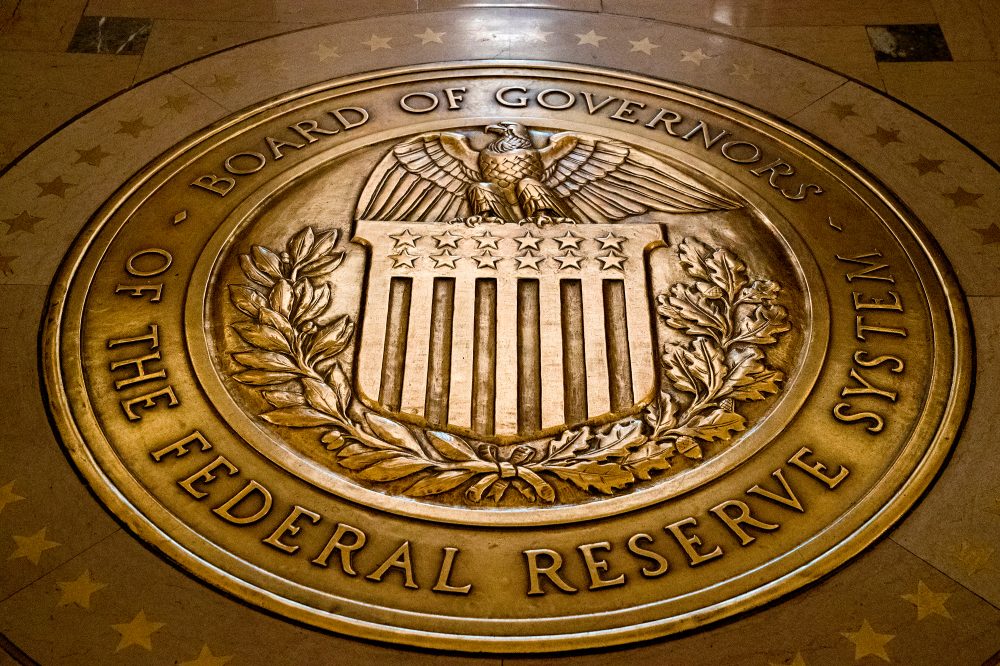
Two prominent Federal Reserve officials are raising red flags about inflation, describing it as a more pressing concern than employment issues while expressing support for maintaining tighter monetary policies.
During a recent podcast interview with The Indicator from Planet Money, Cleveland Federal Reserve President Beth Hammack and Chicago Fed President Austan Goolsbee were asked to evaluate economic conditions using a color-coding system ranging from crisis-level red to all-clear green.
Goolsbee painted a concerning picture of inflation trends, rating them “at least orange. Orange with a chance of meatballs; it hasn’t been great,” as gasoline costs continue climbing. “I was optimistic that we would get back to this path to 2% inflation, but yikes, it’s going from orange to red lately — we had tariffs increasing prices, that was supposed to go away, kind of didn’t go away, and now we add another stagflationary shock on top ….it’s a troubling moment.”
Hammack shared similar worries about price increases, noting inflation has exceeded target levels for five consecutive years and has remained “basically moving sideways” over the past two years. She described the situation as “definitely at the brighter, the more vibrant color orange: I don’t know if that’s burnt orange, burnt sienna: my Crayola box is a little bit old.”
The Wednesday interview took place before Friday’s release of March employment data, which revealed the largest monthly job gains since Donald Trump returned to the presidency in January. Unemployment dropped to 4.3%, though this decline was primarily attributed to significant numbers of workers exiting the labor force.
Regarding employment conditions, Hammack views the unemployment rate as the most reliable gauge, currently sitting near what she considers full employment levels. Despite calling it a “fragile type of balance,” she rates the employment outlook as yellow to green — possibly “chartreuse,” she noted, “or actually it’s like the Diet Mountain Dew” preferred by a colleague on the Federal Reserve’s policy committee.
Hammack described the financial system as “generally green” and stated the economy appears stable from a financial perspective, even with stock market declines following the Iran conflict.
Goolsbee took a more reserved stance on both employment and financial conditions, assigning a “yellow” rating to the job market due to its current state of minimal hiring and firing, which he attributes to ongoing economic uncertainty.
Concerning financial systems, while satisfied with payment mechanisms, he expressed greater concern about asset valuations. “It does look like there is a lot of frothiness,” he observed, questioning whether current conditions reflect genuine productivity gains or represent a bubble ready to burst.
“Maybe that’s yellow? You are never going to hear me say the word ‘chartreuse,’” he concluded.
The Ottawa Charge announced Monday that head coach Carla MacLeod will be taking a leave of absence to focus on her ongoing battle with breast cancer.
The 43-year-old coach first revealed her breast cancer diagnosis back in November. Team officials have not specified how long MacLeod will be away from her coaching duties.
“She remains in good spirits and is focused on her health and recovery,” the team said. “The entire organization fully supports Carla and her family and asks that her privacy is respected.”
Assistant coach Haley Irwin will step up to serve as the team’s interim head coach. This isn’t Irwin’s first time in this role – she previously filled in during a December 2nd game when MacLeod first began her medical treatment.
Ottawa currently sits in fifth position in the PWHL standings after 25 games, trailing the fourth-place Toronto Sceptres by just one point. The team’s next matchup is scheduled for Wednesday evening when they host the Seattle Torrent.
MacLeod has been leading the Ottawa franchise since the professional women’s hockey league launched its first season in 2024.
As a player, MacLeod achieved remarkable success representing Canada on the international stage. The Alberta native earned Olympic gold medals in both 2006 and 2010, and captured a world championship title in 2007. She also collected three world championship silver medals in 2005, 2008, and 2009 during her distinguished playing career as a defender.
Baltimore has promoted right-handed pitcher Brandon Young from their Triple-A Norfolk team to take the mound for Monday’s series opener against the Chicago White Sox.
The Orioles made space on their roster by placing left-handed reliever Dietrich Enns on the 15-day injured list due to a foot infection, with the move backdated to Saturday.
A starting pitcher position became available after Zach Eflin was placed on the 15-day injured list last week with right elbow discomfort. Eflin exited his March 31 start against the Texas Rangers during the fourth inning and is currently consulting with additional medical specialists.
Young earned recognition as the Orioles’ 2024 Minor League Pitcher of the Year and appeared in 12 major league starts during 2025, posting a 1-7 record with a 6.24 ERA. His most memorable performance came on July 8 when he achieved an immaculate inning versus the New York Mets, striking out three consecutive batters using just nine pitches during the fifth inning.
In his most recent Triple-A appearance, Young pitched five innings against Memphis on April 1, surrendering one earned run on five hits while recording four strikeouts without issuing any walks.
Young has not previously pitched against the White Sox during his professional career.
DOVER, Del. — Delaware’s Office of Highway Safety has launched a comprehensive initiative this April to combat distracted driving while supporting heightened enforcement efforts during the spring travel season.
The state agency is observing National Distracted Driving Awareness Month throughout April, coinciding with the Spring BRAKE high-visibility enforcement campaign designed to target risky driving behaviors as travel increases during the warmer months.
The dual campaign focuses on educating drivers about the dangers of distracted driving while law enforcement agencies across Delaware increase their presence on roadways to identify and stop dangerous driving practices.
Spring traditionally sees an uptick in traffic volume as families begin vacation travel and outdoor activities increase, making it a critical time for highway safety awareness and enforcement efforts.
NEW YORK (AP) — In his yearly message to shareholders, JPMorgan Chase’s chief executive Jamie Dimon cautioned that Middle Eastern conflicts involving Iran could trigger fresh inflationary pressures across America’s otherwise strong economy by destabilizing worldwide energy markets.
The banking leader characterized inflation as a potential spoiler for economic progress this year, noting that chaos in oil and commodity sectors could send shockwaves throughout the economy, impacting fuel costs and production expenses across industries. Dimon also expressed concern that persistent price increases might compel the Federal Reserve to maintain elevated interest rates for extended periods, creating additional challenges for the economy and banking sector.
“Given our complex global supply chains, countries are experiencing disruptions in shipbuilding, food and farming, among others,” Dimon wrote. “The outcome of current geopolitical events may very well be the defining factor in how the future global economic order unfolds — then again, it may not.”
The JPMorgan executive has traditionally utilized his yearly correspondence to address significant economic and policy matters. Previous communications have examined subjects including the coronavirus pandemic, domestic political unrest, worldwide financial crises, and international trade disputes.
However, Dimon maintained a largely positive outlook despite identifying these concerns.
“Despite the unsettling landscape, the U.S. economy continues to be resilient, with consumers still earning and spending (though with some recent weakening) and businesses still healthy,” he wrote.
Beyond addressing the immediate geopolitical situation, Dimon highlighted wider dangers associated with regional instability.
“We should not turn a blind eye to the role the current regime in Iran has played in fostering terrorism and killing thousands of people, including Americans and many of its own citizens, over many years,” he wrote.
WASHINGTON — A senior Federal Reserve leader indicated Monday that borrowing costs might need to rise if price increases continue surpassing the central bank’s 2% goal, signaling some policymakers are reconsidering their previous inclination toward lowering rates.
Cleveland Federal Reserve Bank President Beth Hammack told The Associated Press during an interview that she generally favors maintaining the Fed’s key interest rate at current levels “for quite some time.”
Hammack explained the central bank faces challenging scenarios in both directions. She noted the Fed might need to lower rates if elevated gasoline costs trigger economic slowdown and job losses. However, persistent price increases could necessitate rate increases.
“I can foresee scenarios where we would need to reduce rates … if the labor market deteriorates significantly,” Hammack stated. “Or I could see where we might need to raise rates if inflation stays persistently above our target.”
These remarks indicate mounting worry among certain Fed officials that price pressures, which were already elevated before the Iran conflict began, might require rate increases to control. Such action would represent a dramatic reversal from late 2024, when the central bank reduced its primary rate three times.
Additional Fed leaders have recently suggested rate increases remain possible, including Chicago Fed President Austan Goolsbee. Meeting minutes from the Fed’s late January session revealed several of the 19 rate-setting committee members favored modifying their post-meeting statement to acknowledge potential “upward adjustments” to rates.
Any rate increase would likely trigger strong criticism from President Donald Trump, who has repeatedly attacked the Fed for not cutting rates more aggressively. Trump has advocated reducing the central bank’s benchmark rate to 1%, compared to its current level near 3.6%.
Two inflation reports are scheduled for release this week, though only one will likely capture the effects of gasoline price increases since the Iran war started February 28. According to AAA, gas prices reached $4.12 per gallon nationally on Monday, representing an 80-cent increase from one month ago.
Friday’s March inflation data will provide initial insight into how higher fuel and energy costs affected consumer prices. Economic forecasters predict annual inflation will worsen substantially, climbing to 3.1% from February’s 2.4%, based on FactSet polling. Monthly price increases are expected to reach 0.8% from February to March, marking the largest jump in nearly four years.
The Commerce Department will release the Fed’s preferred inflation measurement for February on Thursday, though this data won’t include any Iran conflict impacts.
Hammack revealed Cleveland Fed projections suggest inflation could hit 3.5% in April, which would mark the highest level since 2024. Price increases previously peaked at 9.1% in June 2022 before gradually declining.
“Inflation has been running above our target for more than five years now,” Hammack observed, noting further increases would mean prices are “moving in the wrong direction, away from our 2% objective.”
Congressional mandate requires the Federal Reserve to pursue both low inflation and maximum employment, and rising fuel costs could jeopardize both objectives, explaining why officials like Hammack stress the “two-sided risks” facing the central bank.
Higher gasoline prices may prompt consumers to reduce spending in other economic areas, Hammack explained, potentially causing weaker growth and job losses that would require Fed response through rate reductions.
The war’s economic impact depends on its duration and how long it elevates fuel and other costs, Hammack said. Now in its sixth week, the conflict has already exceeded her expectations when the Fed last convened March 17-18.
Rising gas prices from the Iran war represent “the No. 1 thing” Hammack hears about from residents in her district, which encompasses Ohio and portions of Pennsylvania, West Virginia, and Kentucky.
“We know that causes a lot of pain personally, as it eats up a bigger and bigger share of people’s paychecks. So it’s important for us to stay focused on it,” she concluded.
Motorists traveling on Foulk Road should expect potential delays due to an active moving operation taking place in the area.
The moving activity is occurring along the stretch of Foulk Road that runs between Naamans Road and Silverside Road, according to DelDOT traffic reports.
Officials indicate the moving operation will continue affecting the roadway until 3 PM today. Drivers are advised to plan alternate routes or allow extra travel time when passing through this section of Foulk Road.
The Chicago Sky announced Monday they have sent power forward Angel Reese to the Atlanta Dream as part of a deal that brings the team two future first-round draft selections.
The 23-year-old player, who entered the WNBA as the seventh pick in the 2024 draft, emerged as one of the league’s most prominent figures alongside Indiana Fever guard Caitlin Clark during her rookie season.
Throughout her time with Chicago, Reese dominated the boards, topping the league in rebounds for both the 2024 and 2025 seasons.
According to reports, Atlanta will send Chicago their first-round selections for the 2027 and 2028 drafts in return for acquiring Reese.
Chicago General Manager Jeff Pagliocca explained the move in an official statement, saying the transaction aims to create better team composition and benefits everyone involved.
“Angel has achieved many record-breaking milestones in her first two years in the WNBA and has been a competitive force for the Sky,” Pagliocca stated.
“We are thankful for her many important contributions to this league and this game, and we know she will continue to have a big impact on the court and beyond. We wish Angel all the best in her next chapter.”
During Reese’s tenure, the Sky faced challenges on the court, missing playoff qualification in both of her seasons with the franchise.
Known by her nickname “Chi Barbie,” the forward shared her thoughts about leaving Chicago through a video message posted on her social media accounts.
“To the city of Chicago, you showed me real love from day one,” Reese said. “Thank you, Chicago. Always Chi-Town Barbie.”
ZURICH – The head of the International Committee of the Red Cross called on world leaders Monday to follow international warfare standards both in their statements and military actions, following escalating tensions between the United States and Iran in the Middle East.
ICRC President Mirjana Spoljaric issued a statement emphasizing that “States must respect and ensure respect for the rules of war in both what they say and what they do.” She added, “The world cannot succumb to a political culture that prioritises death over life.”
Spoljaric warned that intentional targeting of crucial civilian infrastructure and nuclear sites through threats or military strikes should not become standard practice in modern conflicts.
While the Red Cross statement addressed ongoing Middle Eastern hostilities, it did not specifically identify any particular nations involved.
Critical civilian facilities including electrical grids, water treatment plants, medical centers, transportation networks, residential areas, and educational institutions have been targeted in fighting that started with joint U.S.-Israeli operations against Iran in late February, prompting Iranian retaliation throughout the region.
President Trump has issued an ultimatum demanding Iran reach an agreement by Tuesday’s end to restore shipping through the Strait of Hormuz, a crucial energy transport corridor, or face strikes on Iranian power facilities and transportation infrastructure.
Israeli forces targeted Iran’s biggest petrochemical facility on Monday, according to Israel’s defense minister.
LONDON – British officials are facing mounting calls to prevent rapper Ye, formerly known as Kanye West, from entering the United Kingdom after organizers announced him as the featured performer for July’s Wireless Festival.
The 48-year-old artist has faced widespread condemnation for making antisemitic statements and expressing support for Nazi ideology, resulting in multiple social media platform suspensions including on X.
The festival booking announcement triggered immediate backlash, with several major corporations withdrawing their financial backing from the event. The opposition Conservative Party has formally requested that Home Secretary Shabana Mahmood use her authority to block his entry into Britain.
A Home Office representative confirmed to Reuters that officials are currently examining his authorization to visit the country. While the department typically avoids commenting on specific cases, Mahmood possesses the legal power to personally deny Ye entry to the UK. Earlier this year in January, officials revoked travel permissions for Dutch far-right activist Eva Vlaardingerbroek for distributing misleading information.
Neither festival representatives nor Ye’s management team provided immediate responses when contacted for comment.
The Jewish Leadership Council issued a statement last week criticizing organizers for selecting Ye amid increasing incidents targeting Jewish individuals and institutions.
Prime Minister Keir Starmer expressed strong disapproval of the booking decision, calling it “deeply concerning.”
“Antisemitism in any form is abhorrent and must be confronted firmly wherever it appears,” Starmer stated in remarks initially published by the Sun on Sunday.
“Everyone has a responsibility to ensure Britain is a place where Jewish people feel safe and secure.”
A representative for London Mayor Sadiq Khan indicated the rapper’s statements contradict the city’s principles, while emphasizing that festival organizers made the booking choice independently.
Australia previously canceled the performer’s visa in July following his release of “Heil Hitler,” a track that promoted Nazi ideology. This action occurred months after Ye advertised merchandise featuring swastika symbols on his website.
In January, Ye purchased a full-page advertisement in the Wall Street Journal to express remorse for his antisemitic statements, citing an undiagnosed brain injury and untreated bipolar disorder as contributing factors. He also apologized for previously expressing admiration for Adolf Hitler and using Nazi symbolism.
The artist has not appeared in Britain since his headline performance at Glastonbury in 2015.
Major beverage companies Diageo and Pepsi, a longtime festival supporter, announced they were ending their partnerships with the Wireless event due to Ye’s involvement. PepsiCo also confirmed that its Rockstar Energy division had terminated its sponsorship agreement.
PayPal informed Reuters on Monday that its corporate branding would be removed from all future Wireless festival marketing materials.
The Atlanta Dream acquired two-time All-Star forward Angel Reese from the Chicago Sky in a Monday trade that sent shockwaves through the WNBA.
Chicago will receive Atlanta’s first-round draft selections for both 2027 and 2028, plus the ability to exchange second-round picks in 2028 as part of the deal.
The 23-year-old Reese has dominated the boards during her brief professional career, topping the WNBA in rebounds for two consecutive seasons with averages of 13.1 per game in 2024 and 12.6 in her rookie year. Both figures represent the highest single-season totals in league history.
Sky general manager Jeff Pagliocca addressed the move in an official statement, saying: “This trade is designed to achieve roster balance and represents a great opportunity for all parties. Angel has achieved many record-breaking milestones in her first two years in the WNBA and has been a competitive force for the Sky. We are thankful for her many important contributions to this league and this game, and we know she will continue to have a big impact on the court and beyond.”
“We wish Angel all the best in her next chapter,” Pagliocca added.
Throughout her 64 career games, Reese has accumulated 49 double-doubles while maintaining averages of 14.1 points, 12.9 rebounds, 2.7 assists and 1.4 steals per contest.
Reese expressed enthusiasm about joining her new team, stating: “I’m beyond grateful for the opportunity to join the Atlanta Dream organization. I’m focused on continuing to grow my game, competing at the highest level, connecting with the fans, and giving everything I’ve got to the Dream.”
The Dream posted a franchise-best 30-14 record last season, making them an attractive destination for the former LSU standout who was selected seventh overall in the 2024 draft.
Dream general manager Dan Padover praised the acquisition, commenting: “Angel is a dynamic talent and a perfect fit for what we are building in Atlanta. She has already proven herself as one of the most impactful players in the league, and her competitiveness, production and drive to win align seamlessly with our vision. This is an exciting moment for our organization and our fans.”
The trade comes after Reese voiced dissatisfaction with Chicago’s direction following their disappointing 10-34 season.
In September comments to the Chicago Tribune, Reese said: “I’m not settling for the same s–t we did this year. We have to get good players. We have to get great players. That’s a non-negotiable for me. I’m willing and wanting to play with the best.”
“… I’d like to be here for my career, but if things don’t pan out, obviously I might have to move in a different direction and do what’s best for me. But while I am here, I’m going to try to stay open-minded about what I have here and maximize that as much as I can,” she continued.
Those remarks resulted in Chicago suspending Reese for half of their September 7th game for conduct considered “detrimental to the team.” She ultimately missed the season’s final four contests with what was reported as a back injury, though she later issued an apology to her teammates.
Motorists traveling through the intersection of Route 24 and Route 30 should expect potential delays as Delaware Department of Transportation survey teams conduct operations along the roadway shoulders.
The survey work is taking place on both the left and right shoulders of Route 24 at its junction with Route 30, with crews expected to remain active until 5 PM today.
Drivers are advised to use caution when passing through the work zone and allow extra time for their commute while the survey operations are underway.
In an unusual diplomatic development, North Korea has praised South Korean President Lee Jae Myung for apologizing over unauthorized drone flights that crossed into North Korean territory.
During a cabinet meeting on Monday, President Lee expressed remorse for at least two separate drone incidents that he said were conducted by civilians acting against government policy. He characterized these actions as an “act of revolt” against South Korea itself.
North Korea had previously claimed that drones from the South had breached its airspace and accused Seoul of serious provocation, stating they had shot down the aircraft.
Kim Yo Jong, the influential sister of North Korean leader Kim Jong Un, responded positively to Lee’s statements through the KCNA state news agency. “Our government appreciated it as a very fortunate and wise behaviour for its own sake,” she said, referring to the South Korean president’s comments.
She added that her brother viewed Lee’s apology as “a manifestation of a frank and broad-minded man’s attitude.” Kim Yo Jong frequently speaks on foreign policy issues and is believed to represent her brother’s positions.
This diplomatic tone represents a dramatic shift from North Korea’s recent harsh rhetoric, where it has labeled South Korea its “most hostile enemy” and declared that unification was no longer possible.
The Korean Peninsula remains divided, with both nations technically still at war following their 1950-53 conflict that concluded with an armistice rather than a peace treaty.
Lee revealed that an internal investigation discovered that a National Intelligence Service worker and an active military member were connected to the drone incidents, which he said violated South Korea’s constitution prohibiting provocative acts against North Korea.
“Although it was not our government’s intention, we express our regret to the North over the fact that unnecessary military tensions were caused by the irresponsible and reckless actions of some individuals,” Lee stated during the cabinet session.
Since assuming office in June, President Lee has attempted multiple diplomatic initiatives with North Korea to repair relations that had deteriorated to historic lows, emphasizing that peaceful coexistence would benefit both nations economically.
Law enforcement officials have released a detailed timeline of events surrounding the disappearance of Nancy Guthrie, the 84-year-old mother of NBC Today show co-anchor Savannah Guthrie, in what investigators are calling an abduction case.
The elderly woman was last spotted by family on January 31st following an evening visit to her eldest daughter Annie Guthrie’s Tucson residence, where she had dinner with Annie and her husband.
On February 1st, surveillance footage from Nancy Guthrie’s doorbell camera recorded a masked individual in the early morning hours attempting to disable the device. The person wore a ski mask, carried a backpack, had on gloves, and appeared to have a holstered weapon. Approximately 30 minutes following this incident, her pacemaker monitoring system lost connection with her phone line. Family members contacted police shortly before midday when Nancy failed to show up for her regular Sunday worship service.
Three days later on February 4th, Savannah Guthrie joined her siblings Annie and Camron Guthrie in posting their initial social media appeal regarding their mother’s vanishing. The family acknowledged media reports about ransom communications and urged the kidnappers to make contact with them directly.
By February 5th, investigators confirmed through DNA analysis that blood discovered on the missing woman’s front porch belonged to her. The same day marked the first missed deadline mentioned in an alleged ransom message at 5 p.m.
On February 7th, Savannah Guthrie appeared alongside her brother and sister in another video appeal for their mother’s safe return, stating: “This is very valuable to us and we will pay.”
Two days later on February 9th, the Today show host posted an Instagram video declaring: “We believe our mom is still out there” while requesting public assistance in the search. A second ransom deadline came and went without resolution.
February 10th brought significant developments when the Pima County Sheriff’s Department and FBI made public the doorbell camera footage showing the armed intruder at Nancy Guthrie’s residence. Sheriff’s officials later called this video evidence the most important breakthrough in their investigation. That same day, law enforcement conducted a search at a residence in Rio Rico, Arizona, located 60 miles south of Tucson near the border. One individual was detained for questioning but subsequently released without charges. Savannah Guthrie shared images of the masked suspect on Instagram with the message: “We believe she is still alive; bring her home.”
On February 15th, authorities recovered discarded gloves approximately 2 miles from the victim’s home that appeared similar to those worn by the suspect captured on camera. DNA samples were extracted from these gloves.
However, by February 17th, the genetic material from the gloves failed to match any profiles in CODIS, the national DNA database, according to FBI and sheriff’s officials.
The family announced a substantial reward on February 24th, offering up to $1 million for information leading to Nancy Guthrie’s recovery. This Instagram video message from Savannah Guthrie marked the first time the family publicly acknowledged the possibility that Nancy might be deceased.
On March 4th, further DNA testing revealed the gloves actually belonged to a local restaurant worker who was ruled out as a suspect, effectively eliminating what investigators had considered a promising lead.
Most recently on April 6th, Savannah Guthrie resumed her duties as co-anchor of NBC’s Today show.
Delaware State Police have released the identity of the person killed in Wednesday’s multi-vehicle collision in Newark as 45-year-old Anthony Curry of Newark, Delaware.
Investigators with the Delaware State Police Collision Reconstruction Unit continue to examine the circumstances surrounding the deadly three-car accident. Officials are seeking witnesses or anyone with information about the crash to reach out to Corporal K. Oakes at (302) 365-8483. Tips can also be submitted through a private message to the Delaware State Police Facebook page or by calling Delaware Crime Stoppers at (800) 847-3333.
Those affected by crime or sudden loss can access support through the Delaware State Police Victim Services Unit and Delaware Victim Center, which provides round-the-clock assistance via their hotline at 1-800-VICTIM-1 (800-842-8461). Support is also available by emailing [email protected].
Young people interested in careers in law enforcement or emergency medical services can now apply for New Castle County’s summer youth program.
The New Castle County Police and Paramedics are currently accepting applications for their career-focused summer program, which will run from July 6 through July 17, 2026. The program operates Monday through Friday from 8:00 AM to 4:00 PM and is offered at no cost to participants.
The two-week program provides participants with an insider’s perspective on both law enforcement and emergency medical services. Students will receive hands-on training along with classroom instruction to learn about these essential public safety careers.
Applications are now being accepted for the program, which aims to give young people real-world experience and insight into the daily operations of police and paramedic services in New Castle County.
Weather officials have issued a freeze watch for the Delaware area that began Saturday afternoon and will continue through Monday morning.
The National Weather Service office in Mount Holly, New Jersey announced the advisory at 12:15 PM on Saturday, April 6th. The watch will remain active until 9:00 AM on Monday, April 8th.
Residents should take precautions to protect sensitive plants and outdoor plumbing during this period of potentially freezing temperatures.
NEW YORK — Philadelphia coach Rick Tocchet knew the importance of the moment, but he didn’t want to add pressure on his players before they took the ice.
“They know,” Tocchet said. “They see the standings.”
The Eastern Conference standings have undergone a dramatic transformation since late March. Most notably, Tocchet’s Flyers have broken into playoff position for the first time since January 12.
At the top, the Boston Bruins, Pittsburgh Penguins and Montreal Canadiens have secured their postseason spots, while Detroit has tumbled from what appeared to be a safe position to outside the playoff picture. The situation became so dire for the New York Islanders that they dismissed coach Patrick Roy, and Washington appears to be running short on time to potentially give Alex Ovechkin another playoff run at age 40.
“It’s just frustrating,” Washington coach Spencer Carbery said following an 8-1 defeat to the New York Rangers. “It’s frustrating because we fought as hard as we have to get back into this spot where we’re within striking distance.”
When play commenced on March 26, just four points divided Montreal (88), Columbus (87), Pittsburgh and Boston (86), Ottawa and the Islanders (86), and Detroit (84). With Philadelphia sitting at 80 points, it appeared seven clubs were competing for five playoff berths.
Montreal captured six straight wins and secured their playoff spot on Sunday before their eight-game victory streak that started March 21 finally ended. Pittsburgh claimed five wins in seven contests, and Boston posted a 4-2-1 record to eliminate any uncertainty about spring hockey in those cities.
“With where the league’s at, our division, there’s pressure every night on every team,” said Montreal winger Cole Caufield, who is approaching becoming the team’s first 50-goal scorer since 1990. “That’s what makes this thing so fun. It’s just the guys in this group, in this room that are pushing each other and the staff that we have is unreal. We’re just going to keep this thing going.”
Philadelphia’s overtime victory against Boston on Sunday, featuring top prospect Porter Martone’s debut NHL goal, propelled the Flyers past the Islanders into third place in the Metropolitan Division. Well before Martone joined the team after completing his college career at Michigan State, Philadelphia sat 13th among 16 Eastern teams following the Olympic break and has since captured 14 victories in 21 contests to emerge as a contender.
“These past 10 or so games, they’ve been playoff games and we’ve been playing the right way,” forward Noah Cates said. “It’s been the simple things, the little things that just kind of get us over the hump and in the win column.”
Detroit held the Atlantic Division lead and was tied for the most points in the East on January 15. Their advantage over the conference’s ninth-place team stood at 12 points.
Following a game where they trailed by three goals, rallied to tie, then lost 5-4 in regulation to Minnesota on Sunday, the Red Wings have compiled an 8-9-3 record since that high point and now trail by two points with five contests remaining.
“Obviously, we would have loved to be in a playoff spot, but that’s not the case,” forward Lucas Raymond said after a disappointing 4-1 defeat to the Rangers on Saturday. “We’ve got a great opportunity here. We’ve got these games left here to really do something special with this team. The faith is high in here. We have a lot of faith in ourselves, in our team, so it’s just about going out there and getting it done.”
Raymond and his Red Wings teammates have been shut out in the opening period in 43 of 77 games, leading the league in that unwanted category.
“I wish I had the answer,” coach Todd McLellan said. “We can get out of the gate quicker: don’t dip our toe in the water.”
Columbus switched from Dean Evason to Rick Bowness behind the bench in mid-January and proceeded to win 19 of 27 games to climb to second in their division. The Blue Jackets have since dropped seven consecutive games.
Since March 18, when they appeared headed for a comfortable playoff berth during Matthew Schaefer’s outstanding rookie campaign, the Islanders have managed just three wins in 10 games, including a four-game losing streak. First-year general manager Mathieu Darche fired Roy and brought in Peter DeBoer on Sunday with four games remaining, hoping a coaching change could spark their playoff push.
Washington is not considering any coaching moves with Carbery, the current Jack Adams Award winner who is expected to guide the franchise through its eventual post-Ovechkin era. Veteran defenseman John Carlson and depth center Nic Dowd were dealt at the trade deadline as part of a youth movement, but an 8-3-2 stretch from March 9 through Saturday had made the playoffs seem achievable.
Their lopsided loss to the already-eliminated Rangers exposed defensive weaknesses that Carbery believed had been present for approximately a dozen games but were masked by solid goaltending, offensive production and fortunate bounces. Washington now needs considerable luck and assistance, sitting three points behind with four games left.
“It’s tough we put ourselves in this spot,” forward Aliaksei Protas said. “But those big games, I feel like they can really show who we are as a team and where we’re at as a team.”
DALLAS (AP) — The Los Angeles Lakers received devastating news when they learned Austin Reaves would miss the remainder of the regular season, adding to their woes after already knowing Luka Doncic’s injury would sideline him indefinitely.
LeBron James discovered the extent of Reaves’ left oblique strain after waking up from a nap, having already processed the grim news about Doncic’s left hamstring injury. Doncic currently leads the NBA in scoring.
“It was a shot to the heart and to the chest and the main frame with Luka, and we got that news kind of quick,” James commented following the Lakers’ 134-128 defeat to the Dallas Mavericks on Sunday evening. “And (Reaves), he’s kind of dealing with the pain, we’re saying, ‘OK, whatever the case may be.’”
“I woke up from my nap yesterday and then saw that news, I was like … (expletive),” James added, taking a lengthy pause before completing his statement.
The playoff-bound Lakers must now rely heavily on James as their main offensive weapon and court general, despite the 41-year-old veteran completing his historic 23rd NBA campaign.
James delivered 30 points and 15 assists versus Dallas but faltered during the fourth quarter after igniting a second-quarter comeback. He managed just 2 of 7 field goals in the final 12 minutes and missed both free throw attempts with his team trailing by eight points and 3:50 left on the clock.
“I think we have to be mindful of that. I think that’s a valid question,” head coach JJ Redick stated before the contest. “For all our guys, him included, we want to put them in positions to be successful. Certain guys are gonna be tasked with doing stuff they haven’t done a lot of this year.”
Both Doncic and Reaves, who serves as LA’s second-leading scorer, sustained their injuries during Thursday night’s lopsided defeat to Oklahoma City.
Doncic remains central to these discussions as an MVP contender who will conclude the season one game shy of the 65-game minimum required for eligibility for that honor and other end-of-season accolades.
“I just know that he’s gonna do everything he can to try to be back,” Redick explained. “I talked to him Friday, I talked him again (Saturday), I talked with him again (Sunday) morning. He’s gonna go through all the necessary things to be back at some point, and it’s our job again to extend the season so that both those guys can get back.”
ESPN reported Sunday that Doncic plans to travel to Europe for specialized hamstring treatment, according to his representative Bill Duffy from WME Basketball.
Redick discussed implementing a point guard rotation system, made essential by Marcus Smart’s absence due to a right ankle injury. The coach mentioned LeBron’s son Bronny James among potential contributors, alongside Luke Kennard, Nick Smith Jr., and rarely-used Kobe Bufkin.
Kennard achieved his first career triple-double with 15 points, a personal-best 16 rebounds, and 11 assists, though he struggled offensively against Dallas, connecting on just 5 of 17 attempts. Among Redick’s other options, only Bronny James logged significant minutes, contributing five points across nine minutes of action.
“I think simplicity wins,” Redick noted. “It’s nothing too crazy. But it’s just being really simple with the menu and hopefully over the next five games, we can really figure out what works for this group. And that’s obviously trial and error.”
James recorded a triple-double with 21 points, 10 rebounds, and 12 assists in their recent win over Washington when Doncic was suspended for one game after accumulating his 16th technical foul of the season.
Sunday’s loss dropped Los Angeles into a third-place deadlock with Denver in the Western Conference standings. Fifth-seeded Houston could potentially challenge for first-round home-court advantage, especially given the Lakers’ current injury troubles.
Rui Hachimura contributed 12 of his 21 points during the opening quarter against Dallas, who established a 22-point halftime advantage before withstanding James’ impressive performance and 23 points from reserve center Jaxson Hayes.
Los Angeles shot 52% while recording 36 assists, falling just two short of their season-high mark, but allowed Dallas to match that same 52% shooting percentage. The Mavericks, typically among the league’s poorest three-point shooting teams, connected on 14 of 32 attempts (44%).
“We’ve got a week left of the regular season and then a week to prepare and we’ve gotta have the commitment to do it on both ends,” Redick said following the game. “That’s the reason that we’ve put ourselves in the position to be in the playoffs is because we became a really good offensive team and a really good defensive team. So it’s gotta be the commitment to both ends.”
FRANKFURT, Germany (AP) — Israeli forces have launched their second assault on Iran’s South Pars natural gas facility and its connected petrochemical operations — a crucial energy infrastructure that powers Iranian homes while generating significant export revenue.
On Monday, Israel’s defense minister confirmed that Israeli forces struck a major petrochemical facility at Asaluyeh, the land-based industrial component of the gas field located beneath the Persian Gulf waters.
Defense Minister Katz described the “powerful strike” as targeting what he termed “the largest petrochemical facility in Iran … responsible for about 50% of the country’s petrochemical production.”
Such strikes against South Pars carry significant consequences, as demonstrated when Israel’s previous March 18 assault led Iran to retaliate against energy infrastructure throughout other Middle Eastern nations, escalating regional tensions and creating widespread concern.
Following the March incident, U.S. President Donald Trump stated that Israel would refrain from future South Pars attacks, though he warned via social media that continued Iranian strikes on Qatar’s energy infrastructure would prompt American retaliation to “massively blow up the entirety” of the facility.
The South Pars natural gas field represents Iran’s primary domestic energy source in a nation that frequently faces electricity generation challenges. This underwater gas field — the world’s largest — spans both Iranian and Qatari territories, known as South Pars on Iran’s side and the North Field on Qatar’s side.
Natural gas plays a vital role in Iranian society, powering electricity generation and home heating systems. Iran ranks as the world’s fourth-largest natural gas consumer, trailing only the United States, China, and Russia, according to Columbia University’s Center on Global Energy Policy, despite having a significantly smaller economy. Unlike other Middle Eastern nations, Iran depends heavily on gas heating due to its colder climate, with much of this usage receiving government subsidies that discourage conservation efforts.
Beyond domestic energy needs, the petrochemical facility generates crucial export income. The extracted gas produces essential chemical components including ethylene, propylene, methanol, ammonia, and urea, which manufacturers use to create plastic pipes, packaging materials, textiles, household items, and fertilizers. Major importing nations include Turkey, China, India, and various Southeast Asian countries, according to Iranian mining and petrochemical export company Irminex. Iran’s petrochemical sector maintains competitive advantages through reduced raw material costs thanks to direct South Pars gas access.
Israeli Prime Minister Benjamin Netanyahu claims these revenues support Iran’s paramilitary Islamic Revolutionary Guards Corps. “Today we destroyed the largest petrochemical plant in Iran,” Netanyahu stated. “In other words, we are systematically destroying the money machine of the Revolutionary Guards.”
Despite possessing substantial energy reserves on paper, Iran has experienced power shortages due to gas supply disruptions. Last July, public facilities were forced to close during a heat wave that overwhelmed the electrical grid.
Therefore, South Pars attacks potentially threaten both civilian welfare and export earnings simultaneously.
Qatar, with its 3 million residents, has invested billions developing the field for liquefied natural gas production, previously exporting from its Ras Laffan facility before wartime shutdowns. This profitable operation made Qatar responsible for approximately one-fifth of global LNG supplies before conflict forced Ras Laffan’s closure.
Iran’s situation differs dramatically with its 93 million population. International sanctions and insufficient investment have prevented LNG export terminal development. Instead, Iran channels its gas through domestic pipeline networks for cooking, home heating, electricity generation, and industrial raw materials. Iran exports relatively modest amounts — roughly 9 billion cubic meters — compared to Qatar’s previous 120 billion cubic meters.
Consequently, South Pars petrochemical operations provide Iran with alternative methods to monetize its vast gas reserves.
Iran previously planned three Persian Gulf coastline LNG export projects, including partnerships with Total Energies and Shell. However, nuclear program sanctions have blocked these initiatives by preventing necessary technology imports and investment. A third Asaluyeh site reportedly nears completion after nearly two decades of construction.
Two Democratic members of Congress are urging Washington to reconsider its approach toward Cuba after completing a diplomatic visit to the Caribbean nation, where they observed the severe effects of America’s energy restrictions firsthand.
Representatives Pramila Jayapal from Washington state and Jonathan Jackson from Illinois spent five days on the island, concluding their trip on Sunday. During their stay, they held meetings with Cuban President Miguel Díaz-Canel, Foreign Minister Bruno Rodríguez, and parliamentary officials.
Following the meetings, President Díaz-Canel posted on social media platform X that he had “denounced the criminal damage caused by the #blockade, particularly the consequences of the energy embargo imposed by the current US administration and its threats of even more aggressive actions.”
The Cuban leader also stated: “I reiterated our government’s willingness to engage in serious and responsible bilateral dialogue and find solutions to our existing differences.”
Officials from both nations have confirmed that high-level discussions are currently underway, though specific details remain confidential.
Representative Jayapal expressed optimism about recent Cuban initiatives, including opening certain investment opportunities to Cuban Americans living in the United States, announcing pardons for over 2,000 prisoners, and allowing FBI agents to assist in investigating a deadly incident involving an American-flagged vessel. She told journalists these developments “indicate that the moment is here for us to have a real negotiation between the two countries and to reverse the failed U.S. policy of decades, a Cold War remnant that no longer serves the American people or the Cuban people.”
Cuban authorities have already freed the pardoned inmates, who faced charges for various offenses, though none appear to have been imprisoned for political reasons.
In late January, President Donald Trump issued warnings about imposing tariffs on nations that supply petroleum to Cuba, though he allowed a Russian vessel carrying 730,000 barrels of crude oil to reach the island last week. This marked the first fuel delivery in three months to Cuba, which only produces 40% of its petroleum needs domestically.
“This is cruel collective punishment — effectively an economic bombing of the infrastructure of the country — that has produced permanent damage. It must stop immediately,” the two lawmakers declared in their Sunday statement.
Venezuela had been providing essential oil supplies until the U.S. took action against the South American nation in early January and detained its president, Nicolas Maduro.
The fuel shortage has severely impacted Cubans already enduring five years of economic hardship, resulting in nationwide power outages, gasoline scarcity and rationing, reduced public transportation, shortened work schedules, hospital shutdowns and delayed surgeries, plus canceled flights.
While Russia has pledged another petroleum shipment, the timing remains uncertain. Energy analysts estimate the recent Russian delivery could yield approximately 180,000 barrels of diesel fuel, sufficient to meet Cuba’s daily requirements for nine to ten days.
Jayapal acknowledged that while these deliveries provide crucial relief, they represent only short-term fixes: “We need a longer, permanent solution for the Cuban people and the American people.”
Jackson drew parallels between efforts to prevent Iran from blocking the Strait of Hormuz and the oil restrictions affecting Cuba, noting that the island nation “is the most sanctioned part of Earth.”
“Our government is fighting to keep the Strait of Hormuz open so there is a free flow of oil around the world. We want, for humanitarian reasons, a free flow of oil, fuel, and energy in our own hemisphere,” Jackson explained.
Both representatives announced plans to compile a comprehensive report and advance legislative proposals from House colleagues aimed at removing sanctions against Cuba to address the ongoing humanitarian situation.
The Federal Aviation Administration announced Monday its intention to recruit 2,300 new air traffic controller trainees in an effort to combat ongoing staffing challenges that have plagued the agency.
Currently, the FAA operates with approximately 3,500 fewer fully certified air traffic controllers than its target staffing requirements. As of late September, the agency employed 13,164 controllers, representing a 6% decline compared to staffing levels from ten years ago. The shortage has forced numerous controllers to work required overtime shifts and six-day work schedules, while the FAA’s training academy for air traffic control continues to struggle with high student dropout rates.
President Donald Trump declared Monday that his established Tuesday deadline for Iran to reach an agreement will not be extended, despite describing Tehran’s recent peace offer as meaningful but insufficient.
The president has threatened extensive strikes against Iranian infrastructure should his Tuesday evening ultimatum pass without resolution. Iranian officials have dismissed Trump’s imposed timeframe.
Speaking to media during a White House Easter egg celebration on the South Lawn, Trump commented on Iran’s diplomatic efforts. “They made a proposal, and it’s a significant proposal. It’s a significant step. It’s not good enough,” the president stated.
Trump expressed optimism about a swift resolution, telling reporters: “It could end very quickly, the war, if they do what they have to do. They have to do certain things. They know that, they’ve been negotiating I think in good faith.”
Administration officials have been conducting indirect discussions with Iran through Pakistani intermediaries, seeking an agreement where Iran would abandon nuclear weapons development and reopen the Strait of Hormuz shipping channel. Iranian negotiators have indicated they seek a permanent conflict resolution rather than a temporary halt to hostilities.
The president characterized Iran’s current negotiating team as less extreme than previous representatives who were eliminated in military strikes. “We think they’re actually smarter,” Trump observed, noting they appear “not as radicalized” compared to their predecessors.
Regarding Iran’s petroleum resources, Trump suggested he would prefer American control of Iranian oil reserves, though he acknowledged such action would likely lack public support domestically.
The Atlanta Hawks have added experienced center Tony Bradley to their roster, the team revealed Monday. Financial terms of the agreement were not made public.
The 28-year-old big man brings eight years of NBA experience from five different franchises, with his most recent stint coming with the Indiana Pacers.
During the current season with Indiana, Bradley posted averages of 4.0 points and 2.8 rebounds while logging 10.9 minutes per game across 38 appearances, including three as a starter.
Originally selected in the first round of the 2017 NBA Draft by the Los Angeles Lakers, Bradley has compiled career statistics of 4.4 points, 3.8 rebounds, and 11.0 minutes per contest over 231 games with 21 starts. His professional journey has taken him through the Utah Jazz, Philadelphia 76ers, Oklahoma City Thunder, Chicago Bulls, and most recently Indiana. Throughout his career, he has maintained an impressive 62.1% shooting percentage from the floor.
The Hawks currently hold a 45-33 record and occupy fifth position in the Eastern Conference standings as they prepare for Monday night’s home matchup against the New York Knicks, with just four games left in their regular season schedule.
The WNBA launched its free agency period Monday, creating a busy marketplace with over 100 players available just seven days ahead of the 2026 WNBA Draft.
The unusually large pool of available talent stems from contracts that were linked to the former collective bargaining agreement’s 2025 expiration date, setting up what promises to be an intense week of negotiations.
Players entering free agency will benefit significantly from the recently agreed-upon CBA, which boosts team salary caps by $5.5 million. This increase translates to substantial pay raises for both seasoned veterans and incoming rookies.
The new agreement dramatically transforms rookie compensation, with the top draft selection now commanding $500,000 per year. This represents a massive jump from 2024, when Indiana Fever selected Caitlin Clark first overall for just over $76,000 annually.
Elite players like Las Vegas Aces’ A’ja Wilson stand to benefit enormously, with potential earnings climbing from approximately $200,000 to more than $1 million under the updated pay structure.
The free agency timeline spans several days, with Monday and Tuesday reserved for designation periods when teams can extend qualifying offers and identify core players. Negotiations between players and their agents are scheduled for Wednesday through Friday, with contract signings permitted starting Saturday.
Several marquee players have already announced their intentions, including Wilson who confirmed plans to remain with the Aces. New York Liberty stars Breanna Stewart and Sabrina Ionescu have similarly indicated they will continue with their current team.
A top White House economic adviser expressed optimism Monday that recent technological advances and business investments could pave the way for the Federal Reserve to reduce interest rates.
Kevin Hassett, speaking during a CNBC interview on April 6th, argued that what he describes as a “supply shock” driven by artificial intelligence improvements and increased capital investment is creating favorable economic conditions.
“If we have a supply shock like we’re seeing because of all this capital spending … AI increasing productivity, it puts downward, downward pressure on inflation, and that should take the pressure off the Fed. They should be able to lower rates,” Hassett explained during the television appearance.
The economic adviser also indicated his expectation that interest rates would decline under the leadership of Kevin Warsh, whom President Donald Trump has nominated to serve as the next Federal Reserve chair.
…FREEZE WATCH IN EFFECT FROM LATE TUESDAY NIGHT THROUGH WEDNESDAY MORNING…
* WHAT…Sub-freezing temperatures as low as 24 possible.
* WHERE…Portions of central, northern, and southern Delaware, northeast Maryland, central and southern New Jersey, and east central and southeast Pennsylvania.
* WHEN…From late Tuesday night through Wednesday morning.
* IMPACTS…Frost and freeze conditions could kill crops, other sensitive vegetation and possibly damage unprotected outdoor plumbing.
PRECAUTIONARY/PREPAREDNESS ACTIONS…
Take steps now to protect tender plants from the cold.
The Delaware Department of Natural Resources and Environmental Control is calling on community members to participate in an environmental cleanup initiative at Concord Pond, located close to Seaford, as part of Earth Month activities.
The state agency is requesting that interested participants register in advance for the volunteer cleanup scheduled for Saturday, April 11, running from 10 a.m. until noon.
Concord Pond serves as a well-known recreational spot for fishing enthusiasts and boaters in the area.
CAIRO, April 6 – Iran has delivered its official response to a United States peace proposal through Pakistani diplomatic channels, declining temporary ceasefire measures and instead demanding a complete resolution to the ongoing conflict, according to the state-run IRNA news agency on Monday.
The Iranian government’s counter-proposal includes ten specific conditions that address broader regional stability concerns. These conditions encompass ending all regional hostilities, establishing secure navigation protocols for the Strait of Hormuz, removing economic sanctions, and implementing reconstruction efforts, according to the news agency.
Delaware transportation officials are alerting drivers about upcoming overnight construction work that will affect traffic flow on a busy stretch of Route 13 in New Castle County.
DelDOT has scheduled paving operations along Route 13 in both the northbound and southbound directions near Odessa. The work zone will span from American Legion Drive to an area north of Hyett’s Corner Road.
Lane closures will take effect during nighttime hours from 9:00 PM until 5:00 AM each night. The construction schedule is set to begin Tuesday, April 7th and continue through Thursday, May 7th.
Transportation officials are advising drivers to exercise extra caution when traveling through the work zone and to plan for possible minor traffic delays during the overnight hours.
Drivers traveling through Wilmington should plan for potential delays on Christina Avenue today as lane restrictions continue to impact traffic flow.
The affected stretch runs between Terminal Avenue and A Street, where intermittent lane closures are creating temporary disruptions for motorists. These traffic restrictions are expected to remain active until 3 PM this afternoon.
Commuters are advised to allow extra travel time or consider alternate routes to avoid potential backups in the area during the closure period.
Investment management firm Barings has implemented withdrawal restrictions on one of its private credit funds following an unprecedented wave of investor exit requests, according to regulatory documents filed Monday.
The company placed a 5% ceiling on withdrawals from its Barings Private Credit Corp fund after investors demanded to redeem 11.3% of their holdings during the first three months of the year. Under the new limitations, the fund will only honor approximately 44.3% of each investor’s withdrawal request.
The move reflects growing unease among retail investors who are abandoning private credit investments due to worries about market transparency, asset valuations, and potential disruption from artificial intelligence developments.
Barings joins a growing list of major financial firms implementing similar protective measures. Apollo Global, Blue Owl, Ares Management, and BlackRock all established 5% withdrawal caps during the first quarter as private credit funds encounter their initial major stress test.
The current situation mirrors the redemption crisis that struck non-traded real estate investment trusts starting in late 2022, when valuation concerns spooked investors and triggered mass withdrawal requests.
Private credit funds like Barings typically provide quarterly liquidity opportunities through tender offers capped at 5% of total shares. These funds primarily hold illiquid loans that cannot be easily sold on open markets.
Investment tracking firm Robert A. Stanger reports that similar non-traded investment vehicles returned a record $7.4 billion to investors during the first quarter through April 2.
Industry experts argue that periods of heavy redemption requests represent normal market dynamics for semi-liquid investment products rather than fundamental flaws in their structure.
“As market conditions evolve, we expect differences in performance across managers to become more pronounced given that long-term results are driven in part by the importance of underwriting quality, portfolio construction, and balance sheet management,” Barings Private Credit stated in a letter to shareholders.
Financial analysts have endorsed the withdrawal restrictions, noting they help prevent massive cash outflows and avoid forced sales of fund assets at unfavorable prices.
Drivers traveling on Interstate 95 in New Castle County should prepare for significant overnight disruptions this week as construction crews work on infrastructure improvements near Newark.
The Delaware Department of Transportation has announced extensive lane restrictions on southbound I-95 between the Welcome Center and the Toll Plaza from Monday, April 6th through Thursday, April 9th. The work involves installing overhead signage and constructing barrier walls as part of preparations for an updated traffic configuration.
Starting at 7 PM each night, one lane will close, followed by a second lane at 8 PM. The most severe impact will occur from midnight to 6 AM when three lanes will be shut down, leaving minimal passage for motorists.
Additional complications are expected Thursday night, April 9th, when both electronic toll collection and cash payment lanes will face alternating closures from 8 PM until 6 AM Friday morning.
Route 896 will remain unaffected during this construction phase, providing an alternative route for local traffic.
Looking ahead, DelDOT has scheduled northbound Route 896 for overnight paving operations during the week of April 13th through 17th, weather conditions permitting. These closures will impact the Monday through Friday timeframe.
Motorists are advised to seek alternate routes or adjust travel times to avoid the construction zones during peak closure hours.
KABUL, Afghanistan — Officials in Afghanistan report that devastating weather conditions have now claimed at least 110 lives, with seven individuals still unaccounted for as forecasters predict more severe rainfall ahead.
The violent storms and torrential rains started approximately two weeks ago, impacting nearly all of Afghanistan’s 34 provinces. According to the Disaster Management Authority, the most recent 24-hour period saw 11 additional fatalities and six new injuries. The seven missing persons are believed to have been swept away by rushing floodwaters in various locations.
During the two-week period, the combination of floods, mudslides, and lightning has resulted in 110 fatalities and left 160 people wounded, officials reported. The destruction includes 958 homes completely leveled and an additional 4,155 structures suffering significant damage.
On Monday, the Defense Ministry reported deploying helicopter rescue operations to extract two individuals who had become trapped by floodwaters in Herat province in the western region.
The disaster has wiped out more than 325 kilometers (200 miles) of roadways, while also damaging commercial properties, farmland, water channels, and drinking water sources, impacting 6,122 families according to authorities. Officials noted these numbers remain preliminary.
Weather officials have issued alerts for Tuesday covering nearly the entire nation, urging citizens to avoid rivers and flood-prone areas.
Afghanistan experienced similar deadly weather earlier this year when heavy snowfall and sudden floods killed dozens nationwide.
Transportation has been severely disrupted with two major highways remaining closed for multiple days due to landslides and flooding. Travelers are being forced to use lengthy alternate routes. The critical Kabul to Jalalabad highway, which connects the capital to Pakistan’s border and eastern Afghan provinces, has been impassable since Thursday. Additionally, the route from Jalalabad northeast to Kunar and Nuristan provinces has been blocked by rockslides since Sunday.
Afghanistan regularly experiences deadly flash flooding triggered by snow and heavy rainfall, often killing dozens or hundreds at once. Spring flooding in 2024 resulted in more than 300 deaths.
The South Korean technology company Samsung announced it will terminate its proprietary messaging application this summer, according to a service termination notice posted on the company’s American support site.
Samsung Messages will cease operations in July, with affected Galaxy phone and device owners encouraged to migrate to Google Messages to ensure uninterrupted texting capabilities on Android devices.
Since Samsung Galaxy devices operate on Google’s Android platform, users can make the transition by downloading Google Messages from the Play Store if it’s not already installed, then designating it as their primary messaging app. Samsung’s website provides step-by-step instructions for the changeover, and some users may receive automated prompts within their current app to assist with the migration.
The technology manufacturer emphasizes that adopting Google Messages will unlock enhanced features, including Google’s Gemini artificial intelligence capabilities. These include an experimental “Remix” tool for creating images during text conversations and AI-generated response suggestions. Users will also benefit from improved photo quality when messaging between Android and Apple devices through RCS technology.
Device owners running older Android versions – specifically Android 11 and earlier – will remain unaffected by Samsung Messages’ discontinuation. Users can verify their Android version by accessing their device settings, selecting “software information,” and locating “Android version.”
Current owners of Samsung’s newest Galaxy 26 series and other recent models are already unable to obtain the Samsung Messages app from the Galaxy Store. Once July arrives, the application will become completely unavailable for download across all devices. Samsung advises users to check their current app for the specific termination date.
The company has not yet clarified whether this messaging app discontinuation applies to Samsung users outside the United States.
The Associated Press announced Monday that it will present voluntary buyout packages to an undetermined number of American journalists as the organization accelerates its transformation from the newspaper-centered model that has defined it since the 1800s.
The wire service is shifting its focus toward visual storytelling and exploring new income streams, especially through partnerships with artificial intelligence companies, as traditional newspaper clients struggle financially. Major newspaper companies, which once generated the majority of AP’s earnings, now contribute only 10% of total revenue.
“We’re not a newspaper company and we haven’t been for quite some time,” said Julie Pace, executive editor and senior vice president of the AP, during an interview.
While the organization has made adjustments—including doubling its U.S. video journalist workforce since 2022—it still maintains staffing patterns originally designed to serve newspapers and broadcasters across individual states.
This structure traces back to AP’s origins in the mid-1800s, when New York newspapers established the cooperative to share costs for reporting beyond their local coverage areas.
The exact number of journalists facing potential job losses remains unclear, partly by design. The AP doesn’t disclose its total journalist count, though it maintains substantial international operations alongside its domestic staff.
According to Pace, the organization aims to reduce its worldwide workforce by under 5%. The Marketing and Media Alliance has estimated AP’s total staff at 3,700, though the timing of that assessment is uncertain.
Given that buyouts are currently limited to U.S.-based journalists, the reduction within that group will likely exceed 5%. Whether layoffs follow will depend on buyout acceptance rates, Pace explained.
The News Media Guild, representing AP journalists, declined immediate comment on the restructuring plan when contacted Monday.
Newspaper revenue has fallen 25% for AP during the past four years. Major publishers Gannett and McClatchy ended their AP relationships in 2024.
Recently, the company discovered that Lee Enterprises—which publishes The Buffalo News, St. Louis Post-Dispatch, and Richmond Times-Dispatch—wants to terminate its contract early, despite it running through 2026.
Pace clarified that the buyout strategy was already underway before learning of Lee Enterprises’ decision. “We made a decision earlier this year that we needed to be bolder in this transformation,” she stated.
Beyond expanding video operations, AP is creating rapid-response teams where journalists contribute to major stories regardless of their geographic assignment, Pace said. The organization is also assigning more reporters to specialized beats focused on topics that interest customers. However, it remains committed to maintaining operations in all 50 states.
“The AP is not in trouble,” Pace emphasized. “We’re making these changes from a position of strength but we’re doing so now to recognize our changing customer base.”
Current clients are primarily broadcast, digital, and technology companies, reflecting evolving news consumption patterns. Technology company revenue has grown 200% over four years, according to Kristin Heitmann, senior vice president and chief revenue officer.
AP was among the earliest news organizations to partner with an AI company, licensing portions of its text archive to OpenAI in 2023. The organization launched on Snowflake Marketplace last year for direct enterprise data licensing and created AP Intelligence to serve financial and advertising industries.
Google contracted with AP last year for news delivery through its Gemini chatbot, marking the tech company’s first agreement with a news publisher.
“If you can think of a large technology company,” Heitmann noted, “they are a customer of ours.”
Last month, AP agreed to provide U.S. election data to Kalshi, the world’s largest prediction market.
The company’s established expertise in election data represents another growth sector, with customer numbers increasing 30% between the 2020 and 2024 election cycles. Additional momentum came when ABC, CBS, NBC, and CNN joined the service last year.
The traditionally wholesale-focused organization has also seen increased interest in its consumer-facing website, apnews.com, which generates revenue through advertising and donations.
Leadership stressed that expanding into new business areas won’t compromise AP’s commitment to delivering quick, accurate, unbiased reporting. “If anything, it makes it more important that we retain these values as we make the transition,” Pace said.
AP is experimenting with innovative fact-checking methods, including video formats, and increasingly featuring journalists publicly explaining their reporting processes, she said.
“I think that authenticity, and the fact that you can associate a real person who is often quite experienced and quite deep on their beats … it builds more credibility,” she explained. “We’re really trying to embrace that because I do think it’s vital when there is so much misinformation out there.”
BASRA, Iraq – The leader of Iraq’s state-operated Basra Oil Company announced that the nation could revive crude oil shipments to approximately 3.4 million barrels daily within seven days, contingent on the conclusion of hostilities with Iran and the reopening of the Strait of Hormuz.
According to a Reuters analysis, Iraq has experienced the most severe decline in petroleum revenues among Persian Gulf oil-producing nations due to the waterway’s effective shutdown, primarily because the country has limited alternative shipping pathways.
However, Iraq, which ranks as OPEC’s second-largest oil producer, has the capability to rapidly resume production levels that existed before U.S.-Israeli military strikes against Iran in late February resulted in the strategic waterway’s closure. The Strait normally handles approximately one-fifth of worldwide oil and liquefied natural gas shipments.
IRAN’S ASSURANCES REMAIN UNOFFICIAL
Bassem Abdul Karim revealed that Iran has only offered oral commitments that would grant Iraqi oil tankers clearance to navigate through the Strait.
“We have not received any formal documents regarding permission for Iraqi tankers to pass,” he said in an interview with Reuters.
Abdul Karim explained that current output from Iraq’s southern petroleum fields stands at roughly 900,000 barrels daily, though he emphasized that ending the conflict and securing safe transit through the Strait could push exports to 3.4 million barrels per day within one week.
President Donald Trump has issued ultimatums to Tehran, warning of unleashing “hell” unless an agreement is reached by Tuesday’s end to restore traffic flow through the Strait of Hormuz.
DRAMATIC DECLINE IN IRAQI PETROLEUM PRODUCTION
Iraqi energy officials reported to Reuters last month that the country’s oil output fell approximately 80% to roughly 800,000 barrels daily as warfare prevented exports and filled storage facilities to capacity.
With restricted distribution channels for Iraqi petroleum, the Rumaila field’s production decreased to about 400,000 barrels per day from its pre-conflict level of 1.35 million barrels daily, while the Zubair field dropped to 300,000 barrels per day from 340,000 barrels daily before hostilities began, Abdul Karim stated.
Multiple smaller drilling sites continue operating at reduced capacity to maintain associated gas production needed for domestic electricity generation, while shutdowns at other locations have provided opportunities for maintenance activities, he noted.
Iraq’s total field production reached 4.3 million barrels daily before the war commenced, which should provide sufficient capacity to export 3.4 million barrels per day despite conflict-related infrastructure damage.
Natural gas production from Basra region fields has fallen to approximately 700 million standard cubic feet daily, compared to about 1.1 billion standard cubic feet per day before the war, mainly due to reduced petroleum extraction, Abdul Karim reported.
SATISFYING DOMESTIC REFINERY NEEDS
To meet internal consumption requirements, the Basra Oil Company transports around 400,000 barrels per day of crude to northern Iraq, including approximately 150,000 barrels daily by truck and roughly 250,000 barrels per day through domestic pipeline infrastructure, supplying refineries with demand totaling 500,000 barrels daily.
The northern Kirkuk fields currently produce about 380,000 barrels per day, Abdul Karim confirmed.
When questioned about drone strike impacts, Abdul Karim described attacks on petroleum facilities as causing “major losses to the continuity of production and oil operations,” noting that both international and Iraqi service companies have been targeted.
A dual-drone assault targeting the Rumaila oilfield on Saturday injured three Iraqi employees, according to security and energy sources who spoke with Reuters.
Abdul Karim said the attack on Rumaila field’s northern section struck locations used by American oilfield service corporations Schlumberger and Baker Hughes, sparking a fire that crews subsequently extinguished.
Both Schlumberger and Baker Hughes did not immediately provide responses to comment requests.
Two-time NFL MVP Lamar Jackson made his presence known Monday as the Baltimore Ravens kicked off their voluntary offseason training program, becoming the league’s first franchise to begin workouts.
There had been uncertainty surrounding whether the veteran signal-caller would participate while he and the organization continue negotiations on a contract extension.
The Ravens shared a brief clip on social media showing Jackson’s entrance at the Under Armour Performance Center.
Jackson’s attendance holds particular significance as Baltimore embarks on its inaugural offseason with new head coach Jesse Minter and newly appointed offensive coordinator Declan Doyle leading the way.
Speaking about Jackson during last week’s NFL owners meetings in Phoenix, Minter expressed enthusiasm about their developing partnership.
“I just think that he’s excited for us to connect, for us to build a relationship, for us to trust each other, for us to be able to talk through things,” Minter said of Jackson.
“You don’t become the level of player that he has without a great work ethic, without being a great teammate, and without being a leader. I am just excited for him to continue to grow, evolve, and become an even better version of Lamar.”
The 29-year-old quarterback and the Ravens failed to reach the postseason last year under veteran coach John Harbaugh. Jackson completed the season with 2,549 passing yards, 21 touchdown passes and seven interceptions across 13 starts, finishing with a 6-7 record while contributing 349 rushing yards and two rushing touchdowns.
Global supply chain disruptions intensified last month, reaching their highest point since early 2023, according to new data from the Federal Reserve Bank of New York released Monday.
The bank’s Global Supply Chain Pressure Index climbed to 0.68 in March, up from February’s reading of 0.54. When the index sits at zero, it indicates typical supply chain conditions, while positive numbers signal increasing strain on global logistics networks.
While the New York Fed didn’t specify what drove March’s increase, the uptick likely stems from disruptions connected to ongoing Middle East conflicts involving U.S.-Israeli military actions against Iran. Despite the recent climb, current supply chain stress remains far below the peak of 4.49 recorded in December 2021, when pandemic-related shutdowns severely impacted the global economy.
WASHINGTON – The U.S. Treasury Department announced Monday that Bank of New York Mellon Corporation will serve as the government’s financial agent to oversee the newly established Trump Accounts initiative.
According to Treasury officials, BNY Mellon will be responsible for creating the Trump Accounts mobile application and overseeing the program’s initial account management. Meanwhile, Robinhood has been selected to handle brokerage services and serve as the program’s first trustee.
The Trump Accounts represent a government-backed investment program for American newborns that President Donald Trump unveiled in January. Under the initiative, Treasury will place $1,000 into investment accounts for every child born in the United States during a four-year window from 2025 through 2028. Officials estimate approximately 25 million American families will qualify for these accounts.
A real estate investment trust specializing in healthcare properties has taken steps toward becoming a publicly traded company by submitting its initial public offering documents on Monday.
National Healthcare Properties joins a growing list of REITs seeking to raise capital through public stock markets this year, as market conditions have become more favorable for certain sectors despite ongoing economic uncertainties and concerns about artificial intelligence’s impact on various industries.
According to IPOX CEO Josef Schuster, current market conditions favor companies in specific sectors. “The IPO window is wide open for firms…less susceptible to the economy, inflation and the AI-driven valuation reset of the software sector. This pertains particularly to U.S.-domiciled firms,” Schuster explained to Reuters.
The timing appears strategic, following the strong performance of Janus Living, another senior housing REIT that raised $966 million in its New York stock debut last month. That company’s shares have climbed 19.5% since going public.
Renaissance Capital senior strategist Matt Kennedy noted the current market dynamics, stating: “IPO bankers are looking at which industries are working, and bringing those deals to market, (but also) we’re seeing IPO filings from companies with a clear need for capital.”
The New York-headquartered company, which initially submitted confidential IPO documents in January, operates as a self-managed REIT with a focus on senior living facilities and healthcare-related real estate investments.
National Healthcare Properties currently owns a portfolio spanning 37 senior housing communities and 130 outpatient medical facilities spread across 29 states as of the end of 2025.
The company stands to benefit from demographic trends, particularly the expanding elderly population in America and the shortage of new senior housing construction, which creates increased demand for existing properties.
Data from real estate services firm JLL indicates that Americans aged 65 and older represent the largest group of healthcare service users in the country.
Schuster highlighted the appeal of healthcare-focused REITs to investors, explaining: “Healthcare REITs have been a bright spot, due to their uncorrelated nature, their potential role as a takeover target, attractive dividend yield and strong recent performance history.”
Wells Fargo Securities, Morgan Stanley, and BMO Capital Markets will serve as the primary underwriters for the offering. The company plans to trade on the Nasdaq stock exchange using the ticker symbol “NHP.”
Motorists traveling on Route 42 should expect delays today as Delaware Department of Transportation crews perform seeding work along the roadway shoulders.
The slow-moving operation is taking place on Route 42 between US Route 13 and Route 9, with crews working to establish vegetation along the shoulder areas.
DelDOT officials indicate the seeding activities will continue until 2 PM this afternoon. Drivers are advised to allow extra travel time and exercise caution when passing through the work zone.
The shoulder seeding is part of routine maintenance operations to maintain proper vegetation along state roadways.
Delaware drivers are facing traffic delays on a busy stretch of Route 1 north as construction crews have temporarily shut down one lane of traffic.
The Delaware Department of Transportation reports that the right lane of northbound Route 1 is currently blocked between the Barkers Landing Bridge and Exit 91 due to ongoing construction activities.
Officials say the lane restriction is expected to remain in place until 1:30 PM today, potentially creating slower travel times for commuters and other motorists using this corridor.
Drivers are advised to allow extra time for their trips and exercise caution when traveling through the work zone area.
The nation’s highest court has opened the door for dismissing the contempt case against Steve Bannon, former advisor to President Trump.
Bannon served a four-month prison sentence after he refused to honor a subpoena issued by the House Select Committee that was investigating the January 6th attack on the Capitol.
The Supreme Court’s decision clears a path for prosecutors to potentially drop the contempt charges that led to his incarceration.
The case stemmed from Bannon’s defiance of congressional demands for testimony and documents related to the events surrounding the Capitol riot.
Delaware Attorney General Kathy Jennings has secured a significant legal victory at the federal appeals court level, blocking the federal government’s efforts to place damaging limitations on HUD grant funding programs.
The court decision ensures that tens of thousands of individuals who were previously experiencing homelessness across the nation can continue living in secure housing arrangements. Jennings announced the favorable ruling, highlighting its importance for vulnerable populations who depend on these federal housing assistance initiatives.
The legal challenge centered around the federal government’s attempt to impose restrictions that would have undermined the effectiveness of Housing and Urban Development grant programs designed to support housing stability for at-risk individuals.
Delaware Department of Transportation officials have announced a significant road closure that will impact local traffic for nearly two years.
Old Orchard Road has been shut down completely in both directions between New Road and Savannah Road due to ongoing construction activities. The extended closure is expected to remain in effect until April 10th, 2026.
Motorists who regularly travel this route will need to find alternate paths during the construction period. DelDOT has not yet released details about the specific nature of the construction work or recommended detour routes.
The lengthy timeline suggests major infrastructure improvements are planned for this section of roadway. Drivers are advised to plan extra travel time and consider alternative routes when navigating the area.
A brief but notable return to cold weather is expected across the Delmarva region midweek, with freezing temperatures likely Wednesday morning and additional frost concerns into Thursday.
A strong Canadian high pressure system will build into the Northeast following a cold front on Tuesday, allowing a surge of cold, dry air to settle over the region Tuesday night through Wednesday night. This setup will promote ideal radiational cooling conditions, with clear skies and light winds allowing temperatures to drop significantly by early Wednesday morning.
Most areas across Delmarva are expected to fall into the low to mid 30s closer to the coast, with upper 20s to low 30s further inland. There is a 50 to 60 percent chance that temperatures reach or drop below freezing, marking the coldest point of this stretch.
This timing is particularly important as the growing season is now active across much of Delmarva, with the exception of New Castle County, Delaware. That means sensitive vegetation and early agricultural interests could be vulnerable to damage from freezing temperatures. Despite the cold, the air mass will be quite dry, which should limit widespread frost formation Wednesday morning. However, a hard freeze alone can still have impacts regardless of frost presence.
We are monitoring the situation closely, and Freeze Warnings may be issued as confidence continues to increase in sub-freezing temperatures.
By Thursday morning, temperatures will remain chilly but trend slightly warmer as the center of high pressure shifts offshore. Lows are expected to hover closer to the freezing mark for many locations. With a modest increase in low-level moisture compared to Wednesday, patchy frost may develop, especially in more sheltered inland areas. This could lead to the need for Frost Advisories.
The cold snap will be short-lived. A warming trend begins Friday, with temperatures climbing well above freezing and continuing into the weekend, bringing more seasonable spring conditions back to the region.
Residents across Delmarva are encouraged to take precautions to protect sensitive plants ahead of Wednesday morning, as this will likely be the most impactful period for freezing temperatures.
The New York Yankees and Los Angeles Dodgers have both launched their seasons with strong 7-2 records, and their superstar players are beginning to find their offensive groove.
Shohei Ohtani struggled to produce RBIs early on but broke through on Friday with his first run driven in, followed by home runs in that contest and again on Sunday. Both he and Aaron Judge are now riding three-game streaks with multiple hits.
Judge hasn’t been required to single-handedly power the Yankees’ success, as the team had surrendered just 15 runs all season before Sunday’s 7-6 defeat to Miami. Cam Schlittler has delivered two shutout performances, and New York displayed aggressive baserunning against the Marlins, including a stolen base by Giancarlo Stanton.
Los Angeles initially saw struggles from their power-hitting foursome of Ohtani, Kyle Tucker, Mookie Betts, and Freddie Freeman during the opening week. However, they exploded offensively during their Washington series, combining for 31 runs across three contests. With Andy Pages delivering an impressive 16-for-34 performance to start the year, the Dodgers can remain patient with their established stars.
This patience extends to Betts, who was placed on the injured list due to an oblique strain.
The Dodgers will now travel to Toronto for a three-game set, marking the first encounter between these clubs since Los Angeles defeated the Blue Jays in Game 7 of last year’s World Series on Canadian soil.
Speaking of teams thriving while waiting for stars to find form, Pittsburgh completed a three-game sweep of Baltimore to reach 6-3. The Pirates have won five consecutive games despite Paul Skenes allowing six earned runs over 5 2/3 innings in his first two outings.
Top prospect Konnor Griffin hasn’t contributed much offensively either, going 1-for-9 since his call-up, though he remains undefeated in games he’s appeared in. Pittsburgh will play 10 of their next 13 contests at home, with Skenes scheduled to start Tuesday against San Diego.
Jo Adell managed just one hit in three at-bats on Saturday, but his defensive heroics proved game-changing. The Angels outfielder made three spectacular home run-saving catches to preserve a 1-0 victory over Seattle.
Adell’s most dramatic grab came when he crashed into the stands while robbing J.P. Crawford of a potential leadoff homer in the ninth inning. He also denied Cal Raleigh what would have been the catcher’s first long ball of the season.
Arizona overcame a four-run deficit on Tuesday night, rallying for six runs in the eighth inning to defeat Detroit 7-5. The Tigers held a 96.4% win probability after seven innings, according to Baseball Savant.
Corbin Carroll delivered a bases-loaded double that brought home two runs, while Jose Fernandez connected for a three-run homer. It marked Fernandez’s second home run of the contest in his major league debut.
Regarding an interesting sports trivia question about when the same state produced both NCAA basketball and World Series champions in the same year: UCLA captured the national title while the Oakland Athletics won the World Series in 1973. That same pairing also occurred in 1972.
A recent close call happened in 2021 when Baylor claimed the NCAA Tournament while the Houston Astros fell to the Atlanta Braves in the World Series. The only possibility for this rare double this year would require Michigan winning in basketball and the Tigers capturing the World Series.
MOSCOW – A former regional governor in Russia received a lengthy prison term Monday after being convicted of stealing public money meant for border security.
Alexei Smirnov, who previously led the Kursk region, was ordered to serve 14 years behind bars following his corruption conviction, according to Russian state media reports.
The sentencing comes as part of a broader criminal investigation targeting multiple former Kursk officials accused of pocketing money allocated for constructing frontier defense systems. The Kursk region sits along Russia’s border, and Ukrainian forces occupied portions of the territory for several months during 2024.
WASHINGTON – The nation’s services industry saw reduced growth during March as companies dealt with sharply rising costs for materials and supplies, reaching levels not seen in three and a half years, according to new economic data released Monday.
The Institute for Supply Management reported its nonmanufacturing index fell to 54.0 in March, down from February’s reading of 56.1. Market analysts had predicted a smaller decline to 54.9. Any measurement above 50 signals expansion in the services industry, which represents over two-thirds of America’s total economic output.
The ongoing U.S.-Israel military engagement with Iran, now entering its second month, has driven global petroleum costs upward by more than 50 percent. Nationwide gasoline prices at the pump have climbed past $4 per gallon, marking the first time in over three years that threshold has been crossed. Economic forecasters anticipate the war’s inflationary impact will become evident in this Friday’s March Consumer Price Index data.
February’s producer price increases already reflected expectations of the Middle Eastern conflict’s escalation.
The ISM survey showed business input costs jumped dramatically to 70.7, representing the steepest level since October 2022, compared to February’s 63.0 reading.
This pricing indicator had stayed high previously, with companies attributing increased expenses to President Donald Trump’s comprehensive tariff policies, which the U.S. Supreme Court later overturned. Trump’s response included implementing worldwide tariffs lasting up to 150 days.
Supply chain delivery times lengthened, with the supplier deliveries metric rising to 56.2 from February’s 53.9. Readings exceeding 50 percent indicate delayed shipments. Manufacturing facilities reported similar delays, particularly food, beverage and tobacco producers who cited “container delays.”
Anticipated inflation consequences from the conflict have significantly reduced expectations for interest rate reductions this year. The Federal Reserve maintained its primary overnight rate between 3.50% and 3.75% during last month’s meeting.
New business orders climbed to a two-year peak of 60.6, up from February’s 58.6. However, international order growth declined substantially and backlog increases moderated.
Employment within the services sector declined, with job-related measurements falling to their lowest point since December 2023. This contradicts March’s strong employment rebound, which included 143,000 additional private service jobs. The ISM employment indicator has historically been an unreliable predictor of the Labor Department’s private services employment figures.
Former President Donald Trump has thrown his support behind conservative commentator Steve Hilton in California’s gubernatorial race, potentially reshaping the dynamics of a contest featuring more than 50 candidates vying to lead the nation’s largest state.
In a post on Truth Social late Sunday evening, Trump described Hilton as someone he has known for years, calling him “a truly fine man” who could address the state’s notoriously high tax burden. The former president criticized California’s current condition, writing that the state “has gone to hell.”
“With Federal help, and a Great Governor, like Steve Hilton, California can be better than ever before!” Trump wrote in his endorsement.
The timing of Trump’s backing — approximately one month before mail-in ballots reach voters ahead of the June 2 primary — could help Hilton unite conservative voters in a contest lacking a clear frontrunner. Yet Trump’s support may prove problematic for Hilton if he advances to face a Democratic opponent in November, given the former president’s poor standing among California voters outside his conservative base.
Democratic strategists have worried that California’s unique “top two” primary format could result in two Republicans advancing to the general election — potentially Hilton and his GOP competitor Chad Bianco, who serves as Riverside County sheriff. Trump’s endorsement may reduce this possibility by helping Hilton attract more conservative support and clarify the Republican field.
The massive candidate field includes eight prominent Democrats alongside the two leading Republican contenders, Hilton and Bianco. California’s primary system places all candidates on a single ballot, with only the top two vote-getters moving forward to November regardless of party affiliation, making an all-Republican general election theoretically possible.
A February survey conducted by the nonpartisan Public Policy Institute of California showed the race had separated into two tiers, with Bianco, Hilton, and three Democratic candidates — Congressman Eric Swalwell, former Representative Katie Porter, and billionaire environmental advocate Tom Steyer — running competitively at the top, while other contenders lagged behind.
WASHINGTON — Former Trump advisor Steve Bannon received a favorable Supreme Court ruling Monday that appears set to overturn his criminal conviction for refusing to cooperate with a Congressional investigation.
Following pressure from the current Trump administration, the nation’s highest court vacated a lower court decision that had affirmed Bannon’s conviction for ignoring a subpoena issued by the House committee examining the January 6, 2021 Capitol attack carried out by Trump supporters.
This action allows a trial court judge to consider the Republican administration’s current motion to throw out both Bannon’s conviction and the underlying charges for the sake of justice.
The potential dismissal carries mostly ceremonial weight, as Bannon already completed a four-month jail sentence following his 2022 jury conviction on contempt of Congress charges. A federal appeals court in Washington had previously affirmed that conviction.
While the Justice Department pursued the case against Bannon under Democrat Joe Biden’s administration, officials reversed their position after Trump returned to the presidency this year.
Bannon’s defense had maintained that his testimony fell under Trump’s assertion of executive privilege. However, the House investigation panel and Justice Department argued this claim lacked merit since Trump had dismissed Bannon from his White House position in 2017, making him a private citizen during his communications with the then-president before the Capitol incident.
In a separate matter, Bannon entered a guilty plea in New York state court for misleading contributors to a private border wall construction project, accepting a plea agreement that spared him additional prison time. This state conviction remains unaffected by Monday’s Supreme Court decision.
The world’s largest asset management company is making a bold move to challenge an established competitor in the technology investment space.
BlackRock submitted paperwork on Monday to federal regulators seeking permission to launch a new exchange-traded fund focused on the Nasdaq-100 index. The proposed iShares Nasdaq-100 ETF would use the trading symbol “IQQ” if approved by the Securities and Exchange Commission.
This new offering would directly compete with Invesco’s highly successful QQQ Trust ETF, which ranks among the world’s largest exchange-traded funds with approximately $376 billion under management, based on LSEG data.
The filing did not include details about what fees would be charged to investors.
Currently, very few publicly available exchange-traded funds focus exclusively on tracking the Nasdaq-100 index, according to VettaFi’s ETF database information.
Invesco’s existing product has become one of America’s most actively traded funds and serves as a popular investment vehicle for those seeking exposure to large technology and growth companies.
The Nasdaq-100 index includes the 100 largest companies trading on the Nasdaq exchange, excluding financial firms. Major technology corporations like Nvidia and Apple are among its key components.
Nasdaq officials expressed support for the increased competition in a public statement. “Expanding access to the Nasdaq-100 is intended to be additive, supporting investors by improving the efficiency, liquidity, and availability of benchmark-linked exposure across markets and product types,” the exchange operator said.
Financial markets responded to the news with Invesco’s stock price dropping nearly 4% to $23.19 during early trading sessions. BlackRock’s shares also declined slightly by 0.6%.
A federal appeals court delivered a significant legal victory Monday to prediction market company Kalshi, blocking New Jersey gaming officials from shutting down the platform’s sports betting operations within state borders.
The Philadelphia-based 3rd U.S. Circuit Court of Appeals decided by a 2-1 margin that federal commodity trading regulations take precedence over state gambling laws when it comes to Kalshi’s sports-related event contracts.
The decision represents a crucial win for Kalshi amid growing tensions between prediction market companies and state gaming authorities across the country. These platforms have faced increasing scrutiny from regulators who claim they operate without proper licensing.
State officials have contended that companies like Kalshi violate local gaming statutes, including rules that prevent individuals under 21 from placing wagers, while operating without required state permits.
New Jersey took action against Kalshi last year, issuing a cease-and-desist order claiming the company’s sports betting contracts violated state laws that specifically ban wagering on college athletics.
In response, Kalshi filed a lawsuit defending its operations. The company maintained that its registration as a designated contract market under the U.S. Commodity Futures Trading Commission provides legal authority for its activities. Kalshi argued that its event contracts qualify as “swaps” under federal Commodity Exchange Act regulations.
The company had not provided a response to requests for comment as of Monday evening.
The nation’s highest court has opened the door for federal prosecutors to drop criminal charges against Steve Bannon, a close ally of President Donald Trump who was found guilty of defying a congressional subpoena related to the January 6th Capitol investigation.
On Monday, the Supreme Court justices overturned a lower court ruling that had maintained Bannon’s 2022 conviction for his refusal to provide documents or appear before the House committee examining the January 6, 2021, Capitol breach by Trump supporters.
The Trump administration’s Justice Department urged the Supreme Court to overturn the previous ruling, stating in legal documents that dropping Bannon’s case would serve “the interests of justice.” Federal prosecutors had already requested dismissal at the trial court level.
In a concise unsigned ruling, the Supreme Court sent the matter back to the lower court for additional review “in light of the pending motion to dismiss the indictment.”
A Washington jury had found Bannon guilty on two contempt of Congress charges for his failure to supply documents or testimony to the Democratic-controlled House committee probing the Capitol incident.
The January 6th protesters had attempted to block Congress from certifying Democrat Joe Biden’s electoral victory over Trump in the 2020 presidential race. Bannon characterized both the House committee’s investigation and the subsequent Justice Department charges during Biden’s administration as politically driven.
The 72-year-old Bannon played a crucial role as an advisor to Trump’s 2016 campaign and served as chief White House strategist in 2017 during Trump’s initial presidency, despite a temporary rift that was eventually resolved.
During sentencing proceedings, prosecutor J.P. Cooney stated that Bannon decided to “thumb his nose at Congress.” Cooney emphasized that Bannon “is not above the law, and that’s what makes this case important.”
Following the Supreme Court’s June 2024 rejection of Bannon’s attempt to avoid prison during his appeal, he completed a four-month term at a minimum-security federal facility in Danbury, Connecticut. His release occurred one week prior to Trump’s electoral victory over Democrat Kamala Harris in 2024.
Bannon portrayed himself as a political prisoner and declared to media upon his release, “I am far from broken. I have been empowered by my four months at Danbury federal prison.” He subsequently returned to hosting his “War Room” podcast.
A controversial figure, Bannon helped shape the “America First” right-wing populist movement and strong anti-immigration stance that has characterized Trump’s political agenda. He has been influential in conservative media and has supported right-wing movements and candidates both domestically and internationally.
House committee records indicate that Bannon communicated with Trump at least twice the day before the January 6th incident, participated in a strategy session at a Washington hotel, and declared on his podcast that “all hell is going to break loose tomorrow.”
The U.S. Court of Appeals for the District of Columbia Circuit upheld Bannon’s conviction in 2024, leading to his Supreme Court appeal.
Bannon’s legal team has presented multiple arguments challenging the subpoena, including matters concerning executive privilege—a legal doctrine allowing presidents to maintain confidentiality of certain communications—and the congressional committee’s power to issue subpoenas.
Bannon has encountered additional legal troubles. In February 2025, he entered a guilty plea in New York state court to fraud charges after prosecutors alleged he misled donors in a 2019 private fundraising effort for Trump’s border wall project. He avoided incarceration in that matter.
Trump granted Bannon a pardon in 2021 following his federal indictment on charges also connected to the border wall fundraising scheme.
Federal nuclear regulators have decided to eliminate government-controlled security testing at nuclear power facilities across the country, sparking concerns from safety experts about weakened oversight during a period of increased infrastructure threats.
The Nuclear Regulatory Commission announced on Friday that it will discontinue its “force-on-force” inspection programs, which involved simulated commando-style raids designed to test vulnerabilities at nuclear facilities under direct agency supervision.
These government-controlled security assessments have been conducted since 1991, with Congress expanding the requirements following the September 11 terrorist attacks to mandate testing at all nuclear facilities every three years.
The decision comes as President Donald Trump’s administration pressures the NRC to rapidly approve permits for expanding U.S. nuclear capacity to 400 gigawatts by 2050, a four-fold increase aimed at meeting growing electricity demands from artificial intelligence, data centers, electric vehicles, and cryptocurrency operations.
Edwin Lyman, a nuclear physicist with the Union of Concerned Scientists, expressed alarm about the timing of this policy change given current security concerns, including threats related to ongoing conflicts involving Iran.
Lyman criticized the new approach, describing it as a “dog-and-pony show, akin to a professional wrestling match, in which the NRC will only be allowed to passively observe exercises staged entirely by the plant managers and personnel.”
Nuclear regulators defended their decision, stating that the policy update “reflects the strong safety and security already in place at U.S. nuclear plants.” The commission indicated that agency-controlled drills will continue until 2028, after which facilities will manage their own exercises under independent regulatory observation.
According to Lyman, these modifications make it doubtful that the program will meet congressional requirements designed to prevent conflicts of interest in security assessments.
The NRC countered that switching from a pass/fail evaluation system to a training-centered model means “potential conflict of interest concerns are significantly reduced.”
Chinese President Xi Jinping is pushing for rapid expansion of his nation’s energy infrastructure as Middle East conflicts continue to shake global oil markets, according to reports from Beijing.
The leader of the world’s second-largest economy stressed the importance of water-based power generation and environmental protection while calling for careful expansion of atomic energy programs, state media CCTV reported Monday.
Xi referenced the ruling Communist Party’s leadership in his remarks, stating: “The Party Central Committee has gained a profound grasp of global energy development trends and made major decisions by advancing the new energy security strategy in depth.”
The Chinese president’s comments did not specifically reference the ongoing Middle East warfare, though the timing comes as the United States and Iran consider a Pakistani-mediated proposal to resolve their five-week conflict. Tehran continues to resist international pressure to quickly reopen the critical Strait of Hormuz shipping lane.
Energy experts note that China faces less vulnerability to rising petroleum costs compared to other major economies. The nation relies on coal for over half its power needs, maintains substantial oil reserves, and receives only about 5% of its total energy consumption through imports passing the Strait of Hormuz.
Xi defended China’s energy strategy, saying: “The path we took in being the first to develop wind and solar power has now proven to be forward-looking. At the same time, coal-fired power remains the foundation of our energy system and must continue to play its supporting role.”
China currently operates more than half the globe’s coal-burning power facilities, making it the largest producer of carbon emissions worldwide. This has created ongoing tensions with Western climate programs. The country continues treating coal power as essential backup infrastructure while simultaneously expanding renewable energy sources.
Despite highlighting coal’s importance in China’s power grid, Xi emphasized his nation’s commitment to environmentally-friendly development approaches.
State media quoted officials saying: “A greener, more diversified and resilient new energy system will provide a strong guarantee for China’s energy security and economic development.”
Major infrastructure projects are moving forward, including construction that began last July on what will become the world’s largest hydroelectric dam along the Tibetan Plateau’s eastern edge.
Additionally, China General Nuclear Power Group started building a solar thermal facility Monday at 4,550 meters elevation in Tibet, according to state news agency Xinhua.
Major technology corporations are encountering growing pressure from shareholders regarding the environmental consequences of their massive data center operations, following recent project cancellations due to community resistance.
Amazon, Microsoft, and Google’s parent company Alphabet have all recently halted construction on billion-dollar data center projects after facing local opposition, and now investors are demanding greater accountability for these facilities’ environmental effects.
Over a dozen investment firms are intensifying their demands ahead of this spring’s annual shareholder meetings, pushing for detailed information about water consumption and conservation practices as these tech companies expand their computing infrastructure, according to recent interviews.
Boston-based Trillium Asset Management, which oversees more than $4 billion in assets, submitted a proposal to Alphabet in December requesting transparency about meeting climate commitments despite rising energy demands from data centers, according to Andrea Ranger, the firm’s director of shareholder advocacy.
Alphabet committed in 2020 to cutting emissions in half and transitioning to carbon-free energy by 2030. However, Trillium reported that emissions actually increased by 51%, leaving investors “in the dark” about the company’s strategy for achieving these targets.
A comparable proposal from Trillium the previous year gained backing from nearly 25% of independent shareholders.
Giovanna Eichner, a shareholder advocate at Green Century Capital Management, revealed ongoing conversations with Nvidia about potentially filing a proposal “to ensure that short-term AI gains do not come at the cost of long-term climate and financial risk,” though she declined to provide additional specifics.
Investors are particularly focused on obtaining comprehensive water usage information. Data centers across North America consumed almost 1 trillion liters of water in 2025, according to market research firm Mordor Intelligence, matching approximately what New York City uses annually.
Although Meta, Google, Amazon and Microsoft have implemented closed-loop cooling systems in their data centers that significantly reduce water requirements, the reporting on consumption varies considerably between companies.
Meta’s 2025 environmental report included water usage for company-owned facilities but excluded leased properties and construction sites. Overall consumption jumped 51% from 3,726 megaliters in 2020 to 5,637 megaliters in 2024, representing enough water to serve over 13,000 households annually.
Google’s 2025 environmental report covered owned and leased facilities but omitted third-party operated sites. Both Amazon and Microsoft disclosed total water consumption in their 2025 sustainability reports without providing site-by-site breakdowns.
Josh Weissman, Amazon’s director of infrastructure capacity delivery, stated the company is “increasingly disclosing site-specific water consumption data where we operate.” An Amazon representative emphasized the company’s commitment to being a “good neighbor” through efficiency investments, new energy development, and water usage reduction.
Facility-specific data is essential for investors to properly evaluate operational risks and company performance in managing them, according to investment professionals who also seek information about water supply replenishment efforts.
“We haven’t seen them disclosing enough about their water consumption (and the) impact on the local community,” explained Jason Qi, lead technology analyst at Calvert Research and Management.
A Microsoft representative described environmental sustainability as “a core value” and stated the company is “proactively addressing sustainability challenges and accelerating solutions for long‑term impact.”
Google declined to provide comment and Meta did not respond to requests for comment.
Dan Diorio, vice-president of the Data Center Coalition, a lobbying organization representing the major tech companies, said enhanced community engagement has become a primary focus over the past year.
“Being upfront with them regarding energy and water use, and so that residents can understand that this project will not stress their resources… and will protect them as rate payers is crucial,” Diorio said.
LONDON – A new analysis reveals how the blockade of a critical Middle Eastern shipping route has created vastly different economic outcomes for oil-producing nations in the region.
The shutdown of the Strait of Hormuz – which normally handles roughly 20% of the world’s oil and natural gas shipments – has resulted in massive financial gains for some countries while devastating others, according to recent data.
Iran closed off the strategic waterway following American and Israeli military strikes against Iranian targets in late February, which escalated into broader regional hostilities. Tehran later announced it would permit passage for ships without American or Israeli connections, allowing some tankers to navigate the narrow passage, though global energy markets remain severely disrupted.
The crisis sent international Brent crude prices soaring 60% during March, marking the largest monthly price jump on record.
President Donald Trump has issued an ultimatum to Iran, warning he will unleash “hell” on Tehran unless a deal is reached by Tuesday’s end to restore normal shipping traffic through the strait.
The financial impact on regional oil exporters has been determined largely by their geographic advantages or disadvantages.
Countries with access to alternative shipping methods – including Iran itself, along with Oman, Saudi Arabia, and the United Arab Emirates – can utilize pipelines and ports that avoid the blocked strait entirely.
Meanwhile, oil from Iraq, Kuwait, and Qatar remains effectively stranded, as these nations lack backup routes to reach global markets.
An Iranian government source told reporters that Iran refuses to reopen the strait as part of any temporary truce agreement, following Trump’s latest demands. Tehran has consistently rejected previous American ultimatums, stating it will not accept humiliation.
Neil Quilliam, an associate fellow with the Chatham House think tank, noted the long-term implications: “Now that Hormuz has been closed, it can be closed again and again, and that poses a major threat to the global economy. The genie is out of the bottle.”
The International Energy Agency has characterized this conflict as the most severe energy supply disruption in global history, with over 12 million barrels daily of regional production halted and approximately 40 energy installations damaged.
March export data analysis shows Iraq and Kuwait both experienced roughly 75% drops in estimated oil export earnings compared to the previous year. In contrast, Iran’s revenues jumped 37% while Oman’s increased 26%. Saudi Arabia saw a 4.3% revenue boost, and the UAE experienced a modest 2.6% decline as higher prices compensated for reduced shipping volumes.
For Saudi Arabia, elevated oil prices translate to increased government income through royalties and taxes from state-controlled Aramco, which is predominantly owned by the government and its investment fund.
This revenue boost comes at an opportune time for the kingdom, which had been running budget shortfalls due to heavy investments in economic diversification projects aimed at reducing oil dependency.
Aramco representatives declined to provide comments regarding the revenue calculations. Officials from other affected nations and their petroleum companies have not yet responded to inquiries.
Saudi Arabia’s primary alternative shipping route is its 746-mile East-West pipeline system, constructed during the 1980s Iran-Iraq conflict specifically to circumvent Hormuz. The pipeline links eastern oil production areas to the Red Sea port of Yanbu and currently operates at its maximum 7 million barrel daily capacity.
With approximately 2 million barrels consumed domestically, Saudi Arabia has roughly 5 million barrels available for export daily. Yanbu port handled an average of 4.6 million barrels per day during the week beginning March 23, despite attacks on the facility on March 19.
Saudi crude exports declined 26% year-over-year in March to 4.39 million barrels daily, but higher prices still increased export values by approximately $558 million compared to the previous year. The kingdom had strategically increased February exports to their highest levels since April 2023, anticipating potential American military action against Iran.
Despite the East-West pipeline advantage, Quilliam warned that Saudi Arabia remains exposed to additional attacks by Iran or its Yemeni allies, the Houthis, targeting western energy infrastructure and ships transiting the Bab el-Mandeb Strait toward the Red Sea.
The UAE has received partial protection through its Habshan-Fujairah pipeline, which can handle 1.5-1.8 million barrels daily while bypassing the strait. However, the country’s estimated oil export revenues still dropped more than $174 million year-over-year in March, and Fujairah has faced multiple attacks causing loading interruptions.
Among Gulf producers, Iraq suffered the steepest revenue decline – falling 76% to $1.73 billion. Kuwait followed with a 73% drop to $864 million.
Iraq’s state oil marketing organization SOMO reported April 2 that March oil revenues totaled approximately $2 billion, closely matching independent estimates.
Both nations likely face even sharper April declines, as their March figures benefited from shipments that departed during the conflict’s early days. One Iraqi crude tanker successfully navigated the strait last week after Iran announced Iraq would be exempt from shipping restrictions.
Adriana Alvarado, VP of sovereign ratings at Morningstar DBRS, explained that Gulf governments have options to maintain financial stability, including utilizing fiscal reserves or accessing debt markets.
“Apart from Bahrain, the Gulf states have enough fiscal room to deal with the shock, with government debt at moderate levels below 45% of GDP,” she stated.
The crisis’s long-term consequences remain uncertain. While some Western oil companies and political leaders advocate for increased fossil fuel investment to guard against supply disruptions, other analysts argue renewable energy offers superior protection.
Demonstrating how the crisis might accelerate the transition away from oil dependence, France’s TotalEnergies and UAE state-backed renewable firm Masdar announced a $2.2 billion joint venture last week to rapidly expand renewable energy infrastructure across nine Asian nations.
Salisbury University has made available details regarding their 2026 Sea Gull Invitational golf tournament, according to information posted on the university’s athletics website.
The annual collegiate golf competition represents a signature event for the Sea Gulls athletics program, bringing together golf teams from various universities to compete in the invitational format tournament.
Additional specifics about the tournament format, participating schools, dates, and venue information are expected to be announced as the event approaches.
The Delaware Division of Motor Vehicles announced it will extend its appointment-only service at the Wilmington office indefinitely after receiving overwhelmingly positive response from customers.
Since the Wilmington DMV location reopened with the appointment system, more than 12,500 people have received services through the scheduled booking process, according to state officials.
Customers can schedule their visits by going online to appointments.dmv.de.gov. For those who don’t have internet access, appointments can be arranged by calling 302-744-2500.
The decision to continue the appointment system comes after officials reviewed customer satisfaction and the effectiveness of the new process at the Wilmington facility.
Ocean City, Maryland officials have announced a special municipal election scheduled for Tuesday, April 21, 2026, to fill a vacant city council position.
Residents will be able to cast their ballots from 7:00 a.m. until 8:00 p.m. at the Roland E. Powell Convention Center, specifically in the Dockside Exhibit Hall.
The special election focuses on selecting a candidate to occupy one open council seat. Multiple candidates are vying for the position to represent the community on the municipal council.
An elevated risk for fire spread is expected across the Delmarva Peninsula today, with conditions becoming more concerning on Tuesday as a much drier air mass moves into the region.
This afternoon, relative humidity values are forecast to fall into the 30 to 40 percent range. At the same time, westerly winds will increase to around 10 to 15 mph, with gusts reaching 20 to 25 mph. While these conditions support an elevated fire risk, they are not expected to reach critical thresholds today.
However, the situation changes heading into Tuesday.
A secondary cold front will move through the region early Tuesday, ushering in a significantly drier air mass. Dew points are expected to drop into the teens, which will allow relative humidity levels to fall even further, into the 20 to 30 percent range by the afternoon.
In addition, northwest winds will strengthen to around 15 to 20 mph, with gusts as high as 30 to 35 mph. This combination of low humidity and gusty winds will create conditions that are close to meeting Red Flag Warning criteria, which signals a high potential for rapid fire spread.
While the meteorological setup strongly supports critical fire weather conditions on Tuesday, recent rainfall may help limit the overall threat. Many areas across Delmarva picked up between a quarter and a half inch of rain on Sunday, with locally higher amounts near one inch across southern Delaware and parts of New Jersey.
That recent moisture could keep fine fuels, such as grasses and small vegetation, from drying out as quickly. Still, ongoing drought conditions across much of the region mean that fire risk remains elevated overall.
Officials are continuing to coordinate with fire weather partners to determine whether additional alerts, such as a Special Weather Statement or a Red Flag Warning, will be issued for Tuesday.
Residents are urged to avoid outdoor burning and use caution with any potential ignition sources, as fires could spread quickly under these conditions.
Delaware transportation officials are alerting drivers about upcoming overnight construction that will impact traffic flow on a busy New Castle County roadway.
Starting Monday, April 13th, the Delaware Department of Transportation will begin pavement repair work along McKennans Church Road in the Milltown area. The project involves warm mix patching to fix deteriorated sections of roadway between Newport Gap Pike and Bardell Drive.
Construction crews will be working during nighttime hours from 8:00 PM until 6:00 AM each night through Friday, April 17th. Traffic control personnel will be stationed at the work site to direct vehicles safely around the active construction zone.
Drivers who regularly use this route should plan for potential delays and consider alternate paths during the overnight hours when the repair work is taking place.
The Delaware Division of Motor Vehicles has announced it will maintain its appointment scheduling system at the Wilmington office for the foreseeable future, citing exceptional results and customer satisfaction.
Since implementing the appointment-only model when the Wilmington DMV location reopened, the facility has successfully processed services for over 12,500 customers. Officials say the overwhelmingly positive response from the public has led to the decision to keep the system in place without a set end date.
Residents looking to schedule their DMV visit can book appointments through the state’s online portal at appointments.dmv.de.gov.
Delaware State Police are working to piece together details of a deadly multi-vehicle collision that claimed one life on Interstate 495 in Wilmington late Saturday evening.
According to authorities, the fatal sequence of events began around 11:30 p.m. on April 4, 2026, when a Kia Optima collided with the back of a Ford Windstar in the right lane of northbound I-495 near 12th Street. The impact sent the Ford into a guardrail.
After the initial collision, the Ford’s driver got out of his vehicle and began walking on the interstate when he was hit by an oncoming Ram 1500 pickup truck.
The pedestrian, identified as 45-year-old Mark Barnett of Upper Darby, Pennsylvania, was transported to a nearby hospital where he succumbed to his injuries.
The 65-year-old driver of the Ram pickup from Gillett, Pennsylvania, escaped injury in the incident.
Police report that the Kia driver left the crash site before troopers could arrive on scene.
The interstate remained shut down for about five hours as investigators worked to document the scene and clear the roadway.
The Delaware State Police Troop 2 Collision Reconstruction Unit is handling the ongoing investigation. Authorities are appealing to the public for assistance, asking anyone who captured video footage or has information about the crash to reach out to Cpl. D. McKenna at (302) 365-8486. Tips can also be submitted through private message to the Delaware State Police Facebook page or by calling Delaware Crime Stoppers at (800) 847-3333.
Those affected by crime or sudden loss can access support through the Delaware State Police Victim Services Unit and Delaware Victim Center, which provides 24-hour assistance via their hotline at 1-800-VICTIM-1 (800-842-8461) or email at [email protected].
Dover Police Department has issued updated registry notifications for sex offenders currently residing within the city boundaries. The notifications, released on April 6th, include photographic identification cards and relevant information as required under state law.
These updates are part of ongoing community notification requirements that help keep residents informed about registered offenders in their neighborhoods. The information is provided through the department’s official notification system.
Residents who have questions about these notifications or need additional information are encouraged to reach out to Dover Police Department’s Sex Offender Enforcement Unit directly. The specialized unit handles all matters related to offender monitoring and community notifications within the city.
ZANJAN, Iran — Dark banners drape the border checkpoint while images of Iran’s fallen Supreme Leader Ayatollah Ali Khamenei look down, vowing revenge against America and Israel.
Yet during the lengthy 12-hour journey south toward Tehran, ordinary life persists, with scattered evidence of the current conflict, including a Shiite religious facility that authorities report was struck in a recent aerial attack.
Reporters from the Associated Press completed this trek on Saturday following their entry into Iran from Turkey. Their journey provided insights into a nation positioned at the heart of a regional conflict that has disrupted global markets and continues unabated five weeks following Khamenei’s death in the initial American and Israeli offensive.
The Iranian government has authorized the Associated Press to deploy an additional reporting team for a limited assignment. AP maintains existing operations within Iran. The visiting journalists must work alongside a handler from a government-connected organization, though AP maintains complete editorial authority over its reporting.
Evidence of wartime devastation first appeared in Zanjan, a northwestern city located roughly six hours from the border crossing.
Government representatives report that an aerial bombardment struck a religious community facility called a husseiniyah, resulting in two fatalities and destroying both a medical clinic and library. Additional sections of the complex, portions dating back centuries, sustained damage including its golden dome structure.
When questioned regarding the attack, Israeli military officials stated they had targeted “a military headquarters,” adding that they attempt to prevent damage to civilian infrastructure, without providing further details.
“It has hurt me a lot and distressed me a lot,” said Somayeh Shojaei, a local resident who has attended religious and cultural events at the center. “With these airstrikes, (the U.S. and Israel) are showing their malicious intent to the whole world,” she said.
The bombardment claimed the lives of the library’s caretaker and an Iranian Red Crescent volunteer responder, according to Jaafar Mohammadi, the regional director of cultural and Islamic guidance.
Mohammadi explained that economically disadvantaged individuals had accessed free medical care at the clinic while students utilized the library containing over 35,000 volumes, including historical manuscripts.
He stated he remained uncertain about the reasoning behind targeting the facility.
“Iran wanted to negotiate for peace with (U.S. President Donald) Trump, but Trump responded with war,” Mohammadi said. “He started the war, but we will definitely be the victorious side.”
American and Israeli forces have conducted thousands of bombing missions throughout the nation, while Trump has threatened to attack Iran “back to the Stone Ages, where they belong.” During the weekend, he restated his Monday ultimatum for Iran to reopen the Strait of Hormuz, a crucial passage for petroleum and natural gas transport.
Iran’s remaining leadership has maintained their defiant stance and governmental control, dismissing what they characterize as unrealistic American peace terms. Israel has shown no signs of reducing its military operations and has encouraged Iranians to remove their current government.
Despite the war creating international upheaval — along with fear and worry among Iranians — everyday activities persist.
Throughout multiple cities along the Tehran route, AP journalists observed regular vehicle traffic, operating businesses, and pedestrians on sidewalks. One restaurant offered traditional Iranian cuisine including grilled lamb with rice, barley soup, and saffron beverages while R.E.M.’s “Losing my religion” played through speakers.
Numerous women were visible conducting daily activities without the government-mandated head coverings, enforcement of which has relaxed in recent years.
The reporting team traveled through two security checkpoints approaching Tehran without being detained.
The capital appeared unusually quiet after midnight hours. Intense aerial bombardments had targeted mountainous areas surrounding the city the night before.
Tehran remains on the conflict’s front lines, experiencing repeated bombing waves that American and Israeli officials claim target military and domestic security installations. Iranian authorities report more than 1,900 casualties, though the breakdown between military personnel and civilians remains unclear.
The AP team observed multiple destroyed government facilities and police stations. They encountered several checkpoints staffed by plainclothes Basij internal security personnel and uniformed Revolutionary Guard members.
Security forces stopped them once, requesting they open their vehicle and display press credentials before allowing them to proceed.
Government fuel subsidies keep gasoline prices at approximately 15 U.S. cents per gallon, though citizens can only purchase about 5 gallons per transaction. No evidence of fuel shortages or waiting lines was apparent.
In Zanjan, Mohamoud Maasoumi, a former military member, described the American conflict as involving “the world’s arrogance” — tensions tracing back to a 1953 CIA-supported overthrow that remains vivid in many Iranians’ memories. He voiced confidence that Iran’s leadership would protect the nation.
“The enemy sees that we are not ever succumbing,” he said.
NEWTON, Mass. — Growing up, Matthew Shifrin shared the same passion for constructing Lego creations that countless children experience. However, his blindness meant he constantly needed assistance from relatives and friends to finish his projects — often offering them tea as an incentive to visit and help.
Everything transformed when Shifrin reached age 13. A family friend who also served as his babysitter arrived at his Newton, Massachusetts residence carrying a binder containing accessible building directions for a Middle Eastern palace set. These braille-written instructions enabled him to assemble the entire creation independently, without depending on the vibrant visual guides that normally accompany Lego products.
“This was the first time that I was able to build a Lego set on my own,” Shifrin said at his home, surrounded by sets he has built including a Statue of Liberty figurine and NASA’s Apollo Saturn V rocket. “It was truly an amazing experience because I was completely in control of the whole building process. I knew where the pieces went and I was able to learn about the world around me.”
Following his babysitter’s passing, Shifrin decided to preserve her legacy by improving and expanding the instructions they had previously shared online to help other blind builders.
Shifrin established Bricks for the Blind three years ago. The 28-year-old now collaborates with 30 volunteers including sighted writers and blind testers. His platform offers free downloadable directions to anyone experiencing blindness or visual impairment. Users can print the detailed instructions in braille, access them through braille computers, or utilize screen reader software that converts text to spoken words.
While the directions enable independent building for blind users, Shifrin’s platform notes that sighted assistance may be required for sorting Lego pieces. Alternatively, blind builders can use various apps that employ artificial intelligence to identify specific bricks.
The nonprofit organization has developed instructions for over 540 different Lego sets, from simple 100-piece vehicles to complex 4,000-piece structures. Approximately 3,000 builders have utilized these resources throughout the United States and internationally, including users in Australia.
In 2017, Shifrin contacted the Denmark-headquartered Lego Group regarding accessibility improvements for their products, which motivated the company to develop audio and braille instructions for an expanding selection of sets, launching this initiative in 2019.
Additionally, the company released Lego Braille Bricks in 2020, available in French, English, and Spanish, featuring raised studs that represent letters, numbers, and symbols. The company has also incorporated characters with vision loss into various sets.
Shifrin, who pursues careers as an actor, composer, and opera singer, reports receiving numerous messages from individuals who previously couldn’t enjoy building Lego.
He has heard from visually impaired grandparents expressing their newfound ability to construct sets with grandchildren. “We couldn’t build with our kids. They didn’t want our help, but now we can teach our grandkids about Lego,” Shifrin said. “Or blind parents who say, ‘My kids are sighted, they don’t want my help, but it’s amazing to really understand what all this hype about Lego is about because now I can build on my own’”
Daniel Millan, who experienced sight loss in 2024, discovered Bricks for the Blind after a tumor damaged his optic nerves. The 31-year-old graduate student from San Diego, pursuing studies to become an assistive technology instructor, initially completed a Lego ornament set, then assembled a Lego rose set with his wife on their anniversary.
“Being able to do it independently, it’s freedom,” he said, adding that his sudden vision loss left him wondering about what he wouldn’t be able to do again.
Following his Lego building experiences, he realized that “It’s not about what I can’t do anymore. It’s more about what I can do,” he said.
For Natalie Charbonneau, who experiences blindness, these instructions have enabled her to complete sets without depending on her sighted husband’s help. They’ve also allowed her to enjoy activities with her 5-year-old son, building numerous fire trucks and other vehicles together.
“If he has questions, I have the ability to check his work or to follow along instead of saying, ‘You have to wait for your dad’ or ‘You have to ask your dad.’ It’s something that I can now do with him as well, which is empowering,” she said. Charbonneau, who tests products for Bricks for the Blind, is pursuing doctoral studies while residing in Bellingham, Washington.
Teri Turgeon, education director for community programs at Perkins School for the Blind in Watertown, Massachusetts — where Shifrin attended as an infant — explained that accessible instructions provide blind children with the same enjoyment as their sighted counterparts. The activity also helps them understand spatial concepts and develop “fine motor and tactile skills.”
“He’s created a space around innovation and accessibility that was otherwise not there prior and he’s done so with a toy that children play with every day,” she said.
At his residence, Shifrin assisted fellow blind builder Minh Ha in constructing a go-kart. Ha selected Lego pieces from two containers and began assembling a driver figure.
“It’s just legs, torso, head, helmet. You’ve built this before. It’s a piece of cake. I believe in you,” Shifrin told her.
“Awesome,” she said with a smile. “All right, I’m gonna put the helmet on the head. And then … put the legs on the body.”
She remembered her experience that started two years earlier when she constructed a lotus flower.
“A lot of blind people have been left out of this cultural and kind of childhood phenomenon of being able to build Lego, play with Lego,” Ha said. “There is something incredibly satisfying and also relaxing to be able to put together these very intricate, very beautiful and architecturally complex builds.”
Motorists traveling on Wiggins Mill Road should plan for potential delays as construction crews continue work that requires periodic lane restrictions.
The affected area spans the section of Wiggins Mill Road from Green Giant Road to Main Street, where workers are causing intermittent lane closures throughout the day.
According to traffic officials, these construction-related lane restrictions are expected to remain in effect until 4 PM today.
Drivers are advised to allow extra travel time when using this route and to exercise caution when passing through the work zone.
An unusual hush descended upon Jerusalem’s historic Christian Quarter on Sunday, April 5th, as both Easter celebrations and Palm Sunday observances took place against the backdrop of ongoing conflict.
Western Christian denominations including Catholics and Protestants marked Easter Sunday while Orthodox Christians commemorated Palm Sunday, but the typical bustling crowds were notably absent from the ancient streets. The sound of individual footsteps echoed clearly off the weathered stone pathways as visitors navigated through the Christian Quarter.
Security measures and the continuing war have significantly impacted religious observances in the Old City, creating a stark contrast to the usually vibrant atmosphere during major Christian holidays. The Muristan Square area, typically a busy central marketplace within the Christian Quarter, showed signs of the reduced activity affecting the entire district.
The subdued celebrations highlight how the current conflict has transformed even the most sacred religious observances in one of Christianity’s holiest sites.