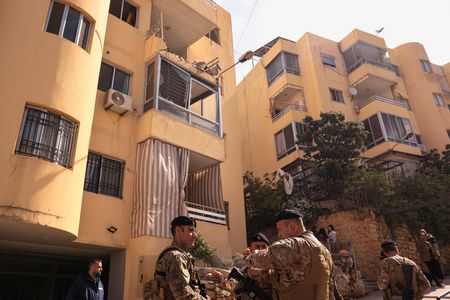

A deadly Israeli airstrike late Sunday targeted an apartment building in a Christian community outside Beirut, claiming the lives of a local political figure and escalating tensions within Lebanon regarding Hezbollah’s involvement in the ongoing conflict.
The attack occurred in Ain Saadeh, a Christian-majority town located in the hills east of Lebanon’s capital. Three people died in the strike – a man and two women who were located one floor beneath the apartment that was actually targeted, according to Lebanon’s health ministry and the town’s mayor.
Among the casualties were Pierre Moawad, a regional official with the Lebanese Forces Party, and his spouse Flavia, the anti-Hezbollah Christian political organization confirmed.
The month-long warfare has intensified existing rifts between those who support the Iran-backed Hezbollah movement and Lebanese citizens who hold the militant group responsible for sparking another confrontation with Israel barely over a year since the previous conflict ended.
“We are paying a heavy price for a war into which we have been dragged by the lawless organisation Hezbollah,” Lebanese Forces parliamentarian Razi El Hage told Lebanese broadcaster MTV.
Israel launched its comprehensive air and ground offensive following Hezbollah’s March 2 rocket attacks into Israeli territory, which the group conducted in support of Iran. Lebanese officials report that more than 1,460 people have died in the Israeli campaign.
The Israeli military’s evacuation orders have affected vast portions of southern Lebanon, eastern regions, and Beirut’s southern neighborhoods, forcing over one million residents to flee their homes. The majority of displaced people belong to the Shi’ite Muslim population that forms Hezbollah’s primary base of support.
Christian area residents and local leaders have voiced worries that displaced populations might be sheltering militants who could become Israeli targets. Some local governments are now screening individuals seeking rental housing in their communities.
Christian legislator Nadim Gemayel, who opposes Hezbollah, expressed concerns to Reuters last month that Israel might be intentionally forcing Shi’ite populations into other Lebanese regions to create inter-community conflicts.
Unlike many previous strikes, Israeli forces issued no evacuation warning before Sunday’s attack. Local residents confirmed that no displaced individuals were residing in the targeted building or nearby structures.
“I’ve been in my house for 20 years, I’ve never even seen this apartment lit. There’s no one in it,” Antoine Aalam, a 70-year-old man who lives across from the targeted apartment, told Reuters on Monday.
Israeli military officials told Reuters they had attacked a “terror target east of Beirut” but provided no additional information.
“Reports that several uninvolved individuals were harmed as a result of the strike are being reviewed,” the military stated.
Military representatives refused to address concerns that attacks on Christian communities were designed to increase sectarian hostilities.
Despite the 2024 ceasefire that concluded the previous Hezbollah conflict, Israeli forces have maintained their presence in southern Lebanon while continuing periodic strikes. Lebanese appeals for new peace negotiations have been ignored by Israel.
The Sunday evening attack occurred just hours after Lebanese President Joseph Aoun delivered his first televised speech since hostilities began, declaring that the nation’s “primary concern is preserving civil peace, which is a red line.”
Additional Israeli strikes on Sunday killed five people in Beirut’s southern suburbs, including a teenage girl and two Sudanese migrant workers. Another attack on a vehicle in southern Lebanon killed a married couple and wounded their two children.