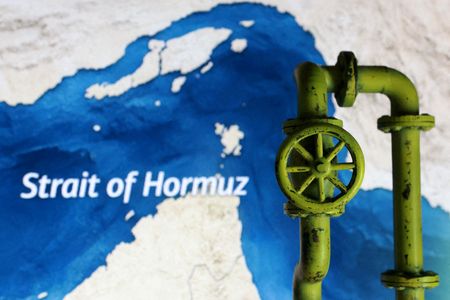

A senior United Arab Emirates official has declared that guaranteed passage through the Strait of Hormuz must be included in any future agreement between the United States and Iran, cautioning that failure to address Tehran’s nuclear ambitions and weapons programs could lead to greater regional instability.
Anwar Gargash, who serves as diplomatic adviser to the UAE president, emphasized during a weekend press conference that the Strait of Hormuz – the world’s most vital oil shipping channel – cannot be turned into a weapon. He stressed that protecting this waterway represents a global economic necessity rather than a regional negotiating tool.
“The Strait of Hormuz cannot be held hostage by any country,” Gargash stated, emphasizing that navigation freedom through this passage “has to be part and parcel of the settlement of any conflict with clear agreement on that.”
While expressing the UAE’s desire to see the conflict end, Gargash cautioned against a cease-fire that would leave underlying causes of regional tension unaddressed.
“We don’t want to see more and more escalation,” he explained. “But we don’t want a ceasefire that fails to address some of the main issues that will create a much more dangerous environment in the region…notably (Iran’s) nuclear programme, the missiles and drones that are still raining down on us and on other countries.”
President Donald Trump has issued ultimatums to Tehran, threatening to unleash “hell” unless Iran agrees to terms and reopens the Strait of Hormuz by his Tuesday deadline. In a profanity-filled social media post Sunday on Truth Social, Trump warned of additional attacks on Iranian energy and transportation infrastructure, moves that some critics argue would violate international law.
For over five weeks, American and Israeli forces have conducted sustained missile and air attacks against Iran, targeting what they describe as immediate threats from the nation’s nuclear weapons development, ballistic missile stockpiles, and backing of regional militant groups.
CRISIS SCENARIO BECOMES REALITY
Gargash announced the UAE’s willingness to participate in any American-led international mission to protect shipping through the strait.
Approximately 20 percent of the world’s oil and liquefied natural gas shipments typically move through this waterway daily, but Iranian military actions have dramatically reduced traffic, sparking a worldwide energy emergency.
The current crisis began on February 28, when American and Israeli forces struck Iran following the collapse of nuclear negotiations between Washington and Tehran. Iran responded with successive waves of missiles and drone attacks against Israeli targets, American military installations across the region, and crucial Gulf energy infrastructure, including aviation facilities, ports, and commercial districts.
Regional authorities report that the UAE has endured more intensive Iranian attacks than any other Gulf nation.
Gargash noted that for years, the UAE’s most feared worst-case scenario involved a comprehensive Iranian assault – a situation that has now materialized. Nevertheless, he said his country has shown remarkable strength and adaptability under these challenging circumstances.
He maintained that the UAE’s economic foundations remain solid and position the nation for eventual recovery, while acknowledging the considerable work ahead.
According to Gargash, Iran’s aggressive approach will likely strengthen rather than weaken Gulf state security partnerships with Washington, solidifying America’s military presence in the region and expanding Israel’s influence. He confirmed that the United States will continue as the UAE’s primary security ally and that Abu Dhabi plans to deepen this partnership as regional dangers grow.
Regional analysts view Iran’s attacks on Gulf energy infrastructure and shipping routes as a deliberate strategy to increase costs for Washington’s Arab allies. By targeting oil installations, ports, and critical waterways including the Strait, Iran hoped that Gulf states, concerned about economic damage and regional consequences, would pressure the United States to end its military campaign.
This approach built on years of Gulf efforts to maintain balanced relationships with both Washington and Tehran, contain regional tensions, and prevent direct military confrontation. Many Gulf countries had reestablished diplomatic ties with Iran and attempted to protect their economies from regional disruptions, believing that engagement would reduce risks.
Gargash argued that Iran’s leadership is battling to save the “regime, not the country,” contending that no responsible government would accept such devastation merely to claim resistance. He said the UAE does not desire conflict with Iran, but cautioned that trust remains impossible under Tehran’s current leadership.
The UAE official expressed appreciation for international support his country has received, specifically highlighting France as a reliable ally and commending Washington for its extraordinary assistance, especially in enhancing the UAE’s air defense systems.