
South Korean President Lee Jae Myung declared Monday that his nation must tolerate some level of risk to maintain crude oil imports from Middle Eastern countries, even as shipping disruptions plague the Strait of Hormuz.
During a cabinet meeting, Lee explained the difficult position his country faces. “There are not many alternative routes, and if shipments are cut off altogether because of heightened risk, it could have a serious impact on South Korea’s crude supply and pose a major risk to the public, so we need to strike a balance and accept a certain degree of risk,” the president stated.
South Korean officials have been working with oil-producing nations including Saudi Arabia, Oman and Algeria to establish backup supply channels, according to ruling Democratic Party lawmaker Ahn Do-geol, who spoke to reporters Monday.
Ahn revealed that diplomatic initiatives led by the foreign ministry could include sending special envoys to facilitate these discussions.
The Industry Ministry is advancing plans to send five South Korean-flagged ships along the Red Sea shipping route, Ahn noted. Government officials have also considered releasing oil from strategic reserves to private refineries initially, then replacing those supplies once alternative shipments reach the country.
Finance Minister Koo Yun-cheol held discussions Friday with representatives from Gulf Cooperation Council nations to maintain consistent deliveries of oil, liquefied natural gas, naphtha, urea and other essential materials, the ministry announced Sunday.
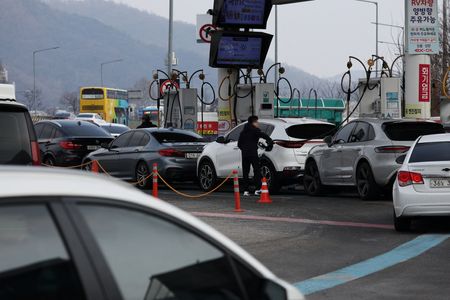
South Korea, similar to other Asian nations, depends heavily on energy imports, including shipments through the Strait of Hormuz. Before U.S. and Israeli air strikes targeted Iran on February 28, this waterway carried 20% of global oil supplies. Iran has since essentially blocked the passage, causing energy costs to surge and raising concerns about worldwide economic recession.
The Energy Ministry outlined plans to achieve a goal of generating 100 gigawatts of renewable energy by 2030 ahead of schedule, while increasing renewable power generation to over 20% of the total energy mix.
Border regions with North Korea will be designated for solar power development, and residents living near new high-voltage transmission lines will have opportunities to invest directly in these projects and receive income from them, ministry officials said.
South Korea has also established objectives for hydrogen-based steel production, which substitutes hydrogen for coal or gas. A 300,000-ton demonstration facility is scheduled for completion by 2028, with full commercial implementation planned for after 2037.