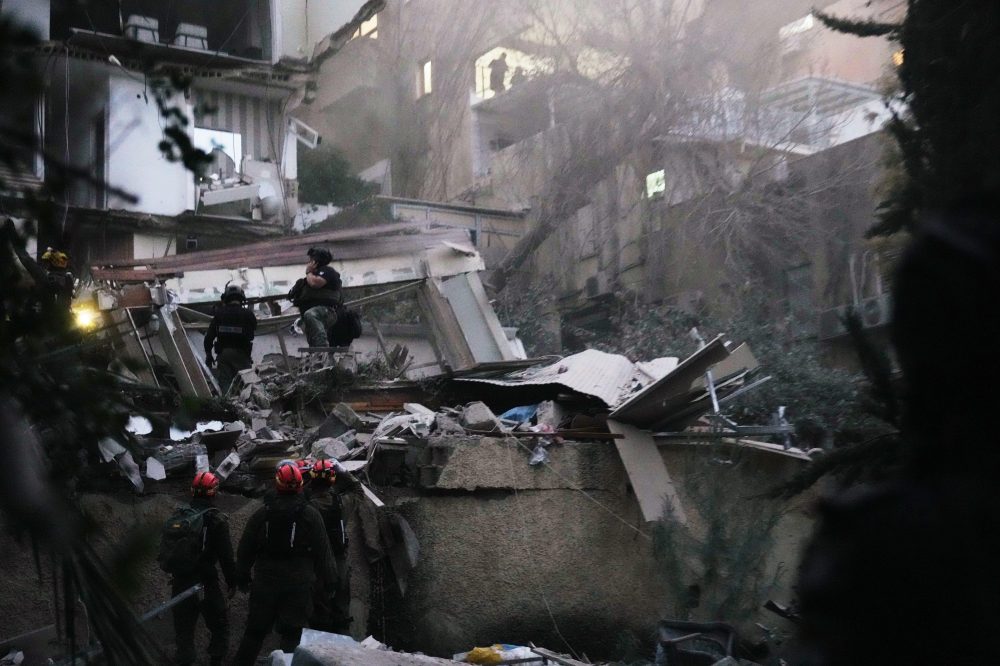

Weekend military strikes across multiple Iranian cities resulted in over 25 deaths from Sunday through Monday, according to reports from the ongoing conflict zone. Meanwhile, Israeli rescue teams continue searching through debris in Haifa where two people died and two remain unaccounted for following Sunday’s Iranian missile attack.
President Donald Trump escalated his warnings against Iran on Sunday, threatening devastating attacks on the nation’s essential infrastructure unless Tehran reopens the Strait of Hormuz shipping lane before his Tuesday ultimatum expires.
In a profanity-laced social media message, Trump declared that Tuesday would mark “Power Plant Day, and Bridge Day, all wrapped up in one, in Iran.”
The military conflict, which started with combined U.S.-Israeli operations on February 28, has resulted in thousands of casualties, disrupted international markets, blocked crucial maritime trade routes, and driven fuel costs higher. Both nations have targeted civilian areas, prompting United Nations officials and international legal experts to warn about potential war crimes violations.
Recent developments include:
Iranian drone forces struck a telecommunications facility in Fujairah, United Arab Emirates, on Monday, according to the state-operated WAM news service. The assault focused on a building owned by the government-backed du telecommunications company. Fujairah authorities confirmed no injuries occurred in the incident, WAM reported.
South Korea’s intelligence officials told parliament members Monday that North Korea shows no evidence of supplying weapons or military assistance to Iran. Agency representatives suggested during a private legislative briefing that Pyongyang may be avoiding involvement to keep diplomatic options open with the Trump government, according to two attending lawmakers.
While North Korea’s Foreign Ministry has criticized the U.S.-Israeli military actions against Iran as unlawful, intelligence sources noted that Pyongyang hasn’t issued formal condolences for the death of Iran’s former supreme leader, Ayatollah Ali Khamenei. North Korean leader Kim Jong Un has recently promoted “new Cold War” concepts and sought expanded partnerships with nations opposing U.S. policies, including sending a trade delegation to Iran in April 2024.
South Korea announced plans to deploy at least five vessels to Saudi Arabia’s Yanbu port over the coming weeks, establishing alternative oil shipping pathways through the Red Sea. The Trade, Industry and Resources Ministry stated Monday that ship deployments will begin in phases starting mid-April, with potential fleet expansion based on Saudi partnership agreements.
Ministry officials declined to name participating companies but indicated some domestic oil refiners might contract with foreign shipping firms. South Korea also intends to dispatch special diplomatic representatives to Saudi Arabia, Oman, and Algeria to strengthen efforts securing backup fuel sources, according to ruling party representative Ahn Do-geol.
Iranian authorities executed another individual convicted on charges related to January’s nationwide protest movement. The judiciary’s Mizan news outlet identified the executed person as Ali Fahim in Monday’s report, though execution timing remained unclear. Fahim faced conviction for allegedly raiding a military installation to obtain weapons.
Amnesty International stated that Fahim and co-defendants “were subjected to torture and other ill-treatment in detention, including beatings, floggings, prolonged solitary confinement, and death threats at gunpoint before being convicted in grossly unfair trials that relied on forced ‘confessions’ extracted under torture and lasted only a few hours.”
The Human Rights Activist News Agency reported that Fahim and others had entered a Tehran facility belonging to the volunteer Basij militia, a Revolutionary Guard branch, after the building was already burned, then were coerced into confessions.
Israeli emergency services reported Monday morning that Iranian missiles targeted several locations across central Israeli cities. In Petah Tikva, medical personnel treated a woman with serious chest wounds from shrapnel fragments before transporting her to Beilinson Hospital. City firefighters worked to extinguish vehicle fires while conducting searches to ensure no individuals remained trapped beneath rubble.
Tel Aviv medics evacuated a man with minor glass fragment injuries to Ichilov Hospital. Magen David Adom rescue service footage documented residential building damage from the assault.
Israeli military forces issued their fourth public warning Monday morning about incoming Iranian missile volleys.
Emergency response teams in the northern port city of Haifa reported multiple Iranian missile impact sites early Monday. Four people sustained minor injuries at one location, including two children. The missile strikes damaged residential neighborhoods and an industrial facility, with the factory suffering shrapnel damage from defensive interceptions.
Officials could not confirm whether all reported damage resulted from interception debris or direct missile impacts. Magen David Adom video footage from affected areas showed active fires and destroyed vehicles in what appeared to be residential districts.
These latest missile attacks followed Sunday’s Iranian strike on another Haifa residential area that killed two people and wounded others. Two additional individuals remain missing beneath Sunday’s rubble, with their status unknown.
In Abu Dhabi, United Arab Emirates, local authorities reported that a Ghanaian man sustained shrapnel injuries after Iranian missile interception over the city’s Musaffah district. This area sits close to Al Dhafra Air Base, which houses U.S. military personnel and has faced repeated Iranian targeting throughout the conflict.