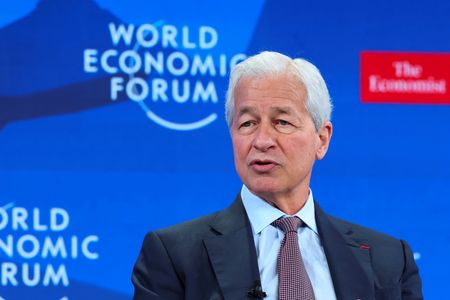

The head of America’s largest bank issued a stark warning Monday about how Middle Eastern conflicts could impact the U.S. economy, specifically pointing to Iran as a potential source of market disruption.
In his yearly message to investors, JPMorgan Chase Chief Executive Jamie Dimon expressed concern that military actions involving Iran could trigger significant disruptions in oil and commodity markets, potentially leading to persistent inflation and higher borrowing costs than financial markets currently anticipate.
The 70-year-old banking executive, who has led JPMorgan for twenty years, delivered this assessment just one day after President Donald Trump escalated tensions with Iran, issuing threats to strike the nation’s infrastructure including power facilities and transportation networks if Iran fails to reopen the Strait of Hormuz shipping channel.
Addressing the broader economic landscape, Dimon acknowledged multiple global challenges facing the nation.
“The challenges we all face are significant,” Dimon stated, pointing to various international tensions including the ongoing conflict in Ukraine, widespread Middle Eastern hostilities, and strained relations with China.
“Now, because of the war in Iran, we additionally face the potential for significant ongoing oil and commodity price shocks, along with the reshaping of global supply chains, which may lead to stickier inflation and ultimately higher interest rates than markets currently expect,” he added.
The banking chief noted that only time would reveal whether military action in Iran accomplishes American strategic goals, while emphasizing that nuclear weapons development remains the most serious threat posed by Iran.
Financial markets have already responded to war-related inflation concerns by essentially eliminating expectations for interest rate reductions this year, a sharp reversal from the monetary policy easing that helped drive stock markets to record levels in the previous year.
The benchmark S&P 500 stock index recently completed its weakest quarterly performance since 2022, declining steadily since late February due to the conflict and subsequent energy price increases.
Despite these concerns, Dimon characterized the American economy as maintaining its strength, with consumers continuing to earn and spend money, though he noted some recent softening in activity, while businesses remain financially sound.
However, he cautioned that economic growth has been supported by substantial government deficit spending and previous stimulus measures, while noting that infrastructure investment needs continue to grow.
Dimon identified several positive economic factors, including fiscal stimulus from President Trump’s legislative package he referred to as the “Big, Beautiful Bill,” deregulation initiatives, and business investment driven by artificial intelligence technology.
Regarding the private credit market, Dimon suggested the $1.8 trillion sector likely does not pose a systemic threat to the financial system, despite recent investor withdrawals from such funds amid concerns that AI advances could harm underlying borrowers.
The banking leader warned that when credit conditions eventually deteriorate, losses across all leveraged lending will exceed expectations due to gradually weakening credit standards throughout the industry.
He also noted that private credit markets often lack transparency and rigorous loan valuations, increasing the likelihood that investors will sell their holdings if they anticipate worsening conditions.
This assessment came after Blue Owl recently informed investors it was restricting withdrawals from two investment funds following unprecedented first-quarter redemption requests, with AI-related concerns driving investors away from its technology-focused fund.
Dimon also used his shareholder letter to strongly criticize updated capital requirements proposed by federal banking regulators last month, describing certain elements as continuing to be “nonsensical.”
JPMorgan was among several major banks that successfully lobbied to weaken initial 2023 versions of the Basel-III regulations and Global Systemically Important Banks’ surcharge rules.
Nevertheless, Dimon maintained Monday that the current proposals remain “very flawed,” arguing that JPMorgan’s required capital surcharge would only decrease to 5.0%, a level he characterized as punishment for the bank’s success and described as “absurd” and “un-American.”