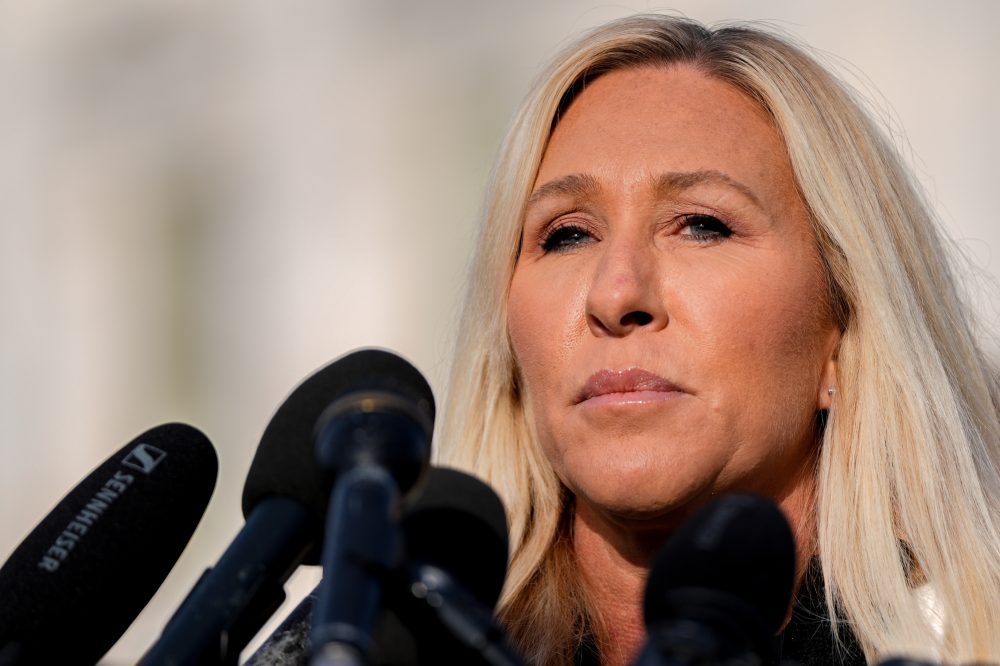

Voters in northwest Georgia will head to polling stations Tuesday to select their next congressional representative, filling the vacancy created when Marjorie Taylor Greene stepped down from her House seat following tensions with President Donald Trump three months ago.
This special runoff election represents the second opportunity in less than 30 days for constituents in Georgia’s 14th Congressional District to choose their Washington representative. The initial special election held March 10 featured 17 candidates, but since no contender secured a majority, the top two finishers advanced to Tuesday’s decisive contest.
The results will have immediate implications for the precarious power structure in the narrowly divided House of Representatives, where Republicans maintain a slim 217-214 advantage. One additional seat belongs to a former GOP member who switched to independent status in March, with two seats currently unfilled.
In the initial Georgia special election, which featured all candidates on a single ballot regardless of party, Democrat Shawn Harris captured the highest vote total. Harris narrowly outpaced Republican Clay Fuller by approximately 2 percentage points, benefiting from the fact that Republican support was distributed among a dozen GOP contenders.
Harris, a former Army brigadier general, previously challenged Greene unsuccessfully in the 2024 general election. Fuller serves as a district attorney and has secured Trump’s backing. Both candidates are simultaneously pursuing their respective party nominations for a complete term in the May 19 primary, looking ahead to November’s midterm contests.
Historically, this congressional district has demonstrated strong Republican preferences in general elections. Trump secured the district in 2024 with 68% support. The 37% that Harris obtained in March represented a slight improvement over the approximately 36% he earned in his direct competition against Greene in 2024.
Harris managed to increase his vote percentage in nine of the district’s ten counties compared to 2024. He also exceeded former Vice President Kamala Harris’s 2024 presidential performance across all ten counties. However, winning the seat requires him to substantially exceed the mid-30% range that Democrats have typically achieved in recent district-wide general elections.
His strongest showings in the special election occurred in Cobb and Paulding counties, the two most densely populated metro Atlanta counties within the northwest Georgia district. Nevertheless, Greene carried every county in that election year.
Harris faced minimal Democratic competition in the special election and accumulated $6.4 million in campaign funds, significantly outpacing Fuller’s approximately $1.3 million. Campaign finance reports from March 18 showed Harris maintaining about $745,000 in available funds, while Fuller had roughly $53,000 remaining.
Trump’s support should provide Fuller with an advantage, given that the president’s district performance exceeded Greene’s numbers. However, special election participation typically falls well below presidential election levels, and runoff contests generally see even lower voter engagement.
Georgia will conduct additional runoff elections Tuesday for state Senate District 53 and state House District 94. Republicans maintain control of both General Assembly chambers, and these special runoff outcomes will not challenge their majorities.
Georgia law does not mandate automatic recounts, though losing candidates may request one if the final margin equals 0.5% or less of total votes cast.
Polling locations will remain open until 7 p.m. Eastern Time on Tuesday.
All registered voters within their respective districts may participate in the special runoff election, regardless of whether they cast ballots in the March 10 special election.
Current registration figures show approximately 571,000 total registered voters in the 14th Congressional District, including roughly 524,000 active voters. Georgia does not require party registration.
The March 10 House special election drew about 116,000 votes, with roughly 52% cast prior to Election Day. As of Friday, nearly 47,000 ballots had already been submitted for the House special runoff.
During the March 10 special election, initial results appeared at 7:05 p.m. Eastern Time, five minutes after poll closure. The final vote update came from Paulding County at 9:51 p.m. Eastern Time with approximately 99.9% of votes tallied.
All ten counties in the 14th Congressional District typically report some or all absentee ballot results in their first vote update. Four counties, including the two largest – Paulding and Cobb – also usually include complete early voting results in their initial reports. Since 2020, Democrats have shown greater tendency to vote early or by mail, potentially giving Democratic candidates initial leads in vote counts until Election Day ballots are processed.
Following Tuesday’s outcome, this congressional seat will be contested again in 210 days during the 2026 midterm elections.