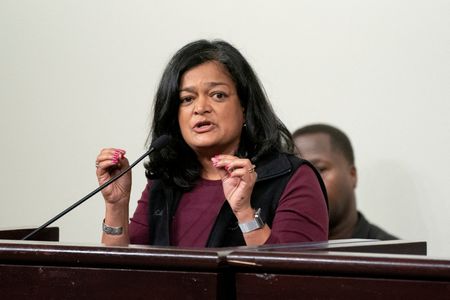

Two Democratic members of Congress recently completed a groundbreaking trip to Cuba, becoming the first legislative delegation to visit the Caribbean nation this year as tensions between Washington and Havana reach new heights under President Trump’s aggressive policies.
Representatives Pramila Jayapal, a prominent progressive Democrat, and Jonathan Jackson, who has long focused on Cuban affairs, concluded their five-day mission on Sunday after witnessing what they described as widespread hardship caused by the Trump administration’s energy restrictions.
The pair characterized their visit as an effort to “see the suffering that is happening on the ground” due to what they termed “an illegal blockade of energy supplies” implemented by the current administration in an attempt to pressure Cuba’s communist leadership.
Speaking to journalists at a private guesthouse near Havana’s coastline, Jackson emphasized the severity of the situation facing the island nation located just 90 miles from American shores.
“This is the most sanctioned part of Planet Earth right now, just 90 miles off our shores,” Jackson stated. “Let´s bring the rhetoric down. People are suffering. And they are suffering for no good reason.”
The congressional visit occurs during an exceptionally strained period in U.S.-Cuba relations, with the Trump administration implementing sweeping measures including restrictions on money transfers to Cuba, threats of penalties against nations supplying oil to the island, and Cuba’s placement on the terrorism sponsor list.
During their stay, the lawmakers held discussions with Cuban President Miguel Diaz-Canel, members of Cuba’s legislature, and senior foreign ministry officials. Both countries have confirmed preliminary conversations are underway, though specific details remain largely confidential.
Following her meetings with Cuban leadership, Jayapal provided insight into the current state of bilateral discussions.
“There has been dialogue – the beginnings of dialogue,” Jayapal explained. “I don´t think it´s reached the state of negotiation that we were told. But I think there is a desire to ensure that there is a real negotiation…about what needs to happen in order for the situation to change.”
The representatives expressed particular concern after touring medical facilities in Havana, including cancer treatment centers and maternity wards that have faced decades of decline but experienced especially severe impacts from the current fuel restrictions.
President Trump has recently made bold statements about Cuba, claiming he anticipated having the “honor” of “taking Cuba in some form” and asserting “I can do anything I want” regarding the neighboring country.
However, despite such aggressive language, the administration allowed a Russian vessel to deliver 700,000 barrels of crucial crude oil to Cuba last week without interference.
“President Trump saw in his heart to let the Russian ship come in, whatever changed his heart we are grateful for,” Jackson observed.
The Democratic legislators also acknowledged recent positive steps taken by Cuban authorities, including an invitation for exiles to invest in island businesses, cooperation with FBI investigations into a deadly maritime incident that claimed five lives off Cuba’s northern coast, and plans to release more than 2,000 prisoners.
Jayapal viewed these developments as evidence that conditions are favorable for meaningful negotiations between the two nations.
“There are a number of things that indicate that the moment is here for us to have a real negotiation between our two countries and to reverse failed U.S. policy of decades, a Cold War era remnant, that no longer serves the American people or the Cuban people,” she said.
The congresswoman indicated that Democrats would continue advocating for legislation preventing military action against Cuba while working to eliminate what she considers ineffective sanctions.
Jackson warned that failure to reach a compromise could result in significant consequences for both nations.
“We can either help (the Cuban) people stay at home and live a healthy normal life, or there´s going to be a huge migration coming towards the United States,” Jackson predicted. “People will not simply stay here, suffer and die.”