
ZANJAN, Iran — Dark banners drape the border checkpoint while images of Iran’s fallen Supreme Leader Ayatollah Ali Khamenei look down, vowing revenge against America and Israel.
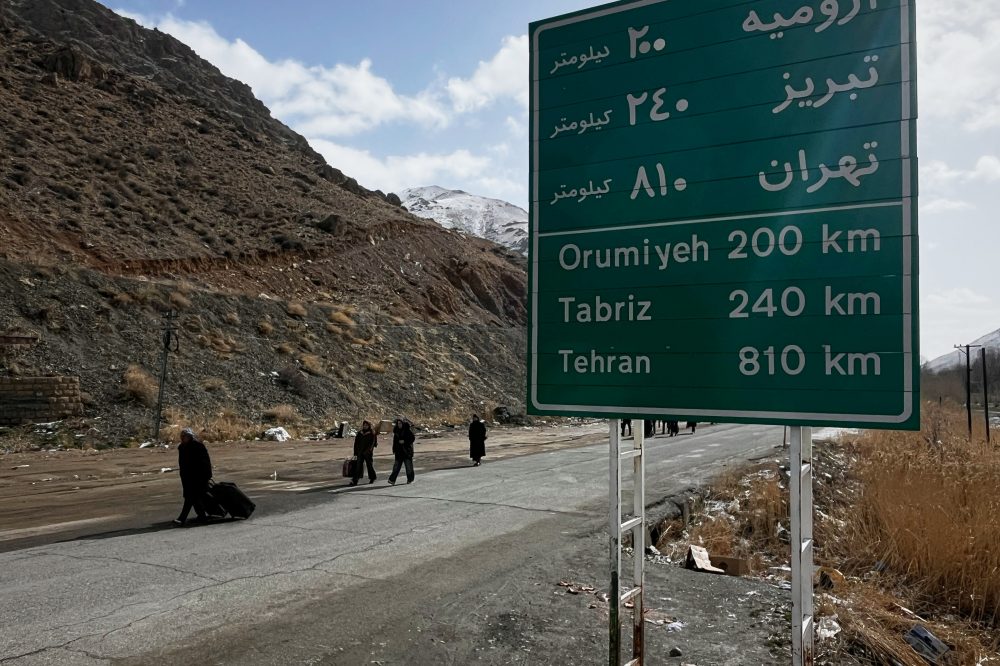
Yet during the lengthy 12-hour journey south toward Tehran, ordinary life persists, with scattered evidence of the current conflict, including a Shiite religious facility that authorities report was struck in a recent aerial attack.
Reporters from the Associated Press completed this trek on Saturday following their entry into Iran from Turkey. Their journey provided insights into a nation positioned at the heart of a regional conflict that has disrupted global markets and continues unabated five weeks following Khamenei’s death in the initial American and Israeli offensive.
The Iranian government has authorized the Associated Press to deploy an additional reporting team for a limited assignment. AP maintains existing operations within Iran. The visiting journalists must work alongside a handler from a government-connected organization, though AP maintains complete editorial authority over its reporting.
Evidence of wartime devastation first appeared in Zanjan, a northwestern city located roughly six hours from the border crossing.
Government representatives report that an aerial bombardment struck a religious community facility called a husseiniyah, resulting in two fatalities and destroying both a medical clinic and library. Additional sections of the complex, portions dating back centuries, sustained damage including its golden dome structure.
When questioned regarding the attack, Israeli military officials stated they had targeted “a military headquarters,” adding that they attempt to prevent damage to civilian infrastructure, without providing further details.
“It has hurt me a lot and distressed me a lot,” said Somayeh Shojaei, a local resident who has attended religious and cultural events at the center. “With these airstrikes, (the U.S. and Israel) are showing their malicious intent to the whole world,” she said.
The bombardment claimed the lives of the library’s caretaker and an Iranian Red Crescent volunteer responder, according to Jaafar Mohammadi, the regional director of cultural and Islamic guidance.
Mohammadi explained that economically disadvantaged individuals had accessed free medical care at the clinic while students utilized the library containing over 35,000 volumes, including historical manuscripts.
He stated he remained uncertain about the reasoning behind targeting the facility.
“Iran wanted to negotiate for peace with (U.S. President Donald) Trump, but Trump responded with war,” Mohammadi said. “He started the war, but we will definitely be the victorious side.”
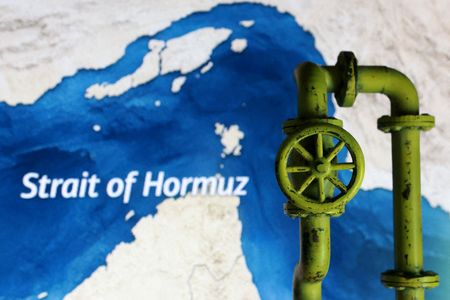
American and Israeli forces have conducted thousands of bombing missions throughout the nation, while Trump has threatened to attack Iran “back to the Stone Ages, where they belong.” During the weekend, he restated his Monday ultimatum for Iran to reopen the Strait of Hormuz, a crucial passage for petroleum and natural gas transport.
Iran’s remaining leadership has maintained their defiant stance and governmental control, dismissing what they characterize as unrealistic American peace terms. Israel has shown no signs of reducing its military operations and has encouraged Iranians to remove their current government.
Despite the war creating international upheaval — along with fear and worry among Iranians — everyday activities persist.
Throughout multiple cities along the Tehran route, AP journalists observed regular vehicle traffic, operating businesses, and pedestrians on sidewalks. One restaurant offered traditional Iranian cuisine including grilled lamb with rice, barley soup, and saffron beverages while R.E.M.’s “Losing my religion” played through speakers.
Numerous women were visible conducting daily activities without the government-mandated head coverings, enforcement of which has relaxed in recent years.
The reporting team traveled through two security checkpoints approaching Tehran without being detained.
The capital appeared unusually quiet after midnight hours. Intense aerial bombardments had targeted mountainous areas surrounding the city the night before.
Tehran remains on the conflict’s front lines, experiencing repeated bombing waves that American and Israeli officials claim target military and domestic security installations. Iranian authorities report more than 1,900 casualties, though the breakdown between military personnel and civilians remains unclear.
The AP team observed multiple destroyed government facilities and police stations. They encountered several checkpoints staffed by plainclothes Basij internal security personnel and uniformed Revolutionary Guard members.
Security forces stopped them once, requesting they open their vehicle and display press credentials before allowing them to proceed.
Government fuel subsidies keep gasoline prices at approximately 15 U.S. cents per gallon, though citizens can only purchase about 5 gallons per transaction. No evidence of fuel shortages or waiting lines was apparent.
In Zanjan, Mohamoud Maasoumi, a former military member, described the American conflict as involving “the world’s arrogance” — tensions tracing back to a 1953 CIA-supported overthrow that remains vivid in many Iranians’ memories. He voiced confidence that Iran’s leadership would protect the nation.
“The enemy sees that we are not ever succumbing,” he said.