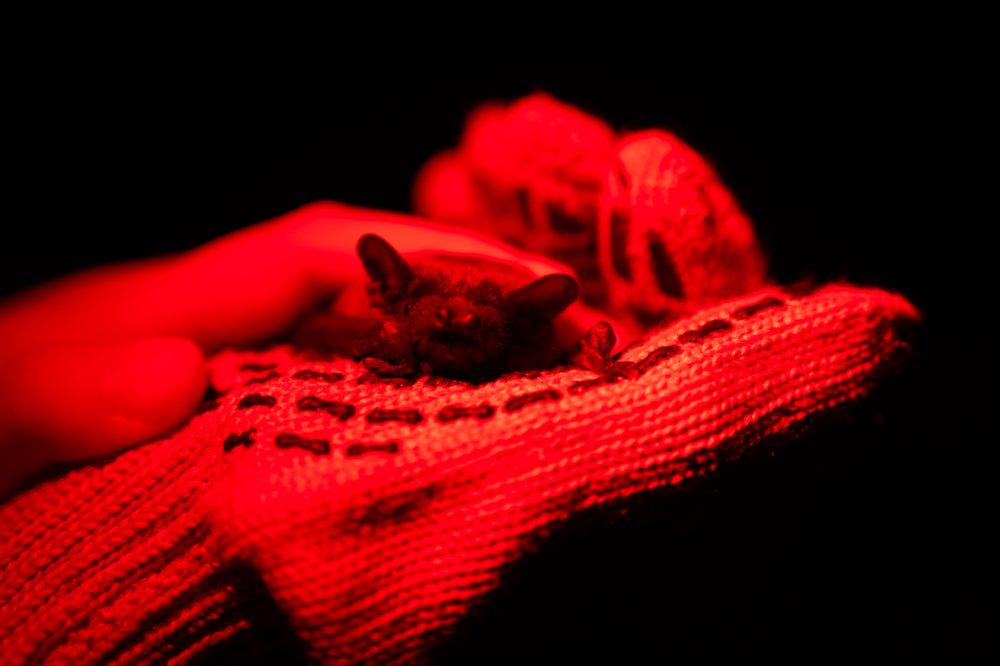

KYIV, Ukraine — When darkness began settling over a nature preserve outside Ukraine’s capital, families gathered to witness volunteers carefully opening fabric pouches to set bats free into the evening sky.
Over 1,000 onlookers — including families, soldiers taking a break from duty, and wildlife lovers, some sporting Gothic clothing — erupted in cheers and clapping as each winged creature darted through the air.
The Saturday evening celebration featured the release of hundreds of bats, many of which had been saved from conflict zones in eastern Ukraine, as part of several springtime events happening across the nation.
“This is important for us as an organization because these are on a red list of endangered animals. Preserving them is very important,” said Anastasiia Vovk, a volunteer at the Ukrainian Bat Rehabilitation Center, which organized the release.
Ukraine’s 28 different bat species all receive protected status because their numbers continue dropping.
The gathering provided much-needed comfort and family entertainment following a brutal winter filled with freezing temperatures, constant Russian aerial bombardments, and devastating electrical grid failures.
During Saturday’s event, youngsters wearing bat-themed clothing watched volunteers use tweezers to feed the animals mealworms before setting them free. Some children were permitted to put on protective gloves and hold the creatures themselves.
“Life goes on despite the war,” said Oleksii Beliaiev, a 54-year-old Kyiv resident who attended with his family. “The war is the main thing right now, but there has to be something else as well.”
Beliaiev operates a small printing company and volunteers his time supporting military initiatives.
The ongoing conflict has forced both people and animals from their homes. Bombing destroys the shelters where bats live, while explosions frighten these small creatures, according to wildlife specialists.
“In winter, bats hibernate, and if they are disturbed, they can die. They reproduce slowly — one or two offspring per year — so populations recover very slowly,” said Alona Shulenko, who headed Saturday’s release.
“As natural hibernation sites disappear, bats move into cities, into cracks in buildings and balconies. But repairs or destruction of these places can kill entire colonies,” she said.
Ukraine’s bat population consists entirely of insect-eating species that receive legal protection, and the nation sits along a crucial eastern European migration pathway.
The rescue organization reports saving over 30,000 bats in total, including 4,000 during this past winter alone.
“We are all living in wartime, and everyone has their own struggles,” Shulenko said. “But we are doing what we know best. … If we stop what we are doing, thousands of bats will die.”