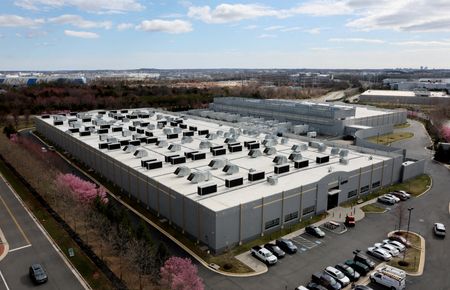

Major technology corporations are encountering growing pressure from shareholders regarding the environmental consequences of their massive data center operations, following recent project cancellations due to community resistance.
Amazon, Microsoft, and Google’s parent company Alphabet have all recently halted construction on billion-dollar data center projects after facing local opposition, and now investors are demanding greater accountability for these facilities’ environmental effects.
Over a dozen investment firms are intensifying their demands ahead of this spring’s annual shareholder meetings, pushing for detailed information about water consumption and conservation practices as these tech companies expand their computing infrastructure, according to recent interviews.
Boston-based Trillium Asset Management, which oversees more than $4 billion in assets, submitted a proposal to Alphabet in December requesting transparency about meeting climate commitments despite rising energy demands from data centers, according to Andrea Ranger, the firm’s director of shareholder advocacy.
Alphabet committed in 2020 to cutting emissions in half and transitioning to carbon-free energy by 2030. However, Trillium reported that emissions actually increased by 51%, leaving investors “in the dark” about the company’s strategy for achieving these targets.
A comparable proposal from Trillium the previous year gained backing from nearly 25% of independent shareholders.
Giovanna Eichner, a shareholder advocate at Green Century Capital Management, revealed ongoing conversations with Nvidia about potentially filing a proposal “to ensure that short-term AI gains do not come at the cost of long-term climate and financial risk,” though she declined to provide additional specifics.
Investors are particularly focused on obtaining comprehensive water usage information. Data centers across North America consumed almost 1 trillion liters of water in 2025, according to market research firm Mordor Intelligence, matching approximately what New York City uses annually.
Although Meta, Google, Amazon and Microsoft have implemented closed-loop cooling systems in their data centers that significantly reduce water requirements, the reporting on consumption varies considerably between companies.
Meta’s 2025 environmental report included water usage for company-owned facilities but excluded leased properties and construction sites. Overall consumption jumped 51% from 3,726 megaliters in 2020 to 5,637 megaliters in 2024, representing enough water to serve over 13,000 households annually.
Google’s 2025 environmental report covered owned and leased facilities but omitted third-party operated sites. Both Amazon and Microsoft disclosed total water consumption in their 2025 sustainability reports without providing site-by-site breakdowns.
Josh Weissman, Amazon’s director of infrastructure capacity delivery, stated the company is “increasingly disclosing site-specific water consumption data where we operate.” An Amazon representative emphasized the company’s commitment to being a “good neighbor” through efficiency investments, new energy development, and water usage reduction.
Facility-specific data is essential for investors to properly evaluate operational risks and company performance in managing them, according to investment professionals who also seek information about water supply replenishment efforts.
“We haven’t seen them disclosing enough about their water consumption (and the) impact on the local community,” explained Jason Qi, lead technology analyst at Calvert Research and Management.
A Microsoft representative described environmental sustainability as “a core value” and stated the company is “proactively addressing sustainability challenges and accelerating solutions for long‑term impact.”
Google declined to provide comment and Meta did not respond to requests for comment.
Dan Diorio, vice-president of the Data Center Coalition, a lobbying organization representing the major tech companies, said enhanced community engagement has become a primary focus over the past year.
“Being upfront with them regarding energy and water use, and so that residents can understand that this project will not stress their resources… and will protect them as rate payers is crucial,” Diorio said.