
Wisconsin residents cast ballots Tuesday in a statewide election featuring a contest for state Supreme Court justice that could shape the court’s direction for years to come.
Two Appeals Court judges are vying for the high court position: Chris Taylor, a former Democratic state lawmaker backed by the court’s four current liberal justices, and Maria Lazar, who previously worked as assistant state attorney general during Republican Scott Walker’s governorship and has conservative Justice Annette Ziegler’s endorsement.
The candidates are seeking to fill the seat being vacated by retiring Justice Rebecca Bradley, who served on the court’s conservative wing. Taylor brings legislative experience from her time as a Democratic state representative, while Lazar has support from Ziegler, who announced in March her intention not to pursue a third term in 2027.
While this election hasn’t drawn the same intense scrutiny as recent Wisconsin Supreme Court battles, the outcome remains significant. The winning candidate will serve a 10-year term and could play a crucial role in potential disputes involving the 2028 presidential election or upcoming congressional redistricting efforts in the early 2030s.
Liberal candidates have secured victories in the past three consecutive state Supreme Court elections. The court’s liberal faction achieved a 4-3 advantage in 2023 for the first time in a decade and a half when Justice Janet Protasiewicz captured a previously conservative-held position. Justice Susan Crawford’s successful campaign in 2025 maintained that liberal edge, despite millions in spending by Elon Musk and affiliated organizations supporting her conservative opponent.
Wisconsin’s electoral patterns typically show Democrats performing strongly in densely populated Milwaukee and Dane counties, where Madison is located, while Republicans dominate in smaller rural areas across much of the state. Republican hopefuls often depend on solid performances in the “WOW” counties of Waukesha, Ozaukee, and Washington near Milwaukee to offset Democratic urban advantages.
During the 2024 presidential race, Kamala Harris captured 68% of Milwaukee County votes and 75% in Dane County but still lost Wisconsin overall. By contrast, both Protasiewicz and Crawford achieved even stronger showings in those areas during their successful campaigns, earning 73% and 75% respectively in Milwaukee County and 82% each in Dane County, leading to comfortable statewide victories.
Both justices also prevailed in more than 10 swing counties that supported Trump in 2024, including Brown County, home to Green Bay, which Trump has carried in all three of his presidential campaigns.
Meanwhile, Waukesha is experiencing its first open mayoral contest in two decades. Common Council President Alicia Halvensleben faces state Representative Scott Allen to succeed Mayor Shawn Reilly, who decided against seeking a fourth term. Allen has established himself as one of the Legislature’s most conservative Republicans since taking office in 2014, while the Waukesha County Democratic Party has thrown its support behind Halvensleben.
Reilly, who operates as an independent after departing the Republican Party following the January 6, 2021, Capitol insurrection, has given his endorsement to Halvensleben.
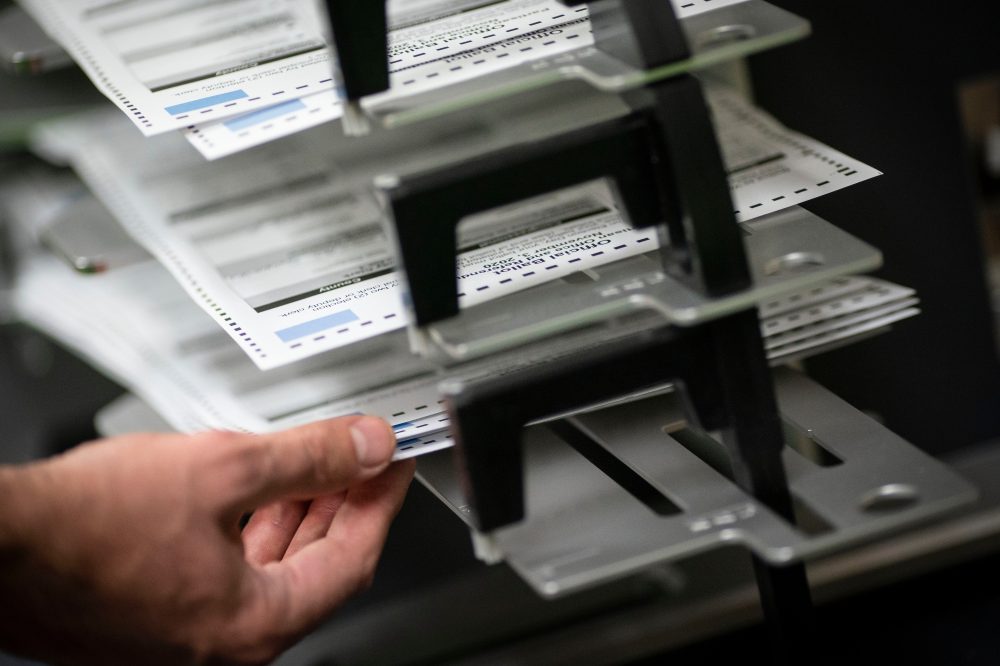
Polling locations remain open until 8 p.m. local time, or 9 p.m. Eastern. Wisconsin’s spring election is open to all registered voters in the state, with approximately 3.6 million active registered voters among roughly 4.5 million eligible voting-age adults as of April 1.
The 2025 spring Supreme Court election drew nearly 2.4 million votes, representing about 62% of registered voters, with 29% casting ballots before election day. Early voting numbers show nearly 281,000 ballots had already been submitted by Friday.
Vote counting and reporting procedures vary across Wisconsin counties, with some releasing early and absentee results immediately after polls close while others provide updates throughout the evening alongside same-day voting tallies.