
LONDON – A new analysis reveals how the blockade of a critical Middle Eastern shipping route has created vastly different economic outcomes for oil-producing nations in the region.
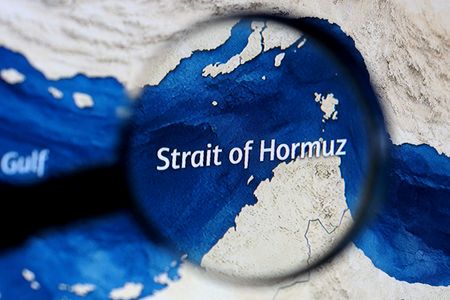
The shutdown of the Strait of Hormuz – which normally handles roughly 20% of the world’s oil and natural gas shipments – has resulted in massive financial gains for some countries while devastating others, according to recent data.
Iran closed off the strategic waterway following American and Israeli military strikes against Iranian targets in late February, which escalated into broader regional hostilities. Tehran later announced it would permit passage for ships without American or Israeli connections, allowing some tankers to navigate the narrow passage, though global energy markets remain severely disrupted.
The crisis sent international Brent crude prices soaring 60% during March, marking the largest monthly price jump on record.
President Donald Trump has issued an ultimatum to Iran, warning he will unleash “hell” on Tehran unless a deal is reached by Tuesday’s end to restore normal shipping traffic through the strait.
The financial impact on regional oil exporters has been determined largely by their geographic advantages or disadvantages.
Countries with access to alternative shipping methods – including Iran itself, along with Oman, Saudi Arabia, and the United Arab Emirates – can utilize pipelines and ports that avoid the blocked strait entirely.
Meanwhile, oil from Iraq, Kuwait, and Qatar remains effectively stranded, as these nations lack backup routes to reach global markets.
An Iranian government source told reporters that Iran refuses to reopen the strait as part of any temporary truce agreement, following Trump’s latest demands. Tehran has consistently rejected previous American ultimatums, stating it will not accept humiliation.
Neil Quilliam, an associate fellow with the Chatham House think tank, noted the long-term implications: “Now that Hormuz has been closed, it can be closed again and again, and that poses a major threat to the global economy. The genie is out of the bottle.”
The International Energy Agency has characterized this conflict as the most severe energy supply disruption in global history, with over 12 million barrels daily of regional production halted and approximately 40 energy installations damaged.
March export data analysis shows Iraq and Kuwait both experienced roughly 75% drops in estimated oil export earnings compared to the previous year. In contrast, Iran’s revenues jumped 37% while Oman’s increased 26%. Saudi Arabia saw a 4.3% revenue boost, and the UAE experienced a modest 2.6% decline as higher prices compensated for reduced shipping volumes.
For Saudi Arabia, elevated oil prices translate to increased government income through royalties and taxes from state-controlled Aramco, which is predominantly owned by the government and its investment fund.
This revenue boost comes at an opportune time for the kingdom, which had been running budget shortfalls due to heavy investments in economic diversification projects aimed at reducing oil dependency.
Aramco representatives declined to provide comments regarding the revenue calculations. Officials from other affected nations and their petroleum companies have not yet responded to inquiries.
Saudi Arabia’s primary alternative shipping route is its 746-mile East-West pipeline system, constructed during the 1980s Iran-Iraq conflict specifically to circumvent Hormuz. The pipeline links eastern oil production areas to the Red Sea port of Yanbu and currently operates at its maximum 7 million barrel daily capacity.
With approximately 2 million barrels consumed domestically, Saudi Arabia has roughly 5 million barrels available for export daily. Yanbu port handled an average of 4.6 million barrels per day during the week beginning March 23, despite attacks on the facility on March 19.
Saudi crude exports declined 26% year-over-year in March to 4.39 million barrels daily, but higher prices still increased export values by approximately $558 million compared to the previous year. The kingdom had strategically increased February exports to their highest levels since April 2023, anticipating potential American military action against Iran.
Despite the East-West pipeline advantage, Quilliam warned that Saudi Arabia remains exposed to additional attacks by Iran or its Yemeni allies, the Houthis, targeting western energy infrastructure and ships transiting the Bab el-Mandeb Strait toward the Red Sea.
The UAE has received partial protection through its Habshan-Fujairah pipeline, which can handle 1.5-1.8 million barrels daily while bypassing the strait. However, the country’s estimated oil export revenues still dropped more than $174 million year-over-year in March, and Fujairah has faced multiple attacks causing loading interruptions.
Among Gulf producers, Iraq suffered the steepest revenue decline – falling 76% to $1.73 billion. Kuwait followed with a 73% drop to $864 million.
Iraq’s state oil marketing organization SOMO reported April 2 that March oil revenues totaled approximately $2 billion, closely matching independent estimates.
Both nations likely face even sharper April declines, as their March figures benefited from shipments that departed during the conflict’s early days. One Iraqi crude tanker successfully navigated the strait last week after Iran announced Iraq would be exempt from shipping restrictions.
Adriana Alvarado, VP of sovereign ratings at Morningstar DBRS, explained that Gulf governments have options to maintain financial stability, including utilizing fiscal reserves or accessing debt markets.
“Apart from Bahrain, the Gulf states have enough fiscal room to deal with the shock, with government debt at moderate levels below 45% of GDP,” she stated.
The crisis’s long-term consequences remain uncertain. While some Western oil companies and political leaders advocate for increased fossil fuel investment to guard against supply disruptions, other analysts argue renewable energy offers superior protection.
Demonstrating how the crisis might accelerate the transition away from oil dependence, France’s TotalEnergies and UAE state-backed renewable firm Masdar announced a $2.2 billion joint venture last week to rapidly expand renewable energy infrastructure across nine Asian nations.