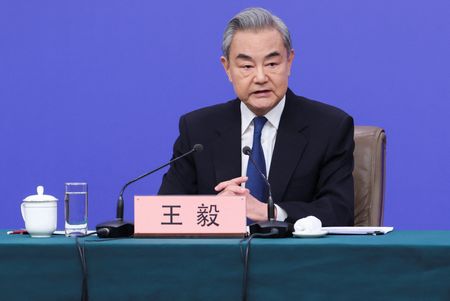
The leader of Taiwan’s primary opposition party departed Tuesday for China on what she describes as a diplomatic peace effort, with a possible meeting scheduled with Chinese President Xi Jinping during escalating tensions between the two nations.
Cheng Li-wun, who heads the Kuomintang (KMT) party, is making this journey while Chinese military activities around Taiwan have intensified and as the opposition-controlled legislature blocks government proposals for an additional $40 billion in military expenditures.
Both Taiwan’s ruling and opposition parties have launched competing social media campaigns surrounding this visit, each using contrasting themes of conflict versus harmony.
“Peace is the only foundation for prosperity, and the hope for Taiwan’s future,” the KMT declared in a Sunday statement, accompanied by a promotional video showing young citizens enjoying leisure activities and gazing at stars.
Taiwan’s governing Democratic Progressive Party responded with sharp criticism on Facebook, accusing the KMT of attempting to “cooperate with the Chinese communists’ scheme to weaken Taiwan’s defence capabilities,” referencing the stalled defense budget that has U.S. support.
During a press briefing with international media last month, Cheng stated that “peace cannot possibly be achieved through defence capabilities alone” and emphasized that diplomatic solutions are equally crucial.
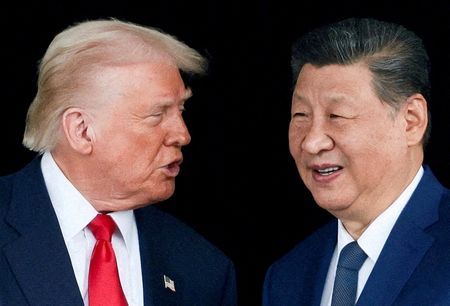
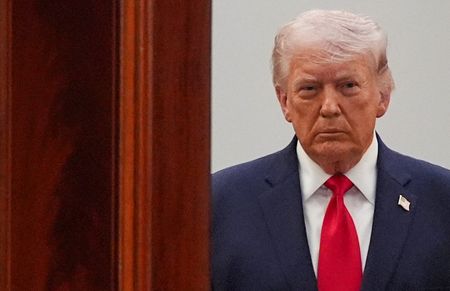
Her China visit occurs one month ahead of a planned summit between U.S. President Donald Trump and Xi Jinping in Beijing.
Although both sides might reach cooperative agreements on agricultural trade and aircraft component commerce, discussions are anticipated to address contentious issues including Taiwan, where meaningful advancement appears unlikely.
During a February phone conversation, Xi urged Trump that the United States “must carefully handle arms sales to Taiwan.”
This marks the first visit by a KMT leader to mainland China in ten years, though Chinese officials have not confirmed whether Xi will definitely meet with Cheng during her Beijing stay beginning Thursday.
Taiwan’s Mainland Affairs Council, which oversees cross-strait policy, stated last week that Cheng should urge Beijing to cease military intimidation and acknowledge Taiwanese citizens’ right to determine their own destiny.
Beijing refuses diplomatic engagement with Taiwan President Lai Ching-te, labeling him a “separatist.”
China has never ruled out military action to gain control over Taiwan but maintains that “peaceful reunification” remains its preferred approach.
Chinese authorities have intensified recent campaigns attempting to convince Taiwanese citizens of potential advantages, including energy security guarantees, which Taiwanese officials have dismissed.
Last Friday, China’s Eastern Theatre Command, responsible for any potential Taiwan military operation, released an illustrated image depicting how “Taiwan province” would appear during the traditional Tomb Sweeping Festival if unified with China.
The illustration showed people placing flowers at a “Monument for the complete reunification of the motherland” located at Taipei’s Machangding Memorial Park, where alleged communist operative Wu Shi was executed by KMT forces in 1950.
KMT troops retreated to Taiwan in 1949 following their defeat in a civil war against Mao Zedong’s communist forces.
Taiwanese public opinion surveys consistently demonstrate minimal support for accepting Beijing’s authority under its “one country, two systems” framework.
When questioned by international reporters about her position on “reunification,” Cheng indicated that such discussions remain premature.
“What we need to deal with now is how to create peaceful and stable cross-strait relations,” she explained.
TOKYO (AP) — Stock markets across Asia climbed higher Monday as traders kept a watchful eye on escalating tensions with Iran, climbing energy costs, and potential policy moves from President Donald Trump.
Japan’s main Nikkei 225 index advanced nearly 1.1% to reach 53,692.42 during morning sessions. South Korea’s Kospi index posted stronger gains of 1.5%, closing at 5,460.24. Markets remained shuttered in Australia for the Easter holiday, while exchanges in Hong Kong and Shanghai stayed closed for traditional Chinese celebrations.
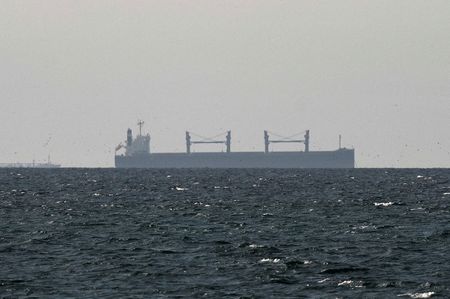
A critical Tuesday deadline set by Trump for Iran to reopen the Strait of Hormuz is approaching rapidly. Market analysts worry the conflict could intensify beyond that point. Trump issued additional warnings against Iran over the weekend as military operations persisted in the area. U.S. forces successfully recovered two pilots after Iran shot down their military aircraft.
Energy markets remain the primary concern for traders worldwide.
U.S. crude oil futures climbed 38 cents to reach $111.92 per barrel. International Brent crude prices jumped $1.71 to $110.74 per barrel. While energy trading was suspended Friday, petroleum prices have been climbing steadily due to concerns the Iranian conflict may continue longer than initially anticipated.
Although the United States imports only a small percentage of its oil from the Persian Gulf region, petroleum operates as a global commodity with worldwide pricing. Countries such as Japan, which lacks natural energy resources, depend heavily on imports and require open access through the Strait of Hormuz.
“As we kick off the first full trading week of April, the word uncertainty is paramount. Last year it was centered on the impact of ‘Liberation Day’ tariffs, this year it’s uncertainty surrounding the ongoing Iranian War,” said Jay Woods, analyst at Freedom Capital Markets in New York.
American financial markets remained closed for Good Friday and will resume operations Monday. Several European exchanges also suspended trading Friday.
Currency markets saw the U.S. dollar edge slightly higher to 159.65 Japanese yen Monday from 159.63. The euro declined to $1.1509 from $1.1517.
NEW YORK (AP) — Sunday’s Easter festivities along Fifth Avenue in New York City featured participants showcasing elaborate headwear and festive costumes in the annual springtime celebration.
The traditional Easter gathering drew people wearing ornate outfits and creative headpieces as they took part in the holiday procession through Manhattan.
The event was documented through a collection of photographs compiled by Associated Press photo editors.
Diplomatic negotiations involving the United States, Iran, and several regional mediators are reportedly focusing on a potential 45-day temporary ceasefire agreement, according to a report published Sunday by Axios.
Four sources with direct knowledge of the discussions – including U.S., Israeli, and regional officials – provided details about the ongoing talks to the news outlet. However, Reuters was unable to independently confirm these reports.
Neither the White House nor the State Department provided immediate responses when asked to comment on the negotiations.
According to the Axios report, the diplomatic framework being discussed involves two distinct phases. The initial stage would establish a 45-day pause in hostilities, creating a window for negotiators to work toward a lasting resolution to the conflict.
The second stage would focus on reaching a comprehensive agreement to permanently end the war, sources indicated.
Officials noted that the temporary ceasefire period could be lengthened if negotiators need additional time to finalize terms for a permanent settlement.
Meanwhile, President Donald Trump established a firm deadline in comments to the Wall Street Journal on Sunday, stating that Iran must reopen the Strait of Hormuz by Tuesday evening or face potential strikes against key infrastructure targets.
Lauren Coughlin dominated the competition from start to finish, claiming victory at the first-ever Aramco Championship in Las Vegas on Sunday. The triumph marks her third LPGA Tour win overall and first since capturing two titles in 2024.
Playing the challenging Shadow Creek Golf Course, Coughlin posted an even-par 72 in her final round to finish at 7-under-par 281, comfortably ahead of second-place finishers Nelly Korda and Ireland’s Leona Maguire by five strokes.
The victory held special significance for Coughlin, who fell short at the same venue twelve months earlier when she lost to Madalene Sagstrom in the championship match of the T-Mobile Match Play tournament.
“I just know I played really, really great all week,” Coughlin said. “Had a lot of fun. I’m just happy. You know, definitely left a sour taste in my mouth last year not getting the W given how well I played all week, so makes it extra special this week.”
Coughlin began the tournament with a 5-under 67, sharing the early lead with Japan’s Nasa Hataoka and Miyu Yamashita. She seized control during Friday’s second round, shooting the day’s best score of 69 despite windy conditions to build a five-shot advantage. Though Korda closed the gap to just two strokes entering Sunday’s final round, Coughlin never relinquished her lead.
The champion established her dominance early on Sunday with a birdie on the opening hole. A crucial two-shot swing occurred at the eighth hole, where Coughlin made birdie while Korda recorded a bogey, creating what proved to be an unbeatable six-shot margin.
Despite her commanding position, Coughlin remained focused until the very end of her round.
“Probably after I hit that wedge shot on 18 into it. I was like, all right, I think I got it now,” she said.
Korda struggled throughout her final round, managing just one birdie on the 18th hole while shooting 3-over 75. Maguire completed her tournament with a 71 in the final round.
“I just didn’t play good golf today,” Korda said. “I was hitting it pretty poorly off the tee and just finding myself in really tough positions going into the greens, and then hitting it in places where I shouldn’t be around the greens.”
“… Props to Lauren. She played some unbelievable golf. It was really fun to see today and it was fun to play alongside her.”
The challenging desert conditions at Shadow Creek proved difficult for most of the field, with Yamashita being the only other player to finish under par. She claimed fourth place at 1-under following a final-round 74. Japan’s Akie Iwai and Australia’s Karis Davidson shared fifth place at even-par 288.
This victory continues Coughlin’s recent success on tour, following her breakthrough 2024 season when she captured both the CPKC Women’s Open and the Women’s Scottish Open for her first two LPGA titles.
The shipping giant United Parcel Service announced Sunday it has resolved a labor dispute with the International Brotherhood of Teamsters regarding limitations on driver severance packages, restricting the offers to 7,500 employees.
The settlement establishes early retirement compensation at $150,000 per eligible driver.
The Teamsters union had challenged UPS’s Driver Choice Program, claiming the company launched the initiative without proper contract negotiations, violating terms of their 2023 labor agreement. Union representatives maintained that contract language prevents UPS from making individual deals with drivers without union involvement.
Earlier this year in January, UPS revealed plans to eliminate as many as 30,000 positions and close 24 operational centers as part of a strategic shift away from handling millions of low-margin shipments for Amazon.com, its biggest client.
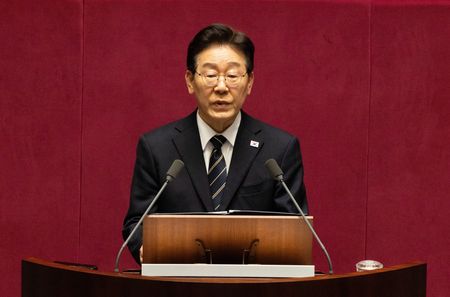
South Korean President Lee Jae Myung issued a formal apology to North Korea on Monday following unauthorized drone flights that crossed into North Korean territory, which he described as the work of individual actors operating without official government authorization.
During a cabinet meeting, the president stated: “Although it was not our government’s intention, we express our regret to the North over the fact that unnecessary military tensions were caused by the irresponsible and reckless actions of some individuals.”
According to Lee, a government investigation revealed that a National Intelligence Service worker and an active military officer were connected to the unauthorized flights. The president emphasized that South Korea’s constitution prohibits individual acts of aggression toward North Korea.
Earlier this year in January, North Korean officials claimed that drones launched from South Korea had breached their airspace, characterizing the incident as a serious act of aggression and stating they had destroyed the aircraft.
Initially, South Korean officials rejected claims of military participation and initiated a combined military-police investigation. The probe resulted in prosecutors filing charges against a South Korean man in his thirties for breaking aviation regulations and national security statutes related to the unauthorized drone operations.
Tensions between the two nations have escalated in recent months, with North Korea designating South Korea as its primary adversary and rejecting diplomatic overtures from Lee’s government.
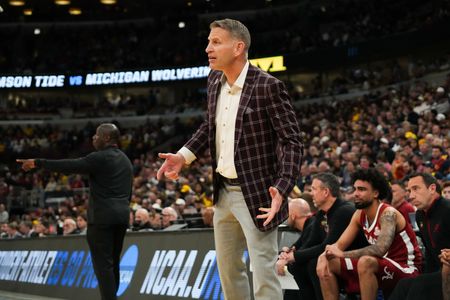
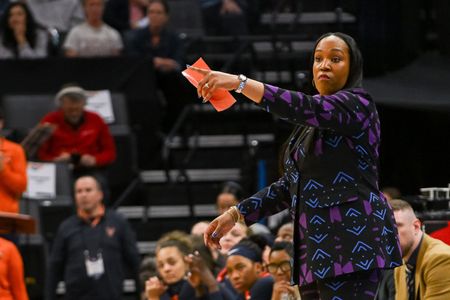
PHOENIX — The UCLA Bruins captured their first NCAA women’s basketball championship in stunning fashion Sunday, overwhelming South Carolina 79-51 in a performance that ranks as the third-most lopsided title game victory in tournament history.
Led by standout performances from Gabriela Jaquez and Lauren Betts, the Bruins completed a remarkable season that saw them finish 37-1 and ride a 31-game winning streak to the championship.
UCLA head coach Cori Close expressed confidence before the game even tipped off.
“I really did expect us to win today,” Close said. “I felt very peaceful all day. It wasn’t about whether we got the ‘W’ or not. I wanted us to be able to play our best when our best was needed, and we delivered on that.”
Jaquez delivered a stellar all-around performance with 21 points, 10 rebounds and five assists, while the 6-foot-7 Betts contributed 14 points and 11 rebounds for her 15th double-double of the season. Betts received Most Outstanding Player recognition for her tournament efforts.
The senior-laden Bruins knew they had championship potential from the beginning of the season.
“Since the roster was made, we just knew we had the tools,” said Jaquez, one of five senior starters. “It was just about staying focused and working hard to be the versions of ourselves. That led us to this moment.”
Jaquez, whose brother Jaime Jr. plays for the Miami Heat and previously starred at UCLA, had extra motivation with family watching from the stands.
“Of course I have bragging rights,” Gabriela said.
The Bruins established control early and never let up. A fast-break score by Jaquez stretched UCLA’s advantage to 48-26 in the third quarter, and consecutive three-pointers from Jaquez and Gianna Kneepkens sparked a 13-0 surge that put the game out of reach at 61-32 heading into the final period.
South Carolina coach Dawn Staley acknowledged the challenge Jaquez presented throughout the contest.
“Hard matchup,” Staley said of Jaquez. “You come into a game, you know exactly what she’s going to do and she does it. She’s relentless.”
The Gamecocks (31-4) struggled offensively all evening, managing just 29.0% shooting from the field while UCLA controlled the boards 49-37. Tessa Johnson led South Carolina with 14 points, while Agot Makeer added 11 points. The deficit never dropped below 28 points in the fourth quarter.
UCLA’s defensive dominance continued a pattern from their semifinal victory over Texas, where they held the Longhorns to 30.8% shooting in a 51-45 win.
The Bruins jumped out to early leads of 13-4, 21-10 and 30-15, taking a 36-23 advantage into halftime before pulling away in the second half.
Staley, who was seeking to become just the fourth coach in NCAA history with four women’s championships, acknowledged her team’s struggles.
“We just didn’t have it today,” said Staley. “They were the better team today. Obviously we got smacked today. We got to figure out how we smack back.”
UCLA’s balanced attack featured all five senior starters reaching double figures. Kneepkens finished with 15 points, Charlisse Leger-Walker scored 10 points, and Kiki Rice contributed 10 points, six rebounds and five assists.
Rice earned a spot on the all-Final Four team alongside Jaquez and South Carolina’s Johnson and Taniya Latson.
The championship marked UCLA’s second consecutive Final Four appearance, a program milestone. While they previously won the 1978 AIAW national title, this represents their first championship since the NCAA began sponsoring women’s basketball in 1982.
For South Carolina, the loss ended their bid for back-to-back titles after defeating Iowa in 2024. The Gamecocks were making their third straight championship game appearance and fourth in five years, having also lost to UConn in the previous season’s final.
UCLA experienced the other side of a championship game blowout just one year ago, falling 85-51 to eventual champion UConn in the semifinals.
“I just never wanted to feel that way ever again,” Betts said. “I feel like ever since then we’ve really just grown in our preparation. When duty called, everyone answered, so I’m just really proud of this group.”
SINGAPORE – Financial markets across Asia displayed volatile trading patterns Monday morning following President Donald Trump’s ultimatum to Iran regarding the critical Strait of Hormuz shipping lane.
Trump has issued stark warnings promising devastating consequences if Tehran fails to reopen the strategic waterway by his Tuesday deadline, specifically threatening to target civilian infrastructure such as electrical facilities and transportation networks.
The president’s aggressive stance has created anxiety among financial traders who fear Iran may launch retaliatory strikes against Gulf region targets in response to any American military action.
Trading volumes remained light Monday due to regional holidays, with S&P 500 electronic futures declining 0.2%. Meanwhile, MSCI’s comprehensive Asia-Pacific stock index excluding Japan gained 0.5%, Japan’s Nikkei 225 climbed 1.2%, and South Korea’s Kospi jumped 2%.
Energy markets saw significant movement as Brent crude futures increased 1.4% to reach $110.58 per barrel. This followed Sunday’s OPEC+ decision to boost production quotas by 206,000 barrels daily for May, though several key producers behind the Strait of Hormuz cannot meet these targets due to war-damaged facilities and infrastructure.
Investment analyst Ed Yardeni from Yardeni Research noted the week’s focus on Middle Eastern developments, stating: “This week will continue to be dominated by developments in the Middle East, though a heavy slate of data releases — including the FOMC March minutes, February personal income, and March CPI — will compete for attention.”
Yardeni further explained Trump’s position in his research analysis: “Trump warned Iran that unless the Strait is opened immediately, Monday will be Obliteration Day, when the U.S. will bomb Iran’s electric power plants.”
Friday’s positive employment data showed stronger-than-anticipated job growth, with nonfarm payrolls adding 178,000 positions in March – the largest monthly gain in over a year. Unemployment dropped to 4.3% from 4.4% as workforce participation declined.
These employment figures create complexity for Federal Reserve policy decisions ahead of their April 29 meeting. Market indicators suggest traders don’t anticipate any central bank rate changes until September 2027, according to CME Group’s monitoring tools.
Currency markets showed the dollar index holding steady at 100.23 against major trading partners. U.S. 10-year Treasury yields rose 1.4 basis points to 4.3584%.
Japanese government bonds reached their highest yields since February 1999, with rates climbing 2.0 basis points to 2.4% amid inflation concerns. The dollar remained unchanged against the yen at 159.635.
Precious metals declined with gold falling 0.8% to $4,638.54. Digital currencies showed gains as bitcoin rose 1.9% to $68,915.85 and ethereum increased 2.4% to $2,117.61.
The UCLA Bruins women’s basketball program achieved a historic milestone by capturing their first NCAA national championship in school history with a decisive victory over South Carolina in the championship game Sunday in Phoenix.
This championship represents the culmination of a journey that began after the Bruins experienced heartbreak in their first Final Four appearance the previous season. The team used that disappointment as motivation to reach the ultimate goal in women’s college basketball.
The Bruins dominated South Carolina in the title game, completing what many consider one of the most impressive championship runs in recent memory. UCLA players and coaches celebrated on the court in Phoenix as confetti fell, marking the end of a remarkable season.
The championship caps off a transformative period for UCLA women’s basketball, as the program has elevated itself to the highest level of college sports. The victory not only brings the first women’s basketball national title to Westwood but also establishes the Bruins as a premier destination for top recruits nationwide.
SAN FRANCISCO — Golden State Warriors star Stephen Curry made his highly anticipated return to the court Sunday evening against Houston, playing approximately 25 minutes after being sidelined for over two months due to a right knee injury.
Head coach Steve Kerr indicated prior to the matchup that Curry’s participation in upcoming games remains uncertain, considering the Warriors face five games within an eight-day span featuring back-to-back contests. The team doesn’t anticipate Curry will participate in consecutive games.
“We’re going to manage it accordingly. The plan for tonight would be shorter bursts and we’ll see on the minutes,” Kerr explained. “But first game back he’s not playing 48 minutes.”
Decisions regarding Curry’s playing schedule will depend on how the veteran guard feels physically, along with guidance from Vice President of Player Health and Performance Rick Celebrini.
The superstar guard participated in multiple scrimmages during the past week to evaluate his injured right knee. On Saturday, Curry mentioned that ending his season early was never under consideration. Kerr expressed optimism about finally having Stephen and his younger sibling Seth play alongside each other.
While Kerr had indicated Saturday that Curry was anticipated to return for his first appearance since the January 30th matchup against Detroit, the Warriors still designated him as questionable on their injury report.
“He’s scheduled to play,” Kerr confirmed before Sunday’s game.
Following Saturday’s team practice, Curry acknowledged that managing discomfort has become his “new normal” and that the upcoming offseason will require substantial rehabilitation.
The 38-year-old initially anticipated returning shortly after the All-Star break, but his recovery timeline extended due to challenging periods where he would feel healthy, increase his activity level, then experience setbacks the following day.
Curry tops the Warriors’ scoring charts with an average of 27.2 points per game, making his absence particularly challenging for the team.
The Warriors entered Sunday’s game with a 36-41 record, having dropped three consecutive contests. Without Curry this season, the team posted a 13-25 record, including a 9-18 mark during his absence due to patellofemoral pain syndrome.
DATONG, China (AP) — When Yang Haiming reached retirement age at 60 after decades in coal mining, he didn’t slow down. Instead, he launched himself into an entirely different field.
Yang represents a generation of laborers who fueled China’s economic expansion by extracting coal from deep underground mines in Datong, a city recognized as China’s coal capital located in northern Shanxi province. Today, as China shifts its focus toward renewable energy sources instead of coal, Yang has gotten ahead of the transformation that his former colleagues are now being compelled to navigate.
He currently operates a restaurant serving lamb skewers to tourists who visit the Yungang Grottoes, an important historical site from the 6th century featuring Buddhist stone carvings in caves that attracts millions of annual visitors.
If Shanxi province operated as an independent nation, it would rank as the globe’s largest coal producer. Its approximately 800,000 miners extracted 1.3 billion tons in 2025, representing nearly one-third of China’s total coal output. Several million additional workers hold positions that depend indirectly on coal, spanning from transportation to food service. The province faces significant transformation as China expands renewable energy at such a rapid pace that it satisfied almost all of the country’s increased power demand last year, while developing tourism has become a primary objective.
Specialists emphasize the importance of ensuring coal workers aren’t abandoned during this transition — a concern for many.
“It doesn’t feel like money’s coming into this industry,” said Zhou Hongfei, a coal miner.
Following the standard practice for China’s state-owned enterprises, the coal company constructed Yang’s village directly adjacent to the mine — designated No. 9 — where residents would be employed. The location once buzzed with thousands of workers and their families, featuring a school, daycare facility, and sports complex. An elevated railway line runs through the area to transport coal throughout the country.
Currently, the No. 9 mine functions primarily as a museum, although one section remains operational. The school stands vacant with locked gates. Many of the low-rise apartment buildings are only partially occupied, often housing people drawn by affordable rent rather than miners.
Yang remembers profitable times before nearby villages were demolished.
“There were so many people, especially during the new year days,” he said. “It was crowded everywhere. Now the bustling scenes have gone, and so has the feeling.”
Those who remained, like Yang, have attempted to profit from visitors to the Yungang Grottoes. During a visit by Associated Press reporters, one retired coal miner walked the streets engaging in conversations hoping to attract customers to his noodle restaurant. Primarily elderly residents strolled the streets, enjoying the sunshine.
Yang belongs to the small group of workers who have successfully made a career change.
There are many “who don’t know what to do, who say they don’t have the right skill sets for anyone else. All they know is to be a coal miner, or the easiest fallback option is for them to go back to farming,” said Tom Wang, a Shanxi native, environmental activist and founder of People of Asia for Climate Solutions.
Zhou, 36, mentioned considering a move to tourism but was unsure how to proceed. He also worries about providing for his wife and 8-year-old daughter.
“To really be able to make contact with and then switch into a new industry is very hard, and the truth is, I don’t dare,” he said. “If you leave this industry, you don’t know if it’ll work out. Can I adapt? And what if this ends up being a burden for my family?”
Mining salaries fluctuate with market demand. Before Yang’s retirement eight years ago, he could earn up to 10,000 renminbi (approximately $1,450) during profitable months. He reports that his restaurant now generates higher income.
The province is working to cultivate various alternative industries, from investing in coal-to-hydrogen initiatives to promoting its local “youmai,” an oat variety that residents use to create a distinctive type of noodles.
However, Shanxi’s primary emphasis and greatest achievement for post-coal life has been tourism. Hang Kan, who leads the Yungang Research Institute overseeing the grottoes and serves as a representative in the National People’s Congress, last year advocated for accelerating development of the culture and tourism sector into “a strategic pillar” that “promotes people’s welfare” in Shanxi.
His statements followed the popular video game Black Myth: Wukong, where the main character explores the grottoes and numerous surrounding locations, creating a surge in visitors. The total increased to 4.5 million in 2024, rising from 3 million the previous year, according to state media.
Yan Jiali, a tour guide in the area, reported that this boom has generated increased interest in positions like hers, which requires passing a government examination to obtain licensing.
“Even my mom’s friends would come ask me about taking this test,” she said.
Wang, the activist, hopes that the high-technology industries now receiving national priority will assist Shanxi’s transition by creating employment opportunities. After all, he noted, the province’s coal powered China’s development into an economic giant.
“What if DeepSeek comes over to Shanxi and says, OK, we will start a data center here? What if Baidu comes over to Shanxi?” he said, referencing China’s domestic technology companies.
Few believe Shanxi can completely abandon coal mining. Experts view coal as an essential backup for China’s security requirements, and the Iran war has again demonstrated how susceptible energy supply networks are to interruptions.
The government recently refused to establish limits on coal usage, stepping back from its pledge to gradually decrease coal consumption, according to analysts at the Centre for Research on Energy and Clean Air.
“The confidence hasn’t grown to the point where they can entirely depend on renewable energy,” said Qi Qin, an analyst at CREA.
Actually, China has continued expanding coal power facilities on a massive scale, activating 78 gigawatts in 2025, exceeding what India accomplished in an entire decade. One gigawatt can supply power to approximately 320,000 Chinese households annually.
Even if demand remains stable, workers must also consider that their mines may become depleted. Some of the older mining operations in Datong are approaching the end of their productive life. When this occurs, workers can be transferred to other mines that might be distant and offer lower compensation.
Another coal mine employee, Xu, has secured a second position as a ride-share driver, spending roughly 5 hours daily driving after completing his primary job. Xu — who refused to provide his complete name due to concerns about consequences from the state-owned mine — expressed doubt that the advantages of industries replacing coal would be distributed fairly, whether tourism or renewable energy.
“This tourism industry, how do I get in there?” he asked. “For Datong, those who can enjoy the benefits of this tourism boom, it’s mostly the big hotels and maybe some restaurants, noodle shops, but what do you think regular people can get?”
President Donald Trump is preparing for a significant diplomatic trip to Beijing in May, where he will meet with Chinese President Xi Jinping for the first time in eight years. The highly anticipated visit occurs against the backdrop of escalating economic tensions between the United States and China over the past year.
The economic dispute between these global superpowers has transformed from initial retaliatory tariff exchanges into a complex series of negotiations involving multiple high-level meetings, phone conversations, and presidential discussions throughout the previous year.
Recent Developments in 2025
In March, the United States initiated fresh Section 301 investigations targeting unfair trade practices within Chinese industries. Beijing responded by launching similar reciprocal probes. Originally planned for earlier in the spring, Trump postponed his China visit to mid-May due to ongoing conflicts in Iran.
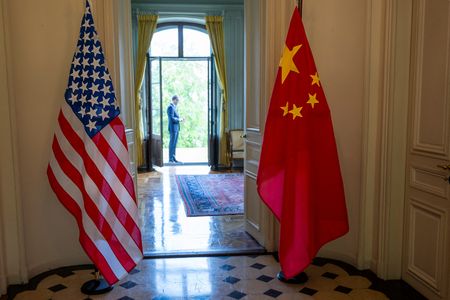
During the same month, Treasury Secretary Scott Bessent and Trade Representative Jamieson Greer conducted negotiations with Chinese Vice Premier He Lifeng and senior trade official Li Chenggang in Paris. Both delegations characterized these sixth-round discussions as “constructive.”
February saw the U.S. Supreme Court striking down Trump’s comprehensive global tariff program, though the President indicated his intention to continue utilizing tariffs as a policy tool.
In January, China concluded 2025 with an unprecedented trade surplus, benefiting from strategic trade diversification toward Southeast Asian, African, and Latin American markets as shipments to America continued declining.
Major 2025 Trade Events
October marked a significant escalation when China expanded its control over essential minerals, broadening restrictions on rare earth element exports while increasing oversight of semiconductor consumers. The U.S. responded by imposing additional 100% duties on Chinese products and implementing new export limitations on crucial software. Both nations also targeted maritime shipping operations.
Later that month, Trump and Xi held talks in Busan, South Korea, reaching a new trade agreement. The deal involved American tariff reductions in exchange for Chinese commitments to combat illegal fentanyl trafficking, restart soybean imports from the U.S., and temporarily halt rare earth export restrictions.
September featured discussions regarding TikTok ownership changes, while Washington sought expanded trade opportunities in chemicals, aircraft components, and engine parts with Beijing.
From June through August, Trump declared progress in trade relations after certain Chinese rare earth magnet manufacturers obtained export permits. The U.S. began approving licenses for Nvidia to ship advanced artificial intelligence processors to China, while Trump called for China to increase American soybean purchases fourfold. The tariff suspension received a 90-day extension.
May’s inaugural trade negotiations in Geneva produced a 90-day ceasefire that reduced elevated tariffs. However, three weeks later, Trump accused China of breaking promises regarding mutual tariff rollbacks and mineral export restriction relief. Chinese officials countered that America had implemented numerous “discriminatory restrictive” policies targeting China.
April began with Trump’s return to office, implementing a 10% penalty tariff on Chinese merchandise. Early that month, he announced comprehensive “Liberation Day” tariffs affecting all imports, further straining Chinese relations. China retaliated, leading to escalating tariff battles exceeding 100% on both sides. Beijing simultaneously began limiting certain rare earth exports.
DONGGUAN, China – When President Donald Trump imposed sweeping tariffs designed to damage Chinese manufacturing, Agilian Technology faced a critical test of survival that would reshape how the electronics company approaches international business.
The Dongguan-based manufacturer, which produces electronics primarily for Western brands and generates over half its revenue from American orders, experienced months of frozen contracts as customers demanded production facilities outside China’s borders.
Chinese manufacturers faced widespread disruption from the trade policies, with the nation’s official purchasing managers’ index showing contraction through most of 2025. The April 2025 reading marked the lowest point since December 2023.
However, Beijing’s countermeasures – restricting exports of critical minerals and metals that American companies struggle to source elsewhere – eventually led to tariff reductions. By March, China’s official PMI registered its strongest growth in twelve months.
This turnaround enabled Agilian, which operates as a $30 million annual business, to rebuild while recognizing the strategic value of its Chinese operations, despite pursuing alternative manufacturing locations.
China’s manufacturing recovery may come as unexpected news to Trump, particularly following the first anniversary of what he termed his “Liberation Day” tariff implementation, designed to revitalize American industrial capacity and demonstrate U.S. economic strength.
“The data confirms that Trump’s tariffs indeed haven’t derailed the momentum that we’ve seen in China’s manufacturing sector,” said Nick Marro, principal economist for Asia and lead for global trade at the Economist Intelligence Unit. He added that levies “resulted in a restructuring of trade linkages and supply chains.”
Official statistics reveal China’s trade surplus climbed to $213.6 billion during the first two months of 2026, compared to $169.21 billion in the same period previously. Throughout 2025, China expanded its trade surplus by one-fifth to reach a record $1.2 trillion – matching the Netherlands’ entire gross domestic product.
Despite this overall growth, American-bound exports dropped 20% in 2025, creating significant challenges for manufacturers dependent on the U.S. market, according to Agilian CEO Fabien Gaussorgues.
Speaking from his factory in southern Dongguan, Gaussorgues expressed uncertainty about potential progress during Trump’s scheduled May visit to China.
“The best we can hope for is probably a pledge for both sides to keep talking and maybe some type of framework to keep trade tensions from boiling over like they did last year,” Marro said.
Economic analysts and industry leaders anticipate Trump’s upcoming visit will extend the current pause in hostilities between the economic superpowers.
He Yadong, representing China’s Ministry of Commerce, emphasized that both nations should honor commitments made during previous negotiations and ongoing discussions.
“China has shown the rare earths (are) a leverage of mass destruction,” said Denis Depoux, general manager of consultancy Roland Berger. “It’s a nuclear weapon of trade.”
CRISIS PREPARATION
Agilian leadership now treats Trump’s tariff strategy as a blueprint for managing future trade conflicts.
During 2024, as Trump gained momentum in polling, Agilian’s customers sought to avoid potential tariffs by requesting shipment to North American storage facilities. Similar strategies by other importers drove warehouse costs to extreme levels, according to company vice-president Renaud Anjoran.
Following Trump’s electoral victory, late-night calls from distressed clients became routine occurrences.
A customer with Malaysian family connections pressed Agilian to establish manufacturing operations in Penang.
While Agilian had created an Indian subsidiary, most clients resisted that option due to concerns about production delays and customs complications.
“India takes time,” Gaussorgues said. “It took us one year to have the official company.”
PRESIDENTIAL TRANSITION
Following Trump’s inauguration, initial tariff increases totaling 20% on Chinese goods concerned customers but didn’t drive them away.
However, April 2nd brought an additional 34 percentage point tariff escalation.
Agilian customers viewed this development as catastrophic, leading to widespread order cancellations. Product pallets soon accumulated throughout the company’s 12,000-square-meter Dongguan facility.
Chinese retaliation followed swiftly. Escalating measures pushed tariffs beyond 100% for both countries before month’s end. “Things were frozen,” said Anjoran.
The company committed to the Penang option, identifying a partner factory. This location offered the advantage of distance from South China Sea military tensions.
Agilian also explored industrial space in Dharwad, India, and even considered American production. However, incomplete supply chains would have maintained dependence on tariff-affected Chinese components while increasing labor expenses.
BACKUP STRATEGY CHALLENGES
By mid-2025, Agilian’s Indian team located a 4,000-square-meter industrial facility and began planning product allocation. Embargo-style conditions with China made the Indian alternative more acceptable to clients.
A May agreement between Washington and Beijing eliminated most China-specific tariffs. However, in August, while the Dharwad facility remained unfinished, Trump imposed 50% tariffs on India to pressure the country away from Russian oil purchases.
Anjoran remained committed: “We want to be a multi-country manufacturer. Focus on the long arc of time.”
Penang pre-production testing also commenced mid-year, revealing that “everything takes way, way, longer” compared to Chinese operations.
TARIFF REDUCTION
Throughout summer months, China’s export restrictions highlighted American reliance on materials processed almost exclusively within China, creating pressure across automotive, defense, and other sectors.
An October summit between Trump and Chinese President Xi Jinping reduced tariffs by 10 percentage points. By this time, Agilian’s clients had stopped inquiring about tariffs and relocation strategies.
The company reported its most productive period ever during 2025’s second half, with production hours increasing 29% compared to the first six months. With tariffs remaining elevated but manageable, clients resumed orders and placed additional contracts.
Anjoran warns that returning to 100% tariff levels would force American-focused customers to halt production and suspend shipments.
Agilian plans continued development of Indian and Malaysian facilities “as an insurance policy,” Gaussorgues explained. However, decreasing costs and improving quality of Chinese components make the Dongguan base essential.
He aims for 30% revenue growth over three years, though concerns remain about potential Trump interference.
“I started in January saying, okay, this might be a good year and then the Iran war started,” he said.
The Goldey-Beacom College Lightning track and field squads made the trip to Collegeville, Pennsylvania this past weekend to participate in the Ursinus Track & Field Festival.
Both the men’s and women’s teams from the Wilmington-based college turned in solid performances during the competitive meet hosted by Ursinus College.
The festival provided valuable competition experience for the Lightning athletes as they continue their season preparations.
Drivers traveling on Interstate 495 northbound in New Castle County should expect delays due to ongoing construction work affecting traffic flow between exits 2 and 3.
The Delaware Department of Transportation reports that the right lane remains blocked for construction activities, with the closure scheduled to continue until 3 a.m.
Motorists are advised to use caution when traveling through the work zone and allow extra time for their commute during the overnight hours.
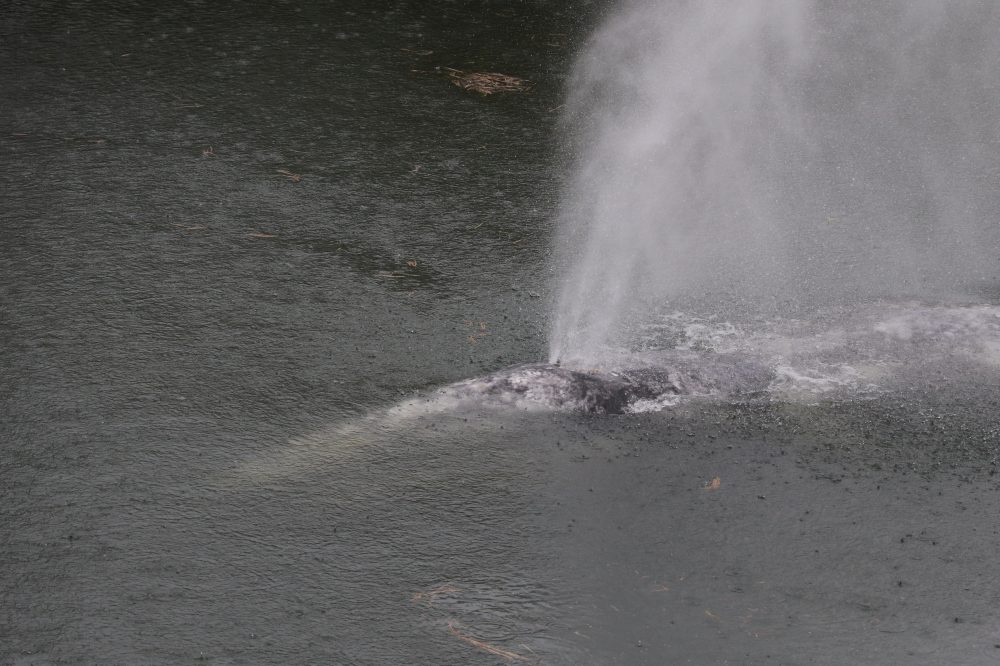
A young gray whale that captivated Washington state communities by venturing 20 miles inland through a small waterway has been discovered deceased, with marine scientists suggesting starvation may have prompted the animal to search for alternative feeding areas as the species confronts a population crisis.
The mammal’s body was located Saturday close to Raymond, Washington, along the Willapa River, which connects to the Pacific through Willapa Bay. Multiple gray whales are presently navigating through the bay during their extensive 5,000-mile spring journey from Mexican birthing waters in Baja California to Alaskan feeding territories.
According to John Calambokidis, a research biologist with the Cascadia Research Collective, the primary challenge facing Pacific gray whale populations since 2019 has been diminished food sources in Alaska’s northern Bering and Chukchi seas.
“Gray whales are facing a major crisis and the heart of it does seem to be feeding on their prey in the Arctic,” he said.
Federal fisheries officials through NOAA declared an extraordinary death event for eastern Pacific gray whales spanning from late 2018 through late 2023. During this period, 690 gray whale strandings occurred across the coastline from Alaska down to Mexico.
NOAA investigators determined the preliminary cause was “localized ecosystem changes in the whales’ sub-Arctic and Arctic feeding areas that led to changes in food, malnutrition, decreased birth rates and increased mortality.”
While authorities initially thought the population was recovering, the latest 2025 census revealed continued decline. Federal estimates place the current population at approximately 13,000 gray whales, marking the smallest count since the 1970s.
“A lot of these gray whales are looking very emaciated, very thin,” Calambokidis said.
The northward migration represents the most difficult time for gray whales, as they endure their longest period without feeding and must rely entirely on stored body fat.
“When that happens, you often see gray whales in a more desperate search for new areas to feed,” Calambokidis said. “That’s the most likely context for this whale.”
Scientists plan to conduct an examination of the deceased whale, potentially beginning Monday.
The animal entered the Willapa River’s northern branch Wednesday through a bay located roughly 185 miles southwest of Seattle. Local residents flocked to river bridges hoping to observe the enormous creature and shared numerous photographs and videos on social media showing the whale breathing through its blowhole.
Despite appearing undernourished, the gray whale displayed normal behavior patterns and showed no visible injuries, according to a Facebook update from the nonprofit Cascadia Research Collective.
The research team initially allowed the whale space and time to exit the river naturally, but when scientists searched for the animal Friday, they discovered it had moved further upstream into shallow waters inaccessible by boat, Calambokidis explained.
Concerns about expanded conflict are growing throughout the Middle East as tensions between the United States and Iran reach a critical juncture. Regional leaders are now worried not just about continued airstrikes, but about the possibility of American ground forces entering Iranian territory.
Though U.S. officials haven’t announced plans for a major invasion, military options previously considered off-limits are now under consideration. These include covert operations, special forces missions, and targeted seizures of key locations. For countries throughout the region, this shift provides little reassurance as they prepare for potential widespread consequences.
Any visible American military presence within Iran’s borders, regardless of duration or scope, could disrupt the region’s delicate balance. Leaders are assessing potential impacts ranging from critical Suez Canal shipping routes to vulnerable Persian Gulf energy infrastructure. Such escalation could spark extensive militia responses, disrupt global energy supplies, and overwhelm already struggling regional economies.
Nations throughout the area aren’t preparing for full-scale occupation scenarios, but rather for unpredictable consequences. Even limited American ground operations could significantly worsen current energy market disruptions, activate militias across multiple regions, and eliminate remaining diplomatic options for neighboring countries. The primary concern involves crossing a significant escalation boundary that could fundamentally alter engagement rules and potentially trigger widespread retaliation.
Egypt faces primarily economic rather than military threats from such developments. The country is currently struggling with severe financial difficulties, including reduced Suez Canal revenues due to Red Sea instability, declining foreign currency reserves, and dependence on strict International Monetary Fund reforms. Expanded warfare involving American troops in Iran wouldn’t draw Egypt into combat, but could devastate its economy through reduced maritime trade, increased import expenses, and further weakening of the Egyptian pound.
Samir Ragheb, former Egyptian military general and president of the Arab Foundation for Development and Strategic Studies, described Cairo’s situation as fundamentally about survival. “While Egypt is not adjacent to the battlefield, it would be adjacent to every consequence of it,” he warned. The immediate impact would affect the Suez Canal directly. “Egypt is already bleeding revenue under current regional tensions,” with ongoing American military preparations freezing investment and unsettling markets. “A full-scale ground invasion would push the Canal toward near-total collapse in traffic,” Ragheb explained, noting that shipping companies avoid war zones and would “reroute to the Cape of Good Hope.”
This situation could create what Ragheb termed a “double-fisted” shock. With the Strait of Hormuz potentially closed, rising oil costs would increase Egypt’s energy import expenses precisely when canal revenues—the country’s traditional buffer against such crises—disappear. “Egypt would not be enduring a short crisis resolved by a ceasefire,” he warned, referencing the chaotic aftermath that would follow extended combat. “The economic bleeding would not be a temporary wound; it would be a sustained hemorrhage.”
Domestic consequences would emerge quickly. The Egyptian pound, stabilized through significant social costs, already faces pressure before a crucial IMF loan review scheduled for the year’s second quarter. Broader regional conflict would eliminate any remaining economic protection. “For the average citizen, this would translate to a singular, dangerous reality: inflation,” Ragheb said. He ultimately cautioned that “it is inflation—not geopolitics—that has historically pushed Egyptian streets to the breaking point.”
Saudi Arabia’s strategic considerations differ significantly. While Riyadh has less exposure to canal revenues, it confronts serious geographic vulnerabilities: the possibility that open American ground campaigns in Iran could prompt Tehran or allied militias to launch widespread attacks against Gulf energy infrastructure, export facilities, and crucial maritime passages. The concern extends beyond managing current hostilities, as direct U.S. military presence in Iran could fundamentally change Tehran’s targeting approach, making Arab neighbors central conflict points.
Saudi leaders must carefully balance their response to these threats. Abdulaziz Alshaabani, a Saudi political analyst, emphasized that Riyadh’s cautious approach shouldn’t be interpreted as supporting American offensive action.
“In Saudi Arabia, the general reaction is cautious rather than supportive of escalation. The priority remains avoiding a wider regional war, especially given the direct risks to energy infrastructure and internal security,” he explained.
Beyond domestic stability concerns, Alshaabani highlighted tangible fears of becoming collateral damage in an uncontrolled U.S.-Iran confrontation. “There is also clear concern about potential spillover effects, including missile attacks, disruptions to oil flows, and threats to maritime routes such as the Strait of Hormuz,” he warned.
Turkey’s position reflects less abstract neutrality and more firm rejection of joining U.S.- and Israeli-led military action against Iran. While Ankara maintains its NATO framework membership, it has no interest in direct military confrontation with Tehran.
Barın Kayaoğlu, chair of the Department of American Studies at the Social Sciences University of Ankara, observed that domestic sentiment strongly opposes escalation. “The general mood and public opinion surveys are quite negative toward the war and the US and Israel,” he told The Media Line. Referencing public anger over ongoing Gaza conflict, he added, “Israel is already in the doghouse for the genocide in Gaza. Iran is becoming the icing on the cake.”
Therefore, Turkey’s strategic approach remains focused on maintaining distance. Kayaoğlu recalled his early conflict assessment: “At the beginning of the conflict, I said something to the effect of ‘As long as the Iranian attacks are less than a week and no Turkish citizen is hurt, and no property is damaged, we’ll be fine.’”
However, complete detachment proves difficult. Housing alliance infrastructure increases Turkey’s exposure even without direct combat involvement. “Turkey’s NATO role makes full neutrality difficult, because even if Ankara stays out politically, its infrastructure is still part of the Western security architecture,” Kayaoğlu pointed out.
Beyond military complications, Ankara faces significant domestic vulnerabilities. “The economic costs of escalation—especially energy prices and trade disruptions—are a major factor behind Turkey’s cautious stance,” Kayaoğlu explained. Additionally, he warned that “instability in Iran could also affect border security, particularly in Kurdish areas, which is another reason Ankara prefers containment over confrontation.”
Turkey’s reluctance to target Tehran also connects closely with its coordination with Azerbaijan. Both countries manage complex networks of trade, transit routes, and border security alongside Iran. Military alignment against their neighbor could destabilize these relationships and expose critical logistics pathways.
“Turkey and Azerbaijan are not joining the Iran war because it is not their fight,” Kayaoğlu said. “Both countries are trying to avoid turning their territory into a staging ground for escalation, while still maintaining ties with Western partners.” Ultimately, he concluded, “Both Ankara and Baku are prioritizing regional stability and energy security over participation in a conflict that could undermine their own strategic interests.”
While Egypt fears economic collapse and Saudi Arabia prepares for infrastructure attacks, Iraq confronts much darker, existential concerns: reliving its own devastating history in warfare where battle lines won’t respect borders.
For Iraqi citizens, memories of the U.S. invasion remain prominent. Mustafa Saadoon, head of the Iraqi Observatory for Human Rights, explained that 2003 memories still shape how the country views current escalation. “I believe Iraqis today live with a genuine obsession over a repeat of the 2003 tragedy, but with a doubled sense of fear this time,” he told The Media Line.
The fear stems from how deeply Iranian-aligned groups have penetrated the Iraqi state. “Iraq is no longer just a potential battlefield; it has become a ‘defensive backyard’ organically intertwined with the Iranian interior through armed factions possessing vast military and political influence,” Saadoon warned. Because these proxy networks wield such power, he argued that Baghdad’s neutrality attempts are largely meaningless. “This renders the ‘disassociation’ policy the government attempts to promote a mere diplomatic ambition, clashing with the reality of ‘ideological weaponry’ that may act independently of official state decisions.”
Open U.S.-Iranian conflict, Saadoon cautioned, would immediately destroy the country’s fragile security, cut energy supplies, and shatter civil peace. “The conflict will not be viewed as a passing regional event, but as a political and economic earthquake that will violently reshuffle internal cards, placing Iraqi sovereignty between the hammer of international obligations and the anvil of cross-border loyalties.”
Importantly, for Middle Eastern states, the danger threshold falls well below full-scale American occupation. As these regional viewpoints demonstrate, even limited U.S. ground operations in Iran would serve as a devastating force multiplier, overwhelming already fragile systems. Whether Egypt risks losing its economic safeguards, Saudi Arabia anticipates energy grid attacks, Turkey fears neutrality collapse, or Iraq faces becoming a proxy battlefield again, the concerns are universally intense. The region isn’t simply preparing for continued warfare, but for crossing a volatile new escalation boundary—one that could trigger an unstoppable chain reaction across global shipping lanes, energy markets, and political divisions, leaving neighboring governments virtually no capacity to absorb the consequences.
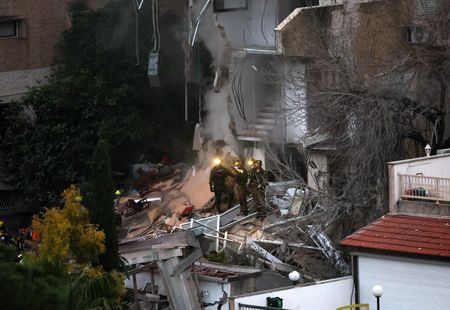
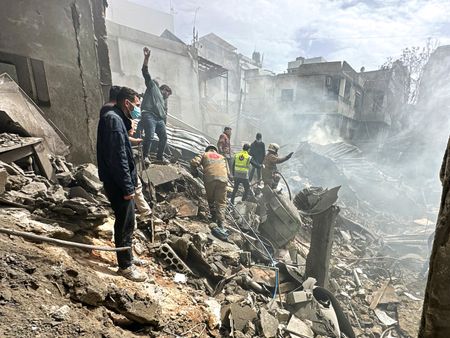
Search and rescue operations continued late Sunday evening in Haifa after an Iranian missile directly struck a residential building, leaving four individuals unaccounted for and injuring at least four others, authorities reported as the Israel-Iran conflict entered its sixth week.
According to police statements, four people remained missing following the attack, while emergency responders confirmed the wounded included an 82-year-old man and a 10-month-old infant.
The attack occurred during an evening wave of missile strikes targeting both northern and southern regions of Israel. Israeli Defense Forces confirmed that a structure in the Haifa area sustained a direct missile impact after military systems detected incoming projectiles from Iran and engaged air defense systems. The Home Front Command subsequently announced that civilians could exit protective shelters, though search and rescue operations continued at multiple strike locations.
Emergency personnel reported that the Haifa structure suffered partial collapse, making rescue efforts more challenging. Initial reports from Israel’s fire and rescue services indicated three people were missing, but police updates later in the evening confirmed four individuals were unaccounted for, indicating casualty figures were still being assessed as crews worked through the debris. Those injured sustained wounds from the blast and flying debris.
Haifa, which serves as Israel’s primary northern urban center and houses significant residential areas, port operations, and critical energy facilities, has faced repeated attacks throughout the ongoing conflict. Recently, a missile struck a fuel tanker and industrial facility at Israel’s Oil Refineries in the city, though officials reported no injuries or public safety threats from that earlier incident. Sunday’s direct strike on residential housing demonstrated once again that civilian areas remain vulnerable despite Israel’s multi-layered missile defense systems being operational.
A recent rescue operation to extract a downed American airman from Iran involved sophisticated CIA deception tactics and cutting-edge surveillance technology, according to new reporting from Fox News on Sunday.
Fox News correspondent Trey Yingst and additional network reporting revealed that the operation relied heavily on intelligence strategy rather than military force alone. The CIA deliberately spread misleading information through Iranian networks, falsely claiming that U.S. forces had already located the missing weapons systems officer and were evacuating him by sea from a different location.
This disinformation campaign was designed to redirect Iranian military attention away from the actual rescue zone while American intelligence analysts worked to verify the authenticity of the airman’s distress beacon. Officials initially worried the signal could be an Iranian trap, but once they confirmed its legitimacy, the extraction proceeded rapidly.
Following verification, CIA Director John Ratcliffe provided briefings to Secretary of War Pete Hegseth, Joint Chiefs Chairman Gen. Dan “Raizin’” Caine, and President Donald Trump, according to Fox’s reporting.
The network also disclosed that the injured airman had taken refuge in mountainous territory while Iranian military units conducted search operations and offered monetary incentives to local residents for assistance in his capture. U.S. forces deployed MQ-9 Reaper drones to establish security perimeters around the area, while military aircraft conducted strikes against nearby threats to prevent Iranian forces from advancing.
The timeline showed remarkable speed: aircraft were airborne within eight hours of the decision, and American personnel had boots on Iranian soil within approximately 12 hours.
While President Trump highlighted the successful mission to demonstrate progress in broader military objectives, Fox’s investigation emphasized how the operation’s success stemmed from intelligence expertise, rapid execution, and strategic misdirection rather than overwhelming military power.
Reuters independently reported that Israeli intelligence services also contributed to pinpointing the airman’s location and helped eliminate concerns about the distress signal being fraudulent.
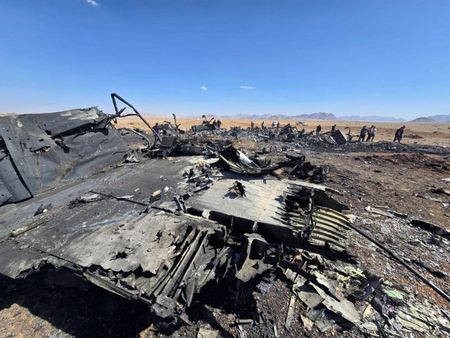
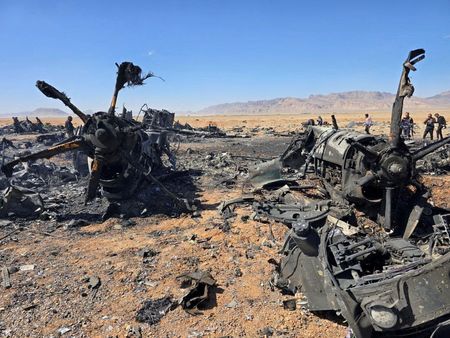
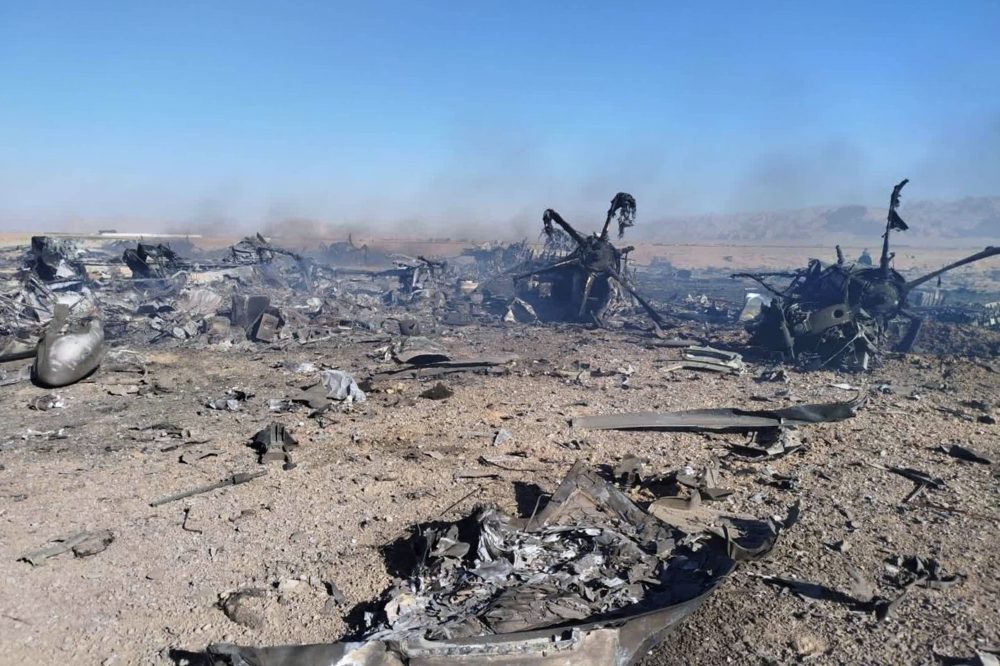
American military forces have successfully retrieved the second crew member from an F-15E Strike Eagle fighter aircraft that was shot down over Iranian territory, according to U.S. officials. The dangerous rescue operation concluded Sunday after spanning two days in enemy territory, highlighting the escalating tensions between the United States and Iran.
President Donald Trump announced the successful recovery on Sunday, confirming that the wounded airman was now secure following what officials characterized as an intricate mission supported by extensive aerial protection and elite military units.
Sunday’s rescue involved the second occupant of the dual-seat fighter aircraft. Military personnel had already retrieved the first crew member soon after the aircraft was brought down on Friday, but the second airman remained trapped in Iranian territory while American forces worked urgently to locate him before Iranian military units could capture him. The service member was eventually extracted safely.
In a Truth Social message, President Trump expressed enthusiasm about the successful mission, posting “WE GOT HIM!” He continued: “My fellow Americans, over the past several hours, the United States Military pulled off one of the most daring Search and Rescue Operations in US History.” The President also noted that while the recovered officer sustained injuries, he “will be just fine.”
Reports indicate the recovery operation required American special forces personnel and significant air backup, while Iranian military units were simultaneously conducting their own search for the missing crew member. Iranian authorities claimed that multiple “enemy aircraft” were shot down during the rescue efforts, although these assertions remain unconfirmed by independent sources.
This incident represents one of the most significant military setbacks for Washington since tensions intensified, challenging previous assumptions about unchallenged American air dominance over Iran. The situation also carries substantial political implications: Iran’s capture of a living American service member would have provided Tehran with considerable propaganda value and negotiating leverage. With both crew members now safely recovered, the conflict has moved into a more intense and dangerous stage.
Three sovereign wealth funds from the Middle East, with Saudi Arabia taking the lead, have committed approximately $24 billion in equity funding to support Paramount’s proposed $81 billion acquisition of Warner Bros. Discovery, according to a Sunday report from the Wall Street Journal.
The signed commitments represent a significant financial backing for the entertainment industry mega-deal, though Reuters was unable to independently confirm the reported agreements at this time.
The development marks a major step forward in what would be one of the largest media industry consolidations in recent years, bringing together major entertainment properties under a single corporate umbrella.
Iranian government media outlets have broadcast footage depicting fighters from Iraq’s Popular Mobilization Forces, known as Hashd al-Shaabi, crossing into Iran’s Khuzestan province, sparking outrage among Iranian citizens who believe these militia groups are being deployed to suppress domestic dissent and bolster the current regime.
On Tuesday, Iranian President Masoud Pezeshkian posted a message on X, the social media platform that has been inaccessible to regular Iranian citizens for several years, expressing gratitude to the “Muslim people of Iraq” for supporting Iran during what he termed an “unjust” conflict. In his post, Pezeshkian stated, “I warmly shake the hands of the people, officials, and fighters of Iraq in Mesopotamia.”
According to reports, PMF forces allegedly crossed into Iran in January and provided support to the Islamic Revolutionary Guard Corps during violent operations against civilians. The presence of these foreign militia forces has intensified concerns about the Iranian government’s use of proxy groups to maintain control and suppress opposition movements within the country.
The deployment has generated significant backlash from Iranian citizens who view the arrival of these Iraqi forces as further evidence of their government’s willingness to use foreign fighters against its own population during periods of civil unrest.
The UCLA Bruins have captured their first-ever NCAA women’s basketball championship with a commanding 79-51 victory over South Carolina in Phoenix. Gabriela Jaquez led the charge with 21 points, while Lauren Betts contributed 16 points in the decisive win.
The overwhelming victory marked the completion of an extraordinary tournament run for UCLA, which began after their Final Four defeat to UConn the previous season. The Bruins dominated opponents throughout the year, finishing with a remarkable 37-1 record, their sole defeat coming against Texas during a November Thanksgiving tournament.
Senior leadership proved crucial for UCLA, with Betts and fellow upperclassmen guiding the team to victory. Jaquez, who spent all four years with the program, recorded a double-double with 10 rebounds and five assists. Her brother Jaime, a Miami Heat player, traveled to witness his alma mater’s historic triumph.
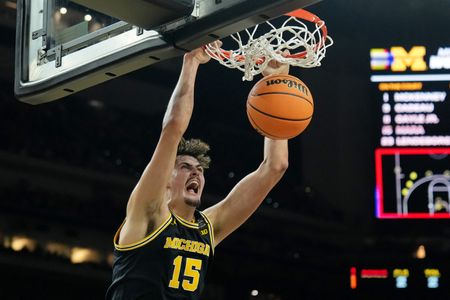
Meanwhile, college basketball faces another potential dynasty as UConn prepares to face Michigan for the men’s national championship in Indianapolis. The Huskies are attempting to become the first program since John Wooden’s legendary UCLA teams of the 1960s and ’70s to capture three titles in four seasons, while Michigan seeks to cap off their own dominant March Madness performance.
In NHL news, the New York Islanders dismissed coach Patrick Roy following a troubling four-game losing streak. General Manager Mathieu Darche made the surprising announcement after the team dropped seven of their last 10 contests, jeopardizing their playoff position with only four games remaining. Peter DeBoer, who previously guided two franchises to Stanley Cup Finals and led Dallas to three straight Western Conference finals, was named as Roy’s permanent replacement.
South Carolina coach Dawn Staley faces the challenge of rebuilding after her team’s disappointing championship game performance, where the Gamecocks managed just 29% shooting from the field. The 28-point defeat represents one of the largest margins in title game history, yet Staley’s program remains well-positioned for future success.
Duke’s Cameron Boozer, the Associated Press men’s national player of the year, continues recovering from both physical and emotional wounds sustained during his team’s Elite Eight loss to UConn. Boozer revealed he suffered multiple facial fractures during the contest but played through the injury, finishing with 27 points despite visible swelling around his eye.
In professional golf, J.J. Spaun claimed victory at the Valero Texas Open with a final-round 67, earning his first tournament win since capturing the U.S. Open last summer. Spaun’s clutch birdie and eagle on holes 16 and 17 at TPC San Antonio secured the victory over Robert MacIntyre, who held the lead for much of the competition.
Lauren Betts emerged as the catalyst for UCLA’s championship run, recording 14 points, 11 rebounds, and two blocks in the title game. The 6-foot-7 senior’s defensive presence altered numerous shots and earned her Final Four Most Outstanding Player honors following her dominant semifinal performance against Texas.
An interesting family dynamic will unfold during Monday’s men’s championship as Josh Mullins, a lifelong Michigan supporter who named his son after Wolverines receiver Braylon Edwards, will be cheering for UConn when his son Braylon Mullins takes the court for the Huskies.
UCLA legend Ann Meyers Drysdale expressed immense pride watching her alma mater claim the NCAA title, nearly five decades after she helped the Bruins win the AIAW championship in 1978. Despite significant changes in women’s college basketball over the years, Meyers Drysdale’s connection to the program remains strong.
In English soccer, Leeds United advanced to the FA Cup semifinals for the first time since 1987 after defeating West Ham 4-2 in a penalty shootout. The dramatic match saw Leeds surrender a two-goal advantage in stoppage time before ultimately prevailing in the shootout, setting up a semifinal clash with Chelsea.
SANTIAGO, Chile — While children around the world searched for Easter eggs this weekend, animals at Chile’s biggest private zoo got their own special hunt.
Bioparque Buinzoo in Santiago hosted its yearly Easter-themed activity on Sunday, where meerkats, monkeys, lemurs and other creatures foraged for specially-packaged food treats designed to look like festive eggs.
This unique celebration serves dual purposes at the Chilean zoo — providing entertainment for guests while encouraging the animals to practice their natural hunting and foraging instincts.
Zoo staff distributed small decorated pouches filled with meat throughout the habitats of smaller wild cats like caracals, who climbed tree branches to reach their holiday snacks.
One meerkat discovered a basket containing eggs nestled among rocks in its living space. Meanwhile, monkeys and lemurs enjoyed fruits concealed inside brown paper packages adorned with bunny ears.
Zoo director Ignacio Idalsoaga explained that “in nature, these animals spend much of their life looking for food,” which is why the facility aims to replicate this natural behavior.
He emphasized that the special treats were “not chocolate eggs” but rather foods that match what these species would consume in the wild.
According to Idalsoaga, this Easter tradition has continued for 16 years at the zoo. This year’s event included a new addition — sheep that had to work for their food pellets by extracting them from a brightly-colored ball with openings.
“Our creative team has been very imaginative this year,” Idalsoaga noted.
Moscow’s defense forces reported Monday morning that they successfully intercepted 148 Ukrainian drones during a concentrated three-hour assault, while utility workers scrambled to restore electricity to approximately half a million homes affected by the overnight strikes.
The drone offensive on Sunday night resulted in casualties, including the death of a civil defense volunteer in the Belgorod border region, an area that has repeatedly faced Ukrainian military operations. Additionally, unmanned aircraft struck a residential tower in the Black Sea coastal city of Novorossiysk.
According to Russia’s Defense Ministry, the interceptions occurred primarily across the nation’s central and southern territories during an intense window from 8 p.m. to 11 p.m. local time on Sunday.
Novorossiysk Mayor Andrei Kravchenko confirmed that fragments from destroyed drones had impacted a multi-story residential complex, though no information about potential injuries was immediately available.
The annexed Crimean peninsula also faced sustained aerial attacks, with Sevastopol’s governor reporting four separate drone assaults throughout Sunday. Officials stated that seven additional drones were eliminated during the most recent wave of attacks on the strategic port city.
In Ukraine’s eastern Donetsk region, currently under Russian control, Moscow-appointed administrator Andrei Chertkov announced that repair teams had successfully restored electrical service to the major urban centers of Donetsk and Makiivka following Ukrainian strikes targeting power infrastructure.
Chertkov had previously disclosed that close to 500,000 homes lost electrical power during the attacks. Restoration efforts remained ongoing in communities still experiencing blackouts.
Emergency repair operations were also underway throughout Russian-controlled portions of the Zaporizhzhia region, where widespread power failures occurred following the strikes.
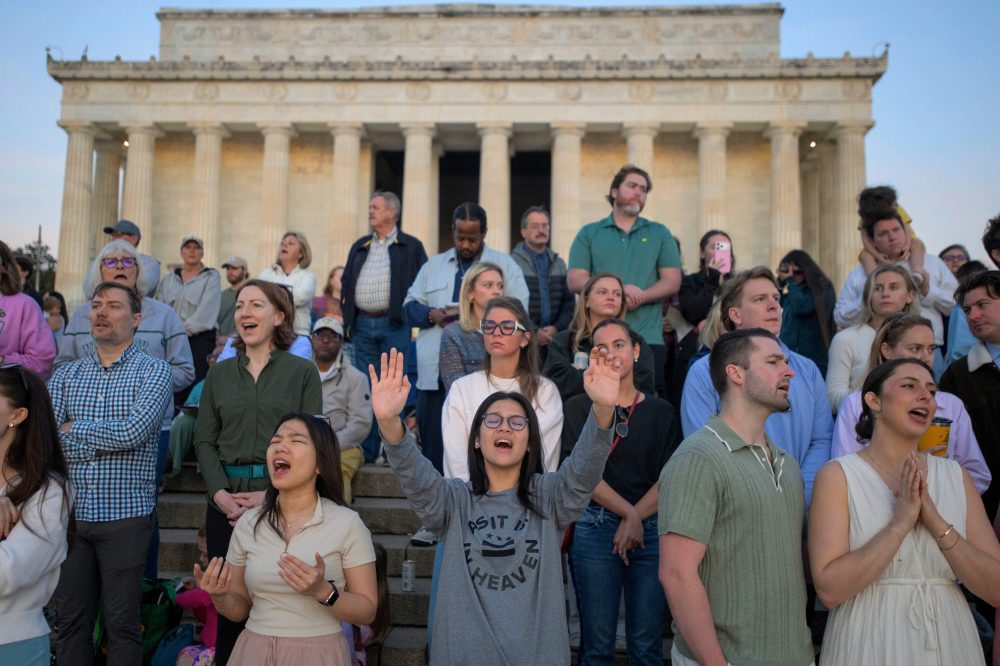
President Donald Trump and members of his administration faced criticism Sunday after describing the successful rescue of an American airman in Iran using religious language, calling the military operation an “Easter miracle.”
The religious framing of the rescue mission represents a departure from traditional holiday messaging by government officials, with critics arguing that blending faith-based language with military policy crosses important boundaries.
Speaking on NBC’s “Meet the Press,” Trump declared: “The rescue was an Easter Miracle.” Several cabinet officials echoed similar religious themes in their own statements about the operation.
Treasury Secretary Scott Bessent connected the rescue to Easter’s religious significance in a post on X, stating: “The Easter miracle is considered the greatest victory in history. And so, it (is) fitting on this holiest of Christian days that a brave American warrior was rescued from behind enemy lines in one of the greatest search and rescue missions in military history.”
Defense Secretary Pete Hegseth also shared religious sentiment, posting “God is good” on his personal X account while sharing Trump’s message about the successful Iran mission.
According to Axios, which cited an interview with Trump and an unnamed defense official, “God is good” were the exact words the rescued pilot radioed after ejecting from his aircraft.
Trump also posted a controversial social media message that combined religious references with military threats, warning Iran to reopen the Strait of Hormuz or face attacks on infrastructure, calling Iranian leaders “you crazy bastards” who would be “living in Hell,” and ending with “Praise be to Allah.”
The religious rhetoric drew sharp rebukes from multiple quarters. Former Republican Representative Marjorie Taylor Greene criticized Trump on X, arguing that Christians in the administration should focus on “pursuing peace” rather than “escalating war,” emphasizing that Jesus taught forgiveness and love for enemies.
The Council on American-Islamic Relations condemned Trump’s language in a statement, describing his “mocking of Islam and his threats to attack civilian infrastructure” as reckless and dangerous. CAIR said using “Praise be to Allah” alongside violent threats showed contempt for Muslim beliefs.
Trump previously invoked divine intervention regarding his own survival, stating at his 2025 inauguration that God saved him from an assassination attempt during the 2024 campaign. “I felt then and believe even more so now that my life was saved for a reason. I was saved by God to make America great again,” he said.
Last month, thirty Democratic lawmakers requested that Defense Department Inspector General Platte Moring investigate reports of military personnel using “biblical end-time prophecies” to justify the Iran war.
“At a time when billions of dollars and untold numbers of lives hang in the balance while the Trump administration wages a war of choice in Iran, the imperative of maintaining strict separation of church and state and protecting the religious freedom of our troops is especially critical,” the lawmakers wrote.
“We must ensure that military operations are guided by facts and the law, not end-times prophecy and extreme religious beliefs,” their letter continued.
Iran’s government, which bases its political system on Shia Islamic beliefs about religious authority stemming from descendants of the Prophet Mohammad, regularly uses religious language in its own military messaging, calling the United States “the Great Satan” and describing killed fighters as martyrs.
American tennis standout Jessica Pegula successfully defended her Charleston Open championship on Sunday, defeating Ukrainian player Yuliia Starodubtseva in straight sets with a commanding 6-2, 6-2 performance that lasted just 82 minutes.
The tournament’s top seed demonstrated exceptional defensive skills, successfully defending seven of eight break point situations while capitalizing on five of her six break point chances. This championship marks Pegula’s second tournament victory this season, following her Dubai triumph in February, and represents the 11th title of her professional career.
At 32 years old, Pegula now holds the WTA tour lead with 24 match victories this season, moving just ahead of Aryna Sabalenka in the win column.
The final represented a career milestone for 26-year-old Starodubtseva, who earned her spot in the main tournament draw after another competitor withdrew. Despite recording five consecutive victories to reach the championship match, she encountered difficulties on Sunday, managing only 11 winners while committing 41 unforced errors. Her impressive tournament run will elevate her world ranking to a personal-best 53rd position when updated Monday.
In other WTA action, top-seeded Marie Bouzkova captured the Copa Colsanitas championship in Bogota, Colombia, overcoming eighth-seeded Panna Udvardy 6-7 (7), 6-2, 6-2 in the final.
Bouzkova displayed remarkable resilience under pressure, saving 10 of 14 break point opportunities to secure her third WTA tour championship and first title earned outside her home country of Czech Republic. Udvardy, a Hungarian player ranked 92nd globally, was competing in her first professional final.
The Hungarian competitor mounted an impressive comeback in the opening set, rallying from a 5-3 deficit to force a tiebreaker. She then overcame a 5-0 tiebreaker disadvantage and saved two set points before claiming the first set. However, Bouzkova controlled the remainder of the match, winning 57.3% of her service points and claiming more than half of her return opportunities with 49 successful returns out of 96 attempts.
TOKYO – Global crude oil markets experienced significant gains Monday following the Easter weekend, driven by escalating military conflict involving the United States, Israel, and Iran that threatens worldwide petroleum distribution networks.
International benchmark Brent crude climbed $2.40 per barrel, representing a 2.2% increase to reach $111.43 by late Monday evening GMT. Meanwhile, U.S. West Texas Intermediate futures jumped $3.00 per barrel, a 2.7% surge that brought trading prices to $114.57.
The energy market volatility comes as President Donald Trump escalated tensions with Iran over the weekend. In a profanity-filled social media message posted on Easter Sunday, Trump issued ultimatums to Iranian leadership, warning of strikes against the nation’s electrical infrastructure and transportation networks by Tuesday unless the critical Strait of Hormuz waterway is immediately reopened to international shipping.
The Houston Astros have sidelined their star starting pitcher Hunter Brown after placing him on the 15-day injured list Sunday due to a shoulder strain.
The 27-year-old right-handed pitcher had been having an outstanding season, posting a 12-2 record with an impressive 2.43 ERA in 2025. His most recent outing showcased his dominance as he delivered six stellar innings in Houston’s commanding 9-2 win against the Boston Red Sox on Tuesday evening. In that performance, Brown surrendered just one hit while walking two batters and recording eight strikeouts to secure the victory.
Manager Joe Espada revealed that Brown experienced shoulder discomfort while throwing during a routine practice session on Friday. The team immediately sent Brown back to Houston for a thorough medical evaluation by team physicians.
Espada informed MLB.com that Brown’s recovery timeline remains uncertain pending additional medical assessments.
To fill the roster spot, Houston promoted right-handed pitcher Christian Roa from their Triple-A affiliate Sugar Land before Sunday’s matchup against the Athletics. The team made Brown’s injured list placement effective retroactively to Thursday.
Brown has established himself as a reliable starter for the Astros, achieving double-digit wins in each of the past three seasons. Over his five-year major league career spanning 102 appearances, including 94 starts, he maintains a 3.44 earned run average.
Several federal agencies under the Trump administration took an unusually direct approach to marking Easter Sunday, posting messages about Christ’s resurrection on their official social media platforms.
Both the Department of Homeland Security and State Department proclaimed “He is risen” in their Easter posts.
The Defense Department amplified a message from Secretary Pete Hegseth on X, which stated: “The tomb is empty. The promise is fulfilled. Through His sacrifice, we are redeemed. We stand firm in faith, courage, and truth.”
The Justice Department also participated, writing on X: “Today, as millions of Christians gather in their churches across the nation to celebrate the resurrection of Christ, this Department —- is proud to protect and defend religious liberty.”
The messages generated thousands of responses from social media users. While some praised the agencies for openly expressing Christian beliefs, others criticized the government for appearing to endorse a specific religion’s teachings.
Secretary Hegseth regularly references his evangelical beliefs in his role leading the military, framing America as a Christian nation using armed force against its adversaries.
Just last week, Hegseth conducted his first monthly Christian service at the Pentagon since the Iran conflict started.
During the livestreamed ceremony, Hegseth offered this prayer: “Let every round find its mark against the enemies of righteousness and our great nation. Give them wisdom in every decision, endurance for the trial ahead, unbreakable unity, and overwhelming violence of action against those who deserve no mercy.”
President Trump’s Good Friday statement made only subtle references to the Iran situation.
“From the Christian patriots who won and secured our liberty on the battlefield and every generation since, the love of Christ has unfailingly guided our Nation through calm waters and dark storms,” Trump stated.
However, his Easter Sunday message took a more aggressive tone. In a post containing profanity on Truth Social, he gave Iran an ultimatum to open the Strait of Hormuz by Tuesday, warning “or you’ll be living in Hell – JUST WATCH! Praise be to Allah.”
The Council on American-Islamic Relations, a national advocacy organization, condemned Trump’s “deranged mocking of Islam.”
Religious expressions are commonplace in American politics across party lines and faith traditions. Pentagon officials and supporters of Hegseth point to historical precedents, including President Franklin D. Roosevelt’s backing of Bible distribution to military personnel.
However, the longstanding practice among presidents and their administrations has been to respect the constitutional principle separating church and state, avoiding clear favoritism toward any particular faith.
Previous presidents have varied in their Easter messaging approaches. Republican President George W. Bush specifically acknowledged Christ’s resurrection in his 2003 Easter statement. Both Republican Ronald Reagan and Democrat Barack Obama occasionally issued combined Easter and Passover recognitions.
TROY, Ala. (AP) — Eight fatalities have resulted from law enforcement pursuits across the United States within a span of less than seven days, as policing experts continue advocating for restrictions on dangerous high-speed chases.
The deadly incidents occurred in multiple states: one person died while fleeing officers in Texas on Sunday, four individuals perished when their vehicle crashed into a tree during an Alabama State Police pursuit on Friday, and three people lost their lives in separate California police chase incidents last week.
These tragic outcomes add to the hundreds of chase-related deaths that happen annually across the nation.
A 2023 study by the Police Executive Research Forum, a national policing policy organization, recommended that law enforcement agencies should limit vehicle pursuits to situations involving violent crimes where suspects present immediate danger. The study highlighted rising death tolls and increased chase frequency in certain jurisdictions, including Houston and New York City.
Regarding the Alabama incident, a motorist was attempting to evade Alabama Law Enforcement Agency highway patrol officers on a rural Pike County road in southeastern Alabama when the fatal crash happened late Friday evening, according to agency spokesperson Amanda Wasden in a Sunday email. The collision involved only the fleeing vehicle.
Three occupants, including the driver and two passengers—one being 17 years old—were ejected from the sedan after not wearing safety restraints. The fourth passenger remained in the vehicle, but all four individuals were declared deceased at the crash site.
Wasden stated that investigators are examining the incident, with no further details currently available. Her correspondence did not specify what initially triggered the pursuit.
In Fort Worth, Texas, law enforcement had been chasing a vehicle operating without headlights on Interstate 35 when it collided with several other cars before crashing, resulting in the driver’s death, the Fort Worth Police Department reported.
In southern California, Pomona Police Department officials stated that officers were pursuing a domestic violence suspect on Wednesday when his vehicle struck another car, killing the couple inside. According to KCBS-TV, the victims were expecting their child within days.
In a separate California case, Orange County Sheriff’s Department deputies had tried stopping a stolen U-Haul truck before it collided with an SUV, killing the SUV driver and leaving three passengers in critical condition.
A massive environmental restoration effort is underway in the Chesapeake Bay, where federal engineers are working to rebuild thousands of acres of lost island habitat using an innovative approach that pairs shipping channel maintenance with ecosystem recovery.
The ambitious Mid-Chesapeake Bay Island Ecosystem Restoration Project aims to restore over 2,100 acres of remote island habitat by recycling between 90 and 95 million cubic yards of material dredged from Baltimore’s port approach channels and other federal waterways.
The initiative focuses on two key locations: James Island, where crews will rebuild 2,072 acres of habitat, and Barren Island, which will see 72 acres restored. Both sites are located in western Dorchester County.
Construction crews are making significant headway at Barren Island, where the U.S. Army Corps of Engineers awarded a $39.9 million contract to Seacoast Marine Construction Inc. in October 2024. The first phase of work wrapped up that same month, with workers completing installation of protective stone barriers and breakwaters designed to guard the island against wave damage.
Phase II operations at Barren Island kicked off in early 2025 and continue to progress. Workers have finished building the southwest wetland containment area and completed filling one of two planned bird islands. Engineers expect to finish foundation work and construction of the northeast barrier by summer’s end in 2026.
The second bird island, along with its protective reef structures and shell covering, should be completed by late 2026. Crews will install the southern spillway sometime in 2026 before beginning placement of dredged materials.
Dredging operations in the Honga River channel are scheduled to run from late 2026 through early 2027, with that material being placed at the restoration site.
James Island represents the largest component of the restoration effort. The site will be rebuilt to span 2,072 acres, with roughly 45% designated as uplands and 55% as wetlands. This portion will use sediment from deep-water channels that lead to the Patapsco River.
Engineers expect to award the Phase I construction contract for James Island by the end of March 2026, with work starting in late spring or early summer on a large contained sand stockpile that will support future barrier construction.
James Island won’t receive dredged material until around 2030, after crews complete construction of barriers and containment structures needed to hold the sediment at each location. The Honga River channel hasn’t been dredged by the Army Corps since 2009.
Funding for the project came through multiple sources, including more than $80 million from the Bipartisan Infrastructure Law in 2022 to complete design work and pre-construction activities for the Barren Island component.
In October 2025, the Army Corps issued safety warnings for boaters in the Chesapeake Bay, urging them to avoid ongoing construction activities near the Mid-Bay Island Project sites adjacent to James and Barren Islands.
The restored areas will feature diverse habitats including mudflats, low and high marsh areas, islands, ponds, channels, and upland zones. By combining navigation maintenance with environmental restoration, the project keeps shipping channels clear while rebuilding critical Bay habitat.
The entire Mid-Bay project is expected to reach completion in 2067, providing more than three decades of capacity to place nearly 95 million cubic yards of dredged material while restoring vital Chesapeake Bay ecosystems.
A traffic accident has resulted in the closure of the left lane on Route 1 southbound at Harris Road, according to Delaware Department of Transportation officials.
The crash is causing delays for drivers traveling south on the major highway. DelDOT is advising motorists to use caution in the area and allow extra travel time.
No additional details about the collision, including potential injuries or the number of vehicles involved, have been released at this time.
Drivers are encouraged to seek alternative routes if possible while emergency crews and transportation officials work to clear the roadway and restore normal traffic flow.
WASHINGTON – What began as a flawlessly executed military operation in Iran nearly turned into disaster when critical equipment failures threatened to strand roughly 100 elite US commandos deep in enemy territory.
The dramatic rescue mission unfolded with clockwork precision initially, as American special forces penetrated Iranian airspace undetected during nighttime hours, climbed a towering 7,000-foot mountain ridge, and located a stranded US weapons specialist, according to a US official who spoke anonymously to Reuters.
The operation targeted the second crew member from an F-15E Strike Eagle fighter jet that Iranian forces had shot down over Isfahan province on Friday. While the pilot had been successfully recovered earlier, the weapons specialist – a colonel according to President Trump – remained trapped behind enemy lines with an injured ankle, hiding in a rocky crevice on a hilltop.
Everything changed when two MC-130 transport planes experienced mechanical problems and became unable to take off from their landing site south of Tehran, the official revealed.
“If there was a ‘holy shit’ moment, that was it,” the source said, praising rapid decision-making that ultimately prevented catastrophe.
Military commanders faced an agonizing choice: risk sending additional aircraft into hostile territory or potentially lose an entire special operations team. They chose the dangerous option, dispatching replacement planes to evacuate the stranded forces in multiple trips over several tense hours.
The bold strategy succeeded. All personnel were extracted safely, though US forces had to destroy the disabled MC-130s and four helicopters rather than leave sensitive military technology in Iranian hands.
Prior to the rescue attempt, the CIA had conducted a disinformation operation, deliberately spreading false intelligence within Iran suggesting American forces had already located and were moving the missing airman. US military units also jammed electronic communications and bombed roads around the rescue site to prevent Iranian interference.
The rescued airman had followed standard Survival, Evasion, Resistance and Escape protocols, eventually establishing contact with US military personnel and verifying his identity to ensure the rescue team wasn’t walking into an ambush.
Smaller turboprop aircraft ultimately completed the extraction, chosen for their ability to operate from improvised landing areas, according to sources familiar with the operation’s details.
During the mission, the White House, Pentagon and US Central Command maintained unusual silence. Trump remained so quiet that local reporters checked whether he was hospitalized at Walter Reed.
Once the operation concluded successfully, Trump celebrated the achievement.
“Over the past several hours, the United States Military pulled off one of the most daring Search and Rescue Operations in U.S. History,” Trump declared in his statement, noting the airman sustained injuries but “he will be just fine.”
The rescue capped a challenging period that began Friday when initial search efforts met fierce Iranian resistance. Two Black Hawk helicopters involved in the earlier search sustained damage from Iranian fire but managed to escape. Additionally, an A-10 Warthog aircraft was hit over Kuwait, forcing its pilot to eject, though details about crew injuries remain unclear.
The ongoing conflict has claimed 13 American military lives with over 300 wounded, according to US Central Command figures. No US personnel have been captured by Iranian forces.
Despite Trump’s repeated claims about Iranian military weakness, defense experts note that Iran’s ability to consistently target US aircraft demonstrates significant capability. Iranian military officials announced Saturday they had employed a new air defense system to down the Friday fighter jet.
Intelligence reports indicate Iran retains substantial missile and drone capabilities. As recently as one week ago, US assessments showed only about one-third of Iran’s missile arsenal had been definitively destroyed, with another third possibly damaged or buried in underground facilities.
Following the successful rescue, Trump issued stern warnings to Tehran regarding the Strait of Hormuz, demanding Iran reopen the critical waterway for global oil shipments.
NEW YORK — Federal appeals judges have restored a massive $656 million verdict against Palestinian organizations, marking a significant victory for American victims of violence in Israel and their families.
The 2nd U.S. Circuit Court of Appeals made the ruling after the U.S. Supreme Court sided with Americans who were killed or injured in attacks overseas. This decision reverses the same court’s action from ten years ago, when it originally threw out the verdict against the Palestine Liberation Organization and Palestinian Authority, determining that American courts lacked jurisdiction over foreign entities for overseas incidents not targeting the United States.
The appeals panel changed course following the Supreme Court’s June decision that upheld congressional legislation from 2019 permitting these victim lawsuits to proceed against the Palestine Liberation Organization and Palestinian Authority.
In their March 30 ruling, the judges stated: “We conclude that the original judgment for the plaintiffs should be reinstated. That conclusion is consistent with the plain import of the Supreme Court’s decision.”
Attorney Kent Yalowitz expressed satisfaction with the outcome in an email statement: “Our client families are very relieved that the court has reinstated the judgment without requiring a new trial. They have been waiting for a very long time for justice to be done.”
Fellow plaintiff attorney Nitsana Darshan-Leitner also welcomed the ruling after more than two decades of court proceedings.
The legal action was filed using the Anti-Terrorism Act, legislation passed in 1992 that opened American courtrooms to those harmed by international terrorist incidents.
The plaintiffs claim that Palestinian operatives either participated directly in the attacks or encouraged them to happen.
Palestinian representatives have maintained throughout the litigation that American courts should not have authority over these cases.
Defense attorneys had not responded to requests for comment as of Sunday.
Operations have restarted at a crucial Russian oil export terminal following several days of interruptions caused by Ukrainian drone strikes in the Baltic Sea region, according to a Bloomberg News report released Sunday.
The report indicates that an Aframax-class tanker called the Jewel started taking on cargo Saturday, based on shipping data reviewed by Bloomberg.
In late March, Ukrainian drones targeted Russia’s Ust-Luga port facility five separate times within a 10-day span, with industry sources telling Reuters that the attacks hit oil loading infrastructure managed by Transneft, Russia’s state-owned pipeline company.
Reuters was unable to independently confirm the Bloomberg report, and Transneft has not responded to requests for comment.
Previous reporting by Reuters indicated that drone strikes, a disputed pipeline attack, and vessel seizures have affected at least 40% of Russia’s oil shipping capability, according to calculations using market information from last month.
Military forces in Nigeria successfully freed 31 people who were kidnapped during violent attacks on churches during Easter Sunday worship services in the country’s northwest region, according to army officials.
The assault occurred while congregants were attending Easter services in Ariko village, located in Kaduna state’s Kachia local government area. Military personnel discovered five bodies at the location and are currently tracking down those responsible for the attack.
According to Caleb Maaji, who leads the Christian Association of Nigeria’s Kaduna state chapter, gunmen targeted two separate churches in the village on Sunday. Maaji reported that seven people lost their lives and an undetermined number were abducted during the violence.
“Findings are still ongoing,” Maaji told Reuters.
This latest incident highlights the ongoing security challenges facing Nigeria’s northwest region, where criminal organizations have operated from remote forest camps for years, carrying out kidnapping schemes and village raids for financial gain.
Houston Astros star pitcher Hunter Brown will miss at least two weeks after the team placed him on the 15-day injured list Sunday due to a right shoulder strain.
The team made the roster move retroactive to Thursday, meaning Brown could return sooner than expected.
The 27-year-old right-hander had been off to a dominant start this season, posting a perfect 1-0 record with an impressive 0.84 ERA across two outings. In just over 10 innings of work, Brown had already racked up 17 strikeouts.
Brown’s most recent appearance came Tuesday in a victory over the Boston Red Sox, where he delivered six strong innings. He allowed just one run on one hit while walking two batters and striking out eight.
The Astros have not provided a timeline for Brown’s return. The team announced his placement on the injured list before manager Joe Espada’s pre-game media session ahead of Sunday’s road matchup with the Athletics.
Last season marked a breakout year for Brown, who earned his first All-Star selection while compiling a 12-9 record with a 2.43 ERA over 31 starts. He set a personal best with 206 strikeouts and maintained an excellent 1.03 WHIP. His stellar performance earned him third place in American League Cy Young Award voting.
Since making his major league debut in 2022, Brown has compiled a 37-31 record with a 3.44 ERA across 102 appearances, including 94 starts.
To fill Brown’s roster spot, Houston called up right-handed pitcher Christian Roa from Triple-A Sugar Land. The 27-year-old Roa appeared in two relief outings for the Astros earlier this season, posting a 6.75 ERA. He has pitched one scoreless inning for Sugar Land this year.
The University of Alabama has secured men’s basketball coach Nate Oats with a new contract extension that elevates him into the ranks of college basketball’s top five highest-paid coaches, athletic director Greg Byrne revealed Sunday on social media.
Byrne shared in his statement that “Appropriate members of The Board of Trustees have been notified of the proposed terms of the new agreement and it will soon be formally approved through the Board process.”
On his personal social media account, Byrne expressed confidence in the arrangement, writing “We are good! He’s not going anywhere.”
The new agreement represents Oats’ third contract extension within a four-year span. His most recent extension from early 2024 was set to run until March 2030, with compensation reaching $6.02 million for the 2026-27 academic year.
While specific financial terms of the latest deal remain undisclosed, USA Today reports that the nation’s five highest-compensated coaches at public universities earned no less than $6.1 million during the 2024-25 season. Oats previously ranked ninth nationally with a $5 million base salary.
The salary increase is expected to place Oats alongside elite coaches including Kansas’ Bill Self, Arkansas’ John Calipari, UConn’s Dan Hurley, Michigan State’s Tom Izzo, and Arizona’s Tommy Lloyd. Arizona recently announced Lloyd’s five-year extension beginning at $7.2 million, reportedly to prevent his departure for the vacant North Carolina position.
Alabama’s motivation for the new contract may stem from similar concerns about losing their successful coach.
When questioned about potential interest from North Carolina on March 26, Oats stated: “As long as we’re able to compete to win championships here — SEC, national championships. We haven’t done that here yet — I’d love to be the coach to bring us our first national championship.”
He continued: “To me, there’s absolutely no reason to leave here. While it’s flattering that a high school guy that caught a couple of breaks would be mentioned with some of these jobs, because they’ve got a lot of tradition, I’m not a guy that’s looking to get out of here any time soon.”
The 51-year-old coach has guided Alabama since 2019, accumulating a 170-73 record with a .700 winning percentage across seven seasons. Under his leadership, the Crimson Tide achieved a program milestone by reaching six consecutive NCAA Tournaments.
Alabama’s current season ended with a Sweet Sixteen loss to Michigan, who will compete for the National Championship on Monday.
Oats reached his greatest postseason success during the 2023-24 campaign when he guided Alabama to the Final Four as a No. 4 seed. The Crimson Tide’s run concluded with a defeat to eventual champion UConn.
Throughout his tenure, Oats has led Alabama to at least two NCAA Tournament victories in five of his six tournament appearances with the program.
American special operations forces completed a dangerous rescue mission deep within Iranian territory, extracting an airman whose fighter jet was downed, while President Donald Trump issued fierce warnings to Tehran regarding the blocked Strait of Hormuz shipping lane.
Trump revealed details of the rescue operation during early Sunday morning through social media, calling the mountainous region mission “one of the most daring” operations in American military history.
The rescued serviceman served as weapons officer aboard an F-15 fighter aircraft that Iranian forces shot down Friday. Though injured during the incident, Trump assured the public the airman “will be just fine” in his X platform message. Military personnel had already recovered the aircraft’s pilot on Friday.
In a separate, profanity-filled social media statement, Trump demanded Iran immediately reopen the Hormuz waterway, which serves as a critical passage for approximately one-fifth of global oil and natural gas shipments. The strait has remained largely blocked since hostilities erupted five weeks earlier.
“Tuesday will be Power Plant Day, and Bridge Day, all wrapped up in one, in Iran,” Trump declared on his Truth Social account, signaling potential strikes against energy and transportation systems that legal experts argue could breach international law.
“There will be nothing like it!!! Open the Fuckin’ Strait, you crazy bastards, or you’ll be living in Hell – JUST WATCH! Praise be to Allah. President DONALD J. TRUMP,” he wrote.
Israel, America’s wartime partner, intensified pressure by attacking a significant Iranian petrochemical complex Saturday. A senior Israeli defense official revealed plans for additional energy facility strikes pending American authorization.
Despite his aggressive rhetoric, Trump created confusion by telling Fox News Sunday that Iran appeared open to negotiations, suggesting a potential agreement could emerge by Monday.
Iranian Parliamentary Speaker Mohammad Baqer Qalibaf responded to Trump’s threats with his own condemnation, accusing the president of following Israeli Prime Minister Benjamin Netanyahu’s influence.
“Your reckless moves are dragging the United States into a living HELL for every single family, and our whole region is going to burn because you insist on following Netanyahu’s commands,” Qalibaf posted online.
Iran demonstrated continued military capability despite ongoing American-Israeli attacks, expanding strikes against Gulf region energy infrastructure through drone and missile assaults targeting petrochemical facilities in Kuwait, Bahrain, and the United Arab Emirates.
Revolutionary Guards forces also claimed responsibility for hitting an Israeli-connected ship at Dubai’s Jebal Ali port.
Kuwaiti facilities suffered drone attacks that ignited fires and caused “severe material damage” at petrochemical plants operated by Kuwait Petroleum Corporation subsidiaries, according to company statements.
These attacks highlighted Iran’s sustained ability to conduct cross-border operations and damage infrastructure throughout multiple Gulf nations, revealing weaknesses in regional energy and shipping centers.
Israeli territory also experienced Iranian retaliation, with missile strikes hitting residential areas in Haifa’s northern districts. Israeli emergency responders reported treating nine injured civilians while search teams worked through building debris.
The successful airman rescue eliminated potential hostage crisis complications for Trump, avoiding additional public relations challenges amid growing American skepticism about the conflict’s impact on global economic stability.
Military officials confirmed the operation involved dozens of aircraft and faced intense Iranian resistance, with Israeli forces providing assistance during the mission.
Pennsylvania Republican Senator Dave McCormick, drawing from Army experience and administration contacts, revealed the rescued pilot climbed approximately 7,000 feet up mountainous terrain to reach the extraction location.
Iranian forces claimed destroying several American aircraft during the rescue attempt, including two transport planes and two Black Hawk helicopters. Social media footage verified by Reuters showed burned aircraft wreckage in the operation area.
The New York Times reported that two transport aircraft became disabled during the mission, forcing American commanders to destroy them rather than allow Iranian capture. Three replacement aircraft were dispatched to extract military personnel.
A senior Washington administration official disclosed that the rescue incorporated a CIA disinformation operation, spreading false intelligence within Iran suggesting American forces had already located and were moving the missing airman.
While Iranian forces responded to the deceptive reports, rescue teams found the weapons officer sheltering in a mountain crevice and successfully extracted him, the official explained.
The current conflict began February 28 with coordinated American and Israeli airstrikes across Iran, subsequently expanding into Lebanon where Israel resumed operations against Iranian-supported Hezbollah forces.
Casualty numbers continue rising, primarily in Iran and Lebanon, where Israeli airstrikes killed eleven additional people Sunday, according to Lebanese health ministry reports.
Pakistani-mediated peace negotiations have failed to produce agreements between the warring parties.
“What we care about are the terms of a conclusive and lasting END to the illegal war that is imposed on us,” Iranian Foreign Minister Abbas Araqchi stated on social media.
Iran’s control over the narrow Strait of Hormuz shipping channel along its southern coastline has driven crude oil prices dramatically higher, creating economic pressure for consumers and businesses worldwide.
Nineteen-year-old Rafael Jodar from Spain claimed his breakthrough ATP tournament victory on Sunday, defeating Argentine qualifier Marco Trungelliti 6-3, 6-2 in the Grand Prix Hassan II championship match in Marrakech, Morocco.
The young Spaniard’s rise has been meteoric – exactly one year ago, he held the No. 911 position in global tennis rankings. After making his professional tour debut at this year’s Australian Open, Jodar has experienced a remarkable climb up the rankings in recent months. His victory makes him the youngest player ever to win the Marrakech tournament.
Jodar dominated from the opening game, breaking his opponent’s serve immediately in a lengthy first game that went to six deuces. The teenager controlled the match with superior shot-making, recording 21 winners compared to Trungelliti’s five. He successfully defended against the single break point he faced while converting four of his nine break opportunities. His second serve proved particularly effective, winning 15 of 17 points for an impressive 88.2 percent success rate.
Trungelliti, 36, was also competing in his first career championship match after defeating the tournament’s first, third, and fifth seeds during his run to the final. The veteran will reach a career milestone on Monday when he enters the top 100 rankings for the first time, becoming the oldest player ever to achieve that feat. The 17-year age difference between the finalists represents the fifth-largest gap in any ATP final since 1990.
In other ATP action, Argentina’s Mariano Navone, seeded seventh, captured the Tiriac Open title in Bucharest, Romania, overcoming Spanish qualifier Daniel Merida 6-2, 4-6, 7-5 in a match lasting 2 hours and 17 minutes.
Navone established early control by winning 19 of 21 first serves and breaking Merida’s serve twice in the opening set. Despite dropping the second set and falling behind early in the deciding third set, Navone rallied to break his opponent’s serve in three of the final four games to secure victory.
The title represents Navone’s first ATP championship after losing in straight sets in this same final last year. His victory is expected to elevate him 18 positions to No. 42 in the world rankings, surpassing his previous career-high of No. 47 achieved in 2024.
Meanwhile, at the U.S. Men’s Clay Court Championship in Houston, Texas, fourth-seeded American Tommy Paul was scheduled to face Argentina’s Roman Andres Burruchaga in the final.
Drivers on Interstate 495 northbound are facing traffic delays this morning after a vehicle collision near the Philadelphia Pike interchange.
According to Delaware Department of Transportation officials, the left lane of I-495 north remains shut down while emergency crews respond to the crash scene. The lane closure is causing backups for commuters in the area.
Motorists are advised to use caution when traveling through the area and to expect delays until the roadway can be fully reopened. Drivers may want to consider alternate routes if possible.
DelDOT has not yet provided an estimated time for when the lane will reopen to traffic.
The New York Islanders made a coaching change Sunday, dismissing head coach Patrick Roy and naming Pete DeBoer as his successor.
New York currently holds a 42-31-5 record with 89 points but has struggled recently with four consecutive losses. The team maintains third place in the Metropolitan Division, holding just a one-point advantage over both Philadelphia and Columbus. The Islanders won’t return to action until Thursday when Toronto visits.
The 60-year-old Roy compiled a 97-78-22 coaching record during his three-year tenure after succeeding Lane Lambert behind the bench.
DeBoer, age 57, comes to New York after leading Dallas to three consecutive Western Conference finals before his dismissal on June 6. His time with the Stars produced a 149-68-29 record.
Throughout his coaching career, DeBoer has accumulated a 662-447-152 record while leading Florida, New Jersey, San Jose, Vegas, and Dallas. He guided New Jersey to the 2012 Stanley Cup Final and took San Jose to the championship series in 2016.
During his playing career, Roy captured four Stanley Cup championships and earned three Vezina Trophy awards as the league’s top goaltender.
This marks the fourth coaching dismissal this season across the NHL. Columbus replaced Dean Evason with Rick Bowness on January 12, Los Angeles brought in D.J. Smith for Jim Hiller on March 1, and Vegas installed John Tortorella in place of Bruce Cassidy on March 29.
Baghdad has launched oil shipments through Syrian territory after disruptions at the Strait of Hormuz blocked conventional export pathways, according to Iraqi officials.
Iraq’s Oil Ministry has verified that shipping operations are now underway, utilizing land-based tankers to move fuel oil across the border to Syria. From there, the oil will be loaded onto ships at Syrian ports for delivery to international buyers. Officials say this alternative route will help stabilize the country’s economy and offset some of the dramatic income losses experienced in recent weeks.
Information shows that Iraq, which depends overwhelmingly on petroleum sales for government revenue, has taken a massive financial hit since navigation problems began in the Strait of Hormuz. The nation’s oil income has fallen approximately 70% within a single month.
This dramatic revenue drop has forced Baghdad to pursue emergency alternatives, even expensive and complicated ones like land transport through Syria – a route that hasn’t been utilized for several decades.
During the opening stage, shipment amounts will be between 10,000 and 15,000 barrels daily, with intentions to slowly increase volumes based on logistical capabilities and cooperation between Baghdad and Damascus.
Reports indicate that agreements have been finalized to eventually ship as many as 50,000 barrels per day, showing intentions to significantly expand this alternative pathway.
This arrangement also signals Syria’s re-emergence in regional energy transportation, as the country will function as a transit hub for Iraqi petroleum moving toward Mediterranean markets.
Oil deliveries reach Syria’s Baniyas port facility, where workers transfer the cargo to oceangoing vessels bound for final destinations, especially in European markets.
The partnership between both nations will breathe new life into previously abandoned routes, including the Kirkuk-Baniyas pipeline system, which formerly served as a major channel for Iraqi oil shipments before being shut down for many years due to regional conflicts and warfare.
While this development is important, energy analysts point out that land-based transportation costs significantly more than ocean shipping through Gulf waters. Nevertheless, current circumstances have made it the most practical alternative given the limitations affecting established routes.
This situation underscores the risks of depending on a single export pathway, especially in areas where political tensions frequently flare up, showing why diversifying shipping options has become a strategic necessity.
The Iraqi choice extends beyond economic considerations and includes political ramifications, indicating increased cooperation between Baghdad and Damascus in energy matters while boosting Syria’s role as a regional participant in petroleum commerce.
Shifting exports toward Mediterranean ports could also provide Iraq with better access to European customers and decrease reliance on Gulf shipping lanes, which have become more susceptible to various threats.
An important question persists: Will this pathway become a lasting change in Iraq’s oil export approach, or simply serve as a short-term response to the present emergency?
Evidence suggests this is a temporary measure, though it might develop into a permanent strategic choice if infrastructure and pipeline systems are enhanced to lower expenses and boost operational effectiveness.
This move represents a new chapter in regional energy markets, where traditional export channels can no longer be taken for granted, making diversification essential rather than optional.
Los Angeles Dodgers shortstop Mookie Betts has been placed on the 10-day injured list following confirmation of an oblique strain through MRI imaging on Sunday.
Dodgers skipper Dave Roberts indicated Sunday that the star player faces a potential absence of four to six weeks, though he expressed optimism that the recovery period might fall on the shorter end of that timeline.
The injury occurred during Saturday’s contest against Washington, forcing Betts to leave the game in the opening frame with what was initially described as lower right back discomfort. The Dodgers went on to defeat the Nationals 10-5.
Miguel Rojas stepped in as Betts’ replacement and will occupy the second spot in the batting order for Sunday’s matchup with Washington.
To fill the roster spot, the Dodgers promoted infielder Hyeseong Kim from their Triple-A affiliate in Oklahoma City. Kim appeared in 71 contests for Los Angeles last season, posting a .280 batting average, but failed to secure a roster position coming out of spring training. Through six games at Oklahoma City this season, he’s batting an impressive .346 on 9-for-26 hitting.
Kim is expected to contribute at shortstop as well during Betts’ absence.
The 33-year-old Betts, a former American League batting champion, has struggled at the plate early this season with a .179 average through 28 at-bats, following a career-worst .258 performance in 2024. Despite the low average, he has contributed two home runs and seven RBIs across eight games.
The New York Islanders made a dramatic coaching change Sunday, dismissing Patrick Roy and bringing in Peter DeBoer as his replacement with only four games left in the regular season.
General Manager Mathieu Darche made the surprising announcement to remove Roy from his position as the team struggles through a devastating late-season collapse. The Islanders are currently mired in a four-game losing skid and have dropped seven of their last ten contests, watching their once-secure playoff position slip away in the highly competitive Eastern Conference.
This marks the second NHL coaching dismissal in just over a week, following the Vegas Golden Knights’ decision to part ways with Bruce Cassidy and bring in John Tortorella on an interim basis.
DeBoer steps into the role permanently after recently serving as an assistant coach for Team Canada at the Milan Cortina Olympics. The 57-year-old brings extensive experience, having guided two franchises to Stanley Cup Finals appearances. His most recent position was with the Dallas Stars, where he led the team to three straight Western Conference finals before his dismissal following last year’s playoff elimination.
Roy, the legendary former goaltender and Hall of Famer, was brought aboard by previous General Manager Lou Lamoriello in January 2024 to replace the dismissed Lane Lambert. His arrival initially energized the club, helping them secure a playoff berth that season, though they fell to Carolina in the opening round. The team’s performance has declined significantly since that playoff run.
The timing of Roy’s departure comes during a pivotal period for the franchise. Eighteen-year-old Matthew Schaefer, widely considered the leading candidate for Rookie of the Year honors, has exceeded expectations in his debut NHL campaign, while additional promising prospects are developing within the organization.
This represents Roy’s second stint as an NHL head coach, following his three-season run with the Colorado Avalanche from 2013-16. During that tenure, he earned the Jack Adams Award as the league’s top coach before unexpectedly stepping down during the offseason.
NEW YORK — Despite Major League Baseball’s efforts to speed up the game, Saturday night’s contest between the New York Yankees and Miami Marlins proved that some matchups will still test fans’ endurance.
The Yankees’ 9-7 victory stretched to 3 hours and 49 minutes, establishing a new record for the lengthiest nine-inning contest since baseball implemented its pitch clock before the 2023 season, data from the Elias Sports Bureau confirms.
To put this marathon in perspective, MLB hadn’t seen a nine-inning game exceed this duration since Boston defeated Baltimore 13-9 in a 3-hour, 57-minute affair on September 27, 2022, according to Elias records.
Before Saturday’s lengthy affair, the Oakland Athletics held the post-pitch clock record with their 3-hour, 45-minute victory over the New York Mets on August 15, 2024, winning 7-6.
Several factors contributed to Saturday’s extended duration: both teams utilized 13 different pitchers who threw a combined 379 pitches, while Miami’s hurlers issued 10 walks, bringing their two-game series total to 21 free passes. Additionally, 21 baserunners were stranded, with the Marlins leaving 12 men on base.
The pitch clock has proven effective overall in shortening game duration. Average nine-inning game times plummeted from 3 hours and 4 minutes in 2022 to 2 hours and 40 minutes when the clock debuted in 2023, then further decreased to 2 hours and 36 minutes in 2024 — the shortest since 1984’s 2-hour, 35-minute average. Last year saw a slight uptick to 2 hours and 38 minutes.
Game length became a significant concern after 2016, when average times first exceeded three hours. The problem peaked at a record 3 hours and 10 minutes in 2021 before electronic pitch-calling technology helped reduce it to 3 hours and 4 minutes in 2022, setting the stage for the pitch clock’s introduction.
Despite capturing two national titles in the last three seasons, UConn faces long odds when they take the court Monday evening against Michigan in the championship game.
The reason for the underdog status is clear: top-seeded Michigan has absolutely dominated their NCAA Tournament path, cruising through five games with victories averaging 21.6 points. Their Saturday night performance against fellow top seed Arizona exemplified this dominance, with an 18-point victory that felt even more lopsided than the final margin suggested.
UConn, seeded second in the East region, followed their shocking takedown of top-seeded Duke in the Elite Eight with a methodical victory over third-seeded Illinois. Despite these impressive wins, the Huskies find themselves as underdogs for their third straight contest.
Sportsbooks across the nation installed Michigan as 7.0-point favorites on Sunday, as the Wolverines chase history by becoming the first Big Ten program to claim a national championship since the 1999-2000 campaign.
The betting spread settled at 6.5 points at both BetMGM and DraftKings, down from an opening line of 7.5. Both sportsbooks set the over/under at 144.5 total points. DraftKings offered the best odds on Michigan winning by 3-6 points at +425, with a Wolverines victory margin of 10-13 points close behind at +450. For UConn backers, the most favorable odds were on a 3-6 point Huskies victory at +800.
Michigan represents the tenth Big Ten squad to reach the championship game since 2000, though Michigan State remains the conference’s lone title winner during that span in 1999-2000. The Wolverines are attempting to complete a remarkable transformation after posting just 8 wins against 24 losses only two seasons ago.
While UConn reaches the final for the third time in four years, they face a Michigan squad that has already made tournament history by becoming the first team ever to score 90 or more points five times in a single NCAA Tournament.
“We know it’s just one more, so we’re going to try to get it,” Michigan’s Aday Mara commented following Saturday’s dominant performance against Arizona.
The Huskies certainly possess recent championship experience, with coach Dan Hurley bringing a 350-179 career record and those two national titles into Monday’s contest. No program has managed three championships in a four-year window since UCLA’s run from 1972-75.
UConn’s defensive prowess has been evident throughout the season, limiting opponents to under 40 percent shooting in 18 different games. On Saturday, the Huskies held Illinois to just 33.9% accuracy from beyond the arc.
“We’re a group of fighters. It’s not appealing to everyone,” Hurley explained. “I’m sure there’s some people in here that it’s off-putting for. But we are a group of fighters. We are incredibly tough. We’ve got incredible will. We go into these games, we’re ready for battle.
“Again, for us it’s not a game that we’re just kind of running around in uniforms throwing the ball around, hoping it goes in. That’s not what we’re doing out there. We’re fighting. It’s a life-and-death struggle for us to get to Monday night for the opportunity to win a championship, and then just to be able to prolong this season with each other and to make the people of Connecticut proud, to make the university proud and all the former great players.”
President Donald Trump has established a specific deadline of Tuesday evening for Iran to reopen the Strait of Hormuz, warning of severe consequences if the country fails to comply, according to a Wall Street Journal interview conducted on Sunday.
“If they don’t do something by Tuesday evening, they won’t have any power plants and they won’t have any bridges standing,” Trump stated during his conversation with the Journal.
Following the interview, Trump posted a cryptic message on social media that read: “Tuesday, 8:00 P.M. Eastern Time!” The post made no reference to Iran or provided additional context. White House representatives were unavailable for immediate comment regarding the social media message.
Earlier on Sunday, Trump had previously indicated that Iran would face infrastructure strikes if the strait remained closed past Tuesday, though he had not specified an exact time until the Journal interview.
University of Connecticut basketball star Solo Ball faces uncertainty ahead of Monday’s national championship showdown with Michigan due to what head coach Dan Hurley described as a foot sprain.
Following the Huskies’ 71-62 semifinal triumph over Illinois, Hurley informed the media that Ball has been placed in a protective walking boot and would be held out of Sunday’s practice session.
“It’s going to be tough to get an MRI on Easter, on a Sunday,” Hurley explained to reporters.
The 6-foot-4 guard delivered a solid performance against the Fighting Illini, recording 13 points and two assists over 28 minutes of play. Throughout this season, Ball has been a consistent starter for UConn, appearing in all 38 games while posting averages of 12.9 points and 3.1 rebounds per contest as the team pursues its third championship in four seasons.
Should Ball be sidelined for the title game, freshman guard Braylon Mullins would likely shoulder increased responsibilities. Additional minutes would also fall to Malachi Smith and Jayden Ross to fill the potential void in the backcourt rotation.
Moscow called on Washington Sunday to drop its confrontational approach toward Iran and pursue diplomatic dialogue instead, following discussions between top Russian and Iranian officials.
The Russian Foreign Ministry released the statement after Russian Foreign Minister Sergei Lavrov spoke with his Iranian counterpart Abbas Araqchi about ongoing tensions in the region.
According to the ministry, both nations “called for efforts to avoid actions, including in the U.N. Security Council, that could undermine the remaining chances for advancing political and diplomatic efforts to resolve the crisis.”
Moscow voiced support for reducing regional tensions “in the interests of long-term and sustainable normalisation of the situation in the Middle East, which would be facilitated by the United States abandoning the language of ultimatums and returning the situation to a negotiating track.”
The Russian statement comes amid heightened tensions between the United States and Iran, with Moscow positioning itself as an advocate for diplomatic solutions over confrontational rhetoric.
Chicago Cubs right-handed pitcher Cade Horton has been sidelined with a right forearm strain, landing him on the 15-day injured list as of Sunday.
The Cubs made the roster move effective Saturday for Horton, who departed Friday’s matchup against Cleveland after pitching just over one inning and throwing 17 pitches.
The young hurler successfully retired three batters in the opening frame before issuing a five-pitch walk to Kyle Manzardo to start the second inning. He then left the field accompanied by Chicago’s head trainer. Cleveland ultimately claimed a 4-1 victory.
“I had some tightness in my wrist and as the game went on, it went into my forearm,” Horton explained following Friday’s contest. “I wanted to err on the cautious side and not hurt anything else. I just wanted to be smart about it and make a smart decision.”
The setback comes after Horton improved his earned run average to 2.45 on Friday, following a strong performance against Washington on March 28 where he allowed just two runs across 6 1/3 innings in Chicago’s 10-2 victory. The 24-year-old is currently in his second major league campaign.
During his debut season, he compiled an 11-4 record with a 2.67 ERA.
In corresponding roster moves Sunday, Chicago brought up left-handed pitcher Riley Martin from Triple-A Iowa and designated right-hander Ethan Roberts as the 27th player for Sunday’s doubleheader against Cleveland.
Martin, age 28, has not yet appeared in a major league contest. Throughout his minor league career spanning 174 appearances (including three starts), he holds a 24-13 record with a 3.76 ERA.
A traffic accident has resulted in sporadic lane blockages on Route 299 in the westbound direction near the US-13 intersection, according to Delaware Department of Transportation officials.
The crash is causing intermittent lane restrictions as emergency responders and cleanup crews work at the scene. Drivers traveling through the area should anticipate potential delays and may want to seek alternative routes if possible.
DelDOT has not yet provided details about the severity of the accident or an estimated timeline for when normal traffic flow will resume. Motorists are advised to exercise caution when passing through the affected area.
Growing opposition emerged Sunday against rapper Kanye West’s scheduled headlining performance at a major London music festival, with British Prime Minister Keir Starmer voicing strong criticism of the booking.
Pepsi has already pulled its lead sponsorship from the Wireless Festival scheduled for July 10-12 at Finsbury Park in north London. Advocates are now calling on additional sponsors, including Budweiser and PayPal, to withdraw their support as well.
The beverage company offered no specific explanation for ending its partnership with the event, despite promotional materials advertising the festival as “Pepsi presents Wireless.”
“Pepsi has decided to withdraw its sponsorship of Wireless Festival,” the company stated Sunday.
The controversial artist, who legally changed his name to Ye in 2021, was set to perform for approximately 150,000 festival attendees across three nights.
West has faced widespread condemnation in recent years for making antisemitic statements and expressing praise for Adolf Hitler. In the past year, he released a track titled “Heil Hitler” and advertised Nazi swastika merchandise on his website.
The 48-year-old performer issued an apology in January through a full-page advertisement in the Wall Street Journal, attributing his behavior to his bipolar disorder. He described experiencing “a four-month long, manic episode of psychotic, paranoid and impulsive behavior that destroyed my life.”
At a sold-out Los Angeles performance Friday at SoFi Stadium – his first major U.S. show in nearly five years – fans seemed willing to overlook his controversial statements and accept his January apology.
However, Prime Minister Starmer expressed serious concerns about the festival booking decision.
“Antisemitism in any form is abhorrent and must be confronted clearly and firmly wherever it appears,” Starmer told The Sun on Sunday newspaper. “Everyone has a responsibility to ensure Britain is a place where Jewish people feel safe and secure.”
The controversy comes amid rising antisemitic incidents across the United Kingdom.
On Saturday, authorities ordered two men and a teenage boy to remain in jail on charges related to setting fire to four ambulances operated by a Jewish community organization in northwest London. Additionally, two people were killed in an October attack at a Manchester synagogue.
Phil Rosenberg, who leads the board of deputies of British Jews, called the decision to book West “absolutely the wrong decision.”
Festival organizers did not respond to requests for comment.
FRANKFURT, Germany — A devastating accident during an Easter celebration in northern Germany has claimed three lives, including an infant, after powerful winds caused a massive tree to crash down on participants.
The tragedy unfolded around 11 a.m. Sunday near Satrupholm when a towering 100-foot tree collapsed onto a group enjoying an Easter egg hunt. Approximately 50 people from a local residential center that assists expectant mothers, new parents, and children were participating in the woodland event when disaster struck.
Emergency responders found four individuals trapped beneath the fallen tree. Two victims — a 21-year-old woman and a 16-year-old girl — received immediate medical attention but succumbed to their injuries at the location. The young woman’s 10-month-old daughter was rushed to a medical facility but later died from her injuries. An 18-year-old woman sustained severe injuries and was airlifted to a hospital for treatment.
The residential facility operates under state funding as part of Germany’s child welfare network, providing support services for pregnant women and mothers requiring assistance, according to facility information.
Mental health professionals were dispatched to provide counseling services following the incident. News photographs from the location revealed colorful Easter eggs strewn across the ground and emergency personnel covering two victims with white coverings.
German meteorological services had issued advisories warning of dangerous wind conditions in the area prior to the accident.
Leadership from the Schleswig-Holstein region expressed their shock over the incident. Regional Governor Daniel Günther, Interior Minister Magdalena Finke, and Youth and Families Minister Aminata Touré released a collective statement saying they were “deeply shaken” by the tragedy.
“Our thoughts are with the family members of the dead, with the injured, and with everyone who had to experience this terrible occurrence,” the officials stated through the dpa news agency.
MEXICO CITY – A former Mexican national team player who competed in the 1978 World Cup believes his homeland has its best chance yet to overcome a decades-long tournament barrier when the global soccer championship comes to North America this summer.
Leonardo Cuellar, the 73-year-old former midfielder who donned Mexico’s national colors nearly five decades ago, shared his optimism about breaking what’s known as the “fifth-game” jinx – the team’s historical struggle to advance beyond the round of 16.
“My heart says so, and so does part of my head,” Cuellar told Reuters during a recent interview. “I think this time we’re going to make it.”
The upcoming tournament will mark the third time Mexico serves as a World Cup host nation, sharing duties with Canada and the United States from June 11 through July 19. This expanded 48-team format means Mexico must now win an additional round-of-32 match before even reaching their traditional stumbling point, adding complexity to their quest.
Despite his confidence, Cuellar, who also competed in the 1972 Munich Olympics, cautioned the current roster against premature expectations.
“If you’re already thinking about the fifth game, you might get stuck before that and not even have the opportunity,” he advised. “They need to concentrate on game by game, let their moment build.”
The veteran player praised head coach Javier Aguirre, who’s leading “El Tri” for his third tenure, working alongside assistant coach and former star Rafael Marquez. Cuellar highlighted Mexico’s European-based talent, including Edson Alvarez, Raul Jimenez, and Julian Araujo, as potential difference-makers, though he emphasized that overseas experience alone won’t guarantee success.
Beyond the field, Cuellar voiced frustration with FIFA’s pricing strategy, arguing it has excluded Mexico’s most passionate supporters.
“Now the prices have been set very, very far above the means of our society … that die-hard fan … the one who is always there supporting, will now have to settle for a big screen.”
The former international also highlighted potential complications for Mexican supporters living in the United States under President Donald Trump’s intensified immigration enforcement policies.
“Those in the U.S. with green cards or temporary visas could find themselves caught up in legal proceedings,” Cuellar warned, noting this reality may influence many fans’ decisions about attending matches.
Amnesty International reported last month that widespread arrests and deportations by U.S. Immigration and Customs Enforcement have disrupted communities and could impact World Cup festivities.
The military branch of Hamas announced Sunday that discussions regarding the organization’s weapon surrender represent what they described as continuing efforts against Palestinians.
During a broadcast statement, a representative from Hamas’ armed division declared the organization would reject such proposals “under any circumstances.” The spokesperson characterized bringing up disarmament in what he termed a “crude manner” as part of what he labeled genocide against Palestinian people.
The University at Albany has selected Kelly Morrone to take over as head coach of their women’s basketball program.
Morrone comes to Albany after leading Merrimack for six years, where she coached in the Metro Atlantic Athletic Conference. This past season earned her recognition as the 2026 MAAC Coach of the Year when the Warriors posted a 19-13 overall record and went 15-5 in conference play, earning a spot in the women’s NIT before falling to NJIT in the opening round.
“I am incredibly honored and excited to accept the position of head women’s basketball coach at the University at Albany,” Morrone stated on Saturday. “I’ve long admired the tradition and pride of the Great Danes, and I am deeply grateful to be entrusted with this important opportunity. It is a privilege to lead a program with such strong institutional support and a clear commitment to excellence.”
During her time at Merrimack, Morrone compiled a 74-92 coaching record while guiding the program through its transition from Division II to Division I competition.
Before joining Merrimack, she achieved success at John Carroll University, a Division III school located in University Heights, Ohio, where she won 117 games.
As a player, Morrone competed at South Carolina, serving as team captain for three seasons before her collegiate career concluded with a second-round NCAA Tournament loss in 2003. Her coaching journey began with assistant positions at Buffalo from 2005-08, followed by coaching stops at Davidson (2008-10), Rhode Island (2010-12), and William & Mary (2012-13) prior to taking the John Carroll position.
Morrone steps in to replace Colleen Mullen, who recently departed to take the head coaching position at Rhode Island. Under Mullen’s eight-year leadership, the Great Danes reached the NCAA Tournament once, though the program had previously enjoyed sustained success in the America East Conference.
From 2012 through 2017, Albany earned six straight NCAA Tournament appearances.
Commercial vessels operating near Italy’s coastline pulled 32 migrants from the water and recovered two bodies during Easter weekend after their boat capsized while attempting the dangerous journey from Libya to Europe, according to rescue organizations.
The survivors and victims were handed over to Italian coast guard officials and transported to Lampedusa island, rescue groups Mediterranea Saving Humans and Sea-Watch reported.
Italy’s interior ministry declined to comment on the incident, while the Italian Coast Guard has not yet responded to inquiries. Easter Sunday is observed as a significant religious holiday throughout Italy.
According to statements from those rescued, the vessel initially carried 105 people before 71 went missing during the crossing, the humanitarian organizations stated.
Footage released by Sea-Watch captured approximately twelve individuals holding onto an overturned orange vessel as a commercial ship approached for rescue operations.
Harsh weather conditions have created turbulent seas across the Mediterranean region this year, reducing departure attempts from North African shores while creating dangerous situations for those who do attempt the crossing.
According to the International Organization for Migration (IOM), no fewer than 683 people have perished in the central Mediterranean during 2024, representing one of the deadliest periods since 2014.
The University of Virginia has dismissed women’s basketball head coach Amaka Agugua-Hamilton following her four-year tenure with the program, the school announced Saturday.
Agugua-Hamilton’s departure comes after she guided the Cavaliers through a remarkable postseason run that made history. Virginia became the first-ever First Four squad to reach the Sweet 16 in the women’s NCAA Tournament, stunning seventh-ranked Georgia 82-73 in overtime during their opening game before pulling off another major upset against second-ranked Iowa, winning 83-75 in double overtime.
The Cavaliers’ impressive tournament journey ended on March 28 when they fell to third-seeded TCU by a score of 79-69.
During Agugua-Hamilton’s time leading the program, Virginia compiled an overall record of 70-58, including a 29-42 conference record in Atlantic Coast Conference competition. This past season, the team achieved a 20-12 record.
The university released a concise statement Saturday confirming that Agugua-Hamilton would not be returning to her position and that officials plan to launch a nationwide search for her successor right away.
Delaware transportation authorities have implemented a temporary speed reduction on Interstate 495, lowering the maximum allowable speed to 55 miles per hour as rainfall creates potentially dangerous driving conditions.
The speed restriction has been put in place as a safety precaution while wet weather affects road conditions along the interstate corridor. Officials are urging motorists to exercise additional caution and reduce their travel speeds to account for decreased visibility and slippery pavement.
Drivers using I-495 should expect the lower speed limit to remain in effect until weather conditions improve and normal driving conditions are restored. Transportation officials will continue monitoring the situation and will lift the restriction when it is safe to do so.
President Donald Trump revealed on Sunday morning that American military forces had successfully retrieved a second aviator who spent nearly 48 hours evading capture in Iranian territory after his aircraft was downed.
The recovery operation occurred following an intensive manhunt across what military sources describe as Iran’s rugged mountain terrain. Military personnel had already pulled the first crew member to safety on Friday, shortly after their F-15E Strike Eagle went down. This marked the initial American warplane lost to Iranian defensive fire since the conflict began on February 28th between the United States, Israel, and Iran.
“This is the first time in military memory that two U.S. Pilots have been rescued, separately, deep in Enemy Territory,” Trump posted on his Truth Social platform. “WE WILL NEVER LEAVE AN AMERICAN WARFIGHTER BEHIND!”
According to Trump’s account, Friday’s retrieval of the initial airman occurred during “broad daylight.” White House officials deliberately withheld confirmation of that successful operation to protect the ongoing search for his fellow crew member, which culminated in Saturday night’s mission extending into early Sunday.
The nighttime extraction required “dozens of aircraft” equipped with combat weaponry, Trump disclosed. Iranian authorities had offered substantial compensation to anyone who could capture the missing service member.
American forces maintained constant surveillance of the downed aviator’s position “24 hours a day, and diligently planning for his rescue,” according to Trump’s statement.
“This brave Warrior was behind enemy lines in the treacherous mountains of Iran, being hunted down by our enemies, who were getting closer and closer by the hour,” the president wrote.
Trump identified the rescued airman as holding colonel rank and suffering from significant injuries, though he assured the public the officer would be “just fine.” No information was provided regarding the first crew member’s medical status.
Iranian state television broadcast footage showing dark smoke rising from what officials claimed were destroyed American transport aircraft and two helicopters.
A regional intelligence source familiar with the operation revealed that mechanical problems forced American military commanders to deploy additional aircraft to complete the rescue mission. The source indicated that U.S. forces destroyed two transport planes they were unable to retrieve due to the equipment failure. The official requested anonymity when discussing the classified operation.
Iranian media outlets reported Friday that a second American aircraft, identified as an A-10, had crashed after sustaining damage from Iranian forces. U.S. military officials have not provided any updates on that aircraft or its crew members.
Lebanese officials reported that Israeli military operations claimed the lives of at least 11 people on Easter Sunday, as violence continued to escalate in the region.
Seven fatalities occurred in the southern Lebanese village of Kfarhata, where Lebanon’s health ministry confirmed a 4-year-old child was among those killed in the strike. The attack came after Israeli forces had ordered residents to evacuate the area overnight.
A separate strike targeted the Jnah district of Beirut, resulting in four deaths and leaving 39 people wounded, according to ministry officials.
The violence unfolded as Lebanese Christians, representing approximately one-third of the nation’s population, observed Easter Sunday celebrations. The day became one of the deadliest since hostilities intensified in early March.
Residents of Beirut reported hearing constant sounds of explosions and military aircraft throughout the day. State media documented eight separate strikes hitting the capital’s southern suburbs.
Lebanese military officials also confirmed that one of their soldiers was killed in an Israeli operation in the country’s south earlier Sunday.
The previous day, Israeli forces had issued evacuation warnings for the Masnaa border crossing with Syria, Lebanon’s primary connection point with its neighbor. Military officials claimed the Iranian-backed Hezbollah organization was using the crossing for military activities.
The current conflict began on March 2 when Hezbollah initiated rocket attacks against Israel in solidarity with Tehran. Israel responded with strikes and ground operations in southern Lebanon, creating what officials describe as the most significant regional escalation of the broader Middle East crisis.
Casualty figures have mounted on both sides. Sources indicate that over 400 Hezbollah fighters have been killed through late March, while Israeli military reports show at least 10 of their troops have died in southern Lebanon operations.
Lebanese health authorities updated their casualty count Sunday, reporting that Israeli attacks have killed 1,461 people since the conflict began, representing an increase of 39 deaths in approximately 24 hours. More than one million Lebanese have been forced from their homes.
Israeli officials have announced plans to establish a “security zone” extending up to 30 kilometers into Lebanese territory. Evacuation orders now cover roughly 15 percent of Lebanon’s land area.
Despite the warnings, tens of thousands of Lebanese citizens have chosen to remain in their homes in the south, including approximately 9,000 Lebanese Christians living in border communities who have expressed their determination to stay.
BEIJING – Chinese Foreign Minister Wang Yi expressed his nation’s commitment to working alongside Russia through the United Nations Security Council to help reduce escalating tensions across the Middle East region, according to a Sunday report from China’s state news agency Xinhua.
During a telephone conversation with Russian Foreign Minister Sergei Lavrov, Wang emphasized that achieving an immediate ceasefire represents the most effective approach to resolving shipping challenges in the strategically important Strait of Hormuz. Wang reiterated China’s longstanding position favoring diplomatic solutions and peaceful negotiations to address international conflicts.
The diplomatic exchange between the two foreign ministers occurred in advance of an upcoming United Nations Security Council decision on a resolution proposed by Bahrain aimed at safeguarding commercial vessels operating in and around the vital Strait of Hormuz waterway.
Monday marks a homecoming 18½ months in the making as the Tampa Bay Rays take the field at Tropicana Field before a sold-out crowd for the first time since Hurricane Milton devastated their stadium.
The distinctive domed venue, known for its slanted roof design and unusual overhead walkways, required extensive reconstruction following the storm that battered downtown St. Petersburg on October 9, 2024.
Milton’s powerful winds tore away large portions of the stadium’s original covering, exposing the playing field to months of rainfall. The resulting water intrusion led to widespread mold growth and significant harm to the facility’s electrical infrastructure, audio equipment, and broadcasting capabilities.
At one point, team officials questioned whether the Rays would ever again compete at the venue that has served as their exclusive home since entering Major League Baseball in 1998. However, the organization committed approximately $60 million toward roof replacement and comprehensive facility restoration.
During the lengthy renovation process, the Rays relocated their 2025 home schedule to Steinbrenner Field in Tampa, which typically hosts the New York Yankees’ spring training operations.
Workers completed the new roof installation in August, with crews placing the final section on November 21. The renovation project also included enhanced luxury boxes, an upgraded video scoreboard, fresh artificial playing surface, premium seating behind home plate, new clubhouse carpeting and player lockers, plus updated flooring throughout the outfield deck area.
“I think guys are excited, and rightfully so,” manager Kevin Cash commented regarding the team’s anticipated return. “Our organization has worked incredibly hard and the city and the county, to get it back up to speed. I briefly walked through there, couldn’t be more impressed with the way it looks, and excited to see our fans. I think our guys are going to appreciate just having our fans in the building, cheering us on for our opening day.”
This sellout represents the franchise’s 20th straight home opener with maximum attendance, not counting 2020 when coronavirus restrictions prevented fan attendance.
Relief pitcher Griffin Jax, who became a Ray last July, expressed enthusiasm about the return. “I’m just really excited to get back in the Trop,” Jax stated. “I always enjoy going there as a visitor. It’ll be cool to see all the new renovations and upgrades they made along the way. We’ve seen it a handful of times walking through and seeing pictures and stuff. It looks great. It’ll be good to be back in our home.”
Following a full season at the smaller minor league facility, players are eager to return to major league-caliber amenities and accommodations.
“It was difficult,” Jax reflected on the temporary arrangement at Steinbrenner Field. “I don’t think anybody expects to play in a situation like that. It’s just one of those things you have to make any adjustment you can and get ready to play because there is still baseball to be played that night. The situation isn’t great. The environment wasn’t awesome, but it’s still baseball. You just have to roll with it. I was only there for two months. Shout out to all these guys who were there for an entire year because it was not ideal.”
Despite the substantial investment in repairs, Tropicana Field may not remain the Rays’ permanent home much longer. The team’s lease extends through at least 2028, but new ownership is actively pursuing construction of a replacement stadium in Tampa, positioned near the Yankees’ spring training complex and adjacent to Raymond James Stadium, where the NFL’s Tampa Bay Buccaneers play.
LOS ANGELES — In an unexpected development, Hollywood writers and major film studios have struck a four-year contract deal following approximately three weeks of discussions.
The Writers Guild of America West announced on social media that its negotiating team gave unanimous support to the preliminary contract with The Alliance of Motion Picture and Television Producers, the organization that speaks for the studios. The alliance verified the agreement in its own statement posted online Saturday.
“We look forward to building on this progress as we continue working toward agreements that support long-term industry stability,” the alliance stated.
While specific contract details haven’t been released yet, the agreement is anticipated to address key writer concerns including enhanced healthcare benefits and stronger safeguards against artificial intelligence use. The guild posted on social media that the contract secures writers’ health coverage, expands on 2023 improvements, and “helps address free work challenges.”
This contract spans four years instead of the standard three-year term and requires approval from both the guild’s leadership board and membership to become final.
The swift agreement stands in sharp contrast to the bitter negotiations from three years earlier, when Hollywood writers launched a massive strike that effectively paralyzed much of the entertainment industry.
Writers overwhelmingly supported that previous agreement, which delivered increased pay, longer job security, and artificial intelligence oversight. The existing contract was scheduled to end in May.
Studio executives are simultaneously negotiating fresh contracts with unions representing performers and directors, whose agreements expire at the end of June. SAG-AFTRA President Sean Astin told The Associated Press in February that he’s observed indications that studios want “to work as partners again.” Hollywood performers also staged a months-long walkout in 2023 seeking improved contract terms.
This writers’ preliminary agreement emerges while the Writers Guild of America West deals with an ongoing walkout by its own staff union that began in February. Over 100 employees in legal, events, and residuals divisions have been striking over alleged unfair labor practices, the Los Angeles Times reported.
Whether the staff union’s weeks-long strike will affect the preliminary studio agreement remains unclear. The union previously announced it was canceling its yearly awards show due to the staff strike.
Faithful Christians worldwide gathered on Sunday to observe Easter, marking the resurrection of Jesus Christ in what stands as the most significant observance in the Christian faith’s annual calendar.
The global celebration was documented through a collection of photographs compiled by Associated Press photo editors, capturing the diverse ways communities honored this sacred day across different nations and cultures.
Former President Donald Trump indicated during a weekend television interview that an agreement with Iran could potentially be finalized by Monday, according to Fox News reporting on Sunday.
During his conversation with the network, Trump suggested that Iran is currently engaged in active negotiations, raising the possibility of a near-term diplomatic breakthrough.
The stage is set for Monday night’s college basketball championship as Michigan and UConn prepare to battle for the national title, with the Wolverines looking to overcome a key injury concern.
UConn is pursuing an unprecedented achievement – capturing three national championships within four years, something no team has accomplished in over 50 years. The Huskies plan to lean on the aggressive style of play that delivered their previous two titles, while seeking improved scoring efficiency.
Michigan dominated Arizona 91-73 in their Final Four matchup, with junior center Aday Mara delivering a standout performance of 26 points and nine rebounds. The Wolverines extended their remarkable March tournament run, becoming the first squad to exceed 90 points in five consecutive tournament games. This marks their fifth straight double-digit victory margin during the current March Madness run.
However, Michigan faces uncertainty heading into the championship game due to an injury to first-team All-American Yaxel Lendeborg. The star forward suffered a turned ankle and sprained MCL during the Arizona game, limiting him to just 14 minutes of action despite contributing 11 points. Lendeborg wore a knee brace when he returned for the second half and has indicated his intention to play in Monday’s final.
UConn secured their championship berth with a 71-62 victory over Illinois in Saturday’s other semifinal contest. Tarris Reed Jr. contributed 17 points and 11 rebounds, while freshman standout Braylon Mullins added 15 points, including a crucial three-pointer. The win extended UConn’s remarkable postseason streak to 19 consecutive victories in Sweet 16 rounds and beyond.
Coach Dan Hurley’s squad is seeking their seventh national title, all of which would have come since 1999. The Huskies’ championship hopes rest on their trademark strong interior play and tenacious defensive approach.
Michigan enters as early betting favorites despite the Lendeborg injury concern, as the Big Ten conference attempts to end a 26-year championship drought. The Monday night showdown features two programs that have reached peak performance during this year’s tournament.
In other sports news, Los Angeles Angels outfielder Jo Adell delivered what nine-time Gold Glove winner Torii Hunter called “probably the greatest defensive game I’ve ever seen.” Adell made three home run-robbing catches during a 1-0 victory over Seattle, including a spectacular ninth-inning grab while crashing into the seats near the right-field foul pole against J.P. Crawford.
The women’s basketball championship will feature South Carolina against UCLA on Sunday, with Gamecocks coach Dawn Staley seeking her fourth national title. Meanwhile, UConn women’s coach Geno Auriemma issued an apology for a heated exchange with Staley following their team’s 62-48 Final Four loss.
In golf, Colombia’s Maria Jose Marin captured the Augusta National Women’s Amateur title after California teenager Asterisk Talley suffered a dramatic collapse on the back nine, including a quadruple bogey on the par-3 12th hole.
The Buffalo Sabres ended the longest playoff drought in NHL history, clinching their first postseason berth in 14 years when the New York Rangers defeated Detroit in regulation on Saturday.
Finally, the Milwaukee Brewers have adopted an unusual new mascot – a tortoise named Bobby Jr. – after manager Pat Murphy presented the reptile during a pregame interview as a substitute for his usual “pocket pancakes” routine.
KINSHASA, Congo (AP) — The Democratic Republic of Congo has announced a new partnership with the Trump administration to accept migrants through a third-country deportation program, making it the latest African nation to participate in such an arrangement.
According to a statement from the Congolese Ministry of Communications released Sunday, deportees are scheduled to begin arriving in the country this month. Officials did not specify exact dates or provide details about how many individuals are expected to arrive.
The ministry characterized the agreement as a short-term arrangement that demonstrates Congo’s “commitment to human dignity and international solidarity.” Under the terms of the deal, the United States will handle all logistical expenses, ensuring no financial burden falls on the Congolese government.
This partnership expands the Trump administration’s third-country deportation network to include at least eight African nations. Many of these countries have been significantly affected by recent U.S. policies that have limited trade relationships, foreign aid, and migration opportunities.
Recent findings from Democratic staff members of the Senate Foreign Relations Committee reveal that the Trump administration has allocated approximately $40 million to deport roughly 300 migrants to nations other than their countries of origin.
Legal experts and advocacy groups have expressed concerns about the nature of these international agreements, particularly those involving African nations. Several participating countries, including Eswatini, South Sudan, and Equatorial Guinea, have documented histories of authoritarian governance and problematic human rights practices.
A significant point of controversy surrounding these deportation agreements involves migrants who have received protection orders from U.S. immigration courts, specifically prohibiting their return to their home countries due to serious safety risks.
Congolese officials emphasized that deportees will not be automatically transferred, stating: “Each situation will be subject to individual review in accordance with the laws of the Republic and national security requirements.”
Ukrainian President Volodymyr Zelenskyy traveled to Syria on Sunday for his first-ever visit to the country, where he conducted talks with Syrian President Ahmed al-Sharaa, according to two Syrian officials who spoke to Reuters on April 5.
A Syrian government adviser indicated that the discussions centered on defense-related issues in the context of the broader regional conflict affecting the area.
Former President Donald Trump announced on his Truth Social platform Sunday that the United States plans to strike Iranian infrastructure facilities this week.
In his social media post, Trump declared that “Tuesday will be Power Plant Day, and Bridge Day, all wrapped up in one, in Iran.”
The announcement suggests coordinated strikes targeting both energy facilities and transportation infrastructure within Iran are planned for Tuesday.
Members of Britain’s Royal Family gathered at Windsor Castle on Sunday for their annual Easter celebration, though several notable family members were missing from the traditional service.
King Charles and Queen Camilla led the Easter Matins ceremony at St. George’s Chapel, accompanied by Prince William, his wife Catherine, and their three children. The service represents a significant event for the monarch, who serves as the supreme governor of the Church of England.
Dean of Windsor Christopher Cocksworth welcomed the royal couple upon their arrival for the morning service. Queen Camilla, dressed in a striking red hat and matching coat, was presented with a small bouquet of flowers during the festivities.
Following the conclusion of the religious ceremony, both Charles and Camilla greeted well-wishers in the crowd, exchanging “Happy Easter” wishes with attendees.
Prince Edward and Anne, the Princess Royal, along with other royal family members, also participated in Sunday’s service.
Notably missing from this year’s Easter gathering was the King’s younger brother, Andrew Mountbatten-Windsor, who had participated in the previous year’s celebration alongside his former wife Sarah Ferguson. Andrew was taken into police custody in February on allegations of misconduct in public office.
His daughters, Princesses Beatrice and Eugenie, also chose not to attend Sunday’s service. According to a royal source who spoke last week, the princesses made their own decision to skip the event, rather than being excluded by King Charles.
The King chose not to issue an Easter message this year. On Saturday, relatives of Jeffrey Epstein accuser Virginia Giuffre called upon Charles to meet with survivors during his upcoming state visit to the United States, noting the timing coincides with the anniversary of her passing.
Giuffre had previously alleged that the deceased American financier Epstein had trafficked her to Mountbatten-Windsor when she was 17 years old.
The former prince, who has consistently denied these accusations and stated he has no memory of encountering Giuffre, reached a financial settlement with her in 2022 while not acknowledging any wrongdoing.
In related church news, Sarah Mullally, who serves as the archbishop of Canterbury and is the first woman to lead the Church of England, delivered her inaugural Easter sermon at Canterbury Cathedral on Sunday.
A Stanford University legal scholar provided analysis on international law questions surrounding an open letter that characterizes military conflict with Iran as breaching United Nations charter provisions.
Allen Weiner, who works with Stanford’s Program in International and Comparative Law, spoke with NPR’s Ayesha Rascoe about the legal implications of the letter and broader questions of international law governing such conflicts.
The discussion focused on how international legal frameworks apply to current military actions and what role UN charter provisions play in determining the legitimacy of international conflicts.
Four astronauts aboard NASA’s Artemis II mission are preparing to make history by surpassing the distance record set by Apollo 13 more than five decades ago. The crew, consisting of three Americans and one Canadian, launched last week on humanity’s first lunar journey since 1972.
On Monday, the astronauts will conduct a flyby of the moon, traveling roughly 4,000 miles farther from Earth than Apollo 13’s crew achieved in 1970. This will make them the most distant human travelers from our planet as they swing around the lunar surface before beginning their return journey.
The approximately six-hour close encounter with the moon will provide the crew with unprecedented views of the lunar far side that the 24 Apollo astronauts before them couldn’t see clearly due to lighting conditions. Additionally, the astronauts will witness a total solar eclipse visible only from their Orion capsule, offering glimpses of the sun’s corona.
Flight director Judd Frieling explained the mission’s broader purpose: “We’ll get eyes on the moon, kind of map it out and then continue to go back in force.” The ultimate objective includes establishing a lunar base complete with landing vehicles, exploration rovers, drones and living quarters.
The current distance record belongs to Apollo 13, whose crew reached 248,655 miles from Earth in 1970. That mission’s astronauts never landed on the moon after an oxygen tank explosion endangered their lives during the journey. Mission Control used a gravity-assisted trajectory around the moon to bring them safely home, making Apollo 13 NASA’s most famous “successful failure.” Commander Jim Lovell, Fred Haise and Jack Swigert followed this emergency route that relied on Earth and lunar gravity with minimal fuel consumption.
Artemis II follows the same figure-eight flight path since the crew won’t orbit or land on the moon. However, their maximum distance from Earth should exceed Apollo 13’s record by approximately 4,000 miles.
Astronaut Christina Koch commented on the significance of breaking the record, saying that while she and her teammates don’t focus on superlatives, it represents an important milestone “that people can understand and wrap their heads around,” connecting past achievements with present and future accomplishments.
During the lunar encounter, the four crew members will work in pairs to photograph the moon’s surface through their windows. Due to their April 1 launch date, less of the moon’s far side will be illuminated compared to other potential launch windows. Nevertheless, NASA geologist Kelsey Young expects them to observe “definite chunks of the far side that have never been seen” by human eyes, including significant portions of the Orientale Basin.
The astronauts will relay their observations while capturing images of the gray, crater-covered landscape. Their equipment includes professional-grade cameras as well as individual iPhones for spontaneous photography opportunities.
Young’s team prepared lunar geography study cards for the crew before launch. “They’ve practiced for many, many, many months on visualizations of the moon,” Young said over the weekend, “and getting their eyes on the real thing, I’m really, really looking forward to them bringing the moon a little closer to home on Monday.”
The April 1 launch timing offers a unique benefit: a total solar eclipse visible exclusively from the Orion spacecraft. This celestial event will treat the astronauts to several minutes of views showing the sun’s outermost atmosphere, known as the corona.
The crew will monitor for unusual solar activity during the eclipse and use their “unique vantage point” to describe corona features, according to Young. All four astronauts brought eclipse glasses for eye protection.
Communication with Mission Control will be interrupted for nearly 40 minutes when Orion passes behind the moon. NASA’s Deep Space Network, featuring large antennas in California, Spain and Australia, cannot maintain contact during this period due to blocked sight lines.
These communication gaps created tension during Apollo missions, though Frieling notes that “physics takes over and physics will absolutely get us back to the front side of the moon.”
After departing the lunar area, Artemis II will require four days to reach Earth. The capsule is scheduled to splash down in the Pacific Ocean near San Diego on April 10, completing a nine-day mission that began with their Florida launch.
During the return flight, the astronauts will establish radio contact with the International Space Station crew. This marks the first instance of simultaneous human presence near the moon and in Earth orbit, prompting NASA to arrange a space-to-space conversation. The discussion will include both participants from the first all-female spacewalk in 2019: Koch aboard Orion and Jessica Meir on the station.
WASHINGTON — Federal authorities launched an investigation Sunday following overnight reports of shots fired in the vicinity of Lafayette Park, positioned directly across from the White House.
The Secret Service confirmed that no one was injured and officers discovered no gunman following an extensive sweep of the park and nearby areas conducted after midnight, according to an agency statement released online.
President Donald Trump was at the White House over the weekend. The administration did not immediately respond to requests for comment regarding the incident. While White House functions continued without disruption, security measures in the surrounding area were heightened, the Secret Service confirmed.
Lafayette Park has been closed to the public for several weeks due to ongoing renovation work.
Federal agents are coordinating their investigation with both D.C. Metropolitan Police and U.S. Park Police, the Secret Service announced.
Students who attended classes since the 1970s probably remember using the CIA World Factbook at some point during their education – a comprehensive reference guide containing maps and detailed information about every country on Earth that served as a reliable source nearly everyone trusted.
Perhaps you accessed portions of it from diskettes or compact discs while rushing to complete a social studies assignment. Maybe you searched through its country listings to find information about Latvia for an upcoming Model United Nations simulation. Some readers explored the world through their imagination while flipping through the printed version, discovering surprising facts like how a simple thumbs-up sign Americans use regularly is actually considered offensive in certain Middle Eastern, European and Argentine regions.
This valuable knowledge came from the Factbook and its users spanning more than 60 years.
The publication’s creators – among the planet’s most skilled intelligence professionals who provided thousands of photographs – maintained this carefully organized database and made it freely available online. Their stated motivations were both geopolitical and ideological. However, examining the facts reveals the Factbook became publicly available in 1975 with grand mission statements during a period when Congressional investigations were exposing misconduct by American intelligence organizations, including the CIA.
“We share these facts with the people of all nations in the belief that knowledge of the truth underpins the functioning of free societies,” the CIA itself explained in its pages.
The intelligence organization has stopped providing this information.
On February 4th, the Trump administration suddenly closed down this widely trusted record of global humanity, including its flags, countries, traditions, armed forces and territorial boundaries. The CIA presented this decision as advancement for an organization whose primary objectives have evolved.
Factbook supporters responded with widespread disappointment. Many expressed sadness over losing an America that cherished learning for educational purposes alone. Others suspected more sinister motivations under a presidential administration that has championed “alternative facts” during both wartime and peacetime.
“Stay curious,” the CIA recommended in its “fond farewell” to the Factbook.
The agency might have also suggested: Best wishes navigating truth from the chaotic and often unreliable internet and artificial intelligence landscape.
Long before Google became a common household term, the Factbook existed.
Its beginning traces back to Japan’s unexpected Pearl Harbor assault in 1941, an American intelligence breakdown that motivated better coordination in collecting and organizing information about the nation’s adversaries. This led to creating the Joint Army Navy Intelligence Studies, America’s initial inter-agency basic intelligence initiative. However, by 1946, national security specialists recognized that “the conduct of peace involves all countries, all human activities — not just the enemy and his war production,” according to expert George S. Pettee.
Responsibility for collecting fundamental intelligence about foreign nations was given to the newly established CIA in 1947, based on the agency’s official records.
The Cold War demonstrated the continuing necessity for a centralized basic intelligence source – and created an opportunity for what became the unclassified Factbook in 1971. Public release occurred four years afterward.
Beyond its educational value for students, it carried geopolitical significance. The Factbook demonstrated American intelligence abilities to the former Soviet Union and other adversaries. Inclusion within its pages could grant legitimacy to nations or opposition movements. The irony was striking that an organization built on acquiring and protecting secrets was distributing so much information – termed “basic intelligence” – to everyone.
The Factbook probably also enhanced the CIA’s public reputation and created separation from other intelligence agencies damaged by Congressional investigations. In 1975, U.S. Senator Frank Church, a Democrat from Idaho, organized a committee that conducted over 100 public hearings, many broadcast on television, representing the most substantial intelligence agency oversight since World War II.
In 1976, the Church Committee documented extensive abuse by the CIA, IRS, National Security Agency and FBI, including exposing the CIA’s “Family Jewels.” This internal document detailed illegal CIA operations, including surveillance of American activists and assassination attempts against Cuba’s Fidel Castro.
Also during 1975, what eventually became the CIA World Factbook went public, rising as a dependable research tool frequently recommended for classroom assignments. No official confirmation ever linked the negative publicity to the Factbook’s broad release, but the timing aligned with the CIA’s need for image rehabilitation.
In 1981, the CIA retitled the publication The World Factbook, and by 1997, it became available online. The CIA has characterized it as representing “a tremendous culmination of efforts from some of our country’s brightest analytic minds.”
News about the Factbook’s termination surprised more than American students and researchers. International news organizations covered the story. Social media buzzed with the announcement, as Reddit users directed each other toward archived Factbook versions and scrambled to establish and locate alternative unbiased information sources.
Isabel Altamirano, a chemistry librarian assistant professor at Auburn University in Alabama, explained the data remains available, but “it’ll be harder to find.” University libraries, for instance, provide similar resources to students through their tuition payments.
“It was so easy, because it was all in one place,” she explained during an interview, mentioning that on February 4th, upon learning the news, she immediately removed the Factbook from her business communications class resource list.
Essentially, one expert noted, a Factbook created by a government agency with confidential agendas and covert operations may never have been truly unbiased initially.
“The compilers aren’t, nor can they be expected to be, neutral,” explained Binoy Kampmark, a professor of global, urban and social studies at Royal Melbourne Institute of Technology in Australia. Grieving its disappearance, he stated in an email, would be “misplaced.”
The Factbook, he continued, might serve better as a historical record. Its final publication on February 4th already contains outdated information, according to an archived copy: Iran’s government head remains listed as Supreme Leader Ayatollah Ali Khamenei.
Khamenei was reportedly killed March 1st in American and Israeli military strikes. The world transformed once more, this time without the Factbook available to document the change.
WASHINGTON — American military forces successfully retrieved a service member who had been stranded in Iranian territory following the downing of their fighter aircraft, officials announced Sunday. The rescue comes as President Donald Trump has issued fresh ultimatums to Tehran demanding the reopening of the Strait of Hormuz.
Tehran continues to show defiance, launching attacks against economic and infrastructure facilities in nearby Gulf Arab nations.
The successful extraction concluded a U.S. search-and-rescue mission that began after an F-15E Strike Eagle went down on Friday in Iranian territory. Iranian officials had offered bounties for capturing any “enemy pilot.” According to Trump, the rescued aviator sustained injuries but remains in stable condition.
“This brave Warrior was behind enemy lines in the treacherous mountains of Iran, being hunted down by our enemies, who were getting closer and closer by the hour,” Trump wrote on social media.
Military officials had previously rescued a second crew member from the same aircraft.
The downed fighter represents the first American military aircraft to crash within Iranian borders since U.S. and Israeli forces initiated their military campaign against Iran on February 28.
Trump declared last week that American forces would conclude the conflict “very fast.” However, just two days afterward, Iranian forces successfully shot down two U.S. military aircraft, demonstrating both the continued dangers of the air campaign and Iran’s capacity to retaliate despite military setbacks.
With Iran maintaining its grip on the Strait of Hormuz, Trump issued weekend social media warnings threatening to unleash “all Hell” unless the waterway reopens by Monday. The president has made similar threats previously, extending deadlines when mediators claimed progress toward a negotiated settlement.
The second aircraft lost was a U.S. A-10 attack plane. Details about the crew’s condition and the exact crash location remain unclear.
Iranian state television broadcast footage Sunday showing what officials claimed were fragments of American aircraft destroyed by Iranian forces, accompanied by images of dense black smoke billowing skyward. The network reported that Iranian forces had shot down an American transport aircraft and two helicopters participating in the rescue mission.
A regional intelligence source familiar with the operation told The Associated Press that U.S. military personnel destroyed two transport planes due to mechanical failures, requiring additional aircraft to complete the rescue operation.
The source requested anonymity when discussing the classified mission.
Iranian drone strikes targeted infrastructure and economic facilities across Gulf nations. In Kuwait, the attacks severely damaged power generation facilities and a petrochemical complex, while also disabling a water desalination facility, according to the Ministry of Electricity. Officials reported no casualties from these strikes.
Bahrain experienced drone attacks that ignited fires at a national oil company storage facility and a government-operated petrochemical plant, the kingdom’s official news service reported.
United Arab Emirates officials responded to multiple fires at the Borouge petrochemicals facility, which they attributed to intercepted debris from Iranian attacks. Operations at the Ruwais plant, located near the UAE’s western border with Saudi Arabia, have been suspended.
These retaliatory strikes followed Israel’s attack on an Iranian petrochemical facility that Prime Minister Benjamin Netanyahu claimed generated funds used to finance the ongoing conflict.
The petrochemical sector represents a crucial economic component for many Gulf nations. Facilities in Bahrain, the UAE, and Iran process oil and gas into products including plastics, polymers, and fertilizers, generating billions in export income.
Trump reiterated his demands for Iran to reopen the Strait of Hormuz by Monday or face severe retaliation, posting Saturday on social media: “Remember when I gave Iran ten days to MAKE A DEAL or OPEN UP THE HORMUZ STRAIT. Time is running out — 48 hours before all Hell will reign down on them.”
The strategic waterway serves as a vital passage for global energy shipments, particularly oil and gas exports from the Persian Gulf to European and Asian markets. Disruptions in this area have created market instability and forced oil and gas-importing nations to pursue alternative supply sources.
Pakistan’s Foreign Ministry spokesperson Tahir Andrabi informed the AP that his government’s ceasefire mediation efforts remain “right on track” following Islamabad’s announcement last week about hosting upcoming discussions between American and Iranian representatives.
Officials from Pakistan, Turkey, and Egypt are collaborating to facilitate negotiations between the United States and Iran, according to two regional sources.
The potential agreement includes halting hostilities to enable diplomatic resolution, according to a regional official participating in the mediation efforts and a Gulf diplomat briefed on the discussions. Both sources spoke anonymously to discuss confidential diplomatic activities.
Christians across the globe are marking Easter Sunday today, as more than two billion faithful commemorate the resurrection of Jesus Christ.
Numerous congregations kicked off their observances with traditional sunrise services this morning. According to church leaders nationwide, Easter consistently brings in the largest attendance figures of any religious holiday throughout the year.
However, festivities remain subdued in regions affected by ongoing conflicts, particularly in Israel and Ukraine, where war continues to impact communities.
Former heavyweight champion Deontay Wilder issued a direct challenge to Anthony Joshua following his split-decision victory over Derek Chisora in London on Saturday, setting up what could be a blockbuster fight between the two ex-titleholders.
The dramatic moment unfolded when Wilder approached Joshua immediately after his win, with the two fighters coming face-to-face ringside. After exchanging a fist bump, the Alabama native made his intentions clear, telling Joshua, “Let’s do it.”
Speaking to media afterward, Wilder elaborated on the encounter. “It wasn’t a few words, I dapped it up with him and I said, now let’s get it on,” the American explained when questioned about their exchange.
The 38-year-old fighter expressed confidence about taking on any challenger in the division. “I’m ready for whoever, long as these guys are in the heavyweight division, I am here. You can call me Mr Clean, because I want to clean up the whole division. The division is nothing without Deontay Wilder,” he declared.
The potential matchup represents a fight that boxing fans have anticipated for years. During their respective championship reigns, Wilder held the WBC title while Joshua possessed the WBA, IBF and WBO belts, but negotiations for a unification bout never succeeded. Both fighters subsequently lost their championships – Wilder to Tyson Fury and Joshua to Oleksandr Usyk.
Usyk currently holds all the major heavyweight titles after defeating Fury in May 2024 to become the undisputed champion.
Joshua last competed in December, scoring a knockout victory against Jake Paul. However, tragedy struck days later when the British fighter was hospitalized following a car crash in Nigeria that claimed the lives of two close friends.
Eddie Hearn, Joshua’s promoter who witnessed the post-fight exchange, indicated his fighter would be willing to accept Wilder’s challenge. “He said, let’s do it. AJ sort of stared at him ice cold, but he would fight him no problem,” Hearn told Fight Hub TV.
A grain-carrying cargo vessel has gone down in the Sea of Azov, resulting in one fatality and leaving two crew members unaccounted for, according to a Russian-appointed official’s announcement Sunday on the Telegram platform.
Vladimir Saldo, the Moscow-appointed administrator for Russian-occupied areas of Ukraine’s Kherson region, reported that nine crew members successfully reached the shoreline and survived the incident. All survivors are Russian citizens, Saldo confirmed.
The official stated that an assistant to the ship’s captain perished in the maritime disaster, while two individuals remain missing. Saldo indicated that authorities have launched an investigation to determine the cause of the sinking.
Lebanon’s armed forces announced Sunday that one of their personnel was fatally wounded during an Israeli military operation targeting the southern portion of the country.
The military confirmed the soldier’s death following the strike, though additional details about the circumstances surrounding the incident were not immediately provided.
The reported fatality represents the latest development in ongoing tensions between the neighboring nations along their shared border region.
KITTERY, Maine — A Democratic Senate hopeful in Maine is taking an unusual approach to campaigning, turning his controversial background into trivia questions at community events.
Graham Platner, a 41-year-old oyster farmer seeking his first elected office, recently held a campaign trivia night where supporters answered questions about his past controversies, including a tattoo he received during military service that resembled a Nazi symbol.
“What was the nature of the controversy of Graham’s tattoo he received while in the Marines?” an event host asked participants at a local community center.
“It was claimed to be a Neo-Nazi tattoo (totenkopf),” came the response.
The military veteran is challenging incumbent Governor Janet Mills, 78, in the June 9 Democratic primary. The winner will face five-term Republican Senator Susan Collins, 73, in a contest that could influence which party controls the Senate.
“Graham Platner’s campaign gave me a place to put my energy in a positive way,” said Beth Knight, a 63-year-old educator who participated in the Kittery trivia event. “I believe he has a true redemption story.”
Attendees enjoyed refreshments while listening to music from Dropkick Murphys, a Boston punk group favored by Platner. Many demonstrated detailed knowledge about the previously unknown candidate, from his pet’s name to his former workplace in Washington, D.C.
One trivia question asked participants to identify what makes Platner the strongest candidate against Collins. While “he is handsome and has a deep voice” was listed as an option, the designated correct response was “he has grown as an individual and is honest.”
Mills, currently serving her second gubernatorial term, has backing from Senate Majority Leader Chuck Schumer and other party officials who consider supporting an unproven candidate like Platner too dangerous. Maine’s aging electorate typically favors politicians known for moderate positions.
However, Platner has energized certain supporters with his anti-establishment messaging that his team believes could lead to victory.
“What specific group did Graham identify as the primary enemy in his campaign launch video?” the trivia host inquired. The answer was “the oligarchy and the billionaires.”
While Platner focuses his platform on cost-of-living concerns including housing and healthcare, media attention has largely concentrated on his troubled history. He continues facing scrutiny over the skull-and-crossbones tattoo that resembled Nazi imagery, which he claims he obtained during a drinking episode while on military leave in Croatia.
Platner maintains he didn’t understand the image’s Nazi connections at the time and has since had it covered with a different design. Additional concerns have emerged regarding inflammatory statements in previous online posts, which he has rejected. Recently, questions arose about his appearance on a podcast hosted by Nate Cornacchia, a former Green Beret facing antisemitism accusations.
Despite ongoing controversies, Platner continues drawing crowds to theaters, community centers, and rallies. Between his August campaign launch and late March, Platner conducted 50 town halls across Maine. His campaign claims Mills and Collins held zero such events.
His activities range from standard voter outreach and volunteer training to brewery happy hours and sign-making sessions before No Kings demonstrations. This extensive presence has boosted Platner’s recognition. During the recent Kittery trivia night, Platner simultaneously held a town hall more than 350 miles north in Fort Kent.
“He’s bringing an energy of wanting to create something in this race, win or lose. He wants to create a lasting connection in communities where people can get together and can actually talk to their neighbors face to face again,” said Megan Smith, a community organizer with the Maine People’s Alliance, which has endorsed Platner.
Both the Mills and Collins campaigns disputed claims that Platner offers better voter access, citing their candidates’ demanding schedules as current officeholders.
“As the only Democrat to have won statewide in 20 years, voters trust Janet Mills, they know she is the only candidate who has delivered progress for Maine people, and they see her leading our state every single day,” Mills campaign spokesperson Tommy Garcia stated.
Collins spokesperson Blake Kernen noted that “town halls are often organized by partisan or dark money groups.”
“She prefers smaller group meetings, rather than holding town halls where very few people get to speak, and the level of civility is often not that high,” Kernen explained.
Since entering the race in August, Platner has dramatically outspent Mills on advertising, investing $4.8 million compared to Mills’ $1.5 million according to AdImpact analysis.
The increased spending coincides with campaign escalation as the primary approaches. Mills recently released a video featuring women reading Platner’s old social media posts that minimized sexual assault.
Platner’s supporters seem unconcerned about heightened scrutiny, arguing that Democrats increasingly accept candidates who acknowledge past errors while demonstrating personal growth.
“In this environment, you know, where we have people like Donald Trump in public office who have done terrible things, there is more appetite in the Democratic Party to have people that are not just purely polished and have been on an election track their whole lives,” said Senator Martin Heinrich, a New Mexico Democrat endorsing Platner.
Smith, the community organizer, noted some voters resent assumptions that outsiders like Schumer understand Maine better than residents.
“Mainers are kind of stubborn and we don’t like to be told what to do,” she observed. “They’re not thrilled to have D.C. Democrats weighing in on our primaries.”
Nevertheless, Platner must overcome historical patterns to defeat Mills.
“Historically, there’s been an inclination of Democratic primary voters in Maine to pick the known candidate,” explained Michael Franz, a government professor at Bowdoin College. “Oftentimes, that is an older candidate who’s been in office for a while.”
Franz characterized Platner as “a high-risk, high-reward type of candidate.”
“He might end up being the new national figure that captures everyone’s attention if he’s elected to the Senate,” Franz said. “Or he might just be the candidate that everyone thought could come out of nowhere but ended up only getting 42% of the vote.”
VATICAN CITY — In his inaugural Easter Sunday celebration as head of the Catholic Church, Pope Leo XIV delivered a powerful message urging nations worldwide to abandon warfare and pursue peaceful resolutions to international disputes through conversation and diplomacy.
The newly installed pontiff presided over Easter Mass at the Vatican, using the holy day to emphasize the importance of dialogue in addressing global tensions and conflicts.
The historic celebration marked Pope Leo XIV’s first major Easter observance since assuming the papacy, with the ceremony captured in photographs documenting this significant milestone in his papal tenure.
Swedish maritime officials have freed an oil tanker that faces European Union sanctions after determining there wasn’t enough proof the vessel caused an environmental disaster in Baltic waters.
Coast guard representatives announced they couldn’t establish adequate evidence linking the Flora 1 tanker to an 8-mile oil slick found last Thursday in the Baltic Sea.
Officials also confirmed that Cameroon verified the ship operated under their national flag, which remained uncertain when maritime authorities stopped the vessel and its 24 crew members on Friday, according to coast guard statements.
European Union officials placed the Flora 1 on their sanctions registry for transporting Russian petroleum while “practicing irregular and high-risk shipping practices.” These dangerous operations can involve disabling automatic tracking systems that broadcast vessel locations to nearby ships.
The penalties target what officials call a “shadow fleet” that developed following price restrictions on Russian petroleum implemented by the Group of Seven democratic nations to reduce funding for Russia’s Ukrainian military campaign. These restrictions work by preventing insurance and shipping companies from handling oil above the established price limit.
This maritime network consists of older tankers with ownership and insurance based in nations that ignore the price restrictions. The advanced age of these vessels and their lack of Western insurance coverage has created safety worries about potential spills and responsibility for cleanup costs.
According to Ukrainian government records, a Hong Kong corporation owned the Flora 1 as of late 2025, and the vessel also faces sanctions from Britain, Canada, Australia, Switzerland, and New Zealand. The ship has switched names six times and changed flag countries nine times. Maritime observers have documented the vessel disabling its automatic tracking system to conceal its whereabouts and conducting ship-to-ship transfers that can mask oil cargo origins.
Current sanctions prohibit any business dealings with the designated vessels.
An Israeli security official disclosed on April 5th that Israel contributed intelligence support to assist American forces in retrieving a U.S. airman who became stranded in Iran. According to the official, Israel also temporarily suspended its military operations in the region to ensure the rescue effort could be carried out successfully.
The cooperation between the two allies highlights the coordination that takes place behind the scenes during sensitive military operations in the Middle East. The Israeli official confirmed that the country’s intelligence services played a supporting role in helping American personnel safely extract their fellow serviceman from Iranian territory.
During his Easter address on Sunday, Pope Leo delivered a passionate plea to world leaders from Vatican City, calling for an immediate end to global conflicts and the abandonment of all pursuits of power and territorial expansion.
Speaking to thousands of faithful assembled in St. Peter’s Square, the pontiff expressed concern that society is becoming desensitized to violence, stating that people “are growing accustomed to violence, resigning ourselves to it, and becoming indifferent.”
“Let those who have weapons lay them down!” declared the first American pope. “Let those who have the power to unleash wars choose peace!”
The Easter address, formally called the “Urbi et Orbi” blessing meaning “to the city and the world,” was notably concise and pointed in its delivery. Pope Leo avoided naming specific global conflicts during his remarks.
Drawing from the Easter story of Christ’s resurrection three days following his crucifixion, the pope emphasized that Jesus demonstrated complete nonviolence by not resisting his execution.
“On this day of celebration, let us abandon every desire for conflict, domination, and power, and implore the Lord to grant his peace to a world ravaged by wars,” Pope Leo declared.
The pontiff, recognized for his deliberate choice of words, has intensified his condemnation of worldwide violence in recent weeks, particularly increasing his opposition to the Iran war.
During Saturday evening’s Easter vigil service, he encouraged believers not to become overwhelmed by the magnitude of global conflicts but instead to actively pursue peace.
Earlier this week on Tuesday, Pope Leo made an uncommon direct appeal to U.S. President Donald Trump, requesting that he seek an “off-ramp” to conclude the Iran war.
From the balcony overlooking St. Peter’s Square, which was adorned with thousands of vibrant flowers for the Easter celebration, Pope Leo extended holiday greetings in ten different languages, including Latin, Arabic, and Chinese.
The pope also revealed plans to return to the Basilica on April 11 to conduct a special prayer service dedicated to peace.
BEIJING – Chinese officials confirmed Sunday they executed a French national who had been on death row since 2010 for drug trafficking offenses, defending their judicial process amid criticism from France regarding the handling of the case.
The Chinese embassy in France issued a statement about the execution of 62-year-old Chan Thao Phoumy, who had served 20 years behind bars before his death sentence was carried out.
French foreign ministry officials expressed disappointment Saturday, stating they “particularly regretted” that Chan’s legal representatives were barred from attending the court’s final proceedings, which they said violated his legal rights.
As one of the nations with the harshest penalties for drug-related crimes worldwide, China has previously executed foreign nationals found guilty of smuggling substantial quantities of narcotics across its borders, though the government does not publicly release execution data.
Chan, who was born in Guangzhou in southern China but later became a naturalized French citizen, was among 89 individuals taken into custody in 2005 on drug trafficking charges. He initially received a life sentence in 2007.
A court in his birth city upgraded his sentence to death in 2010 due to his involvement in a drug enterprise valued at 100 million yuan (approximately $15 million) that manufactured, transported and distributed large quantities of crystal methamphetamine throughout China.
While China’s legal system allows for capital punishment when defendants are caught with as little as 50 grams of heroin or methamphetamine, executions typically occur in cases involving significantly larger trafficking operations.
VATICAN CITY — During his inaugural Easter celebration as the leader of the Catholic Church, Pope Leo urged worshippers Sunday to embrace hope while confronting “the brutality of warfare that murders and devastates,” declaring that “this message of optimism is needed in our world today” as battles continue across multiple nations.
As the U.S.-Israeli conflict with Iran enters its second month alongside Russia’s continuing assault on Ukraine, Leo has consistently demanded an end to military actions. During his Easter sermon, the pontiff specifically condemned those who pursue warfare, exploit vulnerable populations, and place financial gain above human welfare.
Leo, who holds the distinction of being America’s first pope, spoke to congregants from an outdoor platform in St. Peter’s Square decorated with white roses, while spring flowers adorned the stairs where worshippers assembled, creating a visual representation of the pope’s hopeful message.
The religious leader urged believers to maintain optimism despite the presence of death, which exists “in wrongdoing, in political selfishness, in the suppression of impoverished people, in the neglect shown to society’s most defenseless members.
“We witness it in brutality, in global suffering, in the anguished voices emerging from all regions due to the mistreatment that crushes our most vulnerable citizens, due to the worship of money that exploits natural resources, due to the brutality of warfare that murders and devastates,” he stated.
He referenced his predecessor Pope Francis while cautioning against becoming apathetic when facing “ongoing wrongdoing, wickedness, indifference and harshness,” noting that “it remains accurate that within periods of despair, renewal constantly emerges and eventually bears results.”
The pope will subsequently present the customary “Urbi et Orbi” address — meaning “to the city and the world” in Latin.
Customary religious observances at the Church of the Holy Sepulchre, honored by Christians as the historic location of Jesus’ death and resurrection, were reduced following coordination with Israeli law enforcement. Officials have imposed restrictions on public gathering sizes due to continued rocket strikes.
These limitations also affected the recent Islamic holy period of Ramadan and Eid al-Fitr celebration, along with the ongoing seven-day Jewish observance of Passover. Sunday’s Jewish priestly ceremony at the Western Wall — typically drawing tens of thousands — was restricted to only 50 attendees.
These constraints have created tension between Israeli officials and Christian leadership. Law enforcement recently blocked two senior church officials, including Latin Patriarch Pierbattista Pizzaballa, from conducting Palm Sunday services at the Church of the Holy Sepulchre.
Earlier this week, the pope had voiced optimism that the conflict might conclude before Easter.
A childhood spent on Punjab rooftops, cricket bat in hand, dreaming of World Cup glory for India took an unexpected turn for Jaskaran Singh when his professional cricket aspirations finally came to fruition.
The 36-year-old medium pacer achieved his World Cup dream in 2026 after 17 years in professional cricket, though fate delivered it with an unexpected twist – he competed in the Twenty20 World Cup on Indian soil while representing Canada.
“How ironic is that?” Singh reflected during an interview with Reuters. The former India A player, who previously competed for Punjab and Chandigarh in domestic Indian cricket, found himself in a situation he never could have predicted.
Though Canada’s tournament ended without a victory despite Singh’s impressive three-wicket performance against Afghanistan in their final group match, the personal significance of the moment wasn’t lost on him.
“At some point… there was a thought that okay, you worked hard, but your dream of playing and winning the World Cup for India is shattered,” Singh explained. “I went to Canada, not knowing what would happen. And then I’m given an opportunity of playing in a World Cup, and that World Cup happens to be in India, my home country… I could not ever imagine this in my wildest dreams.”
Singh described his relocation to Canada as a “compromise with destiny.” Despite his family holding Canadian permanent residency, he had initially stayed in India to pursue his cricket career.
His professional journey included taking six wickets for Deccan Chargers during the 2010 Indian Premier League season. However, multiple injuries over subsequent years limited his domestic tournament appearances, eventually leading to his Canadian move.
“I went there for my child’s citizenship, to be honest,” Singh admitted about his initial motivation for the relocation.
The transition to Canadian life presented immediate challenges for Singh, particularly the harsh winters that contrasted sharply with his previous lifestyle.
“Here, after October and November, if you have to step out of the house, you must have warm clothes, snow shoes. It was so difficult to adjust at first,” he said, noting how different it was from his habit of wearing shorts even during India’s coldest months.
Singh found work coaching at a Toronto academy while participating in club cricket, entering a sporting environment vastly different from his Indian experience.
“Because the summer is so short, they have to pack a lot of cricket in the weekends. They start from seven in the morning and finish at nine in the evening,” he described. “Wet ground, wet shoes, you slip a lot. The sight screens aren’t good, the quality of the ball varies from match to match, between tournaments.”
Despite the infrastructure challenges, Singh discovered that Canadian cricket maintained high competitive standards, driven by numerous immigrants like himself who viewed the sport as a link to their heritage.
“If you work hard, you can make your way to the top,” Singh observed about the Canadian cricket landscape.
Cricket Canada’s national body quickly identified Singh as a potential team member, with then-coach Pubudu Dassanayake (who later became the U.S. head coach) taking particular interest in his development.
“He’d ask, how long I had left to fulfil my residency obligations before I would be eligible to play for Canada,” Singh remembered about his early conversations with Dassanayake.
Singh’s Canadian debut came in April 2025 against Bermuda, where he claimed three wickets in a decisive win. He attributes his smooth integration into the national team to his IPL background.
“You mentally become confident that it’s nothing new,” he explained about drawing on his previous high-level experience.
Looking beyond Canada’s winless T20 World Cup showing, Singh remains optimistic about the team’s future prospects in both twenty-over and fifty-over World Cup competitions.
However, Singh has adopted a more philosophical approach to his own cricket future, acknowledging the unpredictable nature of his journey.
“I used to make a lot of plans… but destiny teaches you, it’s not in your control. Wherever life takes me, I’m on a boat without a radar. I’m just going to enjoy the ride, whatever destiny throws at me,” he concluded.
The Democratic Republic of Congo announced Sunday it has reached an agreement with the Trump administration to accept individuals being deported from the United States who are not Congolese nationals.
Officials in Kinshasa released a statement confirming the arrangement, which would see the Central African nation receive third-country nationals removed from U.S. territory under the new partnership deal.
The announcement marks a significant development in U.S. immigration policy, as the agreement provides an alternative destination for deportees who may not be accepted by their countries of origin.
ZURICH – Switzerland’s foreign ministry announced that Italy’s diplomatic representative will resume his duties in the country following a diplomatic standoff that lasted several months.
Ambassador Gian Lorenzo Cornado is scheduled to arrive in Bern on Monday, according to Swiss officials. His return comes after Italy withdrew him from his position in January as a formal protest against how Swiss authorities managed the aftermath of a catastrophic nightclub fire.
The deadly blaze occurred on New Year’s Day at a drinking establishment in the mountain resort town of Crans-Montana, claiming the lives of 41 individuals. Among the victims were six Italian citizens. The tragedy ranks among Switzerland’s most devastating disasters in recent decades.
Italian officials expressed strong objections when Swiss authorities decided to release the establishment’s owner on bail, prompting Rome to recall its ambassador as a diplomatic protest. The move highlighted tensions between the neighboring countries over the handling of the investigation and legal proceedings.
Emergency crews successfully evacuated approximately 100 individuals from a military academy in Moscow after a fire broke out at the facility on Sunday, according to reports from Russian news agency TASS citing local officials.
Preliminary reports indicate that all personnel were safely removed from the structure with no one remaining inside during the incident.
A defense ministry representative told TASS that the blaze originated from an electrical short circuit that occurred at approximately 11:22 a.m. local time (8:22 a.m. GMT).
Hungarian Prime Minister Viktor Orban revealed Sunday that Serbian authorities discovered explosive devices at a crucial gas pipeline facility that connects Hungary and Serbia.
The Hungarian leader disclosed the information after speaking by phone with Serbian President Aleksandar Vucic about the security incident. Orban, who maintains a close political relationship with Vucic and is preparing for elections on April 12, shared details of the discovery through a social media announcement.
“Serbian authorities have found destructive explosives and the equipment needed for activation at the critical gas infrastructure connecting Serbia and Hungary. An investigation is underway. I have called an extraordinary defense council this afternoon,” Orban stated in his Facebook post.
The discovery prompted Orban to immediately schedule an emergency defense council meeting for Sunday afternoon as authorities work to determine the circumstances surrounding the explosive materials found at the strategic energy infrastructure.
Good morning, Delmarva! We’re dealing with a soggy Sunday as a weather system moves through our region. Expect showers and thunderstorms throughout the day with temperatures starting near 72°F this morning, then dropping to around 61°F this afternoon as cooler air filters in behind the front.
We’re looking at gusty southwest winds of 10-15 mph with gusts up to 30 mph, so secure any loose outdoor items. The good news? This won’t be a washout – we’re expecting between a quarter to half inch of rain, which our spring gardens will appreciate.
Tonight brings much better conditions as skies begin to clear and temperatures drop to a crisp 42°F under partly cloudy skies. Monday looks absolutely beautiful with sunny skies and pleasant temperatures reaching 59°F – perfect weather to get outside after today’s storms move out.
Monday night stays comfortable with partly cloudy conditions and lows around 43°F. So hang in there through today’s weather – gorgeous spring conditions are just around the corner!
Stay safe and dry, Delmarva!
Delaware Department of Transportation officials have implemented a temporary speed reduction on Interstate 495, lowering the limit to 55 miles per hour as weather conditions create potentially dangerous driving situations.
The speed restriction has been put in place as a safety precaution for motorists using the heavily traveled highway. DelDOT regularly adjusts speed limits during periods of inclement weather to help prevent accidents and protect drivers.
Drivers are advised to exercise additional caution while traveling I-495 and to allow extra time for their commutes. The speed limit will remain at the reduced level until weather conditions improve and normal driving safety is restored.
Motorists can check current traffic conditions and speed restrictions by visiting DelDOT’s website or following their social media channels for real-time updates.
A concerning trend is emerging as digital gambling platforms and sports wagering sites continue to proliferate, with adolescents becoming increasingly vulnerable to developing gambling dependencies, according to recent observations from parents and addiction specialists.
The widespread availability of online betting opportunities, combined with aggressive marketing campaigns targeting younger demographics, has created an environment where teenage gambling addiction can develop rapidly and remain concealed from family members.
Research indicates that male teenagers represent the largest demographic being drawn into these gambling activities, often starting with what appears to be casual sports betting before escalating into more serious addictive behaviors.
Parents are expressing alarm that these gambling habits can develop without obvious warning signs, making early intervention difficult. Unlike other forms of addiction that may show physical symptoms or behavioral changes, online gambling can be conducted entirely through smartphones or computers, allowing teens to hide their activities.
The accessibility of these platforms, many of which operate with minimal age verification processes, has created unprecedented opportunities for underage gambling that previous generations never faced.