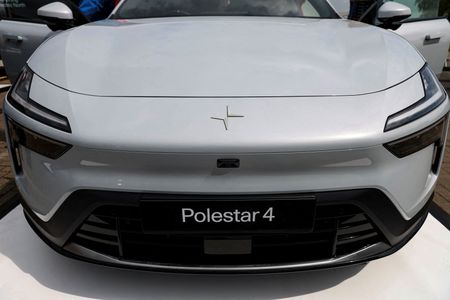

Swedish electric vehicle manufacturer Polestar announced Thursday that its second-quarter sales volumes dropped 4%, coming just weeks after the company was handed a ban from the U.S. market beginning with the 2027 model year — a blow that adds to its continuing challenge of reaching profitability.
With global demand for electric vehicles remaining uncertain, Polestar has pivoted its strategy toward Europe, which represented 80% of the company’s total sales during the first six months of the year.
The trouble in the U.S. market stems from a decision made by the U.S. Commerce Department in June, which denied Polestar authorization under the Connected Vehicles Rule. That rule restricts vehicles equipped with connected-vehicle technology that has ties to China.
Because Polestar is majority-owned by China’s Geely Holding, the ruling effectively shuts the company out of the U.S. market from the 2027 model year onward. Notably, sister brand Volvo Cars was granted special authorization under the same rule about a month before Polestar’s denial.
Despite the upcoming ban, Polestar said it plans to continue selling its existing Polestar 3 and Polestar 4 inventory in the United States, keep its service network accessible to customers, and carry on with used car sales.
The ban also raises uncertainty about the future of the Polestar 3’s production, as it is the company’s only model currently manufactured in the U.S.
For the second quarter, Polestar sold 17,296 vehicles, a decline from the 18,026 cars it sold during the same three-month period last year.
Also on Thursday, competing automaker Porsche — known for its Macan and Taycan electric models — reported a drop in first-half deliveries, pointing to market pressure in China and the end of U.S. tax credits for electric vehicles as contributing factors.
Facing pressure from tariffs, Polestar has chosen to update its existing lineup rather than introduce brand-new vehicles. Back in February, the company announced refreshed versions of its top-selling Polestar 2 and Polestar 4 models, with those updates expected to roll out over the coming year.
The company had already reported a larger-than-expected first-quarter loss in May, as pricing pressures and U.S. tariffs canceled out gains from improved sales figures.
Polestar CEO Michael Lohscheller offered a note of optimism, stating: “The first customer deliveries of Polestar 5 are set to start and production of the Polestar 4 SUV has started, with first deliveries expected during the fourth quarter.”