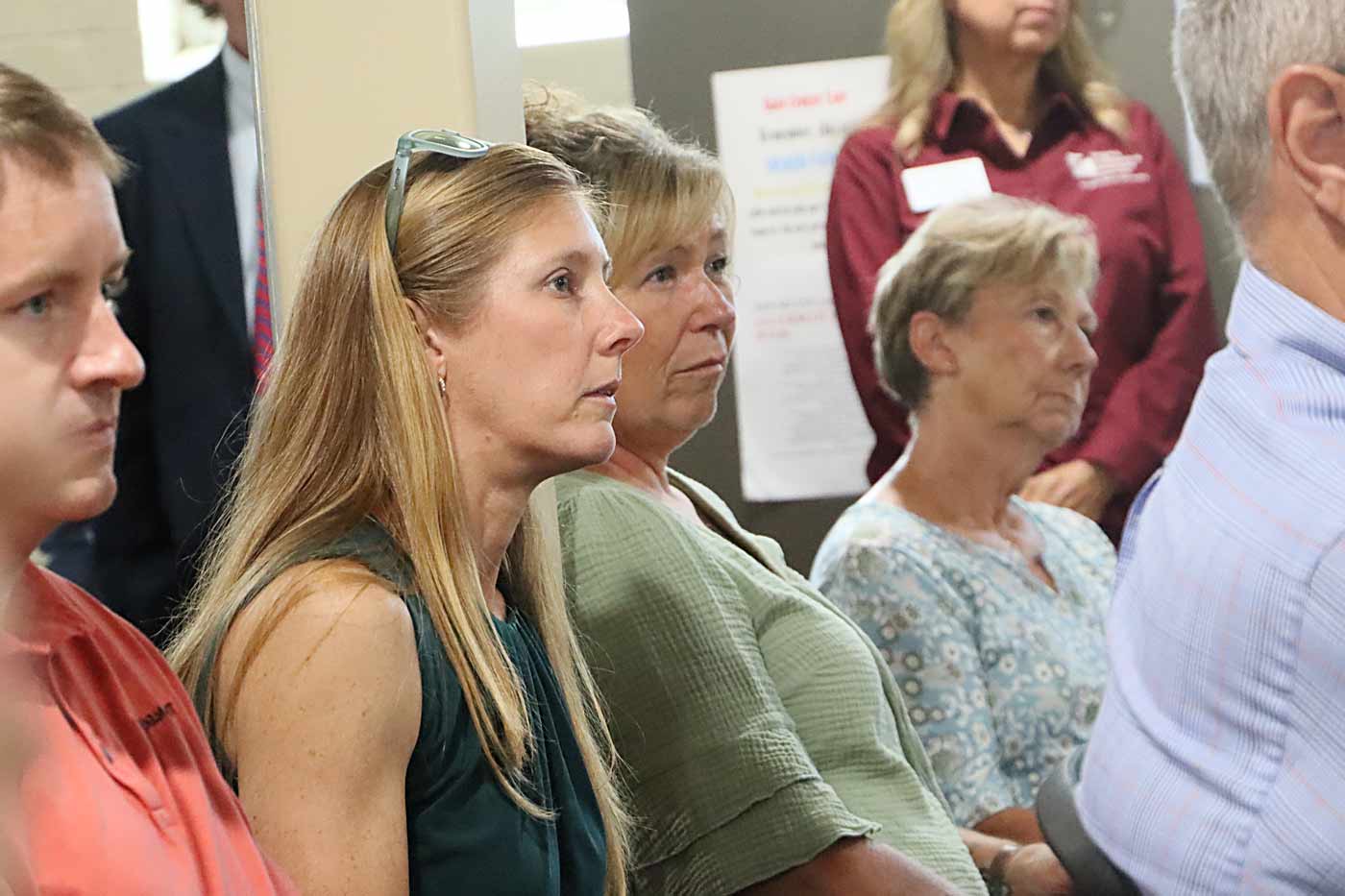

INDEPENDENCE, Va. — Farmers and agricultural stakeholders from Southwest Virginia sat down with U.S. Sen. Mark Warner, D-Va., on June 30 at the Grayson Agriculture, Technology & Educational Center to tackle some of the most pressing challenges facing rural producers today.
At the top of the agenda was the long-stalled Farm Bill. Warner pointed out that Congress has not passed a new five-year farm bill since 2018, leaving growers without the stability they need to plan ahead.
“We keep cobbling together short-term extensions that don’t give any of you predictability,” Warner told those gathered.
On the financial side, Warner noted that the federal government has committed roughly $66 billion in rural farm relief, calling that “the good news.” However, he cautioned that the legislation also slashes the Supplemental Nutrition Assistance Program — commonly known as SNAP — by more than half, which he said threatens the chances of a new Farm Bill clearing Congress this year. SNAP is a federal program that provides monthly grocery assistance to low-income households. A revised version of the legislation is currently under consideration in the Senate.
The meeting also touched on the ongoing recovery from recent extreme weather events, including a damaging spring frost that hit Virginia orchard crops hard and the destruction left behind by Hurricane Helene in 2024. Agricultural leaders expressed gratitude to Virginia’s congressional delegation for backing disaster declarations that could open the door to low-interest loans and other forms of aid for affected producers.
Gene Copenhaver, a multigenerational farmer from Washington County and president of the National Cattlemen’s Beef Association, reflected on how communities pulled together after the storm. He said neighbors helping neighbors was “the real story here,” highlighting the cooperation between counties, farmers, and elected officials.
Warner also took aim at broad tariff increases, arguing that unpredictable trade policy makes it difficult for farmers and agricultural businesses to map out their futures. While he acknowledged that targeted tariffs can be a reasonable tool when trading partners engage in unfair practices, he cautioned that sweeping changes can hurt Virginia growers who depend on international export markets.
Looking further down the road, Warner raised alarms about the potential workforce disruption that artificial intelligence could bring — and suggested that agriculture could be part of the solution by offering workers stable, long-term careers.
“I think over the next five years, we are going to see massive job dislocation come from AI,” Warner said. “We’re at 9% recent college graduate unemployment. I think it’s going to go to 30% in two years. I hope I’m wrong.”
Grayson County Farm Bureau member John Fant echoed concerns about the rural workforce, pointing to a shortage of diesel mechanics and other skilled tradespeople. He suggested that building stronger career pathways for students who choose not to pursue a traditional four-year college degree could help keep young people in rural communities while also supporting local farms and businesses.